Connect with us

Technology

CHANDO Group Presents 20 Research Papers at IFSCC 2026 Congress in Perth

Published

on

12 years of participation underscore the Group’s growing presence in global cosmetics science

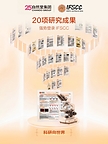
SHANGHAI and PERTH, Australia, Oct. 6, 2026 /PRNewswire/ — The 36th Congress of the International Federation of Societies of Cosmetic Chemists (IFSCC) was held in Perth, Australia, from September 28 to October 1. Building on its continued investment in skin science, ingredient science and product science, CHANDO Group participated in the global scientific gathering for the 12th consecutive year. A record 20 CHANDO Group research papers were accepted for this year’s Congress, placing the Group among the top five companies worldwide by number of accepted papers. 

The IFSCC is widely regarded as the “Nobel Prize of the cosmetics industry,” with the research it recognizes reflecting the latest advances in cosmetic science and technology worldwide. Since first participating in 2015, CHANDO Group has had 79 research papers accepted by IFSCC over 12 years, helping bring Chinese beauty innovation to the forefront of the international scientific community. This track record reflects the comprehensive innovation ecosystem developed by CHANDO Group’s R&D Center over the past 25 years. The Group’s research spans three core scientific disciplines and is supported by four technology platforms, with capabilities extending from fundamental research through product development. This integrated approach helps translate scientific advances into skincare innovations with tangible consumer benefits.

Fundamental Research Driven by Real Consumer Needs

CHANDO Group believes the value of fundamental research extends beyond scientific publications: ultimately, research must translate into products that address real consumer needs. Among the 20 research papers accepted for this year’s IFSCC Congress, technologies from several studies have already been incorporated into products across multiple CHANDO Group brands. From Himalayan extremophile-derived ingredients and precision anti-fatigue aging to barrier repair, pigmentation management, scalp care, cleansing technology, fragrance and sensory science, and women’s intimate care, the Group’s research spans a broad range of skincare and personal well-being applications.

This work is supported by three core scientific disciplines. In skin science, research ranging from longitudinal cohort studies to epigenetic approaches to skin aging is deepening CHANDO Group’s understanding of Asian skin. In ingredient science, the Group is exploring distinctive Himalayan resources to develop a portfolio of proprietary core ingredients. In product science, consumer needs guide the continued evolution of product efficacy. Each research effort starts with a real consumer need, investigates it through fundamental research, and ultimately translates the findings into products, bringing cutting-edge research into the daily lives of hundreds of millions of consumers worldwide.

From Population Insights to AI-Powered R&D: Advancing Precision “Anti-Fatigue Aging”

Skin aging is a perennial focus of skincare research, but how aging occurs—and how best to address it—varies among populations. At this year’s IFSCC Congress, CHANDO Group presented its latest research conducted in collaboration with two leading Chinese institutions.

Historically, global skin-aging research has relied predominantly on Western study populations, leaving limited systematic longitudinal evidence on the characteristics, timing and contributing factors of skin aging among Chinese consumers. To help address this gap, CHANDO Group and the Shanghai Institute of Nutrition and Health of the Chinese Academy of Sciences conducted a two-year longitudinal cohort study quantifying facial skin phenotypes in a Chinese population. The study systematically compared facial-aging phenotype data collected from more than 5,000 Chinese participants over the five-year period from 2018 to 2023 and identified changes in the aging inflection points of six major types of wrinkles. The findings showed that facial wrinkle aging among Chinese women in recent years has tended to begin earlier, progress more rapidly and enter a period of accelerated aging sooner. [1]

The study also identified trends toward shorter sleep duration and earlier initiation of smoking and alcohol consumption, suggesting an increase in fatigue-related lifestyle patterns. For the first time, the researchers quantified the differing effects of insufficient sleep, smoking and alcohol consumption on specific types of wrinkles [1], finding significant associations between multiple fatigue-related lifestyle factors and the earlier appearance of facial wrinkles. These findings not only add to scientific understanding of skin aging among Chinese consumers but also support a shift from generalized anti-aging approaches toward what CHANDO Group describes as “precision anti-fatigue aging”—targeted interventions informed by specific lifestyle factors and wrinkle types.

Building on these insights into aging among Chinese consumers, CHANDO Group has applied AI to reshape its ingredient R&D process. Conventional active-ingredient discovery often relies on experience-based screening, making it time-consuming and inefficient. In collaboration with the ACRDC R&D Center at the Yangtze Delta Region Institute of Tsinghua University, CHANDO Group established an AI-driven peptide discovery platform. Using AI-powered computational biology, the platform screened and optimized candidates from more than 2.8 million yeast proteins, ultimately identifying the new ingredient HiMurchaSin™ Super Anti-Aging Peptide. By targeting PGC-1α, a key regulator of mitochondrial energy metabolism, the ingredient promotes mitochondrial biogenesis and energy production to support precision anti-fatigue aging. It has already been incorporated into the seventh generation of CHANDO’s Super Anti-Aging Little Purple Bottle, launched in April 2026.

CHANDO Group is also expanding its research in longevity science. Its latest study identified, for the first time in the skin of Chinese women, the epigenetic regulator microRNA-1290 as a key epigenetic “switch” involved in photoaging-related telomere depletion. Following UV exposure, microRNA-1290 was significantly upregulated, weakening telomere protection and accelerating skin aging. Treatment with a Himalayan-derived HiMurchaSin filtrate + lysate significantly reversed this effect, helping protect telomeres and delay photoaging. The findings provide scientific support for the underlying anti-aging activity of HiMurchaSin™ and point toward a more targeted, epigenetic approach to addressing skin aging.

Harnessing Himalayan Resources for Sustainable Skincare Innovation

At this year’s IFSCC Congress, CHANDO Group also presented its latest advances in ingredient science. The Himalayas are both the birthplace of the CHANDO brand and a foundation of its scientific research. Drawing on the region’s distinctive extremophile resources, CHANDO has developed an integrated ingredient-development process spanning ecological resource exploration and collection, green process development and scientific efficacy validation.

From yeast extracellular vesicles and yeast-derived PDRN to Saussurea laniceps callus and rose extracellular vesicles, a growing portfolio of innovative ingredients sourced from the Himalayas is continually expanding the possibilities of skincare science.

Yeast was an early focus of this research. Using distinctive microbial resources from the Himalayas, CHANDO Group developed a sustainable yeast-derived PDRN ingredient. Conventional PDRN is typically derived from salmon sperm, while the molecular structure of CHANDO Group’s yeast-derived PDRN more closely resembles human DNA and demonstrated stronger effects in promoting cell regeneration and collagen production. The ingredient has already been used in flagship products including CHANDO’s Super Anti-Aging Little Purple Bottle Essence Cream and Peptide Essence Long-Wear Cushion Foundation. 

Plant callus culture technology also offers a sustainable way to harness rare high-altitude plants. CHANDO Group has developed Saussurea laniceps callus as the world’s first new skin-brightening ingredient derived from the Saussurea genus. Saussurea laniceps is a rare species native to high-altitude areas of the Himalayas and is classified in China as a nationally protected Class II endangered wild plant. With the required approval, CHANDO Group’s plant-ingredient R&D team used plant tissue culture technology to cultivate the material in the laboratory, overcoming the limitations of reliance on wild harvesting while enabling standardized, scalable production. Research showed skin-brightening activity at multiple levels, including cellular and protein levels [2], with multi-target inhibition of melanin production as well as antioxidant and skin-repair effects. The approach addresses limitations associated with conventional brightening ingredients that rely on a single target or high concentrations. Extracellular vesicles derived from high-altitude Rosa callus also exhibit multiple skincare activities, including barrier repair, anti-inflammatory and soothing effects, and protection against photoaging and loss of firmness. In addition, Nardostachys callus has demonstrated superior oil-control, hair-loss prevention and hair-follicle nourishment effects compared with wild-grown Nardostachys [3].

This approach enables consistent, scalable production of highly active ingredients without harvesting wild plants. As sustainability becomes an increasingly important priority for the global beauty industry, CHANDO Group is using callus culture technology to develop effective skincare ingredients while reducing reliance on wild plant resources.

In pigmentation management, CHANDO Group has focused on Asian consumers’ demand for safe, natural-looking skin brightening. A synergistic approach combining snow lotus callus with matsutake mushroom and niacinamide moves beyond conventional single-target brightening strategies, supporting gentler, more sustainable improvements in skin-tone evenness and radiance and providing a scientific basis for the development of safe and effective multi-ingredient brightening serums.

Beyond Facial Skincare: From Scalp Health to Fragrance and Sensory Science

CHANDO Group’s research now extends well beyond facial skincare into a broader range of personal-care and wellness applications.

At this year’s IFSCC Congress, the Group expanded its skin-science research into scalp care. Moving beyond conventional anti-hair-loss approaches based on broad-spectrum antimicrobial activity or a single probiotic, CHANDO Group proposed a new approach centered on maintaining microbial balance, using targeted modulation of the scalp microbiome to support anti-hair-loss efficacy. [4]

In women’s intimate care, CHANDO Group presented research from its recent expansion into women’s health. The Group investigated the use of probiotic extracellular vesicles to regulate the microbiome, exploring a gentle, safe and long-lasting approach to intimate care.

In facial and body cleansing, CHANDO Group addressed a familiar consumer concern: achieving effective cleansing without compromising the skin. The Group unveiled a new formulation technology combining a bicontinuous-phase system with selective cleansing to remove excess oils and impurities while preserving beneficial skin lipids. The concept positions cleansing not as the end of a skincare routine, but as its first step. The technology has already been applied across cleansing products from the CHANDO and Biorrier brands. 

The research presented by CHANDO Group at this year’s IFSCC Congress also extends into the growing field of fragrance and sensory science. Working with university researchers, the Group is exploring how fragrance can move beyond sensory appeal to deliver measurable functional benefits. Addressing fatigue-related concerns including poor sleep and low energy, the Group has drawn on its Himalayan research—from Nyingchi peach blossom to Himalayan fir—to scientifically evaluate the effects of fragrance ingredients and investigate their potential contribution to physical and emotional well-being. 

Advancing Chinese Beauty Innovation Through Technology

At the 2025 IFSCC Congress in Cannes, France, Chinese companies ranked second worldwide in oral presentations and first in poster presentations. That same year, China secured the right to host the 2032 IFSCC Congress, reflecting the growing international profile of Chinese cosmetics research. 

As a leading Chinese beauty company with 12 years of participation in IFSCC, CHANDO Group has both witnessed and contributed to this evolution. From its first accepted paper to its 79th, and from Himalayan extremophile resources to AI-driven precision R&D, the Group has continued to bring original Chinese cosmetics research to the international scientific community through an integrated, independently developed R&D system.

CHANDO Group’s R&D Center combines independent research with global collaboration across fundamental research, ingredient development, formulation innovation and clinical validation, with a focus on three core disciplines: skin science, ingredient science and product science.

The acceptance of 20 CHANDO Group research papers at IFSCC 2026 in Perth marks another milestone in the Group’s R&D journey. Looking ahead, the Group will continue to increase its investment in research and development and pursue original scientific breakthroughs as it contributes to the evolution of China’s beauty industry from “Made in China” to “Created in China.”

[1] Findings from research jointly conducted by CHANDO Group and the Shanghai Institute of Nutrition and Health, Chinese Academy of Sciences
China National Radio report:
https://www.cnr.cn/shanghai/tt/20260424/t20260424_527598222.shtml?f_link_type=f_linkinlinenote&flow_extra=eyJpbmxpbmVfZGlzcGxheV9wb
3NpdGlvbiI6MCwiZG9jX3Bvc2l0aW9uIjowLCJkb2NfaWQiOiI0ZTZjMDZjNGE2YWNlZDQ3LTBkMTJjNWFhNDJmNDY5ZmUifQ%3D%3D&use_xbr
idge3=true&loader_name=forest&need_sec_link=1&sec_link_scene=im&theme=light

[2] SHU H, WANG L, TANG X, et al. Construction of a scalp microecological balance-oriented anti-hair loss system. International Federation of Societies of Cosmetic Chemists (IFSCC) Congress 2026, Perth, Australia. 2026. Poster No. 1067.

[3] LI H, REN H, QU Y, et al. Glacial water culture optimizes sustainable production of Saussurea laniceps callus: From phytochemical composition to in vitro/in vivo efficacy validation. International Federation of Societies of Cosmetic Chemists (IFSCC) Congress 2026, Perth, Australia. 2026. Poster No. 734.

[4] LI H, REN H, ZHOU Q, et al. Tissue culture-based sustainable development of Nardostachys jatamansi callus: Extract preparation and comprehensive evaluation of hair care potentials. International Federation of Societies of Cosmetic Chemists (IFSCC) Congress 2026, Perth, Australia. 2026. Poster No. 733.


View original content to download multimedia:https://www.prnewswire.com/apac/news-releases/chando-group-presents-20-research-papers-at-ifscc-2026-congress-in-perth-302899227.html

SOURCE CHANDO GROUP

Continue Reading

Technology

Where Are You, Strategist?

Published

on

By

GUIYANG, China, Nov. 29, 2026 /PRNewswire/ — A report from CNS: Liu Bei sets out with Guan Yu and Zhang Fei to find Zhuge Liang, only to find a note that reads: “He has gone to Pudong.” Their search across the centuries soon turns into an unexpected startup story.

In the AI-generated short film Where Are You, Strategist?, the three arrive in Pudong and begin turning an idea into a business: finding talent, building a team, developing a product and seeking partners. Through a fictional adventure featuring characters from the Three Kingdoms, the film portrays Pudong’s concentration of talent and its entrepreneurial spirit.

View original content to download multimedia:https://www.prnewswire.com/news-releases/where-are-you-strategist-302952077.html

SOURCE CNS

Continue Reading

Technology

Binance Sets Out Evolution into Global Financial Platform with Hong Kong Equities, Expanded AI Tools, Wider Payment Reach and a Broader Creator Ecosystem

Published

on

By

At Binance Blockchain Week 2026, Binance laid out its plans to bring more of a person’s financial life in one place

ABU DHABI, UAE, Nov. 29, 2026 /PRNewswire/ — In a keynote address titled ‘The Next Chapter: Finance, Evolved,’ Binance Co-CEO and Co-Founder Yi He unveiled “All Finance on Binance,” a strategy to evolve Binance from the world’s largest crypto exchange into a global, AI-powered financial platform. Its first step is an expansion of Binance’s stock offerings: more than 1,000 Hong Kong-listed stocks and ETFs tradable with USDC from December 1, 2026, with further markets to follow.

The strategy brings the assets people want to hold, and the ways they want to use them, into a single platform. From equity markets to more personalized AI, from payments and yield in local currencies to a connected community around markets, Binance is bringing a person’s financial life together.

“Binance started with crypto because we believed the blockchain technology could change what was possible,” said Yi He. “Today, the crypto market and traditional finance are converging — and so we’re building for how far people want to go, not just how they begin.”

The adoption shift is no longer theoretical. Over 83% of Binance users are Gen Z or Millennials, and their interests reach well beyond crypto. Gen Z makes up nearly half of users trading Binance’s stock products, and they invest with a long horizon: 76% of Gen Z bStocks accounts are net accumulators, and 22% of their direct-stock accounts have never placed a sell order, more than double the rate for Baby Boomers.

Opening Up More of the World’s Markets

Binance opened traditional markets to its users in January 2026 with commodity and equity perpetuals, then added U.S.-listed stocks — shares held directly in the same account as their crypto — and tokenized bStocks in June. Demand has been strongest where it was historically hardest to reach, with around 70% of bStocks trading volume coming from emerging markets.

Stock Trading and bStocks for Hong Kong-listed equities

Binance is expanding its stock trading offering to add more than 1,000 Hong Kong-listed stocks and ETFs that users can buy directly with USDC, in the same account they already use for crypto and U.S.-listed stocks. Selected Hong Kong stocks will also be available as bStocks, which are tokenized securities that trade 24/7 from as little as $5 and convert freely 1:1 with the underlying shares.

Trading for Hong Kong-listed equities is planned to commence December 1, 2026. Availability of stock trading and bStocks varies by jurisdiction, and trading of Hong Kong-listed stocks is not offered to the Hong Kong public. Binance will continue to explore more markets.

Looking Ahead: More Ways to Put TradFi Holdings to Work

Binance will enable bStocks for Earn, where eligible bStocks will generate rewards simply by being held, as well as for Dual Investment, letting users earn while committing to buy or sell at a price they choose. Binance also plans to introduce Smart Portfolios, giving users portfolio exposure to stocks and ETFs through a single subscription with rebalancing — part of a shift from a platform where people trade individual assets to one that supports more of the investment journey.

Putting Advanced AI Tools Within Reach

More access means more to understand and manage. AI can bring professional-grade research and workflow tools to everyday users — Binance introduced AI Pro last month, letting users prompt an idea in plain language and turn it into a workflow they can test before it runs. Over 120,000 users have created tens of thousands of live strategies, and AI Pro is already used in more than 30 languages, with 55–60% of users interacting in a language other than English.

Binance AI Pro Strategy Hub and Backtesting

Building a strategy from scratch can still be intimidating for many users even with AI, so Binance will soon release the AI Pro Strategy Hub — a library of Binance-provided templates users can start from, understand, adapt and use, rather than start with a blank page. The strategy templates span trading, alerts and data analysis, and users select a strategy and set their own parameters. A new Backtesting System will let users evaluate a strategy against historical market data before committing funds.

Looking Ahead: Greater Personalization

Binance plans to let users publish their own strategies for others to discover and adopt. AI Pro will also evolve further to provide a persistent workspace for each user across mobile and PC; proactive assistance that flags relevant financial events and suggests adjustments to strategies; and secure third-party connections.

Making Money Work, Wherever You Are

Being able to invest is only part of a financial life — money also has to move and be spent. People’s financial lives increasingly cross borders, while their everyday needs remain local. Binance Pay now serves 2.7 million monthly users across 180+ countries, processing 271M+ transactions (up 30% year over year) and $154B in annualized send, receive and pay volume.

First in-house issued Binance Card

Binance Card is available in 38 countries, with over 1.4 million cards issued and 90M+ merchant acceptance locations globally, and sits within a Binance Pay network where monthly payment volume grew 94% year over year. Binance is now preparing its first in-house issued Card, which will also allow users to spend their USD balance directly, with more fiat currencies planned and extending Card funding beyond crypto balances.

Cross-border transfers in Africa

Binance will soon expand cross-border payment capabilities across Africa, exploring ways to make it easier for users to send money across borders, with competitive exchange rates.

Travel Pay

Travel Pay lets users pay through supported local QR networks while traveling, across eight countries including Argentina, Brazil, Vietnam, the Philippines, Japan. Two more are planned before the end of the year. A new discovery widget will surface the option automatically when users arrive somewhere it’s available.

Fiat Yield
Binance is also about to release Fiat Yield, its first product that pays yield on eligible local currency balances without users needing to convert into stablecoins or crypto first. It launches first in Argentina and Brazil, where users can earn yield on their pesos and reais, with automatic subscription and daily liquidity, followed by additional markets.

Where Community Meets Markets

Beyond access to more financial products, people also need a place to exchange ideas.

Binance Square

Binance Square is the social layer of trading: a global community sharing news, views and live discussions. Livestream copy trading, for example, lets users watch a creator trade in real time and copy their moves as they happen. Square reaches 20 million monthly active users and 6 million pieces of content each month.

On Square, readers can see who made any opinion. Creators post under verified profiles, and their views are backed by real trading records — what they traded and how it played out. Newly launched leaderboards help readers find the strongest traders across Square. This works on Binance because this is where the trades happen — so readers can judge for themselves rather than guess.

Looking Ahead: What’s Next for Creators

If creators drive value, they should earn from it. Write to Earn rewards creators when their content drives trades, and CreatorPad lets them take on campaigns from project teams. Creators enjoy benefits from developing subscriptions, tipping and revenue sharing and next, Binance is building more systemic growth and traffic support for creators — so creators who build value for the community can build a business from it.

Disclaimer: The products and services referred to herein may be restricted in certain jurisdictions or regions or to certain users, in accordance with applicable legal and regulatory requirements. These materials are intended only for those users who are permitted to access and receive the products and services referred to and are not intended for users to whom restrictions apply. Digital asset prices are subject to high market risk and price volatility. The value of your investment may go down or up, and you may not get back the amount invested. You are solely responsible for your investment decisions and Binance is not liable for any losses you may incur. Past performance is not a reliable predictor of future performance. You should only invest in products you are familiar with and where you understand the risks. You should carefully consider your investment experience, financial situation, investment objectives and risk tolerance and consult an independent financial adviser prior to making any investment. This material should not be construed as financial advice. For more information, see our Terms of Use and Risk Warning.

About Binance: Binance is a global financial platform for the next generation of finance, combining blockchain and AI to make financial services faster, cheaper, and more accessible. More than 300 million users across 100+ countries use Binance to move between digital assets and traditional financial markets on a single platform, with global access, deep liquidity, and lower costs. Beyond its core markets, its ecosystem spans education, research, institutional solutions, social impact, and Web3. Built on security, risk management, and compliance, Binance is working to increase the freedom of money for people around the world. For more information, visit: https://www.binance.com.

View original content to download multimedia:https://www.prnewswire.com/apac/news-releases/binance-sets-out-evolution-into-global-financial-platform-with-hong-kong-equities-expanded-ai-tools-wider-payment-reach-and-a-broader-creator-ecosystem-302952080.html

SOURCE Binance

Continue Reading

Technology

Universiti Teknologi Malaysia and UNESCO-ICHEI Partner on Responsible AI for Southeast Asian Universities

Published

on

By

KUALA LUMPUR, Malaysia, Nov. 29, 2026 /PRNewswire/ — Universities across Southeast Asia are joining forces to shape how artificial intelligence (AI) is used in higher education. Universiti Teknologi Malaysia (UTM), one of the founding members of a new regional task force, is partnering with the International Centre for Higher Education Innovation under the auspices of UNESCO (UNESCO-ICHEI) on AI governance, teaching innovation and joint research.

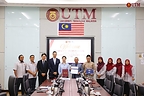
The partnership follows a visit by UNESCO-ICHEI’s leadership to UTM’s Kuala Lumpur campus on 27 November 2026. During the visit, UTM and UNESCO-ICHEI signed a Letter of Intent (LoI) setting out the areas of collaboration.

“Southeast Asia’s universities are adopting AI at very different speeds, and no single institution can work out the rules alone. This task force gives the region a way to share what works and to make sure AI in higher education is responsible and inclusive,” said Dato’ Professor Ts. Dr. Mohd Shafry Mohd Rahim, Vice-Chancellor of UTM.

The task force belongs to the International Institute of Online Education (IIOE) Southeast Asia Regional Centre, set up by the Southeast Asian Ministers of Education Organization (SEAMEO) Secretariat and UNESCO-ICHEI and hosted by the SEAMEO Secretariat. It brings universities together to shape how the region uses AI and digital tools in teaching, learning and management.

Interest was strong: the competitive selection drew 78 universities from ten Southeast Asian countries. UTM’s appointment as a Founding University Member was announced on 5 October 2026, endorsed by Malaysia’s Ministry of Education, and runs for an initial two years.

As a next step, UTM and UNESCO-ICHEI will develop joint collaboration and future actions on AI and digital transformation in higher education.

“The response from universities across Southeast Asia shows a clear commitment to working together on AI. UTM brings strong expertise in AI and digital learning, and we look forward to working with UTM and other task force members to support higher education transformation across the region,” said Ms. Bi Xiaohan, Deputy Director of UNESCO-ICHEI.

The task force is already active. Its first programme, the Korea–Southeast Asia University Leadership and Student Transformation Programme and the 4th Gumi Education Forum, brought university leaders and students to Gumi, Republic of Korea, from 4 to 13 November 2026. UTM was represented by Associate Professor Dr. Noorminshah A.Iahad, Head of Learning Innovation Division, Center for Advancement of Digital and Flexible Learning (CDex) and undergraduate student Tey Xin Yi, Bachelor of Computer Science (Bioinformatics) from the Faculty of Computing.

The partnership covers three areas: AI in university operations, and responsible AI governance, staff training, teaching innovation and flexible study pathways, and joint research, knowledge sharing and regional partnerships.

The collaboration supports the UN Sustainable Development Goals on Quality Education (SDG 4) and Partnerships for the Goals (SDG 17).

The UNESCO-ICHEI delegation was led by Ms. Bi Xiaohan, Deputy Director. She was joined by Mr. Sit Fung, Assistant Director and Chief of the Global Partnership and Programme Office, and Mr. Zhang Boyi, Programme Officer.

They were received by Vice-Chancellor Dato’ Professor Ts. Dr. Mohd Shafry Mohd Rahim, Deputy Vice-Chancellor (Research and Innovation) Professor Ts. Dr. Ali Selamat, Head of Campus Professor Dr. Fauziah binti Sh. Ahmad, and Professor Ts. Dr. Mohd Naz’ri Mahrin, Dean of the Faculty of Artificial Intelligence.

About Universiti Teknologi Malaysia (UTM)

Universiti Teknologi Malaysia (UTM) is a premier public research university specialising in engineering, science and technology, ranked 25th in the QS World University Rankings: Asia 2027. Tracing its roots to a technical school founded in Kuala Lumpur in 1904, UTM has campuses in Johor Bahru, Kuala Lumpur and Pagoh. With recognised strengths in sustainability and artificial intelligence, UTM works alongside industry, government and international partners to develop talent and research, innovating sustainable solutions to global challenges.

View original content to download multimedia:https://www.prnewswire.com/apac/news-releases/universiti-teknologi-malaysia-and-unesco-ichei-partner-on-responsible-ai-for-southeast-asian-universities-302952029.html

SOURCE Universiti Teknologi Malaysia

Continue Reading

Trending