Connect with us

Technology

RepRisk reports 28% rise in greenwashing risk as scrutiny shifts toward the energy transition

Published

on

RepRisk’s fifth annual Greenwashing Report finds that financial institutions remain at the center of greenwashing risk. In 2026, Financial Services recorded a 40% year-on-year rise in the number of companies linked to greenwashing, while Banks recorded a 23% increase.

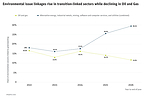
Transition-linked sectors overtake Oil and Gas: Alternative Energy, Industrial Metals, Mining, Software and Computer Services, and Utilities together accounted for 29% of greenwashing-related environmental issue linkages in 2026, up from 18% in 2022, while the share associated with Oil and Gas fell from 17% to 12%.Financial institutions remain at the center of greenwashing risk: Financial Services and Banks together represented one-fifth of all sector linkages among greenwashing-linked companies in 2026, with Financial Services recording a 40% and Banks a 23% year-on-year increase.Biodiversity surpasses climate for the first time: In 2026, greenwashing risk concerning ecosystems and biodiversity overtook climate change and emissions for the first time in five years.

ZURICH, Oct. 6, 2026 /PRNewswire/ — New research from RepRisk, the world’s most respected Data as a Service company for business conduct risks, shows that greenwashing risk is rising again and shifting toward the companies, technologies, projects, and financial institutions at the center of the energy transition.

RepRisk’s fifth annual Greenwashing Report found that the number of companies linked to greenwashing rose for a second consecutive year, reaching 1,594 in the year to June 2026, a 28% year-on-year increase. This follows a 12% decline in 2024. Over the five-year period, greenwashing risk incidents increased by 112%.

This renewed rise is accompanied by a shift from traditional high-emitting industries toward transition-linked sectors. Between 2022 and 2026, the combined share associated with Alternative Energy, Industrial Metals, Mining, Software and Computer Services, and Utilities increased from 18% to 29%, while the share associated with Oil and Gas fell from 17% to 12%.

The transition to a low-carbon economy is creating a new greenwashing risk landscape. As capital flows toward renewable energy, transition minerals, low-carbon infrastructure, and other climate solutions, scrutiny is increasingly extending beyond traditional high-emitting sectors to the activities intended to support the transition itself.

“The transition depends on informed capital allocation,” said Philipp Aeby, CEO and Co-founder of RepRisk. “As investments continue to accelerate, banks, asset managers, and asset owners must be able to cut through greenwashing. High-quality data that is relevant, accurate, and auditable enables financial institutions to identify emerging risks and ensure that capital supports credible transition efforts and long-term value creation.”

Financial institutions sit at the center of this changing landscape. In 2026, Financial Services and Banks together accounted for one-fifth of all sector linkages among companies linked to greenwashing. Financial Services ranked as the most exposed sector, with 305 companies, up 40% year on year, while 86 Banks were linked to greenwashing, an increase of 23%. For financial institutions, greenwashing risk can arise both from their own activities and from the companies and projects they finance, invest in, or underwrite.

The environmental issues linked to greenwashing risk are also shifting. Between 2024 and 2026, greenwashing linkages concerning ecosystems and biodiversity nearly doubled from 162 to 300, while those concerning climate change and emissions remained broadly flat, edging up from 272 to 275. In 2026, biodiversity overtook climate as the leading environmental issue linked to greenwashing risk for the first time in five years.

Notes to Editors

The 2026 report examines five annual periods, each running from July 1 to June 30. “2026” refers to the period from July 1, 2025, to June 30, 2026.A linkage represents a connection between one company and one Business Conduct Issue. As a company may be linked to multiple Issues, the number of linkages exceeds the number of companies.RepRisk defines greenwashing as environment-related statements, communications, or actions that do not clearly and fairly reflect the environmental performance of an entity, product, or service. Such communication may involve omitted, false, or deceptive information and may occur intentionally or unintentionally.RepRisk captures greenwashing through its dedicated Greenwashing Topic Tag. The tag was introduced in 2025 and enables more granular analysis than the methodology used for editions published before 2025. Comparisons spanning the methodological change should therefore be interpreted with this distinction in mind.Transition-linked sectors provide the infrastructure and materials on which the transition to a low-carbon economy depends. The grouping comprises Alternative Energy, Industrial Metals, Mining, Software and Computer Services, and Utilities. Software and Computer Services includes AI companies and data centers whose growing energy demands are reshaping electricity grids and whose claims regarding renewable energy use and carbon-free operations have come under increasing scrutiny.RepRisk’s absolute incident counts reflect both reported developments and the continued expansion of its screening scope, including additional sources, languages, and companies. The report therefore also examines relative shares and distributions to provide a complementary view of how greenwashing risk is evolving.

About RepRisk 

RepRisk is the world’s most respected Data as a Service (DaaS) company for reputational risks and responsible business conduct. Since 2006, RepRisk’s data has been trusted by the world’s leading banks, investment managers, Fortune 500 companies, sovereign wealth funds, and organizations such as the OECD and UN. Combining advanced AI with deep human expertise, and a proven methodology at the core, RepRisk’s solutions bring peace of mind, enabling clients to ‘know more, be sure, and act faster’. Our pioneering solutions help to strengthen due diligence processes across business conduct topics, such as biodiversity, deforestation, human rights, and corruption, empowering clients to identify, monitor, and mitigate reputational, compliance, and financial risks. Headquartered in Zurich, and with offices in Toronto, New York, London, Berlin, Manila, and Tokyo, we stay close to clients and bring an independent lens to the industry. United by our shared belief in the power of data, our 400 people are proud to be setting the global standard for business conduct data and driving positive change through transparency. Visit us at reprisk.com and follow us on LinkedIn.

Contact 

Mathias Fürer 
+41 41 552 30 01 
media@reprisk.com 

View original content to download multimedia:https://www.prnewswire.com/news-releases/reprisk-reports-28-rise-in-greenwashing-risk-as-scrutiny-shifts-toward-the-energy-transition-302898762.html

SOURCE RepRisk

Continue Reading

Technology

Global Product Placement Spending Grew 12.7% in 2025 to $37.2B & Pacing for Faster Growth Again in 2026, Driven by TV, Film, Music & Digital Media

Published

on

By

Global product placement spending grew 12.7% in 2025 to $37.16 billion, accelerating from the 12.1% gain posted in 2024, fueled by double-digit growth in TV, film, music and digital media, which benefited from the end of writer and actor strikes in the US opening up production schedules and launching a cavalcade of new content, according to new PQ Media research released today.

STAMFORD, Conn., Oct. 7, 2026 /PRNewswire-PRWeb/ — Global product placement spending grew 12.7% in 2025 to $37.16 billion, accelerating from the 12.1% gain posted in 2024, fueled by double-digit growth in TV, film, music and digital media, which benefited from the end of writer and actor strikes in the US opening up production schedules and launching a cavalcade of new content, according to new PQ Media research released today. Product placement spending worldwide is on pace to grow at a faster rate of 12.8% in 2026 to $41.92 billion, marking the sixth consecutive year of double-digit growth, following the worst decline ever in pandemic-struck 2020, per PQ Media’s 11th edition Global Product Placement Forecast 2026-2030.

Paid product placements have grown substantially over the past 25 years because brands have become more willing to invest in skillful integrations of their logos and products in storylines that will expose their assets in meaningful ways.

In the US, which accounted for 56.5% of the global market for product placement in all media, total spending rose 13.2% in 2025 to $21.01 billion, faster than the 12.3% gain in 2024. Brazil, Mexico and Australia were the only other countries to generate more than $1 billion in product placement spending in 2025. The Netherlands was the fastest-growing market in 2025, rising 16.3%, while the United Kingdom was the only other top-20 market to rise by more than 15% for the year. In total,19 of the 20 top-20 global markets generated double-digit growth in 2025, with the exception of Russia.

In the 11th edition of the Global Product Placement Forecast 2026-2030, PQ Media found that the impact of the pandemic and writer/actor strikes in the United States are now in the rear window and the industry is growing annually at double-digit rates worldwide and will continue to do during the 2026-2030 forecast period.

Driving growth in 2025 was the continuing shift to streaming content, particularly television shows and movies being produced by the streaming video subscription services in each of the top-20 markets. Additionally, micro-dramas, short 5-15 minute episodic clips from an ongoing series on social media sites, have benefitted significantly from product integrations. Artificial intelligence has helped drive growth in digital media, videogame and music video product placements. Meanwhile, PQ Media found that print media are accepting more product placements to compensate for the declining ad revenues suffered over the last two decades.

But there is concern among product placement professionals that the opportunities for product integrations are slowing. Broadcast and cable TV networks are producing fewer new scripted and reality programs. Movie studios have yet to exceed the number of films produced in 2019. Videogame publishers are holding off releasing new titles until the new console upgrades in 2027 or 2028. Print magazines are folding and newspapers are shuttering print editions. Fewer music videos are being produced and there is a slowdown in new podcasting titles.

“Despite these concerns, content publishers have become more willing to include product integrations in all media to help deal with rising production costs,” said PQ Media President & CEO Patrick Quinn, “Additionally, paid product placements have grown substantially over the past 25 years because brands have become more willing to invest in skillful integrations of their logos and products in storylines that will expose their assets in meaningful ways. This trend will continue going forward. due to the popularity of this marketing tactic among the younger demographics that the brands are targeting.”

Product placement in TV remains, by far, the largest media platform category worldwide, valued at $26.16 billion in 2025. The hottest streaming TV series are driving the double-digit growth in product placement in the overall TV category, such as the brand integrations in “The Hawk” on Netflix. Meanwhile, movie integrations, the second largest platform category, generated $4.44 billion globally last year, with many of the integrations being included in top grossing films, such as “Spider-Man: Brand New Day.” which had 165 brand partnerships which was reportedly valued at over $300 million.

Product placement in music was the fastest-growing placement category in 2025, rising 13.8%, fueled by product placements in popular podcasts, particularly those in which the host references the brands and products. TV integrations ranked second in growth, followed by digital media product placements, as virtual placements (adding a brand in post-production when a theatrical film is shown on a streaming video service), and AI-embedded integrations are becoming more commonplace. The print media and videogame categories were the only channels not to post double-digital gains in 2025.

About the Report:

PQ Media’s Global Product Placement Forecast 2026-2030, the 11th edition of the industry’s recognized performance benchmark, is the only source to consistently define, size, analyze and project the growth of product placement spending in media. The new edition has expanded to cover 6 major media platforms and 19 media channels across all top 20 global markets. Below is a breakdown of the report’s expanded coverage of media platforms and channels:

Television/Video – Broadcast TV, Cable TV, Streaming TV;Filmed Entertainment – Theatrical Films, Streaming Films;Digital Media – Pure-Play Digital Sites, Social Media & Blogs, Virtual Placements & Artificial Intelligence, Influencer Sites;Videogames – Console/PC Games, Mobile Games, Internet Games;Print Media – Print & Digital Magazines, Newspapers, Books;Recorded Music – Music Videos, Broadcast & Streaming Radio, Podcasts, Lyrics

The Core PDF Report & Analysis delivers 259 slides of exclusive market data and insights, which is enhanced by the Deep-Dive Excel Databook that provides 5,625 datasets and over 250,000 datapoints by country, media platform and channel, covering the 2020-2030 period with five-year forecasts, exclusive rankings of the largest and fastest growing media platforms and global markets, and in-depth profiles of each major country. To Download a Free Executive Summary and Sample Datasets click: Global Product Placement Forecast 2026-2030.

About PQ Media:

PQ Mediadelivers strategic intelligence, data and analysis to the world’s leading media, entertainment and technology organizations through syndicated market intelligence reports, custom drill-down research services, and on-demand strategic consulting. PQ Media uses a proprietary econometric methodology to define, segment, size, analyze and project the growth of several hundred traditional, digital and alternative media by country, platform, channel and demographic. PQ Media also publishes the annual Global Media Forecast Series 2026 (13th edition), with each report covering one of the three industry KPIs – Advertising & Marketing Spending; Consumer Media Usage & Exposure; and Consumer Spending on Media Content & Technology.

Media Contact

Patrick Quinn, PQ Media, 1 203-921-5249, pquinn@pqmedia.com, https://www.pqmedia.com

Leo Kivijarv, PQ Media, 1 203-273-7081, lkivijarv@pqmedia.com, https://www.pqmedia.com

View original content to download multimedia:https://www.prweb.com/releases/global-product-placement-spending-grew-12-7-in-2025-to-37-2b–pacing-for-faster-growth-again-in-2026–driven-by-tv-film-music–digital-media-302900751.html

SOURCE PQ Media

Continue Reading

Technology

/R E P E A T – Media Advisory – Minister Hodgson to deliver keynote at Global Risk Institute Summit/

Published

on

By

TORONTO, Oct. 5, 2026 /CNW/ — The Honourable Tim Hodgson, Minister of Energy and Natural Resources, will make a keynote address at the Global Risk Institute’s Summit 2026. Open to the media.

Date: Wednesday, October 7, 2026

Time: 10 a.m. ET

All accredited media are asked to register with GRI Summit 2026. Details on how to participate will be provided upon registration.

Follow Natural Resources Canada on LinkedIn.

SOURCE Natural Resources Canada

Continue Reading

Technology

MintNeuro raises $5 million to scale purpose-built chip platform for neural devices and brain-computer interfaces

Published

on

By

Funding from European and US investors will accelerate product launch,
partner adoption and international expansion

LONDON, Oct. 7, 2026 /PRNewswire/ — MintNeuro, a semiconductor company building specialised chips for neural devices from implants to wearables, today announces a $5 million investment round to drive its commercial scale-up. MintNeuro’s chips give device developers better performance than generic components, with less risk, lower cost and a faster route to market than custom chip design. The funding will accelerate product launch, expand delivery of pre-release silicon to partners and grow the company’s international presence.

The round was led by Odyssey Ventures, with participation from 33East, JSK Investments and Alumni Ventures, and returning investment from Empirical Ventures, Jumpspace Ventures and early investors. Bringing together deep tech, medtech and early-stage investors across Europe and the US, the round reflects global demand for the hardware needed to scale neurotechnology.

MintNeuro has already delivered working silicon and reached key integration milestones with research and development partners, including Motif Neurotech and Amber Therapeutics. Earlier this year, MintNeuro announced a partnership and multi-year commercial chip supply agreement with Motif, supporting the development of Motif’s minimally invasive neurostimulator initially targeting treatment-resistant depression. A growing number of neural device companies are now evaluating or integrating MintNeuro’s technology, alongside research teams building implantable systems that connect directly to the brain and nervous system.

MintNeuro will use the investment to grow its engineering and commercial teams, bring its products to market, support customers as they adopt its chips and strengthen its presence in the US alongside its UK and European base.

Neural devices are opening new ways to understand and treat conditions across neurology, mental health and beyond, from Parkinson’s disease, epilepsy and depression to hearing loss and inflammatory disease. These technologies include brain-computer interfaces (BCIs), neuromodulation systems, sensory prostheses and bioelectronic medicines. Until now, progress across the industry has been held back by the lack of standard chips designed specifically for the extreme power, size, safety and signal-quality demands of these devices.

MintNeuro is closing that gap with a modular semiconductor platform purpose-built for core functions like neural sensing, signal processing and stimulation: listening to the body’s nerve signals, interpreting them, and delivering precise electrical pulses to treat disease or restore function. Instead of adapting generic components or funding years of custom chip design, developers can build on MintNeuro’s chips to create smaller, lower-power neural devices and move from research to clinical use sooner.

MintNeuro’s modular architecture provides the building blocks to combine sensing, processing and stimulation efficiently at the system level, supporting more integrated closed-loop interfaces with the nervous system.

Commenting on the investment, Dorian Haci, Co-Founder and CEO of MintNeuro, said: “Every neural device depends on the chips inside it. Today, most device and therapy developers still have to choose between generic components that were never designed for the body and years of custom chip development. We are building the chips that end that trade-off. This funding moves us from technology validation to commercial scale-up, with more customer programmes, faster product launches and our chips in the hands of many more developers. Our ambition is clear: to make MintNeuro the semiconductor platform the global neurotechnology industry builds on.”

Michelle Robson, Founding Partner at Odyssey Ventures, said: “Neural devices such as BCIs represent one of the most exciting frontier technology opportunities today, and significant value will accrue to those solving the foundational infrastructure challenges that stand between innovation and widespread adoption. MintNeuro has the technology, market pull and ambition to become a globally important semiconductor company, and we are backing this exceptional team as it scales from the UK into global markets, including Silicon Valley.”

Yiannis Eftychiou, Co-Founder and Partner at 33East, said: “What stood out to us is the sheer breadth of the hardware opportunity. MintNeuro is solving critical needs for neural implants today, with technology that can extend into wearables and beyond.”

Johnathan Matlock, Co-Founder and General Partner at Empirical Ventures, said: “We invested before the chips were in hand, and we are reinvesting now that MintNeuro has working silicon, deep customer traction and a clear path to becoming a category-defining semiconductor business.”

Professor Tim Denison, Chair of MintNeuro, added: “Neurotechnology is entering a phase where specialised hardware will determine how far, and how fast, the field can go. MintNeuro’s semiconductor technology is well-placed to remove the key obstacle to industry scale, which could dramatically accelerate the pace of innovation.”

About MintNeuro (www.mintneuro.com)

Founded as a spinout from Imperial College London, MintNeuro is building the semiconductor foundation for the next generation of neurotechnology. The company develops specialised chips that enable devices to connect with the brain and nervous system, helping innovators create new therapies for neurological and mental health conditions.

As neurotechnology moves from research labs into clinical and commercial deployment, MintNeuro is addressing one of the sector’s most critical challenges: providing a scalable semiconductor platform designed specifically for neural devices. By removing the need for custom chip development or adapted generic components, MintNeuro aims to accelerate innovation, reduce development barriers and help bring transformative neurotechnology products to market faster.

The company works with leading developers, researchers and medical device companies, with a long-term vision to become the industry-standard semiconductor platform powering the future of brain-computer interfaces, bioelectronic medicine and other technologies that connect humans and machines.

MintNeuro’s immediate focus is medical applications, where size, power, reliability and safety are critical. The same core technology has the potential to become the chip layer for any device that connects to the brain and nervous system, providing the interface between human biology and the digital world.

View original content to download multimedia:https://www.prnewswire.com/news-releases/mintneuro-raises-5-million-to-scale-purpose-built-chip-platform-for-neural-devices-and-brain-computer-interfaces-302900235.html

SOURCE MintNeuro

Continue Reading

Trending