Connect with us

Technology

CNN’s Tech for Good spotlights the next generation pushing the limits of exploration

Published

on

HONG KONG, Oct. 7, 2026 /PRNewswire/ — Whether navigating outer space or tackling challenges closer to home, technology is revolutionizing our ability to explore. In the seventh season premiere of Tech for Good, CNN anchor and correspondent Kristie Lu Stout meets the young researchers and innovators leading a new era of discovery and developing technology that pushes beyond the limits of human reach. From lunar exploration to environmental monitoring, this episode spotlights creative, adaptable and resourceful engineering that expands opportunities to venture and discover.

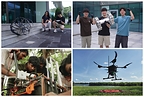
CNN first visits students at the Korea Advanced Institute of Science and Technology (KAIST), to meet a team of engineers developing origami-inspired lunar rover wheels. The intricate spiral wheels are made from thin metal strips, and are designed to change shape, absorb shock, and navigate rough terrain. PhD candidate Seong-binLee and his team have spent three years refining it, with the hope of it one day exploring lunar lava tubes and caves. Master’s student YiseubYun is working on integrating artificial intelligence and reinforcement learning to turn their design into an intelligent rover, as the team works towards South Korea’s planned lunar mission. In another aerospace project at KAIST, PhD candidate Sung-jin Lee is developing a satellite-mounted gripper designed to capture space debris, which the team says is due to be tested in space in 2027.

CNN then heads to Florida, where students from Embry-Riddle Aeronautical University are trying to tackle a vast environmental challenge at Lake Okeechobee, Florida’s largest lake. Warm water and nutrient-rich runoff contributes to toxic blue-green algae blooms that threaten people, wildlife and coastal economies. PhD student Kaylor Taylor and a collaborative team of engineers, drone pilots and environmental scientists are using drones fitted with specially designed devices to take air and water samples, as well as cameras to map algal blooms from the sky. Their system results in faster and richer data collection beyond traditional sampling, helping scientists understand how blooms develop, move, and predict what might happen next.

In Chennai, CNN visits Team Anveshak and ‘Jade’ at the Indian Institute of Technology Madras. Developed by project lead Soham Warde and a team of 60 students, ‘Jade’ is a Mars rover prototype developed to navigate rough terrains, drill for soil samples, and carry out tasks with a robotic arm. Beyond its capabilities, the USD$6000 rover reflects ‘jugaad’, an Indian concept that means to make ambitious things possible using what’s on hand. The team has won several competitions run by the Indian Space Research Organization, but the next stop is an international rover competition in Florida for a chance to demonstrate India’s homegrown approach on a global stage.

Finally, in Tech for Good’s ‘Where Are They Now?’ segment, CNN revisits Myoungseok Kim, originally spotlighted for his nanoscale DNA folding at Seoul National University in 2023. Now at the University of California Berkeley, his latest discovery in the DNA origami field may serve as biosensors for detecting diseases, including cancer.

Tech for Good trailers:https://bit.ly/4xY1hL7
Tech for Good images:https://bit.ly/4jtQBQD
Tech for Good microsite: https://cnn.it/3PB5DSq

Airtimes for 30-minute special:
Saturday, 10th October at 7:30pm HKT
Sunday, 11th October at 11:00am and 3:30pm HKT
Monday, 12th October at 5:30am HKT

-Ends-

View original content to download multimedia:https://www.prnewswire.com/apac/news-releases/cnns-tech-for-good-spotlights-the-next-generation-pushing-the-limits-of-exploration-302900675.html

SOURCE CNN International

Continue Reading

Technology

xFusion Joins the Linux Foundation to Support Open Source Innovation

Published

on

By

xFusion will contribute its infrastructure expertise to open source communities across the Linux Foundation    

PRAGUE, Oct. 7, 2026 /PRNewswire/ — Open Source Summit Europe — xFusion, a leading global provider of AI computing infrastructure, today announced that it has joined the Linux Foundation, the world’s leading organization for open source collaboration, as a Silver member. As part of its engagement, xFusion is also participating in the SODA Foundation, the Linux Foundation community focused on data and AI infrastructure. Through its membership, xFusion plans to engage with open source communities working across cloud and AI infrastructure and contribute technical expertise informed by its work in computing systems, infrastructure efficiency and operations.

As both an AI infrastructure provider and an active open source contributor, xFusion also plans to deepen its engagement with upstream open source communities supporting cloud and AI infrastructure. This work will inform the continued development and interoperability of FusionOS while creating opportunities for xFusion engineers to contribute to relevant community-led projects. As enterprises deploy increasingly heterogeneous AI environments — spanning multiple accelerators, foundation models, inference engines and software platforms — the industry is still developing common, open methodologies for measuring, managing and optimizing AI infrastructure. Through the Linux Foundation and its communities, xFusion will collaborate with technology companies, researchers and enterprise users worldwide to help develop open benchmarks, reference architectures and operational best practices for enterprise AI infrastructure.              

xFusion’s open source participation is anchored by the xFusion Singapore Open Lab, the company’s global open innovation hub. Located in Singapore, one of the world’s leading technology and business hubs connecting East and West, the Open Lab provides a neutral platform where AI hardware, foundation models, software platforms, researchers, enterprises and open source communities from different innovation ecosystems can collaborate, evaluate and benchmark technologies using open methodologies.    

 “AI infrastructure can only reach its full potential through open collaboration. The industry needs vendor-neutral methodologies to measure, manage and optimize increasingly diverse AI environments,” said Fan RuiQi, CTO & President of Central Research Department, xFusion. “Joining the Linux Foundation allows us to work with the global community to build those foundations — and through our Singapore Open Lab, to provide a neutral platform where innovations from across the world’s technology ecosystems advance together.”

“xFusion builds infrastructure that AI runs on, and it’s putting its benchmarking and observability work into open projects where others can build on it,” said Michael Dolan, SVP of Legal and Strategic Programs, Linux Foundation. “We welcome them to the Linux Foundation and building on prior collaborations like SODA Foundation.”

Building on its AI inference benchmarking research, xFusion is developing an open framework for AI Infrastructure Efficiency & Intelligence — bringing standardized observability, benchmarking, efficiency measurement and operational intelligence to heterogeneous AI environments. Aitra, an open reference platform incubating under the SODA Foundation, is among the first implementations of this vision.

Through its membership, xFusion intends to:

Contribute to Linux Foundation projects and working groups focused on AI infrastructure operations, observability and benchmarking, including within the SODA Foundation.Contribute technical expertise and code to relevant upstream projects.Engage the SODA Foundation community on open approaches to AI infrastructure efficiency and operations.Use the xFusion Singapore Open Lab to support collaborative research, testing and benchmarking.Advance open benchmarking methodologies for AI inference performance and infrastructure efficiency.Continue to develop Aitra as an open reference implementation under SODA Foundation governance.

About xFusion

XFUSION INTERNATIONAL PTE. LTD. (xFusion) is a leading global provider of computing infrastructure, smart energy solutions, and related services. Driven by the vision “Let Computing Serve You Better,” xFusion focuses on creating value for its customers and partners, accelerating digital transformation across a wide range of industries. Headquartered in Singapore, xFusion has a substantial global presence, including 8 research centers, 7 regional offices, and 6 Global Technical Assistance Centers (GTACs). xFusion’s commitment to providing innovative computing and energy solutions has enabled it to serve over 10,000 customers in more than 110 countries and regions, including the telecom, finance, internet, transportation, and energy sectors.

The xFusion Global Supply Center in Penang, Malaysia, is designed for an annual production capacity of 200,000 servers, encompassing xFusion’s complete product portfolio. The center’s streamlined logistics and delivery capabilities ensure timely and efficient service to customers worldwide. This strategic location allows xFusion to optimize its operations, guaranteeing the highest quality standards and efficient delivery of its products and services.

View original content to download multimedia:https://www.prnewswire.com/news-releases/xfusion-joins-the-linux-foundation-to-support-open-source-innovation-302899501.html

SOURCE xFusion

Continue Reading

Technology

Linux Foundation Releases OpenChain Automotive SBOM Framework 1.0 for Greater Reliability and Traceability in Automotive Software

Published

on

By

New open framework drives industry-wide alignment on SBOM practices in light of increasing regulatory and cybersecurity requirements within automotive ecosystem

PRAGUE, Oct. 7, 2026 /PRNewswire/ — Open Source Summit Europe – The Linux Foundation, the nonprofit organization enabling mass innovation through open source, today announced the release of the OpenChain Automotive Software Bill of Materials (SBOM) Framework 1.0, an open framework that defines a common approach for creating and sharing high-quality SBOMs tailored to the automotive industry.

“This framework enhances transparency and trust across the entire supply chain.”

As software becomes increasingly critical to modern vehicles, organizations are under growing pressure to improve visibility into software components and dependencies while meeting evolving regulatory and cybersecurity requirements. The OpenChain Automotive SBOM Framework provides a practical baseline that can be adopted and refined across the industry in order to meet these challenges facing the automotive industry.

Key elements of the framework include:

A defined structure for describing software components and dependencies in Automotive SBOMsGuidance on required and recommended data fields, including completeness and quality criteriaAlignment with existing SBOM standards such as SPDX (ISO/IEC 5962)Usage scenarios for suppliers and OEMs, including data exchange across the automotive supply chain

The framework provides guidance on how software component information should be described and exchanged using established formats, enabling suppliers and OEMs to produce SBOMs that meet shared expectations for completeness, consistency, and usability. It is designed to support practical use cases including software transparency, supply chain communication, and regulatory readiness.

“As software-defined vehicles grow in complexity, improving transparency and traceability across software components is becoming essential,” said Mary Meixia Wang, General Manager of the OpenChain Project. “This first release provides practical guidance and helps advance more consistent SBOM practices across the automotive ecosystem.”

The initiative began with early discussions between Keisuke Takase (Toyota), Ayumi Watanabe (Hitachi Solutions, Ltd.), and Masato Endo (Chair, OpenChain Automotive Working Group), reflecting a shared commitment to improving software transparency, traceability, and productivity in the automotive industry. It has since grown through collaboration with organizations, industry associations, and subject matter experts across the automotive and software ecosystems. Their input helped identify common challenges and shape a practical, broadly applicable framework grounded in real-world needs and emerging industry expectations.

The Automotive SBOM Project is part of the OpenChain Automotive Working Group and is designed to complement existing standards such as SPDX (ISO/IEC 5962). The framework does not replace these standards, but instead provides guidance on how they can be applied consistently within the automotive industry.

The project is open to participation from organizations and individuals worldwide and will continue to evolve based on industry feedback and adoption. To learn more about the OpenChain Project and visit the website or access the OpenChain Automotive SBOM Framework, here.

Supporting Quotes

“The release of the OpenChain Automotive SBOM Framework marks a significant milestone for the automotive industry. By establishing a common approach to creating and sharing high-quality, trustworthy SBOM data, this framework enhances transparency and trust across the entire supply chain. We believe its adoption will help improve supply chain reliability and contribute to greater engineering productivity and innovation across the automotive industry.”
– Jiro Watabe, Senior Vice President and Executive Officer, Hitachi Solutions, Ltd.

“As the scale and complexity of automotive software development continue to grow with the advancement of software-defined vehicles, sharing reliable SBOM information across the supply chain is becoming increasingly important. We expect the OpenChain Automotive SBOM Framework to enable the industry to openly share effective processes and best practices, helping create an environment where engineers can focus more of their time and expertise on delivering value to customers.”
– Hirofumi Inoue, President of Advanced R&D and Engineering Company, Toyota Motor Corporation

“Effective use of SBOMs is more than just generating or publishing them on-demand. Differing requirements and expectations between organizations and regulators open the door to SBOM quality issues – something that a shared framework and clear guidance on structures and data quality helps resolve at scale.”
– Tim Mackey, Head of Software Supply Chain Risk Strategy, Black Duck Software, Inc.

“The Automotive SBOM gives the industry a much-needed common format for improving software supply chain transparency. FossID is excited to support it by helping automotive teams generate, import, translate, and validate SBOMs according to the new standard. Reliably automating the process is one way we plan to help accelerate the use of the Automotive SBOM across manufacturers and their supplier ecosystems.”
– Stuart Dross, CEO, FossID

“As vehicle development becomes increasingly software-centric, including through the advancement of software-defined vehicles, visibility into software composition is becoming an important area of focus. Through its participation in this initiative toward SBOM standardization, Nissan will contribute to the development of a common foundation for the industry.”
– Sugimoto Kazma, General Manager, Software Platform and Architecture Engineering Department, Software Defined Vehicle Engineering Division, Nissan Motor Co., Ltd.

“Volvo Cars has embedded SBOM practices into its vehicle development processes through our ‘Continuous SBOM’ program launched last year. By promoting a common approach across the supply chain, we can improve transparency and collaboration for us all while helping drive the evolution of Automotive SBOMs from license compliance and cybersecurity artifacts to become a foundation for software trust, provenance, safety, lifecycle governance, and supply chain intelligence.”
– Carl-Eric Mols, Global Open Source Strategy Lead, Volvo Cars

About the OpenChain Project
The OpenChain Project, hosted by the Linux Foundation, focuses on building trust in the open source supply chain. It develops open standards for open source compliance and security, helping organizations manage software licensing and risk across global ecosystems.

About the Linux Foundation
The Linux Foundation is the world’s leading home for collaboration on open source software, hardware, standards, and data. Linux Foundation projects, including Linux, Kubernetes, Model Context Protocol (MCP), OpenChain, OpenSearch, OpenSSF, OpenStack, PyTorch, Ray, RISC-V, SPDX and Zephyr, provide the foundation for global infrastructure. The Linux Foundation is focused on leveraging best practices and addressing the needs of contributors, users, and solution providers to create sustainable models for open collaboration. For more information, please visit us at linuxfoundation.org.

The Linux Foundation has registered trademarks and uses trademarks. For a list of trademarks of The Linux Foundation, please see its trademark usage page: www.linuxfoundation.org/trademark-usage. Linux is a registered trademark of Linus Torvalds.

Media Contact
The Linux Foundation
pr@linuxfoundation.org

View original content to download multimedia:https://www.prnewswire.com/news-releases/linux-foundation-releases-openchain-automotive-sbom-framework-1-0-for-greater-reliability-and-traceability-in-automotive-software-302890035.html

SOURCE The Linux Foundation

Continue Reading

Technology

Linux Foundation Europe Report Finds Digital Sovereignty Drives European Tech Strategy, but Governance and AI Strain Present Major Hurdles

Published

on

By

European organizations report strong returns from open source as AI adoption, regulation and technology sovereignty reshape software strategy

PRAGUE, Oct. 7, 2026 /PRNewswire/ — Open Source Summit Europe – The Linux Foundation, the non-profit organisation enabling mass innovation through open source, today released the 2026 State of Open Source in Europe report in collaboration with LF Europe, LF Research and NeoNephos. The fifth annual report revealed that digital sovereignty is now firmly embedded in European technology strategy. Ninety-four percent of organizations say digital sovereignty is important, including 61% that consider it very important, while organizations with advanced open source governance report an average return of more than 4x their investment, compared with 3.6x among organizations without formal governance.

Europe has clearly heard the message on digital sovereignty. The next step is participation.

The findings point to a critical next step: European organizations seeking greater control over their technology supply chains must move beyond simply consuming open source software and participate in the openly governed ecosystems that develop and sustain it. European developers account for nearly 40% of contributions to foundational infrastructure projects including Kubernetes and OpenStack. At the same time, 94% of organizations are using or piloting generative AI coding tools, 48% maintain private forks of open source projects and 63% have increased investment in open source dependency management in response to regulatory pressure. 

“Europe has clearly heard the message on digital sovereignty. The next step is participation,” said Thierry Carrez, general manager, Linux Foundation Europe. “Open source gives organizations a way to reduce dependence on any single vendor or country, but consuming open source alone doesn’t give you effective control over the technology. By contributing upstream and participating in open governance, European organizations can achieve greater autonomy, efficiently leveraging the global open source technology commons.”

Additional findings from the 2026 report include:

Governance remains uneven: 31% of European organizations still lack a formal open source governance framework, highlighting a gap between widespread adoption and strategic management of open source.AI is increasing the value of open source: 76% say generative AI coding tools increase the value they receive from open source, while 48% have increased their open source usage as a result.Private forks carry significant maintenance costs: Organizations maintaining private forks spend an average of 311 hours per release cycle patching 9.5 forks, while 28% cannot track those costs at all.Open source strengthens technical talent: 76% say open source involvement improves engineering skills and 53% say it supports recruitment and retention.

“Five years of research confirms how critical open source is to Europe’s tech landscape,” said Hilary Carter, senior vice president of research, Linux Foundation. “With the 2026 Tech Sovereignty Package expected to spur €2 billion in digital infrastructure investment, realizing that value requires more than adopting software – it demands strong governance and active community contribution.”

The full 2026 State of Open Source in Europe report is now available. To learn more about membership to the Linux Foundation Europe, visit https://linuxfoundation.eu/en/join. For information about how to contribute to open source projects, review the Linux Foundation Open Source Guide book.

About the Linux Foundation

The Linux Foundation is the world’s leading home for collaboration on open source software, hardware, standards, and data. Linux Foundation projects, including Linux, Kubernetes, Model Context Protocol (MCP), OpenChain, OpenSearch, OpenSSF, OpenStack, PyTorch, Ray, RISC-V, SPDX and Zephyr, provide the foundation for global infrastructure. The Linux Foundation is focused on leveraging best practices and addressing the needs of contributors, users, and solution providers to create sustainable models for open collaboration. For more information, please visit us at linuxfoundation.org.

The Linux Foundation has registered trademarks and uses trademarks. For a list of trademarks of the Linux Foundation, please see its trademark usage page: www.linuxfoundation.org/trademark-usage. Linux is a registered trademark of Linus Torvalds.

Media Contact

The Linux Foundation
pr@linuxfoundation.org 

View original content to download multimedia:https://www.prnewswire.com/news-releases/linux-foundation-europe-report-finds-digital-sovereignty-drives-european-tech-strategy-but-governance-and-ai-strain-present-major-hurdles-302900590.html

SOURCE The Linux Foundation

Continue Reading

Trending