Connect with us

Technology

Copenhagen Infrastructure Partners invests in Via Verde, Italian biomethane platform

Published

on

The investment in the Via Verde platform marks Copenhagen Infrastructure Partners’ (CIP) entry into the Italian biomethane market, with a development pipeline of 20 biomethane projects.

COPENHAGEN, Denmark, Oct. 7, 2026 /PRNewswire/ — Copenhagen Infrastructure Partners (CIP), through its Advanced Bioenergy Fund II (ABF II), has reached final investment decision (FID) on Via Verde, an Italian biomethane platform. ABF II invests primarily in the development, construction, and operation of biogas plants across Europe, converting agricultural waste and other sustainable feedstock into biomethane.

Via Verde represents ABF II’s first investment and marks CIP’s entry into the Italian biomethane market. The investment will create local jobs and supply domestically produced biomethane, which will replace imported fossil gas, supporting both Italy’s energy independence and decarbonisation efforts.

Via Verde comprises a development pipeline of 20 projects strategically located across multiple regions of Italy, including Lombardy, Abruzzo, and Campania. Each plant is expected to process approximately 60,000 to 100,000 tonnes of agricultural waste annually.

Once the 20 projects are fully operational, the Via Verde platform will deliver approximately 1 TWh of biomethane annually, equivalent to the annual gas consumption of around 60,000 Italian households.

Andreas F. Brandt, Partner at CIP, says of the new investment: “Via Verde marks our entry into one of Europe’s most attractive biomethane markets, giving us a strong foothold as Italy scales towards its 2030 biomethane targets. CIP will leverage its advanced bioenergy expertise to support Via Verde’s experienced local team and substantial project pipeline, laying a strong foundation for long-term growth. We believe biomethane will play a key role in strengthening Italy’s energy independence and supporting its transition to a lower-carbon energy system.”

Supported by favourable market fundamentals and policy support mechanisms, Via Verde is expected to establish an early at-scale position in the Italian biomethane market and support the expansion of domestic renewable gas production.

Notes to Editors

Media Contact
E-mail: media@cip.com / M: +45 2844 7756

About Advanced Bioenergy Fund II

Copenhagen Infrastructure Advanced Bioenergy Fund II (CI ABF II) started fundraising in summer 2025. The fund leverages the seed portfolio and the in-house capabilities that CIP has built over the past four years for CI ABF I, providing a financially attractive product to our investors, both in terms of returns and diversified risks.

About Copenhagen Infrastructure Partners

Founded in 2012, Copenhagen Infrastructure Partners P/S (CIP) is a global fund manager and leading investor in energy infrastructure.

Through its funds, CIP invests in power generation (solar and wind), energy storage, transmission and distribution, advanced bioenergy, low-carbon fuels and carbon capture.

With 15 funds currently under management, CIP is trusted by over 200 of the world’s largest and most sophisticated institutions. CIP has projects in more than 30 countries, with presence on the ground through a network of more than 2,300 professionals.

For more information, visit www.cip.com.

Legal disclaimer

This release does not constitute an offer to sell or the solicitation of an offer to purchase any security. Any investment involves substantial risks including complete loss of capital. There can be no assurance that CIP will be able to implement the strategy described herein or, if implemented, that it will lead to successful results. Similarly, there can be no assurance that CIP will be able to maintain the advantages discussed herein over time or outperform third parties or the financial markets generally.

Certain information contained herein constitutes “forward-looking statements,” which can be identified by the use of terms such as “may,” “will,” “expects,” “intends,” “plans,” “believes,” “estimates” or comparable terminology.

Forward-looking statements are subject to a number of known and unknown risks and uncertainties, including, without limitation, changes in economic conditions, political changes, legal and regulatory requirements, interest rate fluctuations, as well as changes in markets, prospects and competition. There can be no assurance that historical trends will continue. Some of the views expressed herein are the opinions of CIP and should not be construed as absolute statements and are subject to change without notice.

This information was brought to you by Cision http://news.cision.com.

https://news.cision.com/copenhagen-infrastructure-partners-p-s/r/copenhagen-infrastructure-partners-invests-in-via-verde–italian-biomethane-platform,c4405433


View original content:https://www.prnewswire.com/news-releases/copenhagen-infrastructure-partners-invests-in-via-verde-italian-biomethane-platform-302900747.html

SOURCE Copenhagen Infrastructure Partners P/S

Continue Reading

Technology

Universiti Teknologi Malaysia and UNESCO-ICHEI Partner on Responsible AI for Southeast Asian Universities

Published

on

By

KUALA LUMPUR, Malaysia, Nov. 29, 2026 /PRNewswire/ — Universities across Southeast Asia are joining forces to shape how artificial intelligence (AI) is used in higher education. Universiti Teknologi Malaysia (UTM), one of the founding members of a new regional task force, is partnering with the International Centre for Higher Education Innovation under the auspices of UNESCO (UNESCO-ICHEI) on AI governance, teaching innovation and joint research.

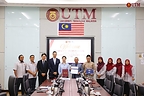
The partnership follows a visit by UNESCO-ICHEI’s leadership to UTM’s Kuala Lumpur campus on 27 November 2026. During the visit, UTM and UNESCO-ICHEI signed a Letter of Intent (LoI) setting out the areas of collaboration.

“Southeast Asia’s universities are adopting AI at very different speeds, and no single institution can work out the rules alone. This task force gives the region a way to share what works and to make sure AI in higher education is responsible and inclusive,” said Dato’ Professor Ts. Dr. Mohd Shafry Mohd Rahim, Vice-Chancellor of UTM.

The task force belongs to the International Institute of Online Education (IIOE) Southeast Asia Regional Centre, set up by the Southeast Asian Ministers of Education Organization (SEAMEO) Secretariat and UNESCO-ICHEI and hosted by the SEAMEO Secretariat. It brings universities together to shape how the region uses AI and digital tools in teaching, learning and management.

Interest was strong: the competitive selection drew 78 universities from ten Southeast Asian countries. UTM’s appointment as a Founding University Member was announced on 5 October 2026, endorsed by Malaysia’s Ministry of Education, and runs for an initial two years.

As a next step, UTM and UNESCO-ICHEI will develop joint collaboration and future actions on AI and digital transformation in higher education.

“The response from universities across Southeast Asia shows a clear commitment to working together on AI. UTM brings strong expertise in AI and digital learning, and we look forward to working with UTM and other task force members to support higher education transformation across the region,” said Ms. Bi Xiaohan, Deputy Director of UNESCO-ICHEI.

The task force is already active. Its first programme, the Korea–Southeast Asia University Leadership and Student Transformation Programme and the 4th Gumi Education Forum, brought university leaders and students to Gumi, Republic of Korea, from 4 to 13 November 2026. UTM was represented by Associate Professor Dr. Noorminshah A.Iahad, Head of Learning Innovation Division, Center for Advancement of Digital and Flexible Learning (CDex) and undergraduate student Tey Xin Yi, Bachelor of Computer Science (Bioinformatics) from the Faculty of Computing.

The partnership covers three areas: AI in university operations, and responsible AI governance, staff training, teaching innovation and flexible study pathways, and joint research, knowledge sharing and regional partnerships.

The collaboration supports the UN Sustainable Development Goals on Quality Education (SDG 4) and Partnerships for the Goals (SDG 17).

The UNESCO-ICHEI delegation was led by Ms. Bi Xiaohan, Deputy Director. She was joined by Mr. Sit Fung, Assistant Director and Chief of the Global Partnership and Programme Office, and Mr. Zhang Boyi, Programme Officer.

They were received by Vice-Chancellor Dato’ Professor Ts. Dr. Mohd Shafry Mohd Rahim, Deputy Vice-Chancellor (Research and Innovation) Professor Ts. Dr. Ali Selamat, Head of Campus Professor Dr. Fauziah binti Sh. Ahmad, and Professor Ts. Dr. Mohd Naz’ri Mahrin, Dean of the Faculty of Artificial Intelligence.

About Universiti Teknologi Malaysia (UTM)

Universiti Teknologi Malaysia (UTM) is a premier public research university specialising in engineering, science and technology, ranked 25th in the QS World University Rankings: Asia 2027. Tracing its roots to a technical school founded in Kuala Lumpur in 1904, UTM has campuses in Johor Bahru, Kuala Lumpur and Pagoh. With recognised strengths in sustainability and artificial intelligence, UTM works alongside industry, government and international partners to develop talent and research, innovating sustainable solutions to global challenges.

View original content to download multimedia:https://www.prnewswire.com/apac/news-releases/universiti-teknologi-malaysia-and-unesco-ichei-partner-on-responsible-ai-for-southeast-asian-universities-302952029.html

SOURCE Universiti Teknologi Malaysia

Continue Reading

Technology

Refocusing a Community Moving Toward Reproducible Research

Published

on

By

Follow #MRITogether’s Hackathon November 30th to December 4th 2026

BOULDER, Colo., Nov. 28, 2026 /PRNewswire/ — MRI Together, a global community advancing open-source solutions to MRI, announces a new hackathon format for 2026 – from November 30th to December 4th, 2026.  This year, the consortia are bringing the community together around a shared practical challenge: building a fully open-source, end-to-end MRI pipeline for prenatal imaging—from sequence programming to image analysis.  With organizers from 5 continents, this global effort provides the community with a unique opportunity to collaborate across disciplines and time zones. Whether you are an MR physicist, software developer, clinician, or student, together we will tackle current challenges of prenatal MR imaging and demonstrate how open science can accelerate reproducible research.

Each day of the hackathon focuses on one stage of the pipeline and pairs short expert talks with a hands-on session. Live sessions will be streamed at youtube.com/@mritogether. Please visit the MRITogether website and follow the ESMRMB social media on LinkedIn to stay tuned.

Full Program can be found here. News from the Hackathon and results can be found here. To join the MRI Together Community and participate in future events, email us at mritogether@esmrmb.org

About MRITogether: We are a team of MRI scientists from different corners of the MRI world with a passion for open, reproducible and inclusive science. With support and endorsement from ESMRMB this global workshop aims to bring MRI enthusiasts together. Whether you’re a MR scientist, scientific software developer, medical doctor, researcher in basic science, or data scientist, there’s something for you here. If you are passionate about Open Science, join us!

About CaliberMRI: CaliberMRI is on a mission to improve the standard of care through advancing quantitative MRI (qMRI), data quality, and standardization. CaliberMRI produces integrated hardware/software phantom platforms to ensure quantitative MRI measurements are accurate, repeatable and reproducible. CaliberMRI’s products, developed in collaboration with NIST, RSNA, and ISMRM, are cited in more than 300 papers and abstracts. Based in Boulder, Colorado, the company works with researchers, hospitals, and clinicians around the world. For more information, visit https://qmri.com and follow us on LinkedIn.

Contact:
Callie Weiant, President
sales@qmri.com

View original content to download multimedia:https://www.prnewswire.com/news-releases/refocusing-a-community-moving-toward-reproducible-research-302952036.html

SOURCE CaliberMRI, Inc.

Continue Reading

Technology

Beyond the Market Volatility: Why Longbridge Group CEO and Co-Founder Nowa Zhu Believes the Next Wave of AI Demand Is So Difficult to Predict

Published

on

By

HONG KONG and SINGAPORE, Nov. 28, 2026 /PRNewswire/ — Nowa Zhu, Group CEO and Co-Founder of Longbridge, Nowa Zhu, shares his perspective on a turbulent week for AI-related stocks, and why the biggest uncertainty surrounding artificial intelligence may not be its current valuations, but how quickly and widely the next wave of AI adoption will unfold.

What a week it has been for global financial markets.

After a turbulent period that saw AI-related stocks suffer sharp declines, Wall Street ended the Thanksgiving-shortened trading week on a surprisingly strong note. The Nasdaq Composite gained approximately 6.7% over the week, as investors navigated dramatic swings in some of the world’s most closely watched technology companies.

The week began with a remarkable rebound in Nvidia following the return of co-founder Jensen Huang as chief executive. But the optimism was soon tested by renewed concerns over AI valuations, the sustainability of infrastructure spending, stronger-than-expected inflation data and the prospect of fresh US tariffs. Anthropic, the company behind the Claude AI models, also experienced considerable volatility following its highly anticipated IPO, before recovering above its initial offering price during Friday’s shortened trading session.

The contrasting market movements illustrate how quickly investor sentiment can shift. Within days, the narrative surrounding AI swung between fears of a bubble, renewed confidence in the sector’s potential and concerns about whether future commercial returns can justify today’s valuations.

Yet beyond these sharp market movements lies a more fundamental question: How can markets accurately value a technology whose capabilities are advancing at extraordinary speed, but whose future demand, adoption and commercial potential remain so difficult to predict?

Beyond macroeconomic and geopolitical factors, I believe this uncertainty is at the heart of the market’s differing views on AI. And to understand why, we must first recognise something fundamental about the technology itself: AI progress is neither slow nor necessarily linear.

AI is advancing faster than expectations can keep up

Consider how dramatically the conversation around artificial intelligence has changed in just a few years.

Not long ago, public attention centred largely on generative AI’s ability to produce text, images and answers to questions. Today, AI-powered coding assistants are reshaping software development, while AI agents capable of performing multi-step tasks have become a major focus of the technology industry.

The concept of an AI agent was once unfamiliar to most people outside specialist technology circles. Today, agentic AI is increasingly prominent in discussions about how businesses might automate workflows, conduct research and interact with software.

This evolution illustrates something fundamental: AI development does not necessarily follow a smooth, linear trajectory.

Instead, progress can occur in waves of rapid breakthroughs, followed by periods of consolidation as businesses experiment, infrastructure catches up and practical applications mature. Another technological advance may then unlock an entirely new wave of capabilities and demand.

What appears to be a plateau may simply be a period between major leaps, although the timing and magnitude of future advances remain uncertain. This makes AI difficult to assess using conventional assumptions about predictable, steady growth.

Where will the next wave of AI demand emerge?

Software development and general-purpose AI agents offer increasingly visible examples of AI’s practical applications. But beyond these areas, the next major wave of demand remains difficult to predict.

Will it emerge from healthcare, scientific research, manufacturing, financial services or education? Could entirely new applications develop that we have yet to imagine?

Identifying potential industries is only part of the challenge. Equally important is understanding the speed and depth of adoption. How quickly will businesses integrate AI into everyday operations? How extensively will it become embedded in consumer products and services? And when will experimentation translate into widespread commercial deployment?

AI coding tools, for example, have evolved from experimental applications into increasingly capable assistants used in software development. Similar advances elsewhere could create new sources of demand, but their commercial viability, adoption timelines and eventual scale remain uncertain.

The challenge is not simply understanding what AI can do today, but anticipating what it may become capable of tomorrow, and how quickly those capabilities could translate into real economic demand.

Why AI’s non-linear growth complicates valuations

This uncertainty extends across the entire AI value chain.

Demand for AI applications influences spending on models and computing services, which in turn affects cloud infrastructure, data centres, semiconductors and energy requirements.

Companies such as Nvidia, Anthropic, CoreWeave and Oracle occupy different positions within this ecosystem. Their business models differ, but their prospects are influenced, to varying degrees, by expectations surrounding AI adoption.

These relationships, however, are neither immediate nor necessarily proportional. A technological breakthrough may stimulate experimentation without generating substantial near-term revenue. Conversely, an application that achieves widespread adoption could eventually create additional demand across multiple layers of the AI supply chain.

There is also uncertainty about where economic value will ultimately be captured. Greater AI adoption does not guarantee that every company supporting the technology will benefit equally.

This helps explain why AI-related valuations can be particularly sensitive to changing expectations. Investors are attempting to assess not only future earnings, but also the scale, timing and distribution of demand that has yet to fully materialise.

Markets are not simply debating whether AI has a future. They are debating how large that future could become, how quickly it might arrive and how much of its potential is already reflected in today’s prices.

The AI paradox: Using AI to understand an uncertain future

There is an interesting paradox in this debate. Even as investors struggle to quantify AI’s long-term economic potential, the technology itself is becoming increasingly capable of helping people research and understand complex financial markets.

Understanding AI’s development requires examining interconnected factors, including technological breakthroughs, enterprise adoption, infrastructure spending, financial performance and macroeconomic conditions.

Traditionally, investigating these relationships involves navigating financial statements, market data, company announcements and research reports across multiple platforms. While information is increasingly accessible, connecting these developments and understanding their implications remains challenging.

This is where AI-native financial technology can make a meaningful difference.

At Longbridge Group, this philosophy underpins our development of Longbridge AI and our vision of an AI-native, agentic brokerage. Rather than treating AI as an additional feature, we are embedding it into our technology infrastructure to make financial information and market research more accessible through natural-language interactions.

With Longbridge AI’s Scheduled Tasks, users can establish recurring research and information-monitoring workflows, helping them follow market developments over time rather than relying solely on isolated snapshots.

Our approach extends beyond AI-powered research. We introduced Singapore’s first broker-integrated Dividend Hub, bringing historical dividend tracking, projected income, payout schedules and income goal monitoring into a dedicated experience. Although separate from Longbridge AI, it reflects the same philosophy of making complex financial information easier to navigate and understand.

These capabilities serve different purposes but share a common objective: making sophisticated financial information more accessible while keeping investors firmly in control of their decisions.

Understanding uncertainty, not predicting the future

Better intelligence, however, does not mean greater certainty.

AI can process vast amounts of information, identify patterns and explain complex relationships, but it cannot reliably predict market movements, determine when the next technological breakthrough will occur or identify which industries will experience the strongest adoption. Its outputs can also be incomplete or inaccurate, making human judgement essential.

The recent volatility surrounding Nvidia, Anthropic and the broader AI sector illustrates how quickly expectations can change, even as technological development follows its own trajectory.

The next transformative application may emerge sooner than expected or take far longer to achieve widespread adoption. Periods of rapid innovation may be followed by consolidation before another breakthrough changes the industry’s direction.

For investors, the challenge is not simply predicting the next breakthrough, but understanding how emerging capabilities, changing demand and commercial realities interact.

The real promise of AI in investing is not that it will predict the future. It is that it can help more people make sense of an increasingly complex present.

In an industry where the next wave of transformation remains difficult to anticipate, the ability to continuously question, investigate and understand change may become increasingly valuable.

Disclaimer: The views expressed are those of the author and are intended for general informational and educational purposes only. This article does not constitute financial or investment advice, a personal recommendation, or an offer or solicitation to buy, sell or hold any securities or financial products. Investing involves risks, including the possible loss of capital. AI-generated information may contain inaccuracies or omissions and should be independently verified.

Dividend Hub first-mover claim: Based on Longbridge’s review of 20 in-scope MAS-licensed retail-facing brokerages, using hands-on app testing and official sources as of 25 September 2026. The claim refers to a native, centralised in-app feature combining historical dividend tracking, forward income projections and income goal-setting with progress tracking.

View original content to download multimedia:https://www.prnewswire.com/apac/news-releases/beyond-the-market-volatility-why-longbridge-group-ceo-and-co-founder-nowa-zhu-believes-the-next-wave-of-ai-demand-is-so-difficult-to-predict-302952030.html

SOURCE Longbridge Group

Continue Reading

Trending