Connect with us

Technology

Data Center Accelerator Market to Reach USD 605.42 Billion by 2035 as Rack-Scale AI Systems and Inference Demand Accelerate Deployment – DC Market Insights

Published

on

Global market grows at 13.56% CAGR; rack-scale systems are projected to capture 61.8% of value by 2035 as hyperscaler and neocloud investment expands

PUNE, India, Oct. 9, 2026 /PRNewswire/ — The “Data Center Accelerator Market – Growth, Share, Opportunities & Competitive Analysis, 2026-2035” report has been added to the DC Market Insights offering. The global Data Center Accelerator Market reached USD 169.77 billion in 2025 and is projected to reach USD 605.42 billion by 2035, registering a CAGR of 13.56%. The market is shifting from add-in accelerator cards toward tightly integrated rack-scale systems, while inference workloads and custom AI ASICs expand the supplier opportunity beyond training-focused GPUs.

Key Takeaways

Operator capital expenditure approaching USD 750 billion is supporting an unprecedented build cycle for AI compute and accelerator-rich infrastructure.Rack-scale systems are projected to reach 61.8% of accelerator market value by 2035 as buyers purchase integrated compute, networking and cooling platforms.North America held 59.4% of the market in 2025, reflecting the concentration of hyperscalers, AI labs, neoclouds and leading accelerator suppliers.Inference accelerators are broadening competition because throughput, power efficiency and total cost per token create room for custom ASICs and specialized architectures.Export controls and geopolitical restrictions remain a material constraint for suppliers, affecting product mix and addressable demand in selected markets.

Scope & Segmentation – Data Center Accelerator Market

The report covers GPUs, custom AI ASICs, FPGAs and other accelerators deployed for AI training, AI inference, HPC, scientific computing, data analytics and video workloads. It also analyzes rack-scale systems, multi-accelerator baseboards and PCIe cards, HBM-based and non-HBM architectures and major end-user groups.

Get Free Sample Report – https://www.dcmarketinsights.com/report/data-center-accelerator-market

“Accelerator demand is moving up the system stack. Buyers are no longer evaluating a chip in isolation; they are evaluating a rack, a network fabric, memory capacity and cooling as one performance envelope. That shift favors suppliers that can deliver integrated platforms, but inference also creates space for lower-cost custom architectures where economics matter more than absolute training performance.”

– Amit Jain, Senior Consultant, ICT & Emerging Technologies, DC Market Insights, report author

Why This Report Matters

Accelerators are the largest value driver behind today’s AI data center buildout. Their economics affect server design, network topology, liquid cooling, power density and the pace of campus construction. The report helps buyers and suppliers evaluate how accelerator type, form factor and workload mix change the total market opportunity.

Market Overview

DC Market Insights estimates the market increased from USD 9.61 billion in 2020 to USD 169.77 billion in 2025. Growth was driven by rapid scaling of hyperscale AI clusters and the transition from experimental deployments to production training and inference. The forecast assumes strong unit expansion but progressively slower average selling price growth as custom ASICs and more efficient inference architectures gain share.

Market Insights

Three forces define the next phase: rack-scale integration, supplier diversification and inference economics. Rack-scale platforms concentrate more value in integrated systems, while custom accelerators from cloud providers shift share away from a purely merchant model. At the same time, sovereign AI programs and neocloud providers are creating new channels for accelerator demand outside traditional hyperscalers.

Key Attributes

Attribute

Details

Historical Market Size (2020)

USD 9.61 billion

Market Size (2025)

USD 169.77 billion

Forecast Market Size (2035)

USD 605.42 billion

CAGR (2025-2035)

13.56 %

Leading Region / District

North America – 59.4%

Base Year

2025

Forecast Period

2026-2035

Report Author

Amit Jain, Senior Consultant, ICT & Emerging Technologies

Report Updated

Oct. 7, 2026

Segmentation

Accelerator Type: GPUs; Custom AI ASICs; FPGAs; Other Accelerators.

Workload: AI Training; AI Inference; HPC and Scientific Computing; Data Analytics; Video and Other.

Form Factor: Rack-Scale Systems; Multi-Accelerator Baseboards; PCIe Cards.

Memory: HBM-Based; Non-HBM.

End User: Hyperscale Cloud Providers; GPU Cloud and Neocloud Providers; Enterprises; Government, Sovereign AI and Research.

Regional Analysis

North America led the market in 2025 with 59.4% share. The full regional distribution was North America 59.4%; Asia Pacific 24.6%; Europe 9.2%; Middle East and Africa 4.9%; Latin America 1.9%. The regional outlook reflects differences in hyperscale investment, AI adoption, power availability, semiconductor or equipment ecosystems and local data center construction pipelines.

Competitive Landscape

NVIDIA remains the reference platform for large-scale AI training, while AMD is expanding through multiyear deployment agreements and hyperscalers continue to scale custom accelerators. Broadcom, Marvell and specialist suppliers are positioned around custom silicon and connectivity. The competitive field is therefore widening even as leading platforms retain strong ecosystem advantages.

Companies profiled: NVIDIA, AMD, Broadcom, Google (TPU), Amazon Web Services (Trainium), Microsoft (Maia), Intel, Marvell Technology, Huawei (Ascend), Qualcomm, Groq, Cerebras Systems, Cambricon Technologies and Alchip Technologies.

Recent Developments

NVIDIA and OpenAI signed a letter of intent to deploy at least 10 GW of NVIDIA systems, with NVIDIA indicating potential investment of up to USD 100 billion as capacity is deployed.AMD and OpenAI announced a multiyear agreement covering 6 GW of AMD GPUs, starting with 1 GW of Instinct MI450 capacity in the second half of 2026.OpenAI and Broadcom agreed to deploy 10 GW of OpenAI-designed custom accelerators through 2029.Anthropic agreed to expand its use of Google Cloud TPUs to as many as one million chips, representing well over a gigawatt of capacity.

Full report: https://www.dcmarketinsights.com/report/data-center-accelerator-market

Recently Published and Related Reports

AI Chip MarketData Center Chip MarketData Center Server MarketAI Infrastructure MarketAI Data Center Market

DC Market Insights Data & Tools

Explore DC Market Insights proprietary data tools for data center locations, operators, transactions, power and policy developments and PUE benchmarking:

Data Center MapData Center OperatorsDeal TrackerPower & Policy TrackerPUE Calculator

About Us

DC Market Insights, headquartered at 128 City Road, London, EC1V 2NX, United Kingdom, is a dedicated research and consulting firm that empowers data center leaders with actionable intelligence. We combine rigorous market research, advanced analytics and practical advisory support to help organizations make confident decisions in an increasingly complex digital infrastructure landscape. Our goal is to transform data into clarity, giving clients the ability to act decisively on strategy, investment and execution.

Contact Us

Tower C-1105, S 25, Akash Tower,

Vishal Nagar, Pimple Nilakh, Haveli,

Pune – 411027, India

Email: sales@dcmarketinsights.com

UK Phone: +44 7453 598 606

US Phone: +1 628 262 7656

Website: www.dcmarketinsights.com

View original content to download multimedia:https://www.prnewswire.co.uk/news-releases/data-center-accelerator-market-to-reach-usd-605-42-billion-by-2035-as-rack-scale-ai-systems-and-inference-demand-accelerate-deployment—dc-market-insights-302903727.html

Continue Reading

Technology

HeyGen Launches HeyGen Voice, Debuting at #1 on Artificial Analysis’ Leaderboard

Published

on

By

HeyGen Supports High-Quality, Identity-Secure Video Content Creation for Creators and Businesses at Scale

HeyGen Voice Delivers Authentic, Natural Output That Sounds Like the User’s Real Voice

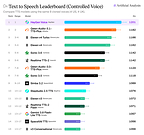
LOS ANGELES, Oct. 9, 2026 /PRNewswire/ — HeyGen, the world’s leading personal avatar company, today launched HeyGen Voice, its new in-house voice model. HeyGen Voice debuts at #1 on Artificial Analysis’ Leaderboard, earning the top ranking as the world’s best model in independent evaluations of AI voice models, and marking a major milestone for HeyGen’stechnology.

The launch expands HeyGen’s work to make high-quality video creation available to people and businesses that increasingly rely on content creation for their digital presence. A recent HeyGen survey of more than 1,000 small business owners in its global user base found that 71.6% had recorded a video for their business and ultimately decided not to post it. HeyGen Voice helps alleviate issues of production quality or having a lack of confidence in front of the camera.

Many AI voice models lack components like emphasis, emotion, and timing, that make a voice identifiable and compelling, and listeners lose interest right away. HeyGen Voice is built for authentic performance, keeping the tone, pacing and expression of a person’s voice so that every line comes across the way they would actually deliver it.

“Voice is one of the most powerful and personal ways we communicate, and quality makes all the difference,” said Rong Yan, CTO of HeyGen. “We built HeyGen Voice to deliver the best possible AI voice that technology can deliver; one that always sounds like you at your best. Debuting at #1 on Artificial Analysis is independent proof that you don’t have to trade authenticity for quality.”

HeyGen Voice product highlights include:

#1 Ranked Voice Model: Top ranking on Artificial Analysis’ Leaderboard in independent evaluations of AI voice models.Authentic Delivery: Delivers natural emphasis, emotion, character and pacing, so users sound like themselves and not a synthetic copy.One End-to-End Stack: HeyGen’s Avatar V is the core model, and voice is a new format inside the same stack. Identity and voice come from one place rather than a patchwork of vendors.Free Access: HeyGen Voice is available free within the HeyGen platform and API.HeyGen Professional Voice Clone: A $99/month add-on for users who want the closest representation of their own voice. It is trained, with explicit consent, on 30 minutes to three hours of the owner’s speech.

A key component of HeyGen’s success is their ability to create products that are true to each user’s identity. As AI makes it easier to create realistic representations of people, HeyGen has made consent and control central to how its technology is built. HeyGen requires the voice owner’s explicit consent, with safeguards built into its avatar products that help ensure users remain in control of how their voice and likeness are represented.

Today’s announcement follows the recent launch of HeyGen Video and continued expansion of the company’s tools for creators and businesses. HeyGen also recently earned a Committed Badge from EcoVadis, reflecting the company’s performance across environment, labor and human rights, ethics and sustainable procurement as it continues to grow its enterprise business.

Founded in 2020, HeyGen now reaches over 40 million users across 196 countries, with more than 118 million videos created and adoption across 85% of the Fortune 100. The company recently surpassed $200 million in ARR, doubling revenue in eight months.

HeyGen Voice will continue to roll out additional capabilities and updates taking into account feedback from users, as the model continues to evolve.

ABOUT HEYGEN

HeyGen is the world’s leading AI avatar company. HeyGen creates Personal Avatars — AI-powered digital versions of people that look, move, and sound like them. Featured in Fast Company’s Most Innovative Companies of 2026, rated #1 most realistic on G2 and powered by its proprietary Avatar V model, HeyGen is used by over 40 million people and 85% of the Fortune 100 to create clear, confident videos without filming every one—so they can be their best self, every time.

View original content to download multimedia:https://www.prnewswire.com/news-releases/heygen-launches-heygen-voice-debuting-at-1-on-artificial-analysis-leaderboard-302903718.html

SOURCE HeyGen

Continue Reading

Technology

Siteimprove Named a Leader in the 2026 Gartner® Magic Quadrant™ for Digital Accessibility

Published

on

By

Recognized for Completeness of Vision and Ability to Execute

COPENHAGEN, Denmark, Oct. 9, 2026 /PRNewswire/ — We are excited to share that Siteimprove has been recognized as a Leader in the 2026 Gartner Magic Quadrant for Digital Accessibility.

“We’re proud to be named a Leader in the 2026 Gartner® Magic Quadrant™ for Digital Accessibility. We built Siteimprove.ai for the way digital teams compete today: one agentic content intelligence platform unifying accessibility, analytics, SEO/AEO, and content strategy, extended into Claude, VS Code, Lovable, and Figma,” said Nayaki Nayyar, CEO of Siteimprove.

Get your complimentary copy of the report here.

Gartner delivers actionable, objective insight to executives and their teams. Its expert guidance and tools enable faster, smarter decisions and stronger performance on an organization’s mission-critical priorities.

The Gartner Magic Quadrant evaluates vendors based on their Ability to Execute and Completeness of Vision. We are honored to be included among the recognized vendors in this important report. Learn more about the Magic Quadrant.

Report citation
Gartner, Magic Quadrant for Digital Accessibility, Brent Stewart, Nabeeha Ahmed, Paige Kirk, Sarah Baumunk, 6 October 2026

Disclaimer
Gartner does not endorse any vendor, product or service depicted in its research publications, and does not advise technology users to select only those vendors with the highest ratings or other designation. Gartner research publications consist of the opinions of Gartner’s research organization and should not be construed as statements of fact. Gartner disclaims all warranties, expressed or implied, with respect to this research, including any warranties of merchantability or fitness for a particular purpose. GARTNER is a registered trademark and service mark of Gartner, Inc. and/or its affiliates in the U.S. and internationally. MAGIC QUADRANT is a registered trademark of Gartner, Inc. and/or its affiliates and is used herein with permission. All rights reserved.

Media Contact:
Emily Degnan
edegnan@thebranded.agency

View original content to download multimedia:https://www.prnewswire.com/news-releases/siteimprove-named-a-leader-in-the-2026-gartner-magic-quadrant-for-digital-accessibility-302903758.html

SOURCE Siteimprove

Continue Reading

Technology

Lean SuperIntelligence (LSI) Closes Initial Financing and Announces First Self-Improving, On-Premise, Lean Cybersecurity Models Beyond Mythos™

Published

on

By

Self-improving cybersecurity LLMs do offense–defense interplay in customizable on-prem deployments and run at massively lower cost.

PALO ALTO, Calif., Oct. 9, 2026 /PRNewswire/ — Lean SuperIntelligence (LSI) is the first AI lab to build self-improving offense and defense security LLMs that enable enterprises to stay ahead of attackers without renting out their data to the cloud. The two models improve each other: LSI-Offense-1 LLM finds, exploits, and validates vulnerabilities and LSI-Defense-1 LLM detects, investigates, and responds within minutes, not days to weeks. Inside LSI’s Cyber World Models, every attack the offense finds becomes a lesson for the defense, and every defense that holds forces the offense to find a new path, so both models keep getting better on customers’ own data. Customizable and air-gapped, they beat frontier LLMs at vulnerability discovery and threat detection, and they are lean enough to run continuously, scanning every check-in software developers make. LSI’s pre-seed round is backed by leading investors and angels who have led AI and security at OpenAI, CrowdStrike, SentinelOne, Zscaler, Commvault, and Gruve AI.

Outperforming frontier models on offense and defense

On independent, real-world offense security benchmarks, LSI-Offense-1 LLM significantly outperforms frontier models including Claude Mythos™, GPT-6 and Gemini-3.8-Cyber at autonomously discovering, exploiting and validating vulnerabilities. The model has already uncovered previously unknown vulnerabilities. The results show that specialized, lean cybersecurity models can exceed general-purpose frontier models.

On public defense benchmarks spanning multi-step threat detection, investigation, and response, LSI-Defense-1 LLM significantly outperforms frontier models from the same labs at a fraction of their cost, triaging alerts, correlating telemetry, and returning verdicts in seconds with far fewer false positives.

Why it matters

Attacks move in minutes. A rumoured vulnerability becomes a working exploit in under 10 minutes; defense must keep pace on every event.Enterprises want to own, not rent. Today they send code and telemetry to frontier labs, pay hundreds of millions in inference, and own nothing they learn. That’s why two-thirds of enterprises moved AI workloads back on-prem last year,[1] and sovereign cloud spending hits $80B in 2026.[2]

LSI gives enterprises self-improving security models they own.

Founded by the team behind National / Sovereign LLMs, the first AI Guardrails, AI labs at Alexa, Uber AI and Salesforce Research — and elite security experts.

Chandra Khatri, Founder and CEO of LSI, with more than 50 patents and publications, was Founding Head of AI at Krutrim, where he built India’s first sovereign LLM in 2023. He co-founded Got It AI, where he built ELMAR, the first enterprise LLM, and TruthChecker, the world’s first hallucination guardrails model (acquired). He led AI initiatives at Uber AI, Amazon Alexa AI, and eBay Research.LSI’s founding engineers have built sovereign AI and foundation models end to end, from pre-training data to production deployment to 10s of millions of users.LSI’s founding security team has discovered hundreds of critical CVEs for major organizations and national intelligence agencies.

Comments

“You cannot defend against an attack you have never seen. So we trained the Offense LLM first,” said Chandra Khatri, Founder and CEO of LSI. “Our LSI-Offense-1 LLM is built to be a generation ahead of the attacks in the wild, and our LSI-Defense-1 LLM learns from every attack LSI-Offense-1 finds. Frontier labs give everyone the same model. We provide each enterprise its own customizable model, running on-premise and trained on its own private data.”

“Chandra has spent his career building at each major wave of AI — Alexa, Uber AI, enterprise LLMs and guardrails at Got It AI, and India’s first sovereign LLM. LSI is the natural next step.” — Lu Zhang, Founder & Managing Partner, Fusion Fund

Availability

LSI-Offense-1 and LSI-Defense-1 LLMs are available now to a limited number of design partners (security vendors, MSSPs, and certain Fortune 500 enterprises) for air-gapped, on-prem, sovereign, or managed deployment. Request access at lsi.inc.

About LSI

Lean SuperIntelligence (LSI) is the first lab building self-improving offense and defense security LLMs, on the path to Security SuperIntelligence. Founded by Chandra Khatri (Krutrim, Got It AI, Amazon Alexa, Uber AI), LSI brings together sovereign and enterprise LLM builders and expert security researchers.

lsi.inc

Follow LSI: LinkedIn, X/Twitter

Claude Mythos is a trademark of Anthropic PBC. All other trademarks are the property of their respective owners.

References

66% of enterprises repatriated AI workloads from public cloud, survey of 1,500 enterprise architects, June 2026.Worldwide sovereign cloud IaaS spending to total $80 billion in 2026, February 2026.

Media contact

media@lsi.inc

View original content to download multimedia:https://www.prnewswire.com/news-releases/lean-superintelligence-lsi-closes-initial-financing-and-announces-first-self-improving-on-premise-lean-cybersecurity-models-beyond-mythos-302903760.html

SOURCE LSI Inc.

Continue Reading

Trending