Connect with us

Technology

AI Revenue Questions Pull Semiconductor Stocks Off October Highs

Published

on

VANCOUVER, BC, Oct. 10, 2026 /PRNewswire/ — Stock Preachers News Commentary – Semiconductor equities began October on firm footing, with the iShares Semiconductor ETF advancing for five consecutive sessions and the sector’s largest company reaching a record high, before retreating through the week ended October 9. Sentiment shifted on Thursday, when the Financial Times reported that OpenAI had told investors its annualized revenue was nearing $50 billion at the end of September, below the approximately $70 billion figure that had been cited in media reports. Because semiconductor valuations are closely tied to expectations for AI infrastructure spending, the report weighed on the group, and the PHLX Semiconductor Index finished the week lower while the broader market was more resilient. Active Companies from around the markets with current developments this week include: Taiwan Semiconductor Manufacturing Company Limited (NYSE: TSM), NVIDIA Corporation (NASDAQ: NVDA), Intel Corporation (NASDAQ: INTC), Arm Holdings plc (NASDAQ: ARM), Micron Technology, Inc. (NASDAQ: MU).

The pullback follows a period of substantial gains. The PHLX Semiconductor Index was up 73% year to date as of late September, and several of the sector’s largest constituents have recorded triple-digit gains in 2026. Higher long-term Treasury yields and a rise in crude oil prices added pressure midweek, as higher discount rates tend to weigh most on companies valued on long-term growth expectations.

Company-specific developments shaped performance within the group. Two companies reported record milestones early in the week, while others faced open questions regarding a manufacturing partnership, ongoing litigation and the sustainability of AI-related demand.

CONTINUED… Read the full weekly market analysis in The Roadmap at: stockpreachers.com

In other industry developments and happenings in the market this week include:

Taiwan Semiconductor Manufacturing Company Limited (NYSE: TSM)

TSMC shares reached a record high on October 5 after Elon Musk confirmed early-stage discussions about a role for the company in his planned Terafab chip complex in Texas, calling them “just discussions.” On October 8 the company reported September revenue of NT$511.86 billion, up 54.6% from a year earlier and down 0.6% from August, bringing revenue for the first nine months of 2026 to NT$3.90 trillion, up 41.1%.

NVIDIA Corporation (NASDAQ: NVDA)

NVIDIA shares reached a record high on October 5, bringing their year-to-date gain to approximately 24.8% and their advance since the August 26 earnings report to approximately 14%. The company has also shown relative strength during recent sector weakness: on September 28, when semiconductor shares declined on AI safety concerns, NVIDIA advanced after announcing a $150 billion share buyback authorization and releasing two open-source tools designed to help control AI agents.

Intel Corporation (NASDAQ: INTC)

Intel shares declined on October 5 after Musk indicated that TSMC could participate in Terafab, a project Intel joined as a partner in April. On October 8 Musk said his companies will build and operate the Texas complex and that another chipmaker could at most sublease part of the site. Intel has said it will remain involved, although the scope of its role has not been finalized. Despite the decline, Intel shares were up approximately 215% year to date as of the October 5 close.

Arm Holdings plc (NASDAQ: ARM)

Arm shares declined during a five-day jury trial in federal court in Wilmington, Delaware, where Qualcomm alleges that Arm breached their licensing agreements and sought to undermine Qualcomm’s dealings with Meta Platforms. Arm denies the claims. The case went to the jury on October 9, and the judge has not yet ruled on whether a clause that could let Qualcomm stop paying royalties for five years is enforceable. Arm reports earnings on November 4.

Micron Technology, Inc. (NASDAQ: MU)

Micron shares declined alongside other memory producers despite Rosenblatt raising its price target to $1,900 from $1,500 on October 6, citing a beat-and-raise quarter and the potential for buybacks. Memory producers had advanced with the broader group in early October before sentiment shifted later in the week.

———————————————-

Luxor IQ by Quote Daddy

Researching a stock normally means piecing together prices, financials, news and analyst views across a dozen tabs. Luxor IQ by Quote Daddy does it in one step. Enter a U.S. ticker and it turns live prices, a year of trend data, fundamentals, news and analyst ratings into a clear research note written by AI, covering valuation, financial health and key risks. You can run three reports a day free on the web or in the Quote Daddy app at ai.quotedaddy.com

Contact Information:
https://stockpreachers.com/
Media Contact: info@stockpreachers.com

DISCLAIMER: Nothing in this publication should be considered as personalized financial advice. We are not licensed under securities laws to address your particular financial situation. No communication by our employees to you should be deemed as personalized financial advice. Please consult a licensed financial advisor before making any investment decision. This is a market commentary and is not a paid advertisement. It is neither an offer nor a recommendation to buy or sell any security.

This article is being distributed by Stock Preachers, which is wholly owned and operated by Market Equities Limited (“MEL”), a company incorporated under the laws of Ireland. This is an independent market commentary published on a non-paid basis. MEL has not been paid any fee by any company mentioned in this article for its production or distribution, and MEL has no advertising or digital media agreement with any company mentioned in this article. The companies mentioned have not reviewed or approved this article.

Market Equities and its owners, operators, directors, and affiliates may, from time to time, hold positions in securities mentioned in this article or in the broad-market index funds that track them, and reserve the right to buy, sell, or hold such securities at any time without further notice.

Information in this article was obtained from sources believed to be reliable, including company news releases and filings and public reporting on market prices, analyst actions and legal proceedings, but its accuracy cannot be guaranteed. Investing in securities involves risk, including the possible loss of some or all of your investment.

References to the companies named in this article are provided solely as market and sector context and as summaries of public reporting and company disclosures. No partnership, affiliation, or endorsement is implied, and nothing in this article is a recommendation to buy, sell, or hold any security. Analyst price targets cited are those of third parties. The outcome of the legal proceedings and partnership discussions described cannot be predicted.

Forward-Looking Statements: This article may contain forward-looking statements within the meaning of Section 27A of the Securities Act of 1933 and Section 21E of the Securities Exchange Act of 1934, including statements made by the companies mentioned in their own news releases. Such statements involve risks and uncertainties, and actual results may differ materially. Readers should review each company’s filings with the SEC.

Luxor IQ Disclosure. Luxor IQ is a research tool from Quote Daddy, a stock-tracking application affiliated with the publisher of this article, and this reference constitutes promotion of an affiliated product. Luxor IQ reports are generated by artificial intelligence, may contain errors, and are for informational and educational purposes only. Nothing in them is financial, investment, tax, or legal advice. Always do your own research before making any investment decision.

SOURCE Stock Preachers

View original content:https://www.prnewswire.com/news-releases/ai-revenue-questions-pull-semiconductor-stocks-off-october-highs-302905067.html

Continue Reading

Technology

GSMA Innovation Forum Explores How AI Is Becoming Embedded Across Devices, Robots and Industry

Published

on

By

GSMA showcases new resources on connected embodied intelligence, industrial AI deployment and mobile operator use cases

HANGZHOU, China, Nov. 26, 2026 /PRNewswire/ — The GSMA brought together mobile operators, policymakers and technology companies at its 2026 Innovation Forum to examine what it takes to deploy artificial intelligence at scale across connected devices, robotics and industrial operations.

As AI evolves beyond individual applications, devices are beginning to understand context, anticipate needs and complete tasks within the scope of user authorisation. Discussions focused on which AI tasks can run directly on devices, when cloud computing is needed, and what mobile networks must support as deployments expand.

Sihan Bo Chen, Head of Greater China, GSMA, said: “AI is rapidly moving beyond individual applications and becoming embedded across devices, networks and industries. Connectivity will be fundamental to enabling the next generation of AI-powered devices and connected embodied intelligence, while supporting industrial AI deployment. Realising these opportunities requires collaboration across the ecosystem, and China’s innovation landscape offers important insights into how AI can be applied at scale. This week discussions take place ahead of MWC27 Shanghai, where the GSMA looks forward to bringing together leaders from across connectivity, AI and 6G to turn this ambition into action.”

Three executive-led discussions explored how AI and connectivity are converging:

AI-powered devices: The development of AI-native smartphones and the collaboration and standardisation needed to support autonomous, cross-application AI agents.Connected embodied intelligence: How robots and other intelligent machines can combine on-device processing with cloud-based AI, and what these applications may require from future mobile networks.Industrial AI: How AI and intelligent connectivity can move beyond isolated trials and become embedded in core operations across manufacturing, automotive, healthcare and education.

The forum featured contributions from China Mobile, China Unicom, Huawei, ZTE, HONOR, Alibaba Cloud, Unitree Robotics, Deloitte China and Rockwell Automation China, among other organisations from across the mobile, technology and industrial ecosystems.

The GSMA also showcased three industry resources:

Connected Embodied Intelligence: A Key Path to Real-World DeploymentThe Path to Industrial Physical AI at Scale: Connectivity, Computing and Ecosystem CollaborationOperator Best Practices: AI Empowering Verticals Use Cases 2026

Media Contact:
pressoffice@gsma.com 

View original content to download multimedia:https://www.prnewswire.co.uk/news-releases/gsma-innovation-forum-explores-how-ai-is-becoming-embedded-across-devices-robots-and-industry-302950616.html

Continue Reading

Technology

Singdata and SB C&S Sign Exclusive Distribution Agreement for Japan

Published

on

By

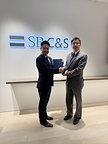
SINGAPORE, Nov. 26, 2026 /PRNewswire/ — The agreement brings Singdata AI Lakehouse and AI agent solutions to Japanese enterprises. Delivery options include SaaS, with price-performance as the priority.

Singdata Cloud Pte. Ltd. and SB C&S Corp. have signed an exclusive distribution agreement for Japan. Under the agreement, the two companies will bring Singdata products to enterprises through the nationwide sales partner network of SB C&S. They will develop sales channels and partner support ahead of the planned product rollout in spring 2027 or later. With Singdata products, they will support enterprises from data integration, management and analytics through to the use of AI in business operations.

The partnership combines Singdata’s data and AI technology with SB C&S’s nationwide network of approximately 15,000 sales partners. Together, the companies aim to help enterprises build the data foundations they need to put AI to work. For SB C&S, the agreement also expands its portfolio of AI and data infrastructure products to address a wider range of business needs.

For enterprises moving AI projects into everyday operations, choosing a model is only part of the work. Agents also need current data, clear business definitions and controlled access to enterprise systems. At the same time, companies need to manage infrastructure costs and decide where their data platforms will run. Singdata’s offering addresses these requirements across three areas.

Better value from data infrastructure

Singdata is designed to improve price-performance by making more efficient use of compute resources. Its incremental compute technology updates results using changes in the underlying data, reducing repeated processing where incremental execution is appropriate. Separate compute and storage, together with workload isolation, help teams allocate resources to different workloads. These capabilities give enterprises ways to manage the cost of data preparation, reporting and analytics as demand grows.

Flexible delivery models including SaaS

Singdata will be offered in Japan through flexible delivery models, including software as a service (SaaS), to meet customers’ infrastructure policies and operational requirements. This gives customers flexibility in how they introduce new analytics and AI capabilities. For system integrators, it also creates opportunities to build solutions around customers’ existing IT environments.

A connected approach to enterprise AI agents

Singdata’s AI agent offering connects data engineering, analytics and business workflow orchestration. The Lakehouse provides the governed data foundation, while its open semantic layer makes business definitions explicit, reusable and portable as code. This helps people and agents work from consistent definitions of the metrics they use.

Singdata helps teams build and operate data pipelines, explore business data through natural-language questions and follow-up analysis, and coordinate agents, enterprise systems and human review within business workflows. These capabilities help enterprises connect the preparation of trusted data with its use in analysis and operational tasks, while retaining human approval where required.

“We are pleased to enter into an exclusive distribution agreement with Singdata for Japan,” said Kota Ito, Senior Vice President of SB C&S, responsible for marketing and technology promotion in its ICT business. “As adoption of generative AI and AI agents grows, companies need an environment where they can use their data securely and effectively. We expect Singdata’s products to help companies make greater use of their data, with capabilities spanning data integration and management, analytics and business process automation. By combining our nationwide sales partner network and product expertise with Singdata’s capabilities, we will help companies put AI and data to work and support their business growth.”

“Our conversations with Japanese enterprises show growing demand for cost-effective data infrastructure, flexible delivery models including SaaS, and AI agents that connect with business data and processes,” said Ethan Yu, CEO of Singdata. “By combining SB C&S’s broad sales partner network with our data and AI technology, we are confident we can address the diverse needs of Japanese enterprises. We will also focus on building local support capabilities to help customers make better use of their data and put AI to work in their operations.”

The agreement builds on the establishment of Singdata Japan and the appointment of a Japan country manager. Through the partnership, Singdata and SB C&S aim to help local system integrators develop customer solutions that combine data infrastructure, analytics and AI agents around specific business needs.

About Singdata

Singdata Japan (シングデータジャパン合同会社) is a Japan-based company that provides Singdata AI Lakehouse, a governed data and semantic foundation for enterprise analytics and AI. Its technology combines data engineering, incremental compute, an open semantic layer and AI agent capabilities to help organizations prepare data, analyze business performance and support business workflows. Learn more at https://www.singdata.com/jp.

Japan office: WeWork Nogizaka, 1-24-3 Minami-Aoyama, Minato-ku, Tokyo 107-0062, Japan.

View original content to download multimedia:https://www.prnewswire.com/apac/news-releases/singdata-and-sb-cs-sign-exclusive-distribution-agreement-for-japan-302950332.html

SOURCE Singdata

Continue Reading

Technology

Mintel predicts 2027 brand growth will shift from selling products to delivering outcomes

Published

on

By

SINGAPORE, Nov. 26, 2026 /PRNewswire/ — Mintel’s 2027 Global Predictions identify a fundamental shift in how brands can create value: future growth will depend less on launching more standalone products and more on helping consumers achieve meaningful outcomes through connected systems.

Consumers are increasingly starting with an outcome they want to achieve, rather than a particular product or category, and assembling their own mix of products, services, technologies and behaviors to get there. That is blurring traditional category boundaries and changing the competitive set for brands. Whether the goal is better sleep, sustained energy, emotional wellbeing or a simpler home routine, brands will need to earn a clear and credible role within the systems consumers build around their lives.

Diana Kelter, Director of Mintel Trends said: 

“The next phase of brand growth will not be driven by more products, formats or claims alone. Consumers don’t experience their needs within neat category boundaries, and increasingly they are combining products, services and behaviors to achieve an outcome. That creates opportunity for brands, but also new competition. A sleep brand may no longer be competing only with another sleep product, for example, but with technology, nutrition, fitness or other solutions that promise the same outcome.” 

“Across categories, the mandate for brands is consistent: stop thinking first about what product to launch and start asking what outcome your brand can credibly help consumers achieve.”

How the shift from products to connected systems will reshape consumer markets

Mintel’s analysis shows how the move from products to systems is reshaping four major consumer categories: 

1. Wellness: the recommendation engine becomes the new battleground 

As wearables and AI move from tracking consumers to recommending what they should eat, buy, take and do, competition will shift from the shelf to the recommendation engine. Half of US consumers already use or are interested in using generative AI to manage their health and wellness. For brands, growth will increasingly depend on providing the proof and data that earns a place within the systems consumers already trust. 

2. Food & Drink: brands face competitors from outside the grocery aisle 

As consumers organize purchases around outcomes such as energy, sleep and weight management, food and drink brands will compete with supplements, beauty, technology and other sectors for the same consumer need. In 2025, 58% of global product launches making stress-relief or relaxation claims came from healthcare brands, compared with 33% from drinks and just 9% from food. Food and drink’s advantage is that eating is non-negotiable, creating an opportunity to become the foundation of consumers’ outcome-led systems rather than just another component within them. 

3. Beauty & Personal Care: brands compete for a bigger share of the routine 

Beauty spending is already moving beyond topical products into supplements, devices and professional treatments as consumers build systems around outcomes such as healthy ageing, hair retention and recovery. In the US, 23% of adults took beauty supplements in 2026, up from 17% in 2022. For beauty brands, the opportunity is to connect products with treatments, diagnostics and wellness solutions around a consumer goal, either by owning more of that system or partnering into it.  

4. Household Care: control of the consumer relationship shifts upstream 

As household decisions are increasingly automated through appliances, retailers and technology platforms, the greatest competitive threat may no longer come from another cleaning brand, but from the companies deciding when and how household needs are met. Already, nearly 7 in 10 US adults see a future where their home anticipates their needs. Brands will need to secure a role within these emerging ecosystems or risk losing control of the consumer relationship. 

Diana Kelter added:  

“Brands should start by identifying the outcomes consumers are trying to achieve, then look at the products, services and behaviors already coming together around them. From there, the question is simple: what role can your brand credibly play? For some, the opportunity will be to orchestrate the wider experience; for others, it will be to provide specialist expertise, measurement, or simply make the system easier to navigate. I expect we’ll see new partnerships develop across technology, healthcare, retail and services, as traditional category boundaries continue to blur.” 

Check out Mintel’s 2027 Global Predictions here.


View original content to download multimedia:https://www.prnewswire.com/apac/news-releases/mintel-predicts-2027-brand-growth-will-shift-from-selling-products-to-delivering-outcomes-302950942.html

SOURCE Mintel

Continue Reading

Trending