Technology
Cancer Drug Spending Is Headed Past $400 Billion as Colorectal and Pancreatic Cancers Move Up the Research Agenda
Published
1 day agoon
By
SAN DIEGO, Oct. 14, 2026 /PRNewswire/ — Equity Insider News Commentary – Global spending on cancer medicines reached $252 billion in 2024 and is forecast to exceed $400 billion by 2028, according to the IQVIA Institute, with the United States accounting for roughly 46% of the total. The pace of new treatments has picked up with it: about 150 new active substances entered the U.S. oncology market between 2015 and 2024, and launch activity in 2020 to 2024 ran nearly 40% ahead of the prior five years. Active Companies from around the markets with current developments this week include: Oncolytics Biotech, Inc. (NASDAQ: ONCY), Revolution Medicines, Inc. (NASDAQ: RVMD), Eli Lilly and Company (NYSE: LLY), Genmab A/S (NASDAQ: GMAB), Exelixis, Inc. (NASDAQ: EXEL).
The past several weeks have shown how quickly that pipeline is turning into new standards of care. On August 26, the U.S. Food and Drug Administration approved the first broad RAS-targeted medicine for metastatic pancreatic cancer, one of the hardest-to-treat solid tumors. In the first two weeks of October, regulators approved a new first-line use for a blood cancer therapy, a first-line maintenance treatment for HER2-positive metastatic breast cancer and a checkpoint inhibitor combination for stage III mismatch repair-deficient colon cancer, while two large Phase 3 trials in lymphoma and multiple myeloma reported positive topline results.
Gastrointestinal cancers are drawing a growing share of that attention. RAS mutations drive many pancreatic and colorectal tumors, and for years they were considered nearly impossible to drug. Colorectal cancer adds a second challenge: most metastatic cases are microsatellite stable, a form that has generally responded poorly to the checkpoint inhibitors that transformed treatment in other cancers. Companies are attacking the problem from several directions, with targeted RAS inhibitors, new drug combinations and therapies designed to make tumors more visible to the immune system.
Investors will get a fresh look at much of this work soon. The European Society for Medical Oncology holds its 2026 Congress in Madrid from October 23 to 27, one of the largest annual meetings for new cancer data, and two of the companies below have pointed to colorectal cancer updates before year-end.
Oncolytics Biotech, Inc. (NASDAQ: ONCY)
Oncolytics is developing pelareorep, an intravenously delivered immunotherapy designed to turn immunologically “cold” tumors “hot,” and colorectal cancer is now at the center of its clinical plans. On September 28 the company reported accelerating enrollment in REO 033, a randomized study in second-line RAS-mutant, microsatellite-stable metastatic colorectal cancer that compares pelareorep plus FOLFIRI and bevacizumab with FOLFIRI and bevacizumab alone. Part A is expected to randomize about 60 patients, with objective response rate as the primary endpoint and progression-free survival, overall survival, safety and biomarkers as additional endpoints.
The study builds on REO 022, a smaller non-randomized trial in which the same pelareorep combination produced a 33% objective response rate, median progression-free survival of 16.6 months and median overall survival of 27.0 months. Oncolytics has said it aligned with the FDA on the concept of a potential pivotal Part B expansion, with a proposed accelerated approval path based on response rate and progression-free survival as the basis for potential full approval. Pelareorep holds FDA Fast Track designation in colorectal, anal and pancreatic cancer and has been administered to more than 1,200 patients.
“Given the current pace of enrollment, we expect to have the ability to report interim data from Part A by year-end,” said John McAdory, Chief Operating Officer.
The company has also been adding scientific support around the program. In September it reported preclinical results combining pelareorep with a pan-RAS inhibitor in a RAS-driven colorectal cancer model, in which the combination showed no evidence of antagonism, and it announced a peer-reviewed publication in the Proceedings of the National Academy of Sciences showing that pelareorep changed the liver tumor microenvironment from immunologically inactive to active in preclinical models.
CONTINUED… Read more oncology sector coverage at: Equity Insider
In other industry developments and happenings in the market this week include:
Revolution Medicines, Inc. (NASDAQ: RVMD)
Revolution Medicines announced on August 26 that the FDA approved RASONQUE (daraxonrasib), a once-daily oral tablet, for adults with metastatic pancreatic cancer who have received at least one prior systemic therapy or cannot receive multiagent therapy. In the Phase 3 RASolute 302 trial, median overall survival was 13.2 months with daraxonrasib versus 6.7 months with chemotherapy. The company has said it expects to share updated colorectal cancer data and strategy in the fourth quarter of 2026.
“The FDA approval of RASONQUE is a monumental step forward for patients with pancreatic cancer and for the oncology field,” said Mark A. Goldsmith, M.D., Ph.D., Chief Executive Officer and Chairman.
Eli Lilly and Company (NYSE: LLY)
Lilly announced on October 2 that the FDA approved Jaypirca (pirtobrutinib) for adults with previously untreated chronic lymphocytic leukemia or small lymphocytic lymphoma without a known 17p deletion. In the BRUIN CLL-313 trial, Jaypirca reduced the risk of progression or death by 80% compared with bendamustine plus rituximab, with an overall response rate of 94% versus 81%.
Genmab A/S (NASDAQ: GMAB)
Genmab and AbbVie announced on October 5 that the Phase 3 EPCORE DLBCL-2 trial of epcoritamab plus R-CHOP met its primary endpoint in newly diagnosed diffuse large B-cell lymphoma, reducing the risk of progression or death by 51% compared with R-CHOP alone. The companies plan to present the data at a future medical meeting and to engage with global regulators.
Exelixis, Inc. (NASDAQ: EXEL)
Exelixis disclosed that the FDA extended its review of zanzalintinib in combination with atezolizumab for metastatic colorectal cancer by three months after the company submitted updated safety and efficacy information, which the agency classed as a major amendment. The new target action date is March 3, 2027.
Know Which Biotech Names Are Moving First
Clinical readouts and FDA decisions can reprice a stock in minutes. Eagle Eye is a real-time investor signal-intelligence platform that surfaces sentiment shifts, news flow and trending tickers as they form, so you see attention building instead of chasing it. Watch it live at eagle-eye.dev.
Contact Information:
Media Contact: info@biotech-insider.com
DISCLAIMER: Nothing in this publication should be considered as personalized financial advice. We are not licensed under securities laws to address your particular financial situation. No communication by our employees to you should be deemed as personalized financial advice. Please consult a licensed financial advisor before making any investment decision. This is a market commentary and is not a paid advertisement. It is neither an offer nor a recommendation to buy or sell any security.
This article is being distributed by Equity Insider, which is wholly owned and operated by Market Equities Limited (“MEL”), a company incorporated under the laws of Ireland. This is an independent market commentary published on a non-paid basis. MEL has not been paid any fee by any company mentioned in this article for its production or distribution. MEL was previously paid a fee by Oncolytics Biotech, Inc. for advertising and digital media services under an arrangement that has since expired.
MEL and/or its owners, operators, directors, and affiliates own shares of Oncolytics Biotech, Inc. purchased in the open market, and reserve the right to buy and sell shares of Oncolytics Biotech, Inc. at any time without any further notice. The prior compensation and this share ownership constitute a conflict of interest as to our ability to remain objective in our communication regarding Oncolytics Biotech, Inc. Because of this conflict, individuals are strongly encouraged not to use this publication as the basis for any investment decision. There may also be third parties who hold shares of Oncolytics Biotech, Inc. and may liquidate their shares, which could have a negative effect on the price of the stock.
While all information is believed to be reliable, it is not guaranteed by us to be accurate. Individuals should assume that all information contained in this publication is not trustworthy unless verified by their own independent research. Because events and circumstances frequently do not occur as expected, there will likely be differences between any predictions and actual results. Clinical results described in this article are as reported by each company; results from different studies are not directly comparable, and early-stage, preclinical and non-randomized data may not be confirmed in later trials. Be extremely careful: investing in securities carries a high degree of risk, and you may lose some or all of your investment. This document is governed by the laws of Ireland.
Eagle Eye Disclosure. Eagle Eye is an investor signal-intelligence platform affiliated with the publisher of this article, and this reference constitutes promotion of an affiliated product. Eagle Eye is not a broker-dealer, and nothing in the platform or in this article is financial, investment, tax, or legal advice. Data provided in the platform is for informational purposes only and may be delayed. Always do your own research before making any investment decision.
Forward-Looking Statements: This article may contain forward-looking statements within the meaning of Section 27A of the Securities Act of 1933 and Section 21E of the Securities Exchange Act of 1934, including statements made by the companies mentioned in their own news releases. Such statements involve risks and uncertainties, and actual results may differ materially. Readers should review each company’s filings with the SEC.
View original content to download multimedia:https://www.prnewswire.com/news-releases/cancer-drug-spending-is-headed-past-400-billion-as-colorectal-and-pancreatic-cancers-move-up-the-research-agenda-302908253.html
SOURCE Equity Insider
You may like
Technology
20 Lenovo and HKC Monitors Among First to Receive TÜV Rheinland Native Gaming Performance Certification
Published
53 minutes agoon
October 15, 2026By
Framework combines native performance with human-factor evaluation to connect measurable specifications with real gaming experiences.
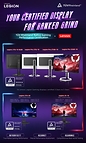
SHANGHAI, Oct. 15, 2026 /PRNewswire/ — Following the official launch of the TÜV Rheinland Native Gaming Performance Standard at the 23rd China Digital Entertainment Expo & Conference (ChinaJoy) in July 2026, the certification framework is now being adopted across the gaming display industry. Recently, multiple gaming monitors from Lenovo’s Legion series and ANTGAMER earned TÜV Rheinland Native Gaming Performance Certification, making them among the first products certified under the new standard. ANTGAMER is an esports brand under HKC which was established in Shenzhen in 2001.
Higher refresh rates and shorter advertised response times do not necessarily translate into clearer, more stable gaming visuals. When such specifications depend on overclocking, undisclosed reductions in display quality or compromises in stability, the actual experience may fall short of product claims. TÜV Rheinland’s framework addresses this challenge by evaluating both the accuracy of performance claims and the quality of the gaming experience.
The Native Gaming Performance evaluation system was developed to provide consumers with a transparent and measurable benchmark for assessing gaming displays. The standard clearly defines three refresh-rate operating modes, namely native, overclocked, and dual-mode, while establishing a “same mode, full-system testing” principle. Refresh-rate overclocking is excluded from certification, ensuring performance claims are assessed under consistent and realistic operating conditions.
Designed around the core requirements of gamers, the certification framework evaluates products across three key dimensions: motion performance, image quality, and visual comfort. Fourteen indicators are assessed under these dimensions. Different weighting factors are applied according to competitive, immersive, and all-around gaming scenarios; the weighted results are then summed to produce the final Gaming Performance Index (GPI), which is converted into a three- to five-star rating. The methodology also incorporates human-factor studies, including dynamic visual acuity assessments, eye-tracking analysis, and first-person shooter gaming tests. These convert subjective gaming experiences into quantifiable data and deliver a more comprehensive measurement of perceived motion clarity.
Advancing the Gaming Display Industry Toward Real-World Performance
Jay Yang, Global Senior Vice President of Electrical at TÜV Rheinland, stated: “The Native Gaming Performance Standard was introduced to help consumers identify products that genuinely deliver high-level gaming experiences. The successful certification of multiple Lenovo Legion and ANTGAMER monitors demonstrates both manufacturers’ continued commitment to display innovation and the practical applicability of the standard across the industry.”
He added that the certification framework combines a unified definition of native performance, full-system testing methodologies, human-factor validation, and scenario-based star ratings. This encourages the gaming display industry to move beyond specification-driven competition toward performance evaluated through real-world testing. The program also supports consumers in making informed purchasing decisions while ensuring certification integrity through ongoing standards updates and production-sample surveillance.
Sixteen Lenovo Legion Monitors Receive 3-Star to 5-Star Ratings
As Lenovo’s flagship gaming monitor lineup, the Legion series is designed to deliver high refresh rates, low latency, and premium image quality. In this certification project, 16 Legion monitors received TÜV Rheinland Native Gaming Performance ratings ranging from three to five stars, reflecting Lenovo’s comprehensive product portfolio from entry-level to flagship offerings.
5-Star Certified Models (4): Legion 27Q-10 OLED, Legion Pro 27Q-10, Legion Pro 27UD-10, Legion Pro 32UD-10
4-Star Certified Models (7): Legion 34W-2c, Legion 32Q-2C, Legion 27U-10, Legion 27U-20, Legion 27QD-10, Legion 27Q-20, Legion 27Q-2c
3-Star Certified Models (5): Legion 27Q-10, Legion 27-2c, Legion 27-1r, Legion 25-10, Legion 24-1r
George Toh, Vice President and General Manager, Visuals Business, Lenovo’s Intelligent Devices Group, said: “The TÜV Rheinland Native Gaming Performance Certification awarded to 16 Legion monitors is strong recognition of our continued investment in gaming display technologies and our commitment to prioritizing real-world user experiences. Certification across the full range of ratings, from three to five stars, demonstrates the ability of our product portfolio to meet the diverse needs of gamers at every level. We look forward to further strengthening our collaboration with TÜV Rheinland to deliver clearer, smoother, and more comfortable visual experiences for gamers worldwide.”
Four ANTGAMER Monitors Earn 5-Star Certification
Following comprehensive testing and evaluation by TÜV Rheinland, four gaming monitors from HKC’s ANTGAMER brand, namely ANT25ASF, ANT255TQ, ANT275TQ, and ANT272TUE, met the requirements of the Native Gaming Performance Standard and received the highest 5-Star Certification.
Covering FHD, QHD, and UHD resolutions, the certified models are designed to address the performance requirements of professional esports players, dedicated gaming enthusiasts, and premium entertainment users seeking high-performance gaming displays.
Peng Xinchun, General Manager of Brand Operations at ANTGAMER, commented: “Receiving TÜV Rheinland’s 5-Star Native Gaming Performance Certification validates our ability to deliver clear, smooth, and precise visual experiences in real gaming scenarios. Going forward, HKC will continue working closely with TÜV Rheinland to provide consumers with superior display technologies and enhanced visual experiences.”
About TÜV Rheinland
TÜV Rheinland is a leading provider of testing, inspection and certification services worldwide. For over 150 years, the company has helped make the world a safer place. Today, more than 29,000 employees test, inspect and certify products, plants and processes, while also providing training for people in a wide range of professions. Operating from 500 locations in more than 50 countries, TÜV Rheinland helps safeguard key areas of business and everyday life. Headquartered in Cologne and generating annual revenue of close to €3 billion, the company plays a key role in quality assurance worldwide. TÜV Rheinland has been a member of the UN Global Compact since 2006, demonstrating its commitment to anti-corruption and sustainability.
View original content to download multimedia:https://www.prnewswire.com/news-releases/20-lenovo-and-hkc-monitors-among-first-to-receive-tuv-rheinland-native-gaming-performance-certification-302909971.html
SOURCE TÜV Rheinland
Technology
YYForce Launches Yolara AI Workforce Intelligence Platform in Singapore
Published
54 minutes agoon
October 15, 2026By
Platform brings conversational AI and intelligent matching to frontline workforce operations
SINGAPORE, Oct. 15, 2026 /PRNewswire/ — YYForce Inc. (NASDAQ: YFOR) (“YYForce” or the “Company”), a technology-enabled provider of workforce solutions and integrated facility management services, today announced the commercial launch of Yolara AI, an AI-powered workforce intelligence platform that combines algorithmic matching, automated staffing workflows, digital attendance, and operational analytics for frontline enterprises.
The core platform is available in Singapore through web and mobile interfaces. YYForce is introducing a conversational AI voice agent through phased deployments with selected enterprise clients, extending the platform with natural-language staffing requests and AI-assisted workflow initiation.
Yolara AI is being introduced through YYForce’s existing regional operating network, which includes more than 100,000 verified frontline workers and over 500 enterprise partner locations. These figures describe the Company’s existing network and do not represent the number of active Yolara AI users or locations at launch.
AI Powered Workforce Orchestration
Yolara AI is designed to help businesses coordinate flexible staffing across hospitality, food and beverage, retail, logistics, events, and facilities management. Its workforce orchestration workflow connects enterprise demand with worker skills and availability, using AI-assisted matching to support staffing decisions and digital tools to track shift execution.
By bringing these activities into one platform, YYForce aims to reduce repetitive administration and improve coordination between businesses and workers. Actual staffing outcomes depend on worker availability, qualification requirements, and operating conditions.
Core Capabilities Available at Launch
AI-powered multi-factor matching: Evaluates worker suitability using skills, availability, location, credentials, and previous shift records to support candidate matching for enterprise requirements.Conversational worker onboarding: Uses conversational interfaces to support worker information collection, availability confirmation, and communication of shift requirements.Automated scheduling workflows: Connects staffing requirements with eligible shift booking, helping businesses coordinate coverage and workers access suitable opportunities.Digital attendance and tracking: Uses geofenced check-in and check-out to capture shift attendance data for monitoring and reconciliation.Talent Graph and workforce intelligence dashboards: Structures worker profiles, qualifications, and shift histories into a searchable talent information base, with dashboards showing staffing coverage, attendance, and workforce cost metrics.
Phased Deployment of the AI Voice Agent
YYForce is deploying Yolara AI’s conversational voice agent in phases with selected enterprise clients in Singapore. The agent is designed to use natural-language processing (NLP), intent recognition, and information extraction to convert spoken staffing requirements into structured digital requests.
For example, a manager could request: “I need five banquet service crew members tomorrow from 6 p.m. to 11 p.m. at Marina Bay.” The agent is designed to extract headcount, role, location, and shift times, request clarification where information is missing, and prepare the request for the platform’s matching workflow.
The phased deployment is intended to assess usability and operational performance before broader rollout. Voice-agent availability will therefore differ from that of the core platform during the initial launch period.
Connecting AI With Real World Workforce Operations
Yolara AI supports YYForce’s strategy of combining workforce operations with applied AI and digital workflow automation. Its existing worker and enterprise relationships provide a base for introducing the platform, gathering operational feedback, and identifying opportunities for future AI model development.
“Frontline staffing has historically suffered from manual friction, fragmented shift communication, and slow fulfillment cycles. With Yolara AI, we are translating applied artificial intelligence into immediate operational leverage—turning spoken manager requests into fulfilled shifts in minutes. This launch marks a foundational milestone in YYForce’s strategy to build a unified, intelligent workforce ecosystem across the region,” said Mike Fu, Chief Executive Officer of YYForce.
AI Development and Regional Expansion Roadmap
YYForce plans to evaluate expansion into additional Southeast Asian markets based on customer demand, operational readiness, and local requirements. Planned AI enhancements include machine-learning-based demand forecasting, predictive workforce analytics, and agentic workflows connecting conversational requests with enterprise systems. These capabilities form part of the development roadmap and are separate from the core functions available at launch.
About Yolara AI
Yolara AI is YYForce’s AI-powered workforce intelligence platform for frontline operations. Its core functions combine multi-factor matching, conversational onboarding, automated scheduling workflows, digital attendance, Talent Graph information, and operational analytics. A conversational AI voice agent for natural-language staffing requests is being introduced through phased enterprise deployments.
About YYFORCE
YYForce Inc. (Nasdaq: YFOR) is an AI-enabled workforce management and integrated facility management provider headquartered in Singapore and operating across Asia and beyond. Through its workforce technology and IFM businesses, YYForce provides workforce deployment, management and facility services solutions across multiple service industries.
The Company operates two distinct workforce technology platforms: YY Circle, which supports workforce deployment and management across hospitality, food and beverage, retail and other service industries; and Yolara AI, an AI-powered workforce intelligence platform that provides intelligent workforce matching, automated scheduling, digital attendance and operational analytics for frontline enterprises. Within its IFM operations, YYForce combines frontline facility services with technology solutions designed to improve workforce productivity and operational efficiency.
YYForce’s long-term strategy is centered on building an integrated future workforce ecosystem in which human workers, intelligent software, automation and robotics increasingly work together to deliver services more efficiently.
Forward Looking Statements
This press release contains forward-looking statements within the meaning of Section 27A of the Securities Act of 1933, as amended, and Section 21E of the Securities Exchange Act of 1934, as amended. The Company bases these forward-looking statements on its expectations and projections about future events, which the Company derives from the information currently available to it. You can identify forward-looking statements by those that are not historical in nature, particularly those that use terminology such as “may,” “should,” “expects,” “anticipates,” “contemplates,” “estimates,” “believes,” “plans,” “projected,” “predicts,” “potential,” or “hopes” or the negative of these or similar terms. Statements regarding expected performance, adoption and benefits of the Yolara AI platform; the phased deployment and any broader rollout of the conversational AI voice agent; planned AI enhancements, including machine-learning-based demand forecasting, predictive workforce analytics and agentic workflows; potential expansion into additional Southeast Asian markets are forward-looking statements. Forward-looking statements involve inherent risks and uncertainties, and the forward-looking events discussed in this press release may not occur, and actual events and results may differ materially and are subject to risks, uncertainties, and assumptions about the Company and a number of factors. These factors include, but are not limited to, the Company’s goals and strategies; the Company’s future business development, financial condition and results of operations, including the introduction of new products and services, the performance, accuracy and reliability of the Company’s AI models and voice agent; the Company’s ability to successfully complete the phased deployment and achieve client adoption of Yolara AI; the Company’s reliance on third-party technology providers; data privacy, cybersecurity and AI-related laws and regulations, including those governing location and voice data; expected changes in the Company’s revenues, costs and expenditures, anticipated customer growth, and demand for and market acceptance of the Company’s products and services; and industry, market and regulatory conditions, including competition, government policies and regulations affecting the Company’s industry, and other factors that may affect the Company’s financial condition, liquidity and results of operations. For a more detailed discussion of risk factors, please refer to the Company’s filings with the Securities and Exchange Commission, including the “Risk Factors” section of the Company’s most recent annual report on Form 20-F, as amended. Readers should also consider the risks described in the Company’s filings with the U.S. Securities and Exchange Commission. YYForce undertakes no obligation to update these statements except as required by applicable law.
Investor Contact
Jason Zhi Yong Phua, Chief Financial Officer
YYForce Inc.
enquiries@yyforce.ai
Investor Relations Contact
Piacente Financial Communications
yfor@thepiacentegroup.com
View original content to download multimedia:https://www.prnewswire.com/news-releases/yyforce-launches-yolara-ai-workforce-intelligence-platform-in-singapore-302908387.html
SOURCE YYForce Inc.
Technology
Interplay Learning Launches Skill Verification to Demonstrate Workforce Readiness
Published
54 minutes agoon
October 15, 2026By
New simulation-based assessments give organizations objective, step-level insights into how workers perform a task before dispatch, contractor authorization, new-hire placement or promotion decisions.
AUSTIN, Texas, Oct. 15, 2026 /PRNewswire/ — Interplay Learning, the leader in immersive learning for the skilled trades and industrial crafts, today announced the launch of Skill Verification, a simulation-based assessment tool that enables organizations to evaluate an individual’s ability to perform trades-specific tasks. Using simulation-based assessments that mirror real equipment and conditions, Skill Verification provides supervisors and safety leaders objective, step-level evidence of readiness across electrical safety, industrial controls and more.
For many skilled trades and industrial roles, employers have limited ways to verify hands-on ability before putting someone on the job. Traditional assessments can require expensive equipment, dedicated facilities and significant supervisor time, while interviews and multiple-choice tests don’t demonstrate whether a worker can actually execute a task.
“You can have your OSHA, EPA and NATE certifications and still not be able to perform the job in the real world”, said Matt Ellenberg, director of training, Southern Home Services. “What Skill Verification gives us is a way to actually demonstrate and prove that a technician can perform the skills we need them to perform. That’s incredibly valuable as we continue to grow.”
The initial catalog of 20 Skill Verification assessments launches October 15, 2026, spanning applications in commercial HVAC, facilities management, manufacturing, data centers and critical infrastructure. Assessments cover equipment, tools and job-specific tasks in simulated operating environments, including Using a Digital Multimeter, Tool Selection and Inspection, and Industrial Electrical Lockout/Tagout Safety Procedure. The assessments can also be used by educational institutions and workforce development programs to validate students’ hands-on skills before they enter the workforce.
Every assessment produces a clear, objective score alongside step-level detail on missed steps, sequence and decisions, giving supervisors specific, targeted areas for remediation rather than a pass/fail result. This gives organizations a repeatable way to evaluate skills consistently across sites, shifts and service partners as they scale their workforce.
“As skilled trades employers face growing pressure to build and deploy qualified workforces, they need better, safer ways to verify hands-on ability,” said Doug Donovan, CEO and founder of Interplay Learning. “Skill Verification gives operations and safety leaders objective evidence of demonstrated performance, helping them quickly identify skill gaps and make more informed decisions about workforce readiness.”
For more information about Skill Verification, visit https://www.interplaylearning.com/skill-verfication.
About Interplay Learning
Interplay Learning, the leader in immersive learning for the skilled trades and industrial crafts, now includes Industrial Training International (ITI), the global leader in specialized industrial learning solutions. Leveraging instructor-led training, online simulations, AI, and VR, Interplay helps organizations and educational institutions upskill faster, reduce risk, and increase operational readiness. With over 500,000 people trained, Interplay is shaping the future of workforce development, building better careers and better lives. Visit www.interplaylearning.com to learn more.
Recent accolades include TIME’s 2026 America’s Top EdTech Companies, Forbes 2026 America’s Best Startup Employers, the 2025 IACET Instructional Impact Award, 2025 Inc 5000 list, Deloitte’s 2025 Technology Fast 500 list, Fast Company’s Annual List of the World’s Most Innovative Companies of 2024, AHR’s 2024 Innovation Award, IACET 2024 Innovation of the Year Award, and NFMT 2024 Vision Awards.
View original content to download multimedia:https://www.prnewswire.com/news-releases/interplay-learning-launches-skill-verification-to-demonstrate-workforce-readiness-302906742.html
SOURCE Interplay Learning
20 Lenovo and HKC Monitors Among First to Receive TÜV Rheinland Native Gaming Performance Certification
YYForce Launches Yolara AI Workforce Intelligence Platform in Singapore
Interplay Learning Launches Skill Verification to Demonstrate Workforce Readiness
Send Rakhi to UK swiftly with UK Gifts Portal
Whiteboard Series with NEAR | Ep: 45 Joel Thorstensson from ceramic.network
Nullmax and Renesas Forge Strategic Partnership to Deliver Competitive ADAS Solutions for the Global Market
Why You Should Build on #NEAR – Co-founder Illia Polosukhin at CV Labs
Whiteboard Series with NEAR | Ep: 45 Joel Thorstensson from ceramic.network
NEAR End of Year Town Hall 2021: The Open Web World, MetaBUILD 2 Hackathon and 2021 recap
Trending
-
Technology5 days agoAI Revenue Questions Pull Semiconductor Stocks Off October Highs
-
Technology2 days agoCresta Launches Deputy Agent: an AI Agent That Keeps Working Long After the Customer Hangs Up
-
Technology5 days agoSolvely.ai Makes the Case for AI That Builds Human Capability
-
Technology5 days agoChandigarh University Launches Campus Tank Season 2 with US $15-Million Funding Pool to Help Young Innovators Take Ideas to Market; Accelerate India’s Start-up Growth
-
Coin Market5 days agoJustin Sun says Tron’s post-quantum cryptography has gone live on testnet
-
Technology5 days agoSTARMUS VIII Announces Two Young Changemakers as Junior Medal Winners
-
Technology5 days agoHaag-Streit USA and Marco Lombart launch Octopus 910 in the US at AAO 2026 in New Orleans
-
Technology2 days agoMesa School of Business raises ₹110 crore to expand its portfolio of programmes for the AI era