Connect with us

Technology

Introducing Chainguard Workspaces: Hardened, Hardware-Isolated Environments for Faster Agentic Development

Published

on

Hardware-isolated, credential-free microVMs built from zero-CVE Chainguard OS Packages give security and platform teams a safe way to run fleets of agents at full speed

SEATTLE, Oct. 14, 2026 /PRNewswire/ — Chainguard, the trusted source for open source, today announced Chainguard Workspaces, hardened microVMs that give every developer and coding agent their own secure environment, with no access to sensitive credentials and optional egress policies that block any connection a team has not approved. Because protection is built into the environment rather than left to the agent, security and platform teams can let agents run autonomously while limiting the blast radius of any compromise and keeping a signed record of everything each agent did.

The tradeoff between access and safety

Coding agents today run migrations, remediation campaigns, and refactors that last for hours, and most agents have the same access as the developer who launched them, right next to their credentials, cloud keys, and production systems. The controls meant to keep them in check, such as permission prompts and allowlists, depend on the agent’s adherence to the rules. At the same time, many developers now run a dozen agents or more at once. Teams have to choose between giving agents enough access to be useful and accepting the risk, or locking them down behind approval prompts and spending their day clicking “allow.”

“Right now teams are choosing between letting agents run next to their production keys or babysitting them through approval prompts all day. Neither one scales,” said Dan Lorenc, CEO and Co-founder, Chainguard. “Workspaces gets rid of that tradeoff. Every agent gets its own hardened, isolated machine with nothing in it worth stealing, so you can let it run for hours and trust what comes out the other end.”

A separate, hardened environment for every agent

Chainguard Workspaces is built for security and platform teams whose developers run fleets of coding agents. Workspaces run as remote microVMs that sync each developer’s local working tree, so developers keep their editor and git workflow while execution happens off their machine. Because every agent gets its own isolated environment, dozens of agents can work in parallel without colliding, and long-running migrations, remediation campaigns, and refactors can run for hours with no one watching. Teams can safely run agent-generated or third-party code, give every developer a standardized environment drawn from their Chainguard catalog, and try many candidate fixes at once. Security teams get visibility into what the agent read, ran, and reached before approving agent use.

To meet security teams’ needs, Workspaces has:

Layers of defense: Workspace microVMs are built exclusively with zero-CVE Chainguard OS Packages, including FIPS-compliant toolchains. Dependencies are verified against the lockfile at runtime, so untrusted or tampered code can’t execute.Exfiltration-safe by design: Real credentials are injected outside the workspace, so agents never hold them. Tools that need a credential on disk get an encrypted, short-lived stand-in that is useless if taken.Configurable egress controls: Optional network egress policies block unauthorized outbound requests, preventing a prompt-injected agent or compromised dependency from communicating with unapproved external systems.Total visibility into every run: Every credential call and network connection is logged in a tamper-proof record, and every run generates signed attestations of the exact environment, code changes, and check results.

Alongside those security controls, Chainguard Workspaces provides engineering teams with what they need to build faster with agents:

Fast starts and resumes: Cache-hot microVM snapshots mapped to the exact repository and toolchain let teams launch new workspaces or resume idle ones in seconds.Instant local package loading: Dependencies load directly from local disk as defined by the lockfile, removing external registry fetches and download delays from the loop.Built-in completion validation with Chainguard Checks: Paired with Chainguard Checks (also launching today in Beta), agents run CI suites in context and keep iterating until checks pass. Tying the loop exit to verified results keeps incomplete or faulty code from being handed off.Human-in-the-loop: When an agent requires developer input, the Workspace stays active for 10 minutes before automatically suspending to a snapshot. Memory state, active processes, and warm caches are preserved with no ongoing compute spend while paused.

With Workspaces, Chainguard extends the secure-by-default foundation behind its open source software catalog to the environments where agents write and run code. As agent adoption outpaces security review, the shift from securing the agent to securing where it runs is becoming a requirement for enterprise teams.

“Banks, fintechs, and corporates across Australia rely on Cuscal to move money safely. For agent sandboxing, we need an environment where AI agents can iterate quickly without risking core systems. We’re excited to work hand-in-hand with Chainguard as an early design partner to shape the future of software development end-to-end,” Brad McCoy, Senior Manager, Cloud Platforms, Cuscal.

“IDC research shows that organizations rank AI-generated code and agentic development workflows alongside third-party software and open source packages as top software supply chain concerns. Addressing that risk means accounting for what an agent can access while it works, in addition to the code it writes. Agents running with developer-level credentials and broad network access extend the supply chain attack surface in ways that many traditional controls were not designed to address,” said Katie Norton, Research Director at IDC. “Approaches that isolate agent execution environments, keep secrets out of the agent’s reach, and maintain auditable records of agent activity, such as the approach Chainguard is taking with Chainguard Workspaces, are designed to support agentic development at scale while preserving control over the development environment.”

Chainguard Workspaces is available now in Beta. For more information, visit: chainguard.dev/workspaces.

About Chainguard
Chainguard is the trusted source for open source. By providing engineers and AI agents with hardened, trusted, and production-ready artifacts, Chainguard helps organizations prevent AI supply chain attacks, increase engineering velocity while reducing toil, and maintain continuous compliance. Customers include Fortune 500 enterprises and global industry leaders, including Anduril, Canva, DocuSign, OpenAI, Public Storage, Snap Inc., and Snowflake. Chainguard is venture-backed by leading investors, including Amplify, IVP, Kleiner Perkins, Lightspeed Venture Partners, Mantis VC, Redpoint Ventures, Sequoia Capital, and Spark Capital.  For more information, visit: https://www.chainguard.dev/ 

Media Contact: Brittany Hendrickson, press@chainguard.dev

View original content to download multimedia:https://www.prnewswire.com/news-releases/introducing-chainguard-workspaces-hardened-hardware-isolated-environments-for-faster-agentic-development-302907716.html

SOURCE Chainguard

Continue Reading

Technology

Redefining the Limits of 3D Medical Study: Anatomage Expands Into Clinical Obesity and More Interactive Physiology

Published

on

By

SAN JOSE, Calif., Oct. 15, 2026 /PRNewswire/ — Anatomage Inc., a market leader in medical visualization and education technology, is introducing its latest Anatomage Table platform update, with new obesity reference bodies, more real-human-based physiology simulations, and interactive learning activities, expanding the scope of what can be studied and explored in medical education. With more than 15 years of continual refinement, Anatomage continues to introduce increasingly detailed anatomical content, functional physiology, and clinical applications designed to support education and clinical training, and the latest platform update builds on this foundation, introducing new ways to examine the human body.

One of the most substantial additions is a pair of new reference bodies representing Class I Obesity (BMI 30–34.9) and Class III Obesity (BMI above 40), based on World Health Organization (WHO) and Centers for Disease Control and Prevention (CDC) classifications. Designed as comprehensive 3D anatomical references for the study of clinical obesity, these models represent one of the first resources of its kind for examining the anatomical changes associated with obesity in a full-body, interactive format. With this disease affecting approximately one in eight people worldwide, these reference bodies provide an opportunity to compare the anatomy of obesity with normal anatomical structures and relationships, revealing changes that extend well beyond external appearance.

Developing these reference bodies required extensive scientific research and medical imaging to accurately represent both external and internal anatomical changes associated with obesity. Visible changes include skin folds, stretch marks associated with mechanical stress from increased tissue volume, and substantial increases in subcutaneous and visceral fat, which can displace and compress surrounding organs. Deeper anatomical changes include muscle hypertrophy and myosteatosis, liver changes associated with metabolic dysfunction-associated steatotic liver disease (MASLD), and ovarian changes associated with polyendocrine metabolic ovarian syndrome (PMOS). Instead of depicting obesity solely through differences in body size or fat distribution, the models incorporate changes across multiple systems and regions, giving students a more realistic understanding of the range of bodies they may encounter in clinical practice.

This Table update also brings new interactive physiology simulations based on real human anatomy. Swallowing can now be examined from multiple perspectives, with more than 50 structures involved in the process represented in detail. Students can follow the coordinated movement through the oral cavity, pharynx, and esophagus using internal views that reveal the process from within the body. A simulated video fluoroscopic view adds a clinical perspective, connecting the anatomical sequence students see in 3D with the way swallowing is evaluated in medical practice.

Sleep can be explored in a similarly dynamic way: The new sleep physiology simulation visualizes brain activity across the major stages of sleep, including awake, N1, N2, N3, and REM, and with the sleep apnea simulation, students can watch the airway collapse and reopen during obstructive sleep apnea while observing associated muscular movements and neural stimulation.

The Anatomage Table update also includes:

Additional physiology simulations, exploring lymphatic physiology, hepatic physiology, alveolar gas exchange, muscle capillary exchange, neuromuscular junction, pancreatic secretion, reflex arcs, intestinal villi absorption, and placental exchange.A new healthy male reference body that provides an additional standardized model for anatomical study.New interactive exercises to challenge students, like building anatomical pathways in the correct sequence and identifying anatomical structures and sections within 3D renderings of real CT scans.An expanded Multi-Body library, increasing opportunities to compare anatomy across individuals and explore the natural variation in human structures.An enhanced ultrasound simulation with simultaneous comparison of 3D anatomy, 2D slice data, and a clinically realistic simulated ultrasound image.State-of the-art real HiP-CT imaging scans, enhanced with Anatomage’s 3D rendering technology.Nearly 200 new histology slides.Translations into French, German, Italian and Spanish will be available soon together with the Anatomical Terminology (Latin).

The latest iteration of the Anatomage Table software provides a more complete view of the human body, particularly in the context of clinical obesity. Students can move between individual anatomical variation, disease-related changes, clinical imaging, microscopic structures, and physiological processes, building connections across levels of anatomy and physiology that are often studied separately. By bringing structure, function, and clinical context into the same interactive environment, the Anatomage Table provides a deeper way to explore the complexity and multidimensionality of the human body, redefining the possibilities of 3D medical education.

The update will be available for eligible Anatomage Tables at no additional cost.

About Anatomage
Anatomage is a market leader in medical imaging and education technology, transforming traditional learning through continuous innovation. With an ecosystem of medical imaging software and hardware, the company delivers world-class anatomy and physiology content at the highest level of accuracy. Anatomage is committed to enhancing its technologies to transform standard anatomy learning, medical training, treatment planning, as well as revolutionize science education.

Media Contact:
dott. Davide Giacomo Tommasi
Anatomage Italy srl
Phone: +39 02 35 99 05 04
Email: table.europe@anatomage.com
eu.anatomage.com

View original content to download multimedia:https://www.prnewswire.co.uk/news-releases/redefining-the-limits-of-3d-medical-study-anatomage-expands-into-clinical-obesity-and-more-interactive-physiology-302907508.html

Continue Reading

Technology

AI proves its worth in banking – 29 percent would rather talk to AI about sensitive money matters: EOS Group Reports

Published

on

By

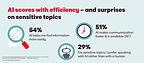
46 percent of European consumers report improved communication with their bank through AI.29 percent would prefer speaking with AI rather than a human when discussing sensitive financial topics.61 percent want proactive AI alerts to warn of potential account overdrafts.

HAMBURG, Germany, Oct. 15, 2026 /PRNewswire/ — Personal advice has long been viewed as an essential part of banking relationships. This perception is shifting, as the latest EOS Banking AI Barometer reveals. The study examines how European consumers evaluate artificial intelligence in the banking sector. 46 percent report improved customer communication through AI support. Only 11 percent perceive a decline in service quality. Where technology genuinely helps, it is accepted. Nearly one in three respondents (29 percent) would prefer speaking with AI about sensitive banking matters rather than a human employee. Among 18-34-year-olds, this figure rises to 38 percent. However, the study indicates that AI still has limitations. Only 35 to 36 percent trust AI to understand their needs, act with precision, and solve problems effectively. Consumers show higher acceptance for information retrieval, speed, and availability. More than half of respondents (54 percent) value AI for helping them find information. Similarly, 51 percent praise faster communication and round-the-clock availability.

Despite these advantages, one key finding stands in contrast: 60 percent of respondents miss the human touch in AI communication. “46 percent of customers say service has improved through AI, only 11 percent perceive a decline. That is a clear signal for AI acceptance in customer service. But the 60 percent who miss the human element also tell us that AI alone is not the answer. The best banks use AI as a tool for better service, not as a replacement for relationships,” says Marwin Ramcke, CEO of the EOS Group.

From information agent to financial coach

Respondents identify potential for AI-powered customer service, particularly in financially challenging situations. “Our study reveals a clear direction in the use of AI services: customers are ready to move beyond reactive AI. They’re seeking intelligent anticipation. 61 percent want alerts warning of potential overdrafts, and 51 percent value AI-powered payment plan suggestions when facing outstanding receivables,” explains the CEO of the EOS Group. Consumers who have previously experienced payment difficulties are notably more open to AI-powered support services from banks than the general population. Rather than simply responding to customer inquiries, AI systems could proactively warn of financial risks and recommend tailored assistance. “Customers are ready for smarter services – banks just need to deliver,” Ramcke concludes.

About the study

For the EOS Banking AI Barometer study – How Europe really feels about AI in banking – 4,400 people in eleven European countries (Bulgaria, Croatia, France, Germany, Greece, Poland, Portugal, Romania, Slovenia, Spain and Switzerland, 400 respondents per country) were surveyed about their attitudes towards artificial intelligence in bank communications. The data was collected in July 2026, and the target group consisted of bank customers aged 18 to 65. The study was conducted online and was representative of the population. Find more information, infographics and downloads on the EOS Banking AI Barometer here.

About the EOS Group

The EOS Group is a leading technology-driven investor in receivables portfolios and an expert in the processing of outstanding receivables. With over 50 years of experience and offices in more than 20 countries, EOS offers smart services for receivables management worldwide. Its key target sectors are banking, real estate, telecommunications, utilities, and e-commerce. EOS employs close to 6,000 people and is part of Otto Group.

For more information on EOS Group: www.eos-solutions.com

View original content to download multimedia:https://www.prnewswire.com/news-releases/ai-proves-its-worth-in-banking–29-percent-would-rather-talk-to-ai-about-sensitive-money-matters-eos-group-reports-302909759.html

SOURCE EOS Group

Continue Reading

Technology

TPIsoftware Launches New Series of Sovereign AI Solutions Designed for Legal, HR, Education and Enterprise Governance

Published

on

By

TAIPEI, Oct. 15, 2026 /PRNewswire/ — TPIsoftware (TPEx: 7781) announced the launch of a new series of sovereign AI solutions pre-configured with OrientAI, an enterprise agentic AI platform. Tailored to specific application scenarios such as legal contract review, human resources operations, talent development, teacher preparation and enterprise AI governance, the software-defined hardware solutions aim to reduce complexity and costs of AI deployment. Solution options pre-configured with Phison aiDAPTIV™ are also available for enhanced on-premises inference speed and fine-tuning efficiency.

The Contract Review appliance specifically designed for the legal team helps identify risk levels and provides suggestions in the original document, allowing legal professionals to review each clause before accepting the revisions. Edit history, deadlines and penalty clauses are tracked throughout the process of contract management.

The HR Compliance appliance combines labor laws, internal policies, payroll logic and compliance deadlines. It automates calculations for severance pay, wage in lieu of notice and unused annual leave conversion, while scheduling process milestones to ensure operational efficiency and regulatory compliance.

The Employee Services appliance converts internal policies into an instant, interactive knowledge base. Employees get accurate, policy-grounded answers to frequently asked questions, such as leave inquiry, reimbursement and the offboarding process, along with instructions on how to proceed, improving information accessibility.

The AI Talent Nurturing appliance equips students with practical AI skills through hands-on experience in model evaluation, retrieval-augmented generation (RAG), text chunking and vector embedding within a secure, on-premises environment. Through side-by-side model comparisons and parameter tuning, students gain end-to-end expertise in data structuring, knowledge base architecture and application validation.

The Teacher Preparation appliance automates curriculum planning, assessment authoring, teaching materials and administrative workflows. All exam data remains securely on-premises to safeguard test integrity. Historical lesson plans and questions are archived to facilitate onboarding for new and substitute teachers, while AI-assisted drafting for proposals and reimbursement documentation streamlines administrative tasks.

The Enterprise AI Agent Governance appliance, powered by OrientAI Enterprise, centrally manages AI agents built by teams on a unified platform. It enforces role-based access control, token usage limits and comprehensive audit logs, giving IT and security teams complete visibility into AI activity across the organization.

The Enterprise AI Metering appliance, powered by OrientAI Meter, provides multi-tenant isolation, token usage controls and automated billing, transforming compute resources into measurable, trackable investments. It supports quota distribution across business units and individual users, backed by an API gateway that intercepts requests when limits are exceeded.

“Enterprise AI adoption requires an all-in-one solution that integrates domain-specific software applications—such as legal contract review, HR operations, educational tools and AI governance—with hardware into a unified AI infrastructure stack. Together with our AISO alliance partners, we look forward to expanding vertical application scenarios across industries,” said Yilan Yeh, General Manager of TPIsoftware.

The new series is available on the AISO portal.

To learn more, visit: https://www.tpisoftware.com/en/aiso.

View original content to download multimedia:https://www.prnewswire.com/apac/news-releases/tpisoftware-launches-new-series-of-sovereign-ai-solutions-designed-for-legal-hr-education-and-enterprise-governance-302909773.html

SOURCE TPIsoftware

Continue Reading

Trending