Connect with us

Technology

Parivas Brings Its 3D Printed Exo.1 Watch to WindUp Watch Fair New York 2026

Published

on

The Los Angeles independent watch company will exhibit as a sponsored brand at WindUp NYC, offering collectors the first opportunity to purchase an Exo.1 and leave the show with the watch in hand.

LOS ANGELES, Oct. 14, 2026 /PRNewswire/ — Parivas, the Los Angeles-based independent watch company focused on additive watchmaking, will exhibit the Exo.1 3D printed watch as a sponsored brand at WindUp Watch Fair New York, taking place October 16–18, 2026 at Center415 in Manhattan.

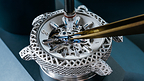
Parivas brings the 3D-printed stainless steel Exo.1 watch to WindUp Watch Fair NYC, with immediate purchase and pickup.

Constructed from 316L stainless steel using metal additive manufacturing, the Parivas Exo.1 is built around a continuous structural lattice that integrates the bezel, case body, lugs, dial architecture, and floating hour indices into a highly complex monolithic structure. Rather than adapting a conventional watch design to 3D printing, the Exo.1 was designed around the capabilities of additive manufacturing from its inception.

For the first time, Parivas will bring a limited number of completed Exo.1 watches to WindUp New York that will be available for immediate purchase and ownership directly from the booth. Collectors who purchase one of the available watches can leave the show with their Exo.1 rather than entering the normal production queue.

The immediately available watches will be offered on a first-come, first-served basis exclusively at WindUp New York. Additional Exo.1 orders placed after that inventory is claimed will be fulfilled as part of Batch 01, scheduled for delivery in Q1 2027.

All four Parivas co-founders will be present throughout the weekend, giving collectors the opportunity to experience the Exo.1 directly with the team responsible for its design, engineering, development, and launch.

“We didn’t start with a conventional watch and ask how we could 3D print it. We started by asking what a watch could become if the manufacturing constraints that shaped the industry were removed. That distinction is at the center of Parivas. Additive manufacturing is valuable to us because it gives us the freedom to create structures and forms that conventional processes cannot.”

Mickey Brown, Co-Founder and CEO, Parivas

What Is Additive Watchmaking?

Additive watchmaking is the application of additive manufacturing to the design and construction of a watch, allowing metal structures to be built layer by layer rather than created primarily by cutting material away from a larger block.

For much of the history of watchmaking, the geometry of a watch has been inseparable from the manufacturing tools used to produce it. Traditional machining requires cutting tools to physically access the material they remove. Individual components must also be manufactured, finished, and assembled within specific sequences.

Those realities helped shape the familiar construction of the modern watch.

Metal 3D printing changes those constraints.

Using additive manufacturing, material can be placed only where it is structurally required, allowing watch-designers to create internal geometries, interconnected lattice structures, enclosed forms, hollow features, and spatial relationships that would be impossible to produce through conventional machining.

Parivas was founded around exploring that expanded design space.

Rather than using additive manufacturing simply as an alternative method for producing a familiar watch case, Parivas develops watches specifically around the capabilities of the process. The Exo.1 is the company’s first expression of that approach.

A 3D Printed Stainless Steel Watch Designed From the Inside Out

The name “Parivas” comes from the Latin phrase “Pario e Pulvas,” meaning “Created from Dust,” a nod to both the company’s origin and the process used to bring its ideas to life. The Exo.1 begins as stainless steel powder.

Through metal additive manufacturing, that powder is transformed layer by layer into a complex 316L stainless steel structure. Its hand-designed lattice extends continuously across the bezel, body, and lugs, creating an architectural framework that gives the watch its distinctive depth.

This manufacturing process allows several elements traditionally separated within a watch to become part of a more integrated structure.

The Exo.1’s floating hour indices are themselves printed with hollow internal cores and positioned within the lattice architecture. Tritium tubes are incorporated into the indices, creating illumination within a structure that appears suspended inside the case.

The result is a watch whose construction is visible from the exterior.

Its architecture is not styling applied after the engineering is complete. The architecture is the engineering.

Why Parivas Uses Metal Additive Manufacturing

For Parivas, 3D printing is not the objective.

It is the tool that allows for a different type of watch to be possible.

The company’s roots in additive manufacturing predate Parivas itself. Co-Founder and CEO Mickey Brown developed expertise in metal additive manufacturing through a career in aerospace engineering, including work involving lattice structures and advanced geometries used within high-performance aerospace applications.

That experience helped shape the fundamental question behind Parivas:

What happens when a watch is designed without accepting the manufacturing constraints that historically defined how a watch had to be built?

The answer became the Exo.1.

Development stretched across six years and more than 10,000 hours as the design evolved alongside the manufacturing technology required to produce it. The watch was intentionally designed ahead of what existing additive manufacturing systems could initially deliver at the standard the team required.

Rather than simplifying the Exo.1 to fit the machines available at the time, Parivas continued developing the design while manufacturing capabilities advanced toward it.

That philosophy remains central to the company.

The Exo.1 and a New Design Language for Watchmaking

The Exo.1 takes its name from the exoskeleton its case architecture evokes.

Its structure combines engineering and visual identity into a single system. The lattice, spatial depth, integrated construction, floating indices, and surface characteristics exist because the watch was developed through additive manufacturing rather than translated into additive manufacturing afterward.

Parivas refers to this approach as additive watchmaking.

The company believes the significance of metal 3D printing in horology extends beyond the ability to manufacture unusually complex components. The larger opportunity is the emergence of a new design language built around geometries that previously could not be produced.

Traditional watchmaking has repeatedly evolved alongside advances in materials, tooling, movements, and manufacturing.

Additive manufacturing introduces another set of possibilities.

It allows designers to reconsider where metal needs to exist, how components can relate to one another, what structures can be integrated, and how depth can become part of the physical architecture of the watch itself.

For Parivas, the Exo.1 represents the beginning of that exploration.

From Aerospace Engineering to the Wrist

Long before the first Exo.1 was manufactured, the architectural thinking behind it was being developed in another industry.

Lattice structures are used throughout advanced engineering because they can provide complex relationships between strength, weight, geometry, and material placement. Additive manufacturing makes many of those structures possible because they do not require a conventional cutting tool to reach every surface being created.

Brown’s aerospace background brought that thinking into Parivas.

Instead of hiding those complex geometries inside a technical system, the Exo.1 places them at the center of the watch’s visual identity.

The result bridges aerospace engineering, metal additive manufacturing, industrial design, and contemporary horology within a single object.

Experience the Parivas Exo.1 at WindUp Watch Fair New York

WindUp New York will give collectors an opportunity to experience the Exo.1 directly rather than only through photography, video, or technical descriptions.

Visitors will be able to handle the watch, study its lattice architecture from multiple angles, speak directly with all four Parivas co-founders, and learn how the Exo.1 moves from stainless steel powder to a completed mechanical watch.

For a limited number of collectors, the experience can go one step further.

For the first time, Parivas will make finished Exo.1 watches available for immediate ownership at an event. Buyers who secure one of the available watches can purchase it directly from the booth and leave WindUp New York with the Exo.1 in hand.

“The best way to understand the Exo.1 is to hold it. You can talk about metal 3D printing, lattice structures and additive manufacturing, but once someone sees the depth of the architecture in person, the reason we chose this process becomes much more intuitive. WindUp gives us the opportunity to have those conversations directly with collectors and let them experience the watch for themselves.”

Mickey Brown, Co-Founder and CEO, Parivas

Parivas Show-Token Raffle and Booth Activations

Parivas will also host several activations throughout WindUp New York.

Among them will be a free raffle for what the company calls a Show-Token, an assembled Exo.1 display piece created without a movement.

The Show-Token preserves the physical architecture and construction of the Exo.1 as an object, allowing its lattice case, integrated structures, and overall design to be viewed independently from the mechanical movement normally housed inside it.

Entry is free. Visitors only need to come to the Parivas booth, meet the team, and enter during the show.

Additional activations will take place throughout the weekend.

WindUp Watch Fair New York 2026

Event: WindUp Watch Fair New York
Dates: October 16–18, 2026
Venue: Center415
Address: 415 Fifth Avenue, New York, NY 10016
Admission: Free
Brand: Parivas
Watch: Exo.1
Exhibitor Status: Sponsored Brand

All four Parivas co-founders will be present at the booth throughout the event.

A limited number of Exo.1 watches will be available for immediate purchase on a first-come, first-served basis. Subsequent purchases will be fulfilled as part of Batch 01 in Q1 2027.

Frequently Asked Questions

What is a 3D printed watch?

A 3D printed watch uses additive manufacturing to produce one or more of its physical components layer by layer from digital geometry rather than creating those components exclusively through traditional subtractive machining.

The Parivas Exo.1 uses metal additive manufacturing to create its primary 316L stainless steel case architecture.

How is the Parivas Exo.1 3D printed?

The Exo.1 begins with metal powder and is produced through an additive manufacturing process that builds its stainless steel structure layer by layer.

This allows Parivas to create the interconnected lattice architecture, integrated structural elements, hollow geometries, and spatial depth that define the Exo.1.

What material is the Parivas Exo.1 made from?

The Exo.1 case is manufactured from 316L stainless steel using metal additive manufacturing.

What is additive watchmaking?

Additive watchmaking is the use of additive manufacturing as part of the fundamental design and construction process of a watch.

Rather than simply using 3D printing to reproduce a component that could otherwise be conventionally machined, additive watchmaking designs around the unique capabilities of layer-by-layer manufacturing.

Parivas uses the term to describe its approach to creating watch structures and geometries specifically for additive manufacturing.

Can I buy a Parivas Exo.1 at WindUp Watch Fair New York?

Yes.

For the first time, Parivas will have a limited number of completed Exo.1 watches available for immediate purchase at WindUp Watch Fair New York. These watches will be sold on a first-come, first-served basis, and buyers will be able to leave the show with their watch.

Additional purchases will be fulfilled as part of Batch 01, with delivery scheduled for Q1 2027.

Where can I see the Parivas Exo.1 in New York?

The Exo.1 will be exhibited by Parivas at WindUp Watch Fair New York from October 16–18, 2026 at Center415, 415 Fifth Avenue in Manhattan.

About Parivas

Parivas is a Los Angeles-based independent watch company specializing in additive watchmaking and metal 3D printed watches.

Founded in 2020 by a multidisciplinary team spanning aerospace engineering, additive manufacturing, design, and business, Parivas was created to explore what becomes possible when watches are designed around emerging manufacturing technologies rather than the limitations of conventional processes.

Its first watch, the Exo.1, is constructed around a 3D printed 316L stainless steel lattice architecture developed through metal additive manufacturing. The watch integrates advanced engineering, monolithic construction, floating geometry, tritium illumination, and Parivas’ proprietary Solar Dusted™ surface into a distinct design language created specifically for additive manufacturing.

Every Parivas watch is hand assembled in Los Angeles.

Website: Parivas.com

View original content to download multimedia:https://www.prnewswire.com/news-releases/parivas-brings-its-3d-printed-exo1-watch-to-windup-watch-fair-new-york-2026-302907838.html

SOURCE Parivas

Continue Reading

Technology

Helpany Named to TIME’s Best Inventions of 2026 for AI-Powered Fall Prevention Device ‘Paul’

Published

on

By

Phoenix-based Helpany announced that Paul, its AI- and radar-powered fall prevention device, has been named to TIME’s Best Inventions of 2026. Designed for senior living communities, Paul identifies changes in residents’ movement and daily routines without cameras or microphones, helping caregivers recognize potential risks and intervene earlier. Communities using the technology have reported fewer falls, reduced emergency calls and more time for resident care, reinforcing Helpany’s focus on proactive care that preserves privacy, dignity and independence.

PHOENIX, Oct. 15, 2026 /PRNewswire-PRWeb/ — Helpany, the Arizona-based company behind the AI- and radar-powered fall prevention device Paul, today announced that Paul has been named to TIME’s Best Inventions of 2026 in the Medical & Healthcare category.

“Behind every fall is a person, a story and, too often, a life permanently changed,” said Sandro Cilurzo, Co-Founder and CEO of Helpany.

TIME’s annual Best Inventions list recognizes 300 innovations shaping the world across industries. The recognition comes as senior living increasingly turns to privacy-preserving technology to move fall prevention from reactive response to proactive intervention. TIME evaluates innovations based on factors including originality, efficacy, impact and innovation.

“Behind every fall is a person, a story and, too often, a life permanently changed,” said Sandro Cilurzo, Co-Founder and CEO of Helpany. “Being recognized by TIME is an incredible honor because it reinforces what we have believed from the beginning: senior care should not have to wait for something to go wrong. With privacy-preserving technology, we can give care teams the insight to recognize risk earlier, intervene sooner and truly move from reactive care to prevention. Ultimately, that means protecting independence, improving quality of life and helping caregivers focus their time where it matters most.”

24/7 AI-powered insights without cameras or microphones

According to the CDC, falls are the leading cause of injury among adults 65 and older in the United States. More than 14 million older adults — approximately one in four — report falling each year.

Helpany’s Paul is designed to help senior living communities recognize changes in a resident’s condition before they may contribute to a fall or other health decline.

Mounted on the ceiling, Paul uses radar and artificial intelligence to understand each resident’s individual movement patterns, without cameras or microphones. It identifies meaningful changes in areas such as gait and mobility, sleep, bathroom frequency, and sedentary behavior, giving care teams earlier insight into when additional attention may be needed. These insights can help caregivers investigate potential causes, adjust care plans, increase support, and intervene before small changes escalate — supporting proactive fall prevention while preserving residents’ privacy, dignity, and independence.

As the population ages and senior living communities support residents with increasingly complex needs amid persistent workforce constraints, technologies that help care teams prioritize attention and use their time more effectively are becoming increasingly important. AI can support this shift by helping communities deliver more proactive care while strengthening resident safety, independence, and quality of life.

Measurable results across senior living communities

United Zion Retirement Community, Pennsylvania: After implementing Helpany across its personal care community, United Zion reduced falls by approximately 70% over four months, culminating in zero recorded falls in April 2026. Helpany insights also contributed to the realignment of approximately one in three resident care plans.Fellowship Square Mesa, Arizona: Resident presence in memory care increased from 92.9% to 97.0%, representing approximately 270 additional resident days per year and more than $78,000 in estimated annual ALTCS/Medicaid savings associated with residents spending fewer days in hospitals and skilled nursing facilities.Glencroft, Arizona: In memory care, nighttime falls were eliminated for three consecutive months, while care teams completed more than 250 proactive interventions. The community also reported 22% more time available for resident care without adding staff.Arroyo Gardens, Arizona: Within two months of implementing Helpany, the community reported a 64% reduction in total falls, zero fall-related 911 calls and a 57% reduction in general injuries.

Across Helpany communities, customers have reported outcomes including up to 80% fewer 911 calls and up to 22% more time for resident care, allowing teams to direct more attention toward residents who need it most.

Swiss engineering, built for American senior living

Helpany’s story began in Switzerland, where the company’s engineering, research and development teams continue to develop its core technology.

Today, Helpany is headquartered in Phoenix, Arizona, placing the company close to the senior living communities, operators and caregivers shaping the future of its platform. As demand has expanded nationally, Helpany has expanded Paul production to Texas, strengthening its U.S. manufacturing capabilities and supporting continued growth across the country.

“We built Paul around a simple belief: the best care happens before an emergency,” said Cilurzo. “Our Swiss engineering roots shaped the way we approached that challenge, with precision, reliability and a strong respect for privacy. Paul gives care teams earlier insight into meaningful changes, helping them intervene sooner, prevent avoidable falls and protect residents’ dignity and independence.”

The TIME recognition follows a series of national honors for Helpany and its senior living partners. At the 2026 McKnight’s Excellence in Technology Awards, Helpany received Gold in Fall Prevention, Silver in Creative Use of AI and Bronze in Quality. In 2025, Helpany received Gold for Innovator of the Year, Gold for Resident Monitoring and Safety, Silver for Fall Prevention and Best of Show. Helpany has also received the LeadingAge Arizona Innovation Award.

About Helpany

Helpany is transforming proactive care and fall prevention in senior living with Paul, its AI-powered, radar-based care technology. Designed for senior living communities across multiple levels of care, Paul analyzes resident movement and behavior patterns without cameras or microphones, helping care teams identify potential fall risks and early signs of changing health or care needs. Helpany also provides insights into care delivery, helping communities identify discrepancies between planned and actual care and supporting more informed care planning and resource allocation.

Founded in Switzerland and headquartered in Phoenix, Arizona, Helpany combines Swiss engineering and research with U.S.-based operations and manufacturing to support senior living providers across the country.

For more information, visit helpany.com.

Media Contact

Holly Morgan, The PR Insiders, 1 4808886074, holly@theprinsiders.com, theprinsiders.com

View original content to download multimedia:https://www.prweb.com/releases/helpany-named-to-times-best-inventions-of-2026-for-ai-powered-fall-prevention-device-paul-302909851.html

SOURCE Helpany

Continue Reading

Technology

12th Tech Launches New Marketing Website and uFloorit

Published

on

By

New marketing site highlights the continued expansion of 12th Tech solutions

AUSTIN, Texas, Oct. 15, 2026 /PRNewswire/ — 12th Tech, a leading provider of collateral verification and floor plan portfolio technology, today announced the launch of its newly redesigned marketing website, showcasing the company’s expanding suite of innovative solutions for lenders, dealers and auditors.

The new site reflects the continued evolution of 12th Tech and the growing capabilities of its technology across the floor plan portfolio lifecycle.

At the center of that expansion is Crescendo, 12th Tech’s highly configurable platform supporting physical audits, dealer self-audits, dealer self-reconciliation, asset onboarding, workflow automation, risk management, reporting and portfolio visibility.

“Our technology continues to evolve because the challenges facing lenders continue to evolve,” said Mark Abrams, CEO and Founder of 12th Tech. “Our new marketing website better represents what 12th Tech has become and where we are going. We are building technology that helps lenders manage collateral risk more effectively from onboarding through payoff.”

Introducing uFloorit™

A key solution featured on the new marketing site is uFloorit, 12th Tech’s newest collateral verification solution.

uFloorit gives lenders a structured way to validate assets being added to a dealer’s floor plan, specifically inventory acquired outside traditional validated channels such as non-auction purchases, trades, private party purchases and dealer to dealer transactions.

Each lender determines what information must be collected. uFloorit can be configured to capture the specific asset details, documents, photographs and underwriting information required as part of that lender’s approval process.

12th Tech uses authenticated, cryptographically sealed photographs to protect image integrity and provide greater confidence in the validity of the asset being presented.

By introducing verification before an asset is added to the floor plan, uFloorit helps lenders reduce risk at one of the most important points in the collateral lifecycle.

Expanding Across the Floor Plan Portfolio

12th Tech continues to expand its technology beyond traditional collateral auditing.

Crescendo provides lenders with a scalable platform capable of supporting more of the processes involved in managing a floor plan portfolio, including onboarding, verification, auditing, reconciliation, workflow management, risk analysis and reporting.

The platform is highly configurable, allowing lenders to establish requirements and workflows around their own business rules, portfolio, and risk strategy.

About 12th Tech

12th Tech exists to give wholesale lenders better visibility, stronger verification and smarter tools to manage collateral risk with greater confidence. The company believes floor plan technology should do more than document an audit. It should connect the information, workflows and verification tools lenders need to make better decisions across their portfolio.

Through Crescendo and solutions including Crescendo Hub, Crescendo Mobile, uVerify™, uReconcile™ and uFloorit, 12th Tech provides a highly configurable technology ecosystem spanning asset onboarding and verification, physical and dealer self-auditing, reconciliation, workflow automation, risk management, reporting and portfolio intelligence. The goal is not simply to complete audits, but to help organizations manage collateral risk and portfolio operations more effectively.

For more information, visit https://www.12thtech.com/

Media Contact

12th Tech, Inc.
Casey J. Holyk
caseyholyk@12thtech.com 
360.360.0123

View original content to download multimedia:https://www.prnewswire.com/news-releases/12th-tech-launches-new-marketing-website-and-ufloorit-302909806.html

SOURCE 12th Tech Inc.

Continue Reading

Technology

Stratus and Zeto Announce Strategic Distribution Partnership to Expand Access to Point-of-Care EEG in Hospitals Nationwide

Published

on

By

Partnership pairs Zeto’s rapid, full-montage EEG headsets with Stratus’ nationwide network of Registered EEG Technologists, giving hospitals a scalable path to high-quality, continuous EEG data in the ICU and ED.

IRVING, Texas and RALEIGH, N.C., Oct. 15, 2026 /PRNewswire-PRWeb/ — Stratus, a leading provider of neurodiagnostic solutions in the United States, and Zeto, Inc., a next-generation neurotechnology company, today announced a strategic partnership under which Stratus will become an exclusive channel distributor of Zeto’s FDA-cleared point-of-care Zeto ONE™ EEG in hospitals. The collaboration combines Zeto’s novel, rapid-application EEG hardware and AI-tools with Stratus’ clinical operations and nationwide network of Registered EEG Technologists (R. EEG T.s), giving hospitals a single, turnkey path to reliable, continuous EEG monitoring in the ICU, ED, and beyond.

The collaboration combines Zeto’s novel, rapid-application EEG hardware and AI-tools with Stratus’ clinical operations and nationwide network of R. EEG T.s, giving hospitals a single, turnkey path to reliable, continuous EEG monitoring in the ICU, ED, and beyond.

“EEG remains one of the most under-resourced diagnostic tools in acute care, constrained less by clinical demand than by a chronic, nationwide shortage of qualified EEG Technologists,” said Charlie Alvarez, Chief Executive Officer at Stratus. “Hospitals need EEG devices that are fast and intuitive enough for bedside staff to apply at the point of care, without sacrificing the full-montage signal quality and continuous, technologist-verified oversight that neurologists rely on to catch critical neurological events as they happen. The Stratus-Zeto partnership is designed to close that gap.”

“Zeto is driven by a simple idea: access to high-quality EEG should not be determined by where a patient happens to be or whether a specialized EEG team is immediately available,” said Florian Strelzyk, PhD, Chief Executive Officer at Zeto. “Our technology is designed to expand EEG access across the continuum of care, from routine testing to the emergency department, ICU and other settings where timely brain monitoring can change clinical decision-making. Stratus brings tremendous depth in EEG services and Technologist expertise. By bringing that depth together with the breadth of Zeto’s platform, we are building a more complete EEG ecosystem and making high-quality brain monitoring available to far more patients.”

The partnership builds on an existing clinical relationship between the two companies. Earlier this year, Zeto and Stratus jointly launched NeuroNotis™, a report that pairs Zeto ONE’s AI-enabled seizure burden detection with technical validation from Stratus’ Registered EEG Technologists. Zeto brings rapid, guided setup and full-head coverage, including synchronized video and ECG to the bedside, while Stratus’ remote R. EEG T.s provide the 24/7, eyes-on monitoring and technical review that helps turn raw data into clinically actionable data. This distribution partnership extends that model across Zeto’s hospital product offerings, positioning both companies to scale point-of-care EEG access to health systems nationwide.

Zeto ONE™ is now available in hospitals through Stratus. To learn more about this partnership, watch this video.

About Stratus

Stratus is a leading provider of EEG solutions in the United States and offers global EEG technology via the Stratus EEG software. Stratus offers an array of EEG solutions, from remote ICU and EMU monitoring to world-class EEG review software, ambulatory VEEGs with pruned data, and other custom EEG solutions to fit hospitals’ needs. The company also provides EEG solutions for centralized and decentralized clinical trials, biomarker detection, and access to over 2.2 million hours of anonymized EEG data through its R&D division’s database. To learn more, visit www.stratusneuro.com.

About Zeto

Zeto, Inc., a trailblazer in next-generation neurotechnology, is striving to include an EEG in every relevant health care decision and make brain health insights as common as other vital signs. Powered by its FDA-cleared EEG platform, Zeto enables scalable, real-time measurement of brain activity and provides actionable data to support clinical decision-making, bringing brain monitoring into everyday care environments. The company plans to leverage its platform technology to improve access and quality of medical EEG testing and to facilitate adjacent biomedical research and clinical trials. Zeto’s EEG systems, which received FDA clearances in 2018, 2024, and 2026, are commercially available in the United States. To learn more, visit https://zeto-inc.com/.

Media Contact
Jennifer Armstrong, Stratus, 1 9727438992, jennifer.armstrong@stratusneuro.com, https://stratusneuro.com/
Monica Hodis, Zeto, 1 585-281-9279, monica.hodis@zetoinc.com, https://zeto-inc.com/

View original content:https://www.prweb.com/releases/stratus-and-zeto-announce-strategic-distribution-partnership-to-expand-access-to-point-of-care-eeg-in-hospitals-nationwide-302909856.html

SOURCE Stratus

Continue Reading

Trending