Connect with us

Technology

20 Lenovo and HKC Monitors Among First to Receive TÜV Rheinland Native Gaming Performance Certification

Published

on

Framework combines native performance with human-factor evaluation to connect measurable specifications with real gaming experiences.

SHANGHAI, Oct. 15, 2026 /PRNewswire/ — Following the official launch of the TÜV Rheinland Native Gaming Performance Standard at the 23rd China Digital Entertainment Expo & Conference (ChinaJoy) in July 2026, the certification framework is now being adopted across the gaming display industry. Recently, multiple gaming monitors from Lenovo’s Legion series and ANTGAMER earned TÜV Rheinland Native Gaming Performance Certification, making them among the first products certified under the new standard. ANTGAMER is an esports brand under HKC which was established in Shenzhen in 2001.

Higher refresh rates and shorter advertised response times do not necessarily translate into clearer, more stable gaming visuals. When such specifications depend on overclocking, undisclosed reductions in display quality or compromises in stability, the actual experience may fall short of product claims. TÜV Rheinland’s framework addresses this challenge by evaluating both the accuracy of performance claims and the quality of the gaming experience.

The Native Gaming Performance evaluation system was developed to provide consumers with a transparent and measurable benchmark for assessing gaming displays. The standard clearly defines three refresh-rate operating modes, namely native, overclocked, and dual-mode, while establishing a “same mode, full-system testing” principle. Refresh-rate overclocking is excluded from certification, ensuring performance claims are assessed under consistent and realistic operating conditions.

Designed around the core requirements of gamers, the certification framework evaluates products across three key dimensions: motion performance, image quality, and visual comfort. Fourteen indicators are assessed under these dimensions. Different weighting factors are applied according to competitive, immersive, and all-around gaming scenarios; the weighted results are then summed to produce the final Gaming Performance Index (GPI), which is converted into a three- to five-star rating. The methodology also incorporates human-factor studies, including dynamic visual acuity assessments, eye-tracking analysis, and first-person shooter gaming tests. These convert subjective gaming experiences into quantifiable data and deliver a more comprehensive measurement of perceived motion clarity.

Advancing the Gaming Display Industry Toward Real-World Performance

Jay Yang, Global Senior Vice President of Electrical at TÜV Rheinland, stated: “The Native Gaming Performance Standard was introduced to help consumers identify products that genuinely deliver high-level gaming experiences. The successful certification of multiple Lenovo Legion and ANTGAMER monitors demonstrates both manufacturers’ continued commitment to display innovation and the practical applicability of the standard across the industry.”

He added that the certification framework combines a unified definition of native performance, full-system testing methodologies, human-factor validation, and scenario-based star ratings. This encourages the gaming display industry to move beyond specification-driven competition toward performance evaluated through real-world testing. The program also supports consumers in making informed purchasing decisions while ensuring certification integrity through ongoing standards updates and production-sample surveillance.

Sixteen Lenovo Legion Monitors Receive 3-Star to 5-Star Ratings

As Lenovo’s flagship gaming monitor lineup, the Legion series is designed to deliver high refresh rates, low latency, and premium image quality. In this certification project, 16 Legion monitors received TÜV Rheinland Native Gaming Performance ratings ranging from three to five stars, reflecting Lenovo’s comprehensive product portfolio from entry-level to flagship offerings.

5-Star Certified Models (4):  Legion 27Q-10 OLED, Legion Pro 27Q-10, Legion Pro 27UD-10, Legion Pro 32UD-10

4-Star Certified Models (7): Legion 34W-2c, Legion 32Q-2C, Legion 27U-10, Legion 27U-20, Legion 27QD-10, Legion 27Q-20, Legion 27Q-2c

3-Star Certified Models (5): Legion 27Q-10, Legion 27-2c, Legion 27-1r, Legion 25-10, Legion 24-1r

George Toh, Vice President and General Manager, Visuals Business, Lenovo’s Intelligent Devices Group, said: “The TÜV Rheinland Native Gaming Performance Certification awarded to 16 Legion monitors is strong recognition of our continued investment in gaming display technologies and our commitment to prioritizing real-world user experiences. Certification across the full range of ratings, from three to five stars, demonstrates the ability of our product portfolio to meet the diverse needs of gamers at every level. We look forward to further strengthening our collaboration with TÜV Rheinland to deliver clearer, smoother, and more comfortable visual experiences for gamers worldwide.”

Four ANTGAMER Monitors Earn 5-Star Certification

Following comprehensive testing and evaluation by TÜV Rheinland, four gaming monitors from HKC’s ANTGAMER brand, namely ANT25ASF, ANT255TQ, ANT275TQ, and ANT272TUE, met the requirements of the Native Gaming Performance Standard and received the highest 5-Star Certification.

Covering FHD, QHD, and UHD resolutions, the certified models are designed to address the performance requirements of professional esports players, dedicated gaming enthusiasts, and premium entertainment users seeking high-performance gaming displays.

Peng Xinchun, General Manager of Brand Operations at ANTGAMER, commented: “Receiving TÜV Rheinland’s 5-Star Native Gaming Performance Certification validates our ability to deliver clear, smooth, and precise visual experiences in real gaming scenarios. Going forward, HKC will continue working closely with TÜV Rheinland to provide consumers with superior display technologies and enhanced visual experiences.”

About TÜV Rheinland

TÜV Rheinland is a leading provider of testing, inspection and certification services worldwide. For over 150 years, the company has helped make the world a safer place. Today, more than 29,000 employees test, inspect and certify products, plants and processes, while also providing training for people in a wide range of professions. Operating from 500 locations in more than 50 countries, TÜV Rheinland helps safeguard key areas of business and everyday life. Headquartered in Cologne and generating annual revenue of close to €3 billion, the company plays a key role in quality assurance worldwide. TÜV Rheinland has been a member of the UN Global Compact since 2006, demonstrating its commitment to anti-corruption and sustainability.

View original content to download multimedia:https://www.prnewswire.com/news-releases/20-lenovo-and-hkc-monitors-among-first-to-receive-tuv-rheinland-native-gaming-performance-certification-302909971.html

SOURCE TÜV Rheinland

Continue Reading

Technology

Growth Acceleration Partners Appoints Dwayne Stoltz as Vice President of AI to Drive Global Client Transformation

Published

on

By

AUSTIN, Texas, Oct. 15, 2026 /PRNewswire/ — Growth Acceleration Partners (GAP), a leading AI transformation company, today announced the appointment of Dwayne Stoltz as Vice President of AI. Stoltz will lead GAP’s global AI go-to-market strategy, unifying its strategic consulting and hands-on engineering practices to help clients modernize software and scale long-term AI capabilities.

The appointment underscores GAP’s positioning as a best-in-class AI transformation partner, combining high-level C-suite advisory with end-to-end technical execution across generative, agentic and custom AI technologies. GAP’s leaders understand the AI market has reached a critical turning point, where companies face immense challenges around legacy architecture, governance, scaling and ROI.

“Our clients don’t just need AI advice; they need an execution partner who can translate complex technology into sustainable business value,” said GAP’s CEO and Cofounder Joyce Durst. “Dwayne’s leadership allows us to bridge the gap between executive strategy and technical execution. Having a dedicated leader driving our AI practice ensures we can move faster, innovate smarter and equip our clients with the internal AI capabilities they need to maintain a competitive edge.”

Stoltz brings over three decades of operational, execution and technology leadership experience, with a proven track record of building enterprise AI practices, commercializing advanced consulting services and delivering high-impact executive advisory.

At the core of GAP’s strategy is a modernized delivery engine that pairs human engineering pods with autonomous engineers and proprietary AI-driven development tools. This hybrid methodology enables clients to accelerate product velocity, automate complex workflows, and modernize core software at unprecedented speed while upholding strict security standards.

“The AI landscape is moving from experimentation to execution, and companies need clear, reliable roadmaps that yield measurable outcomes,” Stoltz said. “By combining deep engineering discipline with strategic consulting, GAP is uniquely positioned to remove the friction from AI adoption. My goal is to build a market-leading practice that gives our clients both the custom solutions they need, along with the internal muscle to stay ahead. And my focus will be on delivering practical, scalable AI solutions today, while helping our clients build autonomous capabilities that power their growth tomorrow.”

In his role, Stoltz will oversee four primary strategic pillars:

AI Services Portfolio: Scaling enterprise-ready service offerings, from agentic AI workflows and autonomous software engineering tools, to generative models and emerging technologies.Executive Advisory: Delivering AI readiness assessments, strategic roadmaps and custom, hands-on acceleration workshops.Practice & Talent Leadership: Expanding GAP’s global technical bench strength to scale specialized AI delivery capabilities.Internal Innovation & Governance: Leveraging GAP’s own internal delivery efficiencies as client-facing proof points, while upholding rigorous AI governance standards.

“Since early 2024, we have taken intentional steps to lay the groundwork for our next phase of growth,” Durst added. “AI is central to how we operate internally and what we build for our clients. Dwayne brings the ideal combination of technical credibility and commercial vision needed to help C-suite executives navigate their AI journeys, build lasting internal capabilities and capture long-term value.”

Stoltz officially assumed his role on Oct. 1, 2026.

About Growth Acceleration Partners

Growth Acceleration Partners (GAP) is an AI transformation company that combines strategic consulting with hands-on engineering to help companies transform their products, processes and people. Our autonomous engineers modernize software, automate business operations and build intelligent products that deliver valuable, measurable outcomes and lasting business capability. Learn more at www.WeAreGAP.com.

Media Contact:

Jocelyn Sexton
VP of Marketing
512- 243-5754 

Email: 424818@email4pr.com 

View original content:https://www.prnewswire.com/news-releases/growth-acceleration-partners-appoints-dwayne-stoltz-as-vice-president-of-ai-to-drive-global-client-transformation-302909445.html

SOURCE Growth Acceleration Partners

Continue Reading

Technology

Intelligence Veteran Brings Real-Time Deception-Risk Alerts to Smart Glasses

Published

on

By

Coyote XR is available to select clients following its showcase at DEFSEC Atlantic 2026

VANCOUVER, BC, Oct. 15, 2026 /CNW/ — Prodigy Intelligence Inc. announced that Coyote XR is available to select clients paired with discreet XR glasses, bringing real-time deception-risk alerts into live conversations. The company showcased the technology at DEFSEC Atlantic in Halifax, October 6–8, 2026.

Founded by former Canadian military intelligence officer Matthew Kane, Prodigy develops communication-analysis tools already used by investigators and Canadian regulators. Coyote XR brings that technology into a wearable format, helping users identify statements that warrant follow-up while maintaining eye contact.

“We’re building a smoke alarm for deception,” said Kane, CEO and founder of Prodigy Intelligence. “Coyote XR draws your attention to something that deserves scrutiny and helps you decide where to look more closely.”

Coyote XR provides:

Discreet alerts: A gentle vibration draws the wearer’s attention to a statement that warrants closer examination.Heads-up analysis: The relevant statement and analysis appear in the glasses’ display during the conversation.Support for follow-up questions: Real-time indicators help users decide when to seek clarification or investigate further.

Potential applications include investigators probing inconsistent accounts, directors examining management presentations and legal professionals assessing prospective clients’ statements.

Coyote XR analyzes communication patterns associated with potential deception risk. An alert does not establish deception or intent; the system supports human judgment and independent verification.

Details of compatible smart glasses and supported features will be published shortly.

“Canada has a reputation for being polite,” said Kane. “But polite shouldn’t mean easy to fool.”

For more information, press materials or to request a demonstration, visit www.prodigyintel.com.

About Prodigy Intelligence Inc.

Prodigy Intelligence develops AI-assisted tools for analyzing human communication. Its Coyote platform examines text, audio and video for deception-risk indicators.

SOURCE Prodigy Intelligence Inc.

Continue Reading

Technology

Reshaping Network Value for New Growth in the AI Era

Published

on

By

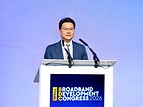
VIENNA, Oct. 15, 2026 /PRNewswire/ — During Network X 2026, the World Broadband Association (WBBA) hosted the Broadband Development Congress (BDC) in Vienna. At the congress, Bob Chen, President of Huawei Optical Business Product Line, delivered a keynote speech titled “Reshaping Network Value for New Growth in the AI Era.” He emphasized the necessity of shifting network construction concepts in the AI era based on three “R”s—Rebuilding network architecture, Reshaping business model, and Redefining network O&M—to reshape network value and achieve new growth.

Bob Chen mentioned that, looking back over the past three decades, every boom in services—from voice and the Internet to video—has relied on network support. Today, AI is developing at a rapid pace. Large AI models now feature nearly 10 trillion parameters, and token consumption has surged nearly 50-fold over the past year. In the AI era, the objects, frequency, and quality of network connections have all undergone dramatic shifts. The entire industry must rethink how to reshape network value.

Chen pointed out that the most crucial element in reshaping network value is shifting network construction philosophy: network planning and building must center around AI service demands and AIDC layouts, while AI technology should be adopted to elevate O&M capabilities. This can be summarized into three “R”s. Rebuild network architecture: transitioning from traditional administrative region-centered networks to AIDC-centered networks. Reshape business model: for enterprise, upgrading from selling bandwidth alone to selling “bandwidth + latency + reliability”, along with integrated computing-network services; and for home broadband: evolving from providing pure broadband connectivity to whole-home networking, and ultimately smart home experiences. Redefine network O&M: evolving from traditional semi-automated operations toward full-lifecycle intelligence.

Rebuild Network Architecture

In the past, networks were structured around administrative regions, divided into national backbone, provincial backbone, and metro networks. With the rise of AI, the number of AIDCs has grown nearly 10-fold, and traffic volume is no longer determined by population, but by computing power.

Take Zhongwei, China as an example: in the past, its traffic accounted for only about 0.1% of China’s total. Today, Zhongwei has become one of China’s eight national computing hubs, with its intelligent computing traffic accounting for over 10% of the country’s total bandwidth, making it a core node in the AIDC interconnect network. Similar cases are taking place worldwide.

Therefore, network architecture must shift from being administrative region-centered to AIDC-centered. Networks should be organized into hierarchical layers around Core DCs, Regional DCs, and Edge DCs. Direct one-hop mesh connections between DCs enable deterministic 1-5-20 ms latency circles and rapid time-to-market.

Reshape Business Model

For enterprise segment, as AI accelerates, enterprise production models are transforming. For instance, an AI industrial design firm in China uses AI rendering to drastically shorten production cycles, and real-time AI rendering demands latency below 2 milliseconds. To capitalize on such opportunities, operators can upgrade private lines from a single dimension of bandwidth to multi-dimensional offerings: “Bandwidth + Latency + Reliability.” Powered by OXC, ASON, and Quantum Encryption, networks can deliver deterministic latency, high reliability, and top security, significantly boosting private line value. Furthermore, leveraging computing platforms, operators can evolve from selling networks to selling “Network + Computing + Model/Application”, delivering integrated computing-network services.

For home broadband segment, operators can upgrade from providing basic broadband connections to the “One Fiber, One Network, One Home” strategy: One Network refers to delivering high-quality whole-home Wi-Fi with FTTR or Wi-Fi Mesh. One Home means providing rich smart applications powered by home AI terminals and AI agents. In addition, home AI agents are reshaping home broadband interaction models—allowing users to interact in real time, and control home networks through simple voice commands.

Redefine Network O&M

In the AI era, end-to-end intelligence across planning, construction, maintenance, optimization, and operation must be realized through network element intelligence, network intelligence, and service intelligence. For example, most home network complaints stem from Wi-Fi issues. Today, AI Wi-Fi tuning automatically identifies interference sources and types, making real-time adjustments to transmit power and other parameters—boosting Wi-Fi speeds by approximately 20% in interference environments.

Second, for AI energy saving, previously, network equipment ran at full capacity regardless of traffic levels, consuming unnecessary substantial power. Now, intelligent traffic analysis enables smart dynamic power adjustments for OLT chassis and line cards, reducing total device energy consumption by over 20%.

Last, for intelligent fault self-healing, home broadband troubleshooting is categorized into three tiers. Self-Healing: Air-interface issues like roaming failures are automatically fixed by O&M AI agents. Remote O&M: Configuration parameter issues are processed remotely at the NOC with AI agent assistance. On-Site Visits: Physical fiber connection issues are precisely localized with O&M Copilot assistance.

“Facing the AI era, we must shift our philosophy to Rebuild network architecture, Reshape business model, and Redefine network O&M,” Bob Chen concluded. “Through these three ‘R’s, we can reshape UBB network value and jointly move towards new growth in the AI era!”

SOURCE Huawei

Continue Reading

Trending