Connect with us

Technology

Fourteen Lingnan students from around the world join inaugural Samuel C.C. Ting Elite Class Nobel Laureate shares insights on ‘starting from zero’ in new research

Published

on

HONG KONG, Oct. 16, 2026 /PRNewswire/ — Lingnan University has announced the admission of 14 outstanding students to its inaugural Samuel C.C. Ting Elite Class (CCT Class). Selected from high-achieving undergraduates awarded University Entrance Scholarships, the students come from eight countries and regions, namely the Hong Kong SAR, the Chinese Mainland, Ethiopia, Kyrgyzstan, Nepal, the Philippines, Russia, and the UK. They will receive four-year full-tuition scholarships, a guaranteed hostel place with fees covered for four years, dedicated one-to-one mentorship, artificial intelligence (AI) training provided by leading multinationals, precedence in frontier research projects, opportunities to meet Nobel laureates and leading scholars, and priority for admission to postgraduate programmes.

Undergraduates in the CCT Class are studying disciplines including Animation and Digital Arts, Accounting and Corporate Governance, Business Analytics and Innovation, Cultural Studies, Data Science, Economics, Finance, Global Development and Sustainability, Government and International Affairs, Health and Social Services Management, and Marketing and Social Media.

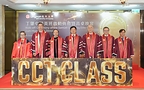
Prof S. Joe Qin, President and Wai Kee Kau Chair Professor of Data Science at Lingnan University, officiated at the “Kick-off Ceremony of the Samuel C.C. Ting Elite Class cum High Table Dinner” on the evening of 15 October to welcome the first cohort, and said he was honoured to receive Prof Wang Yifang, Academician of the Chinese Academy of Sciences and a former student of Prof Samuel C.C. Ting, to witness the launch of the inaugural CCT Class.

President Qin said, “Named after Nobel Laureate in Physics Prof Samuel C.C. Ting, the programme, abbreviated as the CCT Class, also embodies our aspiration for students to become research-oriented individuals with creative and critical thinking. Students from different academic backgrounds will receive AI training and explore the application of AI to research and to real-world problem-solving from the perspective of their respective disciplines. I encourage the members of this inaugural cohort to carry forward Prof Ting’s commitment to scientific exploration, stay curious, have the courage to innovate, and translate their knowledge into practical solutions that address societal challenges.”

Nobel Laureate in Physics Prof Samuel C.C. Ting, who is currently overseas, thanked President Qin for the invitation in a video address, and delivered his first lecture to the students. Sharing his years of experience in ground-based and space research experiments, Prof Ting recalled his involvement in a major US particle accelerator project that was eventually terminated due to management problems, prompting him to reconsider his future research direction. He then decided to take on a field in which he had “zero experience”, one that many people at the time considered impossible, and ventured into space research.

Prof Ting noted that neither he nor any of his collaborators had ever done anything in space, and that they had no relevant experience at the time. Starting from zero, the team worked on how to send a large scientific detector into space, eventually succeeding in sending the detector to the International Space Station to collect and analyse cosmic rays over an extended period. The experiment, known as the Alpha Magnetic Spectrometer (AMS), subsequently became a long-term space research programme.

Prof Ting shared that while the detector was operating in space, the team had no Christmas, no New Year, and no holidays, as the experiment had to continue without interruption. Researchers monitored the experiment 24 hours a day, seven days a week, and 365 days a year.

Prof Ting also explained why basic research that may appear to have no direct connection with everyday life is equally important. Citing the development of science as an example, he said that research into classical mechanics, thermodynamics, and optics in the 1900s is now used in microwave technology, aerospace, and optical instruments. Research into atoms in the 1930s later contributed to the development of computers, AI, superconductors, semiconductors, and lasers. Research into atomic nuclei in the 1940s is now applied to nuclear reactors. “Only later, when uses develop and the public becomes familiar with the new phenomena, does the value of basic research become understood.”

Regarding how scientific research leads to new discoveries, Prof Ting said, “When an experiment agrees with theory, what you learn is limited. Only when experiments contradict theory do you learn something new. Theory, however elegant, cannot replace experimental results. Scientific research must be verified through experimentation to discover new knowledge.”

Prof Wang Yifang, who attended the inauguration ceremony in person, said, “The development of particle physics is closely associated with the name of Prof Samuel C.C. Ting. Over the past 20 years, through the AMS experiment on the International Space Station, Prof Ting has revolutionised the field of cosmic-ray research and made important contributions to the development of particle physics in China. I believe Prof Ting’s story and his point of view about scientific research are very inspiring for young people.”

Dawit Kidu Hailezgi, a CCT Class undergraduate from Ethiopia studying Health and Social Services Management, said, “I come from Ethiopia and always wished to gain better knowledge and skills in order to improve life in my home country. The Hong Kong SAR is a global hub for research and collaboration, and Lingnan University offers a Health and Social Services Management programme that combines healthcare and AI. Together with the scholarship, internship, and international exchange opportunities, Lingnan is the perfect fit for me. In the CCT Class, I am especially looking forward to researching the use of AI tools in medical imaging to help diagnose diseases at an early stage. Through exclusive AI training provided by multinationals and opportunities to participate in cutting-edge research, I hope to develop practical and feasible solutions to narrow the healthcare disparities faced by low-income countries.”

Jia Xinyan, a Chinese Mainland undergraduate studying Data Science, hopes to use AI to address practical challenges in healthcare and smart cities. She said, “What attracts me most about studying in the Hong Kong SAR is its two unique advantages. The city is an international hub for finance, technology and higher education, giving students access to world-class research, companies, and talent. At the same time, the Hong Kong SAR is closely connected with the Chinese Mainland and shares a similar culture with efficient transport, so I never feel completely cut off from home. I chose Lingnan because of its small-class teaching and the close relationships between students and the faculty. The CCT Class also provides state-of-the-art AI courses and training from leading multinationals. I intend to build a strong foundation in data science here, and explore how AI can address real-world challenges in healthcare and smart cities.”

Subats Nepal, an undergraduate from Nepal studying Economics, hopes to research the barriers faced by developing countries. He said, “I come from Nepal, one of the world’s less developed countries. What I look forward to most at Lingnan is conducting research to identify the bottlenecks that have been holding back the potential of countries like mine. I also hope to investigate and establish practical, realistic solutions to overcome these barriers. By drawing on successful development experiences from around the world and adapting strategies to the specific needs of different local communities, I would like to contribute to sustained prosperity.”

Prof Raymond Chan Hon-fu, Vice-President (Academics) cum Provost and Lam Man Tsan Chair Professor of Scientific Computing, and Chair of the CCT Task Force, said in his closing speech, “The CCT Class is an elite, cross-disciplinary enrichment pathway alongside our students’ degree programmes. Prof Ting and Prof Wang reminded us that true learning extends beyond the classroom. It is a lifelong commitment to discovery. Prof Ting has been a role model, devoting his life to asking bold questions that reshape our understanding of the universe. I encourage you to carry these lessons forward. Seize every opportunity, and make the most of the extraordinary mentorship.”

View original content to download multimedia:https://www.prnewswire.com/apac/news-releases/fourteen-lingnan-students-from-around-the-world-join-inaugural-samuel-cc-ting-elite-class-nobel-laureate-shares-insights-on-starting-from-zero-in-new-research-302910906.html

SOURCE Lingnan University

Continue Reading

Technology

FDA grants 510(k) clearance for BoneEnhance, the first machine learning layer on RIVANNA’s Accuro XV platform

Published

on

By

Anatomy segmentation and three-dimensional skeletal visualization arrive with this clearance; an injury detection module for clinical decision support is in development on the platform roadmap

CHARLOTTESVILLE, Va., Oct. 22, 2026 /PRNewswire/ — RIVANNA®, developer of AI-enabled clinical decision-support solutions, today announced that the U.S. Food and Drug Administration (FDA) has granted 510(k) clearance for BoneEnhance®, a machine learning software module for the Accuro® XV diagnostic ultrasound system. The module segments bone and surrounding tissues and supports visualization of skeletal anatomy in three dimensions during image review.

The clearance moves the platform from acquisition toward interpretation. Accuro XV was cleared in April 2026 for B-mode imaging in musculoskeletal conventional and superficial applications. Its conformable three-dimensional probe automates large field-of-view image acquisition after initial patient positioning. BoneEnhance is the first machine learning software module cleared for the platform.

BoneEnhance identifies bone and surrounding tissues

Each automated acquisition creates a volumetric dataset for review. BoneEnhance identifies bone and surrounding tissues within that volume, then highlights them with color-coded overlays on the two-dimensional B-mode image. The original anatomical data remain unaltered and visible beneath the overlays. A three-dimensional indicator beside the image shows the scan orientation and the location of the displayed slice within the volume.

A platform milestone

The sequence is deliberate: decision support begins at acquisition. Accuro XV acquires the image; BoneEnhance identifies and labels the anatomy within it. Behind the integrated workflow stands a worldwide intellectual-property portfolio of more than 100 issued and pending patents across more than 20 patent families.

“We founded RIVANNA to solve a problem that cuts across care settings: decision-critical information sits outside the point-of-care workflow,” said Will Mauldin, PhD, Co-founder and CEO of RIVANNA. “BoneEnhance is where the stack begins to close that gap for musculoskeletal care: automated volumetric acquisition, now paired with cleared software-assisted review. This clearance is the foundation: the first machine learning layer, anchoring the decision-support capabilities now in development.”

Independently validated within a nationwide eight-site study

BoneEnhance was trained and validated within RIVANNA’s nationwide eight-site clinical study. Three sites contributed the training data; the other five provided the independent test set of 233 volumetric datasets, comprising 69,900 images from 173 subjects. None of the test data were used for training or tuning. Three board-certified radiologists established the reference labels, and per-volume label prediction accuracy, a measure of anatomical labeling, ranged from 95.1% to 100.0%.

Separate from the validation supporting this clearance, the platform’s automated acquisition carries peer-reviewed evidence: in a published study of 205 patients in the Journal of Emergency Medicine (DOI: 10.1016/j.jemermed.2025.11.011), operators with one hour of hands-on training acquired wrist and ankle images rated adequate for diagnostic interpretation in more than 90% of scans, with image quality comparable to physician-acquired scans.

“This clearance reflects the strength of the team RIVANNA has built across AI development, clinical affairs, and regulatory execution, and the commitment of the clinical sites that partnered with us to generate the evidence,” said Delphine Le Roux, PhD, PMP, Senior Director, Market Access and Strategic Partnerships at RIVANNA. “None of it happens without BARDA’s sustained support, which allowed us to do this the right way: rigorous, multi-site, and independent. The infrastructure, partnerships, and regulatory playbook we established for BoneEnhance are designed to carry forward. That execution engine is what positions us to pursue the next clearance with confidence.”

The next layer in development

The platform’s progression continues with an investigational musculoskeletal injury detection module. Where BoneEnhance labels the anatomy, the new module is being developed to assist clinicians in evaluating potential extremity fractures within acquired ultrasound images. The nationwide clinical study that trained and validated BoneEnhance, now expanded from eight to ten sites, is building the datasets used to train the module. Because the sites and data infrastructure were established once and are reused for each new module, every subsequent module builds on the program’s federal investment.

Federal funding acknowledgment

This project has been supported in whole or in part with federal funds from the U.S. Department of Health and Human Services; the Administration for Strategic Preparedness and Response (ASPR); Biomedical Advanced Research and Development Authority (BARDA), under contract number 75A50121C00035.

About Accuro XV

Accuro XV is a portable, small-footprint point-of-care volumetric ultrasound imaging system for musculoskeletal imaging. Its conformable three-dimensional probe automates large field-of-view B-mode image acquisition without ionizing radiation. BoneEnhance is a cleared machine learning software module available during review of Accuro XV volumetric image acquisitions. It segments bone and surrounding tissues and supports visualization of skeletal anatomy in three dimensions.

An investigational computer-aided musculoskeletal injury detection module is in development for Accuro XV. It is designed to assist clinicians in detecting extremity fractures from volumetric ultrasound and annotating soft-tissue signs associated with injury, and to support triage decisions, including referral for additional radiographic imaging.

Accuro XV is designed to provide a fracture-care layer at the point of triage, helping to streamline emergency department workflows, expedite evaluation of low-severity extremity injuries, and reduce reliance on X-ray referrals. The platform is designed to support just-in-time training to promote consistent use across clinical experience levels, advancing a shared mission to transform musculoskeletal injury care while supporting broader emergency preparedness objectives.

About RIVANNA

RIVANNA is a medical technology company developing clinical decision-support solutions powered by proprietary clinical datasets, AI models, and purpose-built imaging hardware. The company’s platform is designed to automate complex anatomical analysis at the point of care, support faster and more confident clinical decisions, reduce variability, and expand access to advanced capabilities. Its initial applications address interventional guidance and trauma triage, beginning with neuraxial procedures and musculoskeletal injury assessment. RIVANNA has established an FDA-cleared product portfolio and maintains a worldwide intellectual-property portfolio of more than 100 issued and pending patents. RIVANNA is headquartered in Charlottesville, Virginia, and operates an FDA-registered, ISO 13485:2016-certified manufacturing facility.

RIVANNA, Accuro, BoneEnhance, and the Rivanna Medical family of marks are registered and unregistered trademarks of Rivanna Medical, Inc. in the United States and other jurisdictions.

View original content to download multimedia:https://www.prnewswire.com/news-releases/fda-grants-510k-clearance-for-boneenhance-the-first-machine-learning-layer-on-rivannas-accuro-xv-platform-302917179.html

SOURCE RIVANNA

Continue Reading

Technology

Canadian Credit Unions Back Neo Financial’s Growth Through $185 Million ATB Financial-Led Facility

Published

on

By

CALGARY, AB, Oct. 22, 2026 /CNW/ – Neo Financial (“Neo”) today announced it has closed its syndicated warehouse facility at $185 million, with ATB Financial acting as administrative agent, lead arranger and sole bookrunner. Neo closed the $185 million facility and has increased the accordion to support upsizing to $250 million, expanding committed funding capacity for Neo’s credit card receivables.

“Credit unions are important partners in the financial system we want to help build,” said Allemander Neto, Chief Financial Officer of Neo Financial. “We’ve invested in a credit card platform that other institutions can participate in. Our ambition is to build lasting funding relationships with credit unions that see an opportunity to grow alongside us.”

The syndicate includes Canadian credit union participants Vancouver City Savings Credit Union (“Vancity”), Beem Credit Union, Alterna Savings and Credit Union Limited, and Innovation Federal Credit Union, underscoring growing credit union participation in Neo’s funding platform and the mutual value of the partnership.

ATB Financial structured and led the syndicate to deliver a scalable warehouse aligned with Neo’s growth, providing capacity as Neo continues to originate and fund credit card receivables.

About Neo Financial
Neo Financial is a technology company building a financial experience to help Canadians make financial progress. Founded in 2019, Neo has raised more than $650 million in funding and has been recognized as Canada’s top-growing company by The Globe and Mail and Deloitte, placing #1 on the Deloitte Technology Fast 50 three years in a row. Neo is headquartered in Calgary, Winnipeg, and Toronto and is backed by top-tier investors across North America.

Neo Financial provides over one million customers with safe and secure ways to earn everyday financial wins, including a suite of credit cards to help build credit, everyday chequing accounts, flexible high-interest savings (Neo Savings), and one of Canada’s lowest mortgage rates (Neo Mortgage). Neo for Partners powers financial solutions for thousands of partners across the country. To learn more, visit neofinancial.com.

SOURCE Neo Financial Inc

Continue Reading

Technology

Tractian’s $130M Series D Values the Company at $1.4B to Scale Physical AI for Asset-Heavy Industries

Published

on

By

Round led by Sapphire Ventures values Tractian at $1.4 billion, accelerates efforts to scale multimodal intelligence for asset-heavy industries worldwide

ATLANTA, Oct. 22, 2026 /PRNewswire/ — Tractian, the leading Physical AI platform for asset-heavy industries, today announced a $130M Series D round led by Sapphire Ventures and co-led with M&G’s Catalyst. The round values the company at $1.4 billion and accelerates its evolution from predicting failures to protecting the full health of every critical machine an operation runs on. New and existing investors such as N47, General Catalyst, Bosch Ventures, 53 Stations, Monashees, Endeavor Catalyst, Norte Ventures, and Y Combinator also participated.

Tractian’s asset health solution protects the infrastructure that keeps the world running by applying Physical AI to critical machines. Its multimodal intelligence platform leverages vibration, ultrasound and other sensor modalities to sample machine data across a vast array of variables at once, turning those signals into a single living picture of each machine’s condition. Tractian’s agentic platform, trained on one of the largest industrial failure datasets in existence, then turns that picture into a diagnosis, identifying root causes of any potential problems and providing a recommended plan of action for the operator.

Igor Marinelli, CEO and Founder of Tractian, said, “I grew up watching my father work as a maintenance technician at a paper mill, and I saw how backwards the tools were for the people keeping those machines alive. That sparked my passion to transform how mission-critical assets are maintained in every industry that relies on heavy machinery. This funding round will allow us to scale our platform even further, providing manufacturers, data center operators, defense companies, utilities and more with strategic insights to help optimize the health of their machines, close the alert-to-action gap and eliminate unplanned downtime and lost revenue.”

Tractian is trusted by some of the world’s largest enterprises to protect the critical assets and infrastructure powering their operations. From pharmaceutical giants like Eli Lilly to McKesson’s high-tech distribution centers, Whirlpool’s appliance manufacturing operations, Coca-Cola bottling facilities, Cummins’ industrial engine production, and Embraer’s cutting-edge manufacturing plants, as well as undisclosed customers operating mission-critical data centers and government infrastructure, Tractian is helping keep essential industries running. Today, more than 2,000 critical facilities worldwide rely on Tractian’s technology to keep their equipment running, with no surprises or unexpected outages.

“The AI boom is driving a massive build-out of physical infrastructure, and the companies building and running it can’t afford equipment failures. Tractian is meeting the moment, winning big industrial customers and building a Physical AI platform that gets sharper with every machine it monitors,” said Anders Ranum, Partner at Sapphire Ventures. “When we led Tractian’s Series C, we believed that combining hardware, data, and AI would give the company a real edge. Since then, our thesis has only strengthened. We’re thrilled to once again lead Tractian’s latest round and continue our partnership with Igor and his team.”

The Growing Stakes of Unplanned Downtime

Unplanned downtime costs the world’s 500 largest industrial companies roughly 11% of annual revenue, or about $1.4 trillion a year (Siemens, True Cost of Downtime, Jan 2026). Aging infrastructure compounds the problem, with industrial fixed assets now averaging 24 years in service.

At the same time, the people who know those machines best are leaving at an accelerated rate. Deloitte projects that over 2.1 million manufacturing jobs could go unfilled by 2030. The hard-earned veteran knowledge of how each machine functions or fails will depart with them.

For many asset-heavy companies and those that depend on them, any increase in unplanned downtime can be devastating, from pharmaceutical lines where a brief stoppage or temperature change can mean the loss of an entire production run to data center operators whose software customers may cancel contracts if KPIs are missed.

Built for Operations That Can’t Fail

Tractian was built to solve these challenges. The company’s solution puts individual knowledge regarding a machine’s performance where the next technician can reach it, transforming the expertise of an operator’s retiring workforce into something a plant, and its people, keep.

Tractian’s solutions are trusted where downtime isn’t an option, keeping compressors, chillers, palletizers, pumps, backup systems and more running across pharma, food and beverage, oil & gas, datacenters, government and defense, energy and water, and the manufacturing plants pulling production back onto American soil.

About Tractian
Tractian is the Physical AI that keeps the world’s infrastructure running, ensuring your everyday life stays uninterrupted by outages you never knew could happen. By combining physically deployed sensors with its proprietary AI trained on one of the largest industrial assets datasets in existence, Tractian gives reliability and operations teams the ability to protect assets at every layer, and act on evidence instead of instinct. Over 2,000 customers worldwide run on Tractian. The company is headquartered in Atlanta, with offices in Monterrey, São Paulo, and Poland, and employs more than 700 people. Learn more at tractian.com.

About Sapphire Ventures
Sapphire Ventures partners with Enterprise AI founders building Companies of Consequence. With 15+ years of experience and $10B+ in AUM, the firm invests with high conviction in a select number of post–product-market fit companies. Sapphire helps founders scale go-to-market, operations, and leadership—contributing to 30+ public listings and 50+ acquisitions. Investments include Glean, Cyera, Temporal, LangChain, Clay, Huntress, EliseAI, Grafana, WorkOS, and OneBrief.

About M&G’s Catalyst strategy
Catalyst is a global growth equity strategy investing in technology-led businesses with proven models and global scale potential, focusing on themes including climate, infrastructure healthcare and financial inclusion. Catalyst is backed by M&G’s £138 billion With Profits Fund, alongside other major investors including the British Business Bank, providing patient capital to support high- growth innovative companies and broader economic development.

View original content to download multimedia:https://www.prnewswire.com/news-releases/tractians-130m-series-d-values-the-company-at-1-4b-to-scale-physical-ai-for-asset-heavy-industries-302917313.html

SOURCE Tractian Technologies Inc

Continue Reading

Trending