Connect with us

Technology

Taiwan’s Stock Pickers Are Walking Out to Bet Their Own Money

Published

on

NEW YORK, Oct. 19, 2026 /CNW/ — Fly On Wall Street News Commentary – Taiwan’s benchmark stock index was up 62% this year, the best showing of any major equity gauge in the world, when Bloomberg reported on Oct. 16 that some of the island’s professional fund managers and analysts are quitting their jobs to invest their own money. Strict rules keep them from trading the very stocks they pick for clients, and in a year when about one in ten stocks in the index has more than doubled, some have decided the trade-off is no longer worth it. Companies and funds mentioned in this article include: Taiwan Semiconductor Manufacturing Company Limited [TSMC] (NYSE: TSM), ASE Technology Holding Co., Ltd. [ASE] (NYSE: ASX), United Microelectronics Corporation [UMC] (NYSE: UMC), iShares MSCI Taiwan ETF (NYSE Arca: EWT), The Taiwan Fund, Inc. (NYSE: TWN).

Watching From Behind the Locker

Taiwan does not ban personal investing outright, but its asset-management code of conduct bars staff from trading a locally listed stock or a linked derivative within seven business days before or after their firm’s funds trade it, which in practice rules out personal stock-picking. Fund managers must also lock away their phones, laptops and smartwatches each morning until the market closes at 1:30 p.m. The phone rule was formalized in 2024 to deter insider trading, the Taipei Times reported in July, after six former fund managers from four firms were indicted for front-running trades through the accounts of relatives and friends.

Ken Tsai, 40, a fund manager who until July worked at a large Taiwanese asset manager that Bloomberg did not name, told Bloomberg he made a Taiwanese maker of AI-server data-transfer components his fund’s largest holding in 2024. The stock rose more than fivefold in 2025 and about sixfold again this year, but he owned none of it personally. “It left me with a strong sense of relative deprivation,” he said. He now works at a private investment firm in Taipei, which was also not named. Pay adds to the pull: Taiwan portfolio managers earn roughly US$124,000 to US$311,000 a year, well below Hong Kong base salaries, according to Bloomberg, citing headhunters and recruitment-firm data.

The private shops they are joining sit outside those rules. They register as private companies with the Ministry of Economic Affairs and do not need asset-management licenses from the Financial Supervisory Commission because they do not raise public money. Brokers told Bloomberg some of them now generate more than NT$10 billion in monthly trading volume, rivaling mid-sized asset managers.

The Rally Behind the Exits

Much of the rally traces back to the AI hardware supply chain. TSMC reported third-quarter revenue of NT$1.49 trillion (US$46.7 billion) on Oct. 15, up 50.9% from a year earlier, while net income jumped 68.7% and gross margin reached 66.4%. It guided fourth-quarter revenue from US$52.3 billion to US$54.3 billion.

Chip packaging and testing has ridden the same wave. ASE Technology reported September net revenue of NT$88.1 billion, up 45.5% from a year earlier, and third-quarter revenue of NT$244.2 billion, up 44.8%.

Mature-node foundry UMC reported August sales up 30.71% from a year earlier, lifting year-to-date sales 14.66%. In its second-quarter report, the company guided for capacity utilization above 90% in the third quarter and said revenue from its 22/28nm business continues to set record highs.

CONTINUED… Read more market coverage at: flyonwallstreet.com

A Talent Squeeze, Not a Stampede

The numbers point to churn more than an exodus. Fewer than half of Taiwan’s 20 largest local equity mutual funds have kept the same portfolio manager for more than three years, according to fund-data site MoneyDJ, and Bloomberg reported that applications for junior roles at some international firms have roughly halved this year. Yet the FSC said the industry’s registered headcount actually rose to 4,729 in September from 4,581 at the end of 2025. Firms are responding: the largest foreign asset manager in Taiwan is offering cross-market analyst roles and office rotations to keep staff.

Regulators are paying attention. The FSC said on Oct. 15 it is gathering information and plans to review the rules, balancing market development against conflicts of interest and investor protection. One asset-management executive told Bloomberg there is no easy solution for now.

The Case for the Pros

At least one professionally managed fund has kept pace. The Taiwan Fund, a closed-end fund listed in New York, reported a 47.36% total return for its fiscal quarter ended May 31, against 26.12% for the TAIEX Total Return Index over the same period, with net asset value of US$116.90 a share at the end of that quarter.

Investors who prefer to own the whole market can use the iShares MSCI Taiwan ETF, which holds about US$11.9 billion in assets.

Last week was a reminder of how quickly the math can change. The TAIEX fell 4.6%, its first weekly decline in five weeks, as a technology selloff spread and TSMC CEO C.C. Wei warned of macroeconomic uncertainty and weak consumer demand, according to Trading Economics. In New York, TSMC’s shares fell 8.98% from the Oct. 9 close to $412.61 on Oct. 16, ASE dropped 14.86% to $39.53, UMC slid 13.68% to $19.82, the iShares fund lost 7.04% to $106.26 and The Taiwan Fund declined 8.78% to $94.18, according to Stock Analysis data. For the managers who just traded a salary for their own account, those swings now land on them.

Taiwan’s index fell 4.6% in a single week. Learn to read the charts behind moves like these with the free Stock Preachers guide, plus The Roadmap market reports, at stockpreachers.com.

Contact Information:

flyonwallstreet.com

Media Contact: info@flyonwallstreet.com 

DISCLAIMER: Nothing in this publication should be considered as personalized financial advice. We are not licensed under securities laws to address your particular financial situation. No communication by our employees to you should be deemed as personalized financial advice. Please consult a licensed financial advisor before making any investment decision. This is not a paid advertisement and is neither an offer nor recommendation to buy or sell any security. We hold no investment licenses and are thus neither licensed nor qualified to provide investment advice. The content in this report or email is not provided to any individual with a view toward their individual circumstances.

This article is independent news commentary. Fly On Wall Street is wholly owned and operated by Market Equities Limited (“MEL”), a company incorporated under the laws of Ireland. MEL has not been paid by any fund sponsor or company mentioned in this article. MEL and its owners, operators, directors, and affiliates do not currently own any shares of the funds or companies mentioned in this article, but reserve the right to, and will, buy and sell shares of those funds and companies at any time without further notice. Weekly price changes for U.S.-listed shares are from the October 9, 2026 close to the October 16, 2026 close based on Stock Analysis data and do not include distributions. Information is drawn from company and fund releases and filings, published reporting and third-party data believed to be reliable, but its accuracy is not guaranteed. Investing in securities carries risk, including the loss of some or all of your investment. This document is governed by the laws of Ireland.


View original content to download multimedia:https://www.prnewswire.com/news-releases/taiwans-stock-pickers-are-walking-out-to-bet-their-own-money-302912898.html

SOURCE Fly On Wall Street

Continue Reading

Technology

In HelloNation, Custom Fabrication Expert Mark Coyle Explains a Common Mistake in Custom Aluminum Design

Published

on

By

The article explains why smart geometry, not thicker walls, creates stronger, more efficient aluminum components.

ROCHESTER, N.Y., Oct. 24, 2026 /PRNewswire/ — What early design choice causes many custom aluminum projects to become heavier, costlier, or harder to manufacture? That question is addressed in a HelloNation article featuring insights from Custom Fabrication Expert Mark Coyle of American Custom Metals, Inc. in Rochester, New York, that outlines how misunderstanding aluminum behavior leads designers to rely on thick walls instead of stronger geometry.

The article begins by explaining that many people assume thicker walls automatically make aluminum parts stronger. It notes that aluminum does not respond to wall thickness the way steel does. Instead, its performance is shaped by how the metal flows through the extrusion die. The article states that custom aluminum design is more effective when profiles use ribs, chambers, and flanges to create stiffness without adding unnecessary weight. This guidance helps readers understand why adding material often increases cost without improving strength.

The article also highlights that thicker walls change how aluminum moves during extrusion. When heavy areas fill more slowly, the metal cools unevenly and can develop stress that only appears later. The HelloNation piece explains that well-balanced geometry keeps extrusion smooth and predictable. This consistency makes it easier to maintain dimensional accuracy across long production runs. By focusing on geometry, custom aluminum design avoids the problems that come with slow extrusion speeds and uneven cooling.

Another insight in the article centers on how ribs and internal supports influence stability. It describes how a thin wall supported by a properly placed rib often performs better than a thick wall with no reinforcement. This happens because the rib helps distribute load, improve stiffness, and guide the aluminum as it cools. The article explains that this structural approach makes custom aluminum design more efficient and gives designers more control over how the final part behaves under pressure.

The article also shows why early collaboration between designer and fabricator prevents costly changes. It states that a fabricator familiar with extrusion can catch potential issues before a die is built. Small adjustments to corners or transitions can remove weak points or improve metal flow. The article notes that this teamwork keeps the design aligned with real-world production. By working together early, both sides reduce the risk of redesigning the die after the first test run.

Machining is another area where the article explains how wall thickness affects performance. Features such as deep pockets or sharp internal angles may require slow feed rates or special tooling. When walls are thicker than needed, those areas can become difficult to machine cleanly. The article states that thoughtful custom aluminum design makes machining more predictable. Small changes, such as adding radiused edges or sizing features to match standard tools, help shorten cycle times and prevent tool wear.

Thermal behavior receives detailed attention as well. The article explains that aluminum retains heat differently depending on the mass of each section. Thicker walls hold heat longer, which increases the chance of distortion during extrusion, machining, or finishing. When a design uses geometry to create strength, the material cools more evenly. This reduces warping and helps long profiles stay aligned. The article notes that stable cooling is important for components that require a precise fit and consistent shape throughout an entire production run.

Cost is also a key topic in the article. It states that heavier profiles increase material use, extrusion time, and tooling needs. A custom aluminum design that relies on geometry instead of mass lowers material consumption and keeps the fabrication process efficient. The article explains that lighter parts are easier to handle, ship, and assemble. This saves money across multiple stages of production and supports long-term manufacturing efficiency.

The article also notes that smart custom aluminum design creates profiles that behave predictably during extrusion and machining. Smooth transitions, balanced wall dimensions, and structural features help reduce the chance of distortion or dimensional drift. These elements also lower scrap rates and support reliable performance. By using geometry instead of excess material, designers build parts that maintain strength without compromising manufacturability.

As the article concludes, it emphasizes that avoiding thick walls is one of the best ways to improve performance and lower cost. It states that the most dependable custom aluminum components come from designs that use structural features to strengthen the profile. When designers understand how aluminum behaves at each stage of extrusion and machining, they create parts that are strong, efficient, and consistent from batch to batch. This approach turns custom aluminum design into a predictable process rather than a series of uncertain adjustments.

A Common Mistake in Custom Aluminum Design features insights from Mark Coyle, Custom Fabrication Expert of Rochester, NY, in HelloNation.

About HelloNation
HelloNation is America’s Good News Network, a premier media platform built on the idea that good news travels faster when real people tell real stories. Through its community-focused publications and innovative “edvertising” approach, HelloNation delivers content that informs, inspires, and spotlights the leaders making a meaningful impact in their communities.

View original content to download multimedia:https://www.prnewswire.com/news-releases/in-hellonation-custom-fabrication-expert-mark-coyle-explains-a-common-mistake-in-custom-aluminum-design-302918282.html

SOURCE HelloNation

Continue Reading

Technology

World Young Scientist Summit 2026 Opens in Wenzhou, Zhejiang

Published

on

By

WENZHOU, China, Oct. 24, 2026 /PRNewswire/ — This is a report by China Daily:

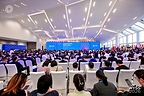
On October 24, the World Young Scientist Summit 2026 opened in Wenzhou, Zhejiang. The event is hosted by the China Association for Science and Technology (CAST), the Zhejiang Provincial People’s Government, and the World Association of Young Scientists. Nearly 800 representatives, including scientists, educators, and entrepreneurs from more than 60 countries and regions, are attending the summit.

He Junke, Vice President of CAST in charge of daily work and First Secretary of its Secretariat; Lian Yimin, Chairman and Party Group Secretary of the Zhejiang Provincial Committee of the Chinese People’s Political Consultative Conference; Marcelo Knobel, Executive Director of The World Academy of Sciences; and Zhang Zhenfeng, Member of the Standing Committee of the CPC Zhejiang Provincial Committee and Secretary of the CPC Wenzhou Municipal Committee, attended the summit and delivered remarks. Yao Gaoyuan, Vice Governor of the Zhejiang Provincial People’s Government, presided over the first segment of the plenary session.

With the theme “Gathering Talents Worldwide to Create a Better Future,” the summit’s annual agenda is “Global Youth Action in the AI Era: Building a Sustainable Future.” It aims to draw on the insights of young people around the world, deepen international sci-tech cooperation, and jointly address questions about young people, science, the world and the future.

Efim Zelmanov, Fields Medalist and Foreign Member of the Chinese Academy of Sciences; Chen Yunji, Deputy Director of the Institute of Computing Technology, CAS, and Director of the National Key Laboratory of Processor Chips; Mary Garson, President of the International Union of Pure and Applied Chemistry; and Lu Chaoyang, Member of the Standing Committee of CAST, Executive Dean of the Shanghai Institute of Advanced Study, University of Science and Technology of China, and Chairman of the Council of the World Association of Young Scientists, delivered keynote speeches respectively on education reform in the AI era, AI and processor chips, young women scientists’ participation in science, and quantum computing. They explored new opportunities for scientific research, talent cultivation, and international cooperation in the AI era.

This year’s summit placed greater emphasis on the growth needs of young scientists, with young talents under the age of 45 accounting for 88 percent of participants. It aimed to build a cluster of international journals, bring together young scientific talent, facilitate a batch of international collaborative projects and advance the application and commercialization of scientific and technological achievements. The summit released the Report on the Distribution and Mobility of Young Scientists in the Field of Embodied Intelligence, launched the World Young Scientist Summit Partner Journal Program and the 2026 World Young Scientist Innovation and Entrepreneurship Growth Support Program. It also published the “Young Scientist Pioneers 2035” list and announced the 2026 Sustainable Development Young Scientist Award. The awards were presented to four Chinese and foreign scientists.

Chen Tianrun, Founder of Hangzhou Moxin Technology Co., Ltd.; Yuan Yang, Assistant to the Dean of the Institute for Interdisciplinary Information Sciences at Tsinghua University; and two of the 2026 Sustainable Development Young Scientist Award winners, César de la Fuente and Nicola Segata, among other Chinese and foreign young scientist representatives, spoke at the flash-talk session to share their research practices and reflections.

In addition, the conference focused on fields such as future manufacturing, quantum information, embodied intelligence, brain-computer intelligence, environmental science, deep-sea resources, and life and health, and held 12 parallel forums. It also included the “Gravitation π” Future Technology and Concept Products Exhibition and Exchange, local thematic side events, and sci-tech and humanities study visits, further building an interdisciplinary, cross-regional and cross-sector platform for youth sci-tech exchange and cooperation.

View original content to download multimedia:https://www.prnewswire.com/news-releases/world-young-scientist-summit-2026-opens-in-wenzhou-zhejiang-302918664.html

SOURCE China Daily

Continue Reading

Technology

The Ultimate Send-off to Summer: CSTS Debuts Global Entertainment IP PremierX at New York’s Pier 17, Ushering in a New Era of Live Entertainment

Published

on

By

NEW YORK, Oct. 24, 2026 /PRNewswire/ — CSTS Enterprises (‘CSTS’), a New York-based sports, entertainment, integrated media and travel technology group, today announced the official launch of PremierXTM, its flagship live entertainment brand, with a landmark Halloween Weekend event “AFTER DARK” at The Rooftop at Pier 17 in New York on October 30, 2026.

Capping off Seaport’s 2026 Summer Season in unforgettable fashion, the grand finale brings a powerhouse lineup of stars to the PremierXTM stage at Pier 17, featuring Lil Xan, Armani White, DJ Soda, Nate Wyatt, and surprise A-list guest headliners. Set against the iconic Manhattan skyline, the landmark eventing unites chart-topping hip-hop and high-octane electronic music for a festival-grade experience as The Rooftop at Pier 17 transforms into the city’s premier live music destination.

Building on the momentum of the PremierXTM After Party for the 2026 World Cup Final that took place in New York on July 19th, “AFTER DARK” signals the official debut of PremierXTM, a proprietary, New York – born global entertainment IP created by CSTS to deliver defining cultural experiences at the intersection of music, sport, art and lifestyle. Centred on the power of cultural crossover, PremierXTM serves as an international bridge connecting East and West, modern innovation and timeless classical, while uniting world-class artists, creators, performers and audiences through the universal language of entertainment and premium live experiences.

The launch also marks the beginning of a promising relationship with Pier 17, providing a world-class stage for PremierXTM to accelerate its growth in the U.S. and engage international audiences over the long term. By combining PremierXTM’s global entertainment vision with Pier 17’s iconic waterfront setting, the partnership aims to create a premier destination for live experiences, empowering both platforms to expand their global reach, deepen audience engagement, and drive sustainable growth.

As a key pillar of CSTS’ integrated ecosystem spanning entertainment, sports, travel, integrated media and marketing solutions, PremierXTM further strengthens the Group’s ability to create high-impact experiences that connect audiences, destinations and brand partners. With the global live entertainment market projected to grow from approximately US$203 billion in 2025 to US$270 billion by 2030[1], PremierXTM is well-positioned to capitalize on the growing demand for premium, experience-led entertainment while creating long-term value to the Group through recurring audience engagement, tourism and brand partnerships.

“PremierX TM represents a significant milestone in CSTS’ evolution from a leading operator of global sports and hospitality platforms into a creator of world-class entertainment experiences,” said Abel Zhao, Group CEO and Executive Director at CSTS Enterprises. “The season finale at Pier17 marks the beginning of an exciting new chapter for CSTS as we expand our entertainment footprint and introduce a platform designed to deliver iconic live experiences and bring together artists and audiences from across the globe.”

“PremierXTM was built from the ground up as a bespoke platform to champion multicultural talent and visionary creative performers.” said Jason Liu, Regional Director of CSTS USA. “Starting from New York, we are building a scalable global brand that brings iconic live experiences to audiences worldwide while expanding our presence across key entertainment hubs in North America, Asia and Europe.”

Following its New York launch, PremierXTM plans to expand through a broader international rollout across North America, Asia and Europe, with future editions planned as part of a growing network of recurring live entertainment properties and flagship cultural events.

For ticket information on PremierXTM: “AFTER DARK”, visit
https://www.axs.com/events/1644912/after-dark-tickets

About CSTS Enterprises

CSTS Enterprises is an integrated media, entertainment, sports, and travel technology group. Headquartered in New York City, the company develops and partners with intellectual properties and brands to deliver compelling experiences that connect with audiences across the world. In addition to its own initiatives, including Generation CTM and PremierXTM, it collaborates with international IPs including FIFA World Cup, UEFA European Championship, and Formula 1.

CSTS integrates experiential marketing, travel, data, and technology to deliver seamless end-to-end audience experiences. The company engages consumers across physical events and digital channels, executing at scale worldwide, turning complex activations into co-ordinated, measurable outcomes.

[1] Source: Industry research by Markets and Markets, Live Entertainment Market Size, Share, Latest Trends & Growth Analysis, 2025-2030, Live Entertainment Market Size, Share, Latest Trends & Growth Analysis, 2025-2030.


View original content to download multimedia:https://www.prnewswire.com/news-releases/the-ultimate-send-off-to-summer-csts-debuts-global-entertainment-ip-premierx-at-new-yorks-pier-17-ushering-in-a-new-era-of-live-entertainment-302918645.html

SOURCE CSTS Enterprises

Continue Reading

Trending