Connect with us

Technology

New ICIMS and Kyle & Co. Research Links AI Readiness and Deployment to Stronger Hiring Performance

Published

on

ICIMS and Kyle & Co.’s 2026 Talent Transformation Yearbook surveys 500 HR and talent leaders and 1,000 U.S. job seekers, finding that talent teams that do the homework and put AI to work lead on time to hire, quality of hire and retention 

ICIMS customers earn yearbook superlatives for results including nearly $2 million in first-year savings, a tripled candidate pipeline and doubled retention for high-volume roles

HOLMDEL, N.J., Oct. 28, 2026 /PRNewswire/ — ICIMS, the Intelligent Hiring Platform, today released the 2026 Talent Transformation Yearbook: AI Progress Report, new research in partnership with Kyle & Co. The report surveyed 500 HR and talent leaders and 1,000 U.S. job seekers and revealed a clear divide between organizations making AI work for their hiring teams and those still figuring out the assignment. While 45% of HR and talent leaders rated their AI implementation highly successful, the average organization puts only about half of its purchased AI capabilities into production. The report indicates the top performers are doing their homework, putting more AI to work across hiring workflows and building the foundations to turn their investments into measurable business results.

“This report is a to-do list for every talent leader heading into 2027.”

Presented as a school yearbook, the report examines AI adoption, candidate experiences and hiring performance in 2026, recognizing standout organizations and offering guidance for talent acquisition leaders planning for 2027.

“This report is a to-do list for every talent leader heading into 2027,” said Trent Cotton, head of talent insights, ICIMS. “The value of AI shows up when it is trusted, running across hiring workflows and transparent to every candidate. By automating routine tasks, AI gives recruiters time back to build relationships, engage with the strongest talent and help hiring managers make better hiring decisions. That is how organizations improve hiring outcomes and deliver measurable business results.”

The Wide Shot: What Happened to Hiring in 2026

ICIMS surveyed 1,000 U.S. job seekers to understand how they encountered AI during their job searches. The findings reveal an opportunity for employers to expand the use of AI across the hiring process while communicating clearly with candidates about where and how it is used.

AI screening remains uncommon for many job seekers. 44% never encountered AI screening during their job search in 2026, while another 17% encountered it only once. Just 32% encountered it several times or in most applications.Candidates who noticed AI often viewed it positively. 45% of job seekers who noticed AI described its effect as positive.AI transparency and fairness remain concerns. Among candidates who believed AI evaluated their applications, only 32% said employers clearly disclosed its use, while 41% suspected AI was used without being told. 42% were confident automated screening evaluated them fairly.

The Class Photo: What Sets High-Performing AI Hiring Teams Apart

ICIMS grouped 500 HR and talent leaders by self-reported performance across six outcomes: time to hire, cost per hire, quality of hire, new hire retention, hiring manager satisfaction and contribution to business outcomes. Upper Classmen (37% of respondents) rated their organizations above average across all six outcomes and Freshmen (34% of respondents) rated their organizations above average on three or fewer.

AI success is rising, but adoption lags. 45% rated their AI implementation highly successful, compared with 17% in a 2025 SHRM survey. Yet organizations put only about half of their purchased AI capabilities into production.Foundational readiness separates top performers. Upper Classmen were more likely than Freshmen to have completed five foundational practices: AI literacy training, data ownership, AI contract terms, manager enablement and redeployment. Completion rates ranged from 51% to 62% among Upper Classmen, versus 17% to 24% among Freshmen.Top teams deploy more AI. Upper Classmen ran an average of six of seven AI hiring capabilities, compared with two and a half among Freshmen. Capabilities included resume screening and ranking, candidate chatbots, interview scheduling, AI-led assessments, agentic AI, AI-assisted writing and skills matching.Agentic AI adoption is concentrated among top performers. About one-quarter of respondents had deployed agentic AI across multistep hiring workflows at full scale, including 42% of Upper Classmen and 9% of Freshmen. 35% said AI enables recruiters and hiring managers to complete common applicant tracking system (ATS) actions within the tools they already use.High-volume hiring is a leading priority for 2027. 28% identified high-volume and frontline hiring capacity as a top priority, followed by skills-based hiring or internal mobility (27%) and scaling AI (24%). Yet 46% described their approach to high-volume hiring as mostly reactive. 42% of Upper Classmen build proactive talent pipelines, compared with 25% of Freshmen.Candidate experience remains a top concern. Delivering a strong candidate experience was the top hiring concern for 2027 (30%), followed by maintaining human judgment (29%) and responsible, accurate and compliant AI use (28%). 

The findings suggest that stronger hiring outcomes are associated with deploying the right AI across hiring workflows and establishing the data, skills and governance needed to support it. The ICIMS Intelligent Hiring Platform brings together hiring technology and trusted, responsible AI to help organizations apply intelligence across the hiring process and turn AI investments into measurable business value.

“The gap is not simply between organizations that have AI and those that do not. It is between buying capabilities and building the skills, data ownership and operating practices to put them to work,” said Kyle Lagunas, founder and principal analyst, Kyle & Co. “The teams reporting stronger hiring outcomes are further along on both readiness and deployment. That gives talent leaders a practical place to focus their 2027 plans.”

Meet the Class Superlatives

Most Likely to Succeed: ATI Physical Therapy grew its candidate pool 3x over two years without adding recruiting headcount.Most Adventurous: Xanterra Travel Collection kept hiring moving through floods, seasonal peaks and changing workforce needs, boosting applicants per opening 50%.Most Popular: EchoStar made candidate experience a team effort and won the CandE Benchmark two years in a row.Most School Spirit: Covenant HealthCare’s team of five recruiters and one sourcer made approximately 800 hires from more than 18,000 applications. Time to apply fell from 20 minutes to two and a half minutes.Teacher’s Pet: Esler Companies built a 45-person talent acquisition team from scratch.Best Personality: Enterprise Mobility maintained human interaction throughout the candidate journey and doubled retention in high-volume roles.Most Resourceful: ATCC’s two-person recruiting team saved nearly $2 million in its first year.Most Likely to Run the World: Signature HealthCARE makes ~6,000 hires annually across 67 locations.

Download the 2026 Talent Transformation Yearbook: AI Progress Report to see how your organization compares with the Class of 2026, explore the research findings and identify opportunities to turn AI investments into business value in 2027.

About ICIMS, Inc.

ICIMS is the talent acquisition platform built to help organizations hire at enterprise scale. Powered by billions of hiring interactions and more than 25 years of expertise, ICIMS combines trusted AI with end-to-end hiring technology to help recruiting teams hire smarter, faster and with greater confidence across corporate, high-volume and frontline roles.

Trusted by thousands of organizations worldwide, ICIMS continuously innovates with responsible AI and a highly extensible platform designed to help customers adapt quickly to changing workforce needs, scale globally and turn talent acquisition into a strategic business advantage. For more information, visit ICIMS.com.

Contact:

Will DeMuria

Corporate Communications

will.demuria@ICIMS.com

View original content to download multimedia:https://www.prnewswire.com/news-releases/new-icims-and-kyle–co-research-links-ai-readiness-and-deployment-to-stronger-hiring-performance-302921676.html

SOURCE iCIMS, Inc.

Continue Reading

Technology

Spacelift Extends Infrastructure Orchestration Beyond Deployment to Day 2 Operations, Meeting the Challenges of AI-Generated Code Velocity

Published

on

By

Spacelift Flows allows platform teams to build automations with an AI-assisted visual canvas or code to bring policy and audit controls to infrastructure operations, so platform teams can move at the pace the business requires.

REDWOOD CITY, Calif., Oct. 29, 2026 /PRNewswire/ — Spacelift, the infrastructure orchestration company, today announced Spacelift Flows, extending its platform beyond infrastructure deployment to day 2 operations, where platform teams spend the majority of their time running, maintaining and troubleshooting infrastructure already in production.

AI-assisted development is increasing the volume and velocity of infrastructure reaching production, but automation and governance have historically stopped short of this operational phase. Spacelift, known for bringing automation and governance to infrastructure as code (IaC) and GitOps deployment, now applies its automation, policy enforcement and audit control expertise to day 2 operations, helping platform engineers keep pace with AI-generated code without becoming the bottleneck.

Spacelift Flows carries automation past provisioning into operations

Infrastructure teams have spent the past decade automating provisioning. However, the operations that occur after a deployment have remained manual and ad hoc. Making matters worse, platform engineers have had no shared view of what automations are running and no record of execution when something fails. That changes with Spacelift Flows. It extends Spacelift’s automation and governance, as well as its AI-powered Spacelift Intelligence layer, to day 2 operations.

“Platform teams are absorbing more infrastructure requests than ever as AI accelerates how quickly their developers write code,” said Pawel Hytry, CEO of Spacelift. “Our customers already manage their IaC pipelines with Spacelift, and Flows extends that same automation, visibility and governance to everything that happens after. When the work after deployment is governed and automated, features ship faster, fewer things break, and platform engineers spend their days on what’s next instead of firefighting.”

The Spacelift infrastructure orchestration platform

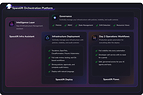
The Spacelift platform now manages the full infrastructure lifecycle on a single control plane, with one governance layer and one AI layer spanning deployment and operations. The IaC and GitOps deployment component is now called Spacelift Deploy, and the new operations component is called Spacelift Flows. Spanning both components is Spacelift Intelligence, an intelligence layer that helps understand, design, govern and even deploy infrastructure with natural language.

Spacelift now gives platform teams a single place to see every infrastructure automation running in their organization, with a step-by-step execution trail, real-time status and the ability to replay a workflow either in whole or in parts.

Governance and audit that don’t stop at provisioning

Every control that applies to infrastructure deployed with Spacelift now also applies to what happens after it. Policy, role-based access control and audit history work the same way on a provisioning run and on an operational workflow. Deployment events can trigger operational workflows and vice versa.

Clear ownership for agentic infrastructure

Platform teams increasingly want agentic workflows, where an agent, not a person, makes the change. Spacelift Flows gives agents a governed path into infrastructure. Teams can expose internal databases, monitoring systems and operational APIs as MCP servers that agents can call, with private network access and approval gates. Each agent authenticates as itself and appears in the audit trail as its own user, rather than borrowing an engineer’s credentials or using a shared key. Every action is attributable to the agent that took it. The workflows themselves execute deterministically, running the same way every time.

The platform team at Discovery Education has deployed Spacelift Flows and is realizing the various benefits of agentic workflows after infrastructure deployment. Toby Norman, partner success manager, said “I hadn’t built an MCP server for my infrastructure before. It went very smoothly with Spacelift Flows. In a few hours I had several tools running and a proof of concept that helps developers debug their services on our platform.” Parker Cameron, senior manager, cloud engineering, said “With Flows, we had something working in a few hours, instead of four weeks later and still struggling with auth, which is usually the pattern.”

More information can be found on the Flows landing page and on the Spacelift blog. A webinar featuring a demo will be held on November 5th — register here.

FAQ

Does anything change for existing Spacelift customers?
No. The product previously known as Spacelift is now called Spacelift Deploy. Functionality, contracts and access are unchanged, and existing customers can use Spacelift Flows immediately.

What does Spacelift Flows cost?
Spacelift Flows is available as part of the Spacelift platform for no additional cost through a promotional period that runs through the end of the year. Commercial pricing and packaging will be announced in Q1 2027.

What does Spacelift Flows integrate with?
Spacelift Flows includes out-of-the-box integrations for AWS, Kubernetes, Terraform, Datadog, PagerDuty, ServiceNow, Jira and Slack. There is a library of more than 40 pre-built templates for tasks including incident enrichment, drift alerts, environment vending and certificate expiry monitoring. Teams can easily build custom flows for internal services and APIs. For AI use cases, Spacelift Flows can act as an MCP gateway, giving agents governed access to internal systems, and can work with whichever AI model a team selects.

Can Spacelift Flows automations be managed as code?
Automations built in Spacelift Flows, whether on the canvas or with the AI assistant, can also be defined as code through a Terraform provider published to the Terraform and OpenTofu registries.

About Spacelift
Spacelift, the infrastructure orchestration company, helps platform teams keep pace with AI-accelerated development by automating and governing IaC pipelines and Day 2 operations, in a single integrated platform.

The Spacelift platform orchestrates Terraform, OpenTofu, CloudFormation, Pulumi and Ansible in one governed workflow, and provides a visual canvas that lets teams build and run Day 2 automations. An intelligence layer adds AI-powered provisioning, workflow building and diagnostics, so teams deliver secure, scalable and compliant infrastructure at AI speed. Duolingo, Figma, Moody’s, Checkout.com, 1Password and Redfin all manage their infrastructure with Spacelift.

Spacelift is also a major contributor to the Platform Engineering community as a founder and major contributor to OpenTofu and as the founder of IaCConf, the leading vendor-neutral IaC conference. Learn more about Spacelift and how it can help you at Spacelift.io. Sign up for a demo, or test the platform yourself with a free trial.

MEDIA CONTACT:
Cristin Connelly
Cathey.co for Spacelift
cristin@cathey.co

View original content to download multimedia:https://www.prnewswire.com/news-releases/spacelift-extends-infrastructure-orchestration-beyond-deployment-to-day-2-operations-meeting-the-challenges-of-ai-generated-code-velocity-302923763.html

SOURCE Spacelift

Continue Reading

Technology

LaserAway, Nation’s Largest Aesthetic Dermatology Brand, Opens Its 238th Clinic

Published

on

By

LOCATED AT 3401 DALE ROAD, SUITE 655, MODESTO, CA, this clinic opening marks 20 years of uninterrupted growth for the founder-led, Los Angeles–based company.

LOS ANGELES, Oct. 29, 2026 /PRNewswire/ — LaserAway, the nation’s leader in aesthetic dermatology today announced the opening of its 238th location in Modesto, CA. The opening celebrates the company’s 20th Anniversary which takes place this year and reflects two decades of continuous growth without a single clinic closure, a rare achievement in retail and the medical aesthetics category.

Founded in 2006 by Dr. Roy Winston and brothers Scott, Brock, and Todd Heckmann, LaserAway has evolved from a single West Hollywood, CA clinic into the largest nationwide aesthetics and dermatology company in the country. All LaserAway locations are privately owned and operated with no franchises. LaserAway’s success was built on a simple but disruptive idea: that industry-leading, safe, and effective aesthetic dermatological treatments should be available for everyone.

“When we opened our first clinic on Sunset Boulevard, we knew there was a massive opportunity to make these treatments accessible to everyone—not just a privileged few,” said Scott Heckmann, co-founder and CEO of LaserAway. “From day one, our mission has been to combine medical precision with modern convenience, giving people safe, effective results in a setting that feels approachable and empowering.”

LaserAway currently operates in 36 states and all treatments are performed by licensed medical professionals (NPs, PAs, RNs). LaserAway’s Chief Medical Officer is Dr. Will Kirby. Dr. Kirby leads LaserAway’s Medical Board, which consists of a team of over 25 board-certified dermatologists.

The Modesto location, like all LaserAway locations, will provide a full range of non- and minimally-invasive aesthetic services, including laser hair removal, Botox®, dermal fillers, skin rejuvenation and body contouring treatments such as CoolSculpting® and Thermage®. It will also feature LaserAway Wellness Injections, administered by medical professionals to support safe, clinically monitored results.

For more information on the brand, please visit laseraway.com.

ABOUT LASERAWAY
LaserAway® is the nation’s leader in aesthetic dermatology, offering customized treatments tailored to patient needs with a team of more than 25 board-certified dermatologists and 700 nurses in its 238 locations across the country. It specializes in a full suite of non- and minimally-invasive aesthetic treatments, including laser hair removal, laser tattoo removal, laser skin rejuvenation, body contouring, skin tightening, injectables, and skincare products. LaserAway is committed to providing high-quality, results-driven skincare solutions in a modern and welcoming environment. For more information, visit the brand on Instagram, TikTok, YouTube, LinkedIn, or at www.laseraway.com.

View original content to download multimedia:https://www.prnewswire.com/news-releases/laseraway-nations-largest-aesthetic-dermatology-brand-opens-its-238th-clinic-302923759.html

SOURCE LaserAway, LLC.

Continue Reading

Technology

SETTLE LAUNCHES PUBLIC API AND MCP SERVER, OPENING ITS PROCURE-TO-PAY PLATFORM TO AI AGENTS

Published

on

By

CPG businesses can now put AI to work on their payables, connecting Settle’s purchasing, bill pay and working capital data with the rest of their tools

NEW YORK, Oct. 29, 2026 /PRNewswire/ — Settle, the leading cash flow management and working capital platform for inventory-based businesses, today announced the launch of its public API and Model Context Protocol (MCP) server. Businesses can now connect Settle directly to their own software, data warehouses and AI assistants such as Claude. It is the first step toward agentic procure-to-pay, where AI handles the busywork across the systems a business runs on, from purchase order to payment.

Consumer Packaged Goods (CPG) brands run on a patchwork of tools: Shopify, an ERP, accounting software, inventory and 3PL systems, and spreadsheets in between. Settle’s API and MCP server bring Settle into that whole stack. Finance and operations teams, and the AI agents working for them, can tap into Settle’s payables data and tools alongside their other systems to reconcile faster, forecast cash, and answer questions like “what do we owe our suppliers next month?” in seconds instead of hours.

Early customers are already building with it, from custom cash flow dashboards to AI agents that help run day-to-day operations. Settle plans to keep expanding what agents can see and do across procurement, payables, and working capital.

“Every business we talk to is rebuilding how they work with AI, and the companies moving fastest want their tools to talk to each other,” said Alek Koenig, CEO and founder of Settle. “We built Settle’s API and MCP server so a brand’s AI can work alongside our platform and their other systems, not around them. This is the foundation for agentic procure-to-pay: software that keeps purchasing, payables, and cash flow moving on its own, with our team behind it.”

Developers and Settle customers can get started at settle.com/api or by contacting their Settle account team.

ABOUT SETTLE
Settle is a cash flow management and working capital platform purpose-built for product businesses. The company’s integrated suite, including procurement, bill pay, AP automation, and flexible working capital financing, gives brands the tools to manage their payables and access the capital they need to grow. With more than $8 billion in payments processed and total originations exceeding $4 billion, Settle has helped thousands of businesses across the United States unlock the capital they need to scale. Settle is backed by leading investors including Ribbit Capital, Kleiner Perkins, Caffeinated Capital, Stripes, Founders Fund, SciFi Ventures, Citi Ventures, and Activant Capital. Learn more at settle.com.

MEDIA CONTACT
Settle Communications
press@settle.com


View original content to download multimedia:https://www.prnewswire.com/news-releases/settle-launches-public-api-and-mcp-server-opening-its-procure-to-pay-platform-to-ai-agents-302923589.html

SOURCE Settle Inc.

Continue Reading

Trending