Technology
Chandigarh University Commemorates ‘Father of Fibre Optics’ Dr. Narinder Singh Kapany’s 100th Birth Anniversary with India’s First Research Chair in His Name; announces annual Grant of ₹1 Crore for Scientific Research
Published
2 days agoon
By
Chandigarh University Confers ‘Narinder Singh Kapany Lifetime Achievement Award for Excellence in Physics’ on Dr Ajoy Ghatak, Prof Emeritus IIT Delhi for Contributions to Fibre Optics & Photonics
CHANDIGARH, India, Oct. 31, 2026 /PRNewswire/ — Chandigarh: To mark the 100th birth anniversary of Dr. Narinder Singh Kapany, the legendary Indian scientist widely known as the ‘Father of Fibre Optics’ whose groundbreaking research in optical fibre technology transformed global telecommunications and laid the foundation for today’s digital revolution, Chandigarh University has announced the establishment of India’s first ‘Dr. Narinder Singh Kapany Research Chair for Excellence in Sciences and Innovation’, along with an annual research grant of ₹1 crore to advance scientific research and innovation.
In a pioneering initiative, Chandigarh University has announced India’s first-ever Research Chair established in the name of Dr. Narinder Singh Kapany, recognizing his unparalleled contribution to science and technology. With no other research chair dedicated to Dr. Kapany currently established in India, this initiative marks a significant institutional tribute to the legendary scientist and seeks to carry forward his legacy through sustained investment in scientific research, innovation and the nurturing of young scientific talent. The Research Chair will provide mentorship, guidance and research support to budding scientists, enabling them to pursue innovative ideas, undertake advanced research and translate scientific discoveries into impactful technologies.
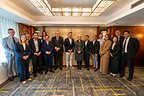
Prominent among those who graced the centenary celebrations of Dr. Narinder Singh Kapany at Chandigarh University campus were Prof. (Dr.) Samir K. Mondal Scientist-G, Optics & Photonics Instrumentation CSIR-CSIO, Chandigarh as Chief Guest, Prof. (Dr.) Aaron Danner, National University of Singapore as Guest of Honour, Eminent Researcher Dr Ajoy Ghatak, Prof. Emeritus, IIT Delhi (virtually) and Dr. Satbir Singh Sehgal Vice-Chancellor Chandigarh University among other dignitaries.
Speaking on the occasion Prof. (Dr.) Samir K. Mondal Scientist-G, Optics & Photonics Instrumentation CSIR-CSIO, Chandigarh said, “Professor Kapani’s contribution to optical science began with his pioneering work on thin, flexible glass fibres, through which he demonstrated for the first time that images could be transmitted from one end to another using bundles of optical fibres. Professor Kapani developed thin, flexible glass fibres and successfully transmitting images through them, laying the foundation for modern fibre optics. He also coined the term ‘optical fibre’ and developed the fibre scope, which later evolved into applications such as endoscopy. His work demonstrated that optical fibres could carry information, opening possibilities beyond image transmission, including voice and data communication.”
Prof Mondal added, “There is also an important question of recognition for Indian scientists. Scientific contributions do not always receive the recognition they deserve and the Nobel Prize is a complex matter. I gave the example of S.N. Bose, whose work has had a lasting influence on physics and is associated with several Nobel Prize-winning developments, despite him never receiving the Nobel Prize himself. Similarly, Professor Kapani’s contribution to optical fibre technology deserves to be remembered and carried forward. We represent one-sixth of the world’s population and taking forward the scientific legacy of such visionaries is no less significant than receiving a Nobel Prize. We must encourage our young researchers to build upon their work and explore new frontiers of science and technology.”
Prof. (Dr.) Aaron Danner National University of Singapore said, “Dr. Narinder Singh Kapany’s pioneering work demonstrated how light could be guided through thin glass fibres using the principle of total internal reflection, overcoming the limitations of metallic transmission. His work on fibre bundles, image transmission and endoscopy opened new possibilities in imaging and optical science. Today, the same fundamental technology that Dr. Kapany started with glass fibres is being used on silicon and lithium niobate wafers to develop advanced photonic devices and achieve increasingly higher communication speeds. While modern research is addressing new engineering challenges in laser sources, optical modulators and high-speed data transmission, it continues to build on those early contributions. We may see Dr. Kapany as a great Indian or Punjabi scientist, but I also see him as a great American scientist. Great science and great scientists are global and their contributions ultimately benefit all of humanity.”
Eminent Researcher Dr Ajoy Ghatak, Prof. Emeritus, IIT Delhi said, “It is indeed a great honour to receive this award in the name of Dr. Narinder Singh Kapany, one of the pioneers of fibre optics. His early work on cladded optical fibres and image transmission through fibre bundles laid the foundation for medical endoscopy. The development of low-loss optical fibres has since revolutionised communication through their tremendous information-carrying capacity, enabling global connectivity and video communication. The establishment of the Dr. Narinder Singh Kapany Research Chair by Chandigarh University is a commendable initiative to advance his scientific legacy and inspire future generations of researchers. This recognition is also a tribute to Dr. Kapany’s remarkable contributions to science.”
Dr. Satbir Singh Sehgal Vice-Chancellor Chandigarh University said, “Dr. Narinder Singh Kapany brought immense pride to India and Punjab through his pioneering research in optical fibre technology, which made high-speed internet and modern digital communication possible. Technologies such as artificial intelligence, data centres and seamless global connectivity rely on the foundations of optical fibre technology. His contribution helped usher humanity into the digital era and accelerated technological progress worldwide. The establishment of India’s first Dr. Narinder Singh Kapany Research Chair, along with its annual grant and prestigious awards, reflects Chandigarh University’s commitment to advancing his scientific legacy, recognising excellence and inspiring the next generation of Indian researchers.”
The Research Chair will provide an annual research grant of ₹1 crore to promote scientific excellence through three dedicated awards: the Narinder Singh Kapany Award for Excellence in Physics, ‘CU Physics Excellence Awards for Best Research Publication’ and ‘CU Physics Excellence Awards for Best Patent’.”
The first edition of these awards was conferred during the birth centenary celebration, with Eminent Researcher Dr Ajoy Ghatak, Prof. Emeritus, IIT Delhi receiving the Narinder Singh Kapany Lifetime Achievement Award for Excellence in Physics. Professor Ajoy K. Ghatak is an internationally acclaimed physicist whose seminal contributions to fibre optics, integrated optics and photonics have advanced the understanding and applications of light. Through pioneering research, influential publications and acclaimed textbooks, Professor Ghatak has advanced fibre optics and photonics, carrying forward Dr Narinder Singh Kapany’s scientific legacy while inspiring generations of physicists.
On this occasion, five ‘CU Physics Excellence Awards for Best Patent’ were presented to five best patents by Dr. Ritu Gupta and Dr. Sandeep Kaur for their ‘Multi-functional Optical Antenna System for Parallel FSO-VLC Communication and Nano-biosignal Monitoring’; Shonak Bansal and Anupama for a ‘Self-powered Real-time Health Monitoring System using Nanowire Photodetectors’, Aditya Bhatnagar and Dr. Sanjeev Saini for ‘Multifunctional Organic-Inorganic Hybrid Luminescent Nanomaterials and a Method for Their Preparation’, Mahima Purohit and Dr. Ruchi Bharti for a ‘Biodegradable, Water-resistant Smart Packaging Film for Fluorescence-based Detection of Food Spoilage’ and Ashit Tripathi, Sachitanand Singh, Iqra Jamal Khan, Sanskruti Singh, Alok Gautam, Mahak received the award for a ‘Handheld Wireless OCT and Fundus Imaging Device’.
‘CU Physics Excellence Awards for Best Research Publication’ were conferred on eight faculty members and students. Ravikant from department of physics was conferrred upon for ‘CU Excellence Award for Research’ for his publication titled Nitrogen doped zinc oxide to enhance dielectric characteristics of reduced graphene oxide (rGO) derived nanocomposites in composites communivations. Apart from him the other awardees were Shivani Singla (Physics Department) for “Optimising the Neodymium Concentration in Sodium Borate Glass for Enhanced Photoluminescent and Mechanical Behaviour” in Ceramics International (Q1); Sumit Bhardwaj (Physics Department) for “Structural, Optical and Photocatalytic Properties of Ce-Doped Ni-Zn Ferrite Nanoparticles”, in Ceramics International (Q1); Ruby Priya (Department of Physics) for “Deconvoluting Capacitive and Diffusive Contributions in Cu-Doped SnO₂ Nanoparticles for Enhanced Double-Layer Capacitance and Oxygen Evolution Reaction in Materials Today Communications (Q1); Akhil Saxena, (Chemistry) for “Mechanistic Elucidation of Persicaria maculosa Gray Extract as a Corrosion Inhibitor: Adsorption, Electrochemical Behavior, and DFT Validation”, published in South African Journal of Chemical Engineering; Harvinder Singh Sohal (Chemistry deoartment), for “Synergistic Adsorptive-Photocatalytic Degradation of Tartrazine Using Mn-Modified Fe₃O₄/Lignocellulose Magnetic Nanocomposites”, published in International Journal of Biological Macromolecules (Q1); Surjeet Chahal, for “Surface Plasmon Resonance Sensor for Dopamine Detection Based on CeO₂ Nanorod and ZnO Nanosheet” in Journal of Materials Science: Materials in Electronics (Q2) and Dr. Sanjeev Kumar from Department of Physics, for “1 Monolinoleoylglycerol and 3,4-Dihydroxymandelic Acids-Mediated ZnO for Antibiotic Degradation and Anticancer Activity”, published in Journal of Environmental Chemical Engineering (Q1).
During the birth centenary celebrations, a message shared by Kiran Kaur Kapany, the daughter of Dr Narinder Kapany was also read out where she said that her father’s journey from a small town in Punjab to transforming the world through fibre optics shows that a big idea can start anywhere. “To students, stay curious, ask questions and be proud of who you are. My heartfelt gratitude to Chandigarh University for honouring my father and family,” added Kapany.
Under the Best Patent Excellence Award for research publication and best patent, the five best patents granted each year will be selected for research grants to support product development and the conversion of patented innovations into practical applications. Similarly, the Best Research Paper Award will recognise the top 10 research publications annually by Chandigarh University students and faculty members in high-impact Q1 and Q2 journals, based on their quality, originality and research impact.
About Chandigarh University
Chandigarh University is a NAAC A+ Grade University and QS World Ranked University. This autonomous educational institution is approved by UGC and is located near Chandigarh in the state of Punjab. It is the youngest university in India and the only private university in Punjab to be honoured with A+ Grade by NAAC (National Assessment and Accreditation Council). CU offers more than 109 UG and PG programs in the field of engineering, management, pharmacy, law, architecture, journalism, animation, hotel management, commerce, and others. It has been awarded as The University with Best Placements by WCRC.
Website address: https://www.cuchd.in/
View original content to download multimedia:https://www.prnewswire.com/in/news-releases/chandigarh-university-commemorates-father-of-fibre-optics-dr-narinder-singh-kapanys-100th-birth-anniversary-with-indias-first-research-chair-in-his-name-announces-annual-grant-of-1-crore-for-scientific-research-302925572.html
You may like
Technology
Northwood raises $375 million to build the network connecting satellites to Earth
Published
6 minutes agoon
November 2, 2026By
Funding will scale the company’s shared, multi-orbit ground network for commercial, U.S. government, and allied customers
TORRANCE, Calif., Nov. 2, 2026 /PRNewswire/ — Northwood Space Corp. (“Northwood”), the company building the network connecting satellites to Earth, today announced it has closed a $375 million Series C equity financing round. The funding will accelerate delivery on existing contracts, talent acquisition, and the buildout of Northwood’s global ground network for commercial, U.S. government, and allied space missions.
Since its Series B less than nine months ago, Northwood has deployed six multi-orbit-capable sites on two continents, demonstrated geosynchronous command capacity from a commercial phased array in live tests, developed and launched a high-throughput antenna system, and opened a new 185,000-square-foot headquarters and factory in Torrance, expanding its manufacturing footprint more than fivefold. Northwood has also added new customers and contracts across U.S. government agencies, commercial new-space operators, and traditional satellite operators.
Andreessen Horowitz (a16z) and DFJ Growth co-led the round, with participation from Alpine Space Ventures, Washington Harbour Partners, Stepstone Activate, In-Q-Tel (IQT), and others. A separate multi-year credit facility from HSBC Innovation Banking will also support working capital and network expansion.
“Space began as the frontier of human innovation, and communications sits at the heart of every mission, yet it has been neglected for decades,” said Bridgit Mendler, co-founder and CEO of Northwood. “We have built hardware that performs and a network that can support the most demanding missions. This funding lets us scale that network and build the infrastructure the next generation of space missions will depend on.”
“We’ve backed Northwood in every round since seed because we believe ground infrastructure is essential to making space infrastructure more abundant,” said Katherine Boyle, board director of Northwood and general partner at Andreessen Horowitz. “Northwood is building the ground network of the future and has become an indispensable partner to government and commercial customers alike.”
“What goes up must come down … this is a universal truth of sending data to and from space-based networks. Northwood plays an essential role in an oft-forgotten, yet critical segment, of that ecosystem — purpose-built to ensure mission-critical signals are delivered to and from satcom constellations reliably and securely. Northwood has emerged from a raw startup to a new-generation leader over the past year, changing the game with innovation and speed of execution to quickly surpass legacy incumbents,” according to Randy Glein, Founder and Managing Partner at DFJ Growth. “Northwood’s advanced phased array technologies, innovative systems, and vertically-integrated manufacturing approach are delivering robust capabilities to demanding commercial and government customers. We are thrilled to join the team at Northwood!”
The ground has become the bottleneck
Satellites are multiplying and spreading across orbits. Active satellites have grown from about 3,000 in 2020 to more than 14,000 by the end of 2025, with tens of thousands more projected by 2030, but the ground infrastructure they rely on was built for a different era of space and has not kept pace. Missions need more ground capacity, in more places, with more capabilities. Meeting the demand takes ground infrastructure that can serve multiple satellites at once, support multiple orbits, and deploy in months rather than years. Without modern infrastructure, the ground will limit what we can do in space, from satellite communications to Earth observation, from national security missions to cislunar exploration.
A space network built like infrastructure
Northwood designs and manufactures its own modular antennas in Torrance, California: Portal phased arrays for command and control and Prism high-throughput dishes for payload data. At full production, the company can build hundreds of antennas per year, and each system ships by standard freight and needs only flat ground, power, and fiber, with none of the extensive civil works traditional ground stations require.
Northwood’s own software and proprietary techniques combine multiple antennas into larger effective apertures. In a recent milestone, the company arrayed 10 Portals to achieve the receive performance of a 20-foot dish. That software extends to a modern API that lets satellite operators search, reserve, update, and cancel passes on the network, paired with hands-on Mission Architects who guide each customer from first conversation through deployment. Operators get a live link without building ground infrastructure of their own.
Because Northwood controls the full stack, from antenna hardware to site selection and buildout to scheduling software, space operators book the capacity they need on a shared network instead of spending millions of dollars on dedicated ground stations. And because the antennas are standardized and modular, the network is growing quickly: a new site takes three months rather than years, and new antennas go from truck arrival to live links in three to four hours. For select customers, Northwood also sells its antenna systems directly, the same hardware that powers the shared network.
Momentum since the Series B
Demonstrated multi-orbit, from LEO to GEO. Northwood demonstrated its multi-orbit capability in a prototype for the U.S. Space Force, delivering dedicated satellite command capacity as a service to geostationary orbit. The demonstration included a full-duplex link to a government GEO satellite from a Northwood Portal phased-array site, building on the company’s existing LEO demonstrations.High-throughput links. Northwood released Prism, a parabolic dish built for multi-gigabit links. Together with Portal, Prism will take the network to global coverage, with sites capable of 100+ Gbps in high-demand regions by the end of 2027.Production at scale. The company’s new 185,000-square-foot Torrance headquarters and factory, opened in September 2026, will produce hundreds of antennas and other components per year across dedicated production lines.Customers. Northwood has added new customers and contracts across U.S. government agencies, commercial new-space operators, and traditional satellite operators.Team. Northwood has grown to more than 140 employees and plans to add 400 jobs in Torrance and Washington, DC over three years across RF engineering, manufacturing, software and site operations.
This announcement is only the start. Northwood is rebuilding the full network stack for bringing data to, through, and from orbit, with several site and network expansions to be announced in the first half of 2027.
About Northwood
Northwood builds the network connecting satellites to Earth. Based in Torrance, California, the company combines modular antenna hardware, manufacturing, software, and global site operations into a shared ground network serving commercial, U.S. government, and allied customers. Northwood helps satellite operators establish and expand connectivity across orbits, supporting reliable communications as their missions grow. Learn more at northwoodspace.io. See open roles at northwoodspace.io/careers.
Media Contact
press@northwoodspace.io
View original content to download multimedia:https://www.prnewswire.com/news-releases/northwood-raises-375-million-to-build-the-network-connecting-satellites-to-earth-302925872.html
SOURCE Northwood Space
Technology
Cleafy Named a Leader in QKS Group SPARK Matrix™: Enterprise Fraud Management, 2026
Published
6 minutes agoon
November 2, 2026By
The QKS Group SPARK Matrix™ evaluates enterprise fraud management providers across Technology Excellence and Customer Impact.Cleafy is recognized for its cyber-fraud convergence approach, real-time attack visibility, and explainable fraud detection capabilities.
PUNE, India, Nov. 2, 2026 /PRNewswire/ — QKS Group announced today that it has named Cleafy as a leader in the SPARK Matrix™: Enterprise Fraud Management, 2026.
Anandh Ramaswamy, Practice Director at QKS Group, states, “Fraud increasingly begins as a cyberattack, well before a payment is initiated. Our assessment finds Cleafy particularly compelling in connecting these stages through its Fraud xDR approach, which brings device, malware, network, session, and transaction evidence into a continuous view of how an attack develops. Its deterministic micro-models and Attack Pattern Reconstruction help banks recognize account takeover, remote-access abuse, and payment scams earlier, with clear reasons for intervention rather than an isolated risk score. For institutions with substantial digital banking activity, this cyber-fraud convergence can strengthen prevention while supporting more proportionate customer interventions. Buyers should assess Cleafy as an attack-focused complement to their broader fraud controls, particularly where visibility before the transaction is a priority.”
Divya Baranawal, Vice President and Principal Analyst at QKS Group, states, “Cleafy’s Leader position reflects a distinctive approach to Enterprise Fraud Management: connecting cybersecurity intelligence with fraud operations rather than treating them as separate detection functions. Cleafy LABS contributes specialist threat research and intelligence, while Fraud xDR connects evidence across the digital journey to reveal how attacks develop. Cleafy Nyx builds on this foundation, autonomously hunting for emerging threats and connecting activity across sessions, accounts and devices, with recommended responses subject to institutional oversight. This combination is relevant for banks facing coordinated attacks and growing investigation volumes. Our evaluation also highlights the importance of validating channel coverage, integration requirements, and local service readiness against each institution’s operating environment.”
QKS Group defines Enterprise Fraud Management as the technologies and operational processes used to detect, prevent, investigate, and respond to fraud across customer interactions and transactions. As digital fraud increasingly combines compromised devices, malicious software, manipulated sessions, and payment activity, effective programs need to connect cyber and financial signals, apply timely risk controls, and equip investigators with auditable evidence. Evaluation therefore extends beyond transaction scoring to detection coverage, explainability, investigation workflows, deployment, and measurable customer impact.
Cleafy’s differentiation lies in its cyber-origin view of financial fraud. Its Fraud xDR approach transforms diverse device, application, network, malware, behavioural, and transaction signals into structured, connected evidence across digital banking journeys. Deterministic micro-models provide explainable detection indicators, Cleafy LABS contributes specialist threat intelligence, and Cleafy Nyx autonomously hunts for emerging threats, connecting evidence into coordinated attacks and recommending responses for analyst review. This architecture is especially relevant to banks prioritizing account takeover, banking malware, remote-access fraud, and authorized push payment scams. Buyers should validate fit with existing payment controls, required channels, and governance arrangements.
The QKS Group SPARK Matrix™ includes a detailed analysis of the global market dynamics, major trends, vendor landscape, and competitive positioning. The study also provides a competitive analysis and ranking of the Enterprise Fraud Management, 2026 providers in the form of the SPARK Matrix™. The study also provides strategic information for users to evaluate different vendor capabilities, competitive differentiation, and market positions.
“Maintaining our Leader position, and improving on it, reflects the value of the approach we’ve built,” said Michael Morris, Product Director at Cleafy. “We brought the discipline of cybersecurity into fraud prevention to recognise attacks before they become fraudulent transactions. With Nyx, we’re taking that further through Autonomous Fraud Operations, continuously hunting for emerging threats and giving banks the evidence they need to act earlier, with greater precision and efficiency.”
Additional Resources:
For more information about Cleafy, visit Here. SPARK Matrix™ Enterprise Fraud Management, 2026
About Cleafy
Cleafy helps banks stop financial fraud through Autonomous Fraud Operations. Rather than adding another tool for analysts, Cleafy investigates cases, produces evidence-based decisions and adapts to changing criminal tactics in production. European banks have been running Cleafy’s Autonomous Fraud Operations since December 2025, enabling fraud teams to prevent more fraud losses while focusing human expertise where it adds the greatest value.
Media Contact:
www.cleafy.com
Tammy du Preez
tammy.dupreez@cleafy.com
About QKS Group
QKS Group is a global analyst and advisory firm helping enterprises, technology vendors, and investors make trusted, data-driven decisions. Our portfolio spans the flagship SPARK Matrix™ evaluation framework, SPARK Plus™ analyst advisory platform, QKS Intelligence™ for market and competitive tracking, and QKS Community™ for CXO leaders and practitioners. All offerings are powered by a Human-Intelligence-driven framework and QKS’s closed-loop research methodology – integrating expert-led insights, quantitative modeling, and continuous validation to deliver credible, outcome-focused intelligence.
For more available research, please visit Research
Media Contact:
Anish Krishnan
PR & Media Relations
QKS Group
5th Floor, Wing 2, Cluster C,
EON Free Zone, Kharadi,
Pune, India
Email: support@qksgroup.com
Content Source: https://qksgroup.com/newsroom/cleafy-named-a-leader-in-qks-group-spark-matrix-enterprise-fraud-management-2026-1844
Connect with us on LinkedIn- https://www.linkedin.com/company/qksgroup/
View original content to download multimedia:https://www.prnewswire.co.uk/news-releases/cleafy-named-a-leader-in-qks-group-spark-matrix-enterprise-fraud-management-2026-302926290.html
Technology
LianLian Global and Cobre Collaborate to Streamline China-Latin America Payments
Published
7 minutes agoon
November 2, 2026By
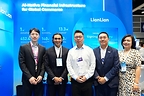
HONG KONG, Nov. 2, 2026 /PRNewswire/ — LianLian Global, the cross-border payment brand of Hong Kong-listed Lianlian DigiTech, today announced a collaboration with Cobre, the leading platform for instant business payments in Latin America, to power cross-border payments between China and Latin America.
Through this collaboration, LianLian Global clients can reach Cobre’s local payment infrastructure in Latin America, and Cobre clients can process fast, compliant payouts into China through LianLian Global’s licensed network.
Trade between China and Latin America reached approximately US$565 billion in 2025, up 6.5% year on year, according to China’s General Administration of Customs. Yet cross-border payments supporting this trade can involve multiple correspondent banks, adding costs and delays.
By combining LianLian’s licensed China payout capabilities with Cobre’s local infrastructure in Latin America, this collaboration gives businesses on both sides a more direct way to settle cross-border payments. The collaboration aims to reduce the number of intermediaries involved, lower payment costs and shorten settlement times. This collaboration also aims to provide transparent foreign exchange (FX) pricing and end-to-end payment tracking across both the collection and payout legs.
Bryan Jiang, General Manager of LianLian Global in Hong Kong, said:
“Latin America is one of the fastest-growing markets for us, and Cobre has built the local infrastructure needed to serve that market. With this collaboration, we can offer businesses on both sides a faster, more transparent way to make cross-border payments along the China–Latin America corridor.”
Jose Gedeón, CEO and Cofounder of Cobre, added:
“Latin American enterprises engaging in commerce require heightened speed and predictability in their transaction flows. Our work with LianLian Global allows us to provide just that.”
James Wong, Senior Vice President (Financial Services and Fintech) of InvestHK, said:
“Hong Kong has long served as a gateway between Asia and the rest of the world, and Latin America is a growing part of that story. We are pleased to see LianLian Global and Cobre working together to make cross-border business payments between both regions faster and simpler, leveraging our flagship HK Fintech Week to mark the start of the collaboration”.
As trade between Asia and Latin America deepens, both companies plan to extend the collaboration to additional payment corridors and use cases.
About LianLian Global
LianLian Global is the international brand of Lianlian DigiTech Co., Ltd. (HKEX: 2598) (“Lianlian”), a global payment and financial platform founded in 2009 and listed on the Main Board of the Hong Kong Stock Exchange in 2024.
Lianlian has served more than 13.3 million clients. Its services reach more than 200 countries and regions, support transactions and settlements in more than 140 currencies, and connect with more than 180 global e-commerce platforms. Lianlian holds 68 payment licenses and related authorizations worldwide, alongside a Hong Kong virtual asset trading platform (VATP) license.
About Cobre
Cobre is the leading enterprise payments infrastructure for Latin America, enabling businesses to move money faster across Latin America and the world. Cobre operates in Colombia and Mexico, offering three core solutions: Local Payments, Cross-Border Payments and Stablecoin Payments. In 2025, Cobre processed over US$17 billion in payment volume across 28 million transactions, serving more than 300 enterprise clients and achieving profitability. Trusted by leading fintechs, financial institutions, and multinational enterprises, Cobre helps businesses simplify financial operations and scale across Latin America.
View original content to download multimedia:https://www.prnewswire.com/apac/news-releases/lianlian-global-and-cobre-collaborate-to-streamline-china-latin-america-payments-302926292.html
SOURCE Lianlian DigiTech
Northwood raises $375 million to build the network connecting satellites to Earth
Cleafy Named a Leader in QKS Group SPARK Matrix™: Enterprise Fraud Management, 2026
LianLian Global and Cobre Collaborate to Streamline China-Latin America Payments
Send Rakhi to UK swiftly with UK Gifts Portal
Whiteboard Series with NEAR | Ep: 45 Joel Thorstensson from ceramic.network
Nullmax and Renesas Forge Strategic Partnership to Deliver Competitive ADAS Solutions for the Global Market
Why You Should Build on #NEAR – Co-founder Illia Polosukhin at CV Labs
Whiteboard Series with NEAR | Ep: 45 Joel Thorstensson from ceramic.network
NEAR End of Year Town Hall 2021: The Open Web World, MetaBUILD 2 Hackathon and 2021 recap
Trending
-
Coin Market3 days agoBinance hack may involve private key ‘misuse,’ not theft: Blockaid CEO
-
Coin Market4 days agoCanton Foundation grants RedStone 15.8M Canton Coin for pricing standard
-
Technology4 days agoMoonello Shifts Focus to AI and Software Engineering, Introduces Four Fixed-Fee Services
-
Technology4 days agoAppian Defense Cloud Achieves IL5 Authorization Across Department of War Operations
-
Technology3 days agoFrom Catapult to capital: NextFin Asia reaches first investment milestone with Indonesia’s Finfra
-
Technology4 days agoUnited Premier Soccer League Names Corgi Insurance Its Official Insurance Partner
-
Technology3 days agoThirty Weihai Companies Added to Shandong’s Green Factory List
-
Technology3 days ago
Thirty Weihai Companies Added to Shandong’s Green Factory List