Connect with us

Technology

Kanazawa University research: Scientists discover how a ring-shaped protein captures and brings together DNA strands

Published

on

High-speed nanoscale imaging reveals how a protein structure changes shape to capture and pack DNA more tightly.

KANAZAWA, Japan, Nov. 4, 2026 /PRNewswire/ — Researchers at Kanazawa University and the National Institute of Genetics in Japan have used high-speed atomic force microscopy to observe how a group of proteins known as Smc5/6 interacts with DNA. The images reveal how this structure opens and closes, captures DNA and brings separate sections together. The researchers also observed Smc5/6 holding twisted sections of DNA in place, producing more tightly packed arrangements. The findings provide new insights into the molecular processes that contribute to the maintenance and repair of genetic material.

Watching a protein structure change shape

Every living cell must protect and maintain its DNA. This genetic material contains the instructions needed for life, but it is constantly subjected to stresses that can damage its structure. DNA must also be copied accurately when cells divide. To accomplish these tasks, cells rely on proteins that interact with DNA, control its arrangement and support the processes needed to maintain its integrity.

One of these is Smc5/6, a structure made up of several proteins that work together. It belongs to a family of proteins involved in maintaining chromosomes, the structures that carry DNA inside cells. Although scientists have known that Smc5/6 is important for DNA maintenance and repair, precisely how it captures and handles DNA has remained difficult to observe.

The research team used high-speed atomic force microscopy (HS-AFM), a technique that uses an extremely fine probe to follow movements and structural changes at the nanometre scale. Unlike conventional imaging methods that provide mainly static views, HS-AFM can record sequences of images showing how individual molecular structures behave over time.

The team studied purified Smc5/6 from budding yeast, observing its movements and interactions with DNA under controlled laboratory conditions.

They found that Smc5/6 could adopt two distinct shapes. In one, its two long arms lay close together, giving it an appearance resembling the letter I. In the other, the arms separated to form an open structure resembling the letter O.

The transition between these shapes was influenced by adenosine triphosphate (ATP), a molecule that supplies energy for many cellular processes. Binding ATP promoted the open configuration, while subsequent ATP-related changes were associated with different ways of holding DNA.

Capturing and bringing DNA together

The images revealed that Smc5/6 could interact with DNA at different parts of its structure. In some configurations, DNA was held near regions at one end of the protein assembly. In others, DNA was positioned within the structure formed by its arms, providing evidence of how Smc5/6 can capture DNA.

The researchers also observed Smc5/6 contacting two separate sections of DNA simultaneously. This allowed the protein assembly to hold the sections together, a process known as DNA tethering.

Another important observation concerned DNA twisting. When Smc5/6 interacted with twisted DNA structures, the DNA occupied a smaller area than DNA without the protein assembly. The results suggest that Smc5/6 can contribute to DNA compaction by bringing sections of DNA together and stabilizing twisted arrangements.

Understanding how cells maintain their genetic material

The study provides a clearer picture of how Smc5/6 interacts with DNA through coordinated changes in its shape. Rather than simply attaching to DNA at one location, the protein assembly can adopt different configurations that allow it to hold and reposition genetic material.

These properties are relevant to the wider biological roles of Smc5/6, including its involvement in chromosome maintenance and DNA repair.

The experiments were carried out using purified proteins and DNA outside living cells. They therefore reveal molecular interactions under controlled conditions rather than directly showing how the complete process operates inside a cell.

Potential significance

The research advances our understanding of how proteins physically handle DNA. By revealing the movements of Smc5/6 and showing how these movements relate to DNA capture, tethering and compaction, the study provides new information about the molecular mechanisms involved in maintaining chromosomes.

A better understanding of these mechanisms may eventually contribute to research on problems arising from failures in DNA maintenance and repair. However, the present study focuses on fundamental molecular biology and does not demonstrate a medical treatment or clinical application.

“By observing individual Smc5/6 structures as they interacted with DNA, we could see how changes in their shape are associated with different ways of capturing and holding DNA,” says Kenichi Umeda of Kanazawa University. “These observations bring us closer to understanding how this protein assembly carries out its roles in maintaining chromosomes.”

Study limitations

This study examined purified Smc5/6 and DNA in controlled laboratory experiments. The images do not directly establish every step of Smc5/6 activity inside living cells.

 Featured image

https://nanolsi.kanazawa-u.ac.jp/wp/wp-content/uploads/30f6d1e56d8beff27905717d05011c5c.jpg

Caption: High-speed AFM images of Smc5/6 topologically bound to DNA in the head-binding mode (left) and hinge-binding mode (right).

Glossary

DNA (deoxyribonucleic acid): The molecule that stores genetic information in living organisms.

Smc5/6: A group of proteins that form a structure involved in maintaining chromosomes and responding to DNA damage.

High-speed atomic force microscopy (HS-AFM): An imaging technique that uses a very fine probe to observe molecular structures and their movements at extremely small scales.

ATP (adenosine triphosphate): A molecule that supplies energy for many biological processes and can influence how proteins change shape and function.

DNA compaction: The process by which DNA becomes more tightly arranged, occupying less space.

Reference

Kenichi Umeda, Yumiko Kurokawa, Noriyuki Kodera and Yasuto Murayama. “Submolecular video-imaging of the Smc5/6 complex topologically bound to DNA.” Nature Communications 17, 10398 (2026).

DOI: 10.1038/s41467-026-77122-x

https://www.nature.com/articles/s41467-026-77122-x

Funding

This research was supported by the Japan Science and Technology Agency (JST) through PRESTO (JPMJPR20E3, JPMJPR23J2 and JPMJPR19KB) and CREST (JPMJCR1762); the Japan Society for the Promotion of Science through KAKENHI grants 19K15409, 21K04849, 26119003, 20H00327, 24H00402, 23K23814 and 24H02282; the Takeda Science Foundation; and the World Premier International Research Center Initiative (WPI) of Japan’s Ministry of Education, Culture, Sports, Science and Technology (MEXT).

Media Contact

Mayumi Tamada (Ms)
NanoLSI Administration Office
Nano Life Science Institute, Kanazawa University
Email: nanokoho@adm.kanazawa-u.ac.jp

About the Nano Life Science Institute (WPI-NanoLSI), Kanazawa University

The Nano Life Science Institute at Kanazawa University develops advanced nanoprobe technologies to directly image, analyze and manipulate biomolecules in living systems. By exploring previously inaccessible nanoscale phenomena, the institute seeks to uncover fundamental principles of life and disease.
https://nanolsi.kanazawa-u.ac.jp/en/

About the World Premier International Research Center Initiative (WPI)

The WPI program was launched in 2007 by Japan’s Ministry of Education, Culture, Sports, Science and Technology (MEXT) to establish globally visible research centers with outstanding research environments and a high degree of autonomy. The program is administered by the Japan Society for the Promotion of Science (JSPS).
https://www.jsps.go.jp/english/e-toplevel/

About Kanazawa University

Founded in 1862 in Ishikawa Prefecture, Kanazawa University is one of Japan’s leading comprehensive national universities. The university promotes interdisciplinary research and international collaboration across science, medicine, engineering, the humanities and social sciences.
https://www.kanazawa-u.ac.jp/en/


View original content:https://www.prnewswire.co.uk/news-releases/kanazawa-university-research-scientists-discover-how-a-ring-shaped-protein-captures-and-brings-together-dna-strands-302928901.html

Continue Reading

Technology

JA Selected as Exclusive PV Module Supplier for Teraco’s 120MW Sediba Solar Project

Published

on

By

High-efficiency n-type modules will support long-term renewable-energy generation in demanding South African operating conditions

BEIJING, Nov. 12, 2026 /PRNewswire/ — JA has been selected as the exclusive photovoltaic (PV) module supplier for Teraco’s 120MW Sediba solar project in Parys, in South Africa’s Free State province. The company will supply the high-efficiency n-type modules required for large-scale renewable energy development.

Owned by Teraco, a provider of carrier-, cloud- and vendor-neutral data centre environments for colocation services, Sediba will generate renewable electricity that will be fed into the national grid. The corresponding renewable energy allocation will be supplied to Teraco’s data centre operations through a power-wheeling arrangement with local municipalities and Eskom.

The project is expected to generate more than 354,000MWh of renewable electricity annually once operational, with operations scheduled to begin by the end of 2026.

Engineered for demanding South African conditions

The Sediba site presents the type of operating environment in which long-term PV performance is critical. High summer temperatures, intense solar irradiation, dust, seasonal thunderstorms and significant temperature variations can place sustained pressure on solar modules over their operating life.

Following technical evaluation and testing, JA was selected as the project’s exclusive module supplier based on the performance, durability and long-term reliability of its PV technology.

JA’s high-efficiency n-type modules are engineered to maintain strong energy output while withstanding challenging environmental and mechanical conditions, including high temperatures, hail and heavy loads. These characteristics are particularly important for utility-scale projects designed to operate reliably over several decades.

For Sediba, module selection therefore extends beyond initial power output. Long-term degradation, mechanical integrity, product consistency and the ability to perform across changing environmental conditions are all fundamental to the project’s lifetime generation profile.

Quality and traceability across the module lifecycle

JA combines module technology with a globally consistent approach to manufacturing quality and supply-chain management.

Key materials used in its modules, including glass and soldering ribbon, can be traced throughout the manufacturing process. Detailed environmental and supply-chain records provide further visibility across the product lifecycle.

This combination of manufacturing control, material traceability and product testing is designed to give project owners greater confidence in module quality and long-term performance, particularly for large-scale installations where consistency across thousands of modules is essential.

Supporting lower-carbon infrastructure

JA’s involvement in Sediba also reflects its broader focus on reducing the environmental impact of solar generation across the full value chain.

The company’s climate targets have been validated by the Science Based Targets initiative, while its manufacturing operations incorporate measures designed to reduce carbon emissions associated with PV production. JA also operates nationally recognised green factories as part of its approach to more sustainable manufacturing.

By combining lower-carbon manufacturing practices with high-efficiency module technology, JA aims to extend the environmental benefits of renewable energy beyond electricity generation itself.

For customers developing large-scale renewable-energy projects, this increasingly means considering not only how much electricity a module can generate, but also product longevity, manufacturing efficiency, supply-chain transparency and lifecycle environmental performance.

A reference project for large-scale solar in Africa

Large commercial and industrial electricity users are increasingly turning to renewable generation and wheeling arrangements to secure cleaner electricity, manage long-term energy requirements and advance sustainability objectives. In this environment, dependable PV performance and predictable lifetime generation are becoming increasingly important considerations.

JA’s role in Sediba demonstrates how proven module technology can meet these requirements at utility-scale. As the project progresses towards operation, it will showcase the application of JA’s n-type technology in one of South Africa’s demanding solar environments and further demonstrate the company’s ability to support complex, large-scale renewable-energy projects.

View original content to download multimedia:https://www.prnewswire.co.uk/news-releases/ja-selected-as-exclusive-pv-module-supplier-for-teracos-120mw-sediba-solar-project-302937333.html

Continue Reading

Technology

From CityUHK’s HK Tech 300 to the world: Turning entrepreneurial dreams into reality

Published

on

By

HONG KONG, Nov. 12, 2026 /PRNewswire/ — City University of Hong Kong (CityUHK) is fostering global talent exchange through its flagship innovation and entrepreneurship programme, HK Tech 300, and the Overseas Start-up Technology Entrepreneur Programme (STEP) organised by the CityUHK Academy of Innovation. Together, these initiatives attract students from around the world to explore entrepreneurial opportunities in Hong Kong while enabling local students to gain hands-on experience at overseas start-ups, facilitating the two-way exchange of innovative talent, knowledge and entrepreneurial spirit.

Attracting global talent to Hong Kong to explore entrepreneurial opportunities

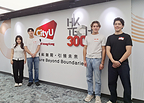
HK Tech 300 recently held a new round of entrepreneurship training, attracting more than 110 participants, around 20% of whom came from Europe, Southeast Asia, Central Asia and other regions. During the three-day programme, participants learned how to transform innovative ideas into commercially viable solutions while exchanging perspectives with students from diverse cultural backgrounds, fostering cross-cultural collaboration and inspiring entrepreneurial thinking.

Sanzhar from Kazakhstan and Jessica, from Indonesia, both students in CityUHK’s Department of Computer Science, believe that Hong Kong’s position as an international technology and financial centre provides an ideal environment for start-up development. Through the training programme, they gained a deeper understanding of entrepreneurship and business planning, and hope to turn their innovative ideas into their own ventures one day.

Théo, a third-year student in CityUHK’s College of Business from France, hopes to pursue a career in the Chinese Mainland. He sees Hong Kong’s international environment as an ideal place to experience different cultures and languages. He said that HK Tech 300 helped him learn how to assess the feasibility of innovative ideas while connecting with students from diverse backgrounds, broadening his horizons and expanding his entrepreneurial network.

Kim, a student from South Korea studying in the Department of Electrical Engineering, aspires to establish an artificial intelligence (AI)-related start-up. He said Hong Kong’s open and multicultural environment, together with its vibrant innovation and technology ecosystem were key factors that attracted him to pursue opportunities in the city.

Taking talent from Hong Kong to the world through hands-on experience

While attracting international students to Hong Kong, CityUHK also actively supports students in gaining experience abroad. Over the past two years, STEP, organised by the CityUHK Academy of Innovation, has arranged internships for more than 50 students at 17 deep-tech start-ups in Melbourne, Australia; London and Cambridge, the United Kingdom; and Beijing. These opportunities allow students to gain first-hand experience of how innovative ideas are translated into products and services.

Winnie, a student in the Department of Biomedical Sciences, joined a start-up in Australia this year through STEP. The company provides rehabilitation support for young stroke survivors. She said that, unlike internships primarily focused on laboratory research, working at a start-up allowed her to take on different roles and gain a deeper understanding of the needs of patients and other stakeholders. The experience enhanced her communication skills and gave her a greater appreciation of how technology can address real-world societal challenges.

Febryan from Indonesia and Mariia from Kyrgyzstan, participated in STEP internships at a UK-based start-up specialising in nanomaterials technology that was incubated by Imperial College London. They helped analyse the procedures and requirements for an initial public offering (IPO), gaining insights into the challenges technology start-ups face in business development and financing. Both found that the overseas experience enabled them to apply classroom knowledge in a real-world business environment, equipping them with valuable skills for their future entrepreneurial pursuits and career development.

Building a global platform for innovation

From attracting international students to explore entrepreneurial opportunities in Hong Kong to supporting local students in gaining overseas start-up experience, CityUHK continues to strengthen connections between Hong Kong and the global innovation ecosystem, facilitating the cross-border exchange of talent, knowledge and innovative ideas.

Since its launch in 2021, HK Tech 300 has trained more than 2,200 participants and nurtured over 1,000 start-up teams. More than 230 start-ups have been approved for Angel Fund investments of up to HK$1 million each. Through the HK Tech 300 International Start-up Competition and partnerships with overseas universities and start-up incubators, the programme continues to connect innovation resources worldwide.

Professor Johnny Ho Chung-yin, Associate Vice-President (Enterprise) of CityUHK, said that the University would continue to bring together global innovation talent and entrepreneurial resources through initiatives such as HK Tech 300 and STEP. By supporting talent mobility and cross-border collaboration, CityUHK aims to nurture a new generation of entrepreneurs with a global outlook and entrepreneurial spirit, further strengthening Hong Kong’s position as an international innovation hub and a “super-connector”.

View original content to download multimedia:https://www.prnewswire.com/apac/news-releases/from-cityuhks-hk-tech-300-to-the-world-turning-entrepreneurial-dreams-into-reality-302937350.html

SOURCE City University of Hong Kong

Continue Reading

Technology

OutSystems Introduces Agentic Claims Solution to Modernize Policyholder Experiences

Published

on

By

Agentic First Notice of Loss connects AI agents, customer applications and existing claims systems while keeping coverage, liability and payment decisions with human adjusters

SINGAPORE, Nov. 12, 2026 /PRNewswire/ — OutSystems, the Agentic Systems Platform helping regulated enterprises safely modernize legacy tech and run agentic systems, today announced the expansion of its Agentic Industry Solutions portfolio into insurance with Agentic First Notice of Loss. The pre-built solution enables auto insurers to modernize claims reporting and intake while safely deploying agentic workflows.

By combining customer-facing applications, AI agents, and governed workflows, the solution connects user experiences across existing policy and claims systems and external partners, while maintaining the oversight and control required in a highly regulated industry. While insurers are investing heavily in AI, many are struggling to move beyond experimentation and deliver meaningful improvements to the policyholder experience. According to the OutSystems State of AI Development in Insurance 2026 report, 35% of insurance IT leaders say AI projects have not started because they take too long, the highest rate of any industry surveyed. Legacy systems or scattered data are the top barrier for 42%, while 39% cite integration with existing systems.

These barriers are particularly relevant in claims processing, where critical information is distributed across policy administration, claims management, billing, and third-party systems. For policyholders, this fragmentation often means repetitive questions, disconnected interactions, and delays in getting help when they need it most. The business impact is significant, with 83% of U.S. consumers claiming they would switch insurance carriers following a poor claims experience, according to 2025 research from InvoiceCloud.

“Insurers don’t need another AI pilot. Insurers need AI working in daily claims operations,” said Luis Blando, Chief Product and Technology Officer at OutSystems. “When someone is in an accident, they need help right away, and the insurer needs accurate details while they’re still fresh. OutSystems Agentic First Notice of Loss delivers both. Through a conversational experience, connected to roadside help and claims systems, insurers can become the first line of support: taking the complete report, arranging a tow, and guiding the customer on what to do next. All while coverage, liability, and payment decisions stay firmly in the hands of adjusters.”

Bringing Governed AI Into the Claims Experience

Agentic First Notice of Loss provides insurers with a pre-built agentic solution for a critical moment in the policyholder journey: reporting a loss. It works across both existing claims systems or those rebuilt on OutSystems.

The solution combines customer-facing applications, data models, governed agents, and structured workflows to support key activities during the initial claims process:

Help policyholders report a loss: AI agents orchestrate the entire intake workflow, coordinating roadside dispatch through best-in-class providers like Honk, capturing driver statements, gathering third-party details, and analyzing submitted damage photos in real time.Give adjusters the facts they need: AI agents check coverage against the policy and open the claim in the carrier’s claims system through the solution’s integration layer, attaching the loss details, statements and photos.Keep critical decisions with adjusters: AI agent actions are recorded, with controls governing access to data and systems. Adjusters retain responsibility for all coverage, fault, and payment decisions, ensuring AI supports rather than replaces human judgment.

Built on a production-ready foundation, the solution allows insurers to tailor business rules, UI screens, and agents using OutSystems capabilities or third-party AI coding tools. Task-level testing enables teams to benchmark models continuously, optimizing for the ideal mix of accuracy, speed, and cost.

“OutSystems Agentic FNOL shows where the industry is headed. Governed AI agents tap into existing core systems in real time to orchestrate incident intake and sort the evidence,” said Tom Pelster, CIO at PRISM. “It proves that modernization doesn’t mean you throw out your platforms and systems of record. You build smarter workflows on top of them, and the critical liability and coverage decisions stay firmly with human adjusters.”

Expanding Claims Capabilities Through Roadside Assistance with Honk

Through a strategic partnership with the advanced roadside assistance technology provider Honk, OutSystems Agentic First Notice of Loss can arrange a tow while the policyholder reports the loss. The policyholder can then follow its status and ETA in the insurer’s app.

“The moments after an accident are when a driver finds out whether their insurer is there for them. With OutSystems Agentic First Notice of Loss, the driver reports what happened in a chat with an AI agent, and that agent coordinates in real time to dispatch a tow from Honk’s nationwide network of towing and roadside assistance providers on the carrier’s behalf,” said Adam DeWitt, CEO, Honk. “The agent first offers the carrier’s closest in-network repair shops to give the driver a clear next step. That’s where this technology matters: making a stressful moment easier for the person who needs help.”

The OutSystems Insurance Agent Kit is also available on OutSystems Forge, providing OutSystems insurance customers with reusable AI agents to check policy coverage and read claim photos and documents.

Agentic First Notice of Loss is generally available today. To learn more about how OutSystems is helping insurers move from AI pilots to optimizing policyholder experiences, visit the dedicated page.

About OutSystems

OutSystems is the Agentic Systems Platform helping regulated enterprises safely modernize legacy tech and run agentic systems. By applying AI at the architecture level rather than generating raw code, OutSystems reduces the cost, risk, and friction of legacy modernization—enabling organizations to deploy compliant, scalable, autonomous applications with any AI model. Global enterprises trust OutSystems to accelerate modernization and govern their entire AI portfolio on a unified platform.

OutSystems is consistently recognized as a leader in enterprise software development and agentic enterprise orchestration by Gartner, IDC, and Forrester, and ranked #1 in Customer Satisfaction by users on G2. Business leaders, IT executives and developers choose OutSystems to accelerate innovation without compromising reliability and security. Founded in 2001, the OutSystems ecosystem includes more than 90 million end users, over 600 partners, and thousands of active customers in 75+ countries across 20+ industries. Learn more at www.outsystems.com.

View original content to download multimedia:https://www.prnewswire.com/apac/news-releases/outsystems-introduces-agentic-claims-solution-to-modernize-policyholder-experiences-302937205.html

SOURCE OutSystems

Continue Reading

Trending