Connect with us

Technology

Paris records 5.3 times more harsh driving events per trip than Berlin, Geotab data reveals

Published

on

Berlin logs 225 harsh events per 1,000 trips, Madrid 1,088 and Paris 1,191

DUBLIN, Nov. 5, 2026 /PRNewswire/ — Geotab Inc. (“Geotab”), a global leader in connected operations, video telematics and AI-powered insights, today published new findings from its European Urban Freight Efficiency Index on road safety, showing that the number of harsh driving events per trip varies more than fivefold across seven European capitals.

The analysis uses GPS-derived harsh acceleration, harsh braking and harsh cornering events from more than 130 million trips by Geotab-connected vehicles in 2025. Berlin records the fewest harsh events at 225 per 1,000 trips, roughly one event every four to five trips, followed by Dublin (315), Amsterdam (356), Rome (393) and London (462). Madrid (1,088) and Paris (1,191) sit far above the rest, at roughly one harsh event for every trip, with the gap between Berlin and Paris being 5.3 times, and between Berlin and Madrid 4.8 times.

What differs most from city to city is the kind of event. Harsh acceleration accounts for 79% of Paris events and 69% of Madrid events, while Berlin and London split more evenly between acceleration and braking. Amsterdam and Rome show the highest share of harsh cornering of any city (34% and 27%), although harsh braking is the largest event type in both (37% and 40%). An acceleration-heavy profile tends to respond to driver coaching and in-cab feedback, while a profile built on braking and cornering more often points to junction design and routing.

Safety and efficiency tend to move together. The four cities with the highest efficiency scores, Berlin, Amsterdam, Dublin and Rome, are the four with the fewest harsh events per trip, while Paris, London and Madrid, the three lowest-scoring cities, have the three highest rates. Two cities sit awkwardly within that pattern. Paris records the most harsh events per trip despite scoring higher than London and Madrid, and London’s rate is less than half of Madrid’s despite a score of 29.

Where events happen matters too. Amsterdam’s three busiest areas hold 13.7% of the city’s harsh events, the most concentrated pattern in the study, and all three of Dublin’s busiest areas sit on a single road, the Naas Road (N7). In cities such as London, by contrast, events are spread widely across the network, with the busiest area holding just 0.6%. In Berlin, Madrid, Paris and Rome the busiest area holds between 1.7% and 2.6% of the city’s events, so a handful of junctions and corridors in each city account for a noticeable share.

Berlin: the lowest rate in the study
Berlin records 225 harsh events per 1,000 trips, the lowest of the seven cities and roughly one event every four to five trips. Acceleration (45%) and braking (44%) are almost evenly matched, and cornering accounts for only 10%, which likely reflects the city’s wide, straight boulevards. Its polycentric layout, with several centres rather than one dominant hub, spreads demand across the network, and the busiest areas, around Spandauer Damm in Charlottenburg, in Spandau and in Westend, each hold about 2% of events. Berlin’s rate makes a useful baseline for what a well-functioning network can look like.

Dublin: one corridor stands out
Dublin records 315 events per 1,000 trips, the second-lowest rate, and its safety picture centres on one road. The Naas Road (N7) corridor through Walkinstown and Drimnagh holds all three of the city’s busiest areas (2.3%, 1.9% and 1.4% of Dublin’s harsh events), and in the worst of them 71% of events are harsh cornering. Across the rest of the city, acceleration leads (49% of events against 32% for braking), so the N7 stands apart. The roundabouts, tight ramps and merge points along the route likely explain it, and routing that avoids that stretch at peak times is likely to reduce exposure without any change to the road itself.

Amsterdam: concentrated at a single interchange
Amsterdam records 356 events per 1,000 trips and has the most balanced profile in the study, with 29% acceleration, 37% braking and 34% cornering. The cornering share is the highest of any city and fits a canal-grid layout of tight turns and narrow bridges. Amsterdam is also home to the most concentrated hotspot in the study: three areas on the A4 approach to Schiphol airport hold 13.7% of the city’s harsh events, and the busiest alone holds 6.3%, more than double the top area in any other city. Cornering makes up between 46% and 78% of events in each of those areas, which points to the demanding geometry of the interchange. Planning routes around that stretch could have an outsized effect on a fleet’s results in the city.

Rome: tight streets, steady flow
Rome records 393 events per 1,000 trips and ranks fourth on efficiency, despite the worst congestion score in the study. Braking is the largest category at 40%, followed by acceleration (33%) and cornering (27%), the second-highest cornering share after Amsterdam, which likely reflects the narrow, irregular streets of the historic centre. Rome’s star-shaped road network spreads demand across several radial corridors, and its busiest areas are the EUR business district (2.6% and 0.9% of events) and the A1/A24 interchange east of Porta Maggiore (0.7%). The rate sits below London’s, which suggests that slow but continuous traffic can be safer than stop-start conditions.

London: lower than its congestion would suggest
London records 462 events per 1,000 trips, less than half of Madrid’s and about two-fifths of Paris’s, even though it ranks sixth of seven on efficiency with a score of 29. Acceleration (45.5%) and braking (38.7%) are close to evenly matched, with cornering at 15.8%. Events are also spread unusually thinly. The busiest area, around Kennington, accounts for just 0.6% of events, followed by Waterloo and Lambeth (0.5%) and central Westminster (0.5%), so there is no single location to fix. In absolute terms London recorded the second-highest number of harsh events of the seven cities over 2025, at 31.4 million behind Madrid’s 32.1 million. The low rate per trip may reflect congestion charging, signal policy, stricter enforcement and calmer driving patterns.

Madrid: the second-highest rate, led by harsh acceleration
Madrid records 1,088 events per 1,000 trips, the second-highest rate, and its profile is led by acceleration at 69% of events, against 19% for braking and 12% for cornering. Its busiest areas run along the Paseo del Prado, the Paseo de la Castellana and the M-30 inner ring, and the top three are almost tied in intensity (1.7%, 1.7% and 1.6% of events), which points to a network under pressure throughout rather than a single chokepoint. Events peak at 11:00, and Madrid still logs 886,000 of them at 05:00, its quietest hour. It is also the lowest-ranked city on efficiency, with a score of 25, and with limited off-peak windows, fleets there have little room to schedule around the pressure.

Paris: the highest rate in the study
Paris records 1,191 events per 1,000 trips, the highest of the seven cities and 5.3 times Berlin’s rate. Harsh acceleration accounts for 79% of events, with braking at 15% and cornering at just 6.5%, the most acceleration-heavy profile in the study. That may point to a habit of rapid take-off from a standstill, which makes driver coaching a sensible first step for fleets operating there. The busiest area sits in the 18th arrondissement near the Porte de la Chapelle interchange (1.8% of events), with further clusters around the inner Périphérique and on the west side towards La Défense. Events also peak later in Paris than in any other city, at 19:00. Paris ranks fifth on efficiency (score 37), so its safety result is weaker than its efficiency score alone would predict.

Reading the Numbers by City
The comparison between cities has a practical use for fleet managers. A driver who logs 1,000 harsh events per 1,000 trips is close to the city average in Madrid and well above it in Berlin, where the average is 225. Targets for drivers and fleets are more useful when they are set against the city a vehicle operates in, rather than one figure for every market.

Edward Kulperger, Senior Vice President, EMEA at Geotab, said: “A harsh event rate only means something when you know which city the driver is working in. The same number can be an average day in Madrid and a warning sign in Berlin. Where the pattern is sudden acceleration, coaching and in-cab feedback can make a real difference. Where it is sharp cornering at a particular junction, a change of route will often do more. Fleets that can see which of the two they are dealing with are in a much better position to act. That is what data and benchmarking make possible: they turn a city-level pattern into something a fleet can act on. Video telematics can also add the context behind an individual event, so a coaching conversation can start from what actually happened on the road.”

Read the full report here.

Methodology

The European Urban Freight Efficiency Index scores each city on a scale of 0 to 100, based on two dimensions evaluated separately for passenger vehicles and trucks, then combined using a 60/40 weighting (passenger/truck). The first dimension, how traffic flows, accounts for 75% of each vehicle score and covers congestion burden, uncongested windows and travel time variability. The second, what congestion costs, accounts for the remaining 25% and measures mid-trip vehicle idling.

Safety findings are reported separately from the index score. They use GPS-derived harsh acceleration, harsh braking and harsh cornering events, expressed per 1,000 trips so that cities of different size can be compared. Hotspot figures show the share of a city’s harsh events that fall within each small grid area (geohash cell). Events are inferred from GPS position data rather than accelerometer readings, so they may undercount on short road segments and overcount on curved roads, and are intended for relative comparison between cities, not as a count of collisions or incidents. All figures are based on full-year 2025 data (January to December) from Geotab’s connected vehicle platform across Berlin, Amsterdam, Dublin, Rome, Paris, London and Madrid, and represent a sample of connected vehicles, not a census.

About Geotab

Geotab is a global leader in connected operations, video telematics and AI-powered insights. Trusted by more than 100,000 customers — from small and mid-size fleets to Fortune 500 enterprises and public-sector organisations, including the U.S. federal government, Geotab connects approximately 6 million vehicles and assets and processes 100 billion data points daily. With ISO/IEC 27001:2022, SOC2, FIPS 140-3 and FedRAMP authorisations, Geotab’s open platform and 700+ partner ecosystem unify safety, compliance and operations in a single system. Our mission: a safer, more efficient and more sustainable world in motion.

View original content to download multimedia:https://www.prnewswire.co.uk/news-releases/paris-records-5-3-times-more-harsh-driving-events-per-trip-than-berlin-geotab-data-reveals-302929889.html

Continue Reading

Technology

Wenge AI Adds Google and Apple Sign-In Options for ScienceOra International Users

Published

on

By

Update streamlines registration and sign-in for researchers using the international site

SHENZHEN, China, Nov. 20, 2026 /PRNewswire/ — Wenge AI (1956.HK) today announced that ScienceOra, its AI-powered scientific research and decision-support platform, has enhanced registration and sign-in for its international site with Google and Apple sign-in options. The update is designed to give overseas researchers a faster, more convenient way to access the AI for Science platform.

Users can now authenticate with their existing Google or Apple accounts instead of completing a lengthy registration form. Based on the email address and account-linking status, ScienceOra identifies whether to create a new account or sign the user in to an existing account. Apple sign-in is currently available on the web version of the platform.

The update also improves the way third-party accounts are linked to ScienceOra. It supports linking for users with existing accounts and provides clearer validation and prompts where an email address is already in use, an account is already linked, or Apple’s Hide My Email feature is used.

These refinements are intended to reduce duplicate registrations and help users resolve common sign-in situations with less friction, while maintaining a more consistent account experience. ScienceOra will continue to refine its product experience around the needs of international users, making access to research tools and scientific exploration more seamless.

Explore ScienceOra: https://www.scienceora.ai

About ScienceOra

ScienceOra is Wenge AI’s AI-powered scientific research and decision-support platform. Powered by the ScienceOne Scientific Foundation Model, it brings together scientific literature, data, tools and specialized research agents to support researchers across scientific inquiry and research workflows.

About Wenge AI

Wenge AI (1956.HK) is an enterprise AI company developing proprietary foundation models and AI platforms to help organizations turn advanced AI capabilities into practical business applications. Founded by a team of AI scientists from the Chinese Academy of Sciences, Wenge AI combines deep expertise in foundation models, cognitive intelligence and complex-systems modelling. The company is committed to bringing advanced AI from research and technological innovation into real-world enterprise applications.

For more information, visit https://www.wenge.com/.


View original content to download multimedia:https://www.prnewswire.com/news-releases/wenge-ai-adds-google-and-apple-sign-in-options-for-scienceora-international-users-302946576.html

SOURCE Wenge AI

Continue Reading

Technology

ROTOBOOST Secures Strategic Investment from Aramco Ventures to Accelerate Global Deployment of Methane Pyrolysis Technology for Low-Carbon Hydrogen and Advanced Carbon Materials

Published

on

By

HELSINKI, Finland, Nov. 20, 2026 /PRNewswire/ — ROTOBOOST, a Finnish energy transition technology company, has secured a strategic investment from Aramco Ventures, Aramco’s corporate venturing arm. The investment supports ROTOBOOST’s plans to scale its innovative methane pyrolysis technology, which produces low-carbon hydrogen alongside high-value advanced carbon materials.

Using a molten catalyst, the process converts natural gas (C1–C6) and other hydrocarbon feedstocks into low-carbon hydrogen and advanced carbon materials, like Crumpled Graphene Nanoplatelets (CGNPs). With their distinctive 3D crumpled structure, CGNPs enhance conductivity and performance in industrial applications. By producing valuable solid carbon alongside hydrogen, ROTOBOOST turns carbon into capital, creating a model where decarbonization drives value creation.

ROTOBOOST has demonstrated its platform’s technical capabilities and commercial potential through several milestones, including TÜV SÜD lifecycle carbon footprint certification for both product streams, a PETRONAS pilot exceeding 1,000 operating hours, four marine Approvals in Principle (AiPs), and strategic partnerships with Baowu and Hankook Tire.

Kaisa Nikulainen, CEO of ROTOBOOST, stated that the investment supports the company’s vision of using methane-splitting technology to advance industrial decarbonization globally, scaling across key industrial sectors worldwide.

The investment will support ROTOBOOST’s expansion across four key areas: deploying commercial-scale methane-splitting systems in oil and gas, power, steel & marine sectors; increasing CGNP production capacity for battery, polymer, coating, steel & tire markets; expanding across the Middle East, Europe, Asia & North America; and advancing R&D to improve reactor efficiency, feedstock flexibility & carbon product applications.

Zayed Alamri, Executive Managing Director, Aramco Ventures, stated: “ROTOBOOST aims to develop methane-splitting technology to produce hydrogen and solid carbon materials for potential use in batteries, anti-corrosion coatings and polymers. Through our investment, we aim to support the company’s technology development and exploration of commercial opportunities. We look forward to working with the team as it seeks to assess potential industrial applications and build relationships with prospective customers and partners.”

Learn more about ROTOBOOST at www.rotoboost.com or contact info@rotoboost.com. Learn more about Aramco Ventures at aramcoventures.com.

View original content to download multimedia:https://www.prnewswire.co.uk/news-releases/rotoboost-secures-strategic-investment-from-aramco-ventures-to-accelerate-global-deployment-of-methane-pyrolysis-technology-for-low-carbon-hydrogen-and-advanced-carbon-materials-302946600.html

Continue Reading

Technology

LONGPORT Whale Wins Silver at Hong Kong ICT Awards 2026 for Multi-Asset Trading Technology Innovation

Published

on

By

Recognition underscores a structural shift in institutional finance: from stitching together legacy systems to building on one unified, modular, AI-ready foundation

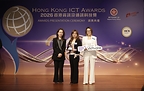
HONG KONG, Nov. 20, 2026 /PRNewswire/ — LONGPORT Whale (Longport Technology HK Limited), a leading provider of institutional-grade trading solutions for brokers, banks, external asset managers and other institutions, has won the Silver Award in the FinTech Award (Financial Services and RegTech Innovations) category at the Hong Kong ICT Awards 2026 for its Integrated Multi-Asset Trading Solution.

Organised by the Digital Policy Office of the Hong Kong SAR Government, the Hong Kong ICT Awards recognise excellence in technology innovation. The FinTech Award is led by The Hong Kong Institute of Bankers.

The real constraint on growth is infrastructure

Financial institutions today share a similar agenda: enter new markets, broaden the product shelf, differentiate the client experience and put artificial intelligence to work. What holds many of them back is rarely a shortage of ideas. It is the fragmented legacy technology underneath, which turns every new product or market into a costly, complex integration project and slows the speed at which innovation reaches clients.

Whale was built on a different premise: expanding a business should be a matter of configuration, without the need to rebuild from the ground up.

Zhong Hua, CEO of LONGPORT Whale, said: “Our ambition is to widen what is possible for financial institutions and the investors they serve. When sophisticated trading capabilities become more accessible, more institutions can bring their ideas to market and create new opportunities for their clients. We see Whale as a long-term partner in that growth, providing a technology foundation on which institutions can build their own future. This award is an encouraging milestone in that journey.”

One platform, multiple markets: Simplifying institutional trading infrastructure

Whale’s Integrated Multi-Asset Trading Solution addresses one of the most persistent challenges in institutional finance: running trading activity across markets and asset classes without a patchwork of disconnected systems.

The platform integrates client-facing trading applications, order management, execution connectivity, risk management and back-office operations within a unified technology environment. It covers markets including Hong Kong SAR, the United States and Singapore, and asset classes spanning equities, options, funds, structured notes and virtual assets.

Two design principles set the solution apart:

Modular by design. Where traditional approaches require a separate system for each new capability, Whale lets institutions deploy the complete solution or adopt individual components in line with their business priorities.Connected from day one. Ready-built connections with execution brokers, custodians and other service providers reduce integration work, so institutions can launch products faster and extend their offerings while retaining full control of their business models and client experience.

From integrated trading to AI-ready financial infrastructure

As artificial intelligence reshapes financial services, the competitive question is shifting from whether to adopt AI to whether an institution’s infrastructure is ready to support it.

Built on a cloud-native architecture, Whale supports continuous platform upgrades and open integration through APIs, SDKs and Model Context Protocol (MCP). Institutions can connect proprietary applications, external services and AI tools directly, without replacing the trading infrastructure they already rely on.

By combining integrated trading capabilities with an extensible technology foundation, LONGPORT Whale enables institutions to modernise existing operations while remaining ready to adopt emerging technologies and support new forms of financial services.

Trusted by more than 100 financial institutions

LONGPORT Whale serves more than 100 financial institutions worldwide, supporting brokers, banks, asset managers and other financial services providers in developing and scaling their businesses.

The Hong Kong ICT Awards recognition reinforces Whale’s commitment to advancing institutional trading technology and building a more accessible, adaptable and AI-ready financial services ecosystem.

About LONGPORT Whale
LONGPORT Whale provides institutional-grade trading solutions for brokers, banks, family offices and other institutions with trading services. The platform delivers comprehensive access to multi-market, multi-asset trading through a single integrated system. Built on a proprietary cloud-native microservices architecture and validated by tens of millions of live transactions, LONGPORT Whale delivers millisecond-level execution with exceptional stability and reliability.

Its modular, flexible deployment model allows each institution to tailor the system to its business scale and regulatory environment, enabling partners to rapidly build efficient and globally scalable trading services. Today, the platform serves as the core trading system for more than 100 institutions worldwide.

The founding team of LONGPORT Whale brings together experienced financial professionals from Singapore and Hong Kong SAR, alongside senior technology leaders from top global technology companies. With operations across Hong Kong SAR, Singapore, the United States and Thailand, the company has built a strong, globally distributed team with a significant focus on FinTech innovation.

LONGPORT Whale is an HKEX-recognised Broker Supplied System (BSS) vendor, holds ISO/IEC 27001 and ISO/IEC 27701 certifications, and has completed SOC 2 Type II and OSPAR audits.

Website: https://longportwhale.com

View original content to download multimedia:https://www.prnewswire.com/apac/news-releases/longport-whale-wins-silver-at-hong-kong-ict-awards-2026-for-multi-asset-trading-technology-innovation-302946625.html

SOURCE LONGPORT Whale

Continue Reading

Trending