Connect with us

Technology

Diamond Foundry Announces First-Ever D200mm Single-Crystal Diamond

Published

on

Breakthrough culminates 25 years of scientific pursuit and establishes a new scale for single-crystal diamond

SAN FRANCISCO, Nov. 6, 2026 /PRNewswire/ — Diamond Foundry Inc. today announced a major milestone in the history of materials technology: the creation of the first-ever D200mm single-crystal diamond, measuring 200 millimeters in diameter.

Diamond Foundry creates the world’s first 200mm single-crystal diamond, bringing diamond to semiconductor wafer scale.

The achievement marks a fundamental step forward in humanity’s ability to manufacture diamond as a technology material at semiconductor-relevant scale.

The announcement accompanies a keynote by Diamond Foundry CEO Martin Roscheisen, delivered by video at CarbonSemi 2026 in Ningbo, China. Watch the keynote: https://youtu.be/ae0XQBDlLMQ.

Diamond has long been recognized as an extraordinary material for technology. It combines the highest thermal conductivity with exceptional mechanical strength, electrical insulation, optical properties, and the potential for extreme electronic performance. Yet its use in advanced technology has been constrained by one basic limitation: size.

Diamond Foundry’s D200mm breakthrough changes that.

Producing single-crystal diamond at D200mm scale required overcoming fundamental challenges in crystal growth, plasma physics, reactor engineering, materials science, process control, and manufacturing. The result is not an assembly of individual diamond pieces and not a polycrystalline diamond wafer. It is a single-crystal diamond at D200mm scale.

“This is one of those milestones that once seemed almost impossible,” said Martin Roscheisen, CEO of Diamond Foundry Inc. “Hundreds of DF engineers, scientists, and technicians contributed to us getting here. It is the accumulated result of countless experiments, failures, inventions, rebuilt machines, and insights over more than a decade.”

Roscheisen particularly recognized Stefan Gsell and Martin Fischer, whose work on scaling single-crystal diamond began 25 years ago.

“Stefan and Martin pursued this goal for 25 years,” Roscheisen said. “There are very few examples in technology of someone sticking to a really hard scientific challenge with that level of perseverance. They kept going when the prevailing view was that single-crystal diamond simply could not be made at this scale. Today, the perseverance shows as the first-ever D200mm single-crystal diamond. And best of all, it makes D300mm predictable as well.”

From Gemstone Dimensions to Semiconductor Dimensions

The semiconductor industry is built around the ability to manufacture extraordinary materials at wafer scale. Silicon’s progression toward larger wafers transformed electronics by allowing increasingly sophisticated devices to be manufactured economically and repeatably.

Diamond has never had an equivalent scaling path.

Natural diamond is constrained by geology. Conventional lab-grown diamond has historically been constrained to relatively small crystal dimensions. Even as the extraordinary properties of diamond became increasingly relevant to high-power electronics, AI computing, optics, quantum systems, and other advanced technologies, crystal size remained a fundamental bottleneck.

The D200mm single-crystal diamond milestone demonstrates a path beyond that limitation.

For Diamond Foundry, the achievement is part of a broader effort to turn single-crystal diamond from a scarce material measured in gemstones into a tech-industrial semiconductor substrate manufactured at scale.

The implications are particularly significant as computing systems encounter increasingly severe thermal constraints. Modern AI processors concentrate enormous amounts of power into microscopic regions of silicon. Diamond’s exceptional thermal conductivity can spread that heat at the material level, creating new possibilities for chip architectures, power densities, reliability, and cooling.

Twenty-Five Years of Perseverance

The D200mm achievement has roots extending well beyond Diamond Foundry itself.

For 25 years, Gsell and Fischer pursued the underlying scientific and engineering challenge of growing high-quality single-crystal diamond of scalable size. Their work ultimately became part of a much larger effort involving hundreds of people across Diamond Foundry.

The milestone reflects advances spanning plasma generation, growth chemistry, reactor architecture, crystal engineering, thermal management, metrology, automation, and manufacturing.

“Technology history is often written around the moment something finally works,” Roscheisen said. “But that moment rests on the people who were willing to spend years — sometimes decades — making it work. This diamond exists because hundreds of people contributed, and because a few people refused to give up on the idea for 25 years.”

A New Scale for Diamond

Diamond Foundry views D200mm not as an endpoint, but as the beginning of a new manufacturing era for diamond.

The company is developing single-crystal diamond for semiconductor and advanced-technology applications where diamond’s combination of thermal, mechanical, electrical, and optical properties can enable performance beyond the limits of conventional materials.

The first D200mm crystal is shown as grown and unpolished — directly from the growth process.

For a material that nature forms only under extraordinary conditions deep inside the Earth, the significance is simple:

Single-crystal diamond has entered the wafer-scale era.

About Diamond Foundry Inc.

Diamond Foundry is the #1 producer of single-crystal diamond in the world. Founded in San Francisco, the company created the world’s first diamond wafer and is scaling volume production of chip substrates with a $2.77B EU Chips Act project in Spain.

Media contact: Jeff Yurek, j@df.com

View original content to download multimedia:https://www.prnewswire.com/news-releases/diamond-foundry-announces-first-ever-d200mm-single-crystal-diamond-302931849.html

SOURCE Diamond Foundry

Continue Reading

Technology

Delta Participates in COP31 and CBD COP17, Supporting Electrification and Biodiversity Conservation

Published

on

By

TAIPEI, Nov. 9, 2026 /PRNewswire/ — Delta marks its 19th consecutive year of participation in the 31st United Nations Climate Change Conference (UNFCCC COP31), which opens today in Antalya, Türkiye. Delta will support the host country’s “35×35” initiative, targeting a 35% electrification goal by 2035, by sharing how smart microgrids accelerate electrification at an official side event. Earlier, at the 17th Conference of the Parties to the Convention on Biological Diversity (CBD COP17) in late October, Delta partnered with the International Union for Conservation of Nature (IUCN) to showcase the world’s first application of the Species Threat Abatement and Restoration (STAR) metric for coral restoration and conservation assessment. Through international collaboration, Delta addresses climate mitigation and adaptation challenges with technological innovation and ecosystem restoration.

Shan-Shan Guo, Vice Chairperson of the Delta Electronics Foundation, said, “As global electrification accelerates and AI drives growing electricity demand, Delta leverages its core technologies to improve energy efficiency and resilience through microgrids and smart energy management, support electrification, and help AI data centers increase their use of clean energy. As Delta celebrates its 55th anniversary, we are participating in international climate conferences under the theme ‘Smarter is Greener.’ At COP31, our EMEA leadership and Foundation colleagues will engage with international thought leaders at official side events and the France Pavilion. We also shared our coral restoration experience and achievements at CBD COP17. Through innovative technology, we hope to collaborate with climate partners and move forward toward a more sustainable future.”

During COP31, Delta will host its 9th official side event in the Blue Zone, joining the Association for Renewable Energy and Clean Technology (REA) and the German Federal Environmental Foundation (DBU) to exchange insights on microgrid applications. Delta will also share its experience deploying microgrids in Indigenous communities to strengthen disaster resilience. In 2025, renewable electricity accounted for 91% of Delta’s global electricity consumption, and Delta achieved its RE100 target in 32 countries.

Delta Presents World-Leading Coral Restoration Experience at CBD COP17

Wim Chang, CEO of the Delta Electronics Foundation, said, “Delta combines technology with coral restoration and conservation, aiming to preserve more than half of the coral species in the Pacific Ocean by 2030. This year, in partnership with IUCN, we became the first globally to apply the STAR metric to coral reef areas where Delta conducts restoration. By scientifically quantifying threats to species survival, we aim to make conservation outcomes more measurable and credible.”

Nicholas Macfarlane, Head of Conservation Science and Technology at IUCN, said, “We are delighted to have partnered with Delta on the world’s first application of the marine STAR metric. This collaboration demonstrates the potential of corporate and scientific partnerships, and we look forward to advancing marine biodiversity through innovative, measurable conservation strategies.”

At CBD COP17 in late October, Delta presented its research at the Nature Pavilion, a flagship venue hosted by IUCN. This year, Delta applied the STAR methodology to coral reef areas in Kenting, Taiwan, and calibrated the results against IUCN’s global database, aligning its restoration methodology with international standards.

Delta also invited Professor David Obura, lead author of the coral chapter of the IUCN Red List of Threatened Species, to a side event at the Ocean Pavilion. Together with international organizations including the UK’s Plymouth Marine Laboratory (PML) and the International Coral Reef Society (ICRS), participants discussed ways to strengthen coral reef resilience.

From biodiversity conservation to electrification goals, leveraging scientific research and technological innovation to address global environmental challenges remains a core focus for the United Nations. To help the international community combat climate change and biodiversity loss, Delta has participated in two COP summits 22 times, and hosted or been invited to 43 side events to date.

ABOUT DELTA

Delta, founded in 1971, and listed on the Taiwan Stock Exchange (code:2308), is a global leader in switching power supplies and thermal management products with a thriving portfolio of IoT-based smart energy-saving systems and solutions in the fields of industrial automation, building automation, telecom power, data center infrastructure, EV charging, renewable energy, energy storage and display, to nurture the development of smart manufacturing and sustainable cities. As a world-class corporate citizen guided by its mission statement, “To provide innovative, clean and energy-efficient solutions for a better tomorrow,” Delta leverages its core competence in high-efficiency power electronics and its ESG-embedded business model to address key environmental issues, such as climate change. Delta serves customers through its sales offices, R&D centers and manufacturing facilities spread over close to 200 locations across 5 continents.

Throughout its history, Delta has received various global awards and recognition for its business achievements, innovative technologies and dedication to ESG. Since 2011, Delta has been listed on the Dow Jones Best-in-Class World Index (formerly the DJSI World Index of Dow Jones Sustainability™ Indices) for 15 consecutive years. Delta has also won CDP with double A List for 4 times for its substantial contribution to climate change and water security issues and has been named Supplier Engagement Leader for its continuous development of a sustainable value chain for 8 consecutive years.

For detailed information about Delta, please visit: www.deltaww.com

View original content:https://www.prnewswire.com/news-releases/delta-participates-in-cop31-and-cbd-cop17-supporting-electrification-and-biodiversity-conservation-302933194.html

SOURCE Delta

Continue Reading

Technology

China, Europe and Africa Explore New Paths for Green Energy Cooperation

Published

on

By

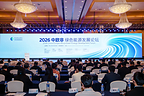
WENZHOU, China, Nov. 9, 2026 /PRNewswire/ — Under the theme “Deepen Green Partnerships, Build a Shared Zero-Carbon Future”, the 2026 China-Europe-Africa Green Energy Development Forum was held in Zhejiang, China. The forum was organized by the CPAFFC and the China-EU Association, with the Commonweal Foundation of CHINT and StarTimes Group serving as co-organizers.

The forum aimed to strengthen collaboration among China, Europe, and Africa in the renewable energy sector, while fostering joint efforts to advance the global energy transition and address the challenges posed by climate change.

Discussions focused on key issues, including cross-regional industrial cooperation amid the new global climate governance landscape, innovative green finance for developing countries, technological innovation and digital transformation, and global green value chain development.

Forum participants and experts emphasized the significant potential for China, Europe and Africa to work together on the green transition. Stronger cross-regional partnerships can help address climate challenges, support global economic stability and extend the benefits of green development to more countries and communities.

They also stressed the need for greater coordination on technical standards, certification and carbon markets, alongside innovative financing mechanisms. Expanding access to small-scale solar solutions, promoting ecological restoration and strengthening international cooperation were also identified as important steps towards improving energy access and accelerating Africa’s green transition.

Against the backdrop of evolving global climate governance, the forum explored ways to strengthen industrial cooperation by building on the complementary strengths of the three regions. These include China’s established green energy solutions, Africa’s abundant energy resources, and Europe’s market expertise and technological capabilities.

At the business level, companies are increasingly turning these complementary strengths into practical partnerships. CHINT, a trusted provider of integrated power and energy solutions, has established smart manufacturing facilities, and delivered solar and energy storage projects worldwide. In Africa, its affordable solar solutions for off-grid and weak-grid areas are bringing reliable, clean electricity to remote communities.

The forum also served as a platform for cross-regional dialogue, business exchange and partnership building, creating opportunities to turn shared ambitions into tangible initiatives.

View original content to download multimedia:https://www.prnewswire.co.uk/news-releases/china-europe-and-africa-explore-new-paths-for-green-energy-cooperation-302933196.html

Continue Reading

Technology

Telespazio Partners with Rivada for Secure Connectivity

Published

on

By

The Outernet’s backbone in space brings an unparalleled level of security to government & enterprise communications

Outernet is a constellation of 600 ultra-secure, networked low-earth orbit satellitesCombining the speed of fiber with the reach of satelliteOrbital mesh network with no terrestrial gateways ensures security by design

MUNICH, Nov. 9, 2026 /PRNewswire/ — Rivada Space Networks is partnering with Telespazio, a 67/33 joint venture between Leonardo and Thales, through its subsidiary Telespazio Brasil, to provide a unique next generation connectivity network with the necessary security and performance to drive digital innovation and transformation. Rivada has now lined up over $US 20 billion of business globally for its unique LEO network.   

Telespazio Brasil S.A. the Brazilian subsidiary of Telespazio has operated in the country since 1997 and is headquartered in Rio de Janeiro. It is a leading provider of satellite communications, earth observation, and satellite ground systems services for both government and enterprise customers across Brazil, Argentina, Chile, Colombia, Costa Rica and Peru.

In Latin America, sovereign communications and critical infrastructure resilience are increasingly key requirements  to support military, government and high-end enterprise connectivity. Telespazio Brazil, is a long-established and trusted provider of tailored communications solutions for business applications, mission-critical operations and network expansion for governments, defense organizations, energy companies and telecom operators across Latin America.  And with the increasing demand to move large quantities of data securely and quickly around the world placing existing digital infrastructure under greater pressure than ever, organisations in banking, security, defense and telecommunications are looking for innovative and future-forward networking technologies that are secure, fast and reliable.

As the first unified global communications network, Rivada’s Outernet is transformative. A global low-latency point-to-point network of 600 low earth orbit (LEO) satellites, it is a unique next-generation constellation combining inter-satellite laser links with advanced onboard processing and routing to create a ubiquitous optical mesh network in space. This “orbital network,” in which data stays in space from origin to destination, creates an ultra-secure satellite network with pole-to-pole coverage, offering end-to-end latencies much lower than terrestrial fiber over long distances. And by routing traffic on a physically separated network in space, it provides a layer of defense for any organization that needs to share data securely between widely distributed sites.

Marzio Laurenti CEO of Telespazio Brasil said: “Rivada is building a uniquely capable LEO constellation with a new level of cybersecurity for the enterprise and government sectors.  By establishing a highly secure global communications infrastructure in space, the Outernet’s fast, seamless and secure connectivity will ramp up network performance and enable true digital transformation and new business opportunities through multi-gigabit bi-directional performance, combined with worldwide reach”.

Declan Ganley, CEO, Rivada Space Networks, said: “We are delighted to be working with Telespazio to enhance their ability to provide data security and data sovereignty. The space domain now plays a critical role in securing network infrastructure and addressing rising cybersecurity issues. With the Outernet’s unique architecture, satellites  become routers in the sky and space now provides secure, high-performance data transport instead of merely providing the last hop to the internet. The future is not just more satellites. It is true orbital networks that offer more than the “gap-filler” LEO systems which bridge the last mile between the satellite and the nearest terrestrial gateway. Our unique gateway-free architecture redefines connectivity in terms of security, latency, capacity, efficiency, and coverage. “

Telespazio will join Rivada’s Customer Advisory Board and conduct a series of technical workshops to structure the collaboration and exchange information on the Outernet’s capabilities.

About Rivada Space Networks
Rivada Space Networks GmbH is deploying the first true “Outernet”: a global, low-latency, point-to-point connectivity network of LEO satellites. By connecting its satellites with lasers, Rivada will provide resellers and B2B customers with the ability to securely connect any two points on the globe with low latency and high bandwidth. The constellation, comprising 600 low-earth-orbit communications satellites, will represent a fundamental change in the availability of secure, global, end-to-end enterprise-grade connectivity for Telecom, Enterprise, Maritime, Energy and Government Services markets. The Outernet is being built using Rivada’s German filings for high-priority Ka-band spectrum, called Outernet-1.  Rivada Space Networks is a wholly owned subsidiary of Rivada Networks, Inc. www.rivadaspace.com  

Follow Rivada Space Networks on: 
LinkedIn: https://www.linkedin.com/company/rivada-space/
Twitter: @rivadaspace  

Media Contacts
Melanie Dickie, Chief Marketing & Communication Officer
Rivada Space Networks GmbH
Tel: +31 6 14 22 97 62
Email: mdickie@rivadaspace.com 

Brian Carney, SVP Corporate Communications 
Rivada Networks, Inc
Tel: +1 (207) 256-0386
Email: bcarney@rivada.com  

About Telespazio

Telespazio, a Leonardo and Thales 67:33 joint venture, is one of the world’s leading operators in space services. Its activities range from the design and development of space systems to the management of launch services and in-orbit satellite control, from Earth observation, integrated communications, satellite navigation and localisation services to scientific programmes. The company plays a leading role in the reference markets, supported by its infrastructure and the technological experience acquired in 65 years of activity, which include participation in space programmes such as Galileo, EGNOS, Copernicus, COSMO-SkyMed and Moonlight. Telespazio, which is Thales Alenia Space’s partner in the “Space Alliance”, generated sales of €850 million in 2025 while employing 3,500 people in 16 different countries.

Media Contact
Beatriz Villanueva
Telespazio Brasil S.A.
Tel: +55 (21) 98861-1155 
Email: beatriz.villanueva@telespazio.com


View original content to download multimedia:https://www.prnewswire.com/news-releases/telespazio-partners-with-rivada-for-secure-connectivity-302933199.html

SOURCE Rivada Space Networks

Continue Reading

Trending