Connect with us

Technology

Ev Dynamics Explores “AI+” Green Mobility Model

Published

on

Zhongtong Kinetic Energy, a Subsidiary of the Group, to Focus on Battery Swapping for New Energy Heavy Trucks and Fixed-route Transportation

Advancing Intelligent Dispatching, Energy Replenishment Management and Transportation Carbon Emission Data Management

HONG KONG, Nov. 6, 2026 /PRNewswire/ — EV Dynamics (Holdings) Limited (the “Company”, stock code: 476.HK, together with its subsidiaries, the “Group”) is exploring an expansion from the supply of new energy commercial vehicles into comprehensive green mobility services. Using battery swapping for new energy heavy trucks and fixed-route transportation as entry points, the Group will integrate artificial intelligence-powered dispatching, energy replenishment management and transportation carbon emission data management to progressively validate the “Transport as a Service” (TaaS) model.

Zhongtong Kinetic Energy (Hangzhou) Technology Co., Ltd. (“Zhongtong Kinetic Energy”), the Group’s China operating headquarters platform and a wholly-owned subsidiary of the Group, will start with actual transportation demand, prioritising the study of fixed routes, stable cargo sources and high-frequency transportation scenarios. It will progressively establish a closed-loop operating model covering vehicles, energy replenishment, dispatching and operational evaluation, with vehicle utilisation rate, energy consumption per unit of transportation, energy replenishment efficiency, transportation costs and service stability serving as the key validation indicators.

In terms of artificial intelligence applications, the Group intends to explore functions such as intelligent route scheduling, energy replenishment planning, and operational and maintenance alerts based on transportation orders, driving routes, vehicle energy consumption, battery status and battery swapping station utilisation. These functions are intended to reduce empty running and waiting time, and improve the utilisation efficiency of vehicles and energy replenishment facilities. The relevant technologies will be progressively tested and iterated in conjunction with actual application scenarios, rather than remaining at the level of a standalone conceptual demonstration.

This direction is in line with the policy trend towards the large-scale application of new energy heavy trucks. In June 2026, the Ministry of Transport and ten other departments publicly issued the Implementation Plan for Promoting the Large-scale Application of New Energy Heavy Trucks (《推動新能源重卡規模化應用實施方案》), which proposed that, by 2030, the penetration rate of new energy heavy trucks should reach 40%, with the number of new energy heavy trucks in operation exceeding 1.6 million units, 30,000 kilometres of zero-carbon road transportation corridors to be constructed, and approximately 3,000 heavy truck charging and battery swapping stations to be supported and guided for construction.

Industry penetration has also continued to increase. According to terminal actual sales data under the compulsory traffic accident liability insurance for motor vehicles cited by First Commercial Vehicle Network, 33,100 new energy heavy trucks were sold in Mainland China in September 2026, representing a year-on-year increase of 37%, with the monthly penetration rate reaching 50.28%. These figures exclude exports and military vehicles, while the cumulative penetration rate for the period from January to September 2026 was 38.10%.

Mr. Zeng Yan, Chairman and Chief Executive Officer of Ev Dynamics, said: “We hope to start with actual transportation scenarios, first establishing vehicle operations, energy replenishment efficiency and dispatching management for fixed routes, and subsequently validate the transport service-based charging model. The value of artificial intelligence does not lie in introducing another concept, but in helping to reduce empty running and waiting time, improve the utilisation rates of vehicles and energy replenishment facilities, and provide customers with more efficient and quantifiable green transportation services.”

In terms of business models, the Group will explore an expansion from vehicle sales into battery swapping services, intelligent dispatching and mobility operations, and study transportation service arrangements charged by mileage or ton-kilometre, with a view to reducing customers’ initial capital investment and barriers to technology adoption, while seeking to progressively establish recurring revenue. The specific cooperation models will be determined according to route conditions, cargo source stability, energy replenishment requirements and project economic benefits.

In terms of carbon emission management, the Group intends to progressively establish the capabilities for digital recording, accounting and reporting of transportation mileage, energy consumption and emission reduction results, thereby providing data support for customers’ green supply chain management.

On 30 October 2026, the Group participated in the “The Oujiang Dialogue — AI Plus Integrated Innovation Development Forum” (「甌江論道——『人工智能+』融合創新發展論壇」) held in Wenzhou, Zhejiang Province, and entered into a strategic agreement with the International Academician Science and Technology Innovation Centre. Building on this agreement, both parties will explore the alignment of scientific research resources and industry-academia-research cooperation in the fields of artificial intelligence, new energy and intelligent connected vehicles. The Group also took this opportunity to exchange views with universities, research institutions and industry representatives on technology applications and the integration of technologies with practical application scenarios.

Regarding participation in the development of the Qidu Island Urban Intelligent Connected Vehicle Demonstration Zone, Mr. Zeng Yan proposed three directions: First, to prioritise the selection of actual fixed routes and establish an agile, iteratively upgradeable closed-loop operating model; Second, to explore joint operations and evaluation mechanisms with local partners, using operational efficiency, service safety and actual emission reduction results as the basis for evaluation; and Third, based on the validation of application scenarios in Mainland China, to explore opportunities to connect with Hong Kong’s resources in finance, professional services, standards and international markets.

Mr. Zeng Yan added: “Ev Dynamics hopes to become not merely a vehicle supplier, but also a participant in application scenarios and a co-builder of long-term operational mechanisms. The application scenarios and supply chain capabilities in Mainland China, combined with Hong Kong’s professional services and international connections, are expected to create favourable conditions for external cooperation in green mobility solutions.”

Looking ahead, the Group will adopt Academician Chen Qingquan’s “Four Networks and Four Flows” theory as a methodological guide for its green mobility system, exploring the coordination of the energy network, transportation network, information network and humanity network, and promoting the integration of energy flow, information flow, material flow and value flow. The Group will also put these concepts into practice across specific aspects such as vehicle dispatching, energy replenishment management and transportation services. Through Zhongtong Kinetic Energy, the Group will steadily advance the validation of application scenarios involving battery swapping for new energy heavy trucks, intelligent logistics dispatching and green mobility operations, while exploring industry-academia-research cooperation in technologies such as autonomous driving for specific transportation scenarios, including “Xinjiang Coal Outbound Transport”. The relevant businesses will be progressively advanced based on actual project progress and commercial feasibility.

About Ev Dynamics (Holdings) Limited

Guided by its mission to ‘revolutionise transportation’, Ev Dynamics is evolving from a pioneer in the global new energy commercial vehicle market into an integrated solution provider of ‘new energy transport vehicles + energy infrastructure’. The Group has supported electrification across multiple countries and cities worldwide. In addition to the development and production of electric vehicles, including electric buses and purpose-built electric vehicles, the Group has expanded into integrated e-Mobility Solutions, offering in the PRC a comprehensive ecosystem that combines vehicle supply, operations, and value-added services such as charging infrastructure deployment.

For more information, please visit: https://evdynamics.com/zh-hant/

View original content:https://www.prnewswire.com/apac/news-releases/ev-dynamics-explores-ai-green-mobility-model-302931694.html

SOURCE Ev Dynamics

Continue Reading

Technology

Agoda and OpenAI Bring AI Learning to Life at Agoda’s 12th Tech Camp Day in Thailand

Published

on

By

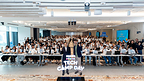
BANGKOK, Nov. 6, 2026 /PRNewswire/ — Digital travel platform Agoda hosted the 12th edition of Agoda Tech Camp Day on 5–6 November, welcoming over 420 students from four Thai universities. The latest edition, in collaboration with OpenAI, brings the program’s cumulative reach to over 4,100 students since 2023.

Delivered in collaboration with OpenAI, the program introduced university students to foundational AI concepts and practical ways to use ChatGPT in their academic and future professional lives, drawing on real-world examples from Agoda.

Agoda’s AI Developer Report 2026 found that junior developers were nearly three times as likely as senior developers to cite a lack of skills as a barrier to wider AI agent adoption (17% versus 6%). The finding underscores the value of giving students early, hands-on opportunities to work with AI and build the skills to apply it thoughtfully as software development evolves.

Throughout the Tech Camp Day workshops, students explored ChatGPT’s agentic capabilities, comparing conversational interactions in Chat mode with tool-enabled workflows in Work mode. They used personal instructions, tools, and skills to guide an agent through multi-step tasks, transforming spreadsheet data into a presentation and an interactive web app. Students also built and published their own applications and learned to package workflow instructions into reusable skills, enabling an agent to repeat the same set of steps from a single prompt.

As part of the collaboration, participating students will receive two months of ChatGPT Plus access, giving them an extended period after the event to practice with ChatGPT, apply AI to their studies and career preparation, and build on the skills introduced at the workshop.

“AI becomes useful when people understand what it can do, where its limitations are, and how to apply it to a problem they want to solve,” said Idan Zalzberg, Chief Technology Officer at Agoda. “Tech Camp Day lets us share Agoda’s practical experience with future tech talent in Thailand and across the region. Working with OpenAI connects that experience with expertise in building AI, helping students use it responsibly and giving educators and policymakers practical insights to build on.”

“Thailand’s students are already curious about what AI can do. Access to AI is just the beginning. We also want to help them build the confidence and skills to use it well, to ask better questions, explore ideas and build things they might not have been able to build before,” said Sandy Kunvatanagarn, OpenAI’s Head of Policy for ASEAN. “That means learning to use the tools available to them, while questioning the output, checking sources and applying their own judgment. Through our work with Agoda, we hope students can carry these skills into their studies and future careers.”

The appetite for AI is already visible in Thailand, which ranks among the top 20 countries for weekly active ChatGPT users. According to OpenAI’s internal data, the three most common uses of ChatGPT among 18- to 24-year-olds in Thailand are creative media, writing and communication, and education and learning, reflecting how young people are using AI to create, communicate and learn.

The program brought together first- to fourth-year students from Sripatum University, Rajamangala University of Technology Phra Nakhon, Rajamangala University of Technology Thanyaburi, and Suan Sunandha Rajabhat University.

Dr. Preesan Rakwatin, Acting Senior Executive Vice President, Chief Operational Officer, Digital Transformation Unit, Digital Economy Promotion Agency (DEPA) also attended the event’s opening ceremony, broadening government support for the program alongside the Ministry of Higher Education, Science, Research and Innovation (MHESI) and the Bangkok Metropolitan Administration (BMA).

“Building AI skills is essential to preparing Thailand’s young people for the changing world of work and strengthening our digital economy,” commented Dr. Preesan. “This initiative by Agoda and OpenAI brings together practical applications and AI expertise, giving students opportunities to develop skills relevant to their future careers, supporting our ambition to broaden access to AI learning and help people use the technology responsibly and productively.”

As Thailand advances AI adoption and its digital economy, practical AI skills can help drive productivity, growth and new jobs. Through Tech Camp Day, Agoda and OpenAI support these ambitions while developing the next generation of Thai technology talent. The initiative also builds on Agoda’s ties to Thailand, a key technology hub where its teams develop solutions used by travelers worldwide, by sharing that expertise with local universities.

Since its launch, Agoda Tech Camp Day, Agoda’s technology-focused social impact initiative, has offered high school and university students hands-on learning in emerging technology fields, including AI applications, UX/UI design and web development. Through workshops developed and led by Agoda engineers, the program connects technical learning with real-world applications, helping students build practical skills and explore further study and career opportunities in technology.

View original content to download multimedia:https://www.prnewswire.com/apac/news-releases/agoda-and-openai-bring-ai-learning-to-life-at-agodas-12th-tech-camp-day-in-thailand-302931794.html

SOURCE Agoda

Continue Reading

Technology

From Cars to Homes: OMODA & JAECOO Ecosystem Partner AiMOGA Robotics Unveils Its First Home Companion Robot

Published

on

By

WUHU, China, Nov. 6, 2026 /PRNewswire/ — Automotive competition in intelligent technology is moving fast beyond the cabin. Perception, decision-making and control capabilities honed in cars are now finding their way into homes and city services.

On October 21, during the OMODA & JAECOO International User Summit, AiMOGA Robotics, an embodied AI ecosystem partner, held its global launch in Wuhu and opened pre-orders for Mobo, its first home companion robot—marking its entry from commercial services into the consumer home market. It also displayed its full robot portfolio for business and household use. Supported by OMODA & JAECOO’s intelligent technology and global channels, AiMOGA Robotics applies embodied AI across multiple scenarios.

Expanding into the Consumer Market: Mobo Combines Advanced Technology with Warm Companionship. Powered by the MoAgent agent, Mobo integrates home spatial awareness, natural interaction, full-body motion control, long-term memory and an edge-cloud architecture, enabling it to break down long-horizon tasks while adapting to complex home environments. It covers three core scenarios: elderly care and companionship, children’s companionship, and whole-family care. With 22 degrees of freedom, it recognises family members, remembers their preferences and provides end-to-end data privacy protection. At launch, 35 early adopters became Mobo’s inaugural Global Angel User Experience Ambassadors. Since debuting at the World Robot Conference in August, Mobo has drawn interest from over 10,000 prospective users worldwide, with plans to refine its interactions, features and services based on family habits across markets.

On the market side, AiMOGA Robotics announced an initial network of 300 experience centres worldwide, supporting partners across solutions, digital marketing, financial and insurance services, and after-sales—building a global channel connecting experience, sales and service. It also plans a global robotics rental brand serving healthcare, transportation, education, security, culture and tourism.

Alongside Mobo, the company showcased its broader portfolio: Mornine for high-end business reception, the Intelligent Security Robot R001 for public safety patrols, the Robotic Nurse RN001 for patient guidance, and the Argos quadruped for specialised inspection and outdoor operations. Cumulative commercial deliveries have passed 3,000 units across more than 60 countries and regions, with field data feeding back into continuous iteration.

Extending Automotive Engineering Capabilities. Autonomous driving and embodied AI share common logic in environmental perception algorithms, motion control models, hardware mass production and supply chain quality control. Drawing on an established automotive R&D and manufacturing system, AiMOGA Robotics reuses automotive supply-chain resources and R&D technologies, bringing automotive-grade quality control and affordability to its robots—lowering the costs of trial and error and scaled production versus start-ups. As embodied AI enters the window between prototype demonstrations and large-scale deployment, this portfolio and global expansion will further enrich OMODA & JAECOO’s intelligent ecosystem, extending intelligence from vehicles into more areas of everyday life.

View original content to download multimedia:https://www.prnewswire.com/apac/news-releases/from-cars-to-homes-omoda–jaecoo-ecosystem-partner-aimoga-robotics-unveils-its-first-home-companion-robot-302931819.html

SOURCE OMODA | JAECOO

Continue Reading

Technology

ASTRI Establishes Advisory Board for Smart Mobility Technology Alliance

Published

on

By

Bringing Together Industry, Academia and Research to Drive Mobility Innovation

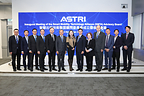
HONG KONG, Nov. 6, 2026 /PRNewswire/ — The Hong Kong Applied Science and Technology Research Institute (ASTRI) announced the establishment of an Advisory Board for the Smart Mobility Technology Alliance (SMTA), an industry-leading initiative designed to accelerate the adoption and scaling of next-generation smart mobility technologies across the Greater Bay Area and beyond. The SMTA aims to address critical challenges and foster a commercially-driven ecosystem for innovation in the smart mobility sector.

The newly-formed Advisory Board comprises distinguished leaders from infrastructure, transport, telecommunications, and academia, offering a wide-ranging blend of industry expertise, market intelligence and policy insight. Drawing on their extensive network and experience across the public and private sectors, the Advisory Board will shape the SMTA’s strategic priorities, identify emerging opportunities, and provide guidance on the evolving mobility landscape.

“The formation of the SMTA Advisory Board underscores ASTRI’s commitment to advancing Hong Kong as a regional leader in technology-driven mobility,” said Ir Dr Ted Suen, Chief Executive Officer of ASTRI. “By uniting industry, government, academia and research around a shared vision, this strategic alliance will unlock commercial opportunities and deliver transformative solutions that redefine the future of mobility,” he added.

The Advisory Board provides strategic guidance on SMTA’s vision and research and development priorities, helping to align its initiatives with market needs and commercialisation opportunities. It supports ecosystem development by fostering partnerships across industry, academia and the public sector, while facilitating pilot projects and encouraging innovation and entrepreneurship. The Board also offers insights on policy and standards, and promotes engagement with key stakeholders and international partners to advance future mobility innovation.

Members of the Advisory Board for Smart Mobility Technology Alliance include:

Chairman

Dr Ying Huang, Chief Technology Officer, ASTRI

Deputy Chairman

Mr Dominic Chow, Deputy Director-General of Civil Aviation, HKSAR Government

Secretary

Dr Ivan Sham, Chief Director, Technical Solutions Business Development, ASTRI

Members (by alphabetical order in surname)

Mr Lawrence Fong, Director, Digital and IT, Cathay Pacific Airways LimitedMr William Ho, Executive Director, Corporate Development, Airport Authority Hong KongIr Dr John Hui, Deputy Executive Director, Vocational Training CouncilMr Ryan Ip, Vice President of Our Hong Kong FoundationProf Mei-po Kwan, Director, Institute of Space and Earth Information Science, The Chinese University of Hong KongDr Gabriel Leung, Chief Executive Officer, Enterprise Solutions, Hong Kong Broadband Network LimitedMr Roger Ma, General Manager (Operations), Citybus LimitedMr Steve Ng, Managing Director, Commercial Group, HKT LimitedMs Sylvia Ng, Deputy Director, Corporate Development, MTR Corporation LimitedMr BY Sim, General Manager (Hong Kong SAR), Thales Solutions and Services Hong Kong LimitedMr Alex Wong, Deputy CEO, Corporate Affairs, Hong Kong Representative Office, Huawei International Co LimitedDr Rosana Wong, Deputy Chair and Executive Director, Yau Lee Holdings LimitedMs Yan Yan, General Manager, Keeta Drone Hong KongMs Theresa Yeung, Managing Principal, East Asia, Ove Arup & Partners Hong Kong Limited

Launched by ASTRI in April 2023, the Smart Mobility Technology Alliance (formerly the Smart Mobility Technology (C-V2X) Alliance) provides a networking and knowledge sharing platform for ecosystem stakeholders. These include infrastructure manufacturers, telecommunications providers, EV and drone developers, system integrators, and end users from China, in particular the Greater Bay Area, and overseas markets, all seeking to explore collaboration and technology commercialisation in the smart mobility field.

SMTA Website: https://smta.astri.org/

Photos Download: https://bit.ly/4s0M9ex


About ASTRI

Founded in 2000 by the HKSAR Government, Hong Kong Applied Science and Technology Research Institute (ASTRI) is the city’s largest government-funded R&D centre. Committed to transforming high-impact research into practical innovations, ASTRI drives market-driven, interdisciplinary advancements across sectors, including Smart City, FinTech, Digital Health and Life Sciences, New Industrialisation and Intelligent Manufacturing, Application-Specific Integrated Circuits (ASIC) and Advanced Electronics, New Energy and Energy Storage, and Green and ESG Technologies. Following its merger with the Nano and Advanced Materials Institute, ASTRI has further strengthened its capabilities, with over 1,500 patents and 2,200 successful cases of technology transfer. Recognised with numerous international awards, ASTRI continues to nurture top I&T talent and foster collaborations among the I&T ecosystem, contributing to Hong Kong’s high-value economic development. For more information, please visit: https://www.astri.org

View original content to download multimedia:https://www.prnewswire.com/apac/news-releases/astri-establishes-advisory-board-for-smart-mobility-technology-alliance-302931698.html

SOURCE Hong Kong Applied Science and Technology Research Institute (ASTRI)

Continue Reading

Trending