Connect with us

Technology

Sub-Millisecond Battery Converter Gives 800 VDC AI Data Centers More Compute from the Same Grid Connection

Published

on

Rack-Mountable 80 kW Units Scale to Any Power Level and Let Battery Storage Absorb GPU Demand Swings

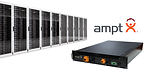
FORT COLLINS, Colo., Nov. 11, 2026 /PRNewswire/ — Ampt’s new Battery Converter helps AI data centers run more compute per megawatt of grid capacity as they transition to 800 VDC architectures. The converter delivers regulated 800 VDC from a DC bus shared by battery storage and grid or on-site power, providing active power conditioning that responds to GPU load changes in less than 1 millisecond. With the battery handling short peaks, GPUs can run without power capping and the grid connection can be sized for average load rather than peak load. Each 2U rack-mountable unit delivers 80 kW (100 A), and units can be paralleled from a single rack to a full row or an entire GPU cluster. The Battery Converter is currently in partner pilots for data centers, with general availability in Q3 2027.

Why Does Millisecond Response Matter?

Data centers are moving to 800 VDC power architectures for rack-scale AI systems, which are projected to support 1 MW IT racks and improve end-to-end power efficiency by up to 5% compared with 54 V systems, according to NVIDIA. AI workloads can swing a rack’s power draw between 30% and 100% within milliseconds. The grid needs a steady, predictable load, while the GPUs need a highly dynamic source. NVIDIA’s white paper says energy storage “needs to fill the gap between these two conflicting requirements.”

How Does the Battery Converter Work?

In Ampt’s design, the battery, the grid and any on-site generation all feed a common DC bus. The Battery Converter steps that bus down to a regulated 800 VDC supply for the GPU racks. When GPU load changes, the Ampt converter responds in less than 1 millisecond, enabling the battery to supply or absorb the difference while the grid or on-site generation sees steadier demand. Smoothing these peaks lets operators size upstream power equipment closer to average demand, reducing equipment costs, while presenting a steadier load that can help sites secure timely grid access.

The grid connects to the DC bus through a medium-voltage transformer and power conversion system, and feeds batteries that operate up to 1500 VDC. With a grid-forming power conversion system, the battery that absorbs GPU swings can also actively support grid voltage and frequency. These are the same transformers, power conversion systems and batteries used in utility-scale storage today, so data center operators can build on established supply chains and on the nearly two decades Ampt has spent deploying DC power conversion for utility-scale solar and energy storage systems.

How Does the Design Improve Efficiency?

In a power-limited AI factory, every kilowatt lost in conversion and distribution is capacity that cannot run GPUs, and operators pay for it twice, once as electricity and again as cooling. To keep more of that power for compute, Ampt’s design reduces losses in the converter, in storage and in distribution. The Ampt Battery Converter reaches up to 99.2% peak efficiency. Stored energy stays DC, avoiding the costly DC-to-AC-to-DC conversions of AC-coupled storage. And the DC bus feeding the converters runs at 1100 to 1500 VDC, depending on the battery’s state of charge, with the converters delivering a stable 800 VDC to the GPU racks. Higher voltage carries the same power at lower current, which reduces conductor losses or allows smaller conductors. Ampt’s Battery Converter is built for the first generation of 800 VDC racks while delivering the benefits of higher distribution voltages that appear only on future roadmaps. 

How Does the Converter Scale?

Ampt Battery Converter units can be paralleled to any power level, allowing the same 2U, 80 kW (100 A) building block to serve a single GPU rack, a full row or an entire data hall. Adding one unit provides N+1 redundancy, maintaining full power if a unit goes offline. Sites with existing or planned solar can also connect PV systems to the same battery DC bus through Ampt String Optimizers, with no additional inverter or transformer.

“In AI factories, GPU loads swing in milliseconds, so storage has to work every minute of the day. With the Ampt Battery Converter, the same battery gives the grid a steady load and the GPUs the fast-responding power they need. For operators, that means reliable compute and a faster path to bringing new AI capacity online. For the communities around them, it means data centers that are easier on the grid,” said Aaron Gomolak, CEO of Ampt.

For specifications or to arrange a pilot, visit Ampt’s website or contact info@ampt.com.

About Ampt 
Ampt delivers power conversion and communication technologies that are used to lower the cost and improve the performance of new PV systems, repower existing systems, enable lower-cost DC-coupled storage, and supply 800 VDC power to AI data centers. With installations and experience serving markets around the world, Ampt is the number one DC optimizer company for large-scale systems. The company is headquartered in Fort Collins, Colorado, U.S.A., and has sales and support locations in North America, Europe, Japan, and Australia as well as representation in Asia and the Middle East. For more information, visit www.ampt.com and follow Ampt on LinkedIn.

NVIDIA is a trademark and/or registered trademark of NVIDIA Corporation in the United States and other countries. 

View original content to download multimedia:https://www.prnewswire.com/news-releases/sub-millisecond-battery-converter-gives-800-vdc-ai-data-centers-more-compute-from-the-same-grid-connection-302935719.html

SOURCE Ampt

Continue Reading

Technology

HiTHIUM Partners with the University of Cambridge to Advance International Industry-Academia Collaboration in Long-Duration Energy Storage

Published

on

By

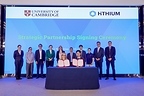
XIAMEN, China, Nov. 14, 2026 /PRNewswire/ — On November 12, the Global Energy Storage Colloquium was held in Xiamen. During the colloquium, HiTHIUM and the University of Cambridge signed a memorandum of understanding (MoU), establishing a strategic partnership. The two parties will collaborate on frontier scientific research, key technology innovation and industrial applications in battery energy storage, bringing academic research into closer alignment with industry needs and exploring new models for international industry-academia collaboration. The partnership aims to contribute to the advancement of global energy storage technology and the industry.

The UK has a strong track record in the development of modern battery technologies and fundamental research. The University of Cambridge is one of the world’s leading universities, with internationally recognized expertise in engineering, materials science and fundamental research. As a leading global energy storage technology company, HiTHIUM has long focused on energy storage technology development and commercialization. It continues to advance integrated research and innovation across the value chain, from high-capacity energy storage cells to long-duration energy storage systems and grid integration technologies.

The collaboration is intended to bring internationally leading academic research into closer engagement with innovation across China’s energy storage industry. The University of Cambridge’s strengths in fundamental science, materials research and engineering will offer new perspectives and approaches to key scientific questions and emerging technologies in energy storage. HiTHIUM will bring its experience in long-duration energy storage (LDES), product development and large-scale deployment, connecting research with real industry needs and application scenarios, and supporting the engineering validation and commercialization of research outcomes. By drawing on the strengths of both research and industry, the partnership will strengthen the links between frontier innovation and practical applications.

Under the cooperation plan, the two parties will establish joint management and research collaboration mechanisms, bringing together academic resources and corporate R&D capabilities. They will work together to plan research projects, facilitate scientific exchange and support the translation of research outcomes, strengthening connections between fundamental research, technology development and industrial applications so that innovation in energy storage can better serve industry needs.

The partnership also marks an important step in HiTHIUM’s efforts to expand its international innovation network. Building on this collaboration with the University of Cambridge, HiTHIUM will further strengthen academic exchanges and research partnerships with leading universities and research institutions around the world. By bringing together international research resources and talent, the company aims to encourage collaboration across disciplines and technology fields, explore the development of technologies such as LDES from a global perspective, and bring technical challenges and application needs from the front lines of industry into research and innovation. This will help research and industrial practice reinforce one another.

View original content to download multimedia:https://www.prnewswire.com/news-releases/hithium-partners-with-the-university-of-cambridge-to-advance-international-industry-academia-collaboration-in-long-duration-energy-storage-302939492.html

SOURCE HiTHIUM

Continue Reading

Technology

The NYSE Welcomes vVARDIS as a Publicly Listed Company

Published

on

By

NEW YORK, Nov. 14, 2026 /PRNewswire/ — vVARDIS (NYSE: VVVV) co-founders Dr. Haley Abivardi and Dr. Goly Abivardi aim to reshape the future of dental care with a drill-free treatment for the world’s #1 non-communicable disease: cavities.

vVARDIS Solves a Problem that Millions FaceTooth decay affects billions of people worldwide, and dental anxiety keeps millions from getting the care they need.vVARDIS is a Swiss dental technology company focused on changing the way early tooth decay is treated.vVARDIS has introduced a new approach that aims to treat decay earlier and more comfortably for patients.Its flagship product, Curodont® Repair Fluoride Plus, uses proprietary peptide technology to help repair early-stage tooth decay by supporting the natural remineralization of enamel — simply put No drill, No needle, or No filling.Tooth Decay is One of the Most Common Health Issues in the World2.5 billion people globally live with untreated tooth decay.Nearly 90% of U.S. adults have experienced tooth decay.Nearly 73% of U.S. adults report dental fear.21% avoid the dentist because of anxiety.The Story that Helped Shape vVARDISFor decades, treating early tooth decay often meant waiting until it worsened or getting a filling. The founders spent 25 years developing Curodont® Repair Fluoride Plus, a treatment that helps repair early tooth decay before it becomes a cavity.Curodont® gives dentists a way to treat early decay while making the experience easier and less intimidating for patients.The technology has already treated more than 2.5 million teethAvailable in more than 20% of U.S. dental practices

Click Here to Learn More about vVARDIS: https://www.youtube.com/watch?v=T1p9hUR5Glk

View original content to download multimedia:https://www.prnewswire.com/apac/news-releases/the-nyse-welcomes-vvardis-as-a-publicly-listed-company-302939487.html

SOURCE New York Stock Exchange

Continue Reading

Technology

Innovative Immunology Biotech Windward Bio Lists on Nasdaq

Published

on

By

SHANGHAI, Nov. 14, 2026 /PRNewswire/ — Windward Bio, a portfolio company of Qiming Venture Partners and a clinical-stage biotechnology company, successfully listed on Nasdaq on November 13, 2026. Windward Bio (Nasdaq: WWB) priced its IPO at $17.00 per share. Its shares closed at $28.50 on the first trading day, up 68% from the IPO price, giving the company a market capitalization of approximately $1.69 billion. This is Qiming Venture Partners’ 11th IPO in 2026.

Qiming Venture Partners invested in Windward Bio’s inaugural Series A financing in 2025 and continued to support the company in its Series B financing in 2026. Qiming also participated in this IPO financing round.

Windward Bio was founded in 2024 with a mission to transform the treatment paradigm for patients living with chronic inflammatory diseases through the development of differentiated biologic therapies targeting clinically validated disease pathways. Led by a team with extensive expertise across discovery, development, and commercialization, Windward Bio is advancing a pipeline of ultra-long-acting antibody medicines to improve clinical outcomes, reduce treatment burden and expand treatment options for patients with serious respiratory and dermatologic diseases, including asthma, chronic obstructive pulmonary disease (COPD) and atopic dermatitis.

Windward Bio’s lead program, WIN378, is a potentially novel anti-TSLP monoclonal antibody engineered for improved potency and extended half-life. WIN378 is currently being evaluated in POLARIS-1, a Phase 2/3 study in severe uncontrolled asthma, and SIRIUS, a Phase 2 study in COPD. The company’s pipeline also includes WIN027, a clinical-stage, long-acting bispecific antibody targeting TSLP and IL-13 with potential applications across multiple inflammatory and immunological diseases. Windward Bio holds exclusive global rights (excluding Greater China and certain Asian countries) to WIN378 through a licensing agreement with Kelun-Biotech and Harbour BioMed, and has separately licensed WIN027 from Qyuns Therapeutics.

“Qiming Venture Partners invests in differentiated, globally competitive biotech innovation designed to address significant unmet needs for patients, and Windward Bio exemplifies this approach. We believe novel, long-acting biologics will reshape the treatment of severe chronic respiratory and skin diseases, and that WIN378 and WIN027 have the potential to expand and meaningfully improve the treatment options available to patients. In the hands of Luca and his team, with their expertise and proven track record, Windward is well-positioned to deliver on this potential, and we look forward to supporting the company through its next phase of growth,” said Alexander Sinclair Wilson, Principal at Qiming Venture Partners.

About Qiming Venture Partners

Qiming Venture Partners was founded in 2006. Currently, Qiming Venture Partners manages eleven US Dollar funds and seven RMB funds with $9.5 billion in capital raised. Since our establishment, we have invested in outstanding companies in the Technology and Healthcare industries at the early and growth stages.

Since our debut, we have backed over 630 fast-growing and innovative companies. Over 290 of our portfolio companies have achieved exits through IPOs at the NYSE, NASDAQ, HKEX, Shanghai Stock Exchange, or Shenzhen Stock Exchange, or through M&A or other means. There are also over 110 portfolio companies that have achieved unicorn or super unicorn status.

Many of our portfolio companies are today’s most influential firms in their respective sectors, including Xiaomi, Meituan, Bilibili, Zhihu, Roborock, Hesai Technology, UBTech, WeRide, HyperStrong, Insta360, Unisound, Biren Technology, Z.AI, Gan & Lee Pharmaceuticals, Tigermed, Zai Lab, CanSino Biologics, Schrödinger, APT Medical, Sanyou Medical, AmoyDx, SinocellTech, Insilico Medicine, AusperBio, Yuanxin Technology, Medilink Therapeutics, LaNova Medicines, StepFun, among many others.


View original content:https://www.prnewswire.com/news-releases/innovative-immunology-biotech-windward-bio-lists-on-nasdaq-302939481.html

SOURCE Qiming Venture Partners

Continue Reading

Trending