Connect with us

Technology

11:11 Systems’ Research Finds 93% of ANZ IT Leaders Report Rising Infrastructure Costs, Cyberattacks Are Top Data Centre Concern

Published

on

New study reveals rising costs, cyber risk and complexity reshaping IT resilience strategies for 2027

SYDNEY, Nov. 13, 2026 /PRNewswire/ — 11:11 Systems, a leading managed infrastructure solutions provider, today announced results from its 2027 State of IT Infrastructure Resilience study. The global survey of more than 700 IT leaders finds that rising costs, expanding complexity and growing cyber risk are forcing organisations to rethink how they build, protect and recover critical infrastructure.

The survey shows that Australia and New Zealand (ANZ) IT leaders are making infrastructure and budget decisions with two big worries in mind: infrastructure costs keep climbing and cyber threats aren’t going away. Identity platforms and production environments top the list of leading data centre concerns in the region, while hybrid complexity and inconsistent data protection make it difficult to maintain a reliable recovery plan.

AI adds another layer of urgency. Nearly all ANZ respondents are either investing in or evaluating AI-enhanced IT and security tools, but fewer than one in five report that AI-enhanced backup or disaster recovery is operational today. There’s a clear gap between AI ambition and recovery readiness, and it tells us something important: focus investment on capabilities that make resilience easier to see, test and put into action.

ANZ Key findings include:

Infrastructure costs are rising significantly. 93% of respondents saw an increase in total data centre infrastructure costs over the past 12 months, with an average increase of 14% year-over-year.Cyber risk and infrastructure costs are converging. 48% of respondents name cyberattacks as the top concern in their data centres, and nearly three-quarters of respondents (74%) expect data protection, backup and recovery budgets to increase in 2027.Cyberattacks remain common and costly. 76% of IT leaders experienced one or more attacks in the last 12 months, with 25% of respondents experiencing three or more. 43% also report the average cost of one hour of downtime from a cyberattack was more than $250,000.Complexity is the number one barrier to resilience. 56% identified the complexity of planning for cyber incident recovery as their greatest challenge, followed by lack of in-house expertise and insufficient budgets.AI investment is outpacing readiness. 63% are investing in AI-enhanced IT or security toolsets, but only 18% have operational AI-enhanced backup or disaster recovery capabilities.

“This research quantifies what IT leaders are already feeling; the challenges are stacking up faster than the budgets,” said Jason Buffington, principal analyst and founder of Data Protection Matters, which conducted the research. “Cyberattacks remain an ever-present threat, and now organisations have to govern their own AI while defending against the attackers’ AI, all while rising hardware costs squeeze budgets that were already tight. For many organisations, the way through that storm is leaning on expertise as-a-service to reduce complexity, while modernising how they protect and recover their data.”

Marc Beder, Executive General Manager, EMEA and APAC at 11:11 Systems, said, “Resilience requires more than investing in new technology. Organisations need to understand which systems are most critical to their operations, how quickly they need to recover and whether their recovery plans will work under pressure. With many businesses relying on virtualised environments such as VMware to run critical applications and workloads, protecting the underlying infrastructure and ensuring these systems can be recovered quickly is essential. As IT environments become more complex, regular testing and a clear understanding of recovery capabilities can help organisations identify gaps and ensure their infrastructure is ready to support business operations when disruption occurs.”

The study was commissioned by 11:11 Systems and conducted by Data Protection Matters (DPM), an independent analyst firm specialising in data protection, backup, cyber resilience, business continuity, disaster recovery and BaaS/DRaaS. The survey included more than 700 IT leaders at organisations across EMEA, the Americas and APAC. Respondents included both decision-makers and implementers responsible for IT infrastructure, cybersecurity or backup and disaster recovery.

The full 2027 State of IT Infrastructure Resilience (APAC) report is available here.

About 11:11 Systems

11:11 Systems is a managed infrastructure solutions provider that empowers customers to modernise, protect, and manage mission-critical applications and data through 11:11’s resilient cloud platform. Learn more at 11:11 Systems and follow 11:11 on LinkedIn.

View original content:https://www.prnewswire.com/apac/news-releases/1111-systems-research-finds-93-of-anz-it-leaders-report-rising-infrastructure-costs-cyberattacks-are-top-data-centre-concern-302938466.html

SOURCE 11:11 Systems

Continue Reading

Technology

2026 “Belt and Road” Sino-German Business Dialogue Held in Qingdao

Published

on

By

QINGDAO, China, Nov. 23, 2026 /PRNewswire/ — A report from iQingdao: On November 20, the 2026 “Belt and Road” Sino-German Business Dialogue, themed “Openness, Inclusiveness, and Win-Win Cooperation,” was held in Qingdao, Shandong Province. More than 170 business representatives from Chinese and German government agencies, industrial and commercial associations, Fortune Global 500 companies, and Hidden Champion enterprises gathered to conduct practical matchmaking around intelligent manufacturing and green transformation, as well as two-way investment and financial empowerment. Four projects were signed on-site, with a total value of approximately 120 million euros. The projects cover multiple fields including equipment manufacturing, precision machinery, low-altitude economy supporting facilities, and industry-education integration talent cultivation, injecting new momentum into local economic and trade cooperation between China and Germany.

Prior to the dialogue, some foreign guests visited Haier Group and Qingdao TGOOD Electric Co., Ltd. The guests toured the Haier Ecological Experience Center and the China New Energy Eco-Technology Museum, learning about innovative achievements such as smart homes, new energy charging networks, vehicle-to-grid interaction, and virtual power plants. They gained firsthand experience of Qingdao’s comprehensive manufacturing system and industrial supporting capabilities, laying a practical foundation for the dialogue’s discussions and exchanges.

Participants noted that in the face of a complex external environment, the business communities of the two countries should leverage their respective technological and market advantages and work together to promote the transformation and upgrading of manufacturing. The event also featured free networking sessions, where Chinese and foreign enterprises held in-depth discussions on topics such as technology implementation and supply chain collaboration to explore cooperation opportunities.

Qingdao and Germany share a deep foundation for economic and trade cooperation. Renowned German companies such as Volkswagen and Siemens have already invested and established operations in Qingdao, with over 440 cumulative German investment projects in the city. Qingdao is leveraging open cooperation platforms such as the Sino-German Ecopark to further expand cooperation with Germany and other European countries in industry, investment, and technology.

Practical cooperation is an important pillar of China-Germany relations. Both sides look forward to further deepening cooperation in manufacturing, green industries, and two-way investment, strengthening the alignment of development strategies, promoting two-way exchanges of talent, technology, and knowledge, and leveraging the bridging role of local governments and industrial and commercial associations. These efforts will advance exchanges and cooperation between Chinese and German localities and enterprises, injecting momentum into the sustained development of bilateral economic and trade relations.

View original content to download multimedia:https://www.prnewswire.com/news-releases/2026-belt-and-road-sino-german-business-dialogue-held-in-qingdao-302948044.html

SOURCE iQingdao

Continue Reading

Technology

MOEA-Supported Research Earns Taiwan Nine R&D 100 Awards

Published

on

By

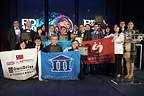
TAIPEI, Nov. 23, 2026 /PRNewswire/ — The Ministry of Economic Affairs (MOEA) announced today that Taiwan’s research institutions have secured nine 2026 R&D 100 Awards with support from MOEA’s Technology Development Program. The Industrial Technology Research Institute (ITRI) and Taiwan Textile Research Institute (TTRI) each received three awards, the Institute for Information Industry (III) received two, and the Automotive Research & Testing Center (ARTC) received one. The winning technologies advance manufacturing processes, sustainability, AI applications, and ICT, underscoring Taiwan’s strong R&D capabilities.

This marks the 19th consecutive year that MOEA-supported technologies have won R&D 100 Awards, bringing the cumulative total to 112. Over the years, 90% of the award-winning technologies have been successfully commercialized through technology transfers to companies or the creation of startups.

All nine winning technologies are already supported by industry partnerships to facilitate their practical application. Among them, ITRI’s IonTwin, a digital twin technology for semiconductor ion implantation, uses physics-informed AI to complete an ion implantation simulation in under 10 seconds—a task that takes four to five hours with conventional methods. By reducing test wafer consumption, it lowers process development costs. Already deployed at a leading foundry, IonTwin accelerates process development and improves production efficiency.

TTRI’s “Beyond Mono-Material: One-Step Separation and Decolorization of Footwear’s Hardest Waste into Manufacturing-Grade rPET” overcomes the challenge of recycling composite footwear materials. The technology removes adhesives and separates different materials in a single step, converting waste footwear materials into recycled polyester (rPET) with 99.5% purity and a 99% decolorization rate. The rPET can be reused in textile and footwear manufacturing, and the circular footwear production approach can cut whole-shoe emissions by 74.6%. TTRI has already partnered with Far Eastern New Century,  Long John Tsung Right Industrial Co., Ltd., and Pro Arch International Development Enterprise Inc. to build an integrated footwear material recycling and remanufacturing chain.

III’s IntelliGlass™–Multimodal Human-Centered Optimization Platform for Smart Glasses Interaction addresses a key limitation of conventional smart glasses, which struggle to tailor information to users’ needs and their surroundings. Combining AI with multimodal sensing technology, the platform estimates users’ cognitive load and attention needs, then dynamically adjusts the information displayed and the mode of interaction according to the individual, context, and task, enhancing the overall smart glasses experience. The institute has partnered with HTC, Jorjin Technologies, National Taiwan University of Science and Technology, National Taitung University, and Tatung University to advance the adoption of smart glasses across a wide range of applications. Looking ahead, the platform could also serve as an important technological foundation for digital human twins and intelligent human-machine collaboration.

ARTC’s OmniDrive Intelligent Safety Driving System integrates three core capabilities: in-cabin and exterior AI perception, vision-only AI autonomous driving with safety control, and vehicle cybersecurity with trustworthy over-the-air (OTA) software updates. This gives electric buses a high level of driving automation and enables real-time monitoring of the driver’s condition and of passenger emergencies. If the driver becomes incapacitated or the system malfunctions, the bus can execute a Minimum Risk Maneuver (MRM) to decelerate, avoid hazards, and pull over safely, improving the safety and ride comfort of public transportation. The technology has been developed in collaboration with Nutek Corporation, Optimal Intelligent Mobility Co., and Autosys, strengthening the capabilities of Taiwan’s smart electric bus industry.

View original content to download multimedia:https://www.prnewswire.com/news-releases/moea-supported-research-earns-taiwan-nine-rd-100-awards-302948050.html

SOURCE Industrial Technology Research Institute (ITRI)

Continue Reading

Technology

SANY Showcases Intelligent, Electrified Solutions from Energy to Equipment at bauma CHINA 2026

Published

on

By

Marking its 40th anniversary, SANY brings its vision for the next decade of construction to the largest showcase in its history

SHANGHAI, Nov. 23, 2026 /PRNewswire/ — As bauma CHINA 2026 opens in Shanghai on November 23, SANY Group is marking its 40th anniversary with a showcase of intelligent, electrified construction under the theme “Pioneering Intelligence and Electrification — Forging the Future Together.” SANY’s microgrid solutions are already on show at the Shanghai World Expo Exhibition and Convention Center, and its landmark stand opens on November 24 at the Shanghai New International Expo Centre.

Energy and Machines, Working as One

SANY’s integrated microgrid solutions are in use worldwide, backed by its portfolio across wind, solar, hydrogen and energy storage. Because SANY builds both the power systems and the electric machines they serve, the two work as one, keeping electric fleets running at sites where the grid is weak or absent.

Design starts with AI load analysis, which matches solar, storage and diesel capacity to the machines and work schedules on site. In operation, an energy management system uses grid-forming control to regulate renewables in milliseconds, coordinating solar, wind, storage and diesel generators with mining loads and the charging and swapping of electric machines, and switching between grid-connected and off-grid modes without interruption. A cloud platform monitors equipment around the clock, with anomaly alerts and digital maintenance.

Intelligence and Electrification, from Energy to Equipment

SANY’s main stand brings together predominantly electrified equipment, including a number of new and new-generation models, configured as five integrated solutions for construction, mining, road building, ports and earthmoving. A complete green mining solution covers the full process, from digging and loading to hauling, grading, crushing and charging. Its centerpiece, making its public debut at the show, is the world’s largest-payload battery-electric mining truck, which carries 240 tonnes and charges in 30 minutes. Beyond mining, the stand also features the world’s largest-capacity intelligent all-electric crawler crane, rated at 320 tonnes.

Behind it all are self-developed core components, from hydraulics to electric motors, drives and controls.

On November 24, SANY is set to make the global debut of SanVIST, its intelligent connectivity platform with a built-in AI agent, and open a hall dedicated to intelligence that brings its intelligent products, intelligent manufacturing and intelligent operations together for the first time.

For four decades, SANY has been guided by its promise, “Quality Changes the World.” In 2025, sales of its new energy products grew 115 percent. As SANY evolves into an AI-native robotics company aiming to lead the way in industrial AI, it sees a decade in which job sites run on clean energy and robotic machinery works alongside people. Forty years after its founding, SANY enters that decade with a conviction that has only grown stronger: Forging the Future Together.

SOURCE SANY Group

Continue Reading

Trending