Technology
Beyond Vehicles: Geotab Launches GO Anywhere Plus to Monitor Operational Assets in Indonesia
Published
2 weeks agoon
By
First commercial launch of a GO Anywhere product in Southeast Asia helps businesses gain greater visibility across trailers, containers, generators, and other equipment, supporting more efficient and resilient supply chains in Indonesia.
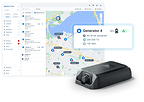
JAKARTA, Indonesia, Nov. 12, 2026 /PRNewswire/ — Geotab Inc. (“Geotab”), a global leader in connected operations, video telematics, and AI-powered insights, today announced the launch of GO Anywhere Plus in Indonesia, a new asset-tracking solution extends fleet visibility beyond vehicles to the trailers, containers, generators, powered equipment, and other critical assets businesses depend on across their operations.
The launch comes as Indonesia’s trade and logistics activity continues to expand. Indonesia’s exports of goods and services grew 7.03% in 2025, while Transportation and Storage recorded 8.98% year-on-year growth in the fourth quarter of 2025, the highest growth on the production side during the period[1]. As more goods and equipment are carried, towed, deployed, or left across warehouses, ports, depots, customer locations and project sites, businesses need to manage an increasingly distributed network of physical assets.
Improving how efficiently those goods and assets move is also a longer-term national priority. The Coordinating Ministry for Economic Affairs has highlighted that an effective logistics system can help reduce transportation costs and delivery times while improving operational efficiency across the economy. Citing Indonesia’s National Development Planning Agency (Bappenas), the Ministry noted that Indonesia’s national logistics costs stood at 14.29% of GDP in 2022, with a target to reduce the figure to 12.5% by 2029.[2]
Against this backdrop, maintaining visibility across increasingly distributed operations can help businesses make more informed decisions about the physical assets supporting the movement of goods. A business may know where its truck is, for example, but still need to determine where a trailer or container has been left, whether equipment at a project site is being used, or whether an asset has moved outside its expected location.
“As Indonesia’s trade, logistics and infrastructure sectors grow, businesses are managing more assets across more locations. Simply knowing where the vehicle is remains important, but operators also need to know where the trailer, container, generator or equipment their operation depends on is located, whether it is being used productively, and whether it is moving where it should. GO Anywhere Plus helps bring those assets into the same MyGeotab connected environment. This gives businesses greater visibility to optimise the assets they already own, reduce operational blind spots, and respond more quickly when something moves unexpectedly or cannot be located,” said Ezanne Soh, Associate Vice President, Southeast Asia, Geotab.
The need for greater visibility also extends to supply-chain resilience. According to the Transported Asset Protection Association Asia Pacific (TAPA APAC), among cargo-crime incidents captured in Indonesia between January and August 2026, 70% occurred en route, 70% were classified as theft from vehicles, and transportation-related incidents accounted for 83.3% of reported cases[3]. Separately, the 2025 Cargo Theft Report from TT Club and BSI Consulting placed Indonesia among the world’s top countries for recorded cargo-theft incidents.[4]
Cargo theft calls for a layered approach and asset tracking is one layer of visibility within it. Asset trackers can provide location and movement insights, helping fleet operators maintain greater awareness of where critical assets are and identify unexpected movements that may require attention.
Recent incidents also illustrate the challenges businesses can face in safeguarding high-value mobile equipment. In West Java, police reported in 2025 that they had uncovered a theft network targeting heavy equipment, with stolen assets including tandem rollers and a crane truck[5]. Such cases highlight how the loss of critical equipment can create consequences beyond replacement cost, potentially affecting asset availability, project continuity and day-to-day operations.
More broadly, these risks reinforce the value of maintaining visibility over assets distributed across routes, project sites and customer locations. Greater visibility can help businesses address operational blind spots associated with lost or misplaced equipment, underutilisation, unnecessary rental or replacement spending and reduced operational control.
From tracking vehicles to seeing the whole operation
Visibility is not only about locating an asset when something goes wrong. It can also help businesses make better use of equipment they already own.
Integrated natively with MyGeotab, GO Anywhere Plus allows organisations to manage fleet vehicles and other physical assets through one platform, helping operators understand where assets are and how they are being utilised.
For example, a logistics operator can use GO Anywhere Plus to monitor trailers or containers separately from the tractor moving them, helping teams understand where an asset was last located and reduce time spent searching across yards or customer sites. For construction and field-service businesses, it can provide visibility over assets such as generators and powered equipment, helping organisations identify equipment that is idle, redeploy assets where they are needed and reduce unnecessary rental or replacement expenditure.
GO Anywhere Plus combines wired and battery-powered operation so that organisations can maintain visibility across different asset types and operating conditions. The device is designed for demanding Indonesian environments, with an IP67/IP69K rating, an operating temperature range of -40°C to +85°C, and a field-replaceable battery designed to last approximately three to five years depending on configuration and usage.
When connected to power, GO Anywhere Plus can provide location and operational information in near real time, including engine hours, distance travelled and ignition status for supported assets. When relying on its internal battery, businesses can select different reporting modes according to their operational priorities, including time-based reporting, movement-based reporting and a high-frequency mode that reports every 15 minutes while an asset is moving for situations requiring increased visibility.
Businesses can also establish geofences and alerts to identify when tracked assets enter or leave designated areas. If cellular connectivity is temporarily unavailable, the device stores data internally and uploads historical information once connectivity is restored, helping maintain continuity in reporting. Together, these capabilities can provide an additional layer of operational awareness within a businesses’ broader fleet, asset-management, and security practices.
“An asset sitting idle, an asset that cannot be located, and an asset that moves unexpectedly may look like very different problems, but they share a common need: visibility. GO Anywhere Plus adds another layer of asset intelligence to broader fleet and asset-management practices, helping businesses move from reacting after something goes wrong to making better decisions about where assets should be, how they are being used and when something requires attention,” concluded Ezanne Soh, Associate Vice President, Southeast Asia, Geotab.
For more information about GO Anywhere Plus, please visit: https://www.geotab.com/idn/go-anywhere-plus/
About Geotab
Geotab adalah pemimpin global dalam operasi terhubung, telematika video, dan wawasan berbasis kecerdasan buatan (AI). Dipercaya oleh lebih dari 100.000 pelanggan — mulai dari armada kecil dan menengah hingga perusahaan Fortune 500 dan organisasi sektor publik, termasuk pemerintah federal AS, Geotab menghubungkan sekitar 6 juta kendaraan dan aset serta memproses 100 miliar titik data setiap hari. Dengan sertifikasi ISO/IEC 27001:2022, SOC2, FIPS 140-3, dan FedRAMP, platform terbuka dan ekosistem lebih dari 700 mitra Geotab menyatukan keamanan, kepatuhan, dan operasi dalam satu sistem terpadu. Misi kami: dunia yang bergerak lebih aman, lebih efisien, dan lebih berkelanjutan. Pelajari lebih lanjut di www.geotab.com/idn/ dan ikuti kami di LinkedIn.
©2026 Geotab Inc. All rights reserved. All trademarks property of their respective owners in Canada and other countries. Geotab, the Geotab logo, Geotab Ace, Go Focus Plus and MyGeotab are trademarks and/or registered trademarks of Geotab Inc. and/or its affiliates. All other trademarks are the property of their respective owners. The use of third party trademarks does not imply endorsement or affiliation with those third parties.
[1] Badan Pusat Statistik, Indonesia’s Economic Growth in 2025.
[2] Coordinating Ministry of Economic Affairs Bulletin
[3] TIS Cargo Crime Statistics for January to August 2026 – TAPA APAC
[4] TT Club and BSI report rise in cargo theft as criminal tactics evolve | BSI US
[5] Ciamis Police Arrest Gang Specialising in Heavy Equipment Theft
View original content to download multimedia:https://www.prnewswire.com/apac/news-releases/beyond-vehicles-geotab-launches-go-anywhere-plus-to-monitor-operational-assets-in-indonesia-302936552.html
SOURCE Geotab
You may like
Technology
Leekr Technology Brings Automotive-Grade Brake-by-Wire Solutions to Support Mass Production of Autonomous Vehicles
Published
26 minutes agoon
November 25, 2026By
SHANGHAI, Nov. 25, 2026 /PRNewswire/ — Leekr Technology, a leading provider of intelligent chassis solutions, is accelerating its expansion into overseas autonomous vehicle markets, bringing its automotive-grade brake-by-wire technology, which has been proven in high-volume production in China’s intelligent electric vehicle market, to low-speed autonomous vehicles. It offers DHB-P (Two-box: Decoupled Hydraulic Brake-by-Wire System) and IHB-P (One-box: Integrated Intelligent Braking System) to meet the braking requirements of autonomous logistics and sweeper vehicles.
Varying vehicle loads, emergency braking demands, and prolonged operating hours pose three major challenges for their braking systems. For low-speed autonomous transport vehicles, Leekr Technology’s brake-by-wire systems dynamically adjust braking force based on vehicle mass and payload variations, in coordination with the vehicle control strategy, ensuring reliable braking under full load and smooth braking when unladen.
The systems support active braking, with a braking response time of less than 150 ms, and work with automated driving systems to execute emergency braking commands, helping to reduce collision risks. Automotive-grade design, safety redundancy, and system self-diagnostics help maintain reliable braking during extended unattended operation. Its solutions have been adopted in series-production vehicles by leading autonomous logistics and sweeper vehicle OEMs in China.
DHB-P (Two-box) is designed for mainstream OEM production programs. Featuring a fully decoupled hydraulic architecture with motor-driven active pressure generation, the system applies braking force in response to vehicle control commands without requiring brake pedal input. It supports integration with Advanced Driver Assistance Systems (ADAS). The system supports human-machine collaborative driving and is compatible with both human-driven and autonomous driving modes.
For vehicles requiring higher integration and more advanced active safety functions, Leekr Technology offers the IHB-P (One-box) Integrated Intelligent Braking System. It combines the electronic brake booster (eBooster) and Electronic Stability Control (ESC) functions in a single unit.
To meet the safety requirements of advanced automated driving, IHB-P can be paired with an independent Redundant Brake Unit (RBU). If the primary braking unit (IHB-P) fails, the RBU can take over braking control to bring the vehicle to a safe stop, meeting the braking redundancy requirements of SAE Level 4 automated driving and low-speed autonomous vehicle applications.
Leekr Technology is the first company in China to achieve mass-production deployment of an IHB-P + RBU redundant brake-by-wire solution in autonomous vehicles. In Europe, it will provide OEMs with customized brake-by-wire solutions and engineering delivery services.
Website: www.leekr-chassis.com.
View original content:https://www.prnewswire.co.uk/news-releases/leekr-technology-brings-automotive-grade-brake-by-wire-solutions-to-support-mass-production-of-autonomous-vehicles-302950200.html
Technology
Meet Taipei 2026 Draws Record Attendance, Sets Stage for Taipei Tech Week 2027
Published
26 minutes agoon
November 25, 2026By
The three-day festival recorded a 19.5% year-over-year increase in visits, with startups from 23 countries participating and Moonlake AI taking top honors at the Meet Neo Star Pitch Competition. Building on this international momentum, Business Next and key ecosystem partners launch Taipei Tech Week 2027 to further boost the city’s technology, startup, and investment communities.
TAIPEI, Nov. 25, 2026 /PRNewswire/ — Meet Taipei 2026 concluded on November 21 at Taipei Expo Park, bringing together more than 550 startups from Taiwan and overseas, including nearly 150 international startups representing 23 countries, among them the United States, Japan, Thailand, and South Korea.
The three-day festival recorded more than 66,000 visits, up 19.5% year over year. Its forums, pitch competitions, and business matchmaking brought local and international founders and ecosystem partners together, creating opportunities to connect with Taiwan’s technology and manufacturing companies and explore partnerships across the region.
“The strong participation from both Taiwan’s local ecosystem and the international startup community reflects a shared recognition that innovation increasingly depends on cross-border collaboration. Taiwan brings deep strengths in technology development, manufacturing, and supply chains, while international partners contribute diverse technologies, business models, and access to global markets. By bringing these complementary strengths together, we can create opportunities for both sides to learn from one another, build meaningful partnerships, and expand into new markets,” said Katie Chen, CEO of Business Next Media.
Connecting international startups with Taiwan partners
The festival hosted 85 activities across five stages, matchmaking sessions, networking gatherings, side events, and programs organized by public-sector and corporate exhibitors. It facilitated more than 400 completed matchmaking meetings and featured pitches from more than 200 pitch presentations. Startup solution showcases, corporate venture capital sessions, and one-on-one investor meetings connected founders with investors and prospective business partners.
International delegations and pavilions further strengthened Meet Taipei’s role as a platform for cross-border collaboration, with organizations including Thailand’s Digital Economy Promotion Agency (depa), CzechInvest, the Busan Startup Investment Agency (BSIA), and Japan’s CIC Japan Innovation Services and Fukuoka City among those bringing their startup communities to Taiwan. Their participation created opportunities for international startups to connect with Taiwanese companies, investors, and potential business partners.
The organizers also welcomed representatives from the Tokyo Metropolitan Government’s Startup Strategy Promotion Headquarters and Deloitte Tohmatsu to discuss participation in SusHi Tech Tokyo 2027 and opportunities to connect the Japanese and Taiwanese startup ecosystems through SusHi Tech Tokyo and Meet Taipei. Discussions focused particularly on deeper engagement with startup investors across Asia, with participants reaching a preliminary understanding on potential areas of collaboration.
Founders explore competitive advantages in the AI era
Held across two days for the first time, the Global Startup Forum explored the theme “Founders of Tomorrow.” Speakers examined how domain expertise, useful products, and hardware capabilities can help startups compete as AI lowers barriers to software development. YouTube co-founder Steve Chen argued that AI lowers the barriers to building software companies, but not hardware companies, and encouraged businesses to collaborate with Taiwan rather than replicate its capabilities. Other discussions explored simulation-based training for robotics and the need for AI systems to demonstrate practical value in factory environments.
Moonlake AI wins top honors at Meet Neo Star
Moonlake AI won the judges’ top prize at the 2026 Meet Neo Star startup competition with its work on world-model technology, which enables AI systems to build representations of how the world works. The competition featured 11 finalist teams selected from seven application areas.
Hera Video, a Y Combinator alumnus specializing in text-to-animation technology, received second prize, while Ohmplus Technology, which focuses on radio-frequency chip measurement and semiconductor testing, took third. International judge Kosuke Yusa of DG Incubation praised the participating teams for their technical capabilities.
Meet Taipei also showcased emerging student founders through the Young Spark Student Startup Demo Show on November 21. Among 16 teams, first prize went to Peeps, a pixel-art social app designed to help friends connect through shared virtual spaces. SIGHT Space, which develops satellite education tools, placed second, followed by SparkGlow, an AI-powered goal-planning assistant.
Taipei Tech Week to bring technology communities across the city together
Building on the momentum of Meet Taipei, Business Next is joining forces with key founding members Day 1, PicCollage, CDIB Capital Innovation Accelerator, SparkLabs Taiwan, and Garage+ to launch Taipei Tech Week in 2027. Bringing together leading organizations across Taiwan’s startup, investment, technology, and innovation ecosystem, the founding coalition will establish a citywide platform under the concept “One City, Many Communities.”
Through a weeklong program of technology events across Taipei, the initiative will connect communities, foster cross-industry and cross-border collaboration, and create more opportunities for local and international innovators to engage with one another.
“Taipei Tech Week brings together a powerhouse coalition of organizations with the networks, expertise, and international reach to make a meaningful impact. We see an opportunity to move beyond individual events and build a platform for sustained cross-border collaboration, where Taiwan and international markets can leverage their respective strengths to create new business and innovation opportunities,” said Kyle Chen, Chief Community Builder at Business Next Media.
“Our ambition is to strengthen Taiwan’s position in the global innovation landscape while making Taipei a place where international communities can connect, collaborate, and build what comes next.”
Further details on Taipei Tech Week 2027, including its program, schedule, and opportunities for local and international participants, are expected to be announced in the first quarter of 2027.
About Meet Taipei
Meet Taipei is an annual startup festival launched in 2014 by Business Next Media Corp. through its Meet Startup platform. As one of Taiwan’s leading startup gatherings, the festival brings together founders, investors, corporations, accelerators, and international ecosystem partners through exhibitions, forums, pitch competitions, and business matchmaking. Built around the development of startups from early to growth stages, Meet Taipei connects entrepreneurial companies with the resources, funding, talent, business opportunities, and international networks they need to grow. Learn more at https://meettaipei.tw/en.
View original content to download multimedia:https://www.prnewswire.com/apac/news-releases/meet-taipei-2026-draws-record-attendance-sets-stage-for-taipei-tech-week-2027-302950202.html
SOURCE Business Next Media Corp.
Technology
CiDi Unveils Expanded Heavy-Duty Embodied AI Portfolio at bauma CHINA 2026, Extending Automation from Surface Mining to Underground Operations
Published
26 minutes agoon
November 25, 2026By
New product portfolio including autonomous freight truck, cabless electric mining truck, mining agent, underground drilling robot and V2X solutions showcase CiDi’s expanding capabilities across heavy-duty industrial applications
CiDi unveils an expanded portfolio of autonomous vehicles, mining robots and intelligent systems at bauma CHINA 2026, extending automation from open-pit mining to public-road freight transportation and underground operations.New products include VEGA, a purpose-built L4 autonomous heavy-duty truck; CDK155, a 100-tonne cabless electric autonomous mining truck; Yura, the first mining agent in the world; and CT17-1S, an underground drilling robot designed to remove people from hazardous working environments; and its V2X solution for real-time coordination among vehicles, infrastructure and personnel in open-pit mines.Powered by Gravicortex, CiDi’s proprietary heavy-duty embodied AI platform, its three business pillars—Autonomous Driving, Task Robotics, and Intelligent Hardware & Services—share technology capabilities and operational data to support integrated, scalable automation.CiDi’s MetaMine platform has served nearly 40 mines globally, with more than 1,000 pieces of equipment connected simultaneously during peak periods. Its autonomous freight business has recorded more than 500 cumulative deliveries and outstanding orders as of October 2026.
SHANGHAI, Nov. 25, 2026 /PRNewswire/ — CiDi (03881.HK), a Hong Kong-listed technology company specializing in heavy-duty embodied AI, today unveiled an expanded portfolio of autonomous vehicles, industrial robots and intelligent systems at bauma CHINA 2026 in Shanghai.
The new portfolio includes VEGA, a purpose-built Level 4 (L4) autonomous heavy-duty truck developed with Zhizi Auto; CDK155, a second-generation cabless electric autonomous mining truck; and CT17-1S, an underground drilling robot designed to reduce people’s exposure to hazardous working environments. CiDi also introduced Yura, an AI-powered mining agent, alongside its V2X open-pit mining solution and IPUr Intelligent Onboard Computing Unit.
The showcase marks CiDi’s first comprehensive presentation of its three business areas—Autonomous Driving, Task Robotics, and Intelligent Hardware & Services—under its broader heavy-duty embodied AI strategy. Together, these technologies extend automation beyond individual vehicles to connect equipment, people, and operational workflows across diverse industrial environments.
“With this integrated portfolio, I am excited to see our vision of extending the benefits of heavy-duty embodied AI across a broad range of industrial operations becoming a reality—from autonomous operations in open-pit mines to drilling and excavation deep underground and freight transportation on public roads. By bringing autonomous technologies into these diverse environments, we are delivering on our goal which is to make industrial operations safer, more efficient and more productive,” said Albert Hu, CEO of CiDi.
Autonomous operations across surface & underground mining and freight transportation
CiDi’s expanding portfolio brings autonomous technologies to a broad range of heavy-duty applications, from open-pit mining to underground drilling and excavation and public-road freight transportation. It combines purpose-built autonomous equipment with intelligent solutions for existing vehicle fleets.
VEGA: A Factory-Integrated L4 Autonomous Heavy-Duty Truck
Jointly developed with Zhizi Auto, a vehicle technology company incubated by Shaanxi Automobile Group, VEGA is an all-electric L4 autonomous heavy-duty truck built on Zhizi Auto’s Dijiang Tan vehicle platform and powered by CiDi’s proprietary Gravicortex platform.
Designed from the outset for autonomous operations, VEGA integrates autonomous driving capabilities directly into the vehicle architecture, rather than relying on conventional aftermarket retrofits. Its braking, propulsion, steering, power supply, perception and computing systems feature vehicle-level dual redundancy. In the event of a critical system failure, the vehicle can initiate a minimum-risk manoeuvre, including slowing down and pulling over safely.
VEGA also features CiDi’s proprietary Vehicle–Road–Vehicle Dual-Workflow Architecture, enabling a single vehicle to operate autonomously across controlled industrial facilities and public roads. This allows freight transportation to continue across different operating environments without vehicle changes, cargo transfers or routine human takeovers, within its defined operational design domain.
CDK155: A Second-Generation Cabless Electric Autonomous Mining Truck
For open-pit mining, CiDi introduced the CDK155, its second-generation purpose-built cabless autonomous mining truck. The 100-tonne-class electric vehicle eliminates the conventional driver’s cabin, with its design, electronic architecture, perception systems and safety features developed specifically for autonomous operations.
CDK155 has a rated payload capacity of 100 tonnes and a battery capacity of 1,056 kWh. Supporting both charging and battery swapping, it can recharge from 20% to 80% in as little as 18 minutes. Other capabilities include predictive maintenance, terrain adaptation and multi-vehicle coordination.
According to CiDi, compared with conventional vehicles in its class, CDK155 offers a 10% increase in loading capacity, 15% fewer components, a 20% improvement in vehicle service life and a 10% reduction in maintenance and operating costs.
Yura: An AI-Powered Agent for Intelligent Mine Operations
At bauma CHINA 2026, CiDi also introduced Yura, which is the mining industry’s first AI-powered mining agent. Developed on the foundation of CiDi’s established MetaMine platform, Yura is designed to make complex mining operations more intelligent and easier to manage.
Through natural-language instructions, mine operators can communicate production objectives directly to Yura. The agent interprets requests, breaks them down into actionable tasks, and then coordinates and dispatches equipment across the mine, including autonomous haul trucks, electric shovels, and drilling machines.
By orchestrating multiple stages of mining operations—from drilling, blasting and loading to haulage, dumping and energy replenishment—Yura shifts mine management from people coordinating individual machines to an AI agent intelligently managing operations across the entire mine.
V2X: Connecting Vehicles, Infrastructure and Personnel in Open-Pit Mines
Complementing mine-level intelligence, CiDi’s V2X solution enables real-time coordination among vehicles, roadside infrastructure, personnel and cloud-based systems.
The solution supports millisecond-level direct communications across four dimensions: vehicle-to-vehicle (V2V), vehicle-to-infrastructure (V2I), vehicle-to-person (V2P) and vehicle-to-cloud (V2C). Applications include collision warnings, blind-spot alerts, curve warnings and coordinated operations between excavators and autonomous trucks.
Personnel safety terminals such as TAG provide two-way alerts and emergency-stop functions, including in areas with limited or unavailable network connectivity. CiDi said the V2X solution has been deployed at more than 35 mines across China, with nearly 5,000 units installed.
CT17-1S: Extending Automation to Underground Mining
The CT17-1S marks a significant step forward, bringing CiDi’s automation to excavation and drilling activities further down to the underground operations.
Developed for challenging underground environments characterized by unstable rock formations, heavy dust, excessive noise and potentially hazardous gases, CT17-1S integrates remote operation with semi-autonomous excavation and autonomous drilling capabilities. Its functions include precision positioning, path following, automated drill-pattern execution and multi-machine coordination.
By enabling remote and autonomous drilling operations, CT17-1S helps keep people away from hazardous underground working faces, significantly reducing their exposure to operational risks.
Powered by CiDi’s multimodal perception technology and heavy-duty world models, the robot can navigate and avoid obstacles in low-light underground environments without satellite positioning. It can also connect to MetaMine to coordinate with autonomous mining trucks, ground-support equipment and mine dispatch systems.
IPUr: Bringing Intelligent Capabilities to Existing Vehicle Fleets
While CiDi continues to advance autonomous operations, it also recognises that many customers still operate conventional, human-driven fleets. To support their transition towards greater automation, CiDi showcased IPUr, its factory-installed computing units, designed to bring L4-level perception and safety capabilities to existing engineering and commercial vehicles.
The solution enables operators to enhance the intelligence and safety of their current fleets while providing a pathway towards broader automation over time.
Gravicortex: A Unified Technology Platform Connecting Vehicles, Robots and Operations
At the core of CiDi’s expanding portfolio is Gravicortex, its proprietary heavy-duty embodied AI technology platform. Serving as the common technological foundation for all three business areas—Autonomous Driving, Task Robotics, and Intelligent Hardware & Services—Gravicortex enables capabilities and operational data to be shared across products and applications.
This interconnected architecture creates a continuous feedback loop in which advances in one business area can enhance the capabilities of others, supporting the development and scaling of autonomous solutions across diverse heavy-duty industrial environments.
The platform combines heavy-duty world models, domain-specific foundation models and vision-language-action (VLA) models to support autonomous decision-making and coordination among vehicles, robots, roadside infrastructure and cloud-based systems. It is designed to support millisecond-level coordination across heterogeneous fleets at the 1,000-vehicle scale.
These capabilities are brought together in mining through MetaMine, CiDi’s intelligent mining platform, which connects equipment, operational workflows and management systems in a unified operating environment. Designed to accommodate equipment from different manufacturers, powertrain configurations and operational functions, MetaMine enables operators to coordinate equipment and manage processes spanning excavation, haulage, dumping, energy replenishment and maintenance.
MetaMine has served more than 40 mines globally, with over 1,000 pieces of equipment connected to the platform simultaneously during peak periods, according to CiDi.
The same underlying technology capabilities are also being extended into autonomous freight transportation. CiDi’s solutions now cover industrial park logistics, border crossings, port-to-rail intermodal transportation, short-haul bulk cargo transportation and cross-border freight.
Notable deployments include the China–Vietnam Puzhai Border Port project, involving autonomous container truck customs clearance, and the Chengdu International Railway Port project, which supports commercial operations involving both human-driven and autonomous vehicles.
By the end of October 2026, CiDi had recorded more than 500 cumulative deliveries and outstanding orders for its autonomous freight business.
Scaling Commercial Deployment Through an Asset-Light Partnership Model
CiDi’s commercialization strategy is built around an asset-light partnership model that brings together the complementary expertise of technology providers, vehicle manufacturers and fleet operators.
Under this model, CiDi focuses on autonomous driving technologies, integrated solutions and fleet management systems. OEM partners are responsible for vehicle engineering and manufacturing, while customers own and operate their fleets. Beyond its role as a technology provider, CiDi continues to work closely with customers and partners, providing technical support and technology upgrades throughout deployment and operation.
This division of responsibilities allows each participant to focus on its core strengths, while enabling CiDi to concentrate its resources on technology development and innovation without taking on the capital requirements and operational responsibilities associated with owning and managing vehicle fleets.
During bauma CHINA 2026, CiDi also signed a series of agreements with mining and industrial partners from Xinjiang, Inner Mongolia and Anhui, further extending its autonomous solutions into mine management and daily operations.
“Our capabilities in autonomous mining and freight transportation have been demonstrated through real-world deployments. With this expanded portfolio, we are bringing the benefits of heavy-duty embodied AI to more industrial applications, helping take people out of hazardous working environments and making operations safer and more efficient. We see significant opportunities to support mining and industrial operators globally as they increasingly embrace automation to enhance safety and efficiency as well as reducing operation costs,” said Albert Hu.
Looking ahead, CiDi aims to extend its technologies into more international mining and industrial markets. Its capabilities in autonomous operations under limited network connectivity, compatibility with equipment from multiple manufacturers, integrated charging and battery-swapping solutions, and specialized electric equipment are designed to address the diverse requirements of mining operations worldwide.
By bringing autonomous driving, task robotics and intelligent hardware together on a shared technology platform, CiDi aims to support the industry’s transition towards safer, more connected and increasingly autonomous heavy-duty operations.
About CiDi
CiDi is a Hong Kong-listed technology company specializing in heavy-duty embodied AI. Founded in 2017, the company develops autonomous driving solutions, task robotics, and intelligent hardware and services for mining, freight transportation and other heavy-duty industrial applications.
Its technologies are designed to improve workplace safety, operational efficiency and productivity through the automation of complex industrial workflows.
For more information, visit www.cidi.ai.
View original content to download multimedia:https://www.prnewswire.com/apac/news-releases/cidi-unveils-expanded-heavy-duty-embodied-ai-portfolio-at-bauma-china-2026-extending-automation-from-surface-mining-to-underground-operations-302950205.html
SOURCE CiDi
Leekr Technology Brings Automotive-Grade Brake-by-Wire Solutions to Support Mass Production of Autonomous Vehicles
Meet Taipei 2026 Draws Record Attendance, Sets Stage for Taipei Tech Week 2027
CiDi Unveils Expanded Heavy-Duty Embodied AI Portfolio at bauma CHINA 2026, Extending Automation from Surface Mining to Underground Operations
Send Rakhi to UK swiftly with UK Gifts Portal
Whiteboard Series with NEAR | Ep: 45 Joel Thorstensson from ceramic.network
Nullmax and Renesas Forge Strategic Partnership to Deliver Competitive ADAS Solutions for the Global Market
Why You Should Build on #NEAR – Co-founder Illia Polosukhin at CV Labs
Whiteboard Series with NEAR | Ep: 45 Joel Thorstensson from ceramic.network
NEAR End of Year Town Hall 2021: The Open Web World, MetaBUILD 2 Hackathon and 2021 recap
Trending
-
Near Videos4 days agoIllia Polosukhin on post-quantum keys and crypto agility | Solana Breakpoint 2026
-
Technology4 days agoAllooloo Tops 100M Capital Markets AI Agent Traffic a Month
-
Coin Market5 days agoBlackRock’s IBIT loses record $541M amid Anthropic market debut
-
Technology4 days agoHEARTBOT AI Wins Chunghwa Telecom Special Award at Meet Neo Star 2026
-
Technology4 days agoAllooloo Tops 100M Capital Markets AI Agent Traffic a Month
-
Technology4 days agoZiehm-Orthoscan Announces Executive Leadership Transition Following 18 Years of Significant Growth
-
Coin Market4 days agoSky Protocol sees $2 billion in stablecoin withdrawals, disputes illicit fund claims
-
Coin Market4 days agoWrapped Monero token crashes 99.8% amid suspected $13.5M exploit