Connect with us

Technology

Asia Pacific accounts for a third of the world’s fraud networks as identity fraud grows more complex: Sumsub

Published

on

The Sumsub Identity Fraud Report finds that one in three fraud network connections in the region emerge only after users pass identity checks, pointing to verified accounts being sold or handed over to fraudsters after onboarding.

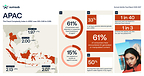
SINGAPORE, Nov. 18, 2026 /PRNewswire/ — Sumsub, the first AI-powered trust infrastructure, has released its Identity Fraud Report 2026-2027*. Now in its sixth edition, the report finds that Asia Pacific (APAC) accounted for a third (33%) of all fraud networks detected globally, more than any other region, and recorded close to a million confirmed fraud attempts, the highest of the six regions.

Fraud networks are coordinated groups of linked identities, accounts and devices run by organized fraudsters. Across APAC, around 1 in 40 approved people (2.4%) are linked to a detected fraud network, and around one-third of these links appear only after they have successfully passed identity verification. This suggests many legitimately verified accounts are later sold or handed over to fraudsters, often for use as money mules: accounts that receive and move stolen funds on a fraudster’s behalf.

Increasingly sophisticated tactics have led Sumsub to the creation of Sumsub’s new Fraud Complexity Index (FCI), which scores each confirmed case on the tooling, coordination and number of techniques behind it. This year, the report finds that the FCI rose from 2.1 to 2.2 globally.

Key APAC findings from the report include:

APAC hotspots for fraud networks: The Philippines recorded the largest number of networks in the region (17% of APAC networks), closely followed by India, while the largest single network was detected in Thailand, with 3,018 linked users.Fraud is becoming more complex: APAC’s FCI rose 14% to 2.09. Hong Kong’s FCI rose 7% to 1.97. APAC businesses also reported fraudster-operated AI agents (11%) more often than any other region.AI agents are adding new exposure: 61% of APAC businesses have detected or suspected fraud involving an AI agent, among the highest levels of any region. APAC businesses lead on limiting agent permissions and on suspending or revoking access, but these controls remain limited: only 15% can suspend or revoke an agent’s access, and 40% verify the human that authorizes one.Deepfake activity is spreading even where overall fraud is declining: Deepfakes rose sharply in Pakistan (+217%), the Philippines (+125%), India (+103%) and Hong Kong (+72%). In Indonesia, the overall fraud rate fell 64% while deepfakes increased 69%.APAC consumers are the most exposed to AI-generated content: 61% of APAC consumers have encountered AI-generated or manipulated content, the highest share of any region. Among those who experienced a fraud attempt, 44% said AI-generated content played a part.Singapore sees fewer, but more complex, attacks: Singapore’s fraud rate fell 36% year-on-year to 1.0%, while its FCI rose 9% to 2.13, above the APAC average. Deepfakes in Singapore fell 37%.Japan has the region’s highest and fastest-growing fraud rate: Japan’s fraud rate rose 219% year-on-year to 5.1%, the highest in APAC.Legitimate AI agents are being turned against businesses: Globally, among businesses that detected or suspected AI-agent fraud, 49% saw a legitimate agent manipulated by malicious instructions, and 30% saw an agent initiate a purchase, payment or transfer.

Verified accounts become building blocks for fraud networks

A single fraudulent account rarely tells the whole story. Fraud networks become visible through shared devices, contact details, payment instruments and document templates that an account-by-account review cannot show. Some of these links appear only after onboarding, as legitimately verified accounts are sold, compromised or otherwise repurposed. Passing KYC confirms an identity at a single point in time, but does not guarantee how an account will be used afterwards.

Businesses recognize the challenge, but few are equipped for it. 29% of APAC businesses say larger linked networks are making fraud harder to detect, the highest share of any region, yet only 25% use fraud network analysis.

In Southeast Asia, organized scam compounds have become highly mobile, relocating sites and reusing the same infrastructure when authorities intervene. Their human cost is significant: by April, Nepal reported that 612 of its citizens had been rescued from online scam centers across Southeast Asia and repatriated.

The impact is felt on both sides of the transaction. Among APAC businesses that experienced fraud, impersonation of a business, employee or supplier was the most commonly reported form of external fraud (42%), the highest of any region, followed by scam-induced payments (40%). Among APAC consumers, 79% experienced fraud in the past 12 months. Half of victims lost money, and 51% of those recovered none of it.

“A scam network is designed to look like a thousand ordinary people doing ordinary things. Every account is verified, and every document is real, because the person holding it was recruited, paid, or coerced into opening it, so nothing trips a wire on its own,” said Erin West, anti-scam advocate, former Deputy District Attorney and founder of Operation Shamrock, who has investigated scam compounds in Cambodia and Thailand. “Look past the person in front of you to the people behind them. The networks already cooperate beautifully with one another, and it’s time we caught up.”

Fraud grows more complex as it shifts across the region

While fraud rates fell in four of six regions globally, the FCI rose in all six. In APAC, it rose 14%, from 1.83 to 2.09.

Rather than rising everywhere at once, fraud is shifting between APAC markets and techniques. Japan’s fraud rate rose 219%, while Singapore’s fraud rate fell 36%, but its FCI rose 9%, above the regional average. In Hong Kong, fraud rate edged up 5% as deepfakes there rose 72%. APAC also leads all regions in the share of businesses saying deepfakes (31%) and synthetic identities (26%) are making fraud harder to detect while QR-code redirection (18%) and device or location manipulation (14%) were also reported more often than anywhere else.

The region also has strong foundations to respond. APAC leads every other region in digital identity wallet adoption: 50% of consumers have used a government digital identity wallet, and 65% say they would be comfortable using one. Banks and financial services remain the most trusted online category, with 74% of APAC consumers reporting high or full trust.

“Fraud in APAC isn’t rising everywhere at once. It is shifting between markets, techniques and stages of the customer lifecycle,” said Penny Chai, Vice President, APAC at Sumsub. “The region is home to some of the world’s most mature digital economies, alongside markets where digital services and organized scam operations are expanding quickly. Those markets are deeply connected, and fraud networks move easily between them. But APAC also has the tools to respond, from progressive regulation to world-leading digital identity adoption and high consumer trust in financial services. The task now is to use them together, so that trust doesn’t end at onboarding.”

Regulators and industry move towards collective action

Regulators across the region are shifting responsibility for scam payments and mule accounts towards the institutions that send, receive or facilitate them, and building new ways to share fraud intelligence. In Singapore, the Protection from Scams Act and the Scams (Countermeasures) and Other Matters Act 2026 give authorities new powers to protect people at risk of being scammed and to disrupt accounts and services linked to scams, while the National Scams List supports the exchange of information on suspicious scam accounts. Hong Kong has created a legally protected mechanism for banks to share information, and Thailand has embedded mule-account controls across banks, payment businesses and crypto operators.

The same collective approach is needed as AI agents take on more tasks. Launched in September, the Sumsub Agentic AI Council brings together cross-sector experts across APAC to develop practical guardrails for AI agents, including agent identity, delegated authority and accountability.

To explore the Sumsub Identity Fraud Report 2026-2027 in full, please download it here: http://sumsub.com/identity-fraud-report-2026/

About Sumsub

Sumsub is the first AI-powered trust infrastructure for compliance operations at scale. It connects identity and business verification, fraud prevention, transaction monitoring, and risk workflows, helping teams reduce manual work and enter new markets.

Trusted by over 4,000 clients across financial services, crypto, mobility, trading, marketplaces, education, and iGaming, including Bybit, Bitpanda, Wirex, Avis, Vodafone, Duolingo, and Kaizen Gaming.

*Methodology

The Sumsub Identity Fraud Report 2026-2027 analyzes more than 5.8 million fraud samples from Sumsub’s internal identity verification and user activity data, comparing 2025 and 2026 across multiple regions and industries. To ensure statistical reliability, only jurisdictions with more than 15,000 verification attempts during the reporting period were included. A network connection refers to a link between an applicant and a detected fraud network at any point in the applicant lifecycle, and is a risk signal rather than proof that the applicant is fraudulent.

The report also draws on Sumsub’s Fraud Exposure Survey 2026, conducted in August 2026 among more than 1,400 fraud and risk professionals and more than 1,500 end users across 21 markets, including Hong Kong, Indonesia, the Philippines, Singapore and Thailand in APAC.

View original content to download multimedia:https://www.prnewswire.com/apac/news-releases/asia-pacific-accounts-for-a-third-of-the-worlds-fraud-networks-as-identity-fraud-grows-more-complex-sumsub-302942447.html

SOURCE Sumsub

Continue Reading

Technology

IDEMIA Public Security Partners with the Connecticut Department of Motor Vehicles to Launch the Next-Generation of Mobile ID

Published

on

By

Connecticut residents can now securely verify their identity quickly and easily from their mobile phone. 

RESTON, Va., Nov. 24, 2026 /PRNewswire/ — IDEMIA Public Security, a leading provider of secure and trusted biometric-based solutions, in partnership with the Connecticut Department of Motor Vehicles (DMV), has launched the next-generation of mobile ID in Connecticut, providing residents with a convenient and secure way to digitally present their state-issued driver’s license or ID.

The Connecticut mobile ID app offers residents a modern, trusted identity solution that complements a physical driver’s license or state ID card. Designed with privacy, security, and convenience at its core, the credential enables residents to present trusted identity information while maintaining greater control over their personal data.

Built on IDEMIA’s proven digital identity technology, the Connecticut mobile ID app supports verification across a variety of in-person and digital use cases. Developed with interoperability, privacy, and user experience in mind, the solution provides a trusted digital credential that residents and relying parties can use with confidence.

“This is an exciting milestone for the State of Connecticut and the Department of Motor Vehicles,” said DMV Commissioner Tony Guerrera. “The Connecticut Mobile ID surpassed 10,000 downloads within just days of its launch, demonstrating tremendous early interest. We are proud to offer this option to our residents and extend our sincere appreciation to everyone who helped bring this initiative across the finish line.”

“We are proud to collaborate with the Connecticut Department of Motor Vehicles to provide residents with a secure digital credential that brings greater convenience and control to the identity experience,” said Rob Gardner, CEO, IDEMIA Civil Identity. “This launch reinforces our commitment to advancing digital identity solutions that prioritize privacy, security, and ease of use while supporting Connecticut’s efforts to deliver innovative services to its residents. Together, we are empowering citizens with a trusted digital credential designed for today’s increasingly mobile world.”

Connecticut joins New York, Iowa, Arkansas, Kentucky and West Virginia implementing IDEMIA’s Mobile ID technology.

To learn more about Connecticut’s mobile ID, click here.

About IDEMIA Group
IDEMIA Group is a global technology leader with more than 10,700 employees worldwide. Its two market-leading divisions deliver mission-critical solutions that simplify and secure interactions in the physical and digital realms:

IDEMIA Public Security (IPS) is a trusted provider of government-grade and secure biometric-based solutions for 600 government, state and federal agencies, as well as organizations requiring identity and access solutions across physical and digital environments. With decades of experience in biometric technologies, IPS enables safer, frictionless and fairer ways to secure travel, access, and citizen protection. Separately, two other government-related activities are conducted by the IDEMIA Group: civilian identity issuance in North America and road safety.IDEMIA Secure Transactions (IST) is the leading technology provider making it safer and easier to pay and connect. With unmatched expertise in cryptography and credential issuance, IST is trusted by over 2000 financial institutions, mobile operators, automotive manufacturers, and IoT providers worldwide. Every day, IST secures billions of essential transactions, ensuring the highest levels of data protection and convenience. 

For more information, please visit www.idemia.com. 

Media contact:
Genevieve de Vera
IDEMIA Public Security 
(978) 808-7047
genevieve.devera@ps-idemia.com

View original content to download multimedia:https://www.prnewswire.com/news-releases/idemia-public-security-partners-with-the-connecticut-department-of-motor-vehicles-to-launch-the-next-generation-of-mobile-id-302948564.html

SOURCE IDEMIA Identity & Security USA LLC

Continue Reading

Technology

Euler Foundation appoints Euler Technologies to lead next phase of growth and adoption

Published

on

By

GRAND CAYMAN, Cayman Islands, Nov. 18, 2026 /PRNewswire/ — The Euler Foundation today announced that Euler Technologies, a newly formed independent service provider, joined by Christopher Cameron as Head of Strategy, succeeds Euler Labs as the primary service provider responsible for maintaining and growing the Euler Protocol. The mutually agreed transition will take effect on 18 November 2026, with Euler Technologies and Euler Labs working together on the handover.

The appointment marks the completion of Euler Labs’ founding mission. Euler Labs has developed the most flexible and robust lending and borrowing product on the market: a modular protocol on which anyone can deploy a customised credit market for any asset without compromising risk isolation. With that infrastructure built and battle-tested, the Protocol’s next step is commercial.

With growth and protocol evolution as top priorities, Euler Technologies assumes responsibility for protocol development and maintenance, as well as the operation of the Euler app, documentation, and communications. Its mandate focuses on partnerships and integrations that bring more users to Euler, support for curators developing credit markets, and work with institutions and tokenised-asset issuers seeking access to onchain lending. The Euler Foundation will compensate Euler Technologies in EUL, Euler’s governance token, aligning the company’s economic incentives with the protocol’s long-term success.

Euler Foundation said: “Euler Labs has made an extraordinary contribution to Euler. The team has built the most adaptable and resilient credit infrastructure in DeFi, and we thank them for the technology and ecosystem they have created. Euler Technologies brings the engineering capability to carry that work forward, and the commercial and governance experience to put it in front of more users and integrators. This transition positions Euler for its next phase of growth.”

Continuity for users and partners

Euler Labs and Euler Technologies will coordinate the transition over November 2026. We do not anticipate any near-term material changes to the protocol, its markets or its interfaces. The Euler Foundation will continue to steward the Euler ecosystem and oversee its service provider relationships, working with Euler Technologies to support the products’ development, maintenance and long-term growth.

Security and control

Under the direction of the Euler Foundation, Euler Labs will transfer the administrative permissions associated with its service-provider role to Euler Technologies before the end of November 2026. Both teams will coordinate and verify each step, and the community will be updated once the transfer is complete.

Euler Technologies will hold the same limited administrative permissions that Euler Labs held, under the same safeguards. Changes to the protocol remain subject to the same controls and governance oversight as today, and Euler Foundation will continue to oversee how those permissions are held and used. Euler Technologies cannot exercise these permissions alone. Protocol upgrades require approval from a distributed multisig whose signers include the Euler Foundation.

Euler Labs will rotate the protocol’s multisig signers to a distributed set that includes the Euler Foundation, Euler Technologies, leading crypto security firms, and investors in Euler Technologies.

“I’m incredibly proud of everything Euler Labs has achieved, from the v2 rebuild to the upgrades we’ve just shipped. We set out to build the most versatile credit infrastructure in DeFi, and that work is done,” said Jonathan Han, CEO of Euler Labs. “What Euler needs now is a team focused on commercializing it. Euler Technologies has the business development capabilities and the market knowledge to expand its reach. We believe this is the best next step for Euler.”

Driving the next phase of growth

Cameron, known across the industry as PaperImperium, is one of the most experienced governance practitioners in decentralised finance, specialising in onchain credit and stablecoin markets. He was among the first elected delegates of MakerDAO (now Sky) and at one point its largest, representing more than 3% of the protocol’s voting power. He organised one of the first public meetings between a DAO and a sitting member of the U.S. Congress. From 2021 to 2026, he served as governance liaison at GFX Labs, representing the firm in the governance of Arbitrum, Optimism, Uniswap, Morpho and other protocols.

“I have spent years inside the governance of DeFi‘s largest credit protocols, and I have watched Euler Labs build the most flexible and robust lending infrastructure on the market,” said Cameron, Head of Strategy, Euler. “The infrastructure is proven. Euler’s major need is distribution: the partnerships, integrations and institutional relationships that bring more markets and more borrowers onto it. Euler Technologies’ job is to keep that infrastructure secure and well maintained while shepherding the next wave of curators and tokenized assets onto the platform.”

“It’s great news that someone with Chris’ wealth of experience will be helping shape Euler through its next chapter,” said Michael Bentley, co-founder and former CEO of Euler Labs. “I’ve long admired his contributions to MakerDAO and other credit protocols. He has a deep understanding of credit markets and knows what users, curators and institutions need from lending infrastructure. I look forward to seeing Euler continue to grow with his help.”

EUL compensation and token transparency

Under its agreement with Euler Foundation, Euler Technologies will receive 4,077,420 EUL over two years, representing 15% of the total EUL supply as of November 17, 2026. Payments will follow a payment schedule of an initial distribution of 3% of supply, followed by monthly disbursements of 0.5% of supply for 24 months. The allocation will come from Euler Foundation’s existing holdings.

The Foundation has published a Tokenomics 2.0 page, providing an updated account of EUL distribution as of 17th November 2026 and showing how it will change under the Euler Technologies agreement.

The vesting schedules associated with EUL’s original token allocations have already concluded or will shortly conclude. In addition, the new page identifies Foundation and treasury balances, documented team and other holdings, and tokens in public circulation. It also details Euler Technologies’ allocation and release schedule, the treatment of any remaining contributor grants, and relevant wallet addresses.

For more information on this transition and Tokenomics 2.0 disclosures, visit Dune.

About Euler Foundation

Euler is a modular DeFi lending protocol that lets anyone permissionlessly deploy a customised credit market for any asset, without compromising risk isolation. Euler Foundation operates as a non-profit entity dedicated to furthering the development of the Euler Protocol by supporting community governance and providing strategic oversight.

About Euler Technologies

Euler Technologies is an independent service provider engaged by the Euler Foundation to operate, maintain, and secure the Euler protocol. Its remit covers protocol development on every network where Euler is deployed, smart contract security and key management, hosting of the Euler app, docs and forum, developer tooling and user support, alongside administrative and communications support for the Foundation. Euler Technologies is the trading name of Web3 Development Ventures Corp., incorporated in the Republic of Panama.

View original content:https://www.prnewswire.com/news-releases/euler-foundation-appoints-euler-technologies-to-lead-next-phase-of-growth-and-adoption-302943727.html

SOURCE Euler Foundation

Continue Reading

Technology

Wonderloom Media and Audioboom Launch Dr. Insanity Podcast Amid Rising Demand for True Crime

Published

on

By

One of YouTube’s largest true crime channels, with more than 6.3 million subscribers, expands its documentary-style storytelling with a new podcast

LOS ANGELES, Nov. 24, 2026 /PRNewswire/ — Wonderloom Media, the creator economy studio formed by Content Partners and media entrepreneur Ed Simpson, today announced that Dr. Insanity, one of YouTube’s largest true crime channels, has partnered with Audioboom to launch the Dr. Insanity Podcast, marking the channel’s expansion into podcasting and the latest step in Wonderloom’s push to bring Dr. Insanity to fans beyond YouTube.

The Dr. Insanity Podcast features in-depth, documentary-style episodes exploring real-life crime cases, and is available now on Apple Podcasts, Spotify and wherever you get your podcasts.

“Dr. Insanity is becoming the home of true crime, and that means meeting fans wherever they listen and watch,” said Ed Simpson, CEO of Wonderloom Media. “Our audience has always gone deep with us, and so many of them already live with true crime in their ears. Audioboom shares our commitment to great storytelling, and we’re excited to bring Dr. Insanity to a whole new community of listeners together.”

Since Wonderloom acquired Dr. Insanity in June 2026, the channel has continued to grow its audience and reach. Known for meticulously researched, documentary-style storytelling on real-life cases, Dr. Insanity has built one of the most engaged audiences in true crime, with more than 6.3 million YouTube subscribers and over 3 billion views. The partnership with Audioboom adds podcasting to the channel’s growing distribution, which also includes Tubi.

“Dr. Insanity has built an incredible audience on YouTube by delivering compelling, high-quality true crime storytelling,” said Brendan Regan, Chief Content Officer at Audioboom. “We see a tremendous opportunity to bring that same experience to podcast listeners and introduce the brand to new audiences. We’re excited to partner with the Wonderloom team to expand Dr. Insanity’s reach and build on its success across platforms.”

Listeners can follow the Dr. Insanity Podcast and learn more at drinsanity.com 

About Wonderloom Media
Wonderloom Media is a creator-first media platform that acquires, operates and scales YouTube-native content businesses. Formed by Content Partners and media entrepreneur Ed Simpson, Wonderloom brings institutional operating experience, expanded distribution and 360° monetization to digital-native properties with loyal audiences and long-term growth potential. Its portfolio includes Dr. Insanity, one of YouTube’s largest true crime channels, with more than 6.3 million subscribers and over 3 billion views.

About Audioboom
Audioboom is a global leader in podcasting – ranked as the fifth largest podcast publisher in the US by Edison Research – reaching more than 58 million unique listeners around the world each month.

Audioboom’s ad-tech and monetisation platform underpins a scalable content business that provides commercial, distribution, marketing and production services for a premium network of top tier podcasts. Key partners include the official Formula 1 podcasts ‘F1: Beyond the Grid’ and ‘F1 Nation’, ‘True Crime Obsessed’ (US), ‘The Tim Dillon Show’ (US), ‘No Such Thing As A Fish’ (UK) and ‘The Cycling Podcast’ (UK).

For more information, visit audioboom.com.

About Dr. Insanity
Dr. Insanity is one of YouTube’s largest true crime channels, with more than 6.3 million subscribers and over 3 billion views. Known for its in-depth, documentary-style storytelling on real-life cases, the channel has built a loyal audience in true crime. Dr. Insanity is part of the Wonderloom Media portfolio and is available on YouTube, Tubi and major podcast platforms.

Media Contact:
Michal Mitchell
Wonderloom@relativity.ventures

View original content to download multimedia:https://www.prnewswire.com/news-releases/wonderloom-media-and-audioboom-launch-dr-insanity-podcast-amid-rising-demand-for-true-crime-302948704.html

SOURCE Wonderloom Media

Continue Reading

Trending