Connect with us

Technology

MetaComp scales its interoperable, agentic payment network to support push for integrated cross-border payments in ASEAN and beyond

Published

on

One year on, MetaComp’s StableX Agentic Network connects ASEAN markets with the wider region and has more than 1,000 members

SINGAPORE, Nov. 18, 2026 /CNW/ — MetaComp Pte. Ltd. (“MetaComp”), a Singapore-headquartered Web2.5 payments solutions provider licensed by the Monetary Authority of Singapore (MAS) as a Major Payment Institution, is scaling the StableX Agentic Network to carry more cross-border payments into and across Southeast Asia, for banks, payment service providers and businesses. The network is an interoperable, agentic payment infrastructure that spans currencies and regions, and in its first year it grew to more than 1,000 members reaching over 100,000 users.

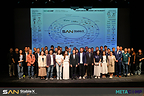
MetaComp marked the network’s first year at its industry forum, Agents Are Moving Money. Are You Ready?, held on 17 November on the eve of Singapore FinTech Festival 2026, with Mr Tan Kiat How, Senior Minister of State for Digital Development and Information, as Guest of Honour.

Key thought leaders from banking, payments, digital assets and academia, including Prof Hahn Jungpil, Provost’s Chair Professor at the School of Computing at the National University of Singapore and representatives from Tether and PwC discussed what agentic payments must demonstrate to earn the trust of institutions and the businesses that depend on them.

Why ASEAN, why now

The forum coincided with the 49th ASEAN Summit. On 14 November, ASEAN member states signed the ASEAN Digital Economy Framework Agreement (DEFA), the bloc’s first standalone, legally binding digital economy agreement. DEFA sets common rules for digital trade, cross-border data flows and electronic payments, and is expected to enter into force in early 2027.

Google, Temasek and Bain & Company project  that Southeast Asia’s digital economy will reach US$368 billion in gross merchandise value this year, up 17%. ASEAN’s merchandise trade reached US$2.1 trillion in the first half of 2025, up 16.4% year on year, according to the ASEAN Secretariat.

Yet businesses that pay across Southeast Asia still deal with different rails, currencies and rules in each market. Private networks that connect those systems, and comply with each of them, can help turn that growth into everyday trade.

Agentic payment Infrastructure for ASEAN

The StableX Agentic Network is built to connect fiat and stablecoin rails in one place and routes each payment across available pathways by rate. Its members include payment service providers whose clients are expanding into Southeast Asia, including exporters from North Asia.

If one corridor is slow or unavailable, a payment can take another. In April, MetaComp announced it would adopt Solana as a preferred blockchain for settlement within the network, adding a route alongside fiat rails. Now, the network has also gone agentic.

The network gives institutions two-way access to Southeast Asia. Over local rails and SWIFT, they can pay out in local currency in six ASEAN markets: Singapore, Indonesia, Malaysia, Vietnam, the Philippines and Thailand. They can also collect local currency in Singapore, the Philippines and Indonesia, with Vietnam to follow.

What makes the network agentic is how it handles AI agents. It is designed for payments made by agents and humans, and governance is built into how they take part.

Building on MetaComp’s existing compliance controls, the StableX Know Your Agent (StableX KYA) Framework acts as the network’s ‘gatekeeper’. Every agent on the network must be verified, bounded and accountable. Each one is registered to a verified owner, works only within the permissions it has been given, and can be traced back to whoever is responsible for it. StableX KYA decides which agents can join the network and be active on it, and what each one is authorised to do.

Launched in April 2026, StableX KYA has since been productised and taken live. It oversees agents across their full lifecycle, and its monitoring framework sets out more than 30 measures across six governance objectives to track how agents behave over time, with results shown on a live dashboard.

Once payments are moving, VisionX, MetaComp’s compliance intelligence engine, screens transactions as they happen, across fiat and on-chain activity. Together, StableX KYA and VisionX AI mean every agent on the network is governed and every transaction is screened, whichever corridor a payment takes.

As agentic and cross-border payments have evolved, VisionX has kept pace, expanding its capabilities over the past year. At the forum, VisionX AI, a standalone RegTech company within Alpha Ladder Group, unveiled AEGIS, its proprietary Large Graph Model for financial crime detection, and launched TraceX, a blockchain investigation platform.

Tin Pei Ling, Co-President of MetaComp, said: “ASEAN has set a clear ambition for integrated payments, and policy only becomes trade when payments can move between markets. We are building an interoperable agentic payment infrastructure for the region, now with more than 1,000 members on the StableX Agentic Network. As more payments are initiated by AI agents, we take AI governance and safety seriously, which is why the StableX KYA framework is a key feature of our infrastructure, so that every agent permitted into our network is verified, bounded and accountable. A payment network is only as useful as the trust behind it.”

Dr Bo Bai, Executive Chairman and Co-founder of Alpha Ladder Group, parent group of MetaComp, said: “Southeast Asia is where many of our clients’ businesses are growing. When we launched the StableX Network a year ago, the aim was payment infrastructure that institutions could rely on across markets, not only in Singapore. With new investment behind us, we can take it into more of the region’s markets and connect businesses from North Asia and beyond to them.”

The network’s first year has also been recognised by industry judges. The StableX Agentic Network was named Outstanding Use of AI for Cross-Border Payments at The Digital Banker’s Global AI Innovation Awards 2026, and VisionX won Best Compliance-First Innovation (Transaction Monitoring) at The Digital Banker’s Digital Assets Awards 2026.

Beyond the network, MetaComp was named to the CB Insights 2026 Fintech 100 and listed among Tech in Asia and Statista’s Singapore’s Top Fintech Companies 2027. It is also a finalist in the Regulatory Leader category of the Singapore FinTech Festival FinTech Excellence Awards 2026.

Visitors can see the StableX Agentic Network and VisionX at the Alpha Ladder booth, 6A13, Hall 6, Singapore EXPO, from 18 to 20 November.

About MetaComp

MetaComp is a Singapore-headquartered payments company licensed by the Monetary Authority of Singapore as a Major Payment Institution. Guided by “Easier Payments, Resilient by Design,” MetaComp connects fiat and stablecoin rails through a compliant Web2.5 architecture, enabling institutions and businesses to move, convert and manage capital across borders.

MetaComp is advancing the next evolution of payments through the StableX Agentic Network, which has grown to more than 1,000 members reaching over 100,000 users. Through its agentic financial solution, AI agents can access MetaComp’s regulated payment capabilities directly, supported by StableX KYA, launched in April 2026, for agent governance, and VisionX for integrated fiat and on-chain compliance intelligence. 

View original content to download multimedia:https://www.prnewswire.com/news-releases/metacomp-scales-its-interoperable-agentic-payment-network-to-support-push-for-integrated-cross-border-payments-in-asean-and-beyond-302943277.html

SOURCE MetaComp

Continue Reading

Technology

Sophia Space Deploys Orbital Computing Software Across Multiple Kepler Satellites

Published

on

By

First in-space deployment of Sophia Orbital Operating System (SOOS) aboard multiple Kepler Communications satellites opens the door for organizations to run workloads in orbit and accelerate the future of scalable orbital data centers.

PASADENA, Calif., Nov. 19, 2026 /PRNewswire/ — Sophia Space, a pioneer in passively-cooled orbital computing infrastructure, today announced the first in-space deployment of its Sophia Orbital Operating System (SOOS) leveraging the on-orbit compute infrastructure aboard multiple Kepler satellites within Kepler’s Tranche 1 optical data relay constellation. The collaboration is advancing the company’s effort to deploy scalable computing infrastructure in orbit. This deployment establishes a foundational software layer for Sophia Space’s future orbital computing architecture, designed to support computing workloads across individual spacecraft and larger, distributed orbital networks.

Sophia Space deploys SOOS across multiple Kepler satellites, paving the way for scalable orbital data centers.

Hosted aboard Kepler satellites, the SOOS deployment validates resilient, autonomous software capabilities needed to manage and execute distributed edge computing workloads across multiple spacecraft connected via optical links in the space environment. This software demonstration marks an important step toward dedicated orbital computing infrastructure capable of processing mission-critical data in space, enabling faster insights, greater operational resilience, and more sophisticated space-based data services.

“Building the next generation of space infrastructure isn’t about launching an entire data center overnight. It’s about proving the architecture, step by step,” said Rob DeMillo, CEO and Co-Founder of Sophia Space. “Deploying SOOS in LEO is an important first step. We’re beginning with the software foundation, then moving toward dedicated computing hardware, standalone satellites, and ultimately entire constellations. Each mission builds toward a future where computing becomes an integral part of the orbital economy.”

The collaboration also highlights the growing convergence of satellite communications and orbital computing, creating opportunities to run AI inference workloads closer to where data is collected and generated. SOOS enables distributed edge computing through managed Kubernetes application deployment and management; software that runs and manages applications across a group of computers. SOOS offers triple redundancy and built-in security capabilities designed to support resilient operations for partners looking to deploy AI inference workloads in orbit across a variety of applications, including missile warning, space domain awareness, maritime awareness, disaster response, atmospheric monitoring and weather intelligence, spacecraft operations, zero-gravity manufacturing, and a host of other potential uses.

“As the space economy grows, communications and computing will become increasingly interconnected,” said Caitlin Marsh, president of Kepler US. “Our collaboration with Sophia Space reflects the importance of building an orbital infrastructure ecosystem where data can be processed, managed, and delivered more efficiently. This is an early step toward demonstrating how those capabilities can work together.”

SOOS deployment represents the first step in Sophia Space’s broader development roadmap, designed to progressively validate the technologies needed to deliver scalable computing infrastructure in orbit. Sophia Space is now open to partner with other companies looking to deploy edge applications in LEO. 

“I want to congratulate the software and operations teams at Sophia Space and Kepler for successfully demonstrating distributed operating system functions across multiple satellites in space and multiple GPUs on each satellite,” added Dr. Leon Alkalai, Founder and CTO of Sophia Space. “The Sophia team demonstrated distributed functions essential for satellite system resilience, self-awareness and fault tolerance. These building blocks are essential for any future orbiting data centers infrastructure.”

These missions are intended to demonstrate how modular computing infrastructure can scale into distributed orbital networks, while advancing opportunities to work with partners to bring new computing capabilities in orbit.

About Sophia Space

Sophia Space is developing the next generation of orbital computing infrastructure through its modular, passively cooled TILE architecture and Sophia Orbital Operating System (SOOS). Drawing on patented, thermal-management innovations originating at NASA’s Jet Propulsion Laboratory and the California Institute of Technology, the company is working to make high-performance computing in space more scalable, efficient, and accessible. Headquartered in Pasadena, California, Sophia Space is building the infrastructure to support a growing space-based economy.

About Kepler Communications

 Kepler Communications Inc. is a space infrastructure provider on a mission to deliver real-time access to space data. With 33 satellites launched to date, Kepler operates the first commercial optical data relay constellation, enabling real-time, continuous space connectivity while supporting advanced on-orbit compute and hosted payload capabilities. Kepler has achieved industry-leading milestones, including the first commercial on-orbit demonstration of SDA-compatible optical inter-satellite links and successful space-to-air and space-to-ground optical communication demonstrations. Headquartered in Toronto, Canada, Kepler is building a global company to enable the future space economy.

View original content to download multimedia:https://www.prnewswire.com/news-releases/sophia-space-deploys-orbital-computing-software-across-multiple-kepler-satellites-302944909.html

SOURCE Sophia Space

Continue Reading

Technology

The Adecco Group global study: AI delivers more value when people are involved in work redesign

Published

on

By

New research among 40,500 workers finds well-integrated AI saves more time, while training, worker involvement and human-centered leadership determine whether adoption translates into sustainable performance.

AI delivers greater value when it is embedded into how work gets done. Workers using well-integrated AI save 20% more time per day and are more likely to reinvest that time in higher-value work.Worker involvement turns adoption into adaptability. 96% of workers involved in redesigning their work are willing to adapt to changing environments, compared with 29% of those not involved.Work-life balance has overtaken salary as the leading reason people would leave their job. It is now workers’ leading reason for considering a move.

ZÜRICH, Nov. 19, 2026 /PRNewswire/ — The Adecco Group (SIX: ADEN) today published the seventh edition of its annual Global Workforce of the Future report, based on a survey of 40,500 workers across 36 countries. The findings show that AI adoption is advancing rapidly, but technology delivers its strongest value when organizations redesign work around people; equip them with relevant skills; and give them a voice in how change is implemented.

AI is now embedded in working life. Nearly three-quarters (74%) of workers use AI agents at work, up from 64% in 2025, and technology occupies four of the five leading influences reshaping work. Yet adoption alone does not guarantee value. The research points to a widening gap between organizations that simply deploy AI and those that orchestrate people, AI agents and workflows as a well-orchestrated hybrid workforce.

Where AI is well integrated into operating workflows, workers report saving 20% more time per day than users experiencing lower integration. They are also more likely to reinvest the time saved in higher-value work and seven times less likely to feel overwhelmed by the need to use AI tools effectively. The findings suggest that productivity gains depend less on access to technology than on how effectively it is embedded into the work itself.

Denis Machuel, CEO of the Adecco Group: “The next phase of AI at work is not about deploying more tools. It is about orchestrating people and technology more effectively. When workers help redesign how work gets done, and receive the training and clarity to adapt, AI creates more value and change becomes easier to navigate. AI delivers its greatest impact when it happens with people and not to people.”

Full press release: available here.

Full report: People-powered performance: How to unlock happiness in the hybrid workforce available here.

For further information please contact:

The Adecco Group Corporate Press Office:

media@adecco.com 

Rodrigo Sánchez Flores – Tel: +34 658 06 54 02

Jürg Schneider – Tel: +41 79 876 09 21

View original content to download multimedia:https://www.prnewswire.co.uk/news-releases/the-adecco-group-global-study-ai-delivers-more-value-when-people-are-involved-in-work-redesign-302944338.html

Continue Reading

Technology

Dubai International Chamber opens representative office in Miami to strengthen trade and investment ties between Dubai and the United States

Published

on

By

DUBAI, UAE, Nov. 19, 2026 /PRNewswire/ — Dubai International Chamber, one of the three chambers operating under the umbrella of Dubai Chambers, has opened a new representative office in Miami. The office aims to strengthen business ties between Dubai and the United States and expand trade and investment cooperation between companies in both markets.

The Miami office is Dubai International Chamber’s second representative office in the United States, following the opening of its New York office during the Dubai Business Forum – USA, organised by Dubai Chambers in November 2025.

Salem AlShamsi, Executive Vice President of International Relations at Dubai Chambers, stated: “The opening of our new office in Miami marks an important step towards expanding trade and investment partnerships between Dubai and the United States and creating new growth opportunities for the business communities in both markets”.

The new office comes amid growing trade between Dubai and the United States. Bilateral non-oil trade reached AED 121.8 billion in 2025, representing an increase of 4.6% compared to the previous year.

The number of active American companies registered with Dubai Chamber of Commerce reached 3,718 by the end of December 2025, recording year-on-year growth of 18.1%. A further 439 American companies joined the chamber during the first nine months of 2026, reflecting continued interest among American businesses in Dubai as a destination for business, expansion, and investment.

The Miami office will strengthen engagement with key public and private sector stakeholders, deepen cooperation with the American business community, and highlight the competitive advantages that make Dubai a leading global business destination. It will also provide information and market intelligence to help American companies enter the Dubai market and expand their operations from the city into international markets.

In addition, the office will support Dubai-based companies seeking to expand into the United States by providing specialised market insights, helping them identify promising trade and investment opportunities, and connecting them with trusted local partners.

About Dubai International Chamber

Dubai International Chamber, one of the three chambers operating under the umbrella of Dubai Chambers, was established to promote Dubai as a global business hub, attract multinational companies and expand the emirate’s trade ties with promising markets.

For more information, please contact:

Mohamad Mouzehem
PR and Corporate Communications
Tel: +971 4 2028537
Email: mohamad.mouzehem@dubaichamber.com 


View original content to download multimedia:https://www.prnewswire.com/news-releases/dubai-international-chamber-opens-representative-office-in-miami-to-strengthen-trade-and-investment-ties-between-dubai-and-the-united-states-302944931.html

SOURCE Dubai International Chamber

Continue Reading

Trending