Connect with us

Technology

StepSecurity Raises $20 Million in Series A Funding to Prevent Supply Chain Attacks

Published

on

Launches free Secure Registry community tier, making protection accessible to open-source maintainers

SEATTLE, Nov. 18, 2026 /PRNewswire/ — StepSecurity, the cybersecurity company that prevents supply chain attacks, today announced an oversubscribed $20 million round of Series A funding. In combination with a previous seed funding round of $3 million, this brings the total of funding raised to date to $23 million. The round was led by Elephant, with participation from existing investors Runtime Ventures, Inner Loop Capital, and SaaS Ventures. With this funding, StepSecurity will accelerate the development and distribution of its comprehensive platform, which combines developer-machine protection, repository checks, Secure Registry, and Harden-Runner for CI/CD to block malicious packages at all control points in the agentic software pipeline.

“We founded StepSecurity in 2021 because we wanted security teams to have visibility and protection in the environments where software gets built,” said Varun Sharma, Co-founder and CEO, StepSecurity. “With this Series A funding, we enter our next phase of growth with years of experience protecting development environments, a solid foundation of trust earned through open-source expertise, and a host of advanced products shaped by real supply chain attacks.”

Recent software supply chain attacks have increasingly weaponized malicious packages, automated installation hooks, and hijacked developer accounts to target popular ecosystems like npm, IDE extensions, and AI agents. The need to secure development environments has never been more urgent, as illustrated by recent high-profile security breaches:

The $6.3 Billion Breach at Binance (October 2026): A threat actor, whom the FBI has identified as North Korea’s TraderTraitor group, compromised a developer’s laptop to access an internal service container with the permissions to initiate withdrawal requests. Using that access as a starting point, the attackers exploited additional points of compromise and an Ethereum account-delegation mechanism to gain transaction approval authority over a hot wallet. In around 20 minutes, the threat actors drained billions of dollars in assets.Claude Code Extension Tampering (October 2026): A tampered copy of the Claude Code extension was served on the Cursor Extension Marketplace for several hours to deploy a persistent SSH backdoor.The Shai-Hulud Attack Series (2025-2026): Attackers hijacked developer credentials and pushed hundreds of malicious packages via a major, self-replicating software supply chain worm and cyberattack campaign targeting the open-source npm and PyPI ecosystems.

The StepSecurity platform combines developer-machine protection, repository checks, Secure Registry, and Harden-Runner for CI/CD. With StepSecurity, a malicious component that gets past one layer will still be detected or blocked at another. “We believe independent controls at all control points in agentic software pipelines are the strongest defense for agentic software development,” explained Ashish Kurmi, Co-founder and CTO, StepSecurity. “We have seen our customers adopt one product, find value, and ask us to protect the next part of their development process. This funding gives us the resources to respond faster.”

The Series A will help StepSecurity to invest in three strategic areas: 

Product and engineering. StepSecurity will grow its engineering team, deepen its existing products, and extend protection to the environments customers are asking to secure, including agent sandboxes. Security research. Expanding StepSecurity’s research team’s ability will enable the company to discover attacks early, investigate their impact, and turn those findings into actionable protection. Go-to-Market: To keep pace with growing demand and help more organizations adopt StepSecurity, the company is expanding its go-to-market efforts.

More than 20,000 open-source projects use the free community tier of StepSecurity’s Harden-Runner. On the commercial side, StepSecurity’s ARR grew 5x in 2024 and 5x again in 2025. In 2026, the company has already surpassed 5x growth and is on pace for its strongest year yet. Enterprise customers including Circle, Dexcom, Kong, Mercari, Chainguard, and XBOW rely on StepSecurity’s enterprise platform to protect their software supply chains. “With the increase in supply chain attacks, StepSecurity gives us peace of mind that this behavior will be caught and stopped.” said Ryan Richardson, SOC Lead, Utility Warehouse.

In addition to its Series A funding, StepSecurity is launching a free Secure Registry community tier, integrated with Harden-Runner. This offering extends StepSecurity’s commitment to making protection accessible to open-source maintainers. Now, any public repository using Harden-Runner can pull packages through Secure Registry and block compromised packages.

“We’re thrilled to invest in and partner with StepSecurity, a company that has taken an innovative approach to tackling the enormous issue of supply chain attacks,” said Matt Tanenblatt, Partner, Elephant. “Under the leadership of Varun and Ashish, the team has created a category-defining platform that ensures that malicious packages will not make their way past key control points. This helps security teams address the problem before the damage is done. With applicability to almost any security organization, the market for this solution is enormous and growing quickly.”

About StepSecurity

StepSecurity prevents software supply chain attacks. Its platform secures every stage of software development, from developer machines and AI coding agents to code repositories, package registries, and CI/CD runners, so malicious code is detected and blocked before it can do damage. It was founded in 2021 by security veterans from Microsoft, Uber, and Plaid. For more information or to get started, please visit https://stepsecurity.io

Varun Sharma, (425) 287-3256, press@stepsecurity.io

View original content to download multimedia:https://www.prnewswire.com/news-releases/stepsecurity-raises-20-million-in-series-a-funding-to-prevent-supply-chain-attacks-302941225.html

SOURCE StepSecurity

Continue Reading

Technology

China Unicom Completes the World’s First Standardized Live-Network Assessment of Autonomous Networks in the Core Network Domain, Advancing Industry Assessment Practices
Published

on

By

BEIJING, Nov. 27, 2026 /PRNewswire/ — Recently, the new live network test standard TS1523B, Autonomous Network Level Test Specification for Core Network Fault Management, jointly developed by TM Forum and the China Academy of Information and Communications Technology (CAICT), was released. The tests, which provide evidence aligned with TM Forum’s Autonomous Network Level Assessment standards for core network fault management, were conducted for China Unicom by CAICT and subsequently validated independently by TM Forum. The specifications establish a unified framework for assessing autonomous capabilities in live networks.

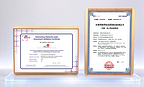
During Innovate Asia, TM Forum and CAICT awarded the world’s first commercial live network autonomy assessment in the core network domain. China Unicom, as the pioneering operator, successfully completed the end-to-end assessment, providing a reference for operators worldwide.

First Live-Network Testing Specifications Advance Autonomous Network Assessment

As autonomous networks evolve towards higher levels of autonomy, validating their performance in real-world environments is increasingly important. TM Forum has taken a leading role in advancing autonomous network assessment methodologies and standards, jointly developing and officially releasing the first set of live network testing specifications for core network fault management with CAICT. These specifications establish a unified framework for validating autonomous capabilities using real production network data. By analyzing operational data such as KPIs and operation logs, live network assessment provides observable, reproducible and traceable evidence. It complements self-assessment of Autonomous Network Levels using TM Forum’s standardized tools by creating supporting evidence from real network environments. TM Forum recognizes the value of this approach and sees it as an important direction for further accelerating the deployment of higher-level autonomous capabilities. The release marks the first milestone in the strategic collaboration between TM Forum and CAICT in the Autonomous Networks domain.

China Unicom Validates Core Network Autonomy Following Live-Network Assessment

As the world’s first operator to participate in a commercial live network AN Level assessment in the core network, China Unicom achieved a score of 3.8. The assessment focused on core network fault management and was conducted on China Unicom’s network operations platform. Leveraging its Fault Management Center and Huawei’s intelligent operations capabilities, China Unicom has established automated capabilities across awareness, analysis, decision and execution. Using actual production network data, the assessment team observed and analyzed the monthly number of successful 5GC diagnoses against the total number of diagnoses, verifying a diagnostic success rate of 98.3%. This demonstrates how live network assessment translates operational performance into measurable evidence, validating the effectiveness of autonomous capabilities in real networks. The assessment also provides valuable industry experience for applying reproducible, data-driven testing methods to autonomous networks. The test evidence and self-assessment results were subsequently validated by TM Forum’s Autonomous Network Levels Assessment Validation service.

Going forward, TM Forum and industry partners will develop and promote live network testing for the assessment of AN levels for high-value scenarios, refining testing standards across network domains and use cases, helping accelerate higher-level autonomous networks and the intelligent transformation.

View original content to download multimedia:https://www.prnewswire.com/apac/news-releases/china-unicom-completes-the-worlds-first-standardized-live-network-assessment-of-autonomous-networks-in-the-core-network-domain-advancing-industry-assessment-practices-302951474.html

SOURCE China Unicom

Continue Reading

Technology

Neolix Establishes Japan Subsidiary, Debuts at Smart Logistics Expo to Deepen Local Service
Published

on

By

NAGOYA, Japan, Nov. 27, 2026 /PRNewswire/ — Neolix, a global leader in autonomous logistics, has established a Japanese subsidiary, NEOLIX K.K. (ネオリックス株式会社) , to deepen its local commitment and strengthen service for customers in Japan. The new unit made its debut at the Smart Logistics Expo, which concluded today after three days at Aichi Sky Expo.

Neolix founded NEOLIX K.K. in October as its permanent Japan base. The subsidiary handles business development, customer support and partner expansion, working with logistics companies, retailers, e-commerce platforms and system integrators on localized autonomous delivery across logistics, retail and manufacturing. It follows a year of groundwork: Neolix joined the Heiwajima Autonomous Driving Council in June and began L4 tests at Tokyo Ryutsu Center (TRC) in September.

“Japan is one of the world’s most mature logistics markets. Labor shortages make autonomous delivery a necessity, not an innovation,” said Yang Jiaxiang, Neolix’s Japan market head. “With the entity in place, we can work with local customers and partners to adapt our scaled technology to Japan’s logistics, retail and manufacturing needs.”

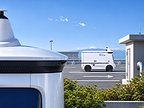
At the expo, Xolra 3 was displayed and the new Xolra 6T self-loading/unloading model was previewed. Xolra 3 targets Japan’s roll-cage operations—standard returnable containers in retail/logistics, long handled manually. Xolra 6T carries three purpose-built cages, 400 kg per cage and 1,200 kg per vehicle; loading, transport and unloading are automatic, with no manual intervention. The L4 vehicle suits plant logistics, inter-warehouse and logistics-node transfers, and store replenishment. Safety features include an emergency stop switch, body-button/app operation and manual cage release as an emergency fallback.

Neolix also demonstrated its on-demand capacity service: customers subscribe by phone and order delivery capacity like an Uber ride, without buying a vehicle. The service operates in multiple countries and regions.

Going forward, NEOLIX K.K. plans to apply scaled L4 autonomous driving and self-loading/unloading technology to plant logistics, inter-warehouse transfers and store replenishment. It aims to develop solutions that can be repeated across sites and to bring autonomous logistics into Japan’s logistics system responsibly, with a practical path to next-generation smart logistics infrastructure.

About Neolix

Neolix is a global AI-powered autonomous logistics company. Its fleet of 30,000+ vehicles operates deployed across 320+ cities in 20+ countries and has completed 270 million autonomous kilometres.

View original content to download multimedia:https://www.prnewswire.com/apac/news-releases/neolix-establishes-japan-subsidiary-debuts-at-smart-logistics-expo-to-deepen-local-service-302951435.html

SOURCE Neolix

Continue Reading

Technology

MISUMI Completes Global Rollout of Next-Generation Core System “NEWTON”

Published

on

By

Enhancing the customer experience and laying the foundation for fully automated procurement in the AI era

TOKYO, Nov. 27, 2026 /PRNewswire/ — MISUMI Group Inc. (Head Office: Chiyoda-ku, Tokyo; Representative Director and President: Arata Shimizu) announced that it completed the global rollout of NEWTON, its next-generation core system, in September 2026, following approximately six years of development and a complete overhaul of its core system. NEWTON has now been deployed to subsidiaries in 13 countries and regions.

With NEWTON, quotation and procurement for high-volume orders that previously took several days to several weeks can now be completed online in just a few minutes, significantly reducing procurement lead times for customers while improving the efficiency of MISUMI’s internal operations. NEWTON also provides the technology foundation for future expansion, including automated procurement using AI agents.

– What Is NEWTON?

NEWTON is MISUMI’s core platform connecting customers, suppliers, and MISUMI. Built on a microservices architecture, it allows individual functions to be combined flexibly and provides the scalability needed to connect securely with external systems and AI agents through APIs. NEWTON also serves as the foundation for D-JIT, which integrates and visualizes supplier inventory data, while enabling MISUMI to introduce new services, such as lead-time discounts, more quickly.

– Background and Objectives: From Core-System Renewal to a Platform for Growth

MISUMI offers more than 40 million products worldwide, from machine components used on manufacturing floors to tools and consumables, with 80 quintillion product variations. As the business expanded and the product lineup grew, the legacy core system came under increasing strain, limiting the speed at which new functions and services could be developed.

To support further growth, MISUMI identified faster development and an improved customer experience as key priorities. Development of NEWTON began in 2020, leading to a complete overhaul of the core system over approximately six years. The aim was not simply to replace an aging system, but to create a platform that could support business growth while bringing customer waiting time as close to zero as possible. With the global rollout now complete, MISUMI has established a common platform for delivering consistent services worldwide.

– Three Ways NEWTON Delivers Value

1. High-Volume Procurement Completed in Minutes

Complex high-volume orders involving thousands of items previously required several days to several weeks to consolidate inventory information and prepare quotations. With NEWTON, D-JIT integrates supplier inventory data worldwide in real time, allowing customers to receive immediate delivery-date responses through MISUMI’s e-Commerce site, without needing to know where individual items are stocked.

Through API integration with MISUMI’s AI chat service, NEWTON also enables customers to make changes or cancellations after placing an order through self-service, 24 hours a day, 365 days a year. Customer waiting time has been reduced by 85%, the number of responses has increased 2.5-fold, and the number of chats requiring human support has been halved, improving both the customer experience and operational productivity.

2. Faster Development at Lower Cost

NEWTON is also improving the efficiency of MISUMI’s system development. Development speed has increased threefold while costs have been reduced to one-third, giving MISUMI greater flexibility and speed in responding to future business expansion and region-specific requirements.

3. From a Monolithic System to an Open, Connected Platform

Expanding the product lineup can create greater complexity and longer lead times. To overcome this trade-off, MISUMI sought to simplify both its business processes and systems. The Company replaced its monolithic legacy system, where changes required considerable time, with an open architecture centered on SAP and connected through an API hub to independent microservices and external systems. This flexible architecture provides the foundation for services such as AI chat and, in the future, automated procurement.

Through API connectivity, MISUMI is also linking its database of more than 40 million products with external production management systems to advance the digitalization of procurement. Quotation, ordering, and delivery information that previously required repeated exchanges between systems and people can now be handled directly within customers’ production management systems, improving the productivity of procurement operations.

– The Future Enabled by NEWTON: Built for the AI Era

NEWTON provides APIs for accessing and updating core data, giving MISUMI a foundation for applying AI not only to individual tasks, but across its operations.

Building on this foundation, MISUMI is working toward fully automated procurement. In the future, customers could simply upload a bill of materials (BOM), allowing AI to select the optimal components from around the world and complete the order automatically. NEWTON has been designed with the scalability needed to support this vision.

The platform is also intended to give suppliers real-time visibility into MISUMI’s planned orders and inventory status, helping them plan production more effectively. By continuing to expand services on this flexible platform, MISUMI aims to support customers in emerging growth industries where speed of development is critical, including agritech, robotics, and aerospace.

– About MISUMI

MISUMI manufactures and sells more than 40 million products worldwide through its e-Commerce platform, ranging from machine components used in manufacturing to tools and consumables. By leveraging IT and AI across its Manufacturing and Distribution businesses, MISUMI works to transform conventional Monozukuri processes and deliver greater Time Value to customers worldwide.

For more information, visit the MISUMI Group corporate website.

View original content to download multimedia:https://www.prnewswire.com/in/news-releases/misumi-completes-global-rollout-of-next-generation-core-system-newton-302951482.html

Continue Reading

Trending