Connect with us

Technology

Xailient Ranks #1 for Face Recognition Accuracy in Real-world On-Device AI

Published

on

Independent NIST testing shows Xailient delivers leading Border-Kiosk accuracy among small-and-fast algorithms.

LAS VEGAS, Nov. 17, 2026 /PRNewswire/ — Xailient, a developer of edge AI face recognition technology, today announced that its latest face recognition model achieved the highest accuracy in the U.S. National Institute of Standards and Technology (NIST) Face Recognition Technology Evaluation (FRTE) Border-Kiosk test among 106 developers whose template generation time is 500 milliseconds (ms) or less.

In contrast to server-based or hub-based Face Recognition Technology (FRT) which have no fixed limit, On-Device FRT must fit within the constraints of 1 GigaByte (GB) of RAM and 500ms response time in the NIST benchmark systems.

NIST tested the same model, xailient_001, that Xailient deploys on edge hardware with approximately 1 TOPS of NPU compute. Running recognition on-device reduces dependence on cloud connectivity and allows face matching to occur at the point of capture.

The result highlights a unique strength of Xailient’s technology: high face recognition accuracy under real-world conditions without large compute budgets or cloud-scale infrastructure.

Why Border-Kiosk matters

NIST’s Border-Kiosk test is the most relevant to real-world deployments because it is the only static-image NIST 1:1 test involving non-cooperative subjects. Subjects interact with a touchscreen positioned below the camera, creating difficult viewing angles including downward facial pitch that can exceed 45 degrees. Kiosk images are compared with border-crossing images, such as those taken when walking through a gate or standing before a border agent – thereby matching two “unposed” images.

#1 of 106 – Leading accuracy without leading compute

At a false match rate of 1 in 100,000, xailient_001 correctly matched 95.4% of genuine Border-Kiosk image pairs while operating at a low false-match rate – the best result in the category.

NIST testing sets a benchmark false match rate, and records the non-match accuracy. At an even stricter false match rate of 1 in 1,000,000, Xailient recorded an equivalent to 94.0% of genuine pairs correctly matched. On the easier Border-Border test, Xailient achieved a 0.55% false non-match rate at a false match rate of 1 in 1,000,000 — approximately 99.45% genuine-match accuracy at an exceptionally strict operating point. In production, Xailient employs multiple methods to achieve a much lower false match rate.

Xailient generated face templates in 497 milliseconds in NIST testing. In Xailient’s comparison of six major competitors, the model was 1.6× faster and produced 12% fewer missed matches than close competitors. Xailient used 901 MB of memory and 280 MB of configuration data, the lowest figures in the comparison set. The nearest competitor required 1.8x more memory and 1.6x more configuration data. The largest competitor systems required 4x more compute and up to 6.7x more memory and 5.7x more configuration data than Xailient.

In practical terms, lower compute requirements translate to cost savings when selecting AI capable chips, such as Neural Processing Units (NPUs). Lower memory reduces the RAM and flash storage required on each device. Device costs have been rising, driven in part by RAM price increases of 400% since 2024 and Flash memory price increases of 250%. More efficient software translates to cost savings.

Efficiency critical to on-Device

On-Device AI must operate within constraints of power and cost, and xailient_001 runs directly on cameras using NPUs rated at approximately 1 TOPS, enabling sophisticated face recognition at the edge without requiring transmission of sensitive data or expensive GPU infrastructure.

“Face recognition performance in the real world is not just about achieving the best score with unlimited compute,” said Lars Oleson, CEO of Xailient. “It is about delivering high accuracy on the hardware customers actually deploy. These results prove that Xailient can deliver real world accuracy while operating inside a dramatically smaller compute envelope.””Edge deployment isn’t just about cost efficiency, it is also essential for privacy. By matching on the camera, edge deployment avoids collecting bystander data – only recognizing opt-in and officially registered subjects,” said Mallika Patel, VP of Product.

Real-world performance can exceed single-shot benchmarks

NIST FRTE 1:1 evaluates one image pair at a time. Xailient’s production system evaluates multiple frames as a subject approaches or interacts with the device, so recognition is based on repeated observations rather than a single frame. Xailient combines those repeated observations with image-quality gating, matching thresholds and application-level verification logic to improve recognition reliability and reduce false positives.

The NIST lab result arrives on the back of recent independent ISO live-subject testing of Xailient systems. In that testing 250 diverse, moving subjects were matched against a gallery of 10,000 registered candidates in real-time. Xailient achieved 99.5% successful recognition with zero false matches.

From benchmark to deployment

For customers in gaming, access control, retail and other edge environments, the combination of accuracy, speed and compact model size means face recognition can be deployed directly at the point of capture with lower hardware requirements, reduced latency, and greater control over data processing.

About Xailient

Xailient develops edge AI face recognition technology designed for high-accuracy, low-latency deployment on resource-constrained hardware. Its technology enables face recognition directly on cameras and edge devices for applications including gaming, access control, security and retail.

Notes to editors

NIST FRTE is an independent, ongoing evaluation of face recognition algorithms conducted by the U.S. National Institute of Standards and Technology. Xailient’s November 2026 submission is identified as xailient_001.

Results shown from NIST do not constitute an endorsement of any particular system, product, service, or company by NIST.

NIST Face Recognition Technology Evaluation: https://www.nist.gov/programs-projects/face-recognition-vendor-test-frvt-ongoing

View original content:https://www.prnewswire.com/news-releases/xailient-ranks-1-for-face-recognition-accuracy-in-real-world-on-device-ai-302943106.html

SOURCE Xailient

Continue Reading

Technology

Ant Digital Technologies and JB Financial Group Sign MOU to Explore Agentic AI in Financial Services

Published

on

By

Partnership announced during Singapore FinTech Festival 2026 will explore AI applications to support banking operations and responsible financial innovation

SINGAPORE, Nov. 18, 2026 /PRNewswire/ — Ant Digital Technologies (Ant DT), the digital technology subsidiary of Ant Group, and JB Financial Group, one of Korea’s leading financial groups, today announced the signing of a Memorandum of Understanding (MOU) during Singapore FinTech Festival 2026, marking a new step in their collaboration to explore AI-powered innovation in financial services.

Under the MOU, the two organizations will explore opportunities to apply AI agents to banking operations, with a focus on supporting risk management, enhancing operational efficiency, and enabling more informed decision-making. Building on their respective experience, capabilities, and industry insights, the two parties aim to identify practical AI applications that address the evolving needs of the financial industry.

Ki Hong Kim, Chairman of JB Financial Group, said, “By applying Ant Group’s AI technology to our core operations, we will strengthen the Group’s competitiveness in financial services and credit assessment.” He added, “Together with Ant DT, we will improve financial access for our foreign customers and build an even more sophisticated risk management framework.”

“We are pleased to collaborate with JB Financial Group to explore new possibilities for AI-powered banking innovation,” said Leo Li, President of International Business at Ant Digital Technologies. “Through this collaboration, we look forward to exploring the development of responsible, practical AI capabilities that create lasting value for the industry.”

The collaboration comes amid the accelerating digital and AI transformation of the financial services industry across Asia. According to 2026: The Future of Fintech in APAC, the region’s fintech landscape is undergoing significant transformation across banking, payments, digital lending and other specialized financial services. Meanwhile, McKinsey’s October 2026 research, The Rise of the Agentic Coworker: A Banking CIO’s Guide to the Next Wave of AI, highlights the banking industry’s shift from AI copilots towards agentic AI systems capable of planning tasks, executing actions and collaborating across business workflows.

Ant Digital Technologies continues to work closely with partners and clients worldwide to explore innovative applications of AI agents and other emerging technologies across industries. In Asia, the company has established collaborations with partners and clients including Ryt Bank, Touch ‘n Go, Kenanga Investment Bank Berhad (KIBB), and Bank CenterCredit. In 2026, Ant DT was recognized as a Market Leader in the Omdia Market Radar: Next-Generation Agentic AI Solution for BFSI, Asia & Oceania, 2026.

About JB Financial Group

JB Financial Group is a Korean financial holding company. Its subsidiaries include Jeonbuk Bank, Kwangju Bank, JB Woori Capital, JB Asset Management and JB Investment. Its overseas network includes Phnom Penh Commercial Bank (PPCBank) in Cambodia, JB Capital Myanmar, JB Securities Vietnam and PT Bukopin Finance in Indonesia.

About Ant Digital Technologies

Ant Digital Technologies is the technology commercialization subsidiary of Ant Group with deep expertise in artificial intelligence, blockchain, and other frontier technologies. Operating independently since April 2024, the company established its overseas headquarters in Hong Kong in 2025. To date, Ant Digital Technologies has partnered with over 300 partners to serve more than 30,000 enterprise customers worldwide.

Media Contacts:

Ant Digital Technologies
Zhumei Wang
zhumei.wzm@antgroup.com

View original content to download multimedia:https://www.prnewswire.com/apac/news-releases/ant-digital-technologies-and-jb-financial-group-sign-mou-to-explore-agentic-ai-in-financial-services-302943142.html

SOURCE Ant Digital Technologies

Continue Reading

Technology

Hexaware Celebrates Seven Consecutive Years of Recognition at the ISG Star of Excellence™ Awards

Published

on

By

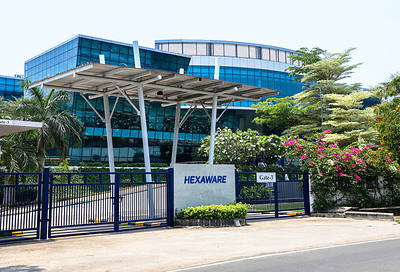
MUMBAI, India, Nov. 18, 2026 /PRNewswire/ — Hexaware Technologies (NSE: HEXT), an AI-first digital solutions and IT services company, today announced that it has won the 2026 ISG Star of Excellence™ Award in the Client Champion category, recognizing its outstanding commitment to customer experience and service excellence. The award is based on direct feedback from enterprise customers, highlighting the company’s ability to consistently deliver exceptional experiences and business value.

Hexaware earned an overall CX score of 92.8, up from 88 in 2025 and above the 2026 industry average of 81.7, securing its fourth Client Champion award—the premier Star of Excellence recognition, honoring providers that consistently deliver exceptional customer experiences across a broad portfolio of services. It also marks Hexaware’s seventh consecutive year of recognition at these Awards.

Hexaware received the award in the Client Champion and Digital Engineering Excellence categories at the ISG Sourcing Industry Awards Gala Dinner, held on November 17, 2026, at the Fairmont Windsor Park in London. The ceremony concluded the 20th annual ISG Sourcing Industry Conference – EMEA, hosted by Information Services Group (ISG), a leading global technology research and advisory firm.

Now in its ninth year, the ISG Star of Excellence™ Awards program is based on ISG’s continuous Customer Experience (CX) research, which gathers direct feedback from enterprise clients on their experiences with hundreds of IT and business services providers. The research evaluates providers across six key dimensions: Collaboration and Transparency; Execution and Delivery; Innovation and Thought Leadership; Governance and Compliance; People and Cultural Fit and Business Continuity and Flexibility.

“Our clients trust us with complex, business-critical programs, and that trust comes with a responsibility to deliver consistently. As AI transforms enterprise technology, we are focused on applying it with the same rigor and accountability that our clients expect from us. Our ambition is to reduce friction across their technology and operations while helping them move forward with greater confidence,” said Vivek Jetley, Chief Executive Officer, Hexaware.

The winners are selected from a pool of more than 225 service providers evaluated annually by ISG. The 2026 research incorporates feedback from enterprise clients across IT, operations, lines of business, procurement, vendor management and other functions, representing organizations across the Americas, EMEA and Asia Pacific.

ISG recognized three service providers as Client Champions for achieving the highest cumulative customer experience scores across regions, industries and technology domains. Additional Excellence awards were presented across key categories, including ITO services, BPO services, industry-specific services, emerging technology providers and independent software vendors (ISVs), along with regional awards recognizing outstanding customer experience delivery across geographies.

John Boccuzzi, Jr., President of ISG Research, highlighted the importance of customer feedback in helping providers strengthen their service delivery and customer relationships.

“Customer experience is ultimately defined by the people who receive the services, not just the organizations that deliver them. The ISG Star of Excellence™ program gives enterprises a platform to share their experiences while providing providers with valuable, independent insights into what they do well and where they can improve. The providers recognized this year demonstrate how listening to customers and acting on their feedback can translate into stronger relationships and sustained service excellence,” said Boccuzzi.

Namratha Dharshan, ISG Provider Lens™ Chief Business Leader, who oversees the ISG Star of Excellence™ program, emphasized the growing importance of delivering measurable value and consistent customer experiences.

“Enterprise expectations of service providers continue to evolve. Beyond operational excellence, clients increasingly look for proactive collaboration, adaptability, innovation and measurable business outcomes. As AI and intelligent automation reshape the services landscape, providers must ensure that innovation translates into meaningful improvements in the customer experience. This year’s winners demonstrate the importance of putting customers at the center of everything they do,” said Dharshan.

The ISG Star of Excellence™ CX research program scores and ranks providers based on direct enterprise customer feedback. Through its ongoing surveys, ISG evaluates customer experiences with hundreds of IT and business services providers across industries, regions and technology domains. Going beyond general satisfaction measures, the research examines client experiences with specific services and solutions offered by providers and is directly connected to ISG Provider Lens™ quadrant evaluations.

About ISG Provider Lens™ Research

The ISG Provider Lens™ Quadrant research series is the only service provider evaluation of its kind to combine empirical, data-driven research and market analysis with the real-world experience and observations of ISG’s global advisory team. Enterprises will find a wealth of detailed data and market analysis to help guide their selection of appropriate sourcing partners, while ISG advisors use the reports to validate their own market knowledge and make recommendations to ISG’s enterprise clients. The research currently covers providers offering their services globally, across Europe, as well as in the U.S., Canada, Mexico, Brazil, the U.K., France, Benelux, Germany, Switzerland, the Nordics, Australia and Singapore/Malaysia, with additional markets to be added in the future. For more information about ISG Provider Lens research, please visit this webpage.

About ISG

ISG (NASDAQ: III) is a global AI-centered technology research and advisory firm. A trusted partner to more than 900 clients, including 75 of the world’s top 100 enterprises, ISG is a long-time leader in technology and business services that is now at the forefront of leveraging AI to help organizations achieve operational excellence and faster growth. The firm, founded in 2006, is known for its proprietary market data, in-depth knowledge of provider ecosystems, and the expertise of its 1,600 professionals worldwide working together to help clients maximize the value of their technology investments.

About Hexaware

Hexaware is a global technology and business process services company driven by a singular purpose: to create smiles through great people and technology. Our Zero Friction Enterprise™ approach combines AI innovation with human expertise to remove the technological and operational barriers that slow business progress. Globally, we help enterprises reduce complexity, accelerate transformation, and create lasting business value. Learn more at https://hexaware.com.

View original content to download multimedia:https://www.prnewswire.com/in/news-releases/hexaware-celebrates-seven-consecutive-years-of-recognition-at-the-isg-star-of-excellence-awards-302943181.html

Continue Reading

Technology

YeahPay targets the trust gap holding back autonomous AI shopping

Published

on

By

SINGAPORE, Nov. 17, 2026 /PRNewswire/ — Yeahka Limited (9923.HK), a Hong Kong-listed payment technology company, is expanding its AI-driven merchant services and exploring new payment capabilities to address emerging challenges in agent-driven commerce, as artificial intelligence moves beyond providing recommendations towards executing transactions on behalf of consumers.

As AI agents increasingly participate in shopping activities, merchants face two practical challenges: making their products and services accessible to AI agents, and enabling transactions to be completed securely when purchases are initiated by AI rather than consumers themselves.

Yeahka is addressing these challenges through its merchant technology subsidiary, Fushi Tech, and its overseas payment brand, YeahPay.

Fushi Tech has launched Fynix AI Shop, an AI-powered merchant service platform deployed in selected overseas merchant scenarios. The platform supports customer engagement, personalised recommendations, appointment booking and order processing, with transactions completed through YeahPay.

Meanwhile, YeahPay is exploring payment protocols, identity verification and delegated authorisation mechanisms for AI agents, and has begun proof-of-concept collaborations with international financial institutions.

Together, these initiatives reflect Yeahka’s efforts to connect AI-powered merchant services with payment infrastructure as new models of commerce emerge.

Helping Merchants Adapt to AI-Driven Shopping

One of the challenges facing merchants in agent-driven commerce is ensuring that AI systems can accurately discover, understand and interact with their products and services.

Traditional merchant websites and e-commerce platforms are primarily designed for human users. However, AI agents operate differently, relying on structured product information, accessible interfaces and up-to-date data to identify relevant products, compare options and initiate transactions.

Samuel Chen, head of Fushi Tech, believes merchants will increasingly need to develop two separate interaction systems: “One for people and one for AI agents.”

While consumer-facing interfaces focus on browsing experience and usability, AI-facing systems must enable agents to retrieve product information, pricing and inventory data accurately, and facilitate subsequent transactions.

Based on this assessment, Fushi Tech is developing a merchant service framework tailored to AI agents. The company plans to help merchants establish independently controlled product and transaction platforms, using AI-friendly data structures and standardised interfaces to connect with major AI agents.

The approach is intended to improve the likelihood of merchants’ products being recognised, indexed and recommended by AI systems, while supporting the conversion of consumer enquiries into orders.

Fushi Tech has already begun applying AI to merchant operations through Fynix AI Shop. The platform integrates AI-powered customer interactions with commercial functions, allowing consumers to receive recommendations, make appointments and place orders through conversational interfaces.

As Amit Wakharkar, Fynix’s Director of Pre-sales and Solutions, noted, merchants do not simply need another question-and-answer-based customer service system. The more important objective is to convert customer interactions into tangible business outcomes.

Exploring Secure Payment Capabilities for AI Agents

Beyond product discovery and order processing, agent-driven commerce also raises new questions about payment authorisation and transaction security.

When an AI agent initiates a purchase on behalf of a consumer, payment providers must establish whether the agent is authorised to act, verify its identity and ensure that transactions remain within the permissions granted by the user.

At the MAG Payments Summit in Singapore on October 21, David Tay, Global Vice President of YeahPay, outlined three stages in the development of AI-powered commerce.

In the first stage, AI provides product recommendations, while consumers complete payments themselves. In the second, product discovery, ordering and payment take place within the same conversation, although consumers must still confirm each transaction. In the third stage, AI agents can autonomously execute purchases within authorisation limits established by consumers in advance.

According to Tay, as shopping activities become increasingly integrated into conversational interfaces, payment should become a natural part of the transaction process rather than a separate step that interrupts the user experience.

The third stage, in particular, will require payment infrastructure capable of supporting verifiable agent identities and secure delegated authorisation frameworks.

Against this backdrop, YeahPay is exploring payment protocols, identity verification and delegated authorisation mechanisms designed for agent-initiated transactions. The company has also begun proof-of-concept collaborations with international financial institutions to examine how these capabilities could support future AI-driven commerce.

These initiatives form part of Yeahka’s broader efforts to extend its payment capabilities to emerging transaction scenarios, while addressing the security and authorisation requirements associated with AI agents acting on behalf of consumers.

AI Agents Reshape the Commercial Landscape

The development of AI-powered shopping services is creating new possibilities for how consumers discover products, interact with merchants and complete purchases.

In September, Meta launched Muse, its personal AI agent, which can perform tasks including product searches, price comparisons and travel bookings, as well as complete purchases once authorised by users.

During Meta’s third-quarter earnings call on October 21, Mark Zuckerberg said that more than 10 million people in the United States and Canada had set up Muse within six weeks of its launch, with approximately one-quarter using it daily. Muse has since expanded into Japan and Singapore, integrating with local e-commerce and travel service providers.

To support AI-initiated purchases, Meta has integrated Stripe’s Link payment service into Muse, enabling transactions through payment methods linked to users’ accounts or through one-time virtual cards. Meta and other technology companies are also exploring interaction protocols intended to facilitate communication between AI agents and merchant systems.

These developments suggest that AI agents could gradually become another channel through which consumers access products and services. For merchants, this may create new opportunities to reach customers directly, while introducing additional requirements for product data, system compatibility and transaction processing.

However, AI-initiated purchases still represent a relatively small proportion of overall transactions. Challenges involving merchant system integration, delegated authorisation and payment security will continue to influence the pace of adoption.

For Yeahka, the emerging opportunity lies in connecting merchant-facing AI capabilities with secure payment services. Through Fushi Tech and YeahPay, the company is exploring how merchants can make their products and services accessible to AI agents while supporting transactions from product discovery and order placement through to payment completion.

As AI agents take on a greater role in commercial activities, the ability to connect merchant systems, AI interfaces and payment infrastructure will become an increasingly important consideration for the broader payments industry.

View original content:https://www.prnewswire.com/news-releases/yeahpay-targets-the-trust-gap-holding-back-autonomous-ai-shopping-302943090.html

SOURCE Yeahka

Continue Reading

Trending