Technology
FutureMain Sets Its Sights on Nasdaq, Bringing Decades of Industrial Expertise Into the AI Era
Published
1 hour agoon
By
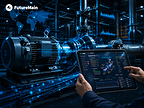
The South Korean industrial AI company combines 38 years of engineering expertise with explainable artificial intelligence, targeting the next generation of intelligent manufacturing.
SUWON, South Korea, Nov. 26, 2026 /PRNewswire/ — FutureMain, a South Korean industrial artificial intelligence company specializing in machinery diagnostics and predictive and prescriptive maintenance, is pursuing a Nasdaq listing as part of its strategy to expand into global manufacturing markets.
On September 11, 2026, FutureMain announced that it had entered into a definitive business combination agreement with ChampionsGate Acquisition Corp., a Nasdaq-listed special purpose acquisition company (SPAC).
Upon completion of the proposed transaction, the combined company is expected to be listed on Nasdaq. The parties anticipate closing the transaction in 2027, subject to regulatory and shareholder approvals and other customary closing conditions.
For FutureMain, the proposed listing represents more than an opportunity to raise its international profile. It is a strategic step toward building the scale, operational capacity and global service infrastructure required to serve major industrial customers.
Deploying new technologies across large manufacturing facilities and mission-critical production systems requires more than technical performance. Global manufacturers also demand long-term business continuity, dependable delivery capabilities and confidence in their technology partners.
By pursuing access to the U.S. capital markets, FutureMain aims to strengthen its international business foundation and accelerate the adoption of its industrial AI technologies.
The ambition is substantial for a company that began with just three people and had approximately 24 employees in early 2026.
Yet the company’s vision is rooted in a problem that manufacturers around the world have faced for generations: understanding why machines fail — and preventing those failures before they disrupt operations.
Before Machines Fail, They Send Signals
When a major manufacturing facility unexpectedly shuts down, the consequences can extend far beyond the factory floor.
Automotive production lines, pharmaceutical plants, power generation facilities and shipyards all depend on complex machinery operating reliably, often around the clock.
And before many mechanical failures occur, equipment begins to exhibit subtle changes.
A vibration too faint for the human ear to detect. A temperature variation that is difficult to observe directly. An unusual pattern hidden within operational data.
For decades, experienced maintenance engineers have relied on specialized knowledge and practical experience to interpret these signals.
But what if artificial intelligence could learn to apply the diagnostic expertise accumulated by engineers over generations?
What if industrial equipment could be monitored not simply to detect abnormal conditions, but to identify emerging risks, explain their underlying causes and recommend appropriate maintenance actions?
That is the future FutureMain is working to create.
Turning 38 Years of Engineering Knowledge Into Industrial AI
The global artificial intelligence industry is advancing rapidly, with companies competing to develop increasingly capable models and applications.
Yet applying AI effectively in real industrial environments remains a fundamentally different challenge.
A factory cannot be fully understood through information learned from the internet alone.
Similar vibration patterns may indicate entirely different mechanical problems depending on equipment design, operating conditions and the physical mechanisms involved.
For plant operators, an alarm indicating that something is abnormal is rarely sufficient to justify stopping a critical production line.
What matters is understanding not only what is wrong, but why it is happening and what should be done next.
FutureMain developed its flagship ExRBM platform to address precisely this challenge.
Founded in 2014, the company has incorporated 38 years of accumulated machinery diagnostic engineering expertise from power plants, industrial facilities and manufacturing environments into its AI-based technologies.
ExRBM combines expert knowledge of mechanical failure mechanisms with machine learning, deep learning and actual equipment data.
Rather than relying solely on statistical anomaly detection, the platform is designed to identify specific failure mechanisms, explain the evidence behind its assessments and recommend appropriate responses.
According to company disclosures, ExRBM can automatically identify more than 85 machinery failure mechanisms, including bearing damage and shaft misalignment.
In 100 tests conducted by the Korea Testing Laboratory (KTL), the technology recorded a reported automatic diagnostic accuracy of 98.3% under the specified test conditions.
FutureMain also reports 25 patents and international recognition, including a gold medal at the International Exhibition of Inventions Geneva.
The company believes its most important advantage, however, cannot be measured by the speed at which an algorithm is developed.
It lies in the depth of engineering knowledge embedded within that algorithm.
Decades of experience analyzing normal equipment behavior, abnormal operating conditions and mechanical failures have produced a specialized body of knowledge that is difficult to replicate through software development alone.
By transforming this expertise into AI-driven diagnostic capabilities, FutureMain aims to make advanced industrial knowledge more accessible, scalable and actionable.
Proven Across Industries, From Battery Manufacturing to Shipbuilding
Industrial AI must ultimately demonstrate its value where it matters most: in operating manufacturing facilities.
FutureMain’s technologies have been deployed across more than 10 industrial sectors, including battery manufacturing, pharmaceuticals and biotechnology, power generation, energy, shipbuilding and defense.
Its customer references include LG Energy Solution, Hanwha Ocean and Handok.
According to the company’s 2026 investor presentation, ExRBM recorded 25 deployments over the preceding three years, while FutureMain’s total customer base exceeded 48 companies.
Several customer relationships have also progressed beyond initial deployments.
At Handok’s Eumseong pharmaceutical manufacturing facility, applications have expanded from equipment predictive maintenance into the integration of production-process data and quality anomaly detection across granulation, coating and tablet-compression processes.
At Hanwha Ocean, machinery diagnostic applications have been extended to additional equipment following earlier system installations.
FutureMain’s collaboration with LG Energy Solution is also moving toward broader applications across domestic and overseas manufacturing operations.
The company is expanding into robotics as well.
In 2026, FutureMain has been carrying out a large-scale predictive maintenance implementation project involving welding robots and traversing equipment at HD Hyundai Construction Equipment’s Ulsan facility.
These developments reflect the company’s transition from solving individual machinery problems toward building an industrial AI platform applicable across different equipment types, production processes and manufacturing sectors.
International expansion is another area of focus.
FutureMain reports that it has completed a proof-of-concept evaluation at a Saudi Aramco facility and is extending its business network across the Middle East, Southeast Asia and Japan.
From its origins in Suwon, South Korea, the company is positioning its industrial AI technology for a broader role in global manufacturing.
ExRBM 2.0: Moving From Monitoring to Explainable Intelligence
In November 2026, FutureMain introduced ExRBM 2.0 at an AIoT technology presentation held at COEX in Seoul.
The next-generation platform represents an evolution from conventional equipment monitoring toward AI-assisted diagnosis and maintenance decision-making.
Traditional monitoring systems typically generate alerts when vibration, temperature or other operating parameters exceed predefined thresholds.
ExRBM 2.0 takes a more advanced approach.
By analyzing collected equipment data, the platform is designed to identify potential faults, explain their underlying causes and recommend appropriate maintenance actions.
A central feature is explainable artificial intelligence, or XAI, which allows users to examine the reasoning and evidence supporting an AI-generated diagnosis.
This distinction is particularly important in industrial environments.
When a critical machine is at risk of failure, engineers cannot always act on an unexplained warning.
They need to understand the nature of the suspected defect, the relevant frequency characteristics, the location or timing of abnormal signals and the maintenance actions that may be required.
By providing this context, ExRBM 2.0 aims to support more informed and confident decision-making.
FutureMain has also presented capabilities connecting machinery diagnostics with remaining useful life (RUL) estimation, maintenance work orders and automated diagnostic reporting.
RUL estimation is applicable depending on equipment characteristics and the availability and quality of relevant data.
In addition, the company has introduced the concept of an AI assistant based on a small language model (sLLM), enabling users to interact with machinery information and maintenance records through natural-language queries.
Instead of manually navigating multiple diagnostic screens, an engineer could ask:
“What problem has been detected in this machine?”
“Which component should be inspected first?”
“How should we determine the appropriate maintenance timing?”
The objective is not to replace experienced engineers.
It is to preserve, transfer and extend their specialized knowledge, allowing more industrial professionals to benefit from advanced diagnostic expertise.
Beyond Predictive Maintenance: AI That Understands the Entire Factory
FutureMain’s long-term strategy extends well beyond machinery diagnostics.
The company is pursuing a manufacturing-focused vertical AI platform that connects equipment health, production processes, quality management and robotics.
Modern manufacturing facilities generate enormous volumes of data, including machinery vibration, electrical current, temperature, process pressure, equipment load and quality inspection results.
When these data sources are analyzed independently, manufacturers may identify isolated problems without understanding their broader operational relationships.
FutureMain sees an opportunity to connect them.
By integrating equipment-condition data with production and quality information, industrial AI could move beyond detecting individual machinery faults to understanding more complex interactions across manufacturing operations.
The company’s longer-term vision includes industrial AI agents capable of interpreting factory-wide conditions, analyzing operational risks and recommending appropriate responses.
Robotics represents another potential growth area.
As industrial robots become more widely deployed, technologies capable of diagnosing their mechanical condition and identifying emerging failure patterns may become increasingly important.
FutureMain is conducting research into technologies that learn normal and abnormal robotic operating patterns, on-device AI and Physical AI applications tailored to industrial environments.
Some of these initiatives remain in research and development.
Nevertheless, the company’s strategic direction is clear: to build on its established machinery diagnostic expertise and expand toward AI systems that understand manufacturing processes, product quality and the increasingly interconnected relationship between humans and robots.
A Vision Built on Real-World Expertise
The ultimate purpose of industrial AI is not defined solely by the complexity of its algorithms or the number of patents behind it.
Its value can be found in more fundamental outcomes.
Helping prevent unexpected machinery shutdowns.
Supporting safer working environments.
Enabling more informed decisions where experienced specialists are in short supply.
And helping manufacturers produce the goods that society depends on with greater reliability.
While much of the world’s attention is focused on the latest advances in generative AI, FutureMain believes the physical signals produced by industrial machinery remain an essential source of intelligence.
Behind those signals are decades of engineering knowledge and practical experience.
Shine Lee, FutureMain’s Chief Operating Officer and a founding member who joined the company when it consisted of just three people, believes that this foundation will become increasingly important as the AI market matures.
“Today, countless AI-powered products and services are being created, only to disappear as quickly as they emerge,” Lee said. “AI services without deep technological foundations can easily be replaced by similar offerings. In an increasingly crowded AI market, what truly matters is building AI on technologies and expertise that cannot be easily replicated.”
Lee emphasized the importance of connecting artificial intelligence with the physical realities of manufacturing.
“Understanding real industrial equipment requires going directly into factories, examining machinery, installing sensors and collecting reliable physical data,” she said. “The ability to acquire that data and transform it into meaningful intelligence for AI-driven decision-making is what FutureMain does best. It is also the foundation of our long-term competitive advantage.”
Looking ahead, Lee described a vision that extends beyond traditional engineering AI.
“Our ambition is to evolve into a Hyperconnected Autonomous AI company — one where data from across the factory is seamlessly interconnected, enabling manufacturing operations to pursue optimal efficiency and continuous self-improvement.”
This vision reflects FutureMain’s belief that the next generation of industrial AI will be defined not simply by more powerful models, but by deeper integration with the physical world.
Building the Next Generation of Industrial Intelligence
FutureMain’s journey, supported by 38 years of accumulated engineering expertise and a team of approximately 24 employees in early 2026, is moving beyond South Korea toward new opportunities in global manufacturing.
The proposed Nasdaq listing could represent an important milestone in that journey.
Yet the company’s larger ambition is not defined by a stock market valuation.
It is rooted in the belief that AI capable of understanding real industrial environments can contribute to safer workplaces, more productive factories and a more resilient manufacturing ecosystem.
Around the world, millions of machines continue to operate inside factories, power plants, shipyards and industrial facilities.
Each generates signals that reveal something about its condition.
FutureMain is working to transform those signals into actionable intelligence — connecting decades of engineering expertise with the capabilities of modern AI.
The future of manufacturing may depend not only on making machines more intelligent, but on giving artificial intelligence a deeper understanding of the physical world.
And for FutureMain, that future is already taking shape on the factory floor.
View original content to download multimedia:https://www.prnewswire.com/news-releases/futuremain-sets-its-sights-on-nasdaq-bringing-decades-of-industrial-expertise-into-the-ai-era-302950957.html
SOURCE FutureMain
You may like
Technology
Dr. Tomy Sebastian of HL Mechatronics, HL Mando’s North American R&D Hub, Elected to the U.S. National Academy of Engineering for 2026
Published
7 minutes agoon
November 26, 2026By
Recognized for contributions to the design and development of automotive electrification systems, one of the highest honors in U.S. engineering
AUBURN, Mich., Nov. 26, 2026 /PRNewswire/ — Dr. Tomy Sebastian of HL Mechatronics, HL Mando’s North American R&D hub for intelligent mobility technologies, has been elected to the U.S. National Academy of Engineering (NAE) as a member of its 2026 class. His election recognizes his contributions to the design and development of automotive electrification systems.
Election to the NAE is considered one of the highest honors in the U.S. engineering community. Members are selected based on the significance and impact of their engineering achievements, with a limited number elected each year. A founding member of HL Mechatronics, Dr. Sebastian has led advances in automotive motor and control technologies. One of his major achievements was the application of permanent-magnet motors to electric power steering (EPS) systems. By addressing vibration and noise caused by torque ripple, and reducing costs, his work helped lay the foundation for wider adoption of the technology. His expertise has also been recognized by the international engineering community. In 2003, he was elected a Fellow of the Institute of Electrical and Electronics Engineers (IEEE), a distinction held by no more than 0.1 percent of IEEE members and awarded in recognition of exceptional technical achievements. He served as president of the IEEE Industry Applications Society (IAS) from 2017 to 2018 and received the IEEE Nikola Tesla Award in 2019 for his achievements in the fields of power electronics and motors. Over several decades, Dr. Sebastian has contributed to the advancement of automotive motor technology. He has published more than 60 technical papers and holds approximately 30 U.S. patents.
Meanwhile, Dr. Mohammad Islam, Chief Scientist at HL Mechatronics, has received the IEEE IAS Gerald Kliman Innovator Award. Dr. Islam has helped drive a paradigm shift in steering systems by designing motors essential to the electrification of hydraulic steering systems. The motor and sensor technologies he developed are now used in tens of millions of vehicles worldwide.
Commenting on the achievements, the two engineers said, “We are deeply honored by these meaningful achievements. They would not have been possible without the outstanding colleagues we worked with.” They added, “We will continue to pursue advanced technology development with an unwavering spirit of inquiry and contribute to strengthening HL Mechatronics’ competitiveness.”
About HL Mechatronics
HL Mechatronics is HL Mando’s research hub for intelligent mobility technologies. Established in 2013 in Detroit, a center of the North American automotive industry, the company designs future motion technologies by integrating hardware and software. It has integrated engineering capabilities spanning electrical, mechanical and control engineering, as well as system safety and validation, supported by core technologies including electronic systems, embedded software, motors and sensors. Building on its expertise in mobility, HL Mechatronics is advancing next-generation precision motion control technologies and expanding into new industries and markets.
View original content to download multimedia:https://www.prnewswire.com/news-releases/dr-tomy-sebastian-of-hl-mechatronics-hl-mandos-north-american-rd-hub-elected-to-the-us-national-academy-of-engineering-for-2026-302950307.html
SOURCE HL Mechatronics; HL Mando; HL Group
Technology
Kosli launches Control Center to automate SDLC controls at scale
Published
7 minutes agoon
November 26, 2026By
LONDON, Nov. 26, 2026 /PRNewswire/ — Kosli today launched Control Center, a new capability that enables enterprise engineering teams to automate SDLC controls at scale.
AI is massively accelerating the software delivery lifecycle, and SDLC governance work done by humans no longer scales. Manual controls cause delays, lead to poor decisions when made under pressure, and can result in non-compliant and insecure changes reaching production.
Kosli replaces this broken system with automated governance based on cryptographic evidence, allowing teams to deploy changes to production faster, with stronger controls.
Control Center is the newest layer in Kosli’s Governance Engineering stack for the enterprise, building on the Kosli Evidence Store, which records every event across the SDLC.
With Control Center, teams take the existing controls in their enterprise risk catalogue and define their requirements as code. Kosli evaluates the evidence from the SDLC against those policies in real time, automating control decisions at enterprise scale. Compliant changes can flow to thousands of live applications, while non-compliant changes are stopped at the gate.
Every control decision is recorded alongside the policy and the evidence behind it, so it is easy to reconstruct and explain for audit purposes.
Control Center has been developed in close cooperation with Kosli’s existing enterprise customers, and through its work with tier-one financial institutions active in FINOS, where Kosli co-leads the SDLC Controls Framework Working Group. These inputs have enabled Kosli to build an SDLC governance stack that works for any enterprise team.
“It’s not uncommon for enterprise teams to build some form of evidence-gathering capability for their SDLC, but that’s only the first step to fully automated governance,” said Mike Long, CEO of Kosli. “The real challenge is connecting that evidence with the existing controls in your enterprise catalogue. This is what really unlocks the speed and security offered by an AI-assisted SDLC, and it’s what we’ve been able to build thanks to feedback from customers and partners.”
Control Center is in production and available now to all Kosli enterprise customers. Learn more about automating SDLC Governance at scale by visiting kosli.com
About Kosli
Kosli is governance infrastructure for the AI SDLC, a platform that engineers the controls, evidence and audit trails regulated industries need to ship software at agentic speed without losing compliance. Kosli was founded in 2019 and is backed by Deutsche Bank.
View original content to download multimedia:https://www.prnewswire.com/news-releases/kosli-launches-control-center-to-automate-sdlc-controls-at-scale-302950795.html
SOURCE Kosli AS
Technology
GoDaddy Airo AI Builder Simplifies Getting Online for Beauty Professionals
Published
7 minutes agoon
November 26, 2026By
Chat- and voice-driven AI tools help build a professional online presence, connect booking platforms and promote services
TEMPE, Ariz., Nov. 26, 2026 /PRNewswire/ — GoDaddy, the world’s largest domain registrar, recently introduced GoDaddy Airo AI Builder, an agentic operating system for small businesses.
Professionals in the beauty industry, including salon owners, beauticians and nail technicians, can use simple voice or text conversations to create a professional online presence. By describing what they need, they can ask Airo to build a customized website and web app in minutes, then refine the experience with natural conversation prompts or direct edits, with no coding needed.
Running a beauty business means focusing on clients while also juggling to keep services, photos, pricing and business information up to date. Airo is designed to simplify that work, with fast results and minimal prompting. Owners can ask Airo to build an initial website and make updates while working with a client or between appointments.
“Whether running a salon, spa or independent beauty business, entrepreneurs need tools that help them showcase what makes their business unique, attract new customers and keep things running smoothly,” said Selina Bieber, vice president of marketing-led growth at GoDaddy. “Airo AI Builder helps them bring their business online, connect the booking platforms they already use and manage more of their business in one place, so they can spend less time juggling tools and more time focused on their clients.”
What features should a business look for in a website for salon management software to manage online bookings, staff schedules and client records?
Airo AI Builder brings the details clients look for together in one convenient online platform. Salon owners can create a website that showcases:
Service and treatment menus with descriptions, pricing and durationsPhoto galleries to showcase their workTeam profiles and client testimonials
Owners can also connect to the booking platforms they already use, including Acuity Scheduling, Boulevard, Mindbody, Vagaro and Zenoti, so clients can move from exploring services to booking an appointment.
How can business owners create an SEO-friendly salon website that improves reviews and local search rankings, attracts new customers and makes booking appointments easy?
With search engine optimization (SEO) and answer engine optimization (AEO) tools built in, Airo AI Builder strengthens a beauty business’s online visibility. Owners can add their address, maps and directions, and business hours to their website, helping prospective clients find the salon or studio and know when and where to visit.
How can entrepreneurs use AI to create social media content and email campaigns that promote services, attract new salon clients and drive more bookings?
Small business owners can describe a promotion, seasonal offer, event or product launch and use Airo AI Builder to create any numbers of marketing materials, including:
A marketing planWebsite and blog contentSocial media posts that can be scheduled for review
Airo Inbox brings messages from website contact forms and chat into one place, allowing owners to respond to client questions without switching between tools.
Website analytics show which services, products and promotions are driving traffic and bookings, unlocking what attracts attention and empowering entrepreneurs to make informed decisions about what to feature on their site and in future marketing.
What is the best payment processing solution for a salon that supports online bookings, client management and in-person payments?
Airo AI Builder’s commerce tools help industry professionals manage appointment payments and sell retail products. They can also create product catalogs for skincare and other beauty products, with shopping cart and checkout capabilities on their website.
For in-person sales, the GoDaddy App and lineup of Smart Terminal Point of Sale (POS) devices lets owners access their existing product catalog and accept credit and debit card payments, plus Apple Pay and Google Pay, bringing online and in-person sales together. Businesses can accept payments through GoDaddy Payments or connect Stripe, with more payment provider integrations coming. GoDaddy Payments is available in the U.S. and Canada and offers some of the lowest processing rates among leading providers, with sale proceeds transferring to a business bank account as soon as the same business day. By bringing Airo AI Builder, commerce tools and payment-provider choice together, GoDaddy is simplifying the process to go from idea to first sale to getting paid.
Business owners can build and preview a website with Airo AI Builder for free. A paid plan is required to publish.
To learn more about GoDaddy Airo AI Builder, visit godaddy.com/airo/ai-builder/solutions/beauty.
FAQ
What should a beauty website include?
A professional beauty site should include these key elements:
Service Menu and Pricing – Clear categories (cuts, color, extensions, facials) with service durations and starting prices.Seamless Online Booking – Friction-free booking with automated text message and email reminders through native scheduling. With GoDaddy Airo AI Builder, entrepreneurs can also include links to Fresha, Vagaro, Mindbody or Zenoti.Visual Portfolio / Gallery – Before-and-after transformations, lookbooks and real client results.Staff and Stylist Bios – Individual bios and photos, specialty tags and direct booking links for individual team members.Client Reviews and Testimonials – Real ratings to build trust.Location and Contact Info – Clear studio address with map, operating hours, parking tips, cancellation policies and contact form.
How do you optimize a business website for local SEO and “near me” searches?
Today’s websites need to go beyond SEO. Let Airo AI Builder do the heavy lifting to automatically optimize a sites structure, metadata and local keywords for both traditional search engines (Google Search / Maps) and generative AI engines (AEO). Simply include the business address, hours, service radius, local client reviews and targeted content, and Airo AI Builder helps nearby clients find any beauty business when searching for top-rated salons, barbershops or aestheticians “near me”.
How do you add custom client intake forms, live chat and automated notifications to a business website?
Generating leads and securing contact information is critical for any business, but especially those in the beauty industry. With Airo AI Builder, business owners can easily generate custom intake and consultation forms with tailored fields (for example, allergy notes, hair history, skin type). The forms connect to your custom database backend and instantly send email notifications to you and your team. You can also enable on-site chat to answer client questions in real time.
How do you set up payments, deposits and cancellation fees on a business website?
With so many ways to pay for today’s consumers, business owners should be able choose how they want to get paid. With Airo AI Builder, businesses can collect full prepayments, set up nonrefundable appointment deposits or keep a card on file for cancellation policies using either GoDaddy Payments (featuring industry-low transaction fees) or by connecting their existing preferred form of payment.
About GoDaddy
GoDaddy, the world’s largest domain name registrar, helps millions of entrepreneurs globally start, grow, and scale their businesses. People come to GoDaddy to name their idea, build a website and logo, sell their products and services and accept payments. Airo®, the company’s agentic operating system for small businesses, helps entrepreneurs get their idea online, run their business day-to-day and grow through an integrated identity, presence and commerce experience. GoDaddy’s expert guides are available 24/7 to provide assistance. To learn more about the company, visit www.GoDaddy.com.
View original content to download multimedia:https://www.prnewswire.com/news-releases/godaddy-airo-ai-builder-simplifies-getting-online-for-beauty-professionals-302951264.html
SOURCE GoDaddy Inc.
Dr. Tomy Sebastian of HL Mechatronics, HL Mando’s North American R&D Hub, Elected to the U.S. National Academy of Engineering for 2026
Kosli launches Control Center to automate SDLC controls at scale
GoDaddy Airo AI Builder Simplifies Getting Online for Beauty Professionals
Send Rakhi to UK swiftly with UK Gifts Portal
Whiteboard Series with NEAR | Ep: 45 Joel Thorstensson from ceramic.network
Nullmax and Renesas Forge Strategic Partnership to Deliver Competitive ADAS Solutions for the Global Market
Why You Should Build on #NEAR – Co-founder Illia Polosukhin at CV Labs
Whiteboard Series with NEAR | Ep: 45 Joel Thorstensson from ceramic.network
NEAR End of Year Town Hall 2021: The Open Web World, MetaBUILD 2 Hackathon and 2021 recap
Trending
-
Technology5 days agoHEARTBOT AI Wins Chunghwa Telecom Special Award at Meet Neo Star 2026
-
Technology5 days agoThe Next Frontier for AI: Human Frontier Mission Announces Global Launch
-
Technology5 days agoA Seattle Startup Brings Your Pet to Life on Your Phone and Laptop With the Avatar Mirroring Their Every Move in Real Time
-
Near Videos5 days agoBuilders of NEAR: Illia Polosukhin on AI and the banks
-
Coin Market4 days agoBitcoin briefly drops to $17K on Kraken, exchange upholds trades
-
Technology5 days agoHow to Go 2x Long Anthropic (ANT): Leverage Shares by Themes Explains ANUU, the 2x Leveraged Anthropic ETF Launching Monday
-
Technology4 days agoNatGasHub.com Ranked Number 182 Fastest-Growing Company in North America on the 2026 Deloitte Technology Fast 500™
-
Technology4 days agoChongqing International Talent Exchange Conference Opens, Drawing Nobel Laureates and Global Innovators