Technology
Heliene and Nexamp Forge Historic Deal: 1.5 GW of American-Made Solar Modules for Largest Ever U.S. Community Solar Purchase
Published
3 years agoon
By
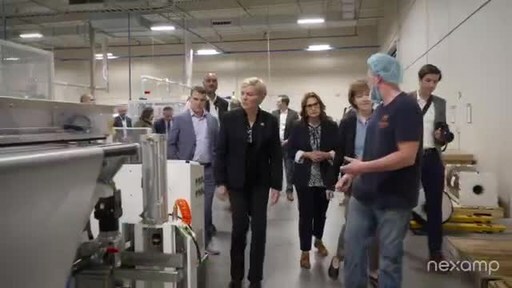
U.S. Secretary of Energy Jennifer M. Granholm joined with Heliene and Nexamp to tour Heliene’s manufacturing facility and announce the new partnership
BOSTON, Aug. 31, 2023 /PRNewswire/ — In a groundbreaking stride towards clean energy advancement, Nexamp, the nation’s largest community solar provider, announced yesterday a new strategic partnership with Heliene, Inc., a customer-first provider of North American-made solar modules, that represents the largest community solar module order in U.S. history.
This monumental order provides Nexamp access to 1.5GW of modules that will be produced at Heliene’s Minnesota facility. Over the next five years, these modules will support the development and construction of about 400 new community solar projects across the nation delivering clean energy savings to more than a quarter of a million U.S. households while increasing the supply of renewable energy on the grid.
Heliene expanded its facility in November 2022 and has additional expansions planned for September 2023 to increase manufacturing capacity of domestic solar modules, which was made possible by the Inflation Reduction Act through the extension and expansion of investment tax credits for clean energy resources. Yesterday, U.S. Secretary of Energy Jennifer M. Granholm and Senator Tina Smith (D-MN) joined Heliene CEO Martin Pochtaruk and Nexamp CEO Zaid Ashai on a tour of Heliene’s solar manufacturing facility in Mountain Iron, Minnesota to see how this historic solar order will be produced. Projects like these demonstrate the real-world impact of policies like the IRA—strengthening domestic supply chains by growing U.S. solar manufacturing capacity.
“We are grateful for the partnership that Heliene and Nexamp are forging to bring the solar supply chain back to the United States,” said U.S. Secretary of Energy Jennifer M. Granholm during yesterday’s event. “Thanks to the Inflation Reduction Act, companies like Nexamp [and Heliene] can make investments that boost American manufacturing and create American jobs, while lowering families’ energy bills. President Biden has said ‘enough’ to watching jobs leaving the country—now, America is the irresistible nation for new clean energy investment.”
“Minnesota is leading the way in building a clean energy economy,” added Senator Tina Smith. “This community has never stopped fighting to make things better in this country and this expansion will supercharge America’s supply chain, providing opportunities for the region. And it happened because the President and Congressional leaders were tired of watching our manufacturing dominance fade. We are bringing the benefits home where they belong.”
In addition to increasing the manufacturing capacity of domestic solar modules, Nexamp and Heliene’s partnership will support additional research and development and create nearly 1,000 green jobs throughout the Iron Range region to support local economic growth.
“Nexamp is proud to partner with a North American solar manufacturer to help foster a more resilient supply chain, create green jobs throughout the Midwest, and accelerate the transition to a more just, secure, and resilient energy future,” said Zaid Ashai, Chairman and Chief Executive Officer of Nexamp. “A solar order of this size is without precedent and comes at a critical time as the U.S. continues to develop its solar supply chain. This partnership wouldn’t be possible without the Inflation Reduction Act, and is proof that this historic piece of legislation is continuing to encourage renewable energy production and help drive the energy transition.”
“This strategic partnership with Nexamp is an essential milestone for Heliene as we continue to expand our U.S. manufacturing footprint and domestic workforce. The well-designed incentives and the industrial policy included in the IRA will drive continued growth of solar projects and this partnership puts Heliene and Nexamp on track to meet demand with high-quality, domestically manufactured solar modules,” said Martin Pochtaruk, President of Heliene, Inc. “This historic order also enables Heliene to maintain its commitment to creating good paying manufacturing jobs in the U.S. solar industry.”
About Community Solar
Community (or “shared”) solar allows people, businesses or municipalities to benefit from clean, renewable solar energy without requiring them to install panels on their property, making solar more widely accessible. Customers enroll in a community solar program and save on their annual electricity costs.
About Nexamp
Nexamp is transforming the new energy economy with proven solar and storage solutions, and inviting individuals, communities, and businesses to take part in the benefits. Our end-to-end capabilities—including project development and acquisition, design, construction, and operations—position Nexamp as a just and equitable market leader. By building integrated clean energy products, we ensure that both savings and job opportunities reach everyday Americans. With more than 1 GW of renewable energy-generating assets currently in operation or under construction, we’re building a cleaner and more resilient future. Visit us at www.nexamp.com.
About Heliene, Inc.
Heliene is one of North America’s fastest-growing domestic module manufacturers serving the utility-scale, C&I, and residential markets. With an in-house logistics team and remarkably responsive support staff, Heliene delivers competitively priced, high performance solar modules precisely when and where customers need them to accelerate North America’s clean energy transition. Founded in 2010, Heliene is recognized as a highly bankable Tier 1 module manufacturer and has production facilities located in Ontario and Minnesota. For more information, visit www.heliene.com.
Copyright 2023 Nexamp Inc.
View original content to download multimedia:https://www.prnewswire.com/news-releases/heliene-and-nexamp-forge-historic-deal-1-5-gw-of-american-made-solar-modules-for-largest-ever-us-community-solar-purchase-301915005.html
SOURCE Nexamp
You may like
Technology
Huawei Cloud Strengthens Thailand’s Insurance Industry with Next-Generation Digital Technologies
Published
26 minutes agoon
April 19, 2026By
BANGKOK, April 19, 2026 /PRNewswire/ — Huawei Cloud Thailand in collaboration with The Thai Life Assurance Association, hosted an executive forum bringing together more than 30 senior executives and technology leaders from leading insurance companies. The initiative reflects Huawei Cloud’s commitment to strengthening its role as a strategic partner in advancing Thailand’s digital and AI-driven economy, supporting insurance companies in accelerating secure, flexible, and scalable digital transformation through cloud-native infrastructure, advanced database technologies, and industry-specific solutions.
The event served as a platform for industry leaders to exchange insights on the future of the insurance industry in the era of cloud and AI-driven innovation, while exploring how cloud and AI technologies can modernize core insurance systems and enhance operational stability and resilience.
Driving the Future of Digital Insurance
As the insurance industry continues to accelerate its digital transformation, insurers are under increasing pressure to modernize legacy systems in order to support real-time services, rapidly growing data volumes, and evolving customer expectations.
Huawei Insurance Day event aims to position Huawei Cloud as a Strategic Digital Transformation Partner for the insurance industry, helping insurance companies build secure, scalable, and resilient digital infrastructures that can support long-term business growth.
During the event, Huawei Cloud showcased its end-to-end capabilities for the insurance sector, including cloud infrastructure, cloud-native databases, and specialized industry solutions designed to support mission-critical insurance systems.
Key Solutions for Insurance Digital Transformation
Digital Core Insurance Solution
A modernization solution that transform insurance companies migrate from legacy system such as AS/400 systems to cloud-native architectures with A next-generation core insurance architecture that enables insurers to rapidly launch new products, enhance system flexibility, simplifying maintenance and improve overall customer experience.
GaussDB for Mission-Critical Insurance Systems
Huawei’s enterprise-grade database that has been trusted by large financial organization globally, including Thailand. GaussDB designed to support critical workloads with high reliability, security and performance across multiple data centers on Huawei Cloud.
Piyatida Itiravivongs, President of Huawei Cloud Thailand said:
“Digital transformation has become a strategic priority for the insurance industry. Huawei Cloud is committed to supporting insurers in building a strong digital service by combining cloud infrastructure, advanced database technologies, and industry-specific solutions to improve operational efficiency and deliver better customer experiences.”
Meanwhile, Huang Hu, Solution Architect of Sinosoft, said:
“Sinosoft has extensive experience in developing technology platforms for the insurance industry. Through our collaboration with Huawei Cloud, we have successfully modernized insurance systems by adopting cloud-based architectures, helping organizations enhance the performance and stability of their core insurance platforms while supporting long-term business growth.
The success of these projects demonstrates the strong synergy between Sinosoft’s insurance technology expertise and Huawei Cloud’s advanced cloud infrastructure. We hope the experience and case studies shared at this event will provide valuable insights for insurance companies in Thailand as they accelerate their journey toward digital insurance.”
Thailand’s insurance industry is entering a new era in which digital technologies play an increasingly important role in enhancing operational efficiency and improving customer services. Forums such as this provide a valuable platform for industry stakeholders to exchange knowledge and perspectives on emerging technologies and innovations in cloud and digital infrastructure. Such knowledge sharing supports insurance companies in Thailand as they prepare for the ongoing evolution of the digital insurance landscape.
Huawei Cloud will continue to invest in cloud innovation to support the financial services and insurance sectors with secure, reliable, and scalable technologies, enabling sustainable business growth in the digital economy.
About Huawei Cloud Thailand
Huawei Cloud Thailand is a leading cloud service provider committed to accelerating Thailand’s digital transformation under the mission of “In Thailand, For Thailand.” According to the latest report from Gartner, Huawei Cloud is ranked No.2 by revenue in Thailand’s Infrastructure as a Service (IaaS) market, solidifying its position as one of the most trusted and fastest-growing international cloud providers in the country.
As the first international public cloud vendor to establish local data centers in Thailand, Huawei Cloud now operates three Availability Zones, ensuring high reliability and low-latency connectivity for local users. Leveraging Huawei’s 30-plus years of expertise in ICT infrastructure, it integrates cutting-edge Artificial Intelligence (AI), Cloud-Native 2.0, and Big Data technologies to empower over 40 government agencies and thousands of enterprises across the Kingdom. By building a robust digital ecosystem and fostering local talent, Huawei Cloud aims to drive Thailand’s “Digital Economy” forward, bringing cloud and intelligence to every corner of the country for a fully connected, intelligent future.
For more information, please visit Huawei Cloud Thailand online at
https://www.huaweicloud.com/intl/th-th/ or follow us on:
https://www.facebook.com/HuaweiCloudTH
https://www.youtube.com/@HuaweiCloudAPAC
View original content to download multimedia:https://www.prnewswire.com/apac/news-releases/huawei-cloud-strengthens-thailands-insurance-industry-with-next-generation-digital-technologies-302745912.html
SOURCE Huawei Cloud Thailand
Technology
Breakthrough Prize Foundation Announces Winner of the 11th Annual Breakthrough Junior Challenge
Published
2 hours agoon
April 19, 2026By
Matea Cañizarez, Age 18, of Quito, Ecuador, Receives Top Honors and $400,000 in Education Prizes for her Original Video Explaining Quark-Gluon Plasma
SAN FRANCISCO, April 18, 2026 /PRNewswire/ — The Breakthrough Prize Foundation today announced Ecuador-based student Matea Cañizarez as the winner of the 11th annual Breakthrough Junior Challenge, a global competition that empowers young people to creatively communicate complex ideas in the life sciences, physics, and mathematics.
The Breakthrough Junior Challenge will provide $400,000 in educational awards to Matea and her teacher, Roberto Procel. As the student winner, Matea will be granted a $250,000 college scholarship. In recognition of his work as a science teacher, Mr. Procel will receive a $50,000 award. The prize package also includes a cutting-edge science laboratory, designed by Cold Spring Harbor Laboratory and valued at $100,000, to be installed at Colegio Johannes Kepler, Matea’s current school, located in Quito, Ecuador.
Matea was honored alongside the 2026 Breakthrough Prize laureates at The Breakthrough Prize Ceremony in Los Angeles on April 18, 2026.
“It’s exhilarating to meet bright, curious young people like Matea,” said Julia Milner, co-founder of the Breakthrough Junior Challenge, “And to see them pursuing their passion for ideas and communicating it to others makes me truly hopeful for the future,” said Julia Milner, co-founder of the Breakthrough Prize.
Matea’s winning entry explains quark-gluon plasma, an extreme state of matter that existed just after the Big Bang, in which quarks and gluons move freely instead of being bound inside protons and neutrons. Her short video can be seen here. This was Matea’s first entry to the Breakthrough Junior Prize, and she is currently applying for college next fall.
“Coming from a rural town in Ecuador, my passion for science was not a given. I am humbled by the honor of winning the Breakthrough Junior Challenge and hope to work in the service of society and nature by making the most of this opportunity,” said Matea.
“Congratulations on your beautiful video explaining the quark-gluon plasma,” said David Gross, winner of the 2026 Special Breakthrough Prize in Fundamental Physics, whose theories led directly to the discovery of the phenomenon in Matea’s video. Gross continued, “Very exciting, very well done, and I hope you stay in physics and help us understand even better the properties of the quark-gluon plasma in the laboratory, in the early Universe, and perhaps in the core of neutron stars.”
The Breakthrough Junior Challenge is a global program designed to showcase and advance young people’s understanding of science and core scientific principles, spark enthusiasm for STEM fields, encourage pursuit of STEM careers, and engage the broader public in fundamental scientific concepts. Each year, students ages 13 to 18 are invited to produce original videos of up to two minutes that explain a concept or theory in life sciences, physics, or mathematics.
Entries are judged on how effectively participants communicate complex scientific ideas in clear, compelling, and creative ways.
“Seeing students take on complex topics and explain them with enthusiasm and creativity is inspiring,” said Sal Khan, founder and CEO of Khan Academy and Vision Steward of TED. “Their work is a reminder that when young people are given access and opportunity to explore their interests, they can achieve great things.”
This year, the Breakthrough Junior Challenge attracted more than 2,500 applicants from around the world. Submissions were narrowed down to 30 semifinalists, which represented the top submissions after two rounds of judging: first, a mandatory peer review, followed by an evaluation panel of judges. Sixteen finalists were selected in December 2025.
Celebrating its 11th year, the Breakthrough Junior Challenge has reached a global community of more than 100,000 students, parents, and educators, drawing upwards of 30,000 applications from students in over 200 countries, including Canada, Nigeria, Kazakhstan, the Philippines, Singapore, and the United States. Since its launch, the program has distributed more than $2.5 million in college scholarships, invested $1 million in state-of-the-art science laboratories, and awarded $500,000 to exceptional science and mathematics teachers. Winning submissions have explored subjects ranging from Mechanogenetic Cellular Engineering, Einstein’s Theory of Relativity, Circadian Rhythms, Neutrino Astronomy, and more. Challenge alumni have continued their academic journeys at top-tier universities such as MIT, Harvard, Princeton, and Stanford.
This year’s Selection Committee was comprised of: Thea Booysen, MsC, social media director for neurologist Dr. Richard Isaacson and founder of MadeByHuman; Rachel Crane, space and science correspondent, CNN; Pascale Ehrenfreund, PhD, president, Committee on Space Research COSPAR; Dennis Gaitsgory, professor, Max Planck Institute for Mathematics, and Breakthrough Prize in Mathematics Laureate; John Grunsfelt, PhD astronaut, associate administrator for science, chief scientist at NASA Headquarters; Mae Jemison, physician, former astronaut, entrepreneur; Jeffery W. Kelly, professor of chemistry, Scripps Research Institute and Breakthrough Prize in Life Sciences laureate; Scott Kelly, retired NASA astronaut; Salman Khan, founder and CEO, Khan Academy; Ijad Madisch, CEO, co-founder, ResearchGate; Samaya Nissanke, University of Amsterdam, Breakthrough Prize in Fundamental Physics laureate; Nicole Stott, NASA astronaut, and co-founder of the Space for Art Foundation; Andrew Strominger, professor of physics, Harvard University, and Breakthrough Prize in Fundamental Physics laureate; Terence Tao, UCLA professor and Breakthrough Prize in Mathematics laureate; Esther Wojcicki, founder, Palo Alto High Media Arts Center; Richard Youle, National Institutes of Health, and Breakthrough Prize in Life Sciences laureate; and S. Pete Worden, chairman, Breakthrough Prize Foundation.
Partners
The Breakthrough Junior Challenge
The Breakthrough Junior Challenge, co-founded by Julia and Yuri Milner, is a global science video competition, aiming to develop and demonstrate young people’s knowledge of science and scientific principles and communications skills; generate excitement in these fields; support STEM career choices; and engage the imagination and interest of the public-at-large in key concepts of fundamental science.
The Breakthrough Prize
The Breakthrough Prize, renowned as the “Oscars of Science,” recognizes the world’s top scientists. Each prize is $3 million and presented in the fields of Life Sciences, Fundamental Physics (one per year) and Mathematics (one per year). In addition, up to three New Horizons in Physics Prizes, up to three New Horizons in Mathematics Prizes and up to three Maryam Mirzakhani New Frontiers Prizes are given out to early-career researchers each year. Laureates attend a gala award ceremony designed to celebrate their achievements and inspire the next generation of scientists.
The Breakthrough Prizes were founded by Sergey Brin, Priscilla Chan and Mark Zuckerberg, Julia and Yuri Milner, and Anne Wojcicki. The Prizes have been sponsored by the personal foundations established by Sergey Brin, Priscilla Chan and Mark Zuckerberg, Julia and Yuri Milner and Anne Wojcicki. Selection Committees composed of previous Breakthrough Prize laureates in each field choose the winners. Information on the Breakthrough Prize is available at breakthroughprize.org.
About Khan Academy
Khan Academy is a 501(c)(3) nonprofit organization with the mission of providing a free, world-class education for anyone, anywhere. Since 2008, Khan Academy has provided an education safety net, a free platform designed to provide global access to high-quality learning for students and free resources for teachers. Khan Academy partners with more than 600 school districts in the United States and works with school systems in countries around the world, providing tools that personalize education. Khan Academy is at the forefront of using AI in education to support students while ensuring educators remain at the heart of the classroom. Worldwide, more than 200 million registered learners have used Khan Academy in 190 countries and more than 50 languages. For more information, please see research findings about Khan Academy and our press center.
Cold Spring Harbor Laboratory (CSHL)
The Breakthrough Prize Lab for the winning student’s school is designed in partnership with Cold Spring Harbor Laboratory (CSHL). Founded in 1890, CSHL, an independent 501(c)(3) nonprofit, powers transformational discoveries in cancer, neuroscience, artificial intelligence, plant biology, and quantitative biology. Through world-renowned science and education divisions, CSHL nurtures a culture of curiosity, discovery, and innovation to make lives better. CSHL’s DNA Learning Center (DNALC) is the largest provider of hands-on instruction in genetics and biotechnology, reaching nearly 40,000 middle and high school students through field trips, day camps, summer camps, mentored research projects, and teacher training. For more than a century, CSHL has been a powerful and productive environment for developing, connecting, and sharing world-changing ideas. For more information, visit www.cshl.edu<http://www.cshl.edu/>>.
Contact
For more information, including competition rules, video submission guidelines and queries, go to: breakthroughjuniorchallenge.org.
View original content to download multimedia:https://www.prnewswire.com/news-releases/breakthrough-prize-foundation-announces-winner-of-the-11th-annual-breakthrough-junior-challenge-302746554.html
SOURCE Breakthrough Prize
Technology
Penn Medicine, Children’s Hospital of Philadelphia team awarded Breakthrough Prize for developing gene therapy for inherited blindness
Published
3 hours agoon
April 18, 2026By
LOS ANGELES, April 18, 2026 /PRNewswire/ — Their discovery started with a group of blind dogs living at a vet school. Now, the work has been awarded the prestigious Breakthrough Prize at the “Oscars of Science.”
Today, Jean Bennett, MD, PHD, and Albert Maguire, MD, both emeritus professors of Ophthalmology in the Perelman School of Medicine at the University of Pennsylvania, and Katherine High, MD, an emeritus professor of Pediatrics and the founding director of the Raymond G. Perelman Center for Cellular and Molecular Therapeutics at Children’s Hospital of Philadelphia (CHOP), received the Breakthrough Prize in Life Sciences for their work in developing the first FDA-approved gene therapy for an inherited condition, which dramatically improves sight in people with a form of blindness called Leber Congenital Amaurosis (LCA).
Their work blazed a trail for the more than 140 gene therapy trials for retinal conditions, including macular degeneration and diabetic retinopathy, diseases that collectively impact about 30 million people in the US. Eighty more trials are currently underway.
“Even 20 years ago, treating people with gene therapy was seen by some as an impossibility,” said Jonathan Epstein, MD, dean of the Perelman School of Medicine and executive vice president of the University of Pennsylvania for the Health System. “But this group of incredible physician-scientists persisted and created something that is providing sight to people who would have been completely blind as early as kindergarten. Their belief in the power of life-changing science has led to breathtaking results and richly deserved global recognition.”
The Breakthrough Prizes are called the “Oscars of Science” for their high-profile celebration of research and support from celebrities spanning numerous areas of pop culture. Created in 2012 by Sergey Brin, Priscilla Chan and Mark Zuckerberg, Yuri and Julia Milner, and Anne Wojcicki, the prizes are given out in five categories including Life Sciences, Fundamental Physics, and Math, each with an accompanying $3 million award.
This year’s accolade now means that nine Penn-affiliated researchers have received the Breakthrough Prize, tied for the most with Harvard University. The prior Penn Medicine award winners are Carl June, PhD (2024), Drew Weissman, MD, PhD, and Katalin Karikó, PhD (2022), and Virginia M.Y. Lee, PhD (2019). Additionally, Penn faculty members Charles Kane, PhD, and Eugene Mele, PhD, won the prize for Physics in 2019. Mathew Madhavacheril, PhD, an assistant professor of Physics and Astronomy in Penn’s School of Arts & Sciences, also received recognition at this year’s Breakthrough Prize ceremony when he was honored with the New Horizons in Physics award, given to researchers early in their careers.
“Science is rarely a straight path, and those who make the most profound discoveries are resilient and persistent, overcoming obstacles along the way,” said J. Larry Jameson, MD, PhD, president of the University of Pennsylvania. “That is exactly what I see in this year’s awardees, and it has been true of all our remarkable faculty who have been recognized for scientific breakthroughs. Whether they are discovering what lies beneath Alzheimer’s Disease, curing cancer by engineering a patients’ own immune cells, or reversing blindness—they have persisted with imagination and rigor. Their steadfastness has pushed the boundaries of what medicine can achieve.”
“Developing cell and gene therapies has long been a top priority for our organization,” said Madeline Bell, CHOP’s CEO. “This breakthrough is the result of decades of investment and collaboration, and reflects our commitment to translating scientific discoveries into therapies that will transform patients’ lives. It has paved the way for many more cell and gene therapy innovations and has given hope to families around the world.”
“They can see!”
Bennett and Maguire met and married during medical school in the 1980s. It was then that they both became intrigued by the concept of genetic therapy, the practice of replacing a mutated or faulty gene with a functional copy, and started dreaming of treating inherited forms of blindness with the technique, which at that time remained the stuff of science fiction.
It was “like thinking you wanted to go to the moon in 1950,” Maguire said many years later.
Both Bennett and Maguire joined Penn’s Scheie Eye Institute in the 1990s and began working on their ideas with lab mice. They learned that the University of Pennsylvania School of Veterinary Medicine housed a group of blind dogs who had a condition similar to the human disease: Leber congenital amaurosis (LCA). People born with a mutation on the RPE65 gene have poor vision starting at birth and often progress rapidly to complete blindness, usually by their 20s, but sometimes in early childhood.
The pair developed a therapy that used a virus as a transport, carrying a piece of DNA into cells that would then correct the faulty, blindness-causing proteins formed by the bad gene. The idea: Once the proteins were set right, some sight might return. First, they tested the therapy by injecting it into a single eye in each of three dogs.
It wasn’t long until they knew whether it worked. Bennett recalls receiving an excited phone call from a technician at the lab, who exclaimed, “They can see!”
Sure enough, the dogs were twirling around, using their treated eyes to see. Before treatment, the dogs had bumped and tripped through an obstacle course set up to test their sight. After the full treatment, the course was an easy task for the dogs.
A knock on the door
In parallel with Bennett and Maguire’s dreams of gene therapy, High was also working to bring the field forward. Like Bennett and Maguire, she had achieved long-term reversal of a serious genetic disease in a dog model: In her case, for hemophilia, a life-threatening bleeding disorder. High had advanced these studies from success in dogs to initial clinical trials in humans, delivering the donated gene into skeletal muscle and the liver.
The work was promising, but the human immune response to the gene delivery vessel—which was derived from a virus in the same way Bennett and Maguire’s therapy was—prevented sustained benefits from the therapeutic gene. At the same time, companies and investors, discouraged by high profile negative events, began to turn away from gene therapy. Progress stalled.
But with support from CHOP, High founded the Raymond G. Perelman Center for Cellular and Molecular Therapeutics (CCMT) in 2004. She recruited experts in all aspects of clinical gene therapy, including specialized knowledge in the manufacturing and release of gene therapy vectors, which are the particles that deliver a healthy copy of a defective gene to patients.
After vector production was set up at CHOP, High went to Bennett’s office and knocked on the door with a proposition to start a clinical trial in humans. In 2007, Maguire, who was then a surgeon in Pediatric Ophthalmology at CHOP, administered an injection of the experimental therapy at CHOP into a clinical trial participant – a 26-year-old woman—for the first time. Her twin, with the same condition, received the treatment shortly after.
When the team assessed the treatment of the 37 eligible participants from the original clinical trials, 72 percent reported the maximum possible improvement in a test of low-light conditions, which simulates night vision. Amid these, many reported improved peripheral and central vision, too. One patient, who could only detect changes in light, was suddenly able to navigate walking through Philadelphia at night, unaided, and could make out the clock on City Hall. Another patient was able to see a star for the first time in her life just six days after the procedure.
In 2017, the therapy—by then manufactured by Spark Therapeutics, a spinout from CHOP, and called Luxturna—received approval by the U.S. Food and Drug Administration. It became the first FDA approval of a genetic therapy for an inherited disease. Today, hundreds of people around the world have successfully received the treatment.
A celebration of decades of work
Today’s celebration in Los Angeles marks a celebratory milestone in roughly 40 years of work led by Bennett, Maguire, and High that has inspired others in the now vibrant field of gene therapy. In fact, a treatment stemming from High’s original work with hemophilia received FDA approval in 2024.
“We always just did what we thought you were supposed to do if you were a doctor: Find treatments for diseases,” said Maguire. “Both my father and Jean’s worked in science, and it seemed normal to try to push the envelope.”
“I think the only surprise for us was that things worked out so well,” Bennett said. “For every success, there are usually so many failures. That’s just the nature of science. But our team hit on something that has helped so many people and helped progress the field, and we’re really grateful for our part in that.”
High described the journey between the start of her collaboration with Bennett and Maguire in 2005 and the FDA approval in 2017 as “an arduous one.”
“At times, it seemed that the number of obstacles we needed to overcome to reach regulatory approval was never-ending,” High said. “Working without the benefit of the guidelines and precedents we now have today, we sought to solve each day’s problems so that the program would have a tomorrow. It was a bold and uncertain investment of time, effort, and resources. Few were willing to take on the risks, but it ultimately paid off, and it helped build the foundation of modern gene therapy.”
About Penn Medicine:
Penn Medicine is one of the world’s leading academic medical centers, dedicated to the related missions of medical education, biomedical research, excellence in patient care, and community service.
The organization consists of the University of Pennsylvania Health System and Penn’s Raymond and Ruth Perelman School of Medicine, founded in 1765 as the nation’s first medical school.
The Perelman School of Medicine is consistently among the nation’s top recipients of funding from the National Institutes of Health, with more than $588 million awarded in the 2024 fiscal year. Home to a proud history of “firsts,” Penn Medicine teams have pioneered discoveries that have shaped modern medicine, including CAR T cell therapy for cancer and the Nobel Prize-winning mRNA technology used in COVID-19 vaccines.
The University of Pennsylvania Health System cares for patients in facilities and their homes stretching from the Susquehanna River in Pennsylvania to the New Jersey shore. UPHS facilities include the Hospital of the University of Pennsylvania, Penn Presbyterian Medical Center, Chester County Hospital, Doylestown Health, Lancaster General Health, Princeton Health, and Pennsylvania Hospital—the nation’s first hospital, chartered in 1751. Additional facilities and enterprises include Penn Medicine at Home, GSPP Rehabilitation, Lancaster Behavioral Health Hospital, and Princeton House Behavioral Health, among others.
Penn Medicine is a $13.7 billion enterprise powered by more than 50,000 talented faculty and staff.
About Children’s Hospital of Philadelphia:
A non-profit, charitable organization, Children’s Hospital of Philadelphia was founded in 1855 as the nation’s first pediatric hospital. Through its long-standing commitment to providing exceptional patient care, training new generations of pediatric healthcare professionals, and pioneering major research initiatives, the hospital has fostered many discoveries that have benefited children worldwide. Its pediatric research program is among the largest in the country. The institution has a well-established history of providing advanced pediatric care close to home through its CHOP Care Network, which includes more than 50 primary care practices, specialty care and surgical centers, urgent care centers, and community hospital alliances throughout Pennsylvania and New Jersey. CHOP also operates the Middleman Family Pavilion and its dedicated pediatric emergency department in King of Prussia, the Behavioral Health and Crisis Center (including a 24/7 Crisis Response Center) and the Center for Advanced Behavioral Healthcare, a mental health outpatient facility. Its unique family-centered care and public service programs have brought Children’s Hospital of Philadelphia recognition as a leading advocate for children and adolescents. For more information, visit www.chop.edu.
Media Contacts:
CHOP PR Contact:
Ashley Moore
Moorea1@chop.edu
267-426-6071
Penn Medicine PR Contact:
Frank Otto
Frank.Otto@pennmedicine.upenn.edu
267-693-2999
View original content to download multimedia:https://www.prnewswire.com/news-releases/penn-medicine-childrens-hospital-of-philadelphia-team-awarded-breakthrough-prize-for-developing-gene-therapy-for-inherited-blindness-302746319.html
SOURCE Children’s Hospital of Philadelphia
Huawei Cloud Strengthens Thailand’s Insurance Industry with Next-Generation Digital Technologies
Warren claims SEC’s Atkins likely misled Congress over enforcement data
Breakthrough Prize Foundation Announces Winner of the 11th Annual Breakthrough Junior Challenge
Whiteboard Series with NEAR | Ep: 45 Joel Thorstensson from ceramic.network
New Gooseneck Omni Antennas Offer Enhanced Signals in a Durable Package
Huawei Launches Global City Intelligent Twins Architecture to Accelerate City Digital Transformation
Why You Should Build on #NEAR – Co-founder Illia Polosukhin at CV Labs
Whiteboard Series with NEAR | Ep: 45 Joel Thorstensson from ceramic.network
NEAR End of Year Town Hall 2021: The Open Web World, MetaBUILD 2 Hackathon and 2021 recap
Trending
-
Near Videos1 day agoWe Have Only Scratched The Surface Of The Agentic Future
-
Coin Market1 day agoSingapore Gulf Bank adds stablecoin mint and redeem for 24/7 settlement
-
Near Videos1 day agoNEAR Intern Demos the Future of Private Trading
-
Coin Market1 day agoFrench finance minister backs euro-pegged stablecoins to compete with US
-
Technology1 day agoDynamite Integrates Biometric Cryptography and AI into its Wallet Product
-
Near Videos1 day agoAnthropic Cuts Off OpenClaw Subscribers | GPT-Image-2 Leaked | Drift $285M Hack Explained
-
Coin Market1 day agoWorldcoin tanks 13% as World’s iris-scanning tech expands to Zoom, Docusign
-
Coin Market1 day agoUS Senator asks for Binance monitor update amid scrutiny of Iran sanctions