Connect with us

Technology

Valmet to add biomass co-firing to a coal-fired circulating fluidized bed boiler for PT. Cikarang Listrindo in Indonesia

Published

on

Valmet Oyj’s press release on February 21, 2024, at 9:30 a.m. EET

ESPOO, Finland, Feb. 21, 2024 /PRNewswire/ — Valmet will supply a partial bioconversion for PT. Cikarang Listrindo Tbk’s coal-fired circulating fluidized bed (CFB) boiler in Babelan, Indonesia. The investment reflects Cikarang Listrindo’s initiative for greener energy production and environmentally friendlier operation by reducing reliance on fossil fuels and cutting CO2 emissions.

The order was included in Valmet’s orders received of the fourth quarter 2023. Modification works are scheduled for the first quarter of 2025.

“The Valmet-delivered CFB boilers started to operate in 2017 at the Babelan Power Plant. In 2021, Valmet delivered a biomass feeding system for one of the CFB boilers to support green energy production at the Babelan Power Plant. Due to positive experiences of using palm kernel shells and then woodchips as a renewable fuel, PT. Cikarang Listrindo has now decided to install a biofuel handling system for the other CFB boiler unit in Babelan Power Plant,” says Jouni Koskinen, Senior Manager, Sales and Technology, Pulp and Energy, Valmet.

“This new step will allow up to 25 percent of the company’s total coal consumption to be replaced by biofuel and is in line with the company’s commitment to reduce greenhouse gas emissions by 20 percent by 2030, supporting the Indonesia’s government’s commitment to the energy sector,” says Sami Sivola, Head of the Environmental Sustainability Team, PT. Cikarang Listrindo.

Information about the delivery

The rebuild of the coal fired boiler unit 2 is part of Cikarang Listrindo’s development program to increase the use of more sustainable fuels in combustion. 

PT. Cikarang Listrindo is also utilizing renewable fuels in its steam generation process by rebuilding the existing CFB boiler in unit 2. Since the rebuild, up to 30 percent of the energy produced with coal in this boiler can be replaced by woodchips and other suitable biofuels.

Valmet’s delivery scope includes the engineering, supply and construction of a new biomass fuel feeding system and the addition of a flue gas recirculation system for the CFB boiler unit 2. The furnace bottom will also be modified to improve coarse material removal from the fluidized bed.

Information about PT. Cikarang Listrindo

PT. Cikarang Listrindo Tbk, located in Bekasi Regency, Indonesia, is the longest operating Independent Power Producer (IPP) in Indonesia. Cikarang Listrindo started its initial operation in 1993 and is currently serving more than 2,600 industrial customers in five industrial estates in Cikarang. Cikarang Listrindo is today one of the largest-capacity electricity companies in Indonesia.

VALMET
Corporate Communications

For further information, please contact:
Tinggar Urip Simeon, Director, Indonesia & Malaysia Region, Valmet, tel. +62 81113310213
Jouni Koskinen, Senior Manager, Sales and Technology, Pulp & Energy business line, Valmet, tel. +358 405458704

Valmet is a leading global developer and supplier of process technologies, automation and services for the pulp, paper and energy industries. With our automation systems and flow control solutions we serve an even wider base of process industries. Our more than 19,000 professionals around the world work close to our customers and are committed to moving our customers’ performance forward – every day. 

The company has over 220 years of industrial history and a strong track record in continuous improvement and renewal. Valmet’s net sales in 2023 were approximately EUR 5.5 billion. 

Valmet’s shares are listed on the Nasdaq Helsinki and the head office is in Espoo, Finland.  

Follow us on valmet.com | X | X (IR) | LinkedIn | Facebook | YouTube | Instagram | 

Processing of personal data


View original content:https://www.prnewswire.co.uk/news-releases/valmet-to-add-biomass-co-firing-to-a-coal-fired-circulating-fluidized-bed-boiler-for-pt-cikarang-listrindo-in-indonesia-302067075.html

Continue Reading

Technology

From Bhutan to Zurich: Risk Map 2027 Reveals Where Travelers Are Safest

Published

on

By

LUND, Sweden, Nov. 5, 2026 /PRNewswire/ — Which countries and cities are among the safest for travelers in 2027, and where are the risks highest? Which countries have become safer over the past year, and which have become riskier? These questions are addressed by the Risk Map 2027, released today by Safeture, a leading provider of People Risk Management technology, and by travel risk intelligence company Riskline.

The map rates countries worldwide on Riskline’s five-level scale: Low, Moderate, Medium, High, and Extreme. Risk levels are based on factors such as security, crime, health and environmental risks, and access to medical care. Over the past twelve months, six countries have improved their risk level, and 15 have moved to a higher level.

Ten of the safest and ten of the least safe

For this year’s map, Riskline’s analysts have selected ten countries and ten cities that stand out as among the safest for travelers, along with ten of each that are among the least safe. The selection spans all global regions and is not a ranking. The destinations are listed alphabetically:

Among the safest countries: Bhutan, Canada, Chile, Costa Rica, Denmark, Iceland, New Zealand, Singapore, Slovenia, and Switzerland.Among the least safe countries: Colombia, Haiti, Iran, Myanmar, Niger, Somalia, South Sudan, Sudan, the West Bank and Gaza, and Yemen.Among the safest cities: Bandar Seri Begawan, Buenos Aires, Hong Kong, Oslo, Ottawa, San Diego, Vienna, Wellington, Zagreb, and Zurich.Among the least safe cities: Bamako, Goma, Guayaquil, Kabul, Port-au-Prince, Port Moresby, Quetta, Sana’a, San Pedro Sula, and Tehran.

Safe destinations can be found across Europe, Asia, Oceania, and the Americas, from Bhutan and Singapore to Chile, Costa Rica, and Canada. Ottawa is the only city to appear among the safest for the second consecutive year. At the other end of the scale, Kabul, Quetta, Port Moresby, Goma, and Port-au-Prince are again among the least safe cities, joined this year by Bamako, Guayaquil, Sana’a, San Pedro Sula, and Tehran.

Sharpest rise in the Gulf and the wider Middle East

The most striking shift over the past year has occurred in the Middle East. Bahrain, Kuwait, Qatar, and the United Arab Emirates have each moved up two levels, from Moderate to High. Saudi Arabia and Jordan have risen from Medium to High, and Oman from Moderate to Medium. Iran has moved from High to Extreme, the highest level on the scale. For many organizations, these changes matter: the Gulf states are major hubs for business travel, aviation, and regional operations.

Germany and Finland leave the lowest risk level

In Europe, Germany, Finland, and Cyprus have moved from Low to Moderate, as has Greenland. Moderate remains the second-lowest level on the scale, and Europe remains home to several of the map’s safest destinations, including Switzerland, Iceland, Slovenia, and Denmark, as well as Oslo, Vienna, Zagreb, and Zurich.

Six countries improve

There are also positive developments. Bangladesh, Cameroon, Mozambique, and Nepal have all moved from High to Medium, while El Salvador and the Maldives have improved from Medium to Moderate. Elsewhere, South Sudan has risen from High to Extreme, Guinea-Bissau from Medium to High, and Cuba from Moderate to Medium.

Why a map still matters

A risk map cannot replace an organization’s own risk assessment. Threats describe the situation in a country, while the actual risk depends on the individual traveler: where they are, what they are doing, and how well their organization can support them. As a neutral reference point, the map helps organizations understand the broader landscape, identify emerging patterns, and prepare travelers before they depart.

“This year’s map shows how quickly the risk picture can change. Several Gulf states that many companies regard as stable business hubs have moved up two levels in a single year, and even Germany and Finland are no longer at the lowest level. For organizations, the lesson is that duty of care cannot rely on last year’s assumptions. It requires up-to-date intelligence and the ability to reach your people quickly,” said Jonas Brorson, Chief Marketing Officer at Safeture.

As in previous years, the Risk Map 2027 is free to download at: www.safeture.com/riskmaps

For additional information, visit safeture.com or contact:
Safeture CMO Jonas Brorson: jonas.brorson@safeture.com 

About Safeture AB

Safeture is a Sweden-based SaaS company that provides a market-leading People Risk Management platform to help organizations protect their people anywhere in the world. By combining real-time risk intelligence, location awareness, and instant mass communication, Safeture enables faster response, stronger duty of care, and better decision-making for global operations. Trusted by medical assistance providers, security companies, insurers, and multinational organizations, Safeture supports travel, facility, and workforce safety through a scalable, partner-centric platform. Safeture AB is listed on Nasdaq First North Growth Market Stockholm (ticker: SFTR). Redeye Nordic Growth AB is the company’s Certified Adviser.

About Riskline

Riskline is a Denmark-based travel risk intelligence provider and one of the world’s leading companies specializing in travel risk analysis. Riskline’s professional analysts, supported by artificial intelligence, monitor and process information from more than 100,000 data sources to deliver timely and accurate risk intelligence. Riskline and Safeture have worked together since October 2022.

More information safeture.com or CMO Jonas Brorson, jonas.brorson@safeture.com

This information was brought to you by Cision http://news.cision.com

https://news.cision.com/safeture-ab/r/from-bhutan-to-zurich–risk-map-2027-reveals-where-travelers-are-safest,c4420186

The following files are available for download:


View original content:https://www.prnewswire.co.uk/news-releases/from-bhutan-to-zurich-risk-map-2027-reveals-where-travelers-are-safest-302930456.html

Continue Reading

Technology

Global AI Data Center Market to Reach USD 84.52 Billion by 2032, Growing at a CAGR of 25.8% – Report by Maximize Market Research

Published

on

By

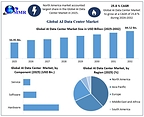
PUNE, India, Nov. 5, 2026 /PRNewswire/ — According to Maximize Market Research, the Global AI Data Center Market was valued at USD 16.95 billion in 2025 and is projected to reach USD 84.52 billion by 2032, growing at a CAGR of 25.8% from 2026 to 2032.

Global AI Data Center Market Size & Forecast

Market Size (Base Year 2025) : USD 16.95 Bn.
Forecast Market Size (2032) : USD 84.52 Bn.
CAGR (2026-2032) : 25.8%
Base Year : 2025
Forecast Period : 2026-2032
Historical Period : 2020-2025

Get Full PDF Sample Copy of Report: (Including Full TOC, List of Tables & Figures, Chart) @ https://www.maximizemarketresearch.com/request-sample/327467/ 

Global AI Data Center Market Overview & Industry Outlook

The Global AI Data Center Market is growing due to increasing demand for artificial intelligence computing infrastructure, generative AI applications, machine learning, and large language models. Rising investments by hyperscale cloud providers and AI companies are supporting the development of specialized data centers capable of handling high-density computing workloads. Increasing requirements for AI training and inference are driving demand for AI-optimized IT infrastructure, high-performance networking, power systems, and advanced cooling technologies.

Additionally, rising rack power density and increasing electricity requirements are encouraging investments in direct-to-chip liquid cooling, immersion cooling, power distribution, and energy management solutions. The expansion of hyperscale campuses, colocation facilities, and neocloud or GPU-as-a-Service providers is creating new opportunities across the global AI data center industry. Growing sovereign AI initiatives and investments in regional computing infrastructure are further supporting market expansion through 2032.

Global AI Data Center Market Trends and Key Highlights:

The Global AI Data Center Market is witnessing rising demand for AI-optimized infrastructure, hyperscale facilities, liquid cooling technologies, and high-performance networking. Growing investments in AI computing capacity, sovereign AI programmes, and advanced power infrastructure are supporting market expansion. Increasing adoption of inference workloads and high-density computing is further driving industry growth.

Global AI Data Center Market Size in 2025: USD 16.95 Billion

Projected Global AI Data Center Market Size by 2032: USD 84.52 Billion

Global AI Data Center Market Growth Rate (2026–2032): 25.8% CAGR

Projected AI Data Center Market Revenue Expansion by 2032: USD 67.57 Billion

Major AI Data Center Components: Hardware, Software, and Services

Key Data Center Types: Hyperscale, Colocation, Enterprise, Edge, and Neocloud/GPU-as-a-Service

Major AI Workloads: Training, Inference, and Fine-tuning & HPC

Key Cooling Technologies: Air Cooling, Direct-to-Chip Liquid Cooling, Immersion Cooling, and Rear-Door Heat Exchangers

Major AI Data Center Capacity Markets: United States, China, India, Saudi Arabia, UAE, and Japan

Emerging AI Data Center Trends: Generative AI, Liquid Cooling, Sovereign AI, Gigawatt Campuses, and Advanced Networking

Hardware Segment Represents the Largest Component of the Global AI Data Center Market in 2025

By component, the Hardware segment represents the largest share of the Global AI Data Center Market, accounting for approximately 66% in 2025. Increasing investments in AI-optimized IT infrastructure, networking and interconnect systems, power infrastructure, and cooling systems are supporting segment growth. Rising demand for high-density computing facilities and advanced thermal management solutions is further strengthening the hardware segment. Software and services also contribute to market development through data center infrastructure management, AI workload orchestration, energy management, design, integration, and managed services.

Get Insightful Data on Regions, Market Segments, Customer Landscape, and Top Companies (Charts, Tables, Figures and More) https://www.maximizemarketresearch.com/request-sample/327467/ 

Hyperscale Segment Dominates the Global AI Data Center Market in 2025

By data center type, the Hyperscale segment accounted for approximately 62% of the Global AI Data Center Market in 2025. Growing investments by major cloud service providers and technology companies in large-scale AI computing facilities are supporting segment dominance. By AI workload, the Training segment held approximately 58% share in 2025, driven by increasing computational requirements for developing and training large AI models. However, Inference is expected to witness the fastest growth during the forecast period as AI applications expand across enterprise, cloud, and edge environments.

North America Represents a Leading Market for the Global AI Data Center Industry During 2026–2032

By region, North America represents a leading market for the Global AI Data Center Market, supported by the presence of major hyperscale cloud providers, AI technology companies, and large-scale data center development projects. The United States remains a major center for AI infrastructure investments, with developments across Texas, Louisiana, Wisconsin, and Ohio. Asia-Pacific is witnessing increasing AI infrastructure development, particularly across India, Malaysia, Japan, and South Korea. Europe is focusing on regional computing capacity and data sovereignty, while the Middle East is attracting investments through sovereign AI programmes and large-scale data center projects. South America is gradually developing its AI data center ecosystem, supported by renewable power availability and digital infrastructure investments.

Global AI Data Center Market Competitive Landscape & Key Players

The Global AI Data Center Market is highly competitive, with major players including Microsoft Corporation (US), Amazon Web Services (US), Alphabet (Google Cloud) (US), Meta Platforms (US), Oracle Corporation (US), Equinix (US), Digital Realty (US), and NVIDIA Corporation (US). These companies are focusing on expanding AI computing capacity, developing hyperscale infrastructure, strengthening networking capabilities, and improving power and cooling efficiency. Growing investments in liquid cooling, high-performance computing infrastructure, sovereign AI facilities, and GPU-as-a-Service are creating new opportunities across the global AI data center industry through 2032.

Explore Emerging Market Opportunities: Data Center Infrastructure Market Analysis & Growth Consulting

Drax, Brookfield and Radiant Partner on a Gigawatt-Scale AI Data Center Project in the UK

In November 2026, Drax partnered with Brookfield and AI infrastructure platform Radiant to develop an AI data center exceeding 1 GW at Drax Power Station in northern England. The project is expected to attract more than USD 26 billion in investment, with the first phase planned to begin commercial operations in early 2028, subject to required approvals and investment decisions. The development highlights growing investments in large-scale AI infrastructure, power availability, and gigawatt-scale data center capacity across the global AI Data Center Market.

Immediate Delivery Available | Buy this Research Report (Insights, Charts, Tables, Figures and More) https://www.maximizemarketresearch.com/checkout/327467/ 

Key Players:

Microsoft CorporationAmazon Web ServicesAlphabet (Google Cloud)Meta PlatformsOracle CorporationAlibaba CloudTencent CloudHuawei TechnologiesEquinixDigital RealtyNTT DATAVantage Data CentersSTACK InfrastructureQTS Data CentersCyrusOneAligned Data CentersCrusoeRelated DigitalSwitchIron Mountain Data CentersAirTrunkAdaniConneXYotta Data ServicesCtrlS DatacentersKhazna Data Centers (G42)HUMAINCoreWeaveNebius GroupLambdaNVIDIA CorporationArista NetworksCisco SystemsBroadcomDell TechnologiesHewlett Packard EnterpriseSuper Micro ComputerSchneider ElectricVertiv HoldingsEaton CorporationABB LtdSiemens AGLegrandDelta ElectronicsGE Vernova

Access Full Summary: https://www.maximizemarketresearch.com/market-report/ai-data-center-market/327467/ 

MMR Analyst Perspective – Global AI Data Center Market

According to Maximize Market Research, the Global AI Data Center Market is evolving rapidly as increasing AI workloads drive demand for specialized computing infrastructure. With the market projected to expand by USD 67.57 billion between 2025 and 2032, investments in hyperscale facilities, high-density hardware, advanced cooling, and power infrastructure are expected to remain important growth factors. While training workloads continue to support infrastructure demand, the expansion of inference applications is creating opportunities for colocation, edge facilities, and neocloud providers. Companies securing reliable power capacity and developing energy-efficient, liquid-cooled AI infrastructure are expected to be better positioned to capture market opportunities through 2032.

View Related Data Center Market Reports:

Data Center Optical Transceiver Market by Data Rate, Form Factor, Reach, Technology, Application, and Region – Global Forecast to 2034.Data Center Power Market by Power Infrastructure, UPS Systems, Power Distribution, and Region – Global Forecast to 2034.Data Center Busway Market by Product Type, Conductor Material, Power Rating, Installation, Data Center Type, and Region – Global Forecast to 2034.Data Center Battery / BESS Market by System Type, Battery Chemistry, Data Center Type, Application, Storage Capacity, and Region – Global Forecast to 2034.Edge Data Center Market by Component, Facility Type, Application, End-Use Industry, and Region – Global Forecast to 2034.Data Center Liquid Cooling Market by Component, Technology, Rack Density, Deployment, Data Center Type, and Region – Global Forecast to 2034.Data Center Networking Market by Component Type, End Users, and Region – Global Forecast to 2034.Global Data Center Automation Software and Services Market by Product, Application, End User, and Region – Global Forecast to 2034.Global Data Center Generator Market by Product Type, Capacity, Tier Standards, and Region – Global Forecast to 2034.Global Data Center Power Consumption Market by Power Consumption Component, Power Source, Data Center Type, Workload Type and Region 2034Data Center Transfer Switches and Switchgears Market by Transfer Switches Type, by Switchgears Type, and Region – Global Forecast to 2034.

About Maximize Market Research – Global AI Data Center Market

Maximize Market Research is a global market research and consulting firm providing insights across technology, IT infrastructure, electronics, energy, and industrial sectors. Its Global AI Data Center Market research covers AI-optimized hardware, software, services, data center types, AI workloads, cooling technologies, power capacity, end users, regional demand, competitive strategies, and recent industry developments. The report helps businesses understand AI infrastructure investments, hyperscale data center expansion, power and cooling requirements, sovereign AI initiatives, and emerging market opportunities through 2032.

Hyper Scale Data Center Market Size by Power Capacity, Data Center Type, Component, End User, Region, Country-level Analysis, Competitive Landscape, and Future Outlook (2026–2032)- Stellar Market Research

Stellar Market Research is a strategic partner of Maximize Market Research, providing global and region-wise market research reports across multiple industries. Its research focuses on market trends, competitive developments, regional opportunities, industry dynamics, and growth outlooks, complementing Maximize Market Research with broader market coverage and region-specific business intelligence.

Contact:
Lumawant Godage
MAXIMIZE MARKET RESEARCH PVT. LTD.
+91 96073 65656
Email: sales@maximizemarketresearch.com   
Visit Our Web Site: https://www.maximizemarketresearch.com/  


View original content to download multimedia:https://www.prnewswire.co.uk/news-releases/global-ai-data-center-market-to-reach-usd-84-52-billion-by-2032–growing-at-a-cagr-of-25-8–report-by-maximize-market-research-302930304.html

Continue Reading

Technology

OID 2026: Advancing Technology Partnerships to Power the Next-Gen Industrial City

Published

on

By

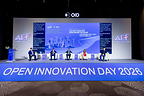
HO CHI MINH CITY, Vietnam, Nov. 5, 2026 /PRNewswire/ — Open Innovation Day 2026 (OID 2026), themed “Power the Next-Gen Industrial City,” took place in Ho Chi Minh City, bringing together policymakers, businesses, investors and technology partners from Viet Nam and abroad. Spanning AI infrastructure, green energy and the low-altitude economy, the event focused on the conditions needed to turn technological potential into industrial capacity and real-world market opportunities.

OID 2026 kicked off the Autumn Economic Forum 2026 (AEF 2026). Led by SoiHub – Open Innovation Hub, it was jointly organized with the Open Innovation and Technopreneur Institute (OITI); the National Academy for Advanced Technology and Innovation (NACENTECH) under the Ministry of Science and Technology of Viet Nam; Saigon Telecommunication & Technologies Corporation (SAIGONTEL); and the Viet Nam Centre for the Fourth Industrial Revolution in Ho Chi Minh City (HCMC C4IR), together with other co-organizers and partners.

From Policy Direction to Technological Capabilities

Speaking at the event, Mr. Truong Minh Huy Vu, Vice Chairman of the Ho Chi Minh City People’s Committee, said the city is laying the groundwork for next-generation industries, from spatial planning for high-tech industry and energy infrastructure to innovation support mechanisms. Notably, the city has rolled out policies to bridge the gap between research and commercialization, including a VND 500 billion venture capital fund. He noted that developing next-generation industries requires not only infrastructure investment but also an ecosystem capable of bringing ideas and technologies to market.

At the national level, Mr. Nguyen Khac Lich, Director General of the Department of Digital Technology and Artificial Intelligence, under the Ministry of Science and Technology of Viet Nam, stressed the need to strengthen Viet Nam’s capacity to master strategic technologies such as AI, semiconductors and unmanned aerial vehicles (UAVs). He said Viet Nam needs to deepen its involvement in research, design and manufacturing while developing regulatory sandboxes to validate new technologies and support their progressive commercialization.

OID 2026 Highlights: Strategic Partnerships Geared Toward Real-World Deployment

Ms. Bui Thanh Hang, Director of SoiHub and Head of the OID 2026 Organizing Committee, said SoiHub has connected and co-developed 50 domestic and international technologies, received 15 technology orders from the market and established 20 strategic cooperation agreements. At OID 2026, partnerships with MobiFone, MOBY Robotics, TADI Global, NACENTECH and CITARES further expanded SoiHub’s network across smart cities, deep-sea robotics, technology transfer and technical workforce development. According to Ms. Hang, these results show that open innovation can deliver tangible value when research and technology are directly linked to the needs of businesses and the market.

AI Infrastructure: Competitiveness Goes Beyond Technology

The morning session, “Foundations of Next-Generation Industry in the AI Era,” examined the factors that will determine Viet Nam’s ability to attract investment in AI infrastructure. Mr. Samuel Ang, Senior Advisor to the Asian Development Bank (ADB), highlighted a shift in site selection criteria for AI data centers: power availability and grid capacity are becoming the top priorities, ahead of location and cost. He said countries that align their digital infrastructure ambitions with energy planning and grid modernization will be better positioned to attract international capital.

Discussions further addressed requirements for data security, computing capacity, clean energy and storage systems. On the workforce front, Ms. Sinwon Park, Director of the International Labour Organization (ILO) Country Office for Viet Nam, discussed AI’s impact on jobs and the need to upskill workers, underscoring that industrial development in the AI era demands coordinated preparation in both infrastructure and human capital.

Low-Altitude Economy: From Technology Testing to Market Development

The afternoon session, “Low-Altitude Economy – Creating New Engines of Growth,” focused on what it takes to scale UAVs and autonomous systems from standalone applications to large-scale industrial development. Drawing on experience from test sites in Japan and the United States, Mr. Joe Felter, CEO of Pickaxe Technologies, emphasized: “Start with the use case, not the equipment.” He said Viet Nam needs to develop a network of test sites integrated with research, training, manufacturing and operational standards, rather than invest in standalone testing facilities.

During the panel discussion, representatives from Viettel High Tech, the Viet Nam Aerospace Association (VASA), SoiHub and EHang further explored commercial viability, regulatory sandboxes and supply chain development. Mr. Bui Trung Hieu, representing SoiHub, raised a pivotal question: once a pilot succeeds, who will be the next customer? The question underscores that building a low-altitude economy requires not only technological capability but also a sufficiently large market and scalable business models.

From the partnership commitments announced to the challenges surrounding AI infrastructure, energy and autonomous technologies, OID 2026 pointed to a shared approach: next-generation industrial development must start from market demand, be underpinned by enabling infrastructure and policies, and involve meaningful participation from businesses, research institutions and investors.

PR Newswire is the official media partner of Open Innovation Day 2026.

Event information: https://oid.openinnovationhub.vn/

SoiHub Organizing Committee Representative: Ms. Trinh Thi Lan Huong, Email: huong.trinh@soihub.vn 

Open Innovation and Technopreneur Institute (OITI) Organizing Committee Representative: Ms. Hoang Ngoc Mai, Email: mai.hoang@oiti.vn 

View original content to download multimedia:https://www.prnewswire.com/apac/news-releases/oid-2026-advancing-technology-partnerships-to-power-the-next-gen-industrial-city-302930321.html

SOURCE The Open Innovation and Technology Entrepreneurship Institute

Continue Reading

Trending