Connect with us

Technology

Rainbow Robotics Signs Trilateral Business Agreement with Schaeffler and Korea Electronics Technology Institute for AI-Mobile Dual-Arm Robot Development

Published

on

BERLIN, Feb. 21, 2024 /PRNewswire/ — Rainbow Robotics, the robot platform company, announced that it had signed a memorandum of understanding (MOU) to co-develop AI-mobile dual-arm robots with Schaeffler and the Korea Electronics Technology Institute (KETI).

The signing ceremony was attended by Dr. Michael Pausch, Chief Technology Officer of Schaeffler’s Industrial division, Lee Jung-ho, CEO of Rainbow Robotics, and Shin Hee-dong, President of KETI. The agreement will see the joint development of AI-based mobile dual-arm robots and corresponding operation technologies for autonomous manufacturing and identify new business models to expand strategically into the global market.

Under this agreement, Schaeffler will develop and supply key components, including gearboxes for mobile dual-arm robots. Meanwhile, KETI will support the application of AI technology for manufacturing processes based on international standards. Rainbow Robotics will be responsible for developing AI-based robot operation solutions and overseeing the production of the mobile dual-arm robot. This collaboration will see jointly developed mobile dual-arm robots deployed in production sites across Germany and Korea to develop successful use cases for autonomous manufacturing and promote joint cooperation to expand sales to global markets.

Autonomous manufacturing is a futuristic production environment that uses AI-based technology and robots in manufacturing facilities across the entire manufacturing process. It is a technology that can sustainably increase the production efficiency of smart factories through artificial intelligence with minimal human intervention.

Dr. Lee Jung-ho, CEO of Rainbow Robotics, stated, “Rainbow Robotics has already initiated technical development cooperation with Schaeffler for the development of mobile dual-arm robots through pilot projects. It is significant for us to advance AI mobile dual-arm robot technology with Schaeffler, a global automotive and industrial machinery specialist with extensive expertise, and KETI, leading the research in AI-based manufacturing innovation technology, to contribute to the commercialization of autonomous manufacturing in the global market.”

Dr. Michael Pausch, Chief Technology Officer of Schaeffler’s Industrial division: “Korea stands at the forefront of the robotics industry, and we are excited to partner with Rainbow Robotics in driving advancements in this area. As a leading global motion technology company, we are committed to pushing the boundaries of innovation to create automated solutions that enhance efficiency and contribute to the evolution of smart and sustainable production processes.”

Shin Hee-Dong, President of KETI, said, “Through this agreement, we will provide KETI’s technology for the development of AI-Mobile Dual-Arm Robot with Rainbow Robotics and Schaeffler Group, bolstering the creation of a successful model for global R&D.”

As part of a three-day visit, Rainbow Robotics and KETI representatives visited Schaeffler’s headquarters in Herzogenaurach to further discuss the cooperation for robotics component development. They also visited Schaeffler’s Digital Transformation Center and the Innovation and Technology Centre for Production Systems at its Erlangen site, which are developing and demonstrating future production technologies.

Schaeffler has been supplying innovative products and solutions in the field of motion technology, including high-precision components and systems for several automotive and industrial applications. In particular, the company focuses on expanding smart and digital automation solutions and is leading the development of precision components and solutions for industrial and lightweight robotics.

Meanwhile, Rainbow Robotics is pursuing its leap into a leading robot platform specialist in the global robot market by introducing robots with world-class quality, Korean-style service, and reasonable prices as part of its World-Class Quality, K-Service, C-Price (WKC) strategy.


View original content to download multimedia:https://www.prnewswire.com/news-releases/rainbow-robotics-signs-trilateral-business-agreement-with-schaeffler-and-korea-electronics-technology-institute-for-ai-mobile-dual-arm-robot-development-302067405.html

SOURCE Rainbow Robotics

Continue Reading

Technology

Scania enables electric long-haul with up to 720 km range

Published

on

By

SÖDERTÄLJE, Sweden, Sept. 14, 2026 /PRNewswire/ — Scania is addressing one of the transport industry’s biggest electrification challenges: how to make electric trucks work for long-haul operations. The solution combines expanded battery capacity, MCS charging and practical vehicle configuration, enabling up to 720 kilometres of range while helping operators balance payload, charging and productivity.

For transport operators, the question is whether an electric truck can cover demanding routes, carry the required load and charge in a way that fits real transport schedules.

Scania’s solution brings those elements together. By adding battery capacity behind the cab, in combination with chassis-mounted batteries and megawatt charging, the vehicle can be configured for longer electric range while retaining the operational flexibility needed for European long-haul assignments.

In combination with Scania’s protruding IVD (Increased Vehicle Dimension) front, the battery-behind-cab layout enables a 6×2*4 European trailer combination with maximum range, even when the total vehicle length exceeds 16.5 metres. This allows customers to combine long electric range with practical trailer compatibility and maintained turning performance.

When combined with the new front, the vehicle can reduce energy consumption by up to 3 percent, depending on specification and operation, as wind resistance accounts for a larger share of total energy use in electric trucks.

“Electric trucks are already part of the transport system, but long-haul operations place very different demands on range, payload and charging. With this solution, Scania is showing how those pieces can come together in a practical way for customers who want to electrify demanding long-distance routes,” says Lars Gustafsson, Senior Vice President, Head of Solutions Management, Scania.

Long distances, heavy loads, trailer compatibility, charging strategy and bodywork requirements all influence whether an electric truck works in daily operation. By placing additional battery packs behind the cab, Scania can increase installed battery capacity without relying only on chassis-mounted batteries, making it possible to build long-haul configurations with up to 720 kilometres of range while giving operators more room to balance range and payload.

In a typical configuration, two MP20 battery packs can be mounted behind the cab, adding approximately 356 kWh of installed capacity in addition to the batteries on the chassis and under the cab. Together with MCS charging, this expanded energy capacity supports electric long-haul tractor configurations using standard European trailer combinations.

“This is not only about placing batteries in a new position on the vehicle. The larger point is what it enables: electric transport over distances that have traditionally been among the hardest to electrify, with range, payload and charging considered together from the start,” Gustafsson concludes.

FACTS:

Electric range of up to 720 kilometres, depending on configuration and operating conditionsUp to 3 percent lower energy consumption on battery-electric vehicles when combined with the new front, depending on specification and operationExpanded installed battery capacity, including two MP20 battery packs mounted behind the cab in a typical configurationAdds approximately 356 kWh installed capacity behind the cab, depending on configurationDesigned to support MCS charging for shorter and more productive charging stops in long-haul operationsSupports selected long-haul 6×2*4 tractor configurations with standard European trailer combinationsWorks together with Scania’s IVD front to enable total vehicle length above 16.5 metres

Explore Scania’s electric solutions here.

For further information, please contact:
Alexandra Österplan
Marketing Communications Manager
Phone: +46 735 667 121 
E-mail: alexandra.osterplan@scania.com

This information was brought to you by Cision http://news.cision.com

https://news.cision.com/scania/r/scania-enables-electric-long-haul-with-up-to-720-km-range,c4393407

The following files are available for download:

https://news.cision.com/scania/i/scania-launches-batteries-behind-cab,c3564130

Scania launches batteries behind cab

https://news.cision.com/scania/i/scania-launches-batteries-behind-cab–full-size-image-,c3564131

Scania launches batteries behind cab (full size image)

https://news.cision.com/scania/i/scania-launches-batteries-behind-cab–three-quarter-view-,c3564132

Scania launches batteries behind cab (three-quarter view)

https://news.cision.com/scania/i/scania-launches-batteries-behind-cab–three-quarter-view-from-behind-,c3564133

Scania launches batteries behind cab (three-quarter view from behind)

https://news.cision.com/scania/i/scania-launches-batteries-behind-cab–side-view-,c3564134

Scania launches batteries behind cab (side view)

https://news.cision.com/scania/i/scania-launches-batteries-behind-cab–open-side-air-deflector,c3564135

Scania launches batteries behind cab, open side air deflector


View original content:https://www.prnewswire.com/news-releases/scania-enables-electric-long-haul-with-up-to-720-km-range-302877387.html

SOURCE Scania

Continue Reading

Technology

Fujitsu launches made-in-Japan next-generation CPU FUJITSU-MONAKA and Fujitsu MONAKA Server for sovereign AI infrastructure

Published

on

By

Achieving world-class AI inference performance through Japan-developed 2nm 3D-stacked CPU and server integrated, developed, and manufactured in Japan

KAWASAKI, Japan, Sept. 14, 2026 /PRNewswire/ — Fujitsu Limited today announced that it will begin global sales of its next-generation CPU, FUJITSU-MONAKA[1], designed and developed in Japan, starting November 2026. This will include sales of the processor as a standalone product to cloud and data center operators and server vendors. Additionally, the company will launch the made-in-Japan Fujitsu MONAKA Server equipped with the FUJITSU-MONAKA CPU, offering high reliability and power efficiency as a sovereign AI infrastructure. Fujitsu MONAKA Server will be made broadly available from November 2026 to data center operators, enterprises, and the academic and HPC sectors in Japan and Europe, contributing to national security.

The FUJITSU-MONAKA CPU integrates Fujitsu’s extensive expertise in processor and server development, achieving world-class computational performance and data supply capabilities with a maximum operating frequency of 3.8GHz and memory transfer speed of 8800MT/s. It delivers twice the AI inference throughput and superior power efficiency compared to other CPUs, effectively halving the number of servers and power consumption required for equivalent processing loads.

Fujitsu MONAKA Server, powered by the FUJITSU-MONAKA CPU, enhances sovereign capabilities through domestic manufacturing, contributing to traceability and supply chain transparency. Furthermore, at a time when power and installation space are significant challenges for AI infrastructure expansion, this CPU server alone can build an AI inference platform. Its space-saving and power-efficient design allows for deployment in air-cooled data centers, significantly increasing customers’ capacity for AI infrastructure expansion. Fujitsu MONAKA Server also supports future scalability through resource pooling technology and reduces cooling energy consumption with Fujitsu’s long-cultivated cooling technologies.

Fujitsu is committed to supporting customers’ autonomy and accountability by providing a sustainable sovereign AI infrastructure with high operability.

For full release click here

Note
[1] FUJITSU-MONAKA: 
This new technology applied to FUJITSU-MONAKA is based on results obtained from a project subsidized by the New Energy and Industrial Technology Development Organization (NEDO).


SOURCE Fujitsu Limited

Continue Reading

Technology

AKSADRON Releases Impact Report 2025, Showcasing the Growth of Malaysia’s Drone Sports Talent Ecosystem

Published

on

By

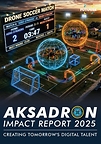
CYBERJAYA, Malaysia, Sept. 14, 2026 /PRNewswire/ — The National Academy for Drone Sports Excellence (AKSADRON), an initiative under Futurise Sdn Bhd (Futurise), today announced the release of the AKSADRON Impact Report 2025, documenting the progress and achievements of its efforts to develop Malaysia’s drone sports ecosystem between 2022 and 2025.

The report highlights AKSADRON’s role in building a structured national platform for drone sports by combining competitive sports, technical learning and the use of drone sports to strengthen STEM, TVET, innovation and future-ready skills. It also reflects the growing participation of students, educational institutions, government stakeholders, industry partners and drone sports communities in programmes conducted across Malaysia.

The report also outlines AKSADRON’s alignment with the National Drone Sports Strategic Roadmap 2023–2027, or NADSAR, which provides a five-year framework for developing drone sports as both a competitive and recreational activity and as a talent pipeline supporting the broader drone and aerospace industries. This initiative also supports current government priorities, including the Thirteenth Malaysia Plan 2026–2030, National TVET Policy 2030 and Visi Sukan Negara 2030. The roadmap is anchored on three strategic priorities: strengthening the national drone sports landscape, building a collaborative ecosystem and increasing public awareness in drone sports.

Guided by these strategic priorities, AKSADRON’s work has translated into positive and measurable outcomes. From 2022 to 2025, AKSADRON achieved the following:

Reached more than 10,000 participants through nationwide awareness programmes and activations;Trained 2,000 participants, contributing to the development of new drone pilots and emerging athletes;Conducted 70 programmes and events, namely, Dronecubator and Drone Hero;Organised 7 drone sports tournaments such as Drone Hub Innovation for Future Talent (DRIFT) & Sky Battle;Engaged more than 20 stakeholders across government, academia and industry;Collaborated with 8 academic and learning institutions and 6 industry stakeholders; andEstablished more than 10 Memorandum of Understanding and Letters of Intent to accelerate collaboration and ecosystem growth.

Shafinaz Salim, Acting Chief Executive Officer of Futurise, said, “The AKSADRON Impact Report 2025 represents an important milestone in our journey to develop a structured and inclusive drone sports ecosystem in Malaysia. The progress achieved since 2022 demonstrates that drone sports are more than a recreational activity. They provide a practical and engaging platform through which young Malaysians can develop technical knowledge, confidence, teamwork, problem-solving abilities and competitive experience”.

Established by Futurise following a mandate from the Malaysian Government in 2022, AKSADRON advances the development of Malaysia’s drone sports ecosystem across four key segments: drone racing, drone soccer, drone e-sports and AI-enabled drone racing.

AKSADRON’s training facility is in Cyberjaya, where it offers public and customised training programmes for individuals, schools, higher-learning institutions and corporate organisations, covering areas such as drone piloting, flight safety, drone handling, technical skills, teamwork and competitive drone sports.

Shafinaz further added, “Through AKSADRON, we are making drone technology more accessible by providing a structured environment where participants can learn, practise and progress. Our Cyberjaya training facility serves as a platform for students, educators, organisations and members of the public to develop practical skills and experience drone sports in a safe and guided setting. We want every training programme to open a pathway, from initial exposure and participation to technical development, competition and future opportunities within Malaysia’s growing drone ecosystem”.

For more details, the AKSADRON Impact Report 2025 will be available soon in Futurise’s website. For those who are keen to explore collaboration opportunities with AKSADRON for trainings and events, may contact aksadron@futurise.com.my for more information.

About Futurise

Futurise is a company under the Ministry of Finance. It is mandated by the Government of Malaysia to manage the National Regulatory Sandbox, providing public policy advisory and acting as a key enabler of regulatory solutions to expedite innovation and future-proof Malaysia’s economy.

Follow Futurise & AKSADRON social media for updates:
FB: https://www.facebook.com/futurisemy/
Instagram: https://www.instagram.com/futurisemy ; https://www.instagram.com/aksadron/
TikTok: https://www.tiktok.com/@aksadron
Linkedin: https://www.linkedin.com/company/futurise/ 

View original content to download multimedia:https://www.prnewswire.com/apac/news-releases/aksadron-releases-impact-report-2025-showcasing-the-growth-of-malaysias-drone-sports-talent-ecosystem-302877400.html

SOURCE Futurise Sdn Bhd

Continue Reading

Trending