Connect with us

Technology

Global Prepaid Card Market Trends, Opportunities, & Forecasts, 2029F: Tap, Pay, Go Fueled by Integration with Mobile Wallets, Blockchain, Cryptocurrency, Sustainability and ESG Principles

Published

on

DUBLIN, Feb. 23, 2024 /PRNewswire/ — The “Prepaid Card Market – Global Industry Size, Share, Trends, Opportunity, & Forecast 2019-2029” report has been added to  ResearchAndMarkets.com’s offering.

The Global Prepaid Card Market was valued at USD 2.71 Trillion in 2023 and is anticipated to project robust growth in the forecast period with a CAGR of 14.6% through 2029, reaching USD 6.12 Trillion.

The prepaid card market is expected to exhibit high growth during the forecast period, owing to the convenience offered similar to that of a credit or debit card with the ability to allow the end user to set the spending limit according to the budget. Prepaid cards, also referred to as daily cards, are a plastic substitute for carrying cash. Cash, cheques, and other payment cards have been replaced with prepaid cards in situations when customers or businesses wish to make payments electronically without having to link the payment to a credit or debit account.

Prepaid cards are also a good substitute for standard banking goods for those who don’t have bank accounts or would rather have greater control over their spending because they’re frequently used for online shopping, travel, and budgeting. Furthermore, because prepaid cards let recipients choose how to utilise the money, they’re widely employed as employee incentives and gift cards. This industry grows considerably around holidays and noteworthy events.

The prepaid card market is driven by multiple strong variables that impact its dynamics. Growing remittance demand has been a major factor in the prepaid card market’s expansion. As more individuals live and work abroad, there is an increasing need for practical and affordable ways to send money home.

Prepaid cards minimise the hassles and costs involved with traditional money transfer methods while providing recipients with an easy way to access funds. In addition to usually offering favourable exchange rates, these cards offer a secure means of making international payments. Furthermore, consumers’ growing desire for cash substitutes fuels the growth of the prepaid card market as they look for convenient, secure, and adaptable payment options that offer these advantages.

However, because both consumers and businesses are worried about possible data breaches, unauthorized transactions, and identity theft in the prepaid card market, security and privacy concerns might seriously impede the expansion of the prepaid card market. The payment system loses credibility when fraudulent transactions occur using prepaid card information.

Concerns concerning their potential use in illegal activities are also raised by the anonymous character of certain prepaid cards. Under certain conditions, insufficient regulatory oversight may make these worries more acute. To thrive, prepaid card firms need to give top priority to strong security protocols, open data management procedures, and efficient fraud prevention strategies. Additionally, the rivalry from mobile payments is impeding the prepaid card market’s expansion.

Contactless Payments and NFC Technology

In recent years, the adoption of contactless payment methods has become a significant trend in the prepaid card market. Near Field Communication (NFC) technology allows users to make secure and convenient transactions by simply tapping their prepaid cards on compatible terminals. This trend aligns with the broader movement towards a cashless society, offering users a faster and more seamless payment experience. As contactless infrastructure continues to expand globally, prepaid cards equipped with NFC capabilities are expected to become even more prevalent.

Integration with Mobile Wallets

The integration of prepaid cards with mobile wallets has emerged as a powerful trend, catering to the increasing reliance on smartphones for financial transactions. Mobile wallet applications enable users to store and manage their prepaid card information digitally, providing added convenience. This trend aligns with the broader shift towards digital financial ecosystems, where users can seamlessly switch between various payment methods, including prepaid cards, within a unified mobile platform. As mobile wallet adoption continues to rise, the integration of prepaid cards with these platforms is expected to become more sophisticated and user-friendly.

Blockchain and Cryptocurrency Integration

The rise of blockchain technology and cryptocurrencies is influencing the prepaid card market, introducing new possibilities and enhancing security measures. Some prepaid card providers now offer cryptocurrency-linked cards, allowing users to spend their digital assets in traditional retail environments. Blockchain technology is also being explored for enhancing the transparency and traceability of prepaid card transactions, addressing concerns related to fraud and security. As the regulatory landscape around cryptocurrencies evolves, the integration of blockchain technology with prepaid cards is likely to shape new avenues for secure and decentralized financial transactions.

Personalization and Customization

Personalization has become a key trend in the prepaid card market, catering to the diverse preferences and lifestyles of users. Prepaid card providers are offering customizable designs, allowing users to add personalized images, choose unique card colors, and even select specific spending categories. This trend enhances the emotional connection users have with their prepaid cards, making them more likely to use and recommend the product. As technology advances, personalization features are expected to become more sophisticated, providing users with a tailored and engaging financial experience.

Focus on Sustainability and ESG Principles

Environmental, Social, and Governance (ESG) considerations are increasingly influencing consumer choices, and the prepaid card market is not exempt from this trend. Users are showing a growing interest in prepaid cards issued by providers committed to sustainable practices. This includes using eco-friendly materials for card production, offsetting carbon emissions associated with card usage, and supporting social initiatives. Prepaid card providers aligning with ESG principles are likely to attract environmentally conscious consumers and contribute to a positive brand image.

Enhanced Security Features

With the rising prevalence of cyber threats and fraud, prepaid card providers are investing in advanced security features to safeguard user funds and personal information. Biometric authentication, such as fingerprint and facial recognition, is becoming more common in securing prepaid card transactions.

Additionally, real-time transaction monitoring, AI-driven fraud detection, and the ability to instantly freeze or block a card through mobile apps are trends aimed at enhancing the overall security posture of prepaid cards. As cybersecurity threats evolve, ongoing investments in cutting-edge security measures are crucial to maintaining user trust.

Financial Wellness Tools and Educational Resources

Recognizing the importance of financial literacy and well-being, prepaid card providers are incorporating financial wellness tools and educational resources into their offerings. Mobile apps associated with prepaid cards now often include budgeting features, spending analytics, and educational content to help users make informed financial decisions. This trend aligns with the growing emphasis on empowering users with the knowledge and tools to manage their finances effectively, contributing to their long-term financial health.

Competitive Landscape

Company Profiles: Detailed analysis of the major companies present in the global Prepaid Card Market.

American Express CompanyGreen Dot CorporationJPMorgan Chase And CoKaiku Finance LLCMango Financial, Inc.MastercardNetSpend CorporationPayPal Holdings, Inc.Travelex Foreign Coin Services LimitedVisa Inc.

Report Scope

Prepaid Card Market, By End User:

Retail EstablishmentsCorporateGovernment/Public SectorOthers

Prepaid Card Market, By Card Type:

Closed Loop Prepaid CardOpen Loop Prepaid Card

Prepaid Card Market, By Offering:

General Purpose Reloadable CardGift CardsGovernment Benefit/Disbursement CardIncentive/Payroll CardOthers

Prepaid Card Market, By Region:

North AmericaUnited StatesCanadaMexicoEuropeFranceUnited KingdomItalyGermanySpainAsia-PacificChinaIndiaJapanAustraliaSouth KoreaSouth AmericaBrazilArgentinaColombiaMiddle East & AfricaSouth AfricaSaudi ArabiaUAETurkeyEgypt

For more information about this report visit https://www.researchandmarkets.com/r/34ac0k

About ResearchAndMarkets.com
ResearchAndMarkets.com is the world’s leading source for international market research reports and market data. We provide you with the latest data on international and regional markets, key industries, the top companies, new products and the latest trends.

Media Contact:

Research and Markets
Laura Wood, Senior Manager
press@researchandmarkets.com 
 
For E.S.T Office Hours Call +1-917-300-0470
For U.S./CAN Toll Free Call +1-800-526-8630
For GMT Office Hours Call +353-1-416-8900
 
U.S. Fax: 646-607-1907
Fax (outside U.S.): +353-1-481-1716

Logo: https://mma.prnewswire.com/media/539438/Research_and_Markets_Logo.jpg

View original content:https://www.prnewswire.com/news-releases/global-prepaid-card-market-trends-opportunities–forecasts-2029f-tap-pay-go-fueled-by-integration-with-mobile-wallets-blockchain-cryptocurrency-sustainability-and-esg-principles-302069745.html

SOURCE Research and Markets

Continue Reading

Technology

Mission Critical Partners Announces Launch of its Justice Integration Hub in Support of the City of New Orleans

Published

on

By

The $30 million ARPA-funded initiative connects public-safety and justice agencies, accelerates case processing and improves service to the community.

NEW ORLEANS, Oct. 27, 2026 /PRNewswire-PRWeb/ — Mission Critical Partners today announced the launch of its Justice Integration Hub in support of the city of New Orleans’ Justice Technology Modernization Program (JTMP). JTMP is a multiyear initiative that replaced several decades-old systems with a unified, cloud-based platform designed to improve public safety and access to justice by streamlining operations and strengthening transparency across the city and Orleans Parish criminal-justice ecosystem.

“The Justice Integration Hub is not just a technology milestone; it’s a fundamental shift in how justice is delivered,” said Darrin Reilly, president and CEO, Mission Critical Partners.

The Justice Integration Hub facilitates the seamless flow of information throughout the Parish’s complex criminal-justice ecosystem. Funded through a $30 million allocation from the American Rescue Plan Act (ARPA), JTMP represents one of the most comprehensive justice technology overhauls in the country, modernizing and transforming more than 40 years of legacy infrastructure. The program integrates the area’s entire criminal justice ecosystem — including the New Orleans Police Department, Orleans Parish Sheriff’s Office and Justice Center, District Attorney, Public Defender, Criminal District Court, and Clerk of Court — into a single, connected environment.

“The integration hub fundamentally changes how our justice agencies work together,” said Nathaniel Weaver, JTMP director. “Instead of information stopping at the boundaries between agencies, it can move securely in real time, allowing people to spend less time reentering data and more time making the decisions that move cases forward.”

From Fragmentation to Real-Time Coordination

For years, criminal-justice agencies in New Orleans and Orleans Parish operated on outdated, siloed systems that limited collaboration, slowed case processing, and created cross-department inefficiencies.

The Justice Enterprise Hub is built on Microsoft Azure and leverages a standardized enterprise data model aligned with national data-sharing models. A secure integration hub enables real-time data sharing across agencies, ensuring that critical information is accessible when and where it is needed.

Immediate Impact Across the Community

The Justice Enterprise Hub already is helping to deliver measurable improvements:

Patrol officers now have additional hours each week to spend in New Orleans communities and respond to emergencies due to more efficient digital arrest-processing workflows.Data sharing from the jail to the court facilitates automated creation of cases and scheduling of court appearances, saving approximately 6,000 hours of time clerks would spend on data entry.Faster information sharing between agencies is helping reduce hearing delays, streamline inmate transport coordination, and improve overall justice system efficiency. This significantly reduces incarceration costs and generates measurable operational savings.

A Foundation for the Future of Justice

With the core platform now fully operational, New Orleans and Orleans Parish are positioned to build on this foundation with advanced capabilities, including AI-assisted case processing, digital evidence management, and expanded state-level data integration.

“The Justice Integration Hub is not just a technology milestone; it’s a fundamental shift in how justice is delivered,” said Darrin Reilly, MCP’s president and CEO. “New Orleans and Orleans Parish now have a nation-leading, scalable, and future-ready system that enables agencies to work together more effectively and collaboratively to better serve the public. We look forward to bringing this solution to more communities across the nation.”

The system was implemented in four phases, following a competitive nationwide process that selected Mission Critical Partners and Major Services, a New Orleans-based IT consulting firm, to oversee JTMP’s development, implementation, and coordinated go-live activities across all participating agencies. Those four phases went live in succession, between November 2025 and April 2026.

About Mission Critical Partners (MCP)

Mission Critical Partners (MCP) is a leading provider of data integration, consulting, network, and cybersecurity solutions specializing in transforming mission-critical communications networks into integrated ecosystems that improve outcomes in the public-safety, justice, healthcare, transportation, and utility markets. Our comprehensive experience and vendor-agnostic approach help us develop modernized solutions that maximize value, improve efficiency, and mitigate risk. Additional information and career opportunities are available at MissionCriticalPartners.com.

Media Contact

Morgan Sava, Mission Critical Partners, 1 608-658-8858, rscarpino@pipitone.com, https://www.missioncriticalpartners.com/

View original content:https://www.prweb.com/releases/mission-critical-partners-announces-launch-of-its-justice-integration-hub-in-support-of-the-city-of-new-orleans-302920918.html

SOURCE Mission Critical Partners

Continue Reading

Technology

MadeAi Launches Dossier Expert, Bringing Agentic AI to Formulary and Value Dossier Development

Published

on

By

New AI-powered solution transforms dossier creation and maintenance with source-level traceability, cross-functional collaboration, and up to 70% faster authoring and updates

CAMBRIDGE, Mass., Oct. 27, 2026 /PRNewswire-PRWeb/ — MadeAi™, a leader in AI-enabled evidence synthesis and life sciences solutions, today announced the launch of MadeAi Dossier Expert, a new AI-powered solution designed to transform how pharmaceutical and life sciences organizations create, review, and maintain formulary and value dossiers.

Traditionally, developing AMCP dossiers, global value dossiers, and health technology assessment (HTA) submissions requires months of coordination across HEOR, Clinical, Market Access, and Medical Writing teams. Evidence is dispersed across multiple sources, citations require extensive manual verification, and updates often trigger lengthy rounds of rewriting and review.

Dossier Expert replaces this fragmented process with a living, evidence-linked document that evolves as the underlying science changes.

Built to address one of the most time-consuming challenges facing Market Access and HEOR teams, Dossier Expert brings evidence management, AI-assisted authoring, citation verification, and cross-functional collaboration into a single, continuously updated environment.

From Static Documents to Living Evidence

Unlike traditional dossier authoring approaches that focus primarily on accelerating initial drafts, Dossier Expert is designed to streamline the entire dossier lifecycle—from first creation through ongoing evidence updates.

Key capabilities include:

AI-Powered Dossier Generation: Create structured AMCP, HTA, and value dossiers using customizable templates and AI-generated, evidence-grounded content.One-Click Citation Verification: Trace every AI-generated claim directly to its source document, with the supporting passage highlighted for immediate verification.Intelligent Evidence Updates: Automatically identify sections affected by changes in underlying evidence and selectively regenerate outdated content without overwriting human edits.Integrated Evidence Hub: Organize and connect indexed source materials directly to relevant dossier sections.Integrated MadeAi-LR: Access AI-enabled literature review directly for in-platform literature review support.Seamless Collaboration: Enable HEOR, Clinical, Market Access, and Medical Writing teams to work within one document, with built-in commenting, assignments, approvals, and version control.Flexible, Submission-Ready Outputs: Export approved dossiers to Word or PDF.

Accelerating Market Access Without Compromising Scientific Rigor

Dossier Expert is designed to deliver up to 70% faster dossier authoring and updates, while reducing the manual effort associated with evidence verification, document management, and recurring revisions.

“Creating a dossier is only part of the challenge. Keeping it scientifically current, fully traceable, and aligned across multiple stakeholders is where organizations lose enormous amounts of time,” said Gaugarin Oliver, Founder and CEO of MadeAi. “With Dossier Expert, we’re moving beyond AI-generated first drafts to a fundamentally different model: a living dossier that connects every claim to its evidence, identifies what needs updating, and enables experts to focus on scientific judgment rather than document administration.”

By combining AI-powered efficiency with human oversight and transparent source verification, Dossier Expert helps life sciences organizations accelerate evidence communication while maintaining the rigor required for payer and HTA engagement.

Learn more about Dossier Expert at www.madeai.com.

About MadeAi

MadeAi™ is an award-winning AI-native evidence synthesis and life sciences solutions platform designed to help pharmaceutical, biotechnology, and medical device organizations accelerate evidence generation and scientific communication. Combining advanced agentic AI capabilities with human expertise, MadeAi supports workflows across HEOR, Market Access, Medical Affairs, and RWE, delivering greater efficiency, transparency, and scientific rigor.

Media Contact

Meghan Oates-Zalesky, MadeAi, 1 617 435 2470, meghan.oates@madeai.com, www.madeai.com

View original content to download multimedia:https://www.prweb.com/releases/madeai-launches-dossier-expert-bringing-agentic-ai-to-formulary-and-value-dossier-development-302920940.html

SOURCE MadeAi

Continue Reading

Technology

Peloton Launches Peloton Broker to Streamline Early-Stage Land Acquisition for Energy Projects

Published

on

By

New tract-based pre-leasing tool joins the
Land Data Management solution in the Peloton Platform

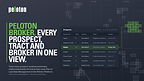
CALGARY, AB, Oct. 27, 2026 /PRNewswire/ — Peloton, a provider of energy data management software, today announced the launch of Peloton Broker, a tract-based pre-leasing management tool built for energy projects. Peloton Broker gives brokers, consultants, land departments, and legal teams one place to handle ownership discovery, negotiation tracking, and title curative work, so they can move from prospect to signed lease without re-entering data or juggling separate systems.

Peloton Broker is part of Peloton’s Land Data Management solution in the Peloton Platform, alongside LandView, LandView Map, and Peloton Dashboards. It extends Peloton’s trusted foundation to the earliest stage of land acquisition, with pre-leasing work carrying straight into agreement-based lease management in LandView.

“The pre-leasing stage has always been where land data is most scattered, with ownership research in one place, negotiation notes in another, and title issues surfacing late,” said James Hatcher, Product Manager – Land Data Management at Peloton. “Peloton Broker brings that work into the Peloton Platform from day one, so land teams start every lease with a complete picture and the rest of the organization gets land data it can trust.”

Built for the start of the lease lifecycle

Peloton Broker helps land teams at oil and gas operators and renewable energy developers:

Track ownership at the tract level, covering both surface and mineral rightsManage negotiations in integrated workflows that record every offer, contact, and status changeCatch title concerns early with title curative support, before they hold up executionWork from the map with GIS-driven prospect management connected to LandView MapKeep audit-ready records with full traceability from first contact to executed lease

Connected across the Peloton Platform

The Peloton Platform is a SaaS solution hosted by Microsoft Azure that brings well, production, and land data together in one environment. With Peloton Broker on the platform, customers get:

A single source of truth. Land, operations, and finance teams work from the same accurate, up-to-date information, with master data such as business associates, wells, and units shared across products.Linked lifecycles. Land data ties into well and production data in WellView and ProdView, and integrates with third-party ERP and financial systems.Enterprise-grade security, backed by Peloton’s SOC 1 and SOC 2 Type 2 certifications.

Peloton Broker is available now. To learn more, visit peloton.com/products/land-data-management/broker.

About Peloton

Headquartered in Calgary, Alberta, and founded in 1991, Peloton created the energy industry’s original data management solution, and it remains the standard today. With more than three decades of industry expertise and over 700 clients globally, Peloton offers software across the well, production, and land lifecycles. The Peloton Platform brings all three together in one integrated SaaS environment, hosted by Microsoft Azure.

View original content to download multimedia:https://www.prnewswire.com/news-releases/peloton-launches-peloton-broker-to-streamline-early-stage-land-acquisition-for-energy-projects-302921122.html

SOURCE Peloton Computer Enterprises Ltd.

Continue Reading

Trending