Connect with us

Technology

Automotive Laser Headlight System Market size is set to grow by USD 18.91 billion from 2024-2028, Incorporation of energy-efficient solutions in automobiles to boost the market growth, Technavio

Published

on

NEW YORK, June 10, 2024 /PRNewswire/ — The global automotive laser headlight system market  size is estimated to grow by USD 18.91 billion from 2024-2028, according to Technavio. The market is estimated to grow at a CAGR of  40.54%  during the forecast period.  Incorporation of energy-efficient solutions in automobiles is driving market growth, with a trend towards increase in r and d spending on headlight technology. However, adoption of led lighting in automobiles  poses a challenge. Key market players include ams OSRAM AG, Baja Designs Inc., Bayerische Motoren Werke AG, Continental AG, HELLA GmbH and Co. KGaA, Infineon Technologies AG, Koito Manufacturing Co. Ltd., KYOCERA Corp., Lazer Lamps Ltd., Marelli Holdings Co. Ltd., Mercedes Benz Group AG, Robert Bosch GmbH, Stanley Electric Co. Ltd., Universe Kogaku Inc., Valeo SA, Varroc Engineering Ltd., Volkswagen AG, and ZKW Group GmbH.

Get a detailed analysis on regions, market segments, customer landscape, and companies – View the snapshot of this report

Forecast period

2024-2028

Base Year

2023

Historic Data

2018 – 2022

Segment Covered

Application (OEM and Aftermarket), End-user (Passenger cars and Motorcycle), and Geography (Europe, APAC, North America, Middle East and Africa, and South America)

Region Covered

Europe, APAC, North America, Middle East and Africa, and South America

Key companies profiled

ams OSRAM AG, Baja Designs Inc., Bayerische Motoren Werke AG, Continental AG, HELLA GmbH and Co. KGaA, Infineon Technologies AG, Koito Manufacturing Co. Ltd., KYOCERA Corp., Lazer Lamps Ltd., Marelli Holdings Co. Ltd., Mercedes Benz Group AG, Robert Bosch GmbH, Stanley Electric Co. Ltd., Universe Kogaku Inc., Valeo SA, Varroc Engineering Ltd., Volkswagen AG, and ZKW Group GmbH

Key Market Trends Fueling Growth

The automotive industry’s lighting segment has seen advancements with the introduction of OLED technology, such as in Audi’s 2016 TT RS. OLEDs offer efficient, visually appealing lighting with no harsh shadows or reflectors. While similar to LEDs, OLEDs are more flexible, energy-efficient, and thin, enabling color emission and uniformity. Audi and BMW use OLEDs for product differentiation in premium models. Vendors like HELLA and OSRAM invest in R&D for OLED and laser lighting panels, driving market growth during the forecast period. 

The Automotive Laser Headlight System market is experiencing significant growth due to advancements in vehicle technology. These systems provide high-performance lighting, enabling better visibility and increasing road safety. The use of semiconductors and sensors in laser headlights contributes to their efficiency and longevity.

Additionally, the integration of these systems with other vehicle features, such as adaptive cruise control and collision avoidance systems, enhances overall driving experience. The market is expected to continue growing, driven by consumer demand for advanced safety features and increasing regulatory focus on road safety. 

Research report provides comprehensive data on impact of trend. For more details- Download a Sample Report

Market Challenges

The automotive laser headlight system market faces challenges due to the increasing adoption of LED headlights in the luxury car segment. LED headlights offer versatility and high-profit margins for vendors, making it difficult for laser technology to gain traction. Despite the potential benefits of laser technology, its adoption is uncertain due to the current popularity of LEDs. The global automotive industry’s demand for LED headlamps poses a significant challenge to the growth of the automotive laser headlight system market during the forecast period.The Automotive Laser Headlight System market faces several challenges. One major challenge is the high cost of production, which makes these systems expensive for mass production. Another challenge is the regulatory environment, as these systems must meet strict safety and performance standards.Additionally, the development of compatible software and integration with existing vehicle systems can be complex. Furthermore, consumer acceptance and market penetration remain key challenges, as many consumers are not yet familiar with the benefits of laser headlight technology. Lastly, the global supply chain for laser diodes and other essential components can be unpredictable, leading to potential supply shortages and price volatility.

For more insights on driver and challenges – Download a Sample Report

Segment Overview 

Application 1.1 OEM1.2 AftermarketEnd-user 2.1 Passenger cars2.2 MotorcycleGeography 3.1 Europe3.2 APAC3.3 North America3.4 Middle East and Africa3.5 South America

1.1 OEM-  The automotive laser headlight system market is experiencing significant growth due to advancements in technology, making headlights brighter and more energy-efficient. OEMs are eager to incorporate these innovations for enhanced visibility and customer experience. High-end models have led the adoption, but as costs decrease, integration into new vehicle classes is expected. The Indian automobile component industry’s Rs. 2.9 lakh crore (USUSD 36.1 billion) turnover in the first half of 2023-24, with a 12.6% revenue growth, underscores the expanding OEM segment’s influence on market expansion.

For more information on market segmentation with geographical analysis including forecast (2024-2028) and historic data (2018 – 2022)  – Download a Sample Report

Research Analysis

The Automotive Laser Headlight System Market is experiencing significant growth in the photonics-related businesses, particularly in the semiconductor sector. Headlamp manufacturers are integrating LiFi Communication technology into their headlight systems, providing high-resolution sensing capabilities for autonomous driving applications. LED and laser diodes are key components in these advanced headlight systems, offering improved illumination range and road safety.

The market spans across the passenger vehicle segment, including luxury automobiles, as well as light commercial vehicles, logistics vehicles, and recreational vans. Night vision cameras and phosphorous lenses are also gaining popularity in this market. The global vehicle production is forecasted to increase, driving the demand for advanced headlight systems in battery-powered vehicles.

Market Research Overview

The Automotive Laser Headlight System market represents a significant advancement in vehicle lighting technology. These systems utilize laser diodes to produce high-intensity beams, enhancing visibility and safety on the road. The technology offers several advantages over traditional headlights, including longer range, faster response time, and reduced power consumption.

The market is driven by increasing consumer demand for advanced safety features and regulatory initiatives promoting the adoption of energy-efficient technologies. Furthermore, ongoing research and development efforts aim to improve the efficiency and affordability of laser headlight systems, expanding their market potential. The market landscape is characterized by continuous innovation and competition among various players, with a focus on delivering superior performance and functionality.

Table of Contents:

1 Executive Summary
2 Market Landscape
3 Market Sizing
4 Historic Market Size
5 Five Forces Analysis
6 Market Segmentation

ApplicationOEMAftermarketEnd-userPassenger CarsMotorcycleGeographyEuropeAPACNorth AmericaMiddle East And AfricaSouth America

7 Customer Landscape
8 Geographic Landscape
9 Drivers, Challenges, and Trends
10 Company Landscape
11 Company Analysis
12 Appendix

About Technavio

Technavio is a leading global technology research and advisory company. Their research and analysis focuses on emerging market trends and provides actionable insights to help businesses identify market opportunities and develop effective strategies to optimize their market positions.

With over 500 specialized analysts, Technavio’s report library consists of more than 17,000 reports and counting, covering 800 technologies, spanning across 50 countries. Their client base consists of enterprises of all sizes, including more than 100 Fortune 500 companies. This growing client base relies on Technavio’s comprehensive coverage, extensive research, and actionable market insights to identify opportunities in existing and potential markets and assess their competitive positions within changing market scenarios.

Contacts

Technavio Research
Jesse Maida
Media & Marketing Executive
US: +1 844 364 1100
UK: +44 203 893 3200
Email: media@technavio.com
Website: www.technavio.com/

View original content to download multimedia:https://www.prnewswire.com/news-releases/automotive-laser-headlight-system-market-size-is-set-to-grow-by-usd-18-91-billion-from-2024-2028–incorporation-of-energy-efficient-solutions-in-automobiles-to-boost-the-market-growth-technavio-302167924.html

SOURCE Technavio

Continue Reading

Technology

GLOBAL VOTING FOR 7 WONDERS OF FUTURE CITIES OFFICIALLY SWITCHED ON

Published

on

By

DUBAI, UAE, Oct. 31, 2026 /PRNewswire/ — New Clark City, Philippines, hosts “switch-on” ceremony as New7Wonders opens worldwide public voting on www.7wondersfc.com to choose the urban developments shaping our future.

New7Wonders today officially launched global public voting for the 7 Wonders of Future Cities, in a landmark ceremony hosted in the Philippines on World Cities Day, marking the beginning of a year of worldwide participation, inviting people everywhere to vote for the cities and urban developments they believe best represent the future of urban life, which will culminate with the official declaration of the seven winning cities and developments on 31 October 2027. 

Hosted and organised by New Clark City, an Official Participant in the 7 Wonders of Future Cities campaign and one of the Philippines’ flagship urban development projects, the special switch-on ceremony brought together city leaders, media and invited guests to witness the activation of the global voting platform. 

Jean-Paul de la Fuente, Director of New7Wonders and Chairman of the 7 Wonders of Future Cities campaign, led the official switch-on. In a ceremonial moment, the campaign website at www.7wondersfc.com was transformed from its presentation format into the worldwide public voting platform, opening the opportunity for citizens across the globe to participate in selecting the urban visions that will define the cities of tomorrow. “Today, from the Philippines to the world, we have switched on more than a voting platform – we have switched on a global conversation about the future of our cities,” said de la Fuente. “For the next year, people everywhere have the opportunity to discover, engage with and champion the places they believe should become global symbols of urban progress.”

The 7 Wonders of Future Cities is a worldwide participation campaign from New7Wonders, the global authority behind the New 7 Wonders of the World and the New 7 Wonders of Nature, and is organised by Global Platform Limited, its Dubai, UAE-based worldwide licensing and commercial arm. Building on the extraordinary worldwide engagement of previous campaigns, which together have generated more than 600 million votes, the new initiative shifts the focus from celebrating humanity’s natural and historical wonders to recognising the places being created and transformed for humanity’s future. Participating cities and developments are brought together through three central themes: Environmental & Nature, Smart City and Human-Centric development. These reflect the conviction that successful future cities must balance ecological responsibility, technological progress and the needs and aspirations of the people who inhabit them.

View original content to download multimedia:https://www.prnewswire.co.uk/news-releases/global-voting-for-7-wonders-of-future-cities-officially-switched-on-302925559.html

Continue Reading

Technology

SCANOLOGY Introduces AirGO Pad for On-Site 3D Scanning, Inspection and Reporting

Published

on

By

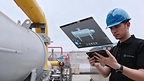
HANGZHOU, China, Oct. 31, 2026 /PRNewswire/ — SCANOLOGY introduces AirGO Pad, an integrated mobile measurement platform that brings 3D scanning, inspection and reporting alongside the part being measured. Combining computing, industrial 3D inspection software and touchscreen operation, AirGO Pad works with compatible SCANOLOGY wireless 3D scanners to help operators complete the inspection workflow on-site without carrying a separate laptop.

When inspecting a large component, operators need to move around the part while keeping scan data and measurement controls accessible. Finding a suitable place for a laptop—and returning to it to check results or adjust settings—can interrupt that process, particularly where space is limited. AirGO Pad places the inspection interface on a portable tablet, allowing operators to view data and interact with the software beside the component.

Users can connect a compatible wireless 3D scanner and view 3D data in real time, monitoring scan coverage and quality as they work. They can then align data, perform measurements and inspect results on the same device. During scanning, operators can create comparison points, features and other inspection elements as needed. Preconfigured report templates complete the workflow, enabling standardized inspection reports to be generated directly on AirGO Pad.

The platform’s design supports these transitions between scanning, inspection and reporting. Its high-definition touchscreen keeps model details and measurement results within reach. Operators can use the tablet in handheld mode while moving around the part, then unfold the convertible stand to review results on a suitable surface. A neck strap provides additional support when carrying and operating the device.

“Making a measurement system mobile means considering more than how operators carry the 3D scanner. They also need access to their data and inspection tools beside the part. We developed AirGO Pad to bring these activities together, from reviewing scan data to producing the inspection report,” said a product manager at SCANOLOGY.

AirGO Pad supports SCANOLOGY’s third-generation handheld and wireless optical 3D scanning systems, standard CAD/3D formats and wireless PC synchronization for measurement, annotation and review.

For product details or to request a demonstration, visit AirGo Pad product page.

About SCANOLOGY

SCANOLOGY develops industrial 3D measurement solutions for manufacturing and engineering. Its products are used for 3D measurement, automated inspection, and quality control. They are trusted by more than 10,000 enterprises across over 70 countries and regions, serving industries such as aerospace, automotive, and heavy manufacturing.

SOURCE SCANOLOGY

Continue Reading

Technology

SKYWORTH Solar Announces Global Launch of Solavita as a Smart Microgrid Brand

Published

on

By

SHENZHEN, China, Oct. 31, 2026 /PRNewswire/ — SKYWORTH Solar has officially announced the global launch of Solavita, its dedicated brand for smart microgrid solutions. Positioned strategically as “A Smart Microgrid Expert for Diverse Energy Scenarios,” Solavita consolidates the company’s extensive solution portfolio and service infrastructure under a unified global identity, building upon its rapidly expanding international footprint.

Addressing Grid Flexibility and Long-Term System Value

The launch comes as electricity systems face growing demands for flexibility. The International Energy Agency’s 2026 mid-year electricity update highlights the importance of flexible resources and more efficient use of infrastructure as renewable generation expands. For customers, the priorities vary by market: managing electricity costs, using more locally generated solar power, or maintaining essential loads where grid supply is unreliable.

“As renewable energy becomes more distributed, the long-term performance of the whole system becomes increasingly important,” said Fan Ruiwu, Chairman of SKYWORTH Solar. “We see that performance as the foundation of our international energy business. With Solavita, we are bringing our capabilities together around a common approach to solution development and service, while working with local partners to adapt delivery to each market. Our focus is on the value these systems provide throughout their life.”

Solutions for Different Energy Needs

To address the dual challenges of grid volatility and operational cost, Solavita engineers its systems around a core architectural philosophy prioritizing grid-forming stability, intelligent automation, cross-generation efficiency, and multi-tier security. Translating these technical principles into practical applications, the brand introduces a comprehensive solution matrix tailored to specific market demands.

For residential users, the SolaHome suite utilizes an advanced Home Energy Management System (HEMS) to seamlessly coordinate rooftop solar, battery storage, and flexible domestic loads like heat pumps and EV chargers. In markets with dynamic electricity tariffs, such as Germany, HEMS automates energy dispatch to capitalize on low-price periods. This practical value is evidenced by a recent residential installation in Jesteburg, Germany, combines 18.9 kW of rooftop solar with 20.48 kWh of battery storage. Solavita reports nearly €50 in electricity-price arbitrage benefits during the first month of dynamic-tariff operation.

Expanding beyond the home, the portfolio scales up with SolaBiz, which integrates distributed solar, commercial storage, and smart dispatch to help factories and retail spaces manage peak-demand costs and safeguard against grid disruptions.

For larger utility and off-grid demands, SolaMatrix delivers scalable, containerized storage and microgrid management focused on stabilizing renewable integration in weak grid environments.

Finally, ensuring energy access in highly mobile contexts, SolaGo offers plug-and-play balcony solar and portable power systems for outdoor activities and critical emergency backup, completing Solavita’s end-to-end coverage of modern energy applications.

Global Engineering Foundation and Ecosystem Delivery

To guarantee the reliable implementation and long-term asset value of these diverse solutions, SKYWORTH Solar underpins Solavita with a robust global engineering foundation.

On the technology front, the Smart Microgrid Technology Centre connects cutting-edge research with product engineering, supported by academic collaborations with Tianjin University and Hainan University. This pipeline is further strengthened by a comprehensive Haikou test platform—scheduled for commissioning by the end of 2026—to rigorously validate grid-connected, islanded, and grid-forming systems.

The InfraCosmos Digital Platform supports lifecycle data management, operational monitoring and fault identification. It connects system information with service and maintenance, helping teams monitor performance and respond to operating issues.

Beyond hardware and software, this foundation extends to flexible supply chain execution and strategic project delivery. Solavita employs F+D+EPC+O (Financing, Development, Engineering, Procurement, Construction, and Operations) framework for large-scale, asset-light project coordination, alongside a localized PD2C cooperation model actively deployed in markets like Germany and Italy to ensure rapid, market-specific service.

These capabilities underpin Solavita’s positioning as a smart microgrid expert, connecting system development with local delivery and ongoing service. The aim is to make integrated energy systems practical to deploy and support in each market.

View original content to download multimedia:https://www.prnewswire.com/apac/news-releases/skyworth-solar-announces-global-launch-of-solavita-as-a-smart-microgrid-brand-302925531.html

SOURCE SKYWORTH Solar

Continue Reading

Trending