Connect with us

Technology

3D-Printed Footwear Market size is set to grow by USD 3.32 billion from 2024-2028, Increasing number of new product launches boost the market, Technavio

Published

on

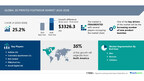
NEW YORK, June 27, 2024 /PRNewswire/ — The global 3D-printed footwear market size is estimated to grow by USD 3.32 billion from 2024-2028, according to Technavio. The market is estimated to grow at a CAGR of 25.2% during the forecast period. Increasing number of new product launches is driving market growth, with a trend towards innovations in 3D printing. However, lack of in-house expertise poses a challenge. Key market players include Adidas AG, Columbia Sportswear Co., EOS GmbH, FitMyFoot Inc., Kornit Digital Ltd., LuxCreo Inc., MATERIALISE NV, New Balance Athletics Inc., Nike Inc., OESH Shoes, Peak Sport Products Co. Ltd., Prodways Group, Scientifeet, Sculpteo Inc., SHAPEWAYS HOLDINGS INC., Sintratec AG, Stratasys Ltd., Superfeet Worldwide LLC, Under Armour Inc., and Zellerfeld.

Get a detailed analysis on regions, market segments, customer landscape, and companies- View the snapshot of this report

3D-Printed Footwear Market Scope

Report Coverage

Details

Base year

2023

Historic period

2018 – 2022

Forecast period

2024-2028

Growth momentum & CAGR

Accelerate at a CAGR of 25.2%

Market growth 2024-2028

USD 3326.3 million

Market structure

Fragmented

YoY growth 2022-2023 (%)

19.78

Regional analysis

North America, Europe, APAC, South America, and Middle East and Africa

Performing market contribution

North America at 35%

Key countries

US, China, UK, Canada, and Germany

Key companies profiled

Adidas AG, Columbia Sportswear Co., EOS GmbH, FitMyFoot Inc., Kornit Digital Ltd., LuxCreo Inc., MATERIALISE NV, New Balance Athletics Inc., Nike Inc., OESH Shoes, Peak Sport Products Co. Ltd., Prodways Group, Scientifeet, Sculpteo Inc., SHAPEWAYS HOLDINGS INC., Sintratec AG, Stratasys Ltd., Superfeet Worldwide LLC, Under Armour Inc., and Zellerfeld

Market Driver

The 3D-printed footwear market is experiencing notable growth due to advancements in 3D printing technology. Manufacturers are leveraging these innovations to create customized, perfectly fitting shoes, catering to individual consumer preferences. Patented technologies are being used to gain a competitive edge, such as Adidas’ Futurecraft 3D, which offers tailored midsole cushioning. The production of custom-made insoles for better support and foot pain relief, particularly for diabetic patients, is driving adoption. The market’s expansion is further fueled by the increasing demand for eco-friendly products. Zellerfeld, a technology leader, showcases its groundbreaking solutions at events like the Hitex Exhibition Centre. These 3D printing advancements are expected to encourage vendors to integrate the technology, leading to market growth. 

The 3D-printed footwear market is experiencing significant growth, with companies utilizing this technology to create customized and innovative designs. Consumers are drawn to the comfort and personalization offered by 3D-printed shoes. The use of materials like TPU and nylon allows for flexibility and durability. The footwear industry is embracing this technology, with brands focusing on performance and aesthetics. Consumers are also attracted to the cost savings and reduced production time associated with 3D printing. The trend towards sustainable manufacturing practices is also driving interest in this technology, as it allows for minimal waste in the production process. Overall, the 3D-printed footwear market is poised for continued growth and innovation. 

Research report provides comprehensive data on impact of trend. For more details- Download a Sample Report

Market Challenges

The 3D-printed footwear market faces challenges due to the necessity for in-house expertise in data management, equipment design, and technology. Companies must invest in training their staff to handle complex procedures and ensure seamless operation. The absence of this expertise may hinder market growth, as it necessitates the hiring of external experts for large installations. This additional expense could impact potential profitability.The 3D-printed footwear market is experiencing significant growth, with numerous advantages such as customization and production efficiency. However, challenges persist. One major challenge is the high cost of 3D printing technology and materials, limiting mass production. Another challenge is ensuring the durability and quality of 3D-printed footwear, which may not meet industry standards. Additionally, regulatory compliance and intellectual property issues can hinder market expansion. Despite these challenges, innovations in technology and materials continue to drive progress in the 3D-printed footwear industry.

For more insights on driver and challenges – Request a sample report!

Segment Overview 

This 3d-printed footwear market report extensively covers market segmentation by

End-user 1.1 Men1.2 Women1.3 ChildrenType 2.1 Insoles2.2 Midsoles2.3 Upper solesGeography 3.1 North America3.2 Europe3.3 APAC3.4 South America3.5 Middle East and Africa

1.1 Men- The 3D-printed footwear market experiences growth due to innovative offerings from vendors like Adidas and Carbon, utilizing Digital Light Synthesis for faster production and superior material. Adidas’ Futurecraft 4D delivers a more flexible, durable final product. US-based Under Armour also contributes with ArchiTech Futurist and UA ArchiTech in the men’s segment. The variety and quality of these 3D-printed shoes are expected to attract buyers, driving market expansion.

For more information on market segmentation with geographical analysis including forecast (2024-2028) and historic data (2017-2021) – Download a Sample Report

Research Analysis

The 3D-printed footwear market is experiencing significant growth due to the adoption of additive manufacturing technology in the production of footwear. Consumers are increasingly drawn to the innovative design possibilities and personalized fit offered by 3D-printed footwear. This technology allows for the creation of athletic footwear, casual footwear, formal footwear, and specialized footwear with unique fashion aesthetics. The use of digital shopping platforms and customized insoles further enhances the consumer experience. The lifespan of 3D-printed footwear is also a key advantage, as it can be produced to last longer than traditionally manufactured footwear. Digital designs enable designers to experiment with new shapes, structures, and textures, leading to a continuous flow of new and exciting footwear offerings. The market for leisure footwear is also expected to benefit from these advancements.

Market Research Overview

The 3D-printed footwear market is experiencing significant growth due to advancements in technology and increasing consumer demand for customized and innovative products. This manufacturing process offers numerous benefits, including reduced production time, lower material waste, and the ability to create complex designs. 3D-printed footwear comes in various forms, such as sneakers, sandals, and athletic shoes, catering to diverse consumer preferences. Materials used in 3D-printed footwear range from thermoplastics and elastomers to biodegradable and recycled materials, contributing to the industry’s sustainability efforts. The market is expected to continue expanding as technology improves and more brands explore this manufacturing method to differentiate themselves in the competitive footwear industry.

Table of Contents:

1 Executive Summary
2 Market Landscape
3 Market Sizing
4 Historic Market Size
5 Five Forces Analysis
6 Market Segmentation

End-userMenWomenChildrenTypeInsolesMidsolesUpper SolesGeographyNorth AmericaEuropeAPACSouth AmericaMiddle East And Africa

7 Customer Landscape
8 Geographic Landscape
9 Drivers, Challenges, and Trends
10 Company Landscape
11 Company Analysis
12 Appendix

About Technavio

Technavio is a leading global technology research and advisory company. Their research and analysis focuses on emerging market trends and provides actionable insights to help businesses identify market opportunities and develop effective strategies to optimize their market positions.

With over 500 specialized analysts, Technavio’s report library consists of more than 17,000 reports and counting, covering 800 technologies, spanning across 50 countries. Their client base consists of enterprises of all sizes, including more than 100 Fortune 500 companies. This growing client base relies on Technavio’s comprehensive coverage, extensive research, and actionable market insights to identify opportunities in existing and potential markets and assess their competitive positions within changing market scenarios.

Contacts

Technavio Research
Jesse Maida
Media & Marketing Executive
US: +1 844 364 1100
UK: +44 203 893 3200
Email: media@technavio.com
Website: www.technavio.com/

View original content to download multimedia:https://www.prnewswire.com/news-releases/3d-printed-footwear-market-size-is-set-to-grow-by-usd-3-32-billion-from-2024-2028–increasing-number-of-new-product-launches-boost-the-market-technavio-302183498.html

SOURCE Technavio

Continue Reading

Technology

Epson to Showcase Collaborative 6-Axis Robot and Integrated Automation Solutions at The ASSEMBLY Show 2026

Published

on

By

AX6 Cobot and Live Demonstrations Highlight Epson’s Expanding Automation Portfolio

LOS ALAMITOS, Calif., Oct. 21, 2026 /PRNewswire/ — Epson Robots, the #1 SCARA robot manufacturer in the world, will showcase its expanding automation portfolio, including its first collaborative robot, the AX6, at The ASSEMBLY Show 2026, taking place in Rosemont, Illinois from Oct. 27-29, 2026, in booth #331.

Epson to Showcase AX6 Cobot and Integrated Automation Solutions with Live Demos at The ASSEMBLY Show 2026

“Every automation application has different safety requirements, and there is no one-size-fits-all approach,” said Scott Marsic, group product manager, Epson Robots. “With the AX6 and SafeSenseTM technology, Epson is giving manufacturers more options to select the right solution for their requirements. At The ASSEMBLY Show, we look forward to demonstrating how these offerings complement our broader robotics portfolio and help manufacturers address a wide range of automation needs.”

With Epson’s latest automation technologies, attendees can experience live demonstrations showcasing integrated robotics, vision, and feeding solutions. The live applications will highlight practical, cost-effective solutions for real-world production environments. An educational speaking session will also focus on selecting the right automation approach for each application. Epson highlights at The ASSEMBLY Show 2026 will include:

Speaking Engagement”Automation Isn’t the Answer. Choosing the Right Automation Is.” – Marsic will outline a practical framework for choosing the right automation strategy, from evaluating opportunities and avoiding application creep to balancing critical design considerations such as safety, robot geometry, workcell design and flexibility. The session will focus on solving the right business problem to create automation systems that are easier to implement, scale and maintain while delivering stronger productivity, reliability and long-term ROI. The session will take place Wednesday, October 28 from 2 – 2:30 p.m. at the Learning Theater.AX6 Collaborative 6-Axis Robot – See Epson’s first collaborative robot in action, featuring a lightweight, compact footprint and intuitive no-code software designed to simplify programming and deployment. Power- and force-limiting capabilities and flexible end-of-arm options support collaborative applications where space, ease of use and fast redeployment are priorities.SafeSense Interactive Demo – Experience a hands-on demonstration of Epson’s SafeSense technology, which uses sensors to detect when a person enters the robot’s workspace, supporting safe human-robot interaction while maintaining high-performance automation.IntelliFlexTM Feeding System – See live demonstrations featuring Epson’s latest SCARA and 6-Axis robots integrated with IntelliFlex Feeding Systems for automated part handling and assembly applications.Epson RC+® Development Software – Explore Epson’s PC-based environment with intuitive GUI Builder for custom interfaces along with integrated vision and IntelliFlex capabilities. Developed and supported by Epson, the software is designed to simplify automation development and deployment.

The ASSEMBLY Show 2026 will take place on Oct. 27 from 4 p.m. to 7 p.m. CDT, Oct. 28 from 10 a.m. to 5 p.m. CDT and Oct. 29 from 9 a.m. to 2 p.m. CDT at the Donald E. Stephens Convention Center in Rosemont, Illinois. To learn more about Epson robot solutions at the show, stop by booth #331 or visit www.epsonrobots.com to contact a robot expert.

About Epson Robots

Epson Robots is a global leader in PC-controlled precision factory automation, with well over 250,000 units sold worldwide1 and a product line of hundreds of models of easy-to-use SCARA and 6-Axis robots based on a common PC-based platform. Building on four decades of experience, Epson Robots delivers robots for precision assembly and material handling applications in the aerospace, appliance, automotive, biotechnology, consumer product, electronics, food processing, medical device, pharmaceutical, plastics, semiconductor, and telecommunication industries. For more information, visit www.epsonrobots.com.

About Epson

Epson is a technology innovation and engineering company whose philosophy of efficient, compact and precise innovation enriches lives and helps create a better world. The company uses technology and engineering ability to implement real-world solutions in precision innovation, industrial and robotics, office and home printing, and visual and lifestyle.

Led by the Japan-based Seiko Epson Corporation, the worldwide Epson Group generates annual sales of more than JPY 1.4 trillion. corporate.epson/en/

Epson America, Inc., based in Los Alamitos, Calif., is Epson’s regional headquarters for the U.S., Canada and Latin America. To learn more about Epson, please visit: epson.com. You may also connect with Epson America on Facebook (facebook.com/Epson), X (x.com/EpsonAmerica), YouTube (youtube.com/epsonamerica) and Instagram (instagram.com/EpsonAmerica).

1 Epson internal sales data through April 2026.

EPSON and Epson RC+ are registered trademarks of Seiko Epson Corporation. SafeSense and IntelliFlex are trademarks of Epson America, Inc. All other product and brand names are trademarks and/or registered trademarks of their respective companies. Epson disclaims any and all rights in these marks. Copyright 2026 Epson America, Inc.


View original content to download multimedia:https://www.prnewswire.com/news-releases/epson-to-showcase-collaborative-6-axis-robot-and-integrated-automation-solutions-at-the-assembly-show-2026-302915812.html

SOURCE Epson America, Inc.

Continue Reading

Technology

Limber Health Launches Recovery Forecast, the First-Ever Predicted Outcomes Solution for Rehab Therapy

Published

on

By

Built on the largest risk-adjusted patient outcomes database in rehab therapy, Limber’s Recovery Forecast replaces traditional single point-in-time forecasts or MCID comparisons with a 90-day outlook

PITTSBURGH, Oct. 21, 2026 /PRNewswire/ — Limber Health, a Net Health company, today announced Recovery Forecast, the first-ever predicted outcomes trajectory solution for rehab therapy. Built into the Limber outcomes platform, Recovery Forecast maps each patient’s expected path throughout care by comparing them with millions of completed assessments and applying robust risk adjustment. Available to clients this fall, this new clinical capability covers the primary MSK regions of injury.

“Current solutions show a point-in-time measurement, but rarely provide context or insight into the score,” said Nirav Modi, president of Limber Health. “Recovery Forecast shows clinicians how a patient is progressing through their plan of care, so they can assess, adjust, and guide them toward the best possible improvement.”

Because Limber Outcomes follows patients from evaluation through the full episode of care, the expected path stays visible between visits. At intake, the feature predicts each patient’s path; then at each reassessment, clinicians compare the actual score with the prediction for real-time context. This gives clinicians an opportunity to adjust the course of care.

“Being able to predict a patient’s outcome trajectory is a game changer,” said Brian Kelly, Vice President of Innovation & Clinical Excellence at Ivy Health. “It transforms outcomes data into real-time clinical intelligence that enhances patient engagement, empowers proactive clinical decision-making, and ensures every patient is positioned for an optimal recovery.”

A newly developed progression indicator, the Predicted Moderate Clinical Improvement (P-MCI), marks where a patient is expected to reach clinically meaningful improvement. P-MCI is already part of commercial payer quality programs. It underpins five functional improvement measures in the CMS proposed rule for the 2027 Physician Fee Schedule, with Limber Health and Patient360 as measure stewards. For more information about Limber Recovery Forecast, click here. 

About Limber Health

Limber Health, a Net Health company, extends in-person musculoskeletal (MSK) care into the home with Remote Therapeutic Monitoring (RTM), Home Exercise Programs (HEP), and Limber Outcomes, which helps practices measure patient progress and predict recovery using the largest risk-adjusted patient outcomes database in rehab therapy. Limber’s solutions are developed by physical therapists and physicians. Learn more at www.limberhealth.com.

About Net Health

For over 30 years, Net Health has gathered specialty knowledge shaped by human expertise and informed by patient outcomes. Today, this depth of knowledge is the foundation for an AI-native specialty platform that delivers intelligence to clinicians across the care continuum, enabling them to be present with patients during the moments that matter. Net Health is a trusted source of specialty solutions for more than 34,000 healthcare organizations, and is a portfolio company of The Carlyle Group, Level Equity, and Silversmith Capital Partners.

View original content to download multimedia:https://www.prnewswire.com/news-releases/limber-health-launches-recovery-forecast-the-first-ever-predicted-outcomes-solution-for-rehab-therapy-302915819.html

SOURCE Net Health Systems, Inc.

Continue Reading

Technology

Asuri.ai Launches Multi-Agent AI Platform for Persistent Business Workflows

Published

on

By

The agentic platform helps nontechnical teams save time, eliminate redundant work and deploy specialized AI agents across more than 1,000 existing applications

IRVINE, Calif., Oct. 21, 2026 /PRNewswire/ — Asuri today announced the launch of its multi-agent enterprise AI platform, designed to help businesses move beyond copilots and deploy persistent AI workflows across complete business processes.

As AI models become more capable, the challenge for businesses is shifting from generating answers to safely giving AI the context, system access and autonomy required to perform real work.

Asuri brings those pieces into one platform.

Nontechnical teams can define a business process, connect the applications involved, assign specialized agents to different responsibilities, and control what each agent can access, recommend or execute. By coordinating work that would otherwise require employees to repeatedly move between systems, gather information and perform routine follow-ups, Asuri helps organizations save time and remove redundant manual work.

“The model itself is becoming less of the bottleneck,” said Artem Bespaloff, CEO and co-founder of Asuri. “The harder problem is coordinating agents across real business systems while giving each one the right context, permissions and level of autonomy.”

Unlike traditional AI assistants that primarily respond to prompts, Asuri is designed around persistent multi-agent workflows.

Asuri combines multi-agent orchestration, workflow logic, persistent context and agent-level permission controls in a single environment, with more than 1,000 integrations connecting agents to the software businesses already use.

This allows companies to automate processes across existing systems instead of replacing their technology stack, reducing repetitive administrative work and freeing employees to focus on higher-value decisions and relationships.

As part of its launch, Asuri is introducing prebuilt customer intelligence workflows that consolidate information from multiple business systems, analyze client activity against company-defined rules, and automatically alert employees to significant developments. By eliminating the need to manually track client activity across different platforms, these workflows reduce the workload on sales and research teams, helping them stay informed, identify opportunities, and focus on higher-value activities.

The same architecture can support workflows across sales, operations, finance, customer success, research and internal compliance.

Businesses can learn more and request access at Asuri.ai.

About Asuri

Asuri is a multi-agent enterprise AI platform, built by Sprouter Technologies, for persistent, governed business workflows. With more than 1,000 integrations, Asuri helps organizations connect specialized AI agents across their existing applications, reduce repetitive work, save employee time and automate processes while maintaining individual permissions, autonomy boundaries and human oversight.

For more information you can contact team@asuri.ai

View original content to download multimedia:https://www.prnewswire.com/news-releases/asuriai-launches-multi-agent-ai-platform-for-persistent-business-workflows-302915829.html

SOURCE Sprouter Technologies

Continue Reading

Trending