Connect with us

Technology

Automotive Exhaust Gas Sensors Market size is set to grow by USD 11.26 billion from 2024-2028, Increase in demand for automobiles to boost the market growth, Technavio

Published

on

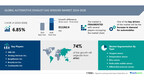
NEW YORK, July 2, 2024 /PRNewswire/ — The global automotive exhaust gas sensors market  size is estimated to grow by USD 11.26 billion from 2024-2028, according to Technavio. The market is estimated to grow at a CAGR of over 6.85%  during the forecast period.  Increase in demand for automobiles is driving market growth, with a trend towards cloud integration with OBD. However, increasing cost burden on oems  poses a challenge. Key market players include ABB Ltd., Analog Devices Inc., BorgWarner Inc., Broadcom Inc., Continental AG, DENSO Corp., Emerson Electric Co., Faurecia SE, HELLA GmbH and Co. KGaA, Hitachi Ltd., Honeywell International Inc., Hyundai Motor Co., Infineon Technologies AG, MS Motorservice International GmbH, Niterra Co. Ltd., Robert Bosch GmbH, Sensata Technologies Inc., Stoneridge Inc., Tenneco Inc., and Tohoku Shibaura Electronics Co. Ltd..

Get a detailed analysis on regions, market segments, customer landscape, and companies – Click for the snapshot of this report

Forecast period

2024-2028

Base Year

2023

Historic Data

2018 – 2022

Segment Covered

Type (Oxygen sensor, Temperature sensor, NOx sensor, Particulate matter sensor, and Differential pressure sensor), End-user (Passenger vehicles and Commercial vehicles), and Geography (APAC, Europe, North America, South America, and Middle East and Africa)

Region Covered

APAC, Europe, North America, South America, and Middle East and Africa

Key companies profiled

ABB Ltd., Analog Devices Inc., BorgWarner Inc., Broadcom Inc., Continental AG, DENSO Corp., Emerson Electric Co., Faurecia SE, HELLA GmbH and Co. KGaA, Hitachi Ltd., Honeywell International Inc., Hyundai Motor Co., Infineon Technologies AG, MS Motorservice International GmbH, Niterra Co. Ltd., Robert Bosch GmbH, Sensata Technologies Inc., Stoneridge Inc., Tenneco Inc., and Tohoku Shibaura Electronics Co. Ltd.

Key Market Trends Fueling Growth

The automotive exhaust gas sensors market is driven by advancements in sensor technology, enabling integration with cloud-based systems. These innovations offer benefits such as online support for repair services, fleet diagnostics, predictive maintenance, and improved driving tracking. However, security and privacy concerns arise due to the potential transfer of sensitive vehicle and personal data without consent. Robust system security and encryptions are essential prerequisites for cloud-connectivity in exhaust gas sensors to mitigate these risks and ensure market growth. 

The Automotive Exhaust Gas Sensors market is experiencing significant growth due to increasing regulations on emissions. These sensors play a crucial role in measuring exhaust gases and ensuring compliance with environmental standards. The market is driven by technological advancements, such as the integration of microelectromechanical systems (MEMS) and the development of real-time monitoring systems. Additionally, the rise in demand for fuel-efficient vehicles and the growing awareness of air quality are key trends shaping the market. The use of autonomous vehicles is also expected to boost the market, as sensors play a vital role in their operation. Overall, the Automotive Exhaust Gas Sensors market is poised for continued expansion in the coming years. 

Research report provides comprehensive data on impact of trend. For more details- Download a Sample Report

Market Challenges

The automotive exhaust gas sensors market is experiencing growth due to stricter emission regulations. OEMs are investing in new technologies and exhaust systems to meet these norms, including engine improvements, NOx and particulate matter treatments, and electronic controls. However, the use of precious metal sensors adds to manufacturing costs and vehicle prices, potentially decreasing demand. High-performance vehicles face even higher sensor replacement costs. These factors may challenge profit margins for OEMs and impact the market during the forecast period.The Automotive Exhaust Gas Sensors market faces several challenges. These sensors are essential for monitoring vehicle emissions and maintaining environmental regulations. However, the development of cost-effective and accurate sensors remains a significant challenge. Additionally, the integration of these sensors into complex vehicle systems requires extensive research and development. Furthermore, the need for sensors to detect various gases, such as carbon monoxide and nitrogen oxides, adds to the complexity. Lastly, ensuring the sensors’ durability and reliability under extreme temperatures and conditions is a continuous challenge. Despite these hurdles, advancements in technology and materials continue to drive innovation in the Automotive Exhaust Gas Sensors market.

For more insights on driver and challenges – Download a Sample Report

Segment Overview 

This automotive exhaust gas sensors market report extensively covers market segmentation by

Type 1.1 Oxygen sensor1.2 Temperature sensor1.3 NOx sensor1.4 Particulate matter sensor1.5 Differential pressure sensorEnd-user 2.1 Passenger vehicles2.2 Commercial vehiclesGeography 3.1 APAC3.2 Europe3.3 North America3.4 South America3.5 Middle East and Africa

1.1 Oxygen sensor-  Oxygen sensors are essential components in automotive exhaust systems, monitoring exhaust gas emissions and maintaining optimal engine performance. These closed-loop sensors detect oxygen molecules to determine the engine’s air-fuel mixture, ensuring it adheres to the stoichiometric ratio. Placed before and after the catalytic converter, they help reduce hydrocarbons and NOx emissions. Manufactured with zirconium bulbs and platinum electrodes, they have become standard equipment due to increasing regulatory compliance. New technologies like MEMS semiconductors are driving down costs, leading to wider adoption and market growth.

For more information on market segmentation with geographical analysis including forecast (2024-2028) and historic data (2018 – 2022)  – Download a Sample Report

Research Analysis

The Automotive Exhaust Gas Sensors Market encompasses the production, sales, and installation of sensors used to monitor exhaust gas emissions in automotive vehicles. These sensors play a crucial role in ensuring compliance with norms and regulations regarding vehicular emissions. They measure physical properties such as temperature, fluid level, and pressure to detect overheating, NOx emissions, and other pollutants. Exhaust gas sensors are integral components of engine control units in both passenger cars and commercial vehicles. Their function is essential for both efficiency, safety, and comfort, as well as for pollution control. The market for these sensors is expanding, driven by the growing demand for electric vehicles and the need for advanced exhaust sensors to improve exhaust gas treatment systems in diesel cars.

Learn and explore more about Technavio’s in-depth research reports

The global Automotive Engineering Service Providers (ESP) market is witnessing significant growth, driven by advancements in vehicle technologies and the increasing demand for innovative engineering solutions. Concurrently, the global Micromobility market is booming as urban areas embrace sustainable and efficient transportation options, such as e-scooters and e-bikes. Additionally, the global Automotive Digital Key market is expanding rapidly, fueled by the rising adoption of connected cars and the need for enhanced vehicle security and convenience. Together, these markets reflect a dynamic shift towards smarter, more efficient, and secure mobility solutions worldwide.

Market Research Overview

The Automotive Exhaust Gas Sensors market is a significant segment in the automotive industry, focusing on the development and implementation of sensors used to monitor exhaust gas emissions. These sensors play a crucial role in ensuring compliance with environmental regulations and improving vehicle performance. The market encompasses various types of sensors, including oxygen sensors, NOx sensors, and CO sensors. The demand for these sensors is driven by stringent emission norms and the increasing awareness of environmental sustainability. The market is also influenced by technological advancements, such as the integration of advanced sensors and the adoption of electric vehicles. The future of the Automotive Exhaust Gas Sensors market lies in the development of sensors that can accurately measure a wider range of emissions and provide real-time data to optimize vehicle performance and reduce emissions.

Table of Contents:

1 Executive Summary
2 Market Landscape
3 Market Sizing
4 Historic Market Size
5 Five Forces Analysis
6 Market Segmentation

TypeOxygen SensorTemperature SensorNOx SensorParticulate Matter SensorDifferential Pressure SensorEnd-userPassenger VehiclesCommercial VehiclesGeographyAPACEuropeNorth AmericaSouth AmericaMiddle East And Africa

7 Customer Landscape
8 Geographic Landscape
9 Drivers, Challenges, and Trends
10 Company Landscape
11 Company Analysis
12 Appendix


About Technavio

Technavio is a leading global technology research and advisory company. Their research and analysis focuses on emerging market trends and provides actionable insights to help businesses identify market opportunities and develop effective strategies to optimize their market positions.

With over 500 specialized analysts, Technavio’s report library consists of more than 17,000 reports and counting, covering 800 technologies, spanning across 50 countries. Their client base consists of enterprises of all sizes, including more than 100 Fortune 500 companies. This growing client base relies on Technavio’s comprehensive coverage, extensive research, and actionable market insights to identify opportunities in existing and potential markets and assess their competitive positions within changing market scenarios.

Contacts

Technavio Research
Jesse Maida
Media & Marketing Executive
US: +1 844 364 1100
UK: +44 203 893 3200
Email: media@technavio.com
Website: www.technavio.com/

View original content to download multimedia:https://www.prnewswire.com/news-releases/automotive-exhaust-gas-sensors-market-size-is-set-to-grow-by-usd-11-26-billion-from-2024-2028–increase-in-demand-for-automobiles-to-boost-the-market-growth-technavio-302187215.html

SOURCE Technavio

Continue Reading

Technology

Toku launches Makimoto Flows, a visual builder for speech AI pipelines, taking its open-source initiative beyond transcription

Published

on

By

Developers can chain transcription, summarisation and call tagging on one canvas, test each step and export the pipeline as code, with every step processed in Singapore

SINGAPORE, Oct. 21, 2026 /PRNewswire/ — Toku Ltd. (SGX: TKU), a Singapore-headquartered AI-powered customer experience (CX) platform, has launched Makimoto Flows (“Flows”), a visual builder within its open-source conversational AI initiative where developers assemble speech AI pipelines block by block and test each stage on a recorded call. Flows is now live at makimoto.ai.

On the Flows canvas, developers connect blocks to build a speech AI pipeline and test each step individually. The Transcribe block converts audio into text using Kawa, the Summarise block generates a topic and short summary from the transcript, and the Tags block classifies each call across seven categories, including customer sentiment. Developers can see how audio moves from transcription to analysis, and control how each stage connects and runs. Every block runs in Singapore, so audio, transcripts and the resulting analysis stay in-country.

The Chained Analysis starter template puts these blocks together in one click, and developers can adjust any block and rerun it to compare results. Each block maps to a Makimoto API endpoint, and any flow can be exported as ready-to-run Python code, so developers can take the same capabilities into their own code for applications such as call recaps and call triage.

“Developers should have control over how their voice AI works, from the models they use to the way each stage connects. That is the principle behind Makimoto. Flows puts the orchestration layer in front of them: they can build a pipeline, run a recorded call through it and see what each step produces before anything reaches their customers. Models will keep changing. The ability to compose them, and to know where they run, is what lasts,” said Thomas Laboulle, Founder and CEO at Toku.

Flows builds on the composable architecture Toku set out when it introduced Makimoto in April 2026, and takes the initiative beyond transcription. Kawa, released on schedule on 1 July 2026, established the transcription layer through a Singapore-hosted API; summarisation and tagging endpoints followed in September; Flows now lets developers compose them visually. Next, Makimoto plans to add audio preparation blocks, starting with noise filtering, giving developers more control over how recordings are processed before transcription.

By pairing open-source development with enterprise-grade deployment, Makimoto complements Toku’s existing customer experience platform and supports long-term innovation opportunities across the Group’s AI roadmap.

Developers can create a free account at makimoto.ai, open the Chained Analysis template and run a sample recording, or one of their own call recordings, through it; each account includes 1,000 free minutes. Feedback reaches the Makimoto team directly from the portal.

About Toku

Headquartered in Singapore, Toku Ltd. (SGX Catalist: TKU) is a cloud-native, AI-powered customer experience platform purpose-built for enterprises operating in complex, multi-market environments. With deep roots in the APAC region and an expanding global footprint, Toku’s modular 360° CX Platform orchestrates customer interactions across voice, chat, email and digital channels while managing regulatory, linguistic and infrastructure complexity at scale.

Built on end-to-end ownership of its technology stack, from carrier-grade connectivity to AI applications, Toku delivers enterprise-grade security, reliability and deployment flexibility in commercial cloud, private data centres and hybrid environments. Its AI capabilities include transcription, summarisation, sentiment analysis, conversation analytics and governed virtual agents, designed to integrate seamlessly with enterprise systems and customer data.

Trusted by leading enterprises and public-sector organisations, Toku helps organisations streamline operations, scale customer engagement and deliver consistent experiences in fragmented markets worldwide.

For more information about Toku, visit toku.co.

About Makimoto

Makimoto is Toku’s open-source initiative, operated through Makimoto Technology Pte Ltd, a wholly owned subsidiary of the Toku Group, dedicated to building composable conversational AI infrastructure for Asia-Pacific. Its releases include Makimoto Kawa, a Singapore-hosted transcription API; summarisation and tagging endpoints; and Makimoto Flows, a visual builder for composing speech AI pipelines. For more information about Makimoto, visit makimoto.ai.

Forward-Looking Statements

This press release contains forward-looking statements regarding Toku’s expansion plans, business strategy and planned product releases. These statements are based on current expectations and assumptions and are subject to risks and uncertainties that could cause actual results to differ materially. Toku undertakes no obligation to update these statements to reflect subsequent events or circumstances.

Sponsor’s Statement

Toku Ltd. (the “Company”) was listed on Catalist of the Singapore Exchange Securities Trading Limited (the “Exchange”) on 22 January 2026. The initial public offering of the Company was sponsored by PrimePartners Corporate Finance Pte. Ltd. (the “Sponsor”). This press release has been reviewed by the Sponsor. It has not been examined or approved by the Exchange and the Exchange assumes no responsibility for the contents of this press release, including the correctness of any of the statements or opinions made or reports contained in this press release. The contact person for the Sponsor is Ms. Ng Shi Qing, 16 Collyer Quay, #10-00 Collyer Quay Centre, Singapore 049318, sponsorship@ppcf.com.sg.

Investor Relations Contact:
investor.relations@toku.co

Developers and Partners:
contact@makimoto.ai  

View original content to download multimedia:https://www.prnewswire.com/apac/news-releases/toku-launches-makimoto-flows-a-visual-builder-for-speech-ai-pipelines-taking-its-open-source-initiative-beyond-transcription-302914906.html

SOURCE Toku Ltd.

Continue Reading

Technology

Conscious Spark LLC Launches Alphimiya® Neuro-Recalibration Framework Designed to Resolve C-Suite Revenue Plateaus

Published

on

By

New research-backed neuro-recalibration framework targets the autonomic nervous system’s threat response to managing high financial amounts, offering enterprise leaders a biological pathway to scaling.

ANTALYA, Turkey and ALBUQUERQUE, N.M., Oct. 21, 2026 /PRNewswire/ — Conscious Spark LLC, a research and advisory firm specializing in applied neuroscience for executive leadership, today announced the official launch of Alphimiya®, a proprietary C-suite neuro-recalibration framework designed to resolve corporate revenue plateaus by upgrading the biological capacity of enterprise decision-makers.

Developed to address the root causes of stalled enterprise growth, the Alphimiya® framework targets the human autonomic nervous system’s subconscious threat response to managing high financial amounts. When commercial leaders and CEOs attempt to scale past historical capital thresholds without recalibrating their stress response, the body’s natural survival mechanism triggers decision fatigue, strategic risk aversion, and systemic self-sabotage. Alphimiya® recalibrates this biological safety brake, enabling executive teams to hold, absorb, and scale larger financial volumes without physiological or operational friction.

“A corporate revenue plateau is rarely an operational or marketing failure; it is a biological safety brake embedded within executive leadership,” stated Dr. Ahmed Al-Nashi, Founder of Conscious Spark LLC. “When managing high financial amounts triggers an underlying physical stress response, the enterprise subconsciously contracts to remain in its perceived safe zone. Alphimiya® removes that biological friction, allowing C-level leaders to multiply revenue with calm, biological authority.”

The Alphimiya® framework restructures executive performance across three core operational pillars:

Sovereign Enterprise Scaling: Expands the nervous system’s tolerance for high-stakes capital, allowing leadership teams to scale revenue without experiencing executive burnout.

High-Value Deal Execution: Regulates autonomic stress responses during multi-million-dollar negotiations and volatile market entries, eliminating hesitation under pressure.

Restored Strategic Clarity: Removes chronic decision fatigue across C-suite teams, restoring mental focus and strategic presence inside and outside the boardroom.

By recalibrating the autonomic nervous system’s response to high capital exposure, Alphimiya® removes the subconscious biological brakes that lock corporate revenue at a standstill. Senior C-level executives and enterprise leadership teams seeking to evaluate their organization’s biological capacity can access the official executive briefing, case studies, and framework assessment directly at https://alphimiya.co/.

About Conscious Spark LLC

Conscious Spark LLC is a U.S.-registered firm specializing in executive education, training, and strategic performance consulting. Pioneering applied neuroscience for C-level leaders, founders, and commercial decision-makers, the firm utilizes its proprietary Alphimiya® methodology to enable leadership teams to recalibrate biological stress responses, resolve revenue ceilings, and build scalable corporations.

Media Relations Team
Conscious Spark LLC
Email: hello@consciousspark.online 
Website: https://alphimiya.co/

View original content to download multimedia:https://www.prnewswire.com/news-releases/conscious-spark-llc-launches-alphimiya-neuro-recalibration-framework-designed-to-resolve-c-suite-revenue-plateaus-302901454.html

SOURCE Conscious Spark LLC

Continue Reading

Technology

Daffodil Software Brings Multilingual Conversational AI to Aadhaar’s Udai Mascot

Published

on

By

GURUGRAM, India, Oct. 21, 2026 /PRNewswire/ — Daffodil Software showcased an AI-powered conversational experience featuring UIDAI’s Udai mascot at Aadhaar Samvaad 2026. Developed by Daffodil Software, the assistant is designed to help users access Aadhaar-related information through natural conversation, using official UIDAI as its reference knowledge base.

Daffodil Software has developed Udai, an AI-powered virtual mascot that helps users get clear, reliable answers about Aadhaar simply by talking to it. The assistant was showcased at Aadhaar Samvaad 2026, held in Kolkata on 29 September, coinciding with the 17th Aadhaar Day, where visitors watched it listen, respond, and gesture in real time in their own language.

For most people, questions about Aadhaar come up in daily life, and they usually need answers fast. Which documents do I need for an address change? How much does an update cost? How do I link Aadhaar to my bank account or mobile number? The answers exist, but finding them usually means working through long help pages and documents.

 Udai is designed to answer exactly these questions in a natural conversation, without anyone having to search through long help pages.

A conversation in the user’s own language

Udai speaks and understands 11 languages: Hindi, Tamil, Bengali, Telugu, Kannada, Malayalam, Marathi, Gujarati, Punjabi, Odia, and English. A user simply asks a question. Udai listens, works out the answer, and replies in the same language, with natural speech, matching lip movements and expressive hand gestures.

What sets Udai apart is how it is built. AI avatars rely on expensive, specialised graphics hardware to bring a face to life. Udai takes a simpler route. The character is created from pre-filmed footage, and its lip movements are matched to its speech in real time using lightweight processing that runs in a web browser.

The result is a smooth experience at 24 frames per second on ordinary servers, at a fraction of the usual cost per user. For a programme that serves hundreds of millions of people, that efficiency is what turns a nationwide rollout from an ambition into a practical plan.

“Our focus with Udai was to make Aadhaar-related information easier to access through natural conversation. Combining multilingual voice interaction with official reference content allowed our team to build an experience that is practical, approachable, and useful to users,” said Yogesh Agarwal, Founder and CEO, Daffodil Software.

Answers drawn only from official sources

The assistant uses official UIDAI material as its reference knowledge base: frequently asked questions, provisions of the Aadhaar Act, and government policy documents on Aadhaar services. It covers the topics users ask about most:

Enrolment and registrationAddress and demographic updatesFees, required documents and eligibilityeKYC and Virtual IDLinking Aadhaar with bank accounts, PAN and mobile numbersmAadhaar servicesGrievance redressal

Users don’t need to phrase their questions in any particular way. Udai understands everyday language, whether a question is spoken in English, Hindi, or asked in a mix of both, and finds the most relevant official information to answer it.

Built to be accurate, respectful, and secure

When a public service speaks directly to users, trust matters as much as convenience. Udai is protected by three layers of safeguards.

Accuracy first. Udai answers only from its verified knowledge base. Responses are grounded in a curated knowledge base of official UIDAI material. If a question falls outside Aadhaar, it guides the user back rather than offering an answer it cannot stand behind.

Respectful conversations. A screening layer catches abusive or offensive language in English, Hindi, and Hinglish before it reaches the assistant. Screening is designed to identify abusive language while supporting legitimate queries

Protection against misuse. Udai cannot be talked into abandoning its role, pretending to be someone else, revealing its internal setup, or answering beyond its approved scope. These checks work almost instantly, so users experience no delay.

What comes next?

Udai is planned to roll out in two phases.

In the first phase, the mascot will be placed in Aadhaar Centres. Visitors will be able to check information and understand processes on their own, such as which documents they need for an address change. This frees centre staff to focus on their core work instead of answering the same questions again and again.

In the second phase, Udai will come to the Aadhaar website and mobile app, taking the place of the current text-based chatbot, which was also built by Daffodil.

About Daffodil Software

Daffodil Software is a software engineering and AI solutions company serving businesses across industries. Its services span software consulting, product engineering, UI/UX design, AI/ML development, quality assurance, cloud and DevOps, and maintenance. The company serves sectors including healthcare, fintech, banking, technology, and digital commerce. Its client portfolio includes organizations such as the Reserve Bank of India, Mount Sinai Hospital, Maruti, Samsung, Pramerica Insurance, and Dangote Group. Daffodil Software has also been featured in industry research and recognition by Gartner, Everest Group, Zinnov, and Frost & Sullivan. For more information, visit https://www.daffodilsw.com

Media contact

Kunwar Pal Singh
media-relations@daffodilsw.com

View original content to download multimedia:https://www.prnewswire.com/in/news-releases/daffodil-software-brings-multilingual-conversational-ai-to-aadhaars-udai-mascot-302914965.html

Continue Reading

Trending