Connect with us

Technology

Cancer Registry Software Market size is set to grow by USD 97.1 million from 2024-2028, Growing prevalence of cancer cases to boost the market growth, Technavio

Published

on

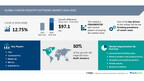
NEW YORK, July 17, 2024 /PRNewswire/ — The global cancer registry software market size is estimated to grow by USD 97.1 million from 2024-2028, according to Technavio. The market is estimated to grow at a CAGR of  12.75%  during the forecast period.  Growing prevalence of cancer cases is driving market growth, with a trend towards increasing clinical research for oncology. However, data privacy and security concerns poses a challenge. Key market players include CDC, Conduent Inc., Elekta AB, ERS Inc., Inspirata Inc., International Association of Cancer Registries, International Business Machines Corp., McKesson Corp., NeuralFrame Inc., OMH HealthEdge Holdings LLC, Onco Inc., Ordinal Data Inc., Redsson Ltd., Siemens AG, and University of Utah Health.

Get a detailed analysis on regions, market segments, customer landscape, and companies – Click for the snapshot of this report

Forecast period

2024-2028

Base Year

2023

Historic Data

2018 – 2022

Segment Covered

End-user (Government and third party, Pharma
biotech and medical device companies, Hospitals
and medical practice, Private payers, and
Research institutes), Type (Stand-alone software
and Integrated software), and Geography (North
America, Europe, Asia, and Rest of World (ROW))

Region Covered

North America, Europe, Asia, and Rest of World (ROW)

Key companies profiled

CDC, Conduent Inc., Elekta AB, ERS Inc.,
Inspirata Inc., International Association of Cancer
Registries, International Business Machines Corp.,
McKesson Corp., NeuralFrame Inc., OMH
HealthEdge Holdings LLC, Onco Inc., Ordinal Data
Inc., Redsson Ltd., Siemens AG, and University of
Utah Health

Key Market Trends Fueling Growth

Pharmaceutical and biopharmaceutical companies, along with research institutes, prioritize clinical trials to discover new cancer treatment methods. These trials enable medical professionals to assess treatment efficacy and identify potential diagnoses. Randomized clinical trials (RCTs) facilitate comparing care approaches and treatment options, supporting informed clinical decisions. Population-based and hospital-based cancer registries offer access to comprehensive data for researchers and healthcare providers. This data is crucial for recruiting large patient groups and analyzing causes and cures during clinical research. Advanced cancer registry software enhances data quality, improving clinical research and healthcare evaluation. Consequently, the growth of the cancer registry software market is anticipated during the forecast period. 

The Cancer Registry Software Market is witnessing significant growth due to the increasing incidence of cancer and the need for effective population health management. Software solutions are essential for tracking cancer-specific outcomes, including cancer deaths, prevalence, and staging. These systems help medical professionals capture and exchange health information data for coordinated care and chronic disease management. Cancer Registry Software is vital for hospitals and healthcare organizations to meet healthcare quality goals and adopt Electronic Health Records (EHR). Vendors offer customized solutions for specific areas like lung cancer, developmental disabilities, and cognitive capacities. The software facilitates evidence-based medicine through observational studies, data capture systems, and disease registries. Cancer Registry Software also addresses concerns like medical identity theft and supports cancer treatment through chemo, surgery, and supportive therapies. By providing cancer diagnostics and treatment information, these systems contribute to the adoption of evidence-based therapeutics and improved patient care. The Lung Cancer Foundation and other healthcare organizations can leverage these tools to improve healthcare outcomes and advance research in the field. 

Discover 360° analysis of this market. For complete information, schedule your consultation- Book Here!

Market Challenges

Cancer registry software is essential for collecting and maintaining patient demographic information related to cancer, including details on tumor characteristics, stage of disease, treatment, and outcome. Confidentiality is paramount in handling this sensitive data, as disclosure can cause psychological, emotional, and financial harm. Regulatory bodies and organizations are implementing new guidelines and laws to ensure data protection, such as the North American Association for Central Cancer Registries (NAACCR) and the Health Insurance Portability and Accountability Act (HIPAA). However, challenges persist, such as the use of cloud and computer systems for storing and transmitting data, which may result in data alteration or loss. Additionally, evolving technology and increasing cyberattacks in the healthcare industry pose significant security risks. These challenges may hinder the growth of the cancer registry software market during the forecast period. To address these challenges, it is crucial to adhere to established guidelines, invest in secure technology tools, and ensure proper network connectivity. For instance, the NAACCR provides standard guidelines for securing patient data against unauthorized access and release, while the HIPAA and HHS offer federal standards for protecting customer health data. In developing countries, guidance on planning and developing population-based cancer registration is available, but awareness of new laws and guidelines remains a concern. In conclusion, while cancer registry software plays a vital role in managing cancer data, maintaining confidentiality, and adhering to regulatory requirements is crucial to mitigate risks and ensure the effective use of this technology. By addressing challenges related to data security, network connectivity, and regulatory compliance, the cancer registry software market can continue to grow and provide valuable insights for cancer research and patient care.The Cancer Registry Software market is witnessing significant growth due to the rising prevalence of cancer and the increasing adoption of electronic health records (EHR). The market faces challenges in integrating data from various cancer treatments, including chemotherapy, surgery, and supportive therapies, into cancer registries. The need for evidence-based medicine and therapeutics requires seamless data integration and interoperability between healthcare systems. Medical professionals and patients benefit from cancer registries for disease staging, treatment planning, and cancer screenings. Security is a major concern, with data security and security protocols essential for protecting sensitive patient information. The market includes standalone and integrated software solutions for cancer reporting, patient care management, and medical research. The changing landscape of cancer care involves collaboration between hospitals, medical practices, pharmaceutical, biotech, and medical device companies, oncology departments, and research institutes. Cancer registries play a crucial role in improving cancer care and reducing healthcare costs.

For more insights on driver and challenges – Download a Sample Report

Segment Overview 

This cancer registry software market report extensively covers market segmentation by

End-user 1.1 Government and third party1.2 Pharma biotech and medical device companies1.3 Hospitals and medical practice1.4 Private payers1.5 Research institutesType 2.1 Stand-alone software2.2 Integrated softwareGeography 3.1 North America3.2 Europe3.3 Asia3.4 Rest of World (ROW)

1.1 Government and third party-  Cancer registry software is essential for government hospitals and third-party agencies to effectively manage and analyze data related to cancer cases. These solutions enable monitoring and tracking of cancer incidence, prevalence, and mortality rates, providing valuable information for public health planning, resource allocation, and policy development. By identifying trends and patterns, governments and third-party agencies can target high-risk populations and geographic disparities, as well as emerging cancer types. Additionally, cancer registry software helps improve the quality of cancer care by evaluating adherence to clinical guidelines, benchmarking outcomes, and identifying variations in treatment practices. This data-driven approach will fuel the expansion of the government and third-party segments in the global cancer registry software market during the forecast period.

For more information on market segmentation with geographical analysis including forecast (2024-2028) and historic data (2018 – 2022)  – Download a Sample Report

Learn and explore more about Technavio’s in-depth research reports

The global head and neck cancer treatment market is driven by advancements in targeted therapies and surgical techniques. Key players focus on personalized medicine and innovative drug development to improve patient outcomes and survival rates.

The global cancer biologics market continues to expand with the rise in biopharmaceutical research. Biologics offer targeted therapies with reduced side effects, driving adoption among oncologists worldwide. Emerging biotech firms and established pharmaceutical companies compete to introduce novel biologic treatments.

The global liquid biopsy market is poised for rapid growth, revolutionizing cancer diagnostics. Non-invasive detection methods using circulating tumor DNA and RNA enable early cancer detection and treatment monitoring. Innovations in sequencing technologies and biomarker research drive market expansion, offering promise for personalized oncology care.

Research Analysis

The Cancer Registry Software Market has witnessed significant growth due to the increasing incidence of cancer worldwide. According to the World Health Organization, there were an estimated 19.3 million new cases and 9.9 million deaths from cancer in 2020. With the adoption of Electronic Health Records (EHR) and the push towards evidence-based medicine, there is a growing demand for cancer registry software solutions. These systems help medical professionals track cancer treatment, including chemotherapy, surgery, and supportive treatments, and collect data on cancer-specific outcomes. The software also aids in the management of diagnostic data and post-endoscopic resection records. The market growth is further driven by the need to reduce healthcare costs and improve patient care. A guidance document issued by the National Cancer Institute outlines the importance of maintaining accurate and complete cancer data for research and public health purposes. Patients and medical professionals alike benefit from the use of cancer registry software, as it facilitates better communication and coordination among healthcare providers and enables more effective treatment plans.

Market Research Overview

The Cancer Registry Software market is witnessing significant growth due to the increasing prevalence of cancer and the adoption of electronic health records (EHR) in healthcare systems. The software solutions enable seamless data integration and interoperability, allowing medical professionals to access evidence-based medicine and make informed decisions for cancer treatment. These systems store data on cancer cases, including disease staging, treatment modalities such as chemo, surgery, and supportive therapies, and cancer screenings. Cancer registries play a crucial role in cancer reporting, patient care management, medical research, and clinical studies, leading to improved cancer care and cancer-specific outcomes. The software caters to various types of cancer and supports hospital workflows, coordinated care, and chronic disease management. The changing landscape of healthcare costs, population health management, health information exchange, and disease registries necessitates the use of cancer registry software. However, concerns around data security and security protocols are essential considerations for software vendors. The market includes standalone and integrated software solutions used by research institutes, hospitals, medical practices, pharmaceutical, biotech, and medical device companies, oncology departments, clinics, and other healthcare entities. The software supports cancer patients throughout the course of their disease, from diagnosis to treatment and beyond. Additionally, the software facilitates healthcare quality goals, hospital workflows, and observational studies, allowing for better data capture and management. Despite these benefits, challenges such as medical identity theft and cognitive capacities for using complex software remain.

Table of Contents:

1 Executive Summary
2 Market Landscape
3 Market Sizing
4 Historic Market Size
5 Five Forces Analysis
6 Market Segmentation

End-userGovernment And Third PartyPharma Biotech And Medical Device CompaniesHospitals And Medical PracticePrivate PayersResearch InstitutesTypeStand-alone SoftwareIntegrated SoftwareGeographyNorth AmericaEuropeAsiaRest Of World (ROW)

7 Customer Landscape
8 Geographic Landscape
9 Drivers, Challenges, and Trends
10 Company Landscape
11 Company Analysis
12 Appendix

About Technavio

Technavio is a leading global technology research and advisory company. Their research and analysis focuses on emerging market trends and provides actionable insights to help businesses identify market opportunities and develop effective strategies to optimize their market positions.

With over 500 specialized analysts, Technavio’s report library consists of more than 17,000 reports and counting, covering 800 technologies, spanning across 50 countries. Their client base consists of enterprises of all sizes, including more than 100 Fortune 500 companies. This growing client base relies on Technavio’s comprehensive coverage, extensive research, and actionable market insights to identify opportunities in existing and potential markets and assess their competitive positions within changing market scenarios.

Contacts

Technavio Research
Jesse Maida
Media & Marketing Executive
US: +1 844 364 1100
UK: +44 203 893 3200
Email: media@technavio.com
Website: www.technavio.com/

View original content to download multimedia:https://www.prnewswire.com/news-releases/cancer-registry-software-market-size-is-set-to-grow-by-usd-97-1-million-from-2024-2028–growing-prevalence-of-cancer-cases-to-boost-the-market-growth-technavio-302198405.html

SOURCE Technavio

Continue Reading
Click to comment

Leave a Reply

Your email address will not be published. Required fields are marked *

Technology

Tencent Brings Together AI and Games to Help Preserve and Share Cultural Heritage of New UNESCO Site in Jingdezhen

Published

on

By

Tencent applies AI and games to protect, reconstruct, and promote one of the world’s oldest porcelain traditions at newly inscribed UNESCO siteDigital initiatives create a new model for technology-driven heritage preservation globally using a multimodal AI dataset, AI-assisted artifact restoration, and interactive virtual experiences

SHENZHEN, China, July 25, 2026 /PRNewswire/ — Tencent (00700.HK) today announced the launch of Digital Jingdezhen: Porcelain Craft Adventure, an AI-powered cultural heritage game that enables users to explore Jingdezhen’s porcelain-making traditions and experience traditional craft techniques through interactive play. The launch coincides with the inscription of the Jingdezhen Handicraft Porcelain Industry Sites on the United Nations Educational, Scientific and Cultural Organization (UNESCO) World Heritage List.

Digital Jingdezhen is part of a broader cultural innovation initiative that applies Tencent’s AI and game technologies. Guided by Tencent’s vision of “Tech for Good”, the initiative leverages digital preservation to keep Jingdezhen’s thousand-year-old porcelain culture alive and relevant today, creating a living heritage with sustainable value and broad public engagement, and building a model that could be carried to heritage sites around the world.

Digital Preservation: Restoring and Unlocking Heritage with AI

Jingdezhen has a thousand years of living heritage; centuries of tradition are still active in its kilns today. To preserve this legacy, a cornerstone of the project was the Jingdezhen Porcelain Cultural Heritage Multimodal AI Dataset.

Over decades, historical records, heritage information, and craft specifications have accumulated into a massive volume of data. Tencent applied Optical Character Recognition (OCR), Natural Language Processing (NLP), and knowledge graph technologies to transform these dispersed materials into structured digital resources that can be analyzed, extracted, verified, and traced back to their original sources.

The dataset contains more than 30,000 documentary records, over 5,000 ceramic gene specimens, and data on nearly 1,000 representative ceramic artifacts in collections worldwide. It provides a digital foundation for cultural research, exhibition development, public interpretation and AI-powered heritage applications.

Building on this foundation, Tencent has developed a range of industry- and public-facing applications, including the Jingdezhen Ancient Ceramics Gene Database, the World Ceramics Interactive Map, and the Digital Jingdezhen AI Companion, providing researchers, heritage professionals, and the public with innovative AI-powered tools to explore and understand porcelain heritage.

Digital Activation: Bringing Jingdezhen’s Porcelain Heritage to Life Through AI and Games

To bring the public closer to Jingdezhen and its porcelain-making traditions, Digital Jingdezhen: Porcelain Craft Adventure utilizes AI-assisted Procedural Content Generation (PCG) to create the first large-scale digital recreation of the city’s five major porcelain heritage sites and historical production scenes. By rapidly mapping out town layouts and automatically generating architectural structures, decorative elements, and pedestrians, the technology brings Jingdezhen’s historic townscape back to life in the digital world.

The game also features high-quality AI digital humans built on large language models and the Jingdezhen Porcelain Cultural Heritage Multimodal AI Dataset. Through AI voice-driven facial expressions and Tencent Games’ proprietary animation technology, it creates warm, human-centered interactive experiences that make historical knowledge tangible and relatable. At the same time, AI-powered 3D generation allows users to quickly transform an uploaded image into a 3D porcelain form, lowering the barrier to participation and enabling anyone to turn creative inspiration into tangible ceramic forms in the digital space.

Continuing Heritage: Mobilizing the Community

Ensuring the longevity of Jingdezhen’s legacy requires active public participation. Tencent developed the Digital Heritage Guardian (Jingdezhen), a volunteer program built within the Weixin ecosystem. The program enables the public to support the upkeep and stewardship of physical heritage sites, creating a practical channel for community involvement in heritage protection.

“Our work in Jingdezhen is a testament to how ‘AI for Good’ can breathe new life into ancient traditions,” said Zhan Shu, Head of Digital Culture Lab, Tencent. “Working alongside dedicated heritage experts, we have contributed our capabilities in AI and digital technologies to unlock decades of dormant archives for this incredible new UNESCO site. We are proud to help bridge the gap between the thousand-year porcelain heritage and the digital era, creating new ways for the global public to connect with Jingdezhen’s living history, and a model for heritage sites worldwide.”

For media queries, please contact: gc@tencent.com

About Tencent

Tencent is a global technology and entertainment company focused on creating connections and experiences that matter. Founded in 1998, Tencent is driven by its mission to create “Value for Users” and apply “Tech for Good.”

Tencent’s communication and social services connect more than one billion people around the world, helping them to keep in touch with friends and family, access transportation, pay for daily necessities, and even be entertained. Tencent also develops and publishes some of the world’s most popular video games and other high-quality digital content, delivering rich and immersive interactive entertainment experiences. Tencent also offers a range of services such as cloud computing and other enterprise services to support our clients’ digital transformation and business growth. Headquartered in Shenzhen, Tencent has been listed on the Main Board of the Stock Exchange of Hong Kong since June 2004.

View original content:https://www.prnewswire.com/news-releases/tencent-brings-together-ai-and-games-to-help-preserve-and-share-cultural-heritage-of-new-unesco-site-in-jingdezhen-302834555.html

SOURCE Tencent

Continue Reading

Technology

Hyundai Motor Group Executive Chair Euisun Chung Announces Physical AI Vision at San Francisco AI Summit

Published

on

By

Hyundai Motor Group shares roadmap for realizing its Physical AI vision and collaboration strategy with global tech leaders at the San Francisco AI SummitExecutive Chair Euisun Chung presented, “Hyundai Motor Group is evolving beyond the traditional boundaries of automotive manufacturing to become a Physical AI solution company,” adding, “The ultimate Physical AI vision we pursue is the realization of integrated intelligence at the city level”The Group to leverage manufacturing competitiveness and leading robotics capabilities centered on Boston Dynamics, while establishing a data flywheel system connecting real-world operational data with continuous AI model advancementThe Group to leverage strategic partnerships with global technology leaders, including NVIDIA and Waymo, as well as Boston Dynamics’ strategic partnership with Google DeepMindThe Group to collaborate with NVIDIA to develop a Robot Reference Platform that combines Hyundai Motor Group’s and NVIDIA’s Physical AI capabilities

… The initiative to support Korea’s Physical AI industry through an open ecosystem

The Group to cultivate strategic domestic hubs through investments in Saemangeum AI Valley and future advanced industries in Korea’s Yeongnam region

SAN FRANCISCO, July 25, 2026 /PRNewswire/ — Hyundai Motor Group (the Group) Executive Chair Euisun Chung today outlined the Group’s vision and strategy for Physical AI at the San Francisco AI Summit held in San Francisco, California.

The event brought together approximately 150 attendees, including Executive Chair Chung, business leaders from major Korean companies, executives from leading U.S. technology firms, startup representatives and students.

At the summit, Executive Chair Chung presented the Group’s roadmap for advancing Physical AI and outlined strategic collaboration plans with global technology leaders.

“Hyundai Motor Group is evolving beyond the traditional boundaries of automotive manufacturing by expanding into autonomous driving, robotics and AI Defined Factories, accelerating our transformation into a Physical AI solution company.” — Hyundai Motor Group Executive Chair Euisun Chung

Accelerating the Transition to a Physical AI Solution Company

Hyundai Motor Group’s Physical AI vision extends beyond intelligent devices such as vehicles and robots to intelligent spaces, including AI factories where AI seamlessly connects and optimizes entire operations. Ultimately, the Group envisions integrated intelligence at the city level, where urban infrastructure is organically connected and operated through AI.

A key differentiator for the Group is its ability to create a data flywheel that continuously connects real-world operations with AI advancement. Drawing on extensive experience in large-scale manufacturing, mobility, robotics and service operations, the Group is positioned to deploy, refine and scale Physical AI technologies in real industrial environments.

Executive Chair Chung also outlined strategic partnerships with leading technology companies, including NVIDIA and Waymo, as well as Boston Dynamics’ strategic partnership with Google DeepMind, to further advance Physical AI capabilities.

By combining Hyundai Motor Group’s manufacturing competitiveness, mobility and robotics technologies and extensive operational data with the AI infrastructure and algorithm capabilities of global technology leaders, the Group aims to help foster a new innovation ecosystem for the Physical AI era.

Executive Chair Chung also introduced initiatives designed to support the growth of Korea’s robotics and AI ecosystem, including the development of a Robot Reference Platform with NVIDIA that combines Hyundai Motor Group’s and NVIDIA’s Physical AI capabilities, as well as investments in initiatives such as the Saemangeum AI Valley.

Physical AI Vision: From Intelligent Devices to Integrated Intelligence at the City Level

During the summit, Executive Chair Chung presented Hyundai Motor Group’s Physical AI vision.

“The ultimate Physical AI vision Hyundai Motor Group pursues begins with intelligent devices such as vehicles and robots, expands to intelligent spaces such as AI factories, and ultimately realizes integrated intelligence at the city level, where urban infrastructure is seamlessly connected and operated.” — Hyundai Motor Group Executive Chair Chung

The Group’s vision begins with intelligent devices, where AI capabilities enhance vehicles and robots. It then expands to intelligent spaces, including AI factories where AI autonomously integrates logistics, production and quality management across entire operations.

Ultimately, Hyundai Motor Group envisions city-level intelligence, where critical infrastructure and assets — including energy, mobility and robotics systems — are connected and optimized in real time.

Executive Chair Chung also highlighted the Group’s key strengths in realizing its Physical AI vision:

World-class manufacturing competitiveness: Hyundai Motor Group has built extensive expertise through decades of operating global manufacturing facilities, managing quality systems and optimizing supply chains. This foundation enables the Group to apply AI technologies to products, processes and services while rapidly validating and scaling innovations in real-world environments.Leading robotics capabilities: Hyundai Motor Group has established robotics as a key pillar of its future business portfolio. Boston Dynamics’ quadruped robot Spot®, logistics robot Stretch®, and Hyundai Motor Group Robotics LAB’s next-generation mobile robot platform MobED are recognized for combining technological competitiveness with real-world applicability.

In particular, the humanoid robot Atlas® is emerging as a representative example of Physical AI, supporting and collaborating with people across manufacturing, logistics and mobility environments.

Establishing a data flywheel system: Hyundai Motor Group is establishing a data flywheel system that leverages data generated across manufacturing operations, vehicles, logistics systems and robotics demonstrations to continuously advance AI models. Enhanced algorithms are then reapplied to real-world operations, creating a virtuous cycle that improves performance and strengthens Physical AI capabilities.

Accelerating the Future of Physical AI Through Partnerships with Global Tech Leaders

Executive Chair Chung also outlined concrete initiatives to position Hyundai Motor Group as a leader in human-centered Physical AI through strategic collaborations with NVIDIA and Waymo, as well as Boston Dynamics’ strategic partnership with Google DeepMind.

“By combining Hyundai Motor Group’s strengths in manufacturing, robotics and data with the capabilities of global technology leaders, we can help create a new innovation ecosystem for the Physical AI era.” — Hyundai Motor Group Executive Chair Euisun Chung

NVIDIA – Advancing Physical AI infrastructure and talent development

Hyundai Motor Group is expanding collaboration with NVIDIA to strengthen Physical AI infrastructure and cultivate AI talent. Building on a supply agreement for 50,000 NVIDIA Blackwell GPUs and a memorandum of understanding signed last year to advance Korea’s Physical AI capabilities, the Group is pursuing a range of initiatives, including the establishment of Hyundai Motor Group Robot Application Center, as well as various collaborations aimed at strengthening Korea’s Physical AI infrastructure and AI talent ecosystem, including the NVIDIA’s AI Technology Center.

In manufacturing, the Group is leveraging NVIDIA’s platform to create more sophisticated digital twins of production facilities, enhancing process design, operational optimization and validation efficiency. The collaboration also includes the integration of NVIDIA’s autonomous driving solutions, including automotive semiconductors, sensors and architecture, with Hyundai Motor Group vehicle platforms.

Waymo – Strengthening autonomous driving collaboration

Hyundai Motor Group continues to strengthen its strategic partnership with Waymo in the autonomous driving sector to support the development of a safe and innovative autonomous driving ecosystem. Autonomous driving vehicles require a wide range of specialized capabilities, including redundant systems for steering, braking, power and communications, dedicated features such as power-operated doors, as well as enhanced functional safety and cybersecurity technologies.

Hyundai Motor Group plans to produce IONIQ 5 vehicles with specific autonomous-ready modifications at Hyundai Motor Group Metaplant America (HMGMA) in Georgia.

Google DeepMind – Accelerating next-generation humanoid robotics

Boston Dynamics has established a strategic partnership with Google DeepMind to accelerate the development of next-generation humanoid robots. Advanced AI models and training systems are essential for robots to perform complex tasks in real-world environments and collaborate effectively with people. Through this partnership, Boston Dynamics robots are expected to achieve greater autonomy and adapt more effectively to complex operating environments.

Hyundai Motor Group plans to establish a robot production facility in the U.S. with an annual capacity of up to 30,000 units by 2028. The Atlas humanoid robot will first be deployed at production facilities including HMGMA before broader deployment is expanded through phased validation.

Building an Open Ecosystem Through the Robot Reference Platform and Continued Investment in Korea’s Physical AI Future

Executive Chair Chung also outlined initiatives aimed at supporting the growth of Korea’s Physical AI ecosystem through open collaboration and continued investment.

“The outcomes of collaboration with global technology leaders should contribute to the growth of Korea’s Physical AI industry. To that end, Hyundai Motor Group plans to foster an open ecosystem that supports innovation in robotics and AI technologies.” — Hyundai Motor Group Executive Chair Euisun Chung

Key initiatives to build an open ecosystem for robotics and AI innovation include:

Robot Reference Platform: Hyundai Motor Group and NVIDIA are collaborating to develop a Robot Reference Platform that combines Hyundai Motor Group’s and NVIDIA’s Physical AI capabilities.

The platform will provide research robot models to universities, research institutes and startups, helping foster an open ecosystem that supports technological innovation and the development of Physical AI talent while contributing to the broader growth of Korea’s robotics and AI industries. 

Supporting universities, research institutes and startups: The Robot Reference Platform is expected to provide universities, research institutes and startups with a standardized hardware and software environment, enabling them to more easily develop and validate Physical AI technologies. The initiative aims to help address challenges faced by organizations with innovative ideas but limited access to commercialization opportunities and validation infrastructure.

Hyundai Motor Group is also continuing large-scale investments aimed at driving the next leap forward in Korea’s industrial and technology ecosystem. Continued investments in Korea’s industrial and technology ecosystem include:

Saemangeum AI Valley: In the Saemangeum region of Jeonbuk State, the Group is developing Saemangeum AI Valley, which includes an approximate KRW 9 trillion investment in AI data centers, robotics manufacturing clusters, electrolyzer plants and AI hydrogen city infrastructure. 

In particular, the robotics manufacturing cluster will serve not only as a production base for the Group’s own robotics products, but also as a robotics foundry that provides manufacturing services for small and medium-sized enterprises that lack manufacturing expertise.

Advanced industrial hubs in the Yeongnam region: Hyundai Motor Group plans to invest a total of KRW 42 trillion over the next decade to foster advanced industrial hubs focused on AI-driven manufacturing, future aerospace industries and sustainable energy infrastructure.

Through these initiatives, Hyundai Motor Group aims to strengthen key foundations for the Physical AI era, including data and energy infrastructure, robotics production capabilities and real-world validation capabilities. The Group also expects these investments to contribute to enhanced industrial competitiveness, balanced regional development, job creation and broader economic vitality in Korea.

About Hyundai Motor Group

Hyundai Motor Group is a global enterprise that has created a value chain based on mobility, steel, and construction, as well as logistics, finance, IT, and service. With about 250,000 employees worldwide, the Group’s mobility brands include Hyundai, Kia, and Genesis. Armed with creative thinking, cooperative communication, and the will to take on any challenges, we strive to create a better future for all.

More information about Hyundai Motor Group can be found at: http://www.hyundaimotorgroup.com or Newsroom: Media Hub by Hyundai, Kia Global Newsroom, Genesis Newsroom

View original content to download multimedia:https://www.prnewswire.com/news-releases/hyundai-motor-group-executive-chair-euisun-chung-announces-physical-ai-vision-at-san-francisco-ai-summit-302834557.html

SOURCE Hyundai Motor Company

Continue Reading

Technology

Reliance Digital Brings Samsung’s Latest Galaxy Z Fold8 Series and Galaxy Z Flip8 to Stores Across India

Published

on

By

Be among the first to own the new Samsung Galaxy Z Fold8 series and Galaxy Z Flip8. Customers can now pre-order the latest Galaxy foldables at Reliance Digital, with EMIs starting at ₹6000/month.

MUMBAI, India, July 25, 2026 /PRNewswire/ — Reliance Digital, India’s leading consumer electronics retailer, today announced the availability of Samsung’s latest generation of foldable smartphones – the Galaxy Z Fold8 Ultra, Galaxy Z Fold8 and Galaxy Z Flip8. Designed to deliver the next evolution of Galaxy AI, powerful performance and iconic foldable innovation, Samsung’s newest line-up is now available across Reliance Digital stores and online.

Built around Samsung’s vision of making AI more intuitive and personal, the new Galaxy foldables combine immersive displays, premium craftsmanship and intelligent experiences that seamlessly adapt to the way users work, create and stay connected.

Leading the line-up is the Galaxy Z Fold8 Ultra, Samsung’s most premium foldable yet. Featuring an expansive 8-inch Dynamic AMOLED 2X main display, a flagship 200MP camera, the latest Snapdragon® 8 Elite Gen 5 for Galaxy processor and a 5,000mAh battery, the device is engineered for users who demand the ultimate in productivity, creativity and entertainment. It is available in Graphite, Cream and Violet Shadow,.

The Galaxy Z Fold8 brings Samsung’s signature foldable experience in a more compact form factor, featuring a 7.6-inch Dynamic AMOLED 2X main display, a redesigned wider cover screen, Galaxy AI-powered multitasking and flagship-grade performance. Customers can choose from Lavender, Graphite and Cream colour options.

Completing the line-up is the Galaxy Z Flip8, Samsung’s most stylish foldable smartphone, designed for users who want flagship performance in a compact, pocket-friendly form. Equipped with a vibrant 6.9-inch Dynamic AMOLED 2X display, an enhanced FlexWindow, a 50MP camera system and Galaxy AI experiences, the Flip8 effortlessly blends fashion with functionality.

Customers can visit their nearest Reliance Digital store to experience the new foldables first-hand with guidance from Reliance Digital’s Tech Dosts, compare models, explore exclusive launch offers and Pre-order the Galaxy device that best fits their lifestyle. The complete Galaxy Z Fold8 series and Galaxy Z Flip8 are also available through Reliance Digital’s online platform, ensuring customers can be among the first to own Samsung’s latest foldable innovations.

View original content to download multimedia:https://www.prnewswire.com/in/news-releases/reliance-digital-brings-samsungs-latest-galaxy-z-fold8-series-and-galaxy-z-flip8-to-stores-across-india-302834321.html

Continue Reading

Trending