Connect with us

Technology

Offshore Structural Analysis Software Market size is set to grow by USD 542.5 million from 2024-2028, Increasing demand from the oil and gas industry boost the market, Technavio

Published

on

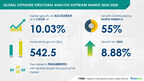
NEW YORK, July 29, 2024 /PRNewswire/ — The global offshore structural analysis software market size is estimated to grow by USD 542.5 million from 2024-2028, according to Technavio. The market is estimated to grow at a CAGR of 10.03% during the forecast period. Increasing demand from the oil and gas industry is driving market growth, with a trend towards advent of cloud computing technology in offshore structural analysis. However, lack of workers with digital skills poses a challenge. Key market players include AVL List GmbH, Bentley Systems Inc., BMT Group Ltd., Dlubal Software Inc., DNV Group AS, Dogtooth Technologies Ltd., Energid Technologies Corp., FFRobotics, Harvest CROO Robotics LLC, Iron Ox Inc., John Wood Group PLC, MetoMotion, Panasonic Holdings Corp., Ramboll Group AS, Robert Bosch GmbH, Stewart Technology Associates, Viking Systems Inc., Vision Robotics Corp., and Zebec Marine Consultant and Services.

Get a detailed analysis on regions, market segments, customer landscape, and companies- View the snapshot of this report

Offshore Structural Analysis Software Market Scope

Report Coverage

Details

Base year

2023

Historic period

2018 – 2022

Forecast period

2024-2028

Growth momentum & CAGR

Accelerate at a CAGR of 10.03%

Market growth 2024-2028

USD 542.5 million

Market structure

Fragmented

YoY growth 2022-2023 (%)

8.88

Regional analysis

North America, Middle East and Africa, Europe, APAC, and South America

Performing market contribution

North America at 55%

Key countries

US, Saudi Arabia, Russia, China, and Canada

Key companies profiled

AVL List GmbH, Bentley Systems Inc., BMT Group Ltd., Dlubal Software Inc., DNV Group AS, Dogtooth Technologies Ltd., Energid Technologies Corp., FFRobotics, Harvest CROO Robotics LLC, Iron Ox Inc., John Wood Group PLC, MetoMotion, Panasonic Holdings Corp., Ramboll Group AS, Robert Bosch GmbH, Stewart Technology Associates, Viking Systems Inc., Vision Robotics Corp., and Zebec Marine Consultant and Services

Market Driver

The offshore structural analysis software market is witnessing a significant trend with the adoption of cloud computing technology. Traditionally an on-premises offering, offshore structural analysis software is now being delivered via cloud platforms. This shift enhances computing capacity by granting customers access to the processing power of multiple high-end machines. Pre- and post-processing tasks are still performed locally, but the model is sent to the cloud for analysis, enabling users to complete other tasks on their local machines until results are transmitted back. Bentley Systems’ SACS Cloud Services is an example of cloud-enabled offshore structural analysis software. It allows the analysis of large and compute-intensive models using the latest cloud version and high-end hardware without straining desktop bandwidth. Simultaneous execution of multiple analyses is possible, increasing productivity and reducing time. Cloud computing services offer several benefits for offshore structural analysis. Users can access the application from any device connected to the internet, eliminating the need to store analysis data on their devices. Hardware with high performance is no longer necessary as all calculations are performed in the cloud. Sharing calculation models with colleagues is simplified, and installation, update, maintenance, and compatibility issues are eliminated. Best resource allocation and a pay-per-use facility ensure cost efficiency. 

The Offshore Structural Analysis Software market is experiencing significant growth due to increasing demand from the maritime industry, particularly in sectors like oil and gas, power generation, and defense. Key trends include the use of skidding systems and tension decks for offshore installation. End users, including architects and engineers, require advanced software to analyze offshore structures under extreme weather conditions and environmental loads. Cloud-based software and deployment services are gaining popularity for their flexibility and cost-effectiveness. Financial performance and performance prediction are crucial factors for investment expenses. Ground-level workers benefit from software that can handle nonlinear structural analysis and predict offshore structural failure. Subsea platforms, protecting structures, and drilling templates are other areas of focus. Physical space constraints and remote locations necessitate advanced solutions. Technical development continues with on-premise software and managed services, offering customized solutions for various industries. Offshore structures in marine environments face unique challenges, and software must provide accurate information on environmental loads and performance under extreme conditions. Overall, the market is expected to continue growing as offshore structures become increasingly complex and critical to various industries. 

Discover 360° analysis of this market. For complete information, schedule your consultation – Book Here!

Market Challenges

The global offshore structural analysis market faces a significant challenge due to the shortage of a digitally skilled workforce capable of effectively operating offshore structural analysis software. Companies require a workforce familiar with software platforms for building models and designs, as well as analyzing the outcomes of these solutions. The ability to use connected systems and integrated software applications is essential for analyzing, designing, and simulating the response of complex offshore structures and vessels. However, the lack of workers with combined skills in both software platforms and offshore structure analysis is a major hindrance to market growth. To effectively use offshore structural analysis software, workers must be knowledgeable in areas such as nonlinear structural analysis, dynamic response analysis due to environmental loads, impact effects analysis, and severe accidental loadings analysis. For instance, analyzing the setup of an offshore structure like a wind turbine using offshore structural analysis software necessitates an understanding of the software platform to explore design options, comprehend behavior, and accurately predict the structural performance of offshore wind farm platforms. Consequently, the absence of a skilled workforce with a combined understanding of software platforms and offshore structures is a significant barrier to market expansion during the forecast period.The Offshore Structural Analysis Software Market faces unique challenges in the maritime industry. Key challenges include analyzing complex structures like skidding systems and tension decks for offshore oil and gas platforms and subsea platforms. End users in defense, maritime, power generation, and government sectors require software to protect structures from extreme weather conditions, environmental loads, and physical space constraints in remote locations. Offshore structural analysis software must cater to architects and engineers, providing cloud-based and on-premise solutions, managed services, and professional services. Financial performance and initial investment are crucial considerations, with nonlinear structural analysis essential for predicting performance and preventing offshore structural failure. Cloud-based software deployment and cloud-based computing offer flexibility, while deployment services ensure seamless integration. Power production platforms and drilling templates require specialized analysis. Ground-level workers need user-friendly software to effectively manage and mitigate risks. Market players must address the challenges of managing large amounts of data related to marine, offshore structures, and environmental loads information. Technical development and investment expense are ongoing priorities for companies in this market.

For more insights on driver and challenges – Request a sample report!

Segment Overview 

This offshore structural analysis software market report extensively covers market segmentation by  

End-user 1.1 Oil and gas1.2 Maritime1.3 Power generation1.4 Government and defenceGeography 2.1 North America2.2 Middle East and Africa2.3 Europe2.4 APAC2.5 South America

1.1 Oil and gas-  The Offshore Structural Analysis Software Market is experiencing significant growth due to increasing offshore oil and gas exploration activities. Companies are investing in advanced software solutions to design and analyze offshore structures for improved safety, efficiency, and cost savings. These software tools enable engineers to simulate various environmental conditions, perform structural analyses, and optimize designs in a virtual environment. This results in reduced physical testing, faster time-to-market, and enhanced operational excellence. Market leaders include Siemens, ABS, and DNV GL, offering comprehensive solutions to cater to the evolving needs of the industry.

For more information on market segmentation with geographical analysis including forecast (2024-2028) and historic data (2017-2021) – Download a Sample Report

Learn and explore more about Technavio’s in-depth research reports

The global Maritime Surveillance market is expanding rapidly, driven by increasing maritime security concerns and technological advancements. As of 2024, the market is projected to grow significantly, with key players innovating in surveillance technologies to enhance border and port security. The global Wind Turbine Monitoring Systems market is also on the rise, fueled by the growing demand for efficient and reliable renewable energy sources. Advanced monitoring solutions are enhancing turbine performance and maintenance, contributing to market growth. In the global Gym Management Software market, increasing fitness awareness and digital transformation are propelling the adoption of sophisticated gym management solutions, streamlining operations and improving member engagement.

Research Analysis

The Offshore Structural Analysis Software market caters to the design, analysis, and optimization of offshore structures used in various industries such as Marine, Oil and Gas, Power Generation, Government and Defense. These structures include subsea platforms, offshore wind turbines, and other marine constructions. The software helps architects and engineers to analyze and predict the performance of offshore structures under extreme weather conditions, environmental loads, and physical space constraints. It utilizes nonlinear structural analysis to account for complex loading scenarios and potential offshore structural failure. End customers include maritime industries, defense organizations, and government agencies. Cloud-based computing enables easy access to environmental loads information and allows for real-time performance prediction. Ground-level workers and engineers benefit from the software’s ability to protect structures and ensure safety in remote locations. The initial investment in offshore structural analysis software can be high, but the long-term benefits in terms of improved design, reduced construction costs, and increased operational efficiency make it a valuable investment.

Market Research Overview

The Offshore Structural Analysis Software market caters to the design, analysis, and optimization of offshore structures used in various industries such as Marine, Oil and Gas, Power Generation, Government and Defense, and Environmental loads assessment. This software is essential for architects and engineers to ensure the structural integrity of offshore platforms, drilling templates, skidding systems, tension decks, and subsea protecting structures under extreme weather conditions and physical space constraints. The market offers both cloud-based and on-premise solutions, along with deployment services, managed services, and professional services. End users include maritime, defense, architects and engineers, and power production companies. The investment expense for offshore structural analysis software includes the initial investment for the software and ongoing costs for technical development and performance prediction. The software helps in analyzing nonlinear structural behavior, predicting offshore structural failure, and providing environmental loads information to ensure financial performance and safety for ground-level workers.

Table of Contents:

1 Executive Summary
2 Market Landscape
3 Market Sizing
4 Historic Market Size
5 Five Forces Analysis
6 Market Segmentation

End-userOil And GasMaritimePower GenerationGovernment And DefenceGeographyNorth AmericaMiddle East And AfricaEuropeAPACSouth America

7 Customer Landscape
8 Geographic Landscape
9 Drivers, Challenges, and Trends
10 Company Landscape
11 Company Analysis
12 Appendix

About Technavio

Technavio is a leading global technology research and advisory company. Their research and analysis focuses on emerging market trends and provides actionable insights to help businesses identify market opportunities and develop effective strategies to optimize their market positions.

With over 500 specialized analysts, Technavio’s report library consists of more than 17,000 reports and counting, covering 800 technologies, spanning across 50 countries. Their client base consists of enterprises of all sizes, including more than 100 Fortune 500 companies. This growing client base relies on Technavio’s comprehensive coverage, extensive research, and actionable market insights to identify opportunities in existing and potential markets and assess their competitive positions within changing market scenarios.

Contacts

Technavio Research
Jesse Maida
Media & Marketing Executive
US: +1 844 364 1100
UK: +44 203 893 3200
Email: media@technavio.com
Website: www.technavio.com/

View original content to download multimedia:https://www.prnewswire.com/news-releases/offshore-structural-analysis-software-market-size-is-set-to-grow-by-usd-542-5-million-from-2024-2028–increasing-demand-from-the-oil-and-gas-industry-boost-the-market-technavio-302207688.html

SOURCE Technavio

Continue Reading

Technology

Dahua Technology Showcases Integrated Smart Living and Innovations at IFA Berlin 2026

Published

on

By

BERLIN, Sept. 4, 2026 /CNW/ — Dahua Technology, a world-leading video-centric AIoT solution and service provider, is showcasing its expanding portfolio of intelligent products and solutions at IFA Berlin 2026, highlighting the company’s continued innovation in its core technology strengths while extending AIoT capabilities into a broader range of business areas.

At this year’s exhibition, Dahua is presenting innovations spanning wireless surveillance, intrusion alarm, video intercom, monitor, and fire safety. The lineup demonstrates how Dahua is building on its expertise in video, AI, and intelligent security to address a wider range of residential, commercial, and professional needs.

WITHS: Extending Professional Security through Wireless Innovation

Developed around the concept of “Simple, Smart, Secure”, WITHS brings Dahua’s professional imaging and intelligent security expertise into a flexible wireless portfolio designed for easier deployment and management.

Supporting Wi-Fi, 4G, and DMSS app control, WITHS helps reduce cabling requirements and enables smaller installations to be conveniently managed through mobile devices, while NVR-based management supports larger applications. Its intelligent capabilities include human, pet, and vehicle detection, auto tracking, gesture recognition, facial recognition, AOV/AOR recording, WizColor imaging, and two-way talk. It covers indoor, outdoor, wire-free, and off-grid scenarios, including solar-powered and high-capacity battery options.

Dahua AirShield: Integrated Wireless Intrusion Protection

Dahua AirShield provides wireless intrusion protection by integrating alarm devices with surveillance, video intercom, and other security systems. Its Airfly private RF protocol supports event transmission between alarm hubs and wireless peripherals, while RF-HD enables rapid image and audio transmission from compatible devices.

The solution supports wired devices through expansion modules, helping users modernize existing systems while reducing upgrade costs. Powered by DoLynk Cloud, AirShield connects end-users, installers, and Alarm Receiving Centers through DMSS and DoLynk Care. AP Mode provides flexible network configuration, while Cloud Update enables one-click upgrades of alarm hubs and wireless peripherals.

Dahua WizTalk: Intelligent Residential Video Intercom

Dahua WizTalk, the company’s flagship IP video intercom series, combines high-resolution imaging, AI capabilities, integrated security, and intelligent residential control. Selected door stations feature 5MP or 5MP+2MP dual-camera configurations, full-color night vision, ultra-wide viewing angles, and panoramic vertical dual-lens designs.

WizTalk supports detection of people, loitering, vehicles, packages, and pets, while selected models also provide crying detection. Its indoor panels integrate video surveillance, PTZ control, digital zoom, and intrusion alarm functions. SCP Series Smart Control Panels running Android 14 also support compatible third-party applications, allowing multiple functions to be managed through a unified interface.

More Technological Innovations Beyond Security

Beyond these core highlights, Dahua is also presenting fire safety solutions and gaming monitors, further demonstrating the breadth of the company’s growing product portfolio. Wisualarm extends Dahua’s capabilities into professional fire detection and alarm applications, including connected fire protection and AI-assisted early fire detection, while Dahua monitors address commercial, gaming, and residential display needs.

“IFA gives us an opportunity to show both the depth of our technology expertise and the breadth of our growing portfolio,” said Eason Rao, Overseas Product General Manager at Dahua. “We are continuing to strengthen our core businesses while exploring new opportunities and developing solutions that bring intelligent technology to more applications and customers.”

Experience Dahua at IFA 2026!

Visitors can experience Dahua’s latest technologies through live demonstrations and speak directly with the company’s product and business teams about their applications and development. Through its diverse portfolio, Dahua continues to strengthen its core businesses while exploring new opportunities to bring intelligent technology to more customers and scenarios.

IFA Berlin 2026 | September 4–8, 2026 | Berlin, Germany 
Dahua Booth: H1.2-173

View original content to download multimedia:https://www.prnewswire.com/news-releases/dahua-technology-showcases-integrated-smart-living-and-innovations-at-ifa-berlin-2026-302870256.html

SOURCE Dahua Technology

Continue Reading

Technology

Optima Announces Strategic Partnership with Arthur to Advance Immersive and AI-Powered Learning

Published

on

By

Optima announces a strategic partnership with Arthur to advance its immersive, AI-powered learning vision.

NAPLES, Fla., Sept. 4, 2026 /PRNewswire-PRWeb/ — Optima, a leader in immersive education and AI-powered learning, today announced a strategic partnership with Arthur, an AI-powered platform for immersive experiences and human-AI collaboration.

Optima has completed the migration of its full library of immersive educational content to the Arthur platform. The company will also use Arthur to develop its next generation of immersive learning experiences and integrate artificial intelligence more deeply throughout those environments.

The partnership provides Optima with greater control over how its immersive and AI capabilities are developed, deployed, and expanded. Optima will retain ownership of its intellectual property while gaining the flexibility to customize experiences, integrate AI technologies, and scale its content across a growing number of students, schools, and educational partners.

“This partnership represents an important step forward in Optima’s long-term technology strategy,” said Adam Mangana, CEO of Optima. “By bringing our immersive content onto Arthur’s platform, we retain ownership of the intellectual property we have created while gaining greater control over how we innovate and grow. Most importantly, it gives us a stronger foundation for creating more engaging, personalized, and impactful experiences for students at scale.”

Arthur provides a flexible environment in which organizations can create and deploy customized spatial experiences supported by configurable AI. Its architecture will allow Optima to integrate AI into immersive lessons with greater control over the AI models, knowledge sources, and behaviors used within each experience. The platform also provides the security and scalability needed to support Optima’s expanding educational programs.

“Optima has built an extraordinary collection of immersive educational content and brings a clear vision for how spatial computing and AI can improve learning,” said Christoph Fleischmann, Founder and CEO of Arthur. “We are excited to provide the platform that will help Optima expand that vision, create highly customized learning environments, and bring meaningful AI-powered experiences to more students and educators.”

For students, the partnership will support more intuitive, interactive, and responsive learning experiences. AI can be incorporated directly into immersive environments to guide exploration, provide context, encourage deeper inquiry, and adapt interactions to the instructional purpose of each lesson. Optima’s educators and content teams will maintain control over how those capabilities are designed and used.

The completed migration also establishes a scalable technology foundation for Optima’s future growth. New immersive experiences can be developed and deployed more efficiently while maintaining consistency across Optima’s educational offerings and partner implementations.

“This is about controlling our own destiny,” Mangana added. “We now have the flexibility to build the experiences we believe will have the greatest educational impact, protect the value of what we have created, and respond more quickly as immersive technology and artificial intelligence continue to evolve.”

About Optima

Optima blends a classical liberal arts foundation with immersive VR and AI-powered technology to help students learn more deeply and educators teach more effectively. The company partners with independent schools, public school districts, microschools, and home learners nationwide and is the parent company of Optima Academy Online, a fully virtual, Cognia-accredited school offering teacher-led and self-guided instruction. For more information, visit optimaxr.ai.

About Arthur

Arthur is an AI-powered platform that enables people and AI to work together through immersive, spatial experiences. Its customizable technology allows organizations to create and deploy AI-guided experiences, training environments, collaborative workflows, and digital spaces tailored to their specific needs. Arthur combines immersive technology, configurable AI, and enterprise-grade security to support organizations worldwide. For more information, visit arthur.digital.

Media Contact

Bridgette Jensen, Optima, 1 2394498599, marketing@optimaed.com, optimaxr.ai

Twitter, LinkedIn

View original content to download multimedia:https://www.prweb.com/releases/optima-announces-strategic-partnership-with-arthur-to-advance-immersive-and-ai-powered-learning-302869749.html

SOURCE Optima

Continue Reading

Technology

SDK.finance Launches a Real-Time General Ledger for Banks and FinTech Companies

Published

on

By

The event-driven, double-entry accounting layer converts financial product events into balanced, auditable journal entries without requiring businesses to replace their existing transaction platform.

VILNIUS, Lithuania, Sept. 4, 2026 /PRNewswire/ — SDK.finance, the software foundation for FinTech and payment products, today announced the launch of SDK.finance General Ledger, a standalone real-time accounting module built for banks, electronic money institutions (EMIs), payment service providers (PSPs), FinTech companies and other businesses operating complex financial products.

Financial platforms often distribute transaction data, balance logic and accounting processes across multiple systems. As products expand across payment rails, currencies and customer segments, this fragmentation can create delayed visibility, manual reconciliation work and inconsistencies between operational data and financial records.

SDK.finance General Ledger can be added as an extra accounting layer to existing payment or banking infrastructure without replacing or modifying the underlying product. It consumes business events from a core banking system, payment platform, digital wallet or other transaction engine and automatically converts them into balanced double-entry journal entries.

This gives financial businesses a consistent, real-time and auditable system of record while allowing them to retain their existing transaction infrastructure.

“Financial businesses need to know not only that money moved, but how every event affected every relevant account, immediately and with a complete audit trail,” said Alex Malyshev, CEO of SDK.finance. “We built SDK.finance General Ledger as a standalone accounting layer that can work with the infrastructure a company already has. It helps technical and finance teams work from the same financial truth while retaining control over their architecture, data and future development.”

From business events to auditable accounting records

SDK.finance General Ledger uses configurable accounting determinations and mapping rules to translate product-specific events into journal-entry legs. It validates that debits and credits are balanced, posts entries automatically when configured and updates account balances and turnovers in real time.

Once posted, journal entries remain immutable. Corrections are handled through reversing entries, preserving the original record and maintaining a clear history of every adjustment.

As a standalone module, SDK.finance General Ledger connects to existing financial infrastructure through Kafka or REST API. It receives business events, generates the corresponding accounting entries and returns confirmations to the originating system.

The integration does not require changes to the existing transaction-processing logic. This allows businesses to introduce a dedicated accounting layer without rebuilding or replacing their current platform.

Core capabilities include:

Automated conversion of business events into balanced debit and credit entriesReal-time account balances and turnover reportingConfigurable chart of accounts, accounting determinations and mapping rulesImmutable posted entries and reversal-based correctionsSupport for fiat currencies and digital assets, with precision of up to 18 decimal placesRole-based access control and a traceable audit historyIntegration through Kafka and REST APIsStandalone deployment alongside an existing core banking system, payment platform or transaction engineSource code access for organisations that require greater control and customisation

Built for financial products that move money

SDK.finance General Ledger is designed for organisations that need to account for high volumes of financial events accurately across multiple products, currencies or systems.

Typical applications include:

Banks and EMIs adding real-time accounting capabilities to existing core infrastructurePSPs managing fees, settlements and transactions across multiple payment railsDigital wallets and neobanks maintaining real-time customer and operational balancesRemittance and payout platforms handling cross-border and foreign-exchange flowsEmbedded finance providers adding auditable financial functionality to non-financial productsMarketplaces recording split payments, commissions and merchant liabilitiesDigital asset businesses accounting for fiat and crypto-related events within a consistent framework

SDK.finance General Ledger can be deployed as a standalone module alongside an existing core banking or payment platform. It can also be combined with the SDK.finance Transaction Platform as part of a broader financial technology stack.

This deployment flexibility allows financial businesses to add a specialised accounting capability while preserving their existing customer journeys, payment logic and operational infrastructure.

About SDK.finance

SDK.finance is the software foundation for FinTech and payment products. With more than 15 years of industry experience, the company provides a modular software suite that helps banks, FinTech companies, EMIs, PSPs and enterprises build, modernise and scale digital financial services.

SDK.finance combines pre-developed transaction and accounting capabilities, flexible deployment options and source code access. This approach enables businesses to customise their financial infrastructure, maintain control over their product development and reduce long-term vendor dependency.

Media Contact
Company: SDK.finance
Email: press@sdk.finance
Website: https://sdk.finance/

View original content to download multimedia:https://www.prnewswire.co.uk/news-releases/sdkfinance-launches-a-real-time-general-ledger-for-banks-and-fintech-companies-302870267.html

Continue Reading

Trending