Connect with us

Technology

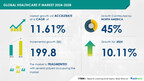
Healthcare IT Market size is set to grow by USD 199.8 billion from 2024-2028, Increasing focus on improving quality of services and efficiency to boost the market growth, Technavio

Published

on

NEW YORK, July 30, 2024 /PRNewswire/ — The global healthcare IT market size is estimated to grow by USD 199.8 billion from 2024-2028, according to Technavio. The market is estimated to grow at a CAGR of almost 11.61% during the forecast period. Increasing focus on improving quality of services and efficiency is driving market growth, with a trend towards emergence of ai-enabled emotion recognition technologies. However, vulnerability of emrs toward cybercrime poses a challenge. Key market players include 3M Co., athenahealth Inc., Cognizant Technology Solutions Corp., Dassault Systemes SE, Datavant, Dell Technologies Inc., Epic Systems Corp., General Electric Co., International Business Machines Corp., Koninklijke Philips N.V., McKesson Corp., Microsoft Corp., Oracle Corp., SAS Institute Inc., Siemens AG, Tata Consultancy Services Ltd., Tenet Healthcare Corp., UnitedHealth Group Inc., Veradigm LLC, and Wipro Ltd..

Get a detailed analysis on regions, market segments, customer landscape, and companies – Click for the snapshot of this report

Forecast period

2024-2028

Base Year

2023

Historic Data

2017 – 2021

Segment Covered

End-user (Healthcare providers and Healthcare payers), Component (Services, Software, and Hardware), and Geography (North America, Europe, APAC, South America, and Middle East and Africa)

Region Covered

North America, Europe, APAC, South America, and Middle East and Africa

Key companies profiled

3M Co., athenahealth Inc., Cognizant Technology Solutions Corp., Dassault Systemes SE, Datavant, Dell Technologies Inc., Epic Systems Corp., General Electric Co., International Business Machines Corp., Koninklijke Philips N.V., McKesson Corp., Microsoft Corp., Oracle Corp., SAS Institute Inc., Siemens AG, Tata Consultancy Services Ltd., Tenet Healthcare Corp., UnitedHealth Group Inc., Veradigm LLC, and Wipro Ltd.

Key Market Trends Fueling Growth

In the healthcare industry, doctors and caregivers are utilizing advanced medical technologies, including AI, for precise ailment diagnosis and effective patient treatment. AI is gaining significant traction in the healthcare IT sector. One of its applications is emotion recognition, which allows solutions to identify and respond to human emotions and moods. Telemedicine vendors, particularly those focusing on telepsychiatry, employ this technology to assess patients’ emotional states, even when they’re not physically present. Smartphones and tablets with cameras are used to capture patients’ facial expressions, which the AI algorithm interprets to provide real-time emotional analysis. Additionally, healthcare providers collect and integrate mental health data from emotion-sensing wearable devices, such as virtual personal assistants (VPAs). Instant reporting of this data to doctors, nurses, or caregivers enhances patient care. Emotion recognition technology also benefits the visually impaired and those with autism by enabling them to read facial expressions and interpret emotions using smart glasses. These advancements in healthcare technology will fuel the growth of the global healthcare IT market. 

The Healthcare IT market is experiencing significant growth with trends such as medical apps, consumer technology companies, and IT solutions for information management systems gaining popularity. Medical devices are integrating data communication standards for seamless information exchange. Hospitals and ambulatory care centers are investing in IT architecture for patient care and clinical solutions, prioritizing patient safety and integrated healthcare systems. Purchasing power is shifting towards healthcare IT solutions, including Healthcare IT solutions, hardware, software, and electronic information systems. Big data, AI, and IoT technologies are revolutionizing health information and digital health. Data security, trained IT professionals, and virtual reality (VR) and augmented reality (AR) are essential considerations. Genomics and personalized medicine are driving innovation, while virtual hospitals, remote patient monitoring, and telemedicine solutions expand access to care. Value-based payment models, payer-provider mergers, and quality reporting solutions are transforming the industry. Cloud-based solutions and accountable care solutions are key investments for the future. AI, ML, and medical imaging are also major areas of focus. 

Discover 360° analysis of this market. For complete information, schedule your consultation- Book Here!

Market Challenges

The healthcare industry heavily utilizes IT and electronic communications for managing vast amounts of sensitive data. This includes medical records, patient personal information, and insurance details. However, advances in technology also increase the risk of cybercrime, such as hacking, data modification, and misuse. In 2019, Montpellier university hospital experienced a cyberattack that compromised over 600 computers. The confidentiality and accuracy of healthcare data are crucial for effective patient care. Cybersecurity threats pose a significant risk to the global healthcare IT market, making robust security systems essential to mitigate these risks and protect sensitive data.The Healthcare IT market faces several challenges in providing optimal care to patients. Hospital beds and medical equipment require capacity management solutions to monitor and manage disease progression effectively. Healthcare providers grapple with specialty medications, ePrescriptions, and controlled substances, necessitating robust IT systems for prescribers. Communication between virtual healthcare and inpatient settings is crucial, especially for smaller healthcare organizations and outpatient settings. Basic infrastructure and usability are key concerns for IT systems in healthcare management. Federal bodies and US hospitals demand web-based management for patient information, RCM solutions, and electronic prior authorizations. Remote monitoring of affected patients in temporary hospitals requires skilled IT personnel for data exchange and decision-making. The exploitation and proliferation of IT systems in healthcare call for increased focus on patient care quality, nurse training, and IT system integration. United Health and US hospitals must prioritize IT systems’ usability, integration, and data exchange to enhance care delivery and improve patient information access across departments.

For more insights on driver and challenges – Download a Sample Report

Segment Overview

This healthcare it market report extensively covers market segmentation by

End-user1.1 Healthcare providers1.2 Healthcare payersComponent2.1 Services2.2 Software2.3 HardwareGeography3.1 North America3.2 Europe3.3 APAC3.4 South America3.5 Middle East and Africa

1.1 Healthcare providers- The Healthcare IT market is experiencing significant growth due to the increasing demand for digitalization in the healthcare industry. Electronic Health Records (EHRs) and telemedicine are key areas driving this growth. Hospitals and clinics are investing in IT solutions to improve patient care, streamline operations, and comply with regulations. Vendors are offering innovative products and services to meet these needs, making the market competitive. Healthcare providers are prioritizing IT investments to enhance patient experiences and population health management.

For more information on market segmentation with geographical analysis including forecast (2024-2028) and historic data (2017 – 2021) – Download a Sample Report

Research Analysis

Title: Healthcare IT Industry Trends and Financial Insights: A Comprehensive Analysis of E-Prescribing, Interoperability, and Digital Health Introduction: The healthcare IT industry is experiencing significant growth, driven by the adoption of e-prescribing, interoperability solutions, and digital health technologies. In this research study, we provide an industry trend analysis of the healthcare IT market, focusing on key areas such as e-prescribing, interoperability issues, and the role of Change Healthcare, Mass Media Data, and other major players. Market Overview: The healthcare IT industry is witnessing robust growth, with the eHealth market projected to reach USD614.3 billion by 2026. This growth is attributed to the increasing demand for electronic information systems, health information, and digital health solutions. (Single diagram: Market size and growth trend) E-Prescribing and Interoperability: E-prescribing and interoperability are critical components of the healthcare IT landscape. E-prescribing has become a standard practice, with over 80% of US hospitals and 60% of physicians using e-prescribing systems. Interoperability, however, remains a challenge, with multiple tables illustrating the complexities of data exchange between different systems. Hardware, Software, and Cloud-based Solutions: Hardware and software continue to play a significant role in the healthcare IT industry, with cloud-based solutions gaining popularity due to their flexibility and cost-effectiveness. (Multiple tables: Market share and growth rate of hardware, software, and cloud-based solutions) Digital Health, Big Data, AI & IoT Technologies: Digital health, big data, AI, and IoT technologies are transforming healthcare delivery, enabling personalized care and improved patient outcomes. (Single diagram: Application of AI & IoT in healthcare) IT Investments and Data Security: IT investments in healthcare are on the rise, driven by the need for digital transformation and data security. Change Healthcare, Mass Media Data, and other players are investing heavily in cybersecurity measures to protect sensitive patient information. (Financial information: IT investments and cybersecurity budgets) Conclusion: The healthcare IT industry is undergoing a digital transformation, driven by the adoption of e-prescribing, interoperability solutions, and digital health technologies. This research study provides a comprehensive analysis of the market trends, financial information, and key challenges, offering valuable insights for stakeholders and investors.

Market Research Overview

Title: Healthcare IT Industry Trend Analysis: E-Prescribing, Interoperability, and Security Concerns in the Digital Healthcare Landscape Introduction: The healthcare IT industry is experiencing significant growth, with e-prescribing, interoperability, and security concerns shaping the market landscape. This research study provides an industry trend analysis of the healthcare IT sector, excluding key players and companies. Market Overview: The healthcare IT industry is witnessing a surge in demand due to the increasing adoption of electronic health records (EHRs), telemedicine, and remote monitoring. According to Worldometer, there were approximately 7.8 billion hospital beds worldwide in 2020, and healthcare organizations are investing in IT solutions to manage capacity, coordinate care, and monitor patient health. E-Prescribing and Interoperability: E-prescribing is a crucial aspect of digital healthcare, with the highest revenue-generating segment being specialty medications and ePrescriptions. However, interoperability issues persist, hindering seamless data exchange between healthcare providers and systems. Security Concerns: Security concerns are a significant challenge in the healthcare IT industry, with healthcare organizations and patients at risk of exploitation and data breaches. Virtual healthcare, electronic prior authorizations, and remote monitoring are areas of concern, affecting millions of patients. Capacity Management Solutions: Capacity management solutions, including RCM solutions, are essential for healthcare organizations to manage resources efficiently. The US hospitals alone spent USD32.4 billion on IT systems in 2020. Conclusion: The healthcare IT industry is evolving rapidly, with trends such as e-prescribing, interoperability, and security concerns shaping the market. Healthcare providers, from smaller organizations to ambulatory care centers and inpatient hospital settings, are investing in IT systems to improve patient care quality, usability, and integration. However, challenges such as data communication standards, IT architecture, and product and service innovation remain. This survey highlights the importance of federal bodies, web-based management, and skilled IT personnel in addressing these challenges and ensuring the success of the healthcare IT industry. Keywords: healthcare IT industry, e-prescribing, interoperability, security concerns, healthcare organizations, clinical devices, capacity management solutions, virtual healthcare, electronic prescriptions, patient care, patient safety, integrated healthcare systems, hospitals, ambulatory care centers, purchasing power, Change Healthcare, Mass Media Data, Healthcare IT solutions, eHealth market, hardware.

Table of Contents:

1 Executive Summary
2 Market Landscape
3 Market Sizing
4 Historic Market Size
5 Five Forces Analysis
6 Market Segmentation

End-userHealthcare ProvidersHealthcare PayersComponentServicesSoftwareHardwareGeographyNorth AmericaEuropeAPACSouth AmericaMiddle East And Africa

7 Customer Landscape
8 Geographic Landscape
9 Drivers, Challenges, and Trends
10 Company Landscape
11 Company Analysis
12 Appendix

About Technavio

Technavio is a leading global technology research and advisory company. Their research and analysis focuses on emerging market trends and provides actionable insights to help businesses identify market opportunities and develop effective strategies to optimize their market positions.

With over 500 specialized analysts, Technavio’s report library consists of more than 17,000 reports and counting, covering 800 technologies, spanning across 50 countries. Their client base consists of enterprises of all sizes, including more than 100 Fortune 500 companies. This growing client base relies on Technavio’s comprehensive coverage, extensive research, and actionable market insights to identify opportunities in existing and potential markets and assess their competitive positions within changing market scenarios.

Contacts

Technavio Research
Jesse Maida
Media & Marketing Executive
US: +1 844 364 1100
UK: +44 203 893 3200
Email: media@technavio.com
Website: www.technavio.com/

View original content to download multimedia:https://www.prnewswire.com/news-releases/healthcare-it-market-size-is-set-to-grow-by-usd-199-8-billion-from-2024-2028–increasing-focus-on-improving-quality-of-services-and-efficiency-to-boost-the-market-growth-technavio-302208580.html

SOURCE Technavio

Continue Reading
Click to comment

Leave a Reply

Your email address will not be published. Required fields are marked *

Technology

Agile & Co Launches Core, a Proprietary AI Marketing Platform Built for Local Service Businesses

Published

on

By

New system pairs AI-driven strategy with human oversight, giving contractors, clinics, auto shops and med spas a marketing partner that remembers their business and compounds results over time

ST. LOUIS, Sept. 3, 2026 /PRNewswire/ — Agile & Co, a full-service marketing agency specializing in local service businesses, today announced the launch of Core, a proprietary AI-powered marketing platform. Built on an 80% AI, 20% human strategy model, Core is designed to help contractors, clinics, auto shops, med spas and other local service businesses generate more booked jobs without their marketing strategy starting from scratch every month. More information on Core is available at agileandco.com.

Core connects directly to a business’s operational data, including services, pricing, and past campaign performance, and applies that context across advertising, SEO, and website work. According to Agile & Co, this removes the need for clients to repeatedly re-explain their business to a rotating cast of marketers, since Core retains that context across every campaign.

Each new campaign also feeds Core’s models directly. The system analyzes lead and conversion data and adjusts strategy automatically, a design intended to help marketing performance compound over time rather than reset with every new push.

“We built Core because we were tired of watching service businesses get sold black-box AI tools that don’t know their market. Core learns your business, your customers, and what actually converts, so every dollar you spend gets smarter over time instead of starting from zero,” said Chans, Founder and CEO of Agile & Co.

Despite the AI foundation, Agile & Co said human strategists review every campaign and write final copy before anything goes live. The company built Core using MCP architecture, RAG retrieval, and vector databases rather than off-the-shelf AI tools, and applies it across SEO, Google Ads, Meta Ads, and website design. Agile & Co also offers transparent, attribution-based reporting, tracking leads to their source and optimizing toward booked jobs rather than clicks, and operates without long-term client contracts.

About Agile & Co

Founded in 2012, Agile & Co has grown from a scrappy SEO shop into a full-service growth partner powered by proprietary AI. The mission never changed: do right by the businesses that trust us, even when it’s the harder path.

Media Contact:

Chans, Founder and CEO
Agile & Co
1535 S 8th St, Suite A, St. Louis, MO 63104
(314) 661-2375

View original content to download multimedia:https://www.prnewswire.com/news-releases/agile–co-launches-core-a-proprietary-ai-marketing-platform-built-for-local-service-businesses-302869251.html

SOURCE Agile & Co.

Continue Reading

Technology

Position² Introduces Arena, the Proprietary Technology Powering Its AI-Native Growth System That Turns Two Decades of Expertise Into an Intelligence Layer, Orchestrated Agents, and Client Delivery in One Workspace

Published

on

By

Built for enterprise marketing teams and the agencies that serve them, Arena connects Position²’s Growth Intelligence, senior experts, and AI Agents across brand, demand, and campaign execution, working with the tools marketers already use and getting smarter with every engagement.

SANTA CLARA, Calif., Sept. 3, 2026 /PRNewswire/ — Position², the AI-Native Growth System for enterprise brands and GTM leaders, today introduced Arena, the proprietary technology at the core of its approach to modern marketing. Arena connects Position²’s Growth Intelligence Layer, senior experts, and AI Agents across the full marketing journey, from brand and positioning to demand generation, campaign execution, and client delivery. Built on more than two decades of marketing expertise, Arena brings together performance signals, brand context, connected workflows, and accumulated knowledge so teams can make better decisions, act faster, and strengthen every engagement that follows.

The business case

“Marketing has drowned in tools and starved for answers. Arena ends that,” said Rajiv Parikh, CEO of Position². “Enterprise marketing isn’t just campaigns, it’s brand, positioning, and every decision that compounds into a reputation. We turned two decades of that expertise into a system that tells teams what’s coming, what to do about it, and remembers everything it learns along the way. Stop paying to describe the past. Start building the brand that wins the next decade.”

Marketing is more than campaigns

Enterprise marketing is not a series of isolated campaigns. It spans brand positioning, audience intelligence, go-to-market strategy, content, creative, demand generation, and performance across channels. Yet many marketing organizations still manage these functions through disconnected tools and workflows, making it difficult to carry insights from one initiative into the next.

Arena connects the context behind strategy, performance, execution, and outcomes so Position² teams and clients can work from a shared foundation, and apply what they learn across the entire growth journey.

Built on Position² Expertise, Not Generic AI

Arena is grounded in Position²’s experience helping enterprise brands grow across industries, including healthcare, computing, consumer electronics, automotive, and industrial technology. Position² Experts apply senior judgment, strategic direction, and quality standards across disciplines such as SEO, paid media, creative, content, and demand generation.

That expertise guides how AI Agents prioritize and execute scoped work, ensuring recommendations and actions reflect each organization’s brand, market, goals, and performance history.

One Connected Approach: Growth Intelligence, Position² Experts, and AI Agents

Arena runs on three layers that work as one system. The intelligence layer forecasts performance and reasons about what to do next, from brand health to campaign ROI. The orchestration layer turns that intelligence into action, coordinating a library of Smart Marketing Agents that plan, execute, and hand off work across channels and disciplines. The workflow layer ships the output as on-brand, client-visible delivery, with Gantt and list views, task hierarchies, and dependencies. Underpinning all three are Arena’s connectors to hundreds of the top platforms marketers already run on: Google Ads, GA4, Meta, LinkedIn, HubSpot, Salesforce, Shopify, Slack, Gmail, Zoom, and 300+ data sources and 50+ business tools in all — each feeding the same intelligence layer, so the system reasons across the entire stack rather than one channel at a time.

“Arena connects the intelligence behind marketing decisions, the Position² Experts who guide them, and the AI Agents that help execute the work,” said Vikrant, Chief Technology Officer at Position², who heads product and technology for Arena. “Because it all runs as one connected system, Arena remembers every brand decision, campaign, and outcome, and gets sharper with each one. That memory is the moat: brand strategy that once lived in a few people’s heads becomes a durable, compounding asset. Most tools reset to zero. Arena compounds.”

Compounding Intelligence Across Every Engagement

The broader you draw marketing, the more corporate memory matters. Brand equity, positioning, and audience understanding are built over years, yet they usually live in slide decks and a handful of people’s heads, and walk out the door when those people leave. Arena changes that. As Position² Experts guide strategy and AI Agents execute, Arena captures a shared growth memory, a living record of brand decisions, campaigns, market intelligence, outcomes, and context that strengthens every engagement that follows. New agents and new team members inherit that institutional knowledge from day one rather than starting from scratch, and the intelligence layer learns from real results to sharpen future strategy and forecasts. The longer a team runs on Arena, the more the system reflects that organization’s own brand and playbook, turning tacit knowledge that usually disappears into a durable, compounding asset.

Built for the enterprise marketing team and the agency that serves it

Arena supports enterprise marketing organizations and the agencies serving them, particularly teams responsible for growth across multiple channels, stakeholders, and programs.

The CMO / VP of Marketing: a forward-looking read on brand health and whether spend will hit its target, with the reasoning to defend both to the board.The Brand / Growth / Performance Marketing lead: brand programs and campaigns across PPC, SEO, creative, and performance, running daily without routing every task through a specialist.The Marketing Operations / Analytics owner: one blended source of truth in place of hand-assembled reports.The Agency account and delivery lead: on-brand, client-visible results shipped on or before deadline, across every account and geography.

Connected Capabilities Across the Full Funnel

Arena is organized around three growth engines, all drawing on the same intelligence layer and shared corporate memory. AI Agents provide a library of Smart Marketing Agents users can chat with, customize, connect to a knowledge base, and schedule, spinning up project tasks directly from an agent’s response. Analytics (Calibrate) delivers predictive marketing analytics with cross-channel, blended dashboards, anomaly detection, and AI-driven forecasting that flags risks early rather than reporting them late. Project Management brings AI-powered delivery built for marketing and client work. Tying it together, Highlights provides a daily AI executive briefing on revenue at risk and pipeline upside, and Client Intelligence (CIS) generates per-client executive briefings with real-time health, owners, and due dates, auto-updated from Slack, Gmail, Zoom, and Arena activity.

That shift from reporting to decision support is already visible in how customers use Arena. “I use Arena on a daily basis to stay plugged into our performance. It’s an extremely efficient tool for viewing every angle of our paid channels’ performance. Detailed reporting and easy drill-downs make campaign analysis quick and allow me to focus more on strategic planning rather than pulling the numbers,” said Caroline Weisenhorn, Performance Marketing Manager at Eventgroove.

Early results

Marketing teams running on Arena are seeing measurable gains

60% reduction in time spent assembling reports and dashboards8–10 hours/week saved per marketer by automating routine campaign tasks2–3x faster client project delivery across agency accountsAt-risk revenue surfaced days earlier, before the budget is committed, not after

Enterprise-grade by design

Arena is enterprise-grade by design, SOC 2 Type II, ISO 27001, and HIPAA-compliant. The same intelligence and memory foundation can extend into adjacent functions over time, but Arena’s focus is unambiguous: it is built for marketing first.

Learn more about Arena and how it powers Position²’s AI-Native Growth System at https://thearena.ai 

About Position²: Position² is the AI-Native Growth System for enterprise brands and GTM leaders, combining Growth Intelligence, senior experts, and AI Agents to help organizations drive smarter, more connected growth. Powered by Arena, Position²’s proprietary technology, the company connects strategy, execution, and continuous learning across brand, demand, and marketing performance. Learn more at www.position2.com

Media Contact: Position² info@position2.com 

View original content to download multimedia:https://www.prnewswire.com/news-releases/position-introduces-arena-the-proprietary-technology-powering-its-ai-native-growth-system-that-turns-two-decades-of-expertise-into-an-intelligence-layer-orchestrated-agents-and-client-delivery-in-one-workspace-302869253.html

SOURCE Position2

Continue Reading

Technology

Diameter Pay Raises $10 Million to Expand Global Access to the US Dollar

Published

on

By

Series A Round Co-Led by CMT Digital and Lightspeed Faction, with participation from SixThirty Ventures, Stellar Development Foundation, Tech Council Ventures, Onigiri Capital and BitRock Capital

JERSEY CITY, N.J., Sept. 3, 2026 /PRNewswire/ — Diameter Pay, a fintech platform building the infrastructure for global U.S. dollar payments and virtual accounts, today announced a $10 million Series A financing round co-led by CMT Digital and Lightspeed Faction, with participation from SixThirty Ventures, Stellar Development Foundation, Tech Council Ventures, Onigiri Capital and BitRock Capital.

Diameter Pay gives banks, fintechs, digital asset exchanges and their customers around the world access to U.S. dollar accounts and payment rails through a single API. The platform supports virtual accounts, domestic and international payments, stablecoin on- and off-ramps, and embedded compliance controls across multiple U.S. banking partners. Diameter Pay has processed more than $10 billion year-to-date in 2026.

The U.S. dollar remains the foundation of global trade and payments, but accessing it has become increasingly difficult in many parts of the world. Correspondent banks have pulled back from entire markets amid rising sanctions and anti-money laundering risk. The result is a global financial system in which legitimate businesses can be excluded alongside the bad actors those safeguards are designed to stop.

“The world is becoming more global, but the financial system is becoming more fragmented,” said David Lighton, founder and CEO of Diameter Pay. “Diameter Pay takes a different approach: rather than asking banks to accept more risk, we provide the technology, data, and compliance infrastructure to understand and manage that risk with greater precision. That’s the bridge we’re building, between traditional finance and digital finance, so money can move at the speed people and businesses actually need in a world that now runs 24/7.”

Stablecoins are amplifying the need for solutions. They enable dollar value to move globally, around the clock, but institutions still need regulated, reliable connectivity between digital dollars and the U.S. banking system, especially to fight financial crimes. Diameter Pay provides that connective tissue, giving banks the technology, data, and compliance infrastructure to manage digital risk with more precision.

The financing will accelerate Diameter Pay’s mission to expand access to the U.S. dollar for financial institutions around the world. The company will use the capital to expand its banking and payment capabilities, deepen its stablecoin and FX infrastructure, and continue investing in the technology and compliance capabilities required to safely move dollars across borders.

Stablecoins are transforming how dollars move globally, but they don’t replace the need for trusted access to the U.S. banking system,” said Charlie Sandor, Partner at CMT Digital. “Diameter provides that connective layer, combining traditional payment rails, stablecoin infrastructure, and compliance in a platform built for regulated financial institutions.”

“The challenging part of modernizing global payments with stablecoins isn’t just technology. It’s building reliable and trustworthy compliance and banking infrastructure,” said Tim Khoury, Partner at Lightspeed Faction. “Diameter started with a relentless focus here, and has won the trust of a growing number of clients as a result. We’re thrilled to be backing the company for its next leg of growth.”

“The modern payments stack is no longer just about speed-to-market; it’s about speed-to-trust. The components: verified counterparties, transactions screened before they move, and licensed settlement behind them,” said Evan Thorpe, Principal at SixThirty Ventures.  “Diameter is the settlement layer that ties each of those critical parts together, turning a trusted counterparty and a clean transaction into dollars that actually arrive, compliantly, across borders. It reflects a conviction we hold about this market: trust, not transport, is the product in modern money movement. Diameter delivers it.”

About Diameter Pay
Diameter Pay’s mission is to expand global financial institutions’ and fintechs’ access to the U.S. dollar through compliance-first infrastructure trusted by banks and regulators. The platform provides U.S. virtual accounts, domestic and international payment rails, stablecoin on- and off-ramps, and embedded compliance controls across multiple banking partners. Diameter Pay is led by a team of banking, payments, technology, and regulatory veterans with decades of experience building and operating financial systems, including former senior executives and founders from Deutsche Bank, Fidelity Investments, Segovia Technology, Reserve Trust, and the World Bank.

Media Contact
Press@Diameterpay.com

View original content:https://www.prnewswire.com/news-releases/diameter-pay-raises-10-million-to-expand-global-access-to-the-us-dollar-302869225.html

SOURCE Diameter Pay

Continue Reading

Trending