Connect with us

Technology

Inflation starts taking a back seat to other household debt and credit concerns, Achieve survey finds

Published

on

57% of consumers rely on credit cards to make ends meet

SAN MATEO, Calif., Aug. 5, 2024 /PRNewswire/ — While inflation remains a lingering challenge for consumers as they strive to make ends meet and pay their bills on time, other financial challenges are starting to become a more pressing concern, according to the results of a new study by Achieve, the leader in digital personal finance.

Achieve’s think tank, the Achieve Center for Consumer Insights, surveyed 2,000 consumers with active accounts across categories of consumer debt, including credit cards, mortgages and home equity lines of credit, and auto and student loans. The survey format and respondent panel are designed to complement the Federal Reserve Bank of New York’s Quarterly Report on Household Debt and Credit by providing qualitative insights into consumer borrowing trends. To further examine the causes and ramifications of rising loan delinquencies, the survey panel included a subset of borrowers who were 30 days or more past due on their payments at least once during the past six months.

Inflation’s impact lessens

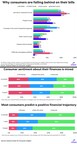
Job loss or reduced income was the leading reason consumers said they have recently fallen behind on their bills, with 18% of respondents citing this as the primary reason they missed a payment on a debt account. Meanwhile, the share of consumers who cited inflation as the primary reason they missed a payment on one of their debt accounts fell by more than half in the third quarter, to 10%, compared to 21% during the second quarter.

While the share of consumers who said they missed a debt payment because they didn’t want to pay the bill remains low, the percent who cited this as their primary reason grew both across all debt accounts and among credit card, auto and student loan borrowers.

“Recent positive news about the pace of inflation slowing, and in some cases, even reversing course, appears to be overshadowed by other financial concerns for struggling consumers,” said Achieve Co-Founder and Co-CEO Andrew Housser. “In a sign of the beginnings of a choppy job market, more and more consumers are being impacted by reduced income or job loss.  Combine that with interest rates still near decades-long highs, and consumers with significant levels of debt are finding it difficult to make ends meet.”

57% of consumers rely on credit cards to get by

Over half (57%) of respondents in Achieve’s survey said they are carrying a credit card balance to cover the cost of essential expenses, including 27% who said spending on living expenses has accrued on their credit card balances for more than six months.

During the third quarter, 36% of consumers said it is very difficult or difficult for them to pay their recurring debts on time, a slight increase from 31% in the second quarter. Among these respondents, 64% said paying their debts on time is challenging because they don’t make enough money to cover their spending. Almost a third (32%) said having too many accounts to repay contributes to their debt challenges, down from 39% last quarter. The share of respondents who said timing cashflow between receiving income and payment due dates was identical in the second and third quarters, at 27%. Meanwhile, 16% said they have difficulty tracking how much they owe across their accounts, up slightly from 14% last quarter.

“Households that find themselves relying heavily on credit cards to pay for basic necessities often get caught up in a cycle of indebtedness that they cannot get out of,” Housser said.

Economic optimism is growing

Consumer sentiment about how their financial situation has evolved over the past three years is mixed, with a nearly even share of respondents saying their situation has improved (37%) and worsened (36%). But expectations for the future are much stronger, with most consumers expecting their financial circumstances to improve in both the short and long term. Over the next year, 56% of consumers expect their finances will improve, with that rate growing to 64% when asked about their outlook three years from now.

Methodology

The data and findings presented are based on an Achieve survey conducted in June 2024 consisting of 2,000 U.S. consumers ages 18 and older with an active account for one or more of the following categories of consumer debt: auto loan; major credit card with a minimum outstanding balance of $100; first-lien mortgage; home equity line of credit (HELOC); student loan; and other (unsecured personal loan, store-branded credit card, buy now, pay later loan, or closed-end home equity loan). The sample was augmented to include a statistically significant subset of credit card, auto loan and student loan borrowers who have been 30 days or more past due at least once in the past six months.

About the Achieve Center for Consumer Insights

The Achieve Center for Consumer Insights is a think tank that leverages Achieve’s team of digital personal finance experts to provide a view into the state of consumer finances. In addition to sharing insights gleaned from Achieve’s proprietary data and analytics, the Achieve Center for Consumer Insights publishes in-depth research, bespoke data and thoughtful commentary in support of Achieve’s mission of helping everyday people get on the path to a better financial future.

About Achieve

Achieve, THE digital personal finance company, helps everyday people get on, and stay on, the path to a better financial future. Achieve pairs proprietary data and analytics with personalized support to offer personal loans, home equity loans, debt resolution and debt consolidation, along with financial tips, education and Achieve MoLO (Money Left Over), a free mobile budgeting app. Achieve has 2,500 dedicated teammates across the country with hubs in Arizona, California, Florida and Texas. Achieve is frequently recognized as a Best Place to Work.

Achieve refers to the global organization and may denote one or more affiliates of Achieve Company, including Achieve.com (NMLS ID #138464); Achieve Home Loans, Equal Housing Lender (NMLS ID #1810501); Achieve Personal Loans (NMLS ID #227977); Achieve Resolution (NMLS ID # 1248929) and Freedom Financial Asset Management (CRD #170229).

Contacts

Erica Bigley

Austin Kilgore

Vice President

Director

Corporate Communications

Corporate Communications

ebigley@achieve.com

akilgore@achieve.com

415-710-9006

214-908-5097

View original content to download multimedia:https://www.prnewswire.com/news-releases/inflation-starts-taking-a-back-seat-to-other-household-debt-and-credit-concerns-achieve-survey-finds-302214150.html

SOURCE Achieve

Continue Reading
Click to comment

Leave a Reply

Your email address will not be published. Required fields are marked *

Technology

In HelloNation, Real Estate Expert Grace Frank Shares What to Know Before Relocating to Chattanooga

Published

on

By

CHATTANOOGA, Tenn., April 27, 2026 /PRNewswire/ — What should people consider before relocating to Chattanooga,TN? According to a HelloNation article, the move involves more than a change of address. Grace Frank of Grace Frank Group explains that housing options, schools, job opportunities, and lifestyle factors all play an important role in helping newcomers settle successfully in the city.

Housing is often the first decision to make. Chattanooga offers a wide range of real estate choices, from historic downtown homes to newer suburban subdivisions and rural properties with more space. Each option comes with trade-offs. Urban neighborhoods provide convenience and entertainment, suburban areas appeal to families with larger homes and school access, and rural living offers peace and quiet but may require longer commutes and fewer services.

Affordability is another factor that draws many people to the area. Compared to larger cities, Chattanooga’s housing prices and property taxes remain relatively moderate. Still, trends vary by neighborhood. Some areas near downtown are experiencing rapid growth and rising prices. Buyers and renters who study these patterns in advance are better able to match their budget with the right community.

For families, schools are central to the relocation decision. Hamilton County features public, private, and charter schools, each offering different strengths. Many families select neighborhoods based on school zones, while others consider private education or alternative programs. Reviewing school ratings, extracurricular options, and long-term academic opportunities helps ensure the best fit for children.

Employment opportunities also make Chattanooga an attractive place to move. The job market has been growing steadily, with strengths in logistics, healthcare, technology, and advanced manufacturing. Expansion from existing companies and new businesses entering the region have created stability in both housing and employment. Prospective residents, however, should review industry-specific opportunities to confirm their career goals align with local options.

Beyond housing, schools, and work, lifestyle factors help determine how well a move turns out. Chattanooga’s reputation as an outdoor destination is one of its strongest assets. Residents enjoy access to hiking trails, mountain biking, and water activities along the Tennessee River. The city also features cultural events, a thriving restaurant scene, and live music, making it appealing for those who want balance between work and recreation.

Planning the details of the move itself is just as important. A relocation checklist can simplify the process, including securing housing, transferring utilities, and registering vehicles. Those moving from out of state should also remember to update driver’s licenses, insurance, and voter registration. Attention to these details reduces stress and prevents unnecessary delays.

Local expertise can help make the transition smoother. A real estate professional who understands Chattanooga can guide newcomers through the city’s neighborhoods, school districts, and commuting options. Their insight can save time, prevent costly mistakes, and ensure that newcomers choose a location that fits both their practical needs and lifestyle goals.

Relocating to Chattanooga offers opportunities that combine affordability, career growth, and outdoor living. Families, retirees, and young professionals are all drawn to the area’s variety of neighborhoods, active lifestyle, and strong sense of community. With careful planning, the move can be both seamless and rewarding.

What to Know Before Relocating to Chattanooga highlights the most important factors for a successful transition. This is according to Grace Frank, Real Estate Expert of Chattanooga, TN, who provides practical advice for those considering a move in HelloNation.

About HelloNation
HelloNation is a premier media platform that connects readers with trusted professionals and businesses across various industries. Through its innovative “edvertising” approach that blends educational content and storytelling, HelloNation delivers expert-driven articles that inform, inspire, and empower. Covering topics from home improvement and health to business strategy and lifestyle, HelloNation highlights leaders making a meaningful impact in their communities.

View original content to download multimedia:https://www.prnewswire.com/news-releases/in-hellonation-real-estate-expert-grace-frank-shares-what-to-know-before-relocating-to-chattanooga-302754736.html

SOURCE HelloNation

Continue Reading

Technology

Hyperscale Data Subsidiary Ault Global Commodities Announces First Silver Purchase

Published

on

By

LAS VEGAS, April 27, 2026 /PRNewswire/ — Hyperscale Data, Inc. (NYSE American: GPUS), an artificial intelligence (“AI”) data center company anchored by Bitcoin (“Hyperscale Data” or the “Company”), today announced that its wholly-owned subsidiary Ault Global Commodities, Inc. (“AGC”) has completed its first purchase of physical silver, acquiring 10,000 ounces of .999 fine silver bullion. The transaction was executed through AGC’s strategic partner, Scottsdale Mint, LLLP, a leading private mint specializing in high-quality investment grade precious metals with which AGC has entered into a purchase and sale agreement (the “Agreement”).

This initial acquisition of silver under the Agreement marks the official launch of the Company’s precious metals strategy and represents a key step in the Company’s broader initiative to build a diversified commodities portfolio alongside its existing digital asset and AI operations, as well as its contemplated robotics plans, each as disclosed in prior press releases.

“This initial silver purchase represents more than merely an entry into precious metals; it reflects the continued evolution of the Company’s balance sheet,” stated Milton “Todd” Ault III, Executive Chairman of Hyperscale Data. “With more than $350 million in assets, including cash and Bitcoin, we are deliberately building a diversified balance sheet designed to endure across market cycles. We believe Bitcoin and precious metals will serve as foundational pillars of that strategy, combining the asymmetric upside of digital assets with the proven stability of hard commodities. As we continue to deploy capital, our objective is clear: Strengthen our asset base, expand our global portfolio of companies, and position Hyperscale Data to create long-term value through disciplined, opportunistic capital allocation.”

The Company expects AGC to make additional purchases in the future as it continues to scale its operations in the broader commodities sector.

For more information on Hyperscale Data and its subsidiaries, Hyperscale Data recommends that stockholders, investors and any other interested parties read Hyperscale Data’s public filings and press releases available under the Investor Relations section at hyperscaledata.com or available at www.sec.gov.

About Hyperscale Data, Inc.

Through its wholly owned subsidiary Sentinum, Inc., Hyperscale Data owns and operates a data center at which it mines digital assets and offers colocation and hosting services for the emerging AI ecosystems and other industries. Hyperscale Data’s other wholly owned subsidiary, Ault Capital Group, Inc. (“ACG”), is a diversified holding company pursuing growth by acquiring undervalued businesses and disruptive technologies with a global impact.

Hyperscale Data currently expects the divestiture of ACG (the “Divestiture”) to occur in the second quarter of 2027. Upon the occurrence of the Divestiture, the Company would be an owner and operator of data centers to support high-performance computing services, as well as a holder of the digital assets. Until the Divestiture occurs, the Company will continue to provide, through ACG and its wholly and majority-owned subsidiaries and strategic investments, mission-critical products that support a diverse range of industries, including an AI software platform, equipment rental services, defense/aerospace, industrial, automotive, medical/biopharma and hotel operations. In addition, ACG is actively engaged in private credit and structured finance through a licensed lending subsidiary. Hyperscale Data’s headquarters are located at 11411 Southern Highlands Parkway, Suite 190, Las Vegas, NV 89141.

On December 23, 2024, the Company issued one million (1,000,000) shares of a newly designated Series F Exchangeable Preferred Stock (the “Series F Preferred Stock”) to all common stockholders and holders of the Series C Preferred Stock on an as-converted basis. The Divestiture will occur through the voluntary exchange of the Series F Preferred Stock for shares of Class A Common Stock and Class B Common Stock of ACG (collectively, the “ACG Shares”). The Company reminds its stockholders that only those holders of the Series F Preferred Stock who agree to surrender such shares, and do not properly withdraw such surrender, in the exchange offer through which the Divestiture will occur, will be entitled to receive the ACG Shares and consequently be shareholders of ACG upon the occurrence of the Divestiture.

Forward-Looking Statements

This press release contains “forward-looking statements” within the meaning of Section 27A of the Securities Act of 1933, as amended, and Section 21E of the Securities Exchange Act of 1934, as amended. These forward-looking statements generally include statements that are predictive in nature and depend upon or refer to future events or conditions, and include words such as “believes,” “plans,” “anticipates,” “projects,” “estimates,” “expects,” “intends,” “strategy,” “future,” “opportunity,” “may,” “will,” “should,” “could,” “potential,” or similar expressions. Statements that are not historical facts are forward-looking statements. Forward-looking statements are based on current beliefs and assumptions that are subject to risks and uncertainties.

Forward-looking statements speak only as of the date they are made, and the Company undertakes no obligation to update any of them publicly in light of new information or future events. Actual results could differ materially from those contained in any forward-looking statement as a result of various factors. More information, including potential risk factors, that could affect the Company’s business and financial results are included in the Company’s filings with the U.S. Securities and Exchange Commission, including, but not limited to, the Company’s Forms 10-K, 10-Q and 8-K. All filings are available at www.sec.gov and on the Company’s website at hyperscaledata.com.


View original content to download multimedia:https://www.prnewswire.com/news-releases/hyperscale-data-subsidiary-ault-global-commodities-announces-first-silver-purchase-302753925.html

SOURCE Hyperscale Data Inc.

Continue Reading

Technology

In HelloNation, Financial Advisor Jennifer Prosise of Joliet, IL Breaks Down When to Start Financial Planning

Published

on

By

JOLIET, Ill., April 27, 2026 /PRNewswire/ — When is the right time to begin financial planning? A recent HelloNation article featuring Financial Advisor Jennifer Prosise of The Voyager Group, Ltd. in Joliet, IL, explores why early financial planning can create lasting advantages, especially during key life transitions.


The article challenges the common belief that financial planning only becomes necessary later in life. According to the feature, waiting until retirement planning is urgent can limit flexibility and options. By starting earlier, individuals can make gradual adjustments that align with long-term goals and reduce financial stress over time.

Jennifer Prosise explains that financial planning is most effective when it starts at the moment questions begin to surface. The article notes that planning isn’t tied to age, but to life events, such as a career change, starting a family, or returning to school. These life transitions often reshape responsibilities and future priorities, making early financial planning both timely and practical.

One of the most valuable aspects of early financial planning is habit-building. The article emphasizes how small choices about income and savings, spending, or borrowing compound over time. Establishing a structure early creates momentum and makes it easier to adapt when circumstances shift.

Career changes are a key opportunity to begin planning. With changes in income, benefits, and risk, the article advises individuals to assess how income and savings can work together more efficiently. A financial advisor can help clarify goals and offer structure during times of professional change.

For growing families, financial planning provides support when expenses increase and new needs emerge. The article points out that early planning can balance short-term decisions with long-term goals like education costs, housing needs, or lifestyle flexibility. Financial clarity during these moments reduces uncertainty and helps families prioritize with confidence.

The article also highlights how education decisions, such as starting or returning to college, can benefit from early financial planning. Loans, tuition, and long-term earnings potential all come into play. Planning in advance helps individuals evaluate tradeoffs and avoid reactive decisions that may lead to unnecessary debt.

Entrepreneurs and small business owners also find value in starting early. Business ventures bring both opportunities and risks, and financial planning helps manage both. With income fluctuations and investment decisions to weigh, early structure ensures that personal and professional goals remain aligned.

The article explains that early financial planning also creates space for gradual change. Instead of making large corrections later in life, people can make smaller, more sustainable adjustments. This flexibility supports retirement planning over a longer horizon and builds resilience during financial shifts.

Jennifer Prosise also points out the emotional benefits of planning early. With a framework in place, people are less likely to feel overwhelmed during uncertain times. Financial planning reduces confusion and allows for steady progress toward long-term goals.

When It Makes Sense to Start Financial Planning features insights from Jennifer Prosise, Financial Advisor of Joliet, IL, in HelloNation.

About HelloNation
HelloNation is a premier media platform that connects readers with trusted professionals and businesses across various industries. Through its innovative “edvertising” approach that blends educational content and storytelling, HelloNation delivers expert-driven articles that inform, inspire, and empower. Covering topics from home improvement and health to business strategy and lifestyle, HelloNation highlights leaders making a meaningful impact in their communities.

View original content to download multimedia:https://www.prnewswire.com/news-releases/in-hellonation-financial-advisor-jennifer-prosise-of-joliet-il-breaks-down-when-to-start-financial-planning-302754763.html

SOURCE HelloNation

Continue Reading

Trending