Connect with us

Technology

Process Analyzer Market size is set to grow by USD 2.07 billion from 2024-2028, Capacity additions in major end-user industries boost the market, Technavio

Published

on

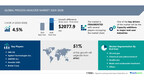
NEW YORK, Aug. 5, 2024 /PRNewswire/ — The global process analyzer market size is estimated to grow by USD 2.07 billion from 2024-2028, according to Technavio. The market is estimated to grow at a CAGR of 4.5% during the forecast period. Capacity additions in major end-user industries is driving market growth, with a trend towards vendors introducing portable process analyzers. However, low adoption by small-scale industrial facilities in developing countries poses a challenge. Key market players include ABB Ltd., Agilent Technologies Inc., AMETEK Inc., Aneolia SARL, Bruker Corp., Danaher Corp., Emerson Electric Co., Endress Hauser Group Services AG, Honeywell International Inc., KROHNE Messtechnik GmbH, Metrohm AG, Mettler Toledo International Inc., Modcon Systems Ltd., Perkin Elmer Inc., Schneider Electric SE, Siemens AG, Spectris Plc, Teledyne Analytical Instruments, Testo SE and Co. KGaA, Thermo Fisher Scientific Inc., and Yokogawa Electric Corp..

Get a detailed analysis on regions, market segments, customer landscape, and companies- View the snapshot of this report

Process Analyzer Market Scope

Report Coverage

Details

Base year

2023

Historic period

2018 – 2022

Forecast period

2024-2028

Growth momentum & CAGR

Accelerate at a CAGR of 4.5%

Market growth 2024-2028

USD 2077.9 million

Market structure

Fragmented

YoY growth 2022-2023 (%)

4.23

Regional analysis

APAC, North America, Europe, Middle East and Africa, and South America

Performing market contribution

APAC at 51%

Key countries

China, US, Japan, Germany, and UK

Key companies profiled

ABB Ltd., Agilent Technologies Inc., AMETEK Inc., Aneolia SARL, Bruker Corp., Danaher Corp., Emerson Electric Co., Endress Hauser Group Services AG, Honeywell International Inc., KROHNE Messtechnik GmbH, Metrohm AG, Mettler Toledo International Inc., Modcon Systems Ltd., Perkin Elmer Inc., Schneider Electric SE, Siemens AG, Spectris Plc, Teledyne Analytical Instruments, Testo SE and Co. KGaA, Thermo Fisher Scientific Inc., and Yokogawa Electric Corp.

Market Driver

Process analyzers, specifically combustion or emission analyzers, are becoming increasingly portable, with vendors investing in developing software for portable devices. For instance, TECsoft, a testing and emission compliance software from Testo SE & Co. KGaA, enhances the capabilities of the testo 350 portable emission analyzer. Portable analyzers enable on-site sample analysis, reducing the risk of foreign elements introduction and human negligence. Vendors plan to launch more portable analyzers by 2026, offering cost savings as they eliminate the need for specialized equipment and laboratory transportation. Portable analyzers are expected to become more prevalent due to their convenience, accuracy, and cost benefits. 

The Process Analyzer Market is experiencing significant growth in various industries, particularly in drug development and bioprocessing for pharmaceutical manufacturing. Analytical instruments play a crucial role in research and development, ensuring quality and compliance with environmental regulations. Freshwater availability and climatic changes are driving the need for innovative solutions in water supply, rainwater harvesting, and wastewater treatment. Gas analyzers are essential for monitoring pollutant levels and maintaining safe drinking water. Reliability, accuracy, and process measurements are key features sought after by laboratories and industries. Protected cabinets, cooling capabilities, power efficiency, and low power consumption are important considerations for installation. Compliance with environmental regulations and emissions standards is a priority. Temperature, pressure, flow rates, and chemical composition are essential process measurements. Process enhancement and safety are crucial for handling hazardous substances. Documentation and reporting are also important for regulatory compliance. 

Discover 360° analysis of this market. For complete information, schedule your consultation – Book Here!

Market Challenges

Large industrial facilities are the primary consumers of process analyzers due to the stringent quality requirements and service level agreements (SLAs) with their customers. For instance, a sugar manufacturer selling to processed food giants like Nestle S.A. Or Mondelez International must adhere to specific sugar standards. To ensure consistent chemical composition and physical properties, these manufacturers use process analyzers. Regulatory oversight is more intensive for large-scale industries, particularly in developing countries, due to limited regulatory resources. As a result, they install process analyzers to avoid regulatory action or closure. In contrast, small-scale industries in developing countries, which make up a significant portion of industrial facilities, often operate without process analyzers. For example, wastewater treatment plants in these industries may be inoperable. The low adoption of process analyzers among small-scale industries could hinder the growth of the global process analyzer market during the forecast period.The Process Analyzer Market faces several challenges in various industries. Environmental regulations require constant monitoring of pollutant levels, temperature, pressure, and flow rates to prevent water pollution and protect ecosystems and public health. Energy efficiency initiatives and process enhancement call for real-time analysis of chemical composition and calibration of sensors in remote areas. Safety and hazardous substance handling demand reliable analyzer technology and remote monitoring. Documentation, reporting, and transparency are essential for regulatory compliance and accountability. Process control, maintenance, troubleshooting, and malfunctions impact operational costs. Analyzer technology includes oxygen analyzers for combustion processes, flammable gas detection, environmental monitoring, and liquid analyzers for pharmaceutical products. Remote monitoring and calibration, sensor placement, and troubleshooting are crucial for optimal performance.

For more insights on driver and challenges – Request a sample report!

Segment Overview 

This process analyzer market report extensively covers market segmentation by

End-user 1.1 Oil and gas1.2 Chemical and petrochemical1.3 Healthcare1.4 Water and wastewater treatment1.5 OthersGeography 2.1 APAC2.2 North America2.3 Europe2.4 Middle East and Africa2.5 South America

1.1 Oil and gas- Process analyzers play a crucial role in the oil and gas industry, particularly in the upstream and midstream sectors. In the upstream sector, these analyzers help identify the type and contents of gases released during exploration, ensuring health, safety, and environmental risks are minimized. In the midstream sector, they prevent corrosion in pipelines and LNG transportation by monitoring carbon, oxygen, and hydrogen gases that can form toxic substances. The oil and gas industry’s capital-intensive nature and harsh working conditions necessitate regular maintenance and accurate gas analysis. With the rise of natural gas production due to technologies like fracking and declining prices, the demand for process analyzers has surged. Upcoming natural gas projects are expected to further fuel market growth, as the need for gas analysis in emissions inspection increases.

For more information on market segmentation with geographical analysis including forecast (2024-2028) and historic data (2017-2021) – Download a Sample Report

Research Analysis

The Process Analyzer Market encompasses innovative technologies and instruments used in drug development and bioprocessing industries for real-time monitoring and analysis of various parameters in pharmaceutical manufacturing. These analyzers play a crucial role in ensuring product quality, freshwater availability, and energy efficiency in the face of climatic changes, weather patterns, and pollution. They measure pressure, flow rates, chemical composition, and water pollution to protect ecosystems and public health. Rainwater harvesting and wastewater treatment are essential applications, as is the monitoring of hazardous substances and documentation for reporting purposes. Remote areas and calibration are also considered in the market’s scope, focusing on process enhancement, safety, and energy efficiency initiatives.

Market Research Overview

The Process Analyzer Market encompasses innovative analytical instruments used in various industries, including drug development and pharmaceutical manufacturing, for process measurements in bioprocessing. These analyzers ensure quality and compliance with regulations by monitoring freshwater availability, climatic changes, weather patterns, pollution, and water sources. They provide safe drinking water by analyzing pollutant levels in wastewater from households and industries, enabling effective rainwater harvesting and wastewater treatment. Process Analyzers offer reliability, accuracy, and versatility, measuring temperature, pressure, flow rates, chemical composition, and other parameters in laboratories and industrial installations. Protected cabinets, cooling capabilities, power efficiency, and remote monitoring are essential features for optimal performance. Compliance with environmental regulations and emissions standards is crucial, making analyzer technology an essential tool for industries seeking energy efficiency initiatives and process enhancement. Safety is paramount, with analyzers monitoring hazardous substances and reporting malfunctions for prompt maintenance and troubleshooting. The market includes gas analyzers for combustion processes, boiler combustion, and flammable gases, as well as liquid analyzers for environmental monitoring and quality regulations in pharmaceutical products. Transparency, accountability, and sustainability are driving factors in the market, with a focus on remote areas, calibration, sensor placement, process control, and documentation.

Table of Contents:

1 Executive Summary
2 Market Landscape
3 Market Sizing
4 Historic Market Size
5 Five Forces Analysis
6 Market Segmentation

End-userOil And GasChemical And PetrochemicalHealthcareWater And Wastewater TreatmentOthersGeographyAPACNorth AmericaEuropeMiddle East And AfricaSouth America

7 Customer Landscape
8 Geographic Landscape
9 Drivers, Challenges, and Trends
10 Company Landscape
11 Company Analysis
12 Appendix

About Technavio

Technavio is a leading global technology research and advisory company. Their research and analysis focuses on emerging market trends and provides actionable insights to help businesses identify market opportunities and develop effective strategies to optimize their market positions.

With over 500 specialized analysts, Technavio’s report library consists of more than 17,000 reports and counting, covering 800 technologies, spanning across 50 countries. Their client base consists of enterprises of all sizes, including more than 100 Fortune 500 companies. This growing client base relies on Technavio’s comprehensive coverage, extensive research, and actionable market insights to identify opportunities in existing and potential markets and assess their competitive positions within changing market scenarios.

Contacts

Technavio Research
Jesse Maida
Media & Marketing Executive
US: +1 844 364 1100
UK: +44 203 893 3200
Email: media@technavio.com
Website: www.technavio.com/

View original content to download multimedia:https://www.prnewswire.com/news-releases/process-analyzer-market-size-is-set-to-grow-by-usd-2-07-billion-from-2024-2028–capacity-additions-in-major-end-user-industries-boost-the-market-technavio-302211519.html

SOURCE Technavio

Continue Reading
Click to comment

Leave a Reply

Your email address will not be published. Required fields are marked *

Technology

Nanalysis Announces Board Transition and Appointment of Three New Directors

Published

on

By

CALGARY, AB, May 1, 2026 /CNW/ – Nanalysis Scientific Corp. (the “Company”, TSXV: NSCI, FRA: 1N1), a leader in portable NMR spectrometers and MRI technology for industrial and research applications, is pleased to announce the appointment of Jonathan Ladd, Werner Maas, and Steve Feick to its Board of Directors effective May 1, 2026.

Mr. Ladd is an experienced technology executive and former Chief Executive Officer of NovAtel Inc., a Nasdaq-listed GPS technology company acquired by Hexagon AB. He has a track record of scaling global technology businesses and brings extensive experience in capital markets, corporate governance, and strategic execution within advanced technology companies. He currently serves on the following boards: Takemetoit Inc., AgriRobot, Litus Inc., and is an advisor at Tall Grass Ventures. Mr. Ladd earned a bachelor’s degree with distinction in engineering and is a member of Tau Beta Pi National Engineering Honor Society.

Dr. Maas is a senior executive in the analytical instrumentation sector, having previously served as President of Bruker BioSpin Corporation and currently serving as Chief Executive Officer of Hudson Lab Automation. He brings deep expertise in nuclear magnetic resonance (NMR) technologies, as well as global sales, marketing, and commercialization of scientific instrumentation. Dr. Maas holds a Ph.D. in Chemistry from Radboud University in The Netherlands, as well as several executive management designations from the MIT Sloan School of Management.

Mr. Feick is President of Manvest Inc., part of the Mancal Group. He has a track record of developing and growing a portfolio of investments in agriculture, finance, supply chain, infrastructure technology, energy efficiency, and data analytics. As a former entrepreneur, he ensures that his operational and investor experience elevates the growth of the portfolio. He is an experienced investor and brings expertise in capital allocation, governance, and long-term strategic planning across private and public market investments. Mr. Feick holds a Bachelor of Science degree in Chemical Engineering from Queen’s University.

In connection with these appointments, Martin Burian and Jennifer Stubbs will be stepping down from the Board of Directors, effective May 1, 2026. The Company thanks Mr. Burian and Ms. Stubbs for their contributions and service and wishes them continued success in their future endeavours.

“On behalf of the Board, I would like to thank Martin and Jennifer for their contributions to Nanalysis and dedicated service to the Company and wish them continued success in their future endeavours.” said Sean Krakiwsky, Chief Executive Officer. “We are pleased to welcome Jonathan, Werner, and Steve. Their collective experience across instrumentation, global commercialization, and capital allocation will support the Company as we focus on scaling our core NMR platform and executing on our services growth strategy.”

About Nanalysis Scientific Corp. (TSXV: NSCI, OTCQX: NSCIF, FRA: 1N1)

Nanalysis Scientific Corp. develops and manufactures portable Nuclear Magnetic Resonance (NMR) spectrometers used worldwide in pharma, biotech, energy, food, materials, and security industries, as well as in academic and government labs. The Company also operates a growing services division that maintains both its own products and third-party imaging equipment, anchored by a $160 million long-term contract with the Canadian Air Transport Security Authority (CATSA) to maintain security scanners at more than 80 Canadian airports.

Notice regarding Forward Looking Statements and Legal Disclaimer

This news release contains certain “forward-looking statements” within the meaning of such statements under applicable securities law. Forward-looking statements are frequently characterized by words such as “anticipates”, “plan”, “continue”, “expect”, “project”, “intend”, “believe”, “anticipate”, “estimate”, “may”, “will”, “potential”, “proposed”, “positioned” and other similar words, or statements that certain events or conditions “may” or “will” occur. These statements are only predictions. Various assumptions were used in drawing the conclusions or making the projections contained in the forward-looking statements throughout this news release. Forward-looking statements are based on the opinions and estimates of management at the date the statements are made and are subject to a variety of risks and uncertainties and other factors that could cause actual events or results to differ materially from those projected in the forward-looking statements. The Company is under no obligation, and expressly disclaims any intention or obligation, to update or revise any forward-looking statements, whether as a result of new information, future events or otherwise, except as expressly required by applicable law.

Neither TSX Venture Exchange nor its Regulation Services Provider (as that term is defined in the policies of the TSX Venture Exchange) accepts responsibility for the adequacy or accuracy of this release.

View original content to download multimedia:https://www.prnewswire.com/news-releases/nanalysis-announces-board-transition-and-appointment-of-three-new-directors-302759750.html

SOURCE Nanalysis Scientific Corp.

Continue Reading

Technology

PCIS Emerges as Leading Risk and Claims Provider in Mid-Atlantic with Three Major Wins

Published

on

By

SEPTA, City of Baltimore, and Maryland Department of Transportation MTA adopt ClaimsVISION to modernize risk and claims operations

NEW YORK, May 1, 2026 /PRNewswire-PRWeb/ — PCIS, a leading provider of Risk & Claims Management Information System (RMIS), today announced a series of new and expanded client engagements across the Mid-Atlantic region, further solidifying its position as a trusted partner for transit agencies and public sector organizations.

“The biggest barrier to innovation in the public sector isn’t a lack of tools—it’s the weight of legacy data environments that were never built for real-time intelligence. You can’t layer AI on top of fragmented, batch-driven systems and expect results.

The Southeastern Pennsylvania Transportation Authority (SEPTA) has selected PCIS ClaimsVISION RMIS to enhance its risk management capabilities and support more efficient claims oversight. The City of Baltimore has chosen ClaimsVISION Claims and RMIS to modernize its claims administration and enterprise risk management operations. In addition, the Maryland Department of Transportation Maryland Transit Administration (MDOT MTA) has entered into a new five-year agreement with PCIS, extending a long-standing partnership and continuing its use of the ClaimsVISION platform.

These engagements reflect a broader trend among public entities seeking modern, configurable platforms to improve visibility, streamline workflows, and strengthen compliance across increasingly complex risk environments.

“The biggest barrier to innovation in the public sector isn’t a lack of tools—it’s the weight of legacy data environments that were never built for real-time intelligence. You can’t layer AI on top of fragmented, batch-driven systems and expect results. Organizations like SEPTA and Baltimore are rethinking the foundation—moving toward continuous, streaming data models that actually enable AI to deliver value”, said Michael Loizou, CSO of PCIS.

Across these implementations, PCIS will deliver a unified platform designed to:

Centralize claims and risk data for improved decision-makingEnhance BI and intelligent analytics capabilitiesStreamline workflows and reduce manual processesSupport regulatory compliance and audit readinessEnable scalable, configurable solutions tailored to public sector needs

The continued expansion of PCIS within the Mid-Atlantic region underscores the company’s growing presence among transit agencies and public entities seeking proven, purpose-built risk and claims management solutions.

Media Contact

Helene Quinn, PCIS, 1 2124051625, hquinn@pcisvision.com, www.pcisvision.com

View original content to download multimedia:https://www.prweb.com/releases/pcis-emerges-as-leading-risk-and-claims-provider-in-mid-atlantic-with-three-major-wins-302759785.html

SOURCE PCIS

Continue Reading

Technology

Private Equity’s AI Moment: The Greatest Value Lever in Decades — and the Hardest to Pull

Published

on

By

The following article is authored by Neil Dhar, Senior Vice President, IBM Consulting Americas

ARMONK, N.Y., May 1, 2026 /PRNewswire/ — Next week at Think 2026, we’ll outline the forces shaping the Enterprise AI Race, forces that apply with particular urgency to private equity. The organizations gaining ground today are not the ones betting on a single model. They are the ones redesigning how their businesses operate, building hybrid architectures that give them control, and deploying AI in ways that orchestrate value that compounds over time. 

The private equity industry understands this better than most. The days of pilots and promises are over, and the demand for hard proof (a.k.a. ROI) has begun. Is your revenue accelerating? Can you drive efficiency and profitability at the same time? What does long-term growth look like? These are the questions sitting across the table at every board meeting and investment committee, and the pressure is only intensifying.  

This pressure has forced major PE firms to move aggressively to formalize their AI strategies, including exploring joint ventures with leading LLM companies. They’re making a calculated bet on AI as the most powerful value‑creation lever the industry has seen in its history, and they recognize that the window to move is now. 

The logic is unmistakable. PE firms don’t run single businesses, they run portfolios. Which means AI playbooks that work don’t just transform one company; they compound across ten, twenty, fifty, hundreds. A workflow reinvented once becomes a repeatable asset. A governance framework built once becomes portfolio infrastructure. That multiplier effect is native to how PE creates value, and it’s what makes the intersection of private equity and enterprise AI one of the most consequential arenas in business right now. 

The bet is a no-brainer. Execution is where it gets hard.  

Here’s what we know to be true: competitive advantage won’t come from betting on a single LLM. It will come from building AI tailored to your business, shifting to a hybrid strategy that combines custom models, foundation models, and smaller specialized models, all grounded in an architecture that connects your data, your workflows, and your intelligence. In private equity, where the same playbook has to work across an entire portfolio, that distinction isn’t academic. It’s the difference between value that compounds and value that stalls. 

We know this because we lived it. We turned our own operations into the proving ground, analyzing nearly 400 operational workflows and deploying AI solutions across more than 100 so far, coupled with AI governance and enablement.

The result was $4.5B in productivity gains from AI, hybrid cloud, automation and consulting expertise, and proof of what works.

We then took that proof and productized those validated workflows into IBM Enterprise Advantage, a first-of-its-kind asset-based consulting service that enables clients to build and operate their own tailored internal AI platform at scale.

With digital workers, prebuilt tools, and native governance, clients have a headstart rather than a blank slate. And because it’s multi-model, they retain the freedom to shift as technology evolves. For private equity, that flexibility determines whether a company is an asset or a liability at exit. 

We’re bringing this same approach to private equity-backed companies, where the defining question is what changed and can you prove it.

A major U.S. telecommunications provider is deploying digital workers and prebuilt AI tools from Enterprise Advantage to accelerate the migration of more than 150 critical applications, delivering measurable savings within two quarters.Working with a leading insurance administrator, IBM is using agentic AI to overhaul end-to-end claims processing, a function where a single claim can involve dozens of tightly regulated steps across multiple systems. AI agents now read and structure claim documents, perform compliance checks, assess eligibility, and route cases automatically, resulting in faster cycle times, fewer bottlenecks, and an operating model built to scale. 

What private equity does here will ripple far beyond its own portfolios. When PE-backed companies deploy production-ready AI across the business, they reset competitive expectations for entire industries, forcing every competitor to respond. That is the Enterprise AI Race playing out in real time.

The choices made today will define portfolio performance for the next decade. Move too slowly and you’re handing the advantage to every competitor who didn’t. Move without discipline and you’re betting the portfolio on a foundation that hasn’t been proven. The firms that win will be the ones who understood that distinction early enough to do something about it.

About IBM 

IBM is a leading provider of global hybrid cloud and AI, and consulting expertise. We help clients in more than 175 countries capitalize on insights from their data, streamline business processes, reduce costs and gain the competitive edge in their industries. Thousands of governments and corporate entities in critical infrastructure areas such as financial services, telecommunications and healthcare rely on IBM’s hybrid cloud platform and Red Hat OpenShift to affect their digital transformations quickly, efficiently and securely. IBM’s breakthrough innovations in AI, quantum computing, industry-specific cloud solutions and consulting deliver open and flexible options to our clients. All of this is backed by IBM’s long-standing commitment to trust, transparency, responsibility, inclusivity and service. Visit www.ibm.com for more information.

Media contact: 

IBM
Lily O’Brien
lilyobrien@ibm.com

SOURCE IBM

Continue Reading

Trending