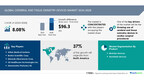
NEW YORK, Aug. 22, 2024 /PRNewswire/ — The global cerebral and tissue oximetry devices market size is estimated to grow by USD 96.3 million from 2024-2028, according to Technavio. The market is estimated to grow at a CAGR of 8.08% during the forecast period. Growing use of cerebral and tissue oximetry devices in cardiac surgical procedures is driving market growth, with a trend towards technological advances in cerebral and tissue oximetry devices. However, high cost of cerebral and tissue oximetry devices poses a challenge. Key market players include Artinis Medical Systems, Boston Scientific Corp., Edwards Lifesciences Corp., GE Healthcare Technologies Inc., Hamamatsu Photonics KK, HyperMed Imaging Inc., ISS Inc., Masimo Corp., Medtronic Plc, Moor Instruments Ltd., Nonin Medical Inc., Sotera Health Co., Spectros Medical Devices Inc., Terumo Corp., and ViOptix Inc..
Get a detailed analysis on regions, market segments, customer landscape, and companies- View the snapshot of this report
Cerebral And Tissue Oximetry Devices Market Scope
Report Coverage
Details
Base year
2023
Historic period
2018 – 2022
Forecast period
2024-2028
Growth momentum & CAGR
Accelerate at a CAGR of 8.08%
Market growth 2024-2028
USD 96.3 million
Market structure
Concentrated
YoY growth 2022-2023 (%)
7.3
Regional analysis
North America, Europe, Asia, and Rest of World (ROW)
Performing market contribution
North America at 37%
Key countries
US, China, Germany, France, and Japan
Key companies profiled
Artinis Medical Systems, Boston Scientific Corp., Edwards Lifesciences Corp., GE Healthcare Technologies Inc., Hamamatsu Photonics KK, HyperMed Imaging Inc., ISS Inc., Masimo Corp., Medtronic Plc, Moor Instruments Ltd., Nonin Medical Inc., Sotera Health Co., Spectros Medical Devices Inc., Terumo Corp., and ViOptix Inc.
Market Driver
The cerebral and tissue oximetry devices market is witnessing significant advancements, driven by vendors’ focus on offering innovative products with enhanced features and benefits. Technological progressions, such as the adoption of diffuse correlation spectroscopy (DCS) technology for sensitive and rapid blood flow measurements and cerebral metabolism ratio of oxygen in deeply located tissues, are key factors fueling market growth. Vendors are also integrating continuous-wave light sources instead of pulsed laser and frequency-modulated approaches to reduce costs. Notable technology offerings include Medtronic’s INVOS TECHNOLOGY, which provides multi-sensor monitoring and real-time data on the balance of oxygen supply and demand using a 3:1 ratio of venous and arterial blood. Edward Lifesciences’ LASER-SIGHT optical technology increases the accuracy and reliability of cerebral and tissue oximetry devices by using five precise wavelengths of NIRS. Nonin Medical’s EQUANOX technology offers six channels for simultaneous monitoring of peripheral oxygen saturation (SpO2) and rSO2, along with dual detector and dual emitter sensors for enhanced accuracy. These advancements in NIRS technologies are crucial for end-users seeking precise and accurate measurements for routine healthcare operations. The increasing adoption of cerebral and tissue oximetry devices is expected to significantly boost the growth of the global cerebral and tissue oximetry devices market during the forecast period.
The Cerebral and Tissue Oximetry Devices market is witnessing significant growth due to the increasing focus on monitoring oxygen saturation levels in various medical settings. Minimally invasive procedures using portable cerebral oximeter monitors are becoming popular among physicians for measuring cerebral oxygenation levels in cerebral tissues. These devices use sensors, a cable, oximeter probe, and a light detector with a fiber-optic light source to measure oxygen levels in the brain. The geriatric population and those with neurodegenerative diseases are major users of these devices. Oxygen saturation monitoring is essential during surgeries, ICUs, research settings, neonatal care, and for premature infants. Sensor technologies and data analytics are trending in this market, enabling real-time monitoring and improved patient care. Cerebral oximetry devices are used to monitor oxygen saturation levels in muscles, liver, and other tissues, besides the brain. These devices are available as tabletop models and portable, handheld units, catering to diverse requirements in hospitals and other healthcare facilities.
Explore a 360° Analysis of the Market: Unveil the Impact of AI. For complete insights- Request Sample!
Market Challenges
The cost is a crucial factor for end-users when purchasing cerebral and tissue oximetry devices. The expense related to components and overall system hardware, including monitors, sensors, mounting options, and maintenance, significantly influences their buying decision. Advanced technologies, such as Near Infrared Spectroscopy (NIRS), used in these devices for accurate blood oxygenation monitoring, increase the overall cost. Monitors range from USD12,000 to USD25,000, and mounting options like wall mounts and roll stands can cost up to USD1,000. Sensor costs vary, with adult sensors priced between USD50 and USD100, and pediatric/infant sensors costing USD100–USD150. Maintenance costs, primarily battery replacements, range from USD450 to USD550. Large-scale hospitals and clinical settings can justify these investments, but small healthcare facilities face challenges justifying the costs, potentially hindering the adoption and growth of the global cerebral and tissue oximetry devices market.The Cerebral and Tissue Oximetry Devices market is witnessing significant growth due to the increasing demand for non-invasive monitoring of oxygen saturation levels in various medical settings. These devices use sensors to measure tissue oxygen levels in muscles, liver, and during surgeries in ICUs, research settings, neonatal care, and premature infants. Sensor technologies and data analytics play a crucial role in providing real-time data for surgical procedures in operating rooms and outpatient settings. However, high device costs and complex reimbursement policies pose challenges to market growth. User-friendly design, portability, and flexibility are essential features for end-users. Tabletop devices are common in hospitals, while handheld devices offer convenience for healthcare professionals in diverse medical specialties, including neurological conditions, cardiovascular disorders, and heart disease. AI integration, wireless connectivity, and data analysis capabilities are emerging trends, enabling home healthcare and mobile monitoring systems for chronic diseases like peripheral artery disease. Surgeons and healthcare professionals rely on these devices for real-time data during surgeries, enhancing patient safety and outcomes.
For more insights on driver and challenges – Request a sample report!
Segment Overview
This cerebral and tissue oximetry devices market report extensively covers market segmentation by
Product 1.1 Modular devices1.2 Handheld devicesEnd-user 2.1 Hospitals2.2 ClinicsGeography 3.1 North America3.2 Europe3.3 Asia3.4 Rest of World (ROW)
1.1 Modular devices- Handheld cerebral and tissue oximetry devices are compact, next-generation tools that provide instantaneous oxygen level measurements in blood without requiring direct patient contact or external connections to sensors and monitors. Advanced compatibility features enable these devices to pair with modular offerings from vendors, creating comprehensive solutions for medical practitioners during pre-operative, intra-operative, and postoperative assessments. Paired devices allow for real-time monitoring and decision-making during surgeries, saving valuable time. Proprietary spectrometer technology, such as HyperMed Imaging’s HyperView and ViOptix’s Intra.Ox, sets handheld devices apart from standard-of-care diagnostic imaging tools, which cannot distinguish oxygenated and deoxygenated hemoglobin. This advantage, along with applications in vascular procedures, wound care, and reconstructive surgeries, is fueling market growth for handheld cerebral and tissue oximetry devices.
For more information on market segmentation with geographical analysis including forecast (2024-2028) and historic data (2017-2021) – Download a Sample Report
Research Analysis
Cerebral and tissue oximetry devices measure oxygen saturation levels in cerebral tissues, including muscles and the liver. These devices are essential in various settings such as surgeries in ICUs, research settings, neonatal care for premature infants, and outpatient settings. Surgical procedures and operating rooms particularly benefit from real-time monitoring of cerebral oxygenation levels to ensure optimal patient care. High device costs and complex reimbursement policies pose challenges to widespread adoption. Advancements in technology include AI integration and wireless connectivity, enabling seamless integration into medical specialties treating chronic diseases and neurological conditions. Physicians rely on cerebral oximeter monitors, which include a cable and oximeter probe, typically placed on the forehead area. The device utilizes a light detector and fiber-optic light source to assess oxygen saturation levels in cerebral tissues.
Market Research Overview
Cerebral and tissue oximetry devices are non-invasive tools used to measure oxygen saturation levels in various tissues, including muscles, liver, and cerebral tissues. These devices use sensors to detect the amount of oxygen in the tissue based on the amount of light absorbed. They are used in various settings such as surgeries, ICUs, research settings, neonatal care, and home healthcare. Premature infants and patients with chronic diseases, neurological conditions, and cardiovascular disorders benefit from these devices. Sensor technologies have advanced to include data analytics, AI integration, and wireless connectivity, making them user-friendly, portable, and flexible. Handheld devices and tabletop devices are popular due to their portability and real-time data capabilities. High device costs and reimbursement policies are challenges in the market. These devices are used in surgical procedures, operating rooms, outpatient settings, and minimally invasive procedures. Surgeons and healthcare professionals rely on cerebral oximeter monitors to monitor cerebral oxygenation levels in the brain, especially during cardiac surgeries and cardiovascular diseases. Geriatric population with neurodegenerative diseases also benefits from these devices. Oxygen saturation levels are essential indicators of tissue health, and these devices provide valuable information for medical specialties to make informed decisions.
Table of Contents:
1 Executive Summary
2 Market Landscape
3 Market Sizing
4 Historic Market Size
5 Five Forces Analysis
6 Market Segmentation
ProductModular DevicesHandheld DevicesEnd-userHospitalsClinicsGeographyNorth AmericaEuropeAsiaRest Of World (ROW)
7 Customer Landscape
8 Geographic Landscape
9 Drivers, Challenges, and Trends
10 Company Landscape
11 Company Analysis
12 Appendix
About Technavio
Technavio is a leading global technology research and advisory company. Their research and analysis focuses on emerging market trends and provides actionable insights to help businesses identify market opportunities and develop effective strategies to optimize their market positions.
With over 500 specialized analysts, Technavio’s report library consists of more than 17,000 reports and counting, covering 800 technologies, spanning across 50 countries. Their client base consists of enterprises of all sizes, including more than 100 Fortune 500 companies. This growing client base relies on Technavio’s comprehensive coverage, extensive research, and actionable market insights to identify opportunities in existing and potential markets and assess their competitive positions within changing market scenarios.
Contacts
Technavio Research
Jesse Maida
Media & Marketing Executive
US: +1 844 364 1100
UK: +44 203 893 3200
Email: media@technavio.com
Website: www.technavio.com/
View original content to download multimedia:https://www.prnewswire.com/news-releases/cerebral-and-tissue-oximetry-devices-market-size-is-set-to-grow-by-usd-96-3-million-from-2024-2028–growing-use-of-cerebral-and-tissue-oximetry-devices-in-cardiac-surgical-procedures-boost-the-market-ai-role-and-impact-technavio-302228668.html
SOURCE Technavio









 Technology4 days ago
 Coin Market4 days ago
 Coin Market4 days ago
 Technology5 days ago
 Coin Market4 days ago
 Coin Market4 days ago
 Technology4 days ago
 Coin Market5 days ago