Connect with us

Technology

Next-Generation Data Storage Market to Grow by USD 29.2 Billion from 2024-2028, Driven by IoT and Big Data Demand, AI-Powered Report- Technavio

Published

on

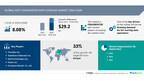
NEW YORK, Sept. 10, 2024 /PRNewswire/ — Report on how AI is driving market transformation- The global next-generation data storage market size is estimated to grow by USD 29.2 billion from 2024-2028, according to Technavio. The market is estimated to grow at a CAGR of 8.08% during the forecast period. Growing demand for iot and big data operations is driving market growth, with a trend towards software-defined storage. However, high operating expenses for vendors poses a challenge. Key market players include Cloudian Inc., DataDirect Networks Inc., Dell Technologies Inc., Drobo Inc., Furukawa Electric Co. Ltd., Hewlett Packard Enterprise Co., Hitachi Ltd., Inspur Group, International Business Machines Corp., Micron Technology Inc., NetApp Inc., Netgear Inc., Nutanix Inc., Oracle Corp., Pure Storage Inc., Quantum Corp., Samsung Electronics Co. Ltd., Scality Inc., Toshiba Corp., and Western Digital Corp..

Key insights into market evolution with AI-powered analysis. Explore trends, segmentation, and growth drivers- View the snapshot of this report

Next-Generation Data Storage Market Scope

Report Coverage

Details

Base year

2023

Historic period

2018 – 2022

Forecast period

2024-2028

Growth momentum & CAGR

Accelerate at a CAGR of 8.08%

Market growth 2024-2028

USD 29.2 billion

Market structure

Fragmented

YoY growth 2022-2023 (%)

7.32

Regional analysis

North America, Europe, APAC, South America, and Middle East and Africa

Performing market contribution

Europe at 33%

Key countries

US, China, UK, France, and Japan

Key companies profiled

Cloudian Inc., DataDirect Networks Inc., Dell Technologies Inc., Drobo Inc., Furukawa Electric Co. Ltd., Hewlett Packard Enterprise Co., Hitachi Ltd., Inspur Group, International Business Machines Corp., Micron Technology Inc., NetApp Inc., Netgear Inc., Nutanix Inc., Oracle Corp., Pure Storage Inc., Quantum Corp., Samsung Electronics Co. Ltd., Scality Inc., Toshiba Corp., and Western Digital Corp.


Market Driver

Next-Generation Software Defined Storage (SDS) is a modern approach to enterprise data storage that separates software services, such as data administration, safety, and input/output capabilities, from hardware services. This separation enhances infrastructure flexibility, scalability, and automation capabilities. SDS also pools resources, abstracts hardware, and automates management, while supporting legacy applications, big data analytics, and cloud-based data apps. Vendors like EMC, NetApp, and IBM offer SDS-enabled infrastructure, making it a cost-effective alternative to reconfiguring existing arrays. Adopting new SSD arrays is more affordable than upgrading existing ones. SDS is increasingly essential due to the growing need for efficient data storage. 

The Next-Generation Data Storage Market is experiencing significant growth due to the exponential increase in digital data production from mobile devices, smart wearables, connected devices, and the Internet of Things. With the rollout of 5G technology, faster data transfer and lower latency are becoming essential for data-driven applications, analytics, and automated systems. The expansion of e-commerce, banking services, financial services, and online shopping is leading to massive amounts of less structured data. Security breaches, configuration errors, and poor user rights pose serious data security issues, making cloud storage and server services increasingly popular. Higher storage capacity, scalability, and flexibility are key requirements for large-scale industries handling corporate information, patient information, and financial data. The market is responding with high-speed data storage solutions, automatic cloud backups, and ransomware attack protection. The industry is poised for continued expansion as the world becomes more digitized. 

Request Sample of our comprehensive report now to stay ahead in the AI-driven market evolution!

 Market Challenges

Next-generation data storage market requires customized solutions based on end-user needs, resulting in costly research and development processes. Cloud service providers face demand fluctuations due to consumer trends, leading to potential oversupply or shortage situations. Complexity in designing next-generation storage solutions also poses a challenge to market growth. Vendors aim to align production with revenue, but unexpected changes in demand can disrupt manufacturing costs.The Next-Generation Data Storage Market is facing numerous challenges in today’s business landscape. Compliance with data protection regulations is a major concern for businesses, especially those in the BFSI, manufacturing, and consumer goods sectors. Data centers need to store vast amounts of data for cloud computing, big data, AI, machine learning, and social media, requiring efficient and secure storage solutions. Cyber threats such as malware, ransomware, viruses, worms, botnets, spam, spoofing, phishing, hacktivism, and state-sanctioned cyberwarfare pose significant risks to data integrity and privacy. Flash memory and HDDs from non-volatile manufacturers are crucial for addressing latency issues in mobile payments and tablets/laptops. On-premises storage systems must contend with FOBS systems and the need for high-performance, low-latency solutions. The market must adapt to these challenges to meet the evolving needs of businesses. PAC Storage (US) and other leading players are investing in advanced technologies to ensure secure, efficient, and cost-effective data storage solutions.

Discover how AI is revolutionizing market trends- Get your access now!

Segment Overview

This next-generation data storage market report extensively covers market segmentation by

Application 1.1 SAN1.2 NAS1.3 DASDeployment 2.1 On-premise2.2 CloudGeography 3.1 North America3.2 Europe3.3 APAC3.4 South America3.5 Middle East and Africa

1.1 SAN- A Storage Area Network (SAN) is a dedicated high-speed network that connects next-generation storage devices to multiple servers. It moves data from the common user network and organizes it into an independent high-speed network, allowing each server to access storage devices. Enterprises are the primary adopters of SAN storage due to its better flexibility, availability, and performance compared to Direct Attached Storage (DAS) or Network Attached Storage (NAS). SAN is a local area network designed for handling large data volumes. It supports data storage, retrieval, and replication using high-end servers and multiple disk arrays. Vendors like Dell Technologies, Hewlett Packard Enterprise, and IBM offer SAN equipment, with costs ranging from hundreds to thousands of dollars. SAN solutions come in two types: Fibre Channel (FC) for mission-critical applications and iSCSI for IP networks. SAN offers advantages such as storage virtualization, high-speed disk technologies, centralized backup, and dynamic failover protection. The construction of data centers in developing countries is increasing, driving the adoption of SAN storage arrays. SAN solutions include Virtual SAN, Unified SAN, and Converged SAN, each offering unique benefits. Virtual SAN is implemented on a hypervisor, providing ease of management and scalability. Unified SAN exposes file and block storage through a single device. Converged SAN uses a common network infrastructure for different networks and keeps it separate from Ethernet networks.

Download a Sample of our comprehensive report today to discover how AI-driven innovations are reshaping competitive dynamics

Research Analysis

The Next-Generation Data Storage market is experiencing exponential growth due to the growth in data production from mobile devices, smart wearables, and connected devices. With the rollout of 5G technology, faster data transfer and processing speeds are enabling new applications in e-commerce, mobile payments, and cloud computing. Smart technologies and automated systems are generating massive amounts of data, leading to an increased demand for efficient and secure data storage solutions. Security breaches and cyber threats are major concerns, driving the need for advanced encryption and data protection technologies. Cloud storage and data centers are becoming the go-to solutions for businesses and individuals seeking cost-effective and scalable storage solutions. Big data, analytics, AI, and machine learning are driving the need for high-performance storage solutions with low latency, such as Flash memory and non-volatile manufacturers. Social media, healthcare, and other data-intensive industries are also fueling the growth of the Next-Generation Data Storage market. HDDs continue to dominate the market due to their affordability and high storage capacity, but Flash memory is gaining popularity due to its faster read and write speeds. Distributed denial-of-service attacks and other cyber threats are also pushing the market towards more secure storage solutions. Overall, the Next-Generation Data Storage market is poised for significant growth in the coming years, driven by the increasing demand for efficient, secure, and scalable storage solutions for data generated by mobile devices, smart technologies, and other digital applications.

Market Research Overview

The next-generation data storage market is experiencing exponential growth due to the increasing production of digital data from mobile devices, smart wearables, connected devices, and the implementation of 5G technology. The expansion of e-commerce, smart technologies, and automated systems is also contributing to the industry’s growth. However, this growth brings new challenges such as security breaches, configuration errors, poor user rights, and data security issues. Large-scale industries, including healthcare, banking services, and financial services, generate vast amounts of less structured data that require scalable and flexible storage solutions. The healthcare sector, in particular, deals with sensitive patient information, making data protection and compliance essential. Cloud storage and server services are popular solutions for managing data, but they come with their own set of challenges, including data transfer, backup, and high-speed data storage. Ransomware attacks and other cyber threats pose significant risks, making data security a top priority. Direct-attached storage, network-attached storage, and storage area networks are on-premise solutions, while cloud, hybrid, and IT specialists offer installation and configuration services. The use of databases in retail, healthcare, and telecom companies, as well as in data centers, is increasing, making data security and compliance critical. The rise of mobile payments, cloud computing, big data, AI, machine learning, social media, and the Internet of Things is generating even more data, requiring new and innovative storage solutions to keep up with the demand. The market is expected to continue expanding as businesses and individuals seek to manage and protect their digital assets.

Table of Contents:

1 Executive Summary
2 Market Landscape
3 Market Sizing
4 Historic Market Size
5 Five Forces Analysis
6 Market Segmentation

ApplicationSANNASDASDeploymentOn-premiseCloudGeographyNorth AmericaEuropeAPACSouth AmericaMiddle East And Africa

7 Customer Landscape
8 Geographic Landscape
9 Drivers, Challenges, and Trends
10 Company Landscape
11 Company Analysis
12 Appendix

About Technavio

Technavio is a leading global technology research and advisory company. Their research and analysis focuses on emerging market trends and provides actionable insights to help businesses identify market opportunities and develop effective strategies to optimize their market positions.

With over 500 specialized analysts, Technavio’s report library consists of more than 17,000 reports and counting, covering 800 technologies, spanning across 50 countries. Their client base consists of enterprises of all sizes, including more than 100 Fortune 500 companies. This growing client base relies on Technavio’s comprehensive coverage, extensive research, and actionable market insights to identify opportunities in existing and potential markets and assess their competitive positions within changing market scenarios.

Contacts

Technavio Research
Jesse Maida
Media & Marketing Executive
US: +1 844 364 1100
UK: +44 203 893 3200
Email: media@technavio.com
Website: www.technavio.com/

View original content to download multimedia:https://www.prnewswire.com/news-releases/next-generation-data-storage-market-to-grow-by-usd-29-2-billion-from-2024-2028–driven-by-iot-and-big-data-demand-ai-powered-report–technavio-302242266.html

SOURCE Technavio

Continue Reading
Click to comment

Leave a Reply

Your email address will not be published. Required fields are marked *

Technology

Melanie Siewert, Chief Marketing Officer at LHH, Joins the Exceptional Women Alliance (EWA)

Published

on

By

LOS ANGELES, May 8, 2026 /PRNewswire/ — The Exceptional Women Alliance (EWA) proudly welcomes Melanie Siewert, Chief Marketing Officer at LHH, into its distinguished community of influential women leaders. A seasoned global marketing executive, Siewert brings more than 20 years of experience transforming brands, building high-performing teams, and driving measurable growth across both B2B and B2C industries.

As Chief Marketing Officer of LHH, Siewert leads global marketing strategy across brand, demand generation, and customer experience. She plays a critical role in aligning marketing with business objectives and fostering strong collaboration with sales to enhance organizational performance and accelerate growth. Her leadership has been instrumental in shaping a modern, customer-centric brand and building a marketing function designed to deliver consistent, high-impact results across a complex global enterprise.

Throughout her career, Siewert has held senior leadership roles at prominent organizations including Truist Financial, Worldpay, Equifax, Whirlpool Corporation, and JPMorgan Chase. She is widely recognized for guiding enterprise brand strategy, leading complex mergers, scaling marketing operations, and delivering measurable gains in pipeline, revenue, and digital adoption.

Siewert’s expertise spans marketing strategy, customer engagement, brand development, sales enablement, and cross-functional leadership. Known for her empowering leadership style and strategic vision, she consistently builds high-performing teams that drive sustainable business growth while fostering collaboration and innovation.

Her accomplishments include:

Leading global marketing strategy for LHH, integrating brand, demand generation, and customer experience to drive business performance.Guiding enterprise brand transformations and go-to-market strategies across multiple global organizations.Driving measurable growth in pipeline, revenue, and digital engagement through data-driven marketing initiatives.Leading marketing efforts through complex mergers and organizational transformations.Serving as a two-time board chair and lifetime member of Strategic & Competitive Intelligence Professionals.Recognized as a Top Woman in Marketing by PRWeek.

“Melanie’s ability to translate complex market dynamics into clear, impactful strategies, combined with her commitment to building strong, collaborative teams, makes her an exceptional addition to EWA,” said Larraine Segil. “Her leadership and results-driven approach align seamlessly with the values of our sisterhood.”

Melanie shared “I’m honored to be part of the Exceptional Women’s Alliance and look forward to learning from the incredible women leaders who are dedicated to lifting other women and impacting the world at large.”

Siewert now joins a powerful and growing community of C-suite and board-level women leaders across disciplines who share a common goal: to support one another through confidential, life-long mentoring relationships and to enrich both their professional and personal lives.

About Exceptional Women Alliance (EWA)
The Exceptional Women Alliance (EWA) is an invitation-only peer mentorship organization where high-level Exceptional Women from across multiple industries are hand-selected and invested in, to grow, learn, share, and succeed. In addition to the achievement of significant success, the criteria for acceptance include character traits that are defining of the EWA Culture – Kindness, the Spirit of Generosity, Transparency, Gratitude, and Willingness to Share their knowledge. The Foundation is a powerhouse of peer-to-peer mentoring that provides guidance, deep connection, and leadership, propelling each woman to sustainable success—one woman at a time. The life-long program enables each participant to be connected as alumnae in the ever-expanding EWA global community, as their fellow women leaders continue to move into positions of significance.

Learn more at www.exceptionalwomenalliance.com

View original content to download multimedia:https://www.prnewswire.com/news-releases/melanie-siewert-chief-marketing-officer-at-lhh-joins-the-exceptional-women-alliance-ewa-302767205.html

SOURCE Exceptional Women Alliance

Continue Reading

Technology

Insurance Modernization at Risk as Workforce Strategies Fall Behind, Says Info-Tech Research Group

Published

on

By

Insurers are under pressure to modernize core systems while competing for scarce cloud, data, AI, and cybersecurity talent. Info-Tech Research Group’s new blueprint, Rebuild Your Talent Engine: Attract and Retain IT Talent in Insurance, outlines a practical framework to help insurance IT and HR leaders assess readiness, strengthen their employee value proposition, and retain the critical roles needed to accelerate transformation.

ARLINGTON, Va., May 8, 2026 /PRNewswire/ – Insurance modernization is increasingly being constrained by the people and capabilities required to deliver it, according to Info-Tech Research Group. The global research and advisory firm’s newly published blueprint, Rebuild Your Talent Engine: Attract and Retain IT Talent in Insurance, provides a structured approach to help insurers attract, retain, and mobilize the IT talent required to support digital transformation.

The firm’s research indicates that many insurers are trying to advance core system modernization while facing shortages in cloud, data, AI, and cybersecurity roles. At the same time, experienced legacy system experts are retiring, creating knowledge gaps that can slow delivery, increase operational risk, and deepen dependence on external partners.

“Insurance modernization cannot succeed if the workforce strategy behind it remains outdated,” says Vidhi Trivedi, senior research analyst at Info-Tech Research Group. “Insurers need an employee value proposition that reflects what both digital and legacy talent value today: flexibility, growth, purpose, and belonging. When organizations connect those expectations to the technology roadmap, they are better positioned to retain institutional knowledge, attract new capabilities, and move transformation forward with confidence.”

Key Workforce Risks Slowing Insurance Modernization

Info-Tech’s blueprint identifies several talent challenges that are limiting insurers’ ability to modernize effectively:

Critical digital skills remain difficult to attract and retain. Cloud engineers, data architects, cybersecurity specialists, and AI-capable technologists are essential to future-state systems, integration, and automation.Legacy expertise is leaving faster than it can be replaced. Core system knowledge remains vital to operations, compliance, and transition planning, yet many long-tenured experts are approaching retirement or feel disconnected from future-state roles.Rigid work models reduce access to high-demand talent. Digital professionals increasingly expect hybrid options, autonomy, modern delivery practices, and environments that support productivity and wellbeing.Growth pathways are not clearly connected to transformation needs. Without structured upskilling, internal mobility, and role progression, insurers risk losing employees to industries perceived as more innovative or career-accelerating.Employer branding often undersells insurance’s purpose and impact. The industry plays a critical role in protecting people, businesses, and communities, but that purpose is not always translated into a compelling technology career story.

Info-Tech’s Three-Phase Framework for Rebuilding the Insurance IT Talent Engine

To help insurers address these challenges, the Rebuild Your Talent Engine: Attract and Retain IT Talent in Insurance blueprint outlines a three-phase methodology:

Assess Talent Readiness for Modernization Success
Insurance IT and HR leaders identify modernization-critical roles, evaluate workforce pressure, assess EVP fit across key roles, and prioritize the roles that pose the greatest risk to transformation timelines.Build and Embed a Modern Employee Value Proposition
Organizations define a clear employer-employee value exchange, establish proof points across the four EVP pillars of flexibility, growth, purpose, and belonging, and activate targeted initiatives for priority roles.Develop and Present the EVP Impact Report
Leaders synthesize workforce insights, visualize progress, and present a measurable view of how EVP activation is improving retention, engagement, internal mobility, and readiness.

The resource also includes supporting tools, such as the EVP Diagnostic Tool, EVP Activation & Implementation Tool, and EVP Impact Report Template, that help insurers move from talent planning to measurable action.

“Too often, insurers view IT talent challenges as a capacity issue, when they are really a transformation risk,” explains Trivedi. ” “The insurers that move fastest will be those that know where critical capabilities are under strain, protect the expertise that increases operational resilience, and create clear pathways for employees to help shape the future of insurance from within.”

By applying Info-Tech’s framework outlined in the Rebuild Your Talent Engine: Attract and Retain IT Talent in Insurance blueprint, insurance leaders can better understand where people-related risks are highest, strengthen retention in critical roles, reduce long-term reliance on external partners, and build a more resilient technology organization. The firm’s research emphasizes that a modern EVP is not only an HR initiative but a strategic enabler of modernization success.

For exclusive and timely commentary from Info-Tech’s experts, including Vidhi Trivedi, and access to the complete Rebuild Your Talent Engine: Attract and Retain IT Talent in Insurance blueprint, please contact pr@infotech.com.

About Info-Tech Research Group

Info-Tech Research Group is the “get things done” partner for over 30,000 IT, HR, and marketing leaders worldwide. The fastest growing research and advisory firm, Info-Tech enables leaders to make well-informed decisions and transform their organizations through AI, strategic foresight, step-by-step methodologies, practical tools, industry-leading advisory, and training programs. For nearly 30 years, tens of thousands of private and public organizations have trusted Info-Tech to lead their most important initiatives through periods of change and deliver outcomes that truly matter.

To learn more about Info-Tech’s HR research and advisory services, visit McLean & Company, and for data-driven software buying insights and vendor evaluations, visit the firm’s SoftwareReviews platform.

Media professionals can register for unrestricted access to research across IT, HR, and software, and hundreds of industry analysts through the firm’s Media Insiders program. To gain access, contact pr@infotech.com.

For information about Info-Tech Research Group or to access the latest research, visit infotech.com and connect via LinkedIn and X.

View original content to download multimedia:https://www.prnewswire.com/news-releases/insurance-modernization-at-risk-as-workforce-strategies-fall-behind-says-info-tech-research-group-302767354.html

SOURCE Info-Tech Research Group

Continue Reading

Technology

Caris Life Sciences Submits Application to New York State Department of Health for Caris Assure Blood‑Based Testing Authorization

Published

on

By

IRVING, Texas, May 8, 2026 /PRNewswire/ — Caris Life Sciences® (NASDAQ: CAI), a leading patient-centric next-generation AI TechBio company and precision medicine pioneer, today announced that it has submitted an application to the New York State Department of Health (NYSDOH) Clinical Laboratory Evaluation Program (CLEP), administered through the Wadsworth Center, seeking authorization to perform Caris Assure®, its blood‑based molecular profiling test, on specimens originating from New York State.

Caris Assure is a blood‑based molecular profiling test designed to support comprehensive biomarker analysis using a minimally invasive blood sample. Caris Assure uses circulating nucleic acids sequencing (cNAS) to analyze the whole exome (DNA) and whole transcriptome (RNA) of 22,000 genes. This comprehensive test identifies tumor alterations, clonal hematopoiesis (CH) and inherited variants, pharmacogenomic alterations, microsatellite instability (MSI) and tumor mutational burden (TMB).

The submission initiates the formal review process required by New York State for clinical laboratories seeking to perform testing on specimens collected from New York patients. Through the Wadsworth Center, CLEP conducts comprehensive reviews of laboratory permits and laboratory-developed tests to evaluate analytical validation, quality systems, personnel qualifications and compliance with applicable state regulations.

“Caris is committed to meeting the highest standards for laboratory quality, validation and regulatory compliance,” said David Spetzler, MS, PhD, MBA, President of Caris Life Sciences. “This submission of Caris Assure for review through the New York State Department of Health’s Wadsworth Center reflects our disciplined approach to expanding access to our technologies in a manner that demonstrates the rigor, responsibility and focus on the patient that define Caris Life Sciences and guide our work in the markets we serve.”

At this time, no determination has been made by NYSDOH, and Caris Assure is not authorized for use on blood-based specimens originating from New York State unless and until CLEP authorization is granted.

Caris operates a CAP-accredited, CLIA‑certified clinical laboratory and performs testing in jurisdictions where it is authorized to do so, in accordance with all applicable federal, state, and local regulations. Any future availability of Caris Assure in New York State will be contingent upon completion of the CLEP review process administered by the Wadsworth Center and receipt of the appropriate authorization.

About Caris Life Sciences
Caris Life Sciences® (Caris) is a leading, patient-centric, next-generation AI TechBio company and precision medicine pioneer actively developing and commercializing innovative solutions to transform healthcare. Through comprehensive molecular profiling (Whole Genome, Whole Exome and Whole Transcriptome Sequencing), advanced AI and machine learning, Caris has created the large-scale, multimodal clinico-genomic database and computing capability needed to analyze and further unravel the molecular complexity of disease. This convergence of next-generation sequencing, AI and machine learning technologies and high-performance computing provides a differentiated platform for developing the latest generation of advanced precision medicine diagnostic solutions for early detection, diagnosis, monitoring, therapy selection and drug development.

Caris was founded with a vision to realize the potential of precision medicine to improve the human condition. Headquartered in Irving, Texas, Caris has offices in Phoenix, New York, Cambridge (MA), Tokyo, Japan and Basel, Switzerland. Caris or its distributor partners provide services in the U.S. and other international markets.

Forward Looking Statements

This press release contains forward-looking statements, within the meaning of the Private Securities Litigation Reform Act of 1995 and other federal securities laws. All statements other than statements of historical facts contained in this press release are forward-looking statements, including statements regarding our business, solutions, plans, objectives, goals, industry trends, financial outlook and guidance. In some cases forward-looking statements can be identified by words such as “may,” “will,” “should,” “would,” “expect,” “plan,” “anticipate,” “could,” “intend,” “target,” “project,” “potential,” “contemplate,” “believe,” “estimate,” “predict,” or “continue” or similar expressions.

You should not rely upon forward-looking statements as predictions of future events. Although we believe that the expectations reflected in these forward-looking statements are reasonable based on information currently available to us, we cannot guarantee that the future results, discoveries, levels of activity, performance or events and circumstances reflected in forward-looking statements will be achieved or occur. Forward-looking statements involve known and unknown risks and uncertainties, some of which are beyond our control. Risks and uncertainties that could cause our actual results to differ materially from those indicated or implied by the forward-looking statements in this press release include, among other things: our future financial performance, results of operations or other operational results or metrics; development, analytical and clinical validation, timing and performance of future solutions by us and our competitors; commercial market acceptance for our solutions, including acceptance of preventive as well as diagnostic testing paradigms, and our ability to meet resulting demand; the rapidly evolving competitive environment in which we operate; third-party payer reimbursement and coverage decisions related to our solutions; risks related to data management, storage, and processing capabilities and our ability to integrate and deploy artificial intelligence and advanced data analytics technologies; our ability to protect and enhance our intellectual property; regulatory requirements, decisions or approvals (including the timing and conditions thereof) related to our solutions, including our application for New York State Department of Health approval for Caris Assure; reliance on third-party suppliers; risks related to data security, patient privacy, and compliance with healthcare data protection regulations as well as potential cybersecurity threats to our data platforms; our compliance with laws and regulations; the outcome of government investigations and litigation; risks related to our indebtedness; and our ability to hire and retain key personnel as well as risks, uncertainties; and other factors described in the section titled “Risk Factors” and elsewhere in our Annual Report on Form 10-K filed on March 3, 2026, and in our other filings we make with the SEC from time to time. We undertake no obligation to update any forward-looking statements to reflect changes in events, circumstances or our beliefs after the date of this press release, except as required by law.

Caris Life Sciences Media:
Corporate Communications
CorpComm@CarisLS.com
214.294.5606 

View original content to download multimedia:https://www.prnewswire.com/news-releases/caris-life-sciences-submits-application-to-new-york-state-department-of-health-for-caris-assure-bloodbased-testing-authorization-302767104.html

SOURCE Caris Life Sciences

Continue Reading

Trending