Connect with us

Technology

Elderly and Disabled Assistive Solutions Market to grow by USD 15.60 Billion (2024-2028), AI Redefining Market Landscape with Government and NGO Initiatives – Technavio

Published

on

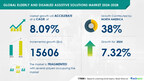
NEW YORK, Sept. 19, 2024 /PRNewswire/ — Report with market evolution powered by AI- The global elderly and disabled assistive solutions market size is estimated to grow by USD 15.60 billion from 2024-2028, according to Technavio. The market is estimated to grow at a CAGR of almost 8.09% during the forecast period. Initiatives by governments and ngos is driving market growth, with a trend towards growing customization. However, issues faced in developing countries poses a challenge. Key market players include Blue Chip Medical Products Inc., Briggs Corp., Cochlear Ltd., Demant AS, DeVilbiss Healthcare GmbH, Electric Mobility Euro Ltd., Freedom Scientific Inc., GF Health Products Inc., GN Store Nord AS, Invacare Corp., LifeTec, MED EL Elektromedizinische Gerate GmbH, Ottobock SE and Co. KGaA, Permobil AB, Pride Mobility Products Corp., Siemens AG, Sonova AG, Starkey Laboratories Inc., Sunrise Medical LLC, and WS Audiology AS.

Key insights into market evolution with AI-powered analysis. Explore trends, segmentation, and growth drivers- View the snapshot of this report

Elderly And Disabled Assistive Solutions Market Scope

Report Coverage

Details

Base year

2023

Historic period

2018 – 2022

Forecast period

2024-2028

Growth momentum & CAGR

Accelerate at a CAGR of 8.09%

Market growth 2024-2028

USD 15606 million

Market structure

Fragmented

YoY growth 2022-2023 (%)

7.32

Regional analysis

North America, Europe, Asia, and Rest of World (ROW)

Performing market contribution

North America at 38%

Key countries

US, Germany, Japan, UK, and France

Key companies profiled

Blue Chip Medical Products Inc., Briggs Corp., Cochlear Ltd., Demant AS, DeVilbiss Healthcare GmbH, Electric Mobility Euro Ltd., Freedom Scientific Inc., GF Health Products Inc., GN Store Nord AS, Invacare Corp., LifeTec, MED EL Elektromedizinische Gerate GmbH, Ottobock SE and Co. KGaA, Permobil AB, Pride Mobility Products Corp., Siemens AG, Sonova AG, Starkey Laboratories Inc., Sunrise Medical LLC, and WS Audiology AS

Market Driver

The elderly and disabled assistive solutions market is witnessing significant advancements, with vendors prioritizing faster delivery processes and mass customization. Mass customization, which involves catering to consumers’ unique requirements, is becoming increasingly important. Technological advances, such as computer-aided designing, offer flexibility in add-on features and equipment. Vendors like Permobil AB and Sunrise Medical provide customization templates for consumers. The growing number of physically disabled individuals and rising awareness of their participation in events like the Paralympics fuel the demand for customized solutions, including swimming pool lifts, customized wheelchairs, and running leg implants. These trends are expected to boost sales and drive market growth during the forecast period. 

The Elderly and Disabled Assistive Solutions market is experiencing significant growth due to the increasing prevalence of mobility impairment disorders from non-communicable diseases like Multiple Sclerosis, Stroke, and Paralysis, as well as non-fatal injuries from road traffic accidents. Mobility aids, such as walkers, canes, wheelchairs, and mobility scooters, are in high demand to improve quality of life. Advanced healthcare systems, including patient mechanical lifts and rehabilitative devices, are also popular solutions. Companies like Sonova Holding AG, AI Squared, and AudioNova provide cost-effective assistive technology, including hearing aids, visual aids, and cognitive aids. Retail stores offer a range of assistive devices, including bathroom safety equipment and crutches, to cater to the needs of the elderly and disabled population. Assistive technology innovations, such as AI-powered mobility scooters and computer software, are also trending. Amputation patients benefit from advanced prosthetic solutions. Overall, the market prioritizes affordable, effective, and user-friendly solutions to enhance the daily lives of those with mobility challenges. 

Request Sample of our comprehensive report now to stay ahead in the AI-driven market evolution!

 Market Challenges

The elderly and disabled assistive solutions market is primarily dominated by vendors based in the US and Europe, with manufacturing or sales units in 3-5 countries. Import duties, particularly in Asia, significantly impact the market’s growth. Asian countries, including China, India, and Bangladesh, levy high import duties and additional charges, making the import of these products expensive. High import duties discourage institutional end-users, such as hospitals, from importing these instruments and setting up research facilities in these countries due to the high costs involved. In contrast, Middle Eastern countries, such as Qatar, Oman, Saudi Arabia, and the UAE, have the least import charges and duties. However, the logistical complexity of accessories and other consumables used in the manufacturing of assistive solutions and intense competition from low-cost manufacturers like China and India restrict the expansion of global players in the market. These factors are expected to hinder market growth during the forecast period.The Elderly and Disabled Assistive Solutions market caters to the needs of the elderly population and disabled individuals, addressing challenges in daily activities due to advanced healthcare systems and chronic diseases. Companies like AI Squared, AudioNova, and GN Resound Group provide assistive technology and cognitive aids, such as hearing aids and computer software. Cost-effective solutions include assistive devices like canes, crutches, and bathroom safety equipment. Mergers and joint ventures between companies like Drive Medical, Invacare, and Ergonomic manufacturers offer cost-effective hardware systems and independent living alternatives. Hospitals and healthcare services invest in these solutions to improve health results and reduce healthcare expenditure. Developmental strategies focus on creating cost-effective, user-friendly assistive technology for cerebral palsy, dementia, amputation, and other disabilities, enhancing the quality of life for the disabled population.

Discover how AI is revolutionizing market trends- Get your access now!

Segment Overview 

This elderly and disabled assistive solutions market report extensively covers market segmentation by

Product 1.1 Hearing devices1.2 Mobility and ambulatory devices1.3 Healthcare furniture and BSE1.4 Vision and reading aidsEnd-user 2.1 Hospital2.2 Home care setting2.3 Nursing homes2.4 Assisted living facilitiesGeography 3.1 North America3.2 Europe3.3 Asia3.4 Rest of World (ROW)

1.1 Hearing devices- The elderly and disabled assistive solutions market, specifically the hearing aids and devices segment, presents a significant growth opportunity for vendors due to the increasing number of people with hearing impairments and related disorders. Hearing aids, such as binaural aids and BTE hearing aids, are gaining popularity with advancements in technology and industrial standards. Major vendors, including Cochlear Ltd., Invacare Corp., Sonova AG, and Demant AS, are introducing new, innovative products, like Phonak Lyric, to cater to consumer needs. Government support through health insurance and subsidies for cochlear implants is also driving market growth. However, challenges, such as short battery life and potential substitution with smart earbuds, may hinder market expansion during the forecast period. Vendors must address these concerns to ensure continued growth in the elderly and disabled assistive solutions market.

Download a Sample of our comprehensive report today to discover how AI-driven innovations are reshaping competitive dynamics

Research Analysis

The Elderly and Disabled Assistive Solutions market encompasses a range of devices and technologies designed to improve quality of life for the elderly and disabled population. Rehabilitative devices, such as braces and prosthetics, help restore mobility and function after injuries or illnesses. Mobility aids like wheelchairs, scooters, canes, and walkers provide independence and ease of movement. Cognitive aids, including visual aids, hearing aids, and computer software, assist individuals with memory, perception, and communication challenges. Healthcare expenses for the elderly and disabled population are significant, making independent living alternatives essential. Assistive devices, such as bathroom safety equipment, hospital beds, and homecare solutions, enable individuals to live safely and comfortably in their own homes. The market caters to various disabilities, including those resulting from dementia, chronic diseases, and road traffic accidents. The geriatric population and individuals with disabilities benefit greatly from these solutions, enhancing their overall health results and promoting a sense of independence.

Market Research Overview

The Elderly and Disabled Assistive Solutions market encompasses a range of advanced healthcare systems and assistive devices designed to enhance the functioning of elderly and disabled individuals. These solutions include assistive technology such as AI-powered cognitive aids, computer software, and hardware systems, which help improve daily activities and enable independent living. Bathroom safety equipment, mobility aids like canes, crutches, and wheelchairs, and medical furniture are essential components of this market. Chronic diseases, disabilities, and mobility impairment disorders like cerebral palsy, multiple sclerosis, and paralysis are common reasons for the use of these assistive solutions. Noncommunicable diseases, such as dementia and stroke, also drive demand. The market caters to various disabilities, including hearing impairments with hearing aids and visual impairments with visual aids. Cost-effective solutions are crucial for the elderly and disabled population, leading to the development of joint ventures and mergers among market players. Homecare, hospitals, and retail stores offer these assistive devices, ensuring accessibility and affordability. Lifestyle changes due to aging or injuries, such as road traffic accidents and amputations, further fuel market growth. Rehabilitative devices, patient mechanical lifts, and mobility scooters are other essential solutions within this market, aiming to improve health results and overall quality of life.

Table of Contents:

1 Executive Summary
2 Market Landscape
3 Market Sizing
4 Historic Market Size
5 Five Forces Analysis
6 Market Segmentation

ProductHearing DevicesMobility And Ambulatory DevicesHealthcare Furniture And BSEVision And Reading AidsEnd-userHospitalHome Care SettingNursing HomesAssisted Living FacilitiesGeographyNorth AmericaEuropeAsiaRest Of World (ROW)

7 Customer Landscape
8 Geographic Landscape
9 Drivers, Challenges, and Trends
10 Company Landscape
11 Company Analysis
12 Appendix

About Technavio

Technavio is a leading global technology research and advisory company. Their research and analysis focuses on emerging market trends and provides actionable insights to help businesses identify market opportunities and develop effective strategies to optimize their market positions.

With over 500 specialized analysts, Technavio’s report library consists of more than 17,000 reports and counting, covering 800 technologies, spanning across 50 countries. Their client base consists of enterprises of all sizes, including more than 100 Fortune 500 companies. This growing client base relies on Technavio’s comprehensive coverage, extensive research, and actionable market insights to identify opportunities in existing and potential markets and assess their competitive positions within changing market scenarios.

Contacts

Technavio Research
Jesse Maida
Media & Marketing Executive
US: +1 844 364 1100
UK: +44 203 893 3200
Email: media@technavio.com
Website: www.technavio.com/

View original content to download multimedia:https://www.prnewswire.com/news-releases/elderly-and-disabled-assistive-solutions-market-to-grow-by-usd-15-60-billion-2024-2028-ai-redefining-market-landscape-with-government-and-ngo-initiatives—technavio-302253370.html

SOURCE Technavio

Continue Reading

Technology

Carnegie Mellon University Names Jason Brown Next Director and CEO of the Software Engineering Institute

Published

on

By

Brown will lead the SEI as it drives the frontiers of software, artificial intelligence and cybersecurity research and engineering as a strategic advantage for national security.

PITTSBURGH, Nov. 2, 2026 /PRNewswire/ — Carnegie Mellon University has named Jason M. Brown as director and chief executive officer of the Software Engineering Institute (SEI), a Department of War (DoW)-sponsored, federally funded research and development center (FFRDC) operated by the university. Brown will join CMU on Nov. 16, bringing extensive experience across military operations, the DoW and other national security agencies, academia and the defense technology industry at a pivotal moment for the institute and its mission. 

Brown will lead the SEI as it drives software, AI and cybersecurity research and engineering for national security.

For more than four decades, the SEI has brought together an understanding of national security missions, deep technical expertise and Carnegie Mellon’s research strengths to address consequential challenges for the nation. As emerging technologies transform defense operations, the institute has an opportunity to expand that role—helping the department evaluate new capabilities, understand their potential and vulnerabilities and employ them responsibly at scale.

As director and CEO, Brown will set the SEI’s strategic direction, oversee its research, engineering and technology-transition activities and serve as its principal representative to federal sponsors and partners. He will work with researchers throughout Carnegie Mellon to connect the university’s strengths with emerging national security needs.

“Jason brings an exceptional breadth of experience to this role,” said Theresa Mayer, CMU’s vice president for research. “He understands national-security missions from the perspective of a military leader, the development and deployment of emerging technologies from his work in industry and the contributions universities can make through research and education. That combination, together with his commitment to public service, makes him exceptionally well suited to lead the SEI as it builds on its success and enters its next chapter.”

Brown first worked with Carnegie Mellon and the SEI while in the Air Force, gaining an early view of how the institute connects technical expertise with national-security missions. He brings experience across each of the sectors central to the SEI’s mission. He currently serves as general manager, government, at Applied Intuition, where he leads work to develop and deploy software and autonomous technologies for government and defense customers. Before joining Applied Intuition, he led Google’s professional services business for defense. 

Brown has held senior U.S. Air Force leadership positions focused on intelligence, emerging technology and national security. As director of the Chief of Staff of the Air Force Strategic Studies Group, he developed and implemented the service’s emerging-technology strategy and founded the U.S. Air Force Artificial Intelligence Accelerator at the Massachusetts Institute of Technology.

He was a founding member of the Department of Defense’s Joint Artificial Intelligence Center. Brown is also an adjunct assistant professor at Georgetown University, where he teaches artificial intelligence and national security.

“The most powerful results occur when researchers, military professionals and industry partners work closely enough to recognize possibilities that no one organization would identify on its own,” Brown said. “The SEI can create more of those connections—bringing Carnegie Mellon’s ideas and technical capabilities together with a deep understanding of the mission and helping turn them into capabilities that make a real difference.”

Building on a Successful Legacy

Brown succeeds Paul Nielsen, who joined the SEI in 2004 and became its director and CEO later that year. Nielsen has guided the institute through more than two decades of technological change, institutional growth and expanded mission responsibility.

“It has been an honor to serve the SEI and to work alongside the individuals and leaders committed to securing our nation through advances in software, cybersecurity and AI,” Nielsen said when announcing his transition. “SEI’s strength has always been its ability to evolve as technology and national needs change, and I am confident the institute will continue to lead with impact and purpose in the years ahead.”

Nielsen will remain engaged through the leadership transition. Carnegie Mellon will celebrate his service and contributions to the SEI and the nation at a reception in early 2027, with details to come soon.

Advancing the SEI’s National Security Mission

The ability to connect research with mission needs has defined the SEI throughout its history. Its work has influenced how the DoW develops and acquires software, protects the defense industrial base, responds to cybersecurity threats and moves AI from experimental models into dependable systems.

“The SEI is exceptionally well positioned for its next chapter, with extraordinary people, deep technical capabilities and trusted partnerships with organizations in government, industry and academia,” said John Gilligan, chair of the SEI Board of Visitors. “The board thanks Paul Nielsen for his superb leadership in guiding the SEI for the past 22 years and looks forward to working with Jason as he builds on that foundation, strengthens the institute’s impact and positions the SEI to meet the nation’s evolving needs.”

With a renewed federal mandate, a record of national impact and new leadership, the SEI enters its next chapter prepared to help the nation realize the potential of emerging technologies while ensuring that the software, cybersecurity, AI and autonomous systems supporting critical missions remain secure, reliable and ready to perform.

“The SEI’s impact rests on the extraordinary expertise of its people and the trust it has built across government, industry and academia,” Mayer said. “With Jason’s leadership, the institute is well positioned to build on its success, deepen its connections across Carnegie Mellon and continue its legacy of leadership in service to the nation.”

About the Carnegie Mellon University Software Engineering Institute

The Software Engineering Institute (SEI) advances software as a strategic advantage for national security through research, development and deployment of tools, technologies and practices in software engineering, artificial intelligence (AI), cyber and acquisition transformation. We serve the nation as a federally funded research and development center (FFRDC) sponsored by the U.S. Department of War (DoW). For more information, visit the SEI website at https://www.sei.cmu.edu.

View original content to download multimedia:https://www.prnewswire.com/news-releases/carnegie-mellon-university-names-jason-brown-next-director-and-ceo-of-the-software-engineering-institute-302926788.html

SOURCE Carnegie Mellon University Software Engineering Institute

Continue Reading

Technology

Creative5 and Sateliot to Advance Satellite IoT Field Evaluations at SCEWC 2026

Published

on

By

HESTIA Plus and standards-based NB-IoT NTN connectivity help enterprises evaluate IoT applications beyond terrestrial coverage.

BARCELONA, Spain, Nov. 2, 2026 /PRNewswire/ — Creative5 and Sateliot will showcase their satellite IoT collaboration at Smart City Expo World Congress (SCEWC) 2026. The initiative combines Creative5’s HESTIA Plus devices and system-integration capabilities with Sateliot’s 3GPP standards-based NB-IoT non-terrestrial network (NTN) connectivity, helping enterprises evaluate IoT applications in areas with limited terrestrial coverage.

Initial opportunities span smart agriculture, environmental monitoring, water and utility assets, and remote infrastructure. The companies will engage solution providers and enterprise customers to define application needs, review device and network integration, and plan field evaluations against agreed performance criteria.

A complementary, standards-based approach

HESTIA Plus supports terrestrial and satellite IoT connectivity. Creative5 supplies hardware, integration and application enablement, while Sateliot provides satellite connectivity and onboarding in supported markets. Customers gain a structured route from use-case definition and technical review to time-bound field trials with agreed data flows, success metrics and deployment requirements.

Field evaluations will be planned according to network and service availability, local regulatory requirements and project-specific technical readiness.

“Enterprise customers need a clear understanding of how satellite IoT can support their operations beyond terrestrial coverage. By combining HESTIA Plus with Sateliot’s standards-based connectivity, we aim to help customers evaluate real-world performance and make informed deployment decisions,” said Jennifer Chang, CMO and GM of SATCOM Business Unit, Creative5.

“Sateliot is building satellite connectivity as a standards-based extension of cellular IoT. Our work with Creative5 gives customers a practical way to evaluate how HESTIA Plus can connect assets beyond conventional coverage and prepare suitable applications for scalable deployment,” said Gianluca Redolfi, Chief Business Officer at Sateliot.

Meet Creative5 at SCEWC

Creative5 will exhibit at the LoRa Alliance Pavilion, Hall 3, Booth B41, from 3–5 November 2026. Visitors can explore HESTIA Plus applications and discuss integration, pilot scope and field evaluations.

About Creative5

Founded in Taiwan in 2017, Creative5 develops HESTIA satellite IoT devices and the CeresHub platform. The company combines hybrid terrestrial and non-terrestrial connectivity with integration services for environmental monitoring, infrastructure and UAV applications. creative5.io

About Sateliot

Headquartered in Barcelona, Sateliot develops 3GPP standards-based LEO satellite connectivity that extends cellular NB-IoT services into areas with limited terrestrial coverage. Its network approach supports direct satellite connectivity for compatible IoT devices. sateliot.com

View original content to download multimedia:https://www.prnewswire.co.uk/news-releases/creative5-and-sateliot-to-advance-satellite-iot-field-evaluations-at-scewc-2026-302926872.html

Continue Reading

Technology

Armor Names Nicholas Lee, Former CEO of Fujitsu Intelligence, as Chief Executive Officer

Published

on

By

Founder Chris Drake transitions to Chief Innovation Officer, remains on Board

DALLAS, Nov. 2, 2026 /PRNewswire/ — Armor, a global provider of managed cyber defense and compliance, today announced Nicholas Lee as Chief Executive Officer, effective November 2, 2026. Lee, most recently CEO of Fujitsu Intelligence, brings more than two decades of leadership experience building and scaling technology services businesses, including managed services and enterprise AI, and will lead Armor’s next phase of growth.

Former Fujitsu Intelligence CEO Nicholas Lee will lead Armor’s next phase of growth.

Founder Chris Drake will become Chief Innovation Officer in a full-time role and remain on Armor’s Board of Directors. He will work closely with Lee to explore emerging needs and develop future opportunities for the company.

“Solving hard problems for customers is what I love, and the past six months bringing Sovereign AI to market reminded me of that. My other priority was finding the right leader to help Armor scale,” said Drake. “I’ve known Nicholas for 14 years and first tried to recruit him back then. His deep experience in cybersecurity and enterprise AI, and his track record scaling services businesses, make him exactly the right person to drive Armor’s growth.”

Lee spent much of his career at Fujitsu, where he built managed security and services businesses and led global services portfolios serving enterprise and public sector customers. As CEO of Fujitsu Intelligence, he built and scaled the company’s data and AI business, turning emerging capabilities into solutions that deliver measurable customer value.

“Armor combines a proven cybersecurity business with an exciting opportunity to help customers adopt AI securely and confidently,” said Lee. “Sovereign AI is a strong example of that opportunity. My first priority is to listen to our people, customers, and partners and build on the company’s strengths. I look forward to working with Drake and the team to strengthen our cybersecurity services, secure the AI era and deliver measurable customers outcomes.”

About Armor

Armor provides managed cyber defense and compliance for highly regulated organizations globally. Trusted by over 1,700 companies across 40+ countries, the company integrates 24/7 managed defense, compliance consulting, and cloud-native detection and response. Today, Armor extends this standard to the AI era with production-ready security platforms designed to protect next-generation enterprise environments. Learn more at armor.com or connect with us on LinkedIn.

Media Contact
Michele Glassman
Marketing Director, Armor
michele.glassman@armor.com

View original content to download multimedia:https://www.prnewswire.com/news-releases/armor-names-nicholas-lee-former-ceo-of-fujitsu-intelligence-as-chief-executive-officer-302926889.html

SOURCE Armor Defense Inc

Continue Reading

Trending