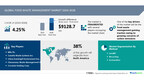
NEW YORK, Sept. 24, 2024 /PRNewswire/ — Report with market evolution powered by AI – The global food waste management market size is estimated to grow by USD 9.13 billion from 2024-2028, according to Technavio. The market is estimated to grow at a CAGR of almost 4.25% during the forecast period. Food waste management gaining traction owing to growing concerns of carbon emissions is driving market growth, with a trend towards rising number of startups However, increasing risks of fire accidents poses a challenge – Key market players include Biffa Plc, Casella Waste Systems Inc., China Everbright Environment Group Ltd., Cleanaway Waste Management Ltd., Covanta Holding Corp., FCC SA, GFL Environmental Inc., Hitachi Zosen Corp., Interstate Waste Services Inc., PHENIX SAS, PreZero Stiftung and Co. KG, Recology Inc., Republic Services Inc., RETHMANN SE and Co. KG, US Foods Holding Corp., Van Dyk Recycling Solutions, Veolia Environnement SA, Waste Connections Inc., Waste Management Inc., and Winnow Solutions Ltd..
AI-Powered Market Evolution Insights. Our comprehensive market report ready with the latest trends, growth opportunities, and strategic analysis- View your snapshot now
Forecast period
2024-2028
Base Year
2023
Historic Data
2018 – 2022
Segment Covered
Method (Landfill, Recycling, and Incineration), Application (Feed, Fertilizers, Biofuel, and Power generation), and Geography (North America, Europe, APAC, South America, and Middle East and Africa)
Region Covered
North America, Europe, APAC, South America, and Middle East and Africa
Key companies profiled
Biffa Plc, Casella Waste Systems Inc., China Everbright Environment Group Ltd., Cleanaway Waste Management Ltd., Covanta Holding Corp., FCC SA, GFL Environmental Inc., Hitachi Zosen Corp., Interstate Waste Services Inc., PHENIX SAS, PreZero Stiftung and Co. KG, Recology Inc., Republic Services Inc., RETHMANN SE and Co. KG, US Foods Holding Corp., Van Dyk Recycling Solutions, Veolia Environnement SA, Waste Connections Inc., Waste Management Inc., and Winnow Solutions Ltd.
Key Market Trends Fueling Growth
The food waste management market is gaining significant attention due to the large volumes of food being wasted daily worldwide. Efficient food waste management is essential to mitigate negative environmental and health consequences. New companies, such as PHENIX SAS and World Waters LLC, are innovating in this space. PHENIX finds value in unsold food products by offering promotions, creating animal feed, donating to charities, and recycling. World Waters utilizes unattractive watermelons for cold-pressed juice production. Replate, a social venture in the US, redistributes excess food from businesses to underprivileged communities and provides monthly impact metrics. The growing number of startups will fuel the food waste management market’s growth, offering solutions for reducing waste and addressing food insecurity.
The Food Waste Management market is on the rise, driven by health-conscious consumers who prioritize reducing food waste. Food processing facilities, merchants, wholesalers, and food service providers are key players in this market. Waste types include cereals and organic waste from residential, institutional, and industrial sources. Collection segments use various methods like composting, landfills, incineration, and open dumping. Biofuel from food waste is a growing trend, with applications in renewable energy. Favorable government regulations, such as the UK’s Zero Hunger Challenge, encourage food waste reduction. Spoilage of food, imported products, and exotic food items contribute to wastage. Large businesses, fast-food cafes, and hotel chains are significant contributors. Food rescue organizations help address hunger crises. Technologies like anaerobic digestion, gasification, and aerobic digestion are cutting-edge solutions for food waste management. Food waste can be transformed into animal feed, fertilizer, and biogas. The market also includes services like composting and recycling. Food waste reduction is crucial to address the environmental impact and potential economic benefits.
Insights on how AI is driving innovation, efficiency, and market growth- Request Sample!
Market Challenges
Landfills serve as disposal sites for non-hazardous household, commercial, and industrial solid waste and sludge. However, food waste in landfills generates methane, a potent greenhouse gas. Methane, which forms when food waste decomposes in the absence of oxygen, can ignite and cause dangerous fires. For instance, a food waste landfill in Chandigarar, India, has experienced 486 fire incidents in the last 15 years. These fires pose a risk to human life and have increased concerns over food waste accumulation in landfills. Consequently, the potential for food waste-related fire accidents is hindering the expansion of the global food waste management market during the forecast period.The Food Waste Management market faces several challenges in reducing the volume of food waste. Key issues include incineration and open dumping, which have environmental implications. Composting, recycling, and biogas are preferred solutions for managing organic waste, contributing to renewable energy. Favorable government regulations and initiatives, such as the UK government’s Zero Hunger Challenge, are driving the market. Spoilage of food due to imported products, exotic food items, and large businesses contribute significantly to food waste. Hunger crises and food rescue organizations are addressing this issue. Urbanization increases the generation of organic waste, requiring advanced technologies like gasification and anaerobic digestion. Fast-food cafes, hotel chains, and the dietary supply chain are significant contributors. Cutting-edge technology and partnerships with government agencies, municipality garbage collectors, and waste management businesses are crucial for effective food waste management. Disease transfer and supply chain interruptions pose risks, requiring stringent safety measures.
Insights into how AI is reshaping industries and driving growth- Download a Sample Report
Segment Overview
This food waste management market report extensively covers market segmentation by
Method 1.1 Landfill1.2 Recycling1.3 IncinerationApplication 2.1 Feed2.2 Fertilizers2.3 Biofuel2.4 Power generationGeography 3.1 North America3.2 Europe3.3 APAC3.4 South America3.5 Middle East and Africa
1.1 Landfill- The food waste management market is witnessing an increasing trend towards landfill disposal due to the efficient management of Landfill Gas (LFG) produced. Landfills, as the preferred method for disposing of food waste in many parts of the world, particularly developing countries, are favored due to their cost-effectiveness compared to alternative methods like incineration. Methane, a significant component of LFG, is a potent greenhouse gas that contributes to climatic degradation if released into the atmosphere. However, it can be harnessed as an energy resource through efficient collection and treatment. The global demand for LFG is escalating due to its economic benefits, leading several governments to promote its use for electricity generation. The EPA’s Global Methane Initiatives International Best Practices Guide for LFG Energy Projects outlines the process for developing LFG to energy projects and addresses technological, economic, and political considerations. As of 2022, over 2000 landfills in the US have the potential to convert methane into an energy resource cost-effectively. New and existing landfills are undergoing projects to utilize LFG for fuel in turbines or co-generators. However, the limited availability of land in some countries, such as Japan, poses a challenge for the growth of the landfill segment. In countries like India, the exhaustion of capacity in existing landfills necessitates the exploration of alternative food waste disposal methods. Despite these challenges, the substantial volume of food waste generation and the relatively low costs of landfilling compared to other disposal methods will drive the expansion of the landfill segment in the global food waste management market.
Download complimentary Sample Report to gain insights into AI’s impact on market dynamics, emerging trends, and future opportunities- including forecast (2024-2028) and historic data (2018 – 2022)
Research Analysis
The Food Waste Management Market is experiencing significant growth due to the increasing awareness among health-conscious consumers about the importance of reducing food waste. Food processing facilities, merchants, wholesalers, and food service providers are recognizing the need to implement effective food waste management strategies. The market covers various waste types, including cereals, and sources such as residential, institutional, and industrial segments. Service types include collection, landfills, incineration, composting, recycling, and biogas production. The composting process is gaining popularity as a sustainable solution for managing food waste, with applications in renewable energy generation. Favorable government regulations and the negative environmental impact of spoilage of food and imported products are driving the market’s growth. Food waste management solutions include the use of biofuel, which can be produced from food waste through anaerobic digestion. The market is segmented by waste type, including cereals, fruits and vegetables, meat and poultry, and dairy products. The institutional sector, including schools and hospitals, and the industrial segment, including food processing and manufacturing industries, are significant contributors to food waste. The residential source segment is also a significant contributor due to household food waste.
Market Research Overview
The Food Waste Management market is a growing industry driven by the increasing awareness of health-conscious consumers and the need to reduce environmental impact. Food processing facilities, merchants, wholesalers, food service providers, and large businesses generate significant amounts of food waste. The composting process is a popular solution for managing organic waste, with applications in renewable energy generation through biogas production. Waste type insights include cereals, residential sources, the institutional sector, and the industrial segment. Service types include collection, landfills, incineration, open dumping, composting, recycling, and biogas production. Applications of food waste management include renewable energy, animal feed, fertilizer, and disease transfer prevention. Factors driving the market include spoilage of food, imported products, exotic food items, favorable government regulation, and supply chain interruptions. Food Rescue Organizations play a crucial role in reducing food waste and addressing hunger crises. Urbanization and the use of cutting-edge technology, such as gasification technology and anaerobic digestion, are also shaping the industry. Food waste sources include fast-food cafes, hotel chains, and the dietary supply chain. Government agencies and municipality garbage collectors are key stakeholders in the waste management business. Disease transfer and food safety concerns are important considerations in food waste management.
Table of Contents:
1 Executive Summary
2 Market Landscape
3 Market Sizing
4 Historic Market Size
5 Five Forces Analysis
6 Market Segmentation
MethodLandfillRecyclingIncinerationApplicationFeedFertilizersBiofuelPower GenerationGeographyNorth AmericaEuropeAPACSouth AmericaMiddle East And Africa
7 Customer Landscape
8 Geographic Landscape
9 Drivers, Challenges, and Trends
10 Company Landscape
11 Company Analysis
12 Appendix
About Technavio
Technavio is a leading global technology research and advisory company. Their research and analysis focuses on emerging market trends and provides actionable insights to help businesses identify market opportunities and develop effective strategies to optimize their market positions.
With over 500 specialized analysts, Technavio’s report library consists of more than 17,000 reports and counting, covering 800 technologies, spanning across 50 countries. Their client base consists of enterprises of all sizes, including more than 100 Fortune 500 companies. This growing client base relies on Technavio’s comprehensive coverage, extensive research, and actionable market insights to identify opportunities in existing and potential markets and assess their competitive positions within changing market scenarios.
Contacts
Technavio Research
Jesse Maida
Media & Marketing Executive
US: +1 844 364 1100
UK: +44 203 893 3200
Email: media@technavio.com
Website: www.technavio.com/
View original content to download multimedia:https://www.prnewswire.com/news-releases/the-food-waste-management-market-is-projected-to-grow-by-usd-9-13-billion-from-2024-2028–with-ai-reshaping-the-landscape-and-rising-carbon-emission-concerns-driving-revenue—technavio-302256023.html
SOURCE Technavio








 Technology5 days ago
 Coin Market5 days ago
 Technology5 days ago


 Technology4 days ago
 Technology4 days ago
 Technology5 days ago