Connect with us

Technology

China’s first aquatic biennial exhibition with the art of light as its medium cohosted by China Academy of Art opens

Published

on

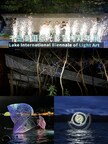
HANGZHOU, China, Sept. 25, 2024 /PRNewswire/ — The opening ceremony of the second Illuminate the World: Qiandao Lake International Biennale of Light Art and Qiandao Lake Tunnel Art Museum took place at Qiandao Lake in Zhejiang Province, China on September 21, 2024. The event marks another collaboration between China Academy of Art (CAA) and Qiandao Lake, Chun’an County that resulted in their second rendition of China’s first aquatic biennial exhibition with the art of light as its medium.

The theme of the biennial exhibition is “How Is Light?” It reflects how the exhibition takes into account the forms of light in the evolution of industrial technology, foundation of civilization and innovation through the ages and a call to expand our understanding of light beyond the constraints of existing forms, into greater imaginative spaces with greater possibilities. Thus, the focus of the exhibition leans towards artworks that explore technology, interaction and ecosystems.

The second Qiandao Lake International Biennale of Light Art adopted a selection process that combined open submissions and special invitations. Over 200 submissions from eight countries were received and reviewed by an expert panel before the final submissions were selected. The selected artworks will be showcased at Yueguang Island, Qiandao Lake in two phases alongside those from the first biennale in a multilayered approach that will enrich Qiandao Lake’s artistic ecosystem. This approach highlights the biennale’s core objectives of promoting local economy through art and cultural tourism while paving the way for green and ecological development. Cross-disciplinary creators such as renowned rock musician Cui Jian have also been invited to the biennale, expanding the potential for experimentation at an event distinguished by its focus on the art of light as a medium, public art and aquatic spaces.

The Qiandao Lake Tunnel Art Museum was inaugurated on the same day. The art museum is a cluster of art galleries that comprises nearly 100 tunnels. Qiandao Lake Tunnel Art Museum NO. 001, which is presently located at Xialanwu Tunnel and stretches across 209 meters, was designed by CAA’s School of Painting. As China’s first tunnel art museum, it bears contemporary elements that target the international audience, and aims to create spatial aesthetics with contemporary art. The space is an open “unwalled art museum”. Besides serving as an urban tourist attraction and a jogging trail, it is also an exhibition space for international artists where the public may enjoy public art.

Qiandao Lake Tunnel Art Museum’s opening exhibition showcases artworks of international residents centered around the theme of “Echo”. Beyond the mirroring and repetition of voices in space, “Echo” symbolizes the spatial and temporal synergies of Qiandao Lake’s natural landscape, cultural heritage and ecological preservation. Through murals and public art, the exhibition showcases the scenes of Qiandao Lake’s past and present and reflects the dialogue between humankind and nature as well as the connection between the past and future. The curvature of the tunnel amplifies the sense of being enclosed while symbolizing the persistence of echoes through time. Standing in the tunnel, one feels as if they are standing in the heart of Qiandao Lake, feeling the heartbeat and breathing of its artworks.

Qiandao Lake is the apple of the Chinese local cultural tourism industry’s eye while CAA is the engine driving Chinese contemporary art. Their continual partnership to develop social aesthetic education through the use of public spaces and nature has led to the creation of a vibrant Qiandao with local features and Chinese cultural characteristics.

About the Theme of the Second Qiandao Lake International Biennale of Light Art: How Is Light?

The biennale goes beyond the exploration of the traditional definition of light as “natural light”, “artificial light” and their contemporary evolutionary product “digital light” to showcase the changing forms, technical foundations and applications of light. When it comes to technology and industries − from the Fourier transform to the design of a chip, from color management to the conversion of vector graphics to numbers and formulas, from LED screens to image processing software, from handheld devices to screens at stadiums and plazas − light plays a role in our everyday life. It dominates our visual culture.

On the front of science, the scientific community has known about light for a very long time. Yet there was no consensus on what light is until the mid-19th century. The British physicist James Clerk Maxwell discovered that all forms of electromagnetic radiation come together to form a continuous spectrum and that they travel through vacuum at the same speed. The German physicist Philipp Lenard discovered the photoelectric effect. In the early 20th century, Albert Einstein hypothesized that light might possess properties we associate with particles. Einstein’s theory was validated by experiments conducted by the American physicist Arthur H. Compton, who proved that photons have momentum, an essential condition supporting the theory that matter and energy can be interchangeable. The French scientist Louis-Victor de Broglie drew the relationship between wavelength and particle mass and energy. His discovery explained how light possesses both properties of a wave and particle.

Nevertheless, light isn’t simply the basis for modern vision. It is also closely linked to the foundation of civilization. The ancient Greek philosopher Plato came up with the allegory of the cave through the description of fire, natural light and shadow. The allegory is a philosophical, epistemological and ethical meditation on the existence of the world, an expression of one’s views on art, and a story of enlightenment. In ancient China, light is emphasized in a holistic theory on the creation of the universe. In the Canon of Yao in the Book of Documents, it was written, “to calculate and delineate (the movements and appearances of) the sun, the moon, the stars, and the zodiacal spaces, and so to deliver respectfully the seasons to be observed by the people.” This suggests that the observation of the celestial bodies through the use of light has not only affected the way we perceive spaces but also led to the establishment of rites and rituals.

The theme of the second Qiandao Lake International Biennale of Light Art is thus set as “How Is Light?” to take into account the forms of light in the evolution of industrial technology, foundation of civilization and innovation through the ages. It is also a call to expand our understanding of light beyond the constraints of existing forms, into greater imaginative spaces with greater possibilities. We hope that these new possibilities may lead to more ideas in the realms of technology, interaction and ecosystems.

“How Is Light?” is a description and a question—how does an artist preserve tradition and innovate while contending with what we know about light and shadow? This is not just an epistemological challenge, it is a question about methodology and artistic intervention. Importantly, it is a test of the imagination. When we ask “How Is Light?”, we are asking what else there is beyond what we already know.

About the Theme of the Qiandao Lake Tunnel Art Museum’s Opening Exhibition: Echo

Qiandao Lake, hailed as heaven on earth, has always been a paradise where culture and nature intertwine. At Qiandao Lake, the sounds of nature, traces of the past and modern ecological expectations converge. The exhibition is located in the tunnel, whose curvature amplifies the sense of being enclosed while symbolizing the persistence of echoes through time. Standing in the tunnel, one feels as if they are standing in the heart of Qiandao Lake, feeling its heartbeat and breathing.

About the Festivals and Exhibitions Organized by CAA’s School of Sculpture and Public Art

The festivals and exhibitions that CAA’s School of Sculpture and Public Art has launched and kept going in recent years include “Wuzhen Theatre Festival: Public Space Art Exhibition Project”, “Aranya Theater Festival: Migratory Birds 300”, “CAA Armory•Wuzhen”, “Illuminate the World: Qiandao Lake International Biennale of Light Art”, “Hangzhou Triennial of Fiber Art”, and “Frontier Fiber Art Exhibition”. They form a vast network for artistic research and creation.

View original content to download multimedia:https://www.prnewswire.com/news-releases/chinas-first-aquatic-biennial-exhibition-with-the-art-of-light-as-its-medium-cohosted-by-china-academy-of-art-opens-302258400.html

SOURCE China Academy of Art

Continue Reading
Click to comment

Leave a Reply

Your email address will not be published. Required fields are marked *

Technology

11:11 Systems Announces Strategic Partnership with Cato Networks to Deliver SASE Solution for Distributed Enterprises

Published

on

By

New Managed Secure Access Service Edge (SASE) solution combines SD-WAN, cloud-native networking and security capabilities with 11:11’s connectivity, cyber resilience and cloud expertise

SYDNEY, July 22, 2026 /PRNewswire/ — 11:11 Systems, a leading managed infrastructure solutions provider, today announced the global availability of its 11:11 Managed Secure Access Service Edge (SASE) solution and a new strategic partnership with Cato Networks.

11:11 Managed SASE is a fully managed secure connectivity solution leveraging Cato Networks AI-native network security platform. This solution brings together intelligent SD-WAN, cloud-delivered security and global connectivity into a single offering. It enables organisations to simplify and secure access across branch offices, data centres, users and cloud environments, reducing complexity without sacrificing performance or control.

Built on the Cato Networks cloud-native SASE platform, 11:11 Managed SASE combines zero trust network access (ZTNA), firewall as a service (FWaaS), secure web gateway (SWG), cloud access security broker (CASB), advanced threat protection and centralised visibility into a unified managed experience. 11:11 also delivers 24x7x365 monitoring and support, incident management integration and operational accountability to help customers limit vendor sprawl, increase agility and free internal teams to focus on higher-value priorities.

The offering is backed by 11:11’s broader networking, cloud and cyber resilience capabilities. Through its global backbone, carrier-agnostic connectivity options and integrated portfolio spanning cloud, backup, disaster recovery and security services, 11:11 gives customers a practical path to modernise network and security architecture while strengthening resilience across the business.

“Enterprises are under pressure to support users, applications and locations that are more distributed than ever, while limiting complexity and improving security,” said Justin Giardina, CTO, 11:11 Systems. “Our Managed SASE solution provides customers with a unified approach to modernising networking and security, along with the visibility, support and flexibility they need to thrive in a rapidly changing environment.”

According to Karl Soderlund, global channel chief, Cato Networks, “As enterprises move beyond fragmented legacy networking and security stacks, they need a simpler way to gain visibility, context and control across hybrid work environments and reduce the operational burden on IT. Through our partnership, we can address these challenges head on and deliver end-to-end visibility and protection in a single service built for the reality of modern work.”

The joint offering is well suited for distributed enterprises, multi-site organisations, hybrid workforce initiatives, SD-WAN refreshes, security modernisation efforts and businesses with limited IT resources. 11:11 meets customers where they are by supporting existing environments, simplifying multi-vendor operations and serving as a single provider accountable for network, security, cloud and data integration.

This partnership expands 11:11’s Network as a Service portfolio and follows Forrester’s inclusion of 11:11 Systems in its report, “The Secure Access Service Edge Services Landscape, Q1 2026.”

About 11:11 Systems

11:11 Systems is a managed infrastructure solutions provider that empowers customers to modernise, protect and manage mission-critical applications and data, leveraging 11:11’s resilient cloud platform. Learn more at www.1111Systems.com and follow 11:11 on LinkedIn.

View original content:https://www.prnewswire.com/apac/news-releases/1111-systems-announces-strategic-partnership-with-cato-networks-to-deliver-sase-solution-for-distributed-enterprises-302830322.html

SOURCE 11:11 Systems

Continue Reading

Technology

Crowell & Moring Expands Financial Services Group with Former UBS Bank USA General Counsel Cristina Diaz

Published

on

By

NEW YORK, July 21, 2026 /PRNewswire/ — Crowell & Moring has added Cristina Diaz, former executive director and general counsel of UBS Bank USA, and most recently head of legal for UBS’s U.S. Remediation Management Office, to the firm’s Financial Services Group as senior counsel in New York. Diaz brings more than two decades of in-house counsel and law firm experience in bank regulation, compliance, and risk management.

At Crowell, Diaz will counsel banks, fintechs, and digital assets companies on a broad range of bank regulatory matters, including charters and licensing, permissible activities, capital requirements, regulatory enforcement, M&A, and corporate governance. She will also counsel clients navigating the intersection of traditional banking and emerging financial services, including digital assets companies seeking to acquire or establish national banks, and banks exploring partnerships with fintechs and digital assets firms.

At UBS, Diaz advised on the firm’s most pressing regulatory matters, including most recently UBS Bank USA’s charter conversion from a Utah industrial bank to an OCC national bank and key compliance remediations. This work gave Diaz extensive experience navigating relationships with state and federal financial regulators. Earlier in her career, Diaz spent eight years at Davis Polk & Wardwell advising U.S. and foreign banks on bank regulatory matters, M&A, and capital markets transactions.

“Cristina is a highly experienced, solution-oriented attorney who brings deep knowledge in the bank regulatory space. She will be an enormous asset to the firm’s growing regulatory and transactional offerings to banks, digital assets businesses, and fintechs,” said Carlton Greene, Co-Chair of Crowell’s Financial Services Group.

“I am delighted to join Crowell & Moring and integrate my bank regulatory experience with the firm’s nationally-recognized digital assets practice. As traditional banking and emerging financial technologies continue to evolve, clients need actionable and sophisticated legal counsel. Crowell offers the collaborative platform to help institutions successfully execute their growth and compliance strategies,” said Diaz.

Diaz received her J.D. from New York University School of Law, where she was a member of the New York University Law Review, and received her B.A., summa cum laude, from New York University. She is fluent in Spanish.

About Crowell & Moring LLP
Crowell & Moring is an international law firm with operations in the United States, Europe, and MENA. Drawing on significant government, business, industry, and legal experience, the firm helps clients capitalize on opportunities and provides creative solutions to complex regulatory and policy, litigation, transactional, and intellectual property issues. The firm is consistently recognized for its commitment to pro bono service, as well as its comprehensive programs and initiatives to advance the professional and personal development of all members of the Crowell community.

Media Contact:
Email: prteam@crowell.com

View original content to download multimedia:https://www.prnewswire.com/news-releases/crowell–moring-expands-financial-services-group-with-former-ubs-bank-usa-general-counsel-cristina-diaz-302831280.html

SOURCE Crowell & Moring LLP

Continue Reading

Technology

Quantinuum and SoftBank Corp. Publish Joint White Paper on Scaling Practical Quantum Computing Use Cases Toward the Fault-Tolerant Era

Published

on

By

The companies have published a joint white paper mapping commercially relevant quantum computing use cases in quantum chemistry and graph analytics to Quantinuum’s hardware roadmap.The paper provides a framework for assessing how advances in quantum hardware and algorithms, could affect when practical industrial applications become feasible.SoftBank Corp. and Quantinuum will use the roadmap to inform their exploration of future quantum AI data center services and related business models.

TOKYO and BROOMFIELD, Colo., July 22, 2026 /PRNewswire/ — Quantinuum (NASDAQ: QNT) and SoftBank Corp. (“SoftBank”) today announced the publication of “Quantum Computing Frontiers,” a joint white paper that maps two commercially-relevant quantum computing application areas against Quantinuum’s hardware roadmap. The analysis examines how advances in quantum hardware and algorithms could affect when these applications become practical for industrial use.

The paper focuses on two representative application domains that SoftBank is actively using Quantinuum’s systems to research: quantum chemistry for new materials discovery and energy research, and topological data analysis for large-scale graph analytics, including for telecommunications fraud detection. The authors anchor their assessment of the scalability of these two application areas against Quantinuum’s published hardware roadmap, examining how projected advances in hardware capabilities and algorithms may enable the commercial readiness of future industrial applications.

Building on this use-case roadmap, the paper also examines how quantum computing, AI, and high-performance computing could be integrated into future computing infrastructure. It considers how progress across successive hardware generations could inform future quantum AI data center services and related business models, a key focus of the Quantinuum and SoftBank partnership announced last year.

“The key takeaway of this study is that organizations do not need to wait for large-scale, fault-tolerant systems to explore where quantum computing can begin creating value,” said Duncan Jones, General Manager, Applications Group at Quantinuum. “By using today’s systems to develop, benchmark and refine applications in areas such as quantum chemistry and graph analytics, enterprises can build the technical and operational readiness needed for the next era of quantum-enabled computing.”

“The question is no longer whether quantum computing may deliver value, but rather which problem classes become executable at which stage of hardware maturity,” said Ryuji Wakikawa, Senior Vice President & CTO at SoftBank Corp. “However, we believe progress in hardware must be complemented by equally strong developments in quantum algorithms and the integration of quantum systems with AI and high-performance computing.”

The white paper discusses illustrative scenarios describing how representative applications, technology maturity, and potential market opportunities may evolve over time under stated assumptions. The analysis provided in the paper is intended to provide a conceptual framework for understanding potential market evolution and does not represent financial guidance or forecasts. These analyses are intended to support discussion of future technology development and should not be interpreted as commitments regarding commercialization, infrastructure investment, products, services, or financial performance.

The full white paper is available to download on the SoftBank and Quantinuum websites.

About SoftBank Corp.

Guided by the SoftBank Group’s corporate philosophy, “Information Revolution – Happiness for everyone,” SoftBank Corp. (TOKYO: 9434) operates telecommunications and IT businesses in Japan and globally. Building on its strong business foundation, SoftBank Corp. is aiming to activate the potential of AI across its businesses and drive implementation in line with its “Activate AI for Society” growth strategy. While further growing its telecom business, SoftBank is expanding its AI computing infrastructure and AI and Cloud service businesses with the aim of becoming a provider of Next-generation Social Infrastructure. To learn more, please visit https://www.softbank.jp/en/corp/

About Quantinuum

Quantinuum (NASDAQ: QNT) is a leading quantum computing company offering a full-stack platform designed to make quantum computing deployable in real-world environments. The company has commercially deployed multiple generations of quantum systems built on the well-established QCCD architecture, which it has implemented with novel designs and capabilities to achieve the industry’s highest accuracy levels based on average two-qubit gate fidelity.[1] Quantinuum has active engagements with market leaders across pharmaceuticals, material science, financial services, and government and industrial markets. The company has a global workforce of approximately 700 employees, including top scientists and researchers. Over 70% of its technology team holds PhDs or Master’s degrees. Quantinuum’s headquarters is in Broomfield, Colorado, with additional facilities across the United States, United Kingdom, Germany, Japan, Qatar, and Singapore.

For more information, please visit www.quantinuum.com.

Cautionary Statement Concerning Forward-Looking Statements

This press release contains certain statements that may be deemed “forward-looking statements” within the meaning of the Private Securities Litigation Reform Act of 1995. Forward-looking statements include all statements that are not historical facts. The words “anticipate,” “assume,” “believe,” “continue,” “could,” “estimate,” “expect,” “intend,” “may,” “plan,” “potential,” “predict,” “project,” “future,” “will,” “seek,” “foreseeable,” the negative version of these words, or similar terms and phrases are intended to identify forward-looking statements. Such statements are based on certain assumptions and assessments made by our management in light of their experience and their perception of historical trends, current economic and industry conditions, expected future developments and other factors they believe to be appropriate. The forward-looking statements included in this release are also subject to a number of material risks and uncertainties, including but not limited to economic, competitive, governmental, and technological factors affecting our operations, markets, products, services and prices. New factors emerge from time to time, and it is not possible for Quantinuum to predict all such factors. Any forward-looking statement speaks only as of the date on which it is made, and, except as required by law, Quantinuum does not undertake any obligation to update or revise any forward-looking statement, whether as a result of new information, future events or otherwise.


[1] As of December 31, 2025.

SOURCE Quantinuum

Continue Reading

Trending