SHENZHEN, China, Sept. 30, 2024 /PRNewswire/ — In the golden glow of autumn, Shenzhen brings all together to convene a grand celebration. On September 27, the Third GMIF2024 Innovation Summit (Global Memory Innovation Forum) has been successfully concluded in Shenzhen. The event was hosted by the Semiconductor Investment Alliance and the Shenzhen Memory Industry Association, co-organized by the Guangdong Integrated Circuit Industry Association and the Shenzhen Semiconductor Industry Association, and organized by JW Insights Consulting (Xiamen) Co., Ltd. and Haitong Securities Co., Ltd.
With the theme of “AI Leads Memory’s New Momentum”, this year’s summit has brought together leading enterprises from various segments of the memory industry chain, including major wafer manufacturers, memory controller suppliers, module producers, packaging and testing enterprises, equipment and materials manufacturers, and terminal manufacturers, as well as representatives from investment institutions. The event centered around all aspects of key topics such as product innovation, technological evolution, and the collaborative development of the industrial chain, all with the aim of advancing industry cooperation and creating a shared future of success.
Accelerating Deployment of AI Applications to Unlock New Growth in the Storage Industry
The explosive growth of AI in the new era is reshaping the global semiconductor landscape. The widespread application of AI is driving demand for high-performance, high-computing-power chips, while also creating significant growth opportunities for high-bandwidth, large-capacity, and low-power storage chips.
The GMIF2024 Innovation Summit officially kicked off with the welcoming remarks from Mr. Rixin Sun, President of the Shenzhen Memory Industry Association (SMIA). Over the recent years, the exponential growth of AI, 5G, Big Data and Internet has seen a brand-new revolutionizing period in global storage industry. Mr. Sun addressed that the GMIF2024 Innovation Summit turns special attention to the entire upstream and downstream storage value chain that goes beyond just the storage and memory itself. In particular, it unfolds critical areas across the industry, consisting of storage media, solutions, system platforms, testing equipment and more. Mr. Sun affirmed that only through collaboration across the entire industry chain can we continuously drive the advancement of the sector and maintain a leading position in global competition.
Xiaofei Zhang, Chief Analyst for Electronics Industry from Haitong Securities, stated that, from the perspective of overall storage market, the HBM3e has exerted impacts on the production schedule of DDR5, and the decline in DRAM prices remains restricted. In the NAND sector, the inventory adjustments at server terminals are entering the final stages; coupled with AI driving demand for high-capacity storage products, prices have continued to rise in Q2. Although the recent increase in NAND prices has slowed, it still exceeds market concerns. Looking ahead, the penetration of AI terminal applications is accelerating, leading to a sustained increase in demand for computing and storage solutions.
Yimao Cai, Dean of the School of Integrated Circuits at Peking University, expressed that semiconductor storage, considered as one of the largest segment of the integrated circuit industry, has encountered considerable challenges after stepping into the post-Moore and AI era. On one hand, traditional memory technologies have posed significant limits on the integration density and reliability below 28nm, and there is an urgent need for breakthroughs in underlying technologies. On the other hand, the traditional computing chips are insufficient to satisfy the high-efficiency demands for intelligent equipment, catalyzed by the surging growth in AI computing needs, as the traditional chip hardware incurs high costs and energy consumption. It can be observed that innovations in foundational units and process integration are crucial to the progress of memory technology, and new forms of storage technology are becoming increasingly mature.
Prasad Alluri, VP and GM for Client Storage, SBU from Micron Technology, emphasized that “AI is everywhere and AI applications have entered every corner of people’s daily lives in all kinds of forms. For instance, smartphone manufacturers have introduced AI capabilities in high-end phones, and the storage capacity of LPDDR 5 has been increased to between 12GB and 16GB to accommodate ever-increasing datasets. In addition, storage technology has evolved to UFS 4.0, which more than doubles power efficiency compared to the previous generation. In the realm of edge devices, autonomous driving will be elevated from Level 0 to Level 5 supported by the enhanced AI technology. Industry experts predict that the bit density required for automotive memory will increase by approximately 30 times, while the non-collision bits in power systems will grow nearly 100 times. None of the enhancements, whether in data centers, edge devices, or memory and storage environments, would be possible without the technological progress we’ve achieved generation after generation.”
Yan Li, Vice President of Advanced Technology at Western Digital, pointed out that the 3D NAND flash market is highly competitive and constantly evolving. The number of NAND cells stacked has experienced substantial growth, from 48 layers in 2017 to 64 and 96 layers. Up to date, Western Digital has completed mass production of its 218-layer products; while Micron Technology has already mass-produced its 280-layer products as stated in its keynote. Dr. Yan Li shared her insights that the continuous increase of layers might not be considered as an ideal strategy because large amounts of capitals are required for new equipment as complexity of the products rises. Should the market fail to accommodate these new products and prices start to decline, it could lead to a vicious cycle.
Dr. Yan Li then moved on to make some explanations of the trade-offs involved in 3D NAND scaling technology. There are four main vectors to scaling: vertical scaling, lateral scaling, architecture scaling, and logical scaling. Taking its product PC SN5000S NVMe SSD as an example, Dr. Li noted that this model is equipped with cost-effective BiCS6 NAND technology and DRAM-less QLC PCIe Gen4 SSD, and its internal controller and firmware provide a perfectly optimized solution which can be introduced to the market within a shorter time and allowed for quality control. Compared to the previous generation, it offers a 51% improvement in memory density and a 12% increase in layer density. In relation to the mainstream TLC SSD, QLC SSD features enhanced performance and its major metrics are matched with TLC SSD. In consumer and commercial sectors, QLC SSDs are now being widely adopted by PC OEMs.
Wallace C. Kou, President & CEO of Silicon Motion, claimed that AI will be the ever-lasting energy and vitality that propel continuous growth in the global market. Storage is regarded as one of the key areas in the artificial intelligence ecosystem, and the market requires more relevant software and applications to make AI edge devices more meaningful and appealing to consumers.
Benny Ni, GAR Sales VP at Solidigm, remarked that the company currently possesses leading innovative technologies in the fields of TLC and QLC, enabling it to offer a powerful portfolio of data center storage products and storage solutions that optimize AI storage efficiency.
Zhinong Liu, Executive Vice President of UNISOC, signified that in the all-scenario AI computing system, software serves as the “engine”, chips as the “foundation”, the ecosystem as the “link”, and products as the “carrier”. The company will continue to strengthen its advanced semiconductor manufacturing platform based on strategy and capability centers, maintain supply chain security, ensure efficient and stable product delivery, and enhance customer satisfaction.
Haibing Xie, Director of Application Design in Center, Intel China, mentioned that AI PCs are the best carriers for edge-side AI and will lead the next explosion in the PC industry. The Intel Core Ultra is equipped with powerful AI capabilities, enabling the deployment of “generative AI” on PCs. At present, the company’s AI PC chips have shipped 20 million units, and it is expected to reach 40 million units by the end of the year, with projected shipments of 100 million units in 2024-2025.
Haiqing Huang, R&D Vice General Manager at Victory Giant Technology, revealed that the AI investment landscape among global tech companies is currently marked by an unparalleled enthusiasm, and the three main application markets, namely the smartphones, PCs, and servers, are bound to experience a welcome upswing brought by the development of AI applications. As of now, there is a constant increase in memory bandwidth, and Victory Giant has been accelerating its product R&D investments to meet the demands of high-performance computing, data centers, AI training, and inference scenarios. The fifth-generation high-performance memory (DDR5) is already in mass production, while the development of the sixth generation (DDR6) and seventh generation (DDR7) products is underway.
Sam Sun, Chairman of BIWIN Storage, voiced that the evolving storage industry has brought a bright spot and prominent attention to the testing and packaging sector. This is particularly true as advanced packaging moves towards miniaturization and integration, and technical barriers are progressively becoming higher. The company is deepening its research and development efforts in the integrated packaging and testing layout to enhance its competitive edge. It is anticipated that the Integrated R&D and Packaging 2.0 Strategy will transform the company from a storage product supplier into a comprehensive partner offering wafer-level advanced packaging and testing services. This will provide industry partners with higher-quality in-depth solutions and promote a comprehensive enhancement of customer value.
Rui Ding, General Manager, Product Department, Consumer Cloud Platform Business Group at iFLYTEK, declared that the development of large models has transitioned AI from a “tool” to an “assistant”, capable of performing a wider range of tasks through more natural conversational forms. In the future, iFLYTEK hopes to collaborate with various industry stakeholders to promote the development of AI technology.
Chloe Ma, VP of China GTM for IoT Line of Business at Arm, claimed that the wave of AI is sweeping across various sectors. Generative AI is not only being deployed in the cloud but is also rapidly making its way to the edge, where storage plays a crucial role in AI computing from the cloud to the edge. In response to the innovative demands of the new era of edge AI, Arm is committed to advancing in three major areas: hardware, software, and ecosystem development.
Feng Chen, Senior Vice President of Rockchip, mentioned that an increasing number of industries and applications are integrating AI with IoT, making AIoT the optimal pathway for the intelligent transformation of traditional sectors and a key direction for the future development of the IoT. The rapid expansion of the AIoT market is creating opportunities for AIoT chips while also driving greater demands for data transmission, storage, and computing, which poses challenges for chip processing power. Rockchip continues to release new chips to support AIoT applications.
Jie Chen, Co-founder and VP of Data Storage Technology at InnoGrit, highlighted that in the AI era, as well as the data age, higher challenges have been presented for storage technologies. Faster and more efficient SSD interfaces will contribute to breaking through storage limitations. The collaborative optimization between InnoGrit’s memory controller chips and domestically produced flash memory will enhance the read/write performance and QOS competitiveness of storage products, jointly shaping the future of China’s storage industry.
Vic Huang, Vice General Manager of QUANXING Technology, noted that the computing architecture of solutions provided by QUANXING is not constrained by the size of large models, which contributes to a significant reduction in the cost of local deployment. The company is focused on a full range of high-end domestic storage products, aiming to complete the “last mile” of AI and striving to become a leader in the era of AI for everyone.
Zheng Qiu, Technical Marketing Manager at Montage Technology, remarked that the rapid development of AI has generated immense demand for both computing power and storage capacity. The high-speed and stable data transfer between high-performance processors and large-capacity memory is of utmost importance. In response, “transmission chips” surfaced as a timely solution.
Don Hu, Vice President of Marketing at Allwinner Technology, shared insights on the company’s industrial layout, technological direction, and industry applications. Mr. Hu introduced Allwinner’s exploration in areas such as general-purpose computing power, dedicated computing power, computational expansion, and multi-modal sensing. He also explained how Allwinner gives a full play to the fundamental role played by computing power to provide high-quality chips and services for industries like smart living, smart cities, and smart industries.
Lei Hu, Director of Business Management at Applied Materials (AMAT), conducted an in-depth analysis of the technologies involved in high-bandwidth memory, including DRAM chips, logic controllers, and HBM stacks, as well as the additional material engineering processes. He further added that AMAT is capable of providing clients with cutting-edge packaging equipment to empower the elevation of customer value by taking advantage of its strong R&D capabilities to facilitate the advancement of high-bandwidth memory technology.
Lee Chee Ping, Senior Director of LAM Research, commented that the AI chip market is flourishing with rapid growth, and the enhancement of AI chip performance requires the essential support of advanced packaging. Moreover, advanced packaging and heterogeneous integration are also the primary methods in the semiconductor industry for optimizing performance, power, form factor, and cost.
Youngsuk Kim, Director of DISCO, remarked that from 2023 to 2029, the advanced packaging market is expected to grow at a compound annual growth rate of 11%, making 2.5D/3D packaging equipment increasingly important. DISCO has extensive experience in mass production and has closely collaborated with customers during the R&D phase, providing solutions for thinning and cutting HBM and 2.5D-PKG. Mr. Kim then introduced the performance and advantages of various equipment, including DFD6860HS, DGP8761HC, DGP8761, DFL7262, DFL7362, and DFD6362/6363.
Focusing on Frontline Technologies to Foster a New and Autonomous Ecosystem
The summit also established a dedicated forum, dubbed “Memory Industry Chain Ecosystem Forum”, for enterprises across the memory industry chain to further decode memory future trends. An array of leading companies, including Skyverse, Loongson, Like Automation Equipment, Micro-Nano (HongKong), OKN Technology, Maxwell, Attach Point Intelligent Equipment, Tytantest, Maxio, Silergy and Heyan Technology, had gathered to share their insights. Discussions focused on cutting-edge trends, industry pain points, and solutions related to wafer testing, memory packaging, aging testing, product and technology innovation, terminal applications, yield improvement, and cost reduction.
Song Zhang, Executive Vice President of Skyverse, observed that it has become the industry trend to identify defects by machines through AI decision-making, aimed at helping customers to locate defects more effectively and further enhance production yield and efficiency. In practical applications, it can be noted that system inspection has demonstrated better results in efficiency and accuracy than manual inspection, which aids to significantly improve production efficiency for the clients. Skyverse will remain dedicated to driving innovation in AI products to provide high-quality solutions for domestic customers in the future.
Shan Jiang, General Manager of Guangdong Loongson Electronic Technology, affirmed that Loongson has gained more innovative space for the industry and market through self-reliance and independence. Autonomy has granted Loongson greater freedom, enhanced cost-effectiveness, and a more secure supply chain. Committed to becoming both a contributor and a maintainer of the international upstream community, Loongson aims to achieve independence and compatibility on the global stage at the same time, rather than decoupling or breaking the chain.
Simon Ye, General Manager of Like Automation Equipment, expressed that the company’s next-generation innovative technology of 2.5D/3D large-size packaging bumping is currently being validated through product development with domestic clients.
Steve Pei, CEO of Micro-Nano (Hong Kong) Technology, mentioned that as a professional manufacturer of wafer thickness measurement systems, Micro-Nano now mainly provides the SemDex M1 semi-automatic system and the SemDex A fully automatic system, with over 1,000 units installed globally, placing the company at the forefront of the industry.
Ming Zhao, General Manager of OKN Technology, observed that the company has initiated the R&D for PCIe GEN6 based on the GEN5 SSD testing system. With intense competition in the industry, OKN sees this as an opportunity to enhance its internal drive, strengthen its R&D capabilities, and foster product innovation, continuously providing better solutions for its customers.
Kuilin Jin, Vice General Manager of Sales at Maxwell Technologies, pointed out that independent R&D is crucial. Through technological innovation, Maxwell aims to achieve the import substitution of key core components, break the foreign technology monopoly and ensure supply chain security.
Xiaolong Ouyang, R&D VP at Attach Point Intelligent Equipment (APIE), shared his insights that APIE’s one-stop solution has achieved AI Inside applications, supporting the packaging of mature storage chips required for AI, as well as advanced packaging solutions for AI storage chips, including HBM, 2.5D, TCB, and HB.
Aaron Xu, CTO of Tytantest, highlighted that through its efforts on forward R&D, domestic manufacturing of complete machines, and validation on self-owned production lines, Tytantest strives to achieve fully automated and self-controllable processes, enabling to develop solutions that better meet customer needs.
Huan Ren, Marketing Director at Maxio Technology, confirmed that the company continues to maintain a high level of investment in research and development. Its R&D expenditures have increased from 155 million yuan in 2021 to 380 million yuan in 2023, which have already been translated into several mass-produced products. Among these, the MAP1102 main control chip has exceeded 50 million units shipped. Compared to similar products on the market, Maxio’s offerings demonstrate a leading advantage in I/O speed and energy efficiency, as well as a deep understanding and proactive layout in the integration of hardware and software.
Leo Cao, Senior Sales Director at Silergy, said that in the storage industry chain, the company possesses several advantages, including highly efficient product integration, extensive experience collaborating with top-tier clients, a wide range of product coverage, supply chain security, and global collaborative research and development. Silergy has achieved a global layout in R&D and service, and stayed true to its mission to prioritize customer needs.
Kent Wang, Business Development Manager at Heyan Technology, introduced that the company has gone through three development stages: the basic products of 6-inch dicing machines, upgraded products of 8-inch/12-inch dicing machines, and high-end products such as cutting and sorting machines and de-bonding machines. With rich technological accumulation and industrial experience, the company is capable of providing reliable and stable consistency assurance for customers, supporting customized solutions for different processes, and offering process-related technological innovations to meet advanced packaging demands.
After a day of intense intellectual exchanges, the guests gathered for a grand dinner where the GMIF 2024 Annual Awards were presented. Following a rigorous selection process, many companies, including Intel, Micron, GigaDevice, Arm, UNISOC, SIXUNITED, Victory Giant, BIWIN Storage, Solidigm, Western Digital, Rockchip, Allwinner Technology, Weibu Information, Heyan Technology, OKN Technology, Attach Point Intelligent Equipment, iWISEETEC, Tytantest, Hemei Jingyi, Silicon Motion, Maxio, QUANXING, MICROFROM, Konsemi, Silergy, LKAUTO, Maxwell, Skyverse, RORZE, ExTripod Electronics, EPS, InnoGrit, POWEV, KingSpec and more, had been honored with the 2024 Annual Awards, receiving unanimous recognition from the expert judges.
In summary, as a grand feast in the global storage field, the GMIF Innovation Summit has successfully held three consecutive sessions and received commendation from the industry. It has now become one of the most influential high-end summits in the domestic storage sector. In the future, the GMIF Innovation Summit will strive for deeper market service and innovative formats, creating a higher-level platform for communication and collaboration. The summit aims to explore more impactful industry events, analyze industry trends and opportunities with an international perspective, and promote mutual benefits within the industry. We look forward to seeing you again next year!
About GMIF
GMIF (Global Memory Innovation Forum) is the most important annual event of Shenzhen Memory Industry Association (SMIA). The forum aims to build a globally-focused, professional platform for the storage industry to collectively explore new technologies, applications, collaborations, and emerging opportunities. The Third GMIF2024 Innovation Summit is scheduled to be held on September 27, 2024 at Renaissance Shenzhen Bay Hotel. Under the theme of “AI Leads Memory’s New Momentum”, the summit aims to foster communication and interaction among both upstream and downstream enterprises in the storage industry. By promoting collaboration and complementary growth among industry partners, the GMIF seeks to help participating companies expand their product and brand reach and contribute to a thriving, win-win ecosystem in the global storage sector.
For more information about GMIF, please visit https://www.gmif.com.cn/.
Media Contact:
Ms. Gu, 15064010336, wenjing.gu@gmif.com.cn
View original content to download multimedia:https://www.prnewswire.com/news-releases/embracing-the-ai-era-for-a-win-win-future-of-memory-industry-the-gmif2024-innovation-summit-successfully-held-in-shenzhen-302262593.html
SOURCE Shenzhen Memory Industry Association










 Technology4 days ago

 Near Videos4 days ago
 Technology4 days ago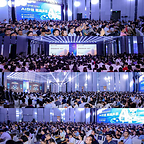
 Technology3 days ago


 Coin Market2 days ago