Connect with us

Technology

Graphics Processing Unit (GPU) Market to Grow by USD 388.3 Billion (2024-2028), with AI-Driven Insights on Rising Demand for Advanced Gaming and VR – Technavio

Published

on

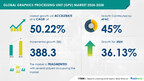
NEW YORK, Oct. 4, 2024 /PRNewswire/ — Report with the AI impact on market trends – The Global Graphics Processing Unit (GPU) market size is estimated to grow by USD 388.3 billion from 2024-2028, according to Technavio. The market is estimated to grow at a CAGR of 50.22% during the forecast period.Increase in demand for advanced gaming and VR experiences is driving market growth, with a trend towards rise in demand for high-performance computing (HPC). However, issues with graphics processing unit upgrading in notebooks poses a challenge – Key market players include Advanced Micro Devices Inc., Alphabet Inc., Apple Inc., Arm Ltd., ASUSTeK Computer Inc., Broadcom Inc., Fujitsu Ltd., Galaxy Microsystems Ltd., Gigabyte Technology Co. Ltd., Imagination Technologies Ltd., Intel Corp., International Business Machines Corp., NVIDIA Corp., Qualcomm Inc., Samsung Electronics Co. Ltd., SAPPHIRE Technology Ltd., Sony Group Corp., Taiwan Semiconductor Manufacturing Co. Ltd., Zebra Technologies Corp., and Zotac Technology Ltd..

AI-Powered Market Evolution Insights. Our comprehensive market report ready with the latest trends, growth opportunities, and strategic analysis- View your snapshot now

Forecast period

2024-2028

Base Year

2023

Historic Data

2017 – 2021

Segment Covered

Type (Integrated GPUs and Discrete GPUs), Application (Computers, Tablets and smartphones, Television, and Gaming consoles), and Geography (APAC, North America, Europe, South America, and Middle East and Africa)

Region Covered

APAC, North America, Europe, South America, and Middle East and Africa

Key companies profiled

Advanced Micro Devices Inc., Alphabet Inc., Apple Inc., Arm Ltd., ASUSTeK Computer Inc., Broadcom Inc., Fujitsu Ltd., Galaxy Microsystems Ltd., Gigabyte Technology Co. Ltd., Imagination Technologies Ltd., Intel Corp., International Business Machines Corp., NVIDIA Corp., Qualcomm Inc., Samsung Electronics Co. Ltd., SAPPHIRE Technology Ltd., Sony Group Corp., Taiwan Semiconductor Manufacturing Co. Ltd., Zebra Technologies Corp., and Zotac Technology Ltd.


Key Market Trends Fueling Growth

The global Graphics Processing Unit (GPU) market is experiencing a notable growth in demand for High Performance Computing (HPC) applications. This trend can be attributed to several factors, including the expanding need for advanced graphics capabilities in industries such as gaming, Virtual Reality (VR), and animation. The increasing intricacy of video games and the escalating popularity of VR experiences necessitate graphics processing units that can deliver high-resolution graphics and seamless performance. In response, manufacturers have developed specialized graphics processing units for HPC, empowering game developers and content creators to elevate visual quality and realism. Another significant driver of this trend is the burgeoning adoption of Artificial Intelligence (AI) and Machine Learning (ML) applications. AI and ML algorithms necessitate substantial computational power for tasks like image and speech recognition, natural language processing, and data analysis. Graphics processing units, with their parallel processing capabilities, are a preferred choice for AI and ML developers. Moreover, industries such as finance, scientific research, and healthcare are increasingly relying on HPC using graphics processing units. In finance, graphics processing units are employed for intricate calculations and simulations in areas like risk analysis, portfolio optimization, and algorithmic trading. In scientific research, they are utilized for data-intensive calculations in fields like genomics, climate modeling, and particle physics. In healthcare, graphics processing units are leveraged for medical imaging, drug discovery, and personalized medicine applications. The escalating demand for HPC in the GPU market is also fueled by advancements in cloud computing and the proliferation of data centers. As businesses shift their workloads to the cloud, there is a requirement for graphics processing units in data centers to manage tasks like rendering, video transcoding, and real-time analytics. Consequently, cloud-based GPU services have emerged, enabling organizations to access high-performance computing resources on demand. These factors are anticipated to amplify the demand for graphics processing units, driving the growth of the market during the forecast period. 

The GPU market is thriving in the digital world, driven by trends in graphics, video rendering, and gaming platforms. According to a recent PwC report, global spending in the gaming industry is projected to reach USD159.3 billion by 2023. GPUs play a crucial role in delivering visuals and fluid gameplay in video games, 3D designs, and virtual reality (VR) and augmented reality (AR) applications. In the mainstream business sector, GPUs are used for AI applications like fraud detection, conversational AI solutions, and cryptocurrency mining. The rapid evolution of AI, machine learning, and computing technologies is increasing the demand for GPUs in areas like design, development, optimization, and data processing. However, ethical concerns around user data, GDPR, and biased algorithms are creating regulatory scrutiny. Skilled engineers, developers, data scientists, AI researchers, and machine learning experts are in high demand to address these challenges and optimize the use of GPUs in this complex technology landscape. The market for GPUs is expected to continue growing as the technology becomes more integrated into our daily lives through wearable technologies, computing technologies, and other emerging applications. 

Insights on how AI is driving innovation, efficiency, and market growth- Request Sample!

Market Challenges

The global graphics processing unit (GPU) market in notebooks is facing a persistent challenge with the limitation of GPU upgrades. This issue is a concern for both manufacturers and consumers due to the compact design of notebooks. Notebooks prioritize portability and compactness, leading to thermal and space constraints, making it challenging to accommodate upgrades. In contrast, desktop computers offer more room for expansion and can easily accommodate larger, more powerful GPUs. Another reason for this issue is the proprietary nature of notebook designs. Many manufacturers restrict users from upgrading key components, including GPUs, creating a dependency on the manufacturer for future upgrades. The lack of standardized GPU form factors for notebooks further complicates matters. Unlike desktop GPUs, which follow standard form factors like PCI Express, notebook GPUs come in various shapes and sizes, making it difficult for consumers to find compatible upgrades for their specific notebook models. This issue becomes more significant as the demand for high-performance gaming and professional-grade graphics applications increases. With technology advancing at a rapid pace, users find themselves unable to fully utilize new features and enhancements due to outdated GPU capabilities. These factors are expected to hinder the growth of the GPU market for notebooks during the forecast period.The GPU market is experiencing significant growth due to increasing demand from gaming and data center industries. Gaming applications, online gaming, and e-gaming are major drivers, with compatibility and multiple device support being key challenges. Location independence and low-cost high-quality experience are crucial for organizations in the on-premises deployment mode. Data procurement, storage, and machine-learning applications in sectors like AI and online learning/entertainment also fuel demand. Gaming companies like Steam and DirectX 12 GPU manufacturers such as AMD and NVIDIA’s RTX gaming servers are leading the charge. New entrants like Fenghua GPU and SenseTime, using GPUs in Exynos SoCs and P5 instances, are also making waves. The HPC sector’s demand for GPUs in AI and machine learning is also noteworthy. Despite these opportunities, compatibility across platforms and devices remains a challenge. Overall, the GPU market’s future looks bright, with continued innovation and advancements in frame buffer technology.

Insights into how AI is reshaping industries and driving growth- Download a Sample Report

Segment Overview 

This graphics processing unit (gpu) market report extensively covers market segmentation by

Type 1.1 Integrated GPUs1.2 Discrete GPUsApplication 2.1 Computers2.2 Tablets and smartphones2.3 Television2.4 Gaming consolesGeography 3.1 APAC3.2 North America3.3 Europe3.4 South America3.5 Middle East and Africa

1.1 Integrated GPUs- The Global GPU Market experienced steady growth in 2020, driven by increasing demand for advanced graphics in gaming, virtual reality, and artificial intelligence applications. Major players like NVIDIA, AMD, and Intel dominated the market, offering high-performance GPUs for various industries. The market is expected to continue expanding due to rising adoption in data centers and automotive sectors. Companies invest in research and development to improve energy efficiency and enhance computing capabilities.

Download complimentary Sample Report to gain insights into AI’s impact on market dynamics, emerging trends, and future opportunities- including forecast (2024-2028) and historic data (2017 – 2021) 

Research Analysis

The GPU market is experiencing significant growth due to the increasing demand for artificial intelligence (AI) and machine learning (ML) applications. GPUs, or Graphics Processing Units, are specialized processors designed for handling complex mathematical calculations, making them ideal for AI and ML development. The adoption of GPUs in AI-powered solutions is driving innovation in various industries, including gaming, graphics, virtual reality (VR), healthcare, manufacturing, real estate, and data centers. In the gaming industry, the latest RTX gaming servers and DirectX 12 GPUs offer enhanced graphics processing capabilities for gaming experiences. For creative technologies, GPUs are essential for rendering high-definition 3D content and optimizing design workflows. In the field of HPC (High Performance Computing), GPUs are used for scientific simulations and big data analytics. Cloud-based analytics applications and AI-powered solutions are also driving the demand for GPU as a Service (GPUaaS), enabling businesses to access powerful GPU resources on-demand. The use of GPUs in VR, healthcare, and real estate industries is also on the rise, as they offer faster processing times and improved accuracy for complex mathematical calculations. Overall, the GPU market is poised for continued growth as more industries discover the benefits of these powerful processing units.

Market Research Overview

The Graphics Processing Unit (GPU) market is experiencing rapid growth due to the increasing demand for AI, RTX gaming servers, GPUaaS, HPC, and other advanced technologies. GPUs, as electronic processors specialized in graphics and video rendering, play a crucial role in the digital world, powering video games, 3D designs, virtual reality (VR), and augmented reality (AR) on gaming platforms and wearable technologies. The global spending on the gaming industry is projected to reach new heights, with mainstream businesses adopting GPUs for various applications, including fraud detection, conversational AI solutions, and visuals. The emergence of AI, machine learning, and big data technology is driving the industry expansion, with GPUs providing the computational power needed for complex mathematical calculations and analyzing large databases. The use of GPUs in AI applications, such as image recognition and interference times, is also leading to design and development optimizations. However, the use of GPUs in AI and other emerging technologies raises ethical concerns, including GDPR, user data, and biased algorithms. Regulatory scrutiny is increasing, and skilled engineers and developers are in high demand to address these challenges and ensure the responsible use of this rapidly evolving technology. Meanwhile, GPUs continue to be a key component in the digital world, from PC games and mobile titles to specialized processors and display enhancements. Companies like Imagination Technology and its GPU IP and API system are leading the way in this field, while the adoption of GPUs in industries such as healthcare, manufacturing, and supply chain is set to accelerate. In summary, the GPU market is a dynamic and complex technology landscape, driven by the demands of AI, gaming, HPC, and other emerging applications. The role of GPUs in powering the digital world and enabling new innovations is undeniable, but the challenges of ethical use and regulatory compliance must also be addressed to ensure a sustainable and responsible future for this rapidly evolving technology.

Table of Contents:

1 Executive Summary
2 Market Landscape
3 Market Sizing
4 Historic Market Size
5 Five Forces Analysis
6 Market Segmentation

TypeIntegrated GPUsDiscrete GPUsApplicationComputersTablets And SmartphonesTelevisionGaming ConsolesGeographyAPACNorth AmericaEuropeSouth AmericaMiddle East And Africa

7 Customer Landscape
8 Geographic Landscape
9 Drivers, Challenges, and Trends
10 Company Landscape
11 Company Analysis
12 Appendix

About Technavio

Technavio is a leading global technology research and advisory company. Their research and analysis focuses on emerging market trends and provides actionable insights to help businesses identify market opportunities and develop effective strategies to optimize their market positions.

With over 500 specialized analysts, Technavio’s report library consists of more than 17,000 reports and counting, covering 800 technologies, spanning across 50 countries. Their client base consists of enterprises of all sizes, including more than 100 Fortune 500 companies. This growing client base relies on Technavio’s comprehensive coverage, extensive research, and actionable market insights to identify opportunities in existing and potential markets and assess their competitive positions within changing market scenarios.

Contacts

Technavio Research
Jesse Maida
Media & Marketing Executive
US: +1 844 364 1100
UK: +44 203 893 3200
Email: media@technavio.com
Website: www.technavio.com/

View original content to download multimedia:https://www.prnewswire.com/news-releases/graphics-processing-unit-gpu-market-to-grow-by-usd-388-3-billion-2024-2028-with-ai-driven-insights-on-rising-demand-for-advanced-gaming-and-vr—technavio-302267044.html

SOURCE Technavio

Continue Reading
Click to comment

Leave a Reply

Your email address will not be published. Required fields are marked *

Technology

BillionToOne Launches Unity Confirm™: A category-defining test that bridges the gap between screening and invasive diagnostics

Published

on

By

A breakthrough in prenatal care, Unity Confirm enables non-invasive confirmation for high-risk screening results through the capture of intact circulating fetal cells using BillionToOne’s Fetal Cell Capture™ Technology

MENLO PARK, Calif., May 1, 2026 /PRNewswire/ — For more than two decades, the ultimate quest for scientists and clinicians studying prenatal genetics was the capture of an intact fetal cell non-invasively so that its fetal DNA could be directly analyzed. While cell-free DNA has revolutionized prenatal genetics, it left an uncertainty—a gap between screening and invasive diagnostics, for patients who cannot, or choose not to, access invasive diagnostics. Today, BillionToOne, Inc. (Nasdaq: BLLN), a next-generation molecular diagnostics company with a mission to create powerful and accurate tests that are accessible to all, announced the launch of Unity Confirm™, a circulating fetal cell-based, non-invasive confirmation test, designed to address this need from a simple maternal blood draw.

Since its introduction in the early 2010s, non-invasive prenatal testing (NIPT) has become the standard of care for screening for fetal aneuploidies. However, when screening returns a high-risk result, clinical guidelines recommend diagnostic confirmation via chorionic villus sampling (CVS) or amniocentesis. These invasive procedures carry a small but real risk of pregnancy loss, and are increasingly difficult to access. The majority of patients decline, leaving clinicians and families without the information needed to guide next steps, and widening gaps in inequitable care.

While cell-based prenatal genetics has been studied since before the advent of cell-free DNA tests, the scientific barrier has long been the rarity and fragility of fetal cells in maternal circulation. Presenting at fewer than one cell per milliliter of blood and nearly indistinguishable from millions of surrounding maternal cells, intact circulating fetal cells have been too difficult to isolate in an accessible way for clinical use. The cell-based approaches were previously studied across multiple independent publications1 in more than 1,500 patients, consistently demonstrating that when a fetal cell is captured and sequenced, it provides an accurate result that has extremely high concordance with invasive diagnostic testing. However, these methodologies have stayed too academic, expensive, and inaccessible.

Unity Confirm addresses this directly. Available for all patients who use UNITY Aneuploidy for their front-line screen*, BillionToOne’s Fetal Cell Capture™ technology, a multi-step immunological enrichment and single cell isolation process, isolates intact circulating fetal cells, effectively providing 100% fetal fraction2, and performs whole genome sequencing on each individual cell. By analyzing the direct fetal cells rather than fragmentary cfDNA, similar to invasive procedures, Unity Confirm delivers rapid CVS-like insights3 non-invasively, from a single blood draw.

“For years, the idea of capturing whole fetal cells non-invasively was largely viewed as an elusive holy grail, something theoretically possible but practically out of reach,” said Oguzhan Atay, PhD, Co-founder and CEO of BillionToOne. “Unity Confirm is proof that it does not have to be. For the first time, a clinician can confirm a high-risk prenatal result non-invasively, with a level of accuracy the field has never before seen outside of an invasive procedure. For the first time, this technology is broadly accessible.”

“A high-risk NIPT result does not give you a diagnosis. It gives you a decision to make under enormous stress, often without enough information,” said Haywood Brown, MD, Chief Medical Officer, Prenatal, BillionToOne. “For too long, the options were limited: forgo confirmation, or undergo an invasive procedure with a small but real risk. What makes Unity Confirm truly different is not just the science; it is that this capability is now clinically accessible. That’s not an incremental improvement. That is a fundamentally different standard of care.”

In BillionToOne’s own clinical validation, Unity Confirm demonstrated 100% concordance with known fetal outcomes and invasive diagnostic results across 16 of 16 samples, including affected fetuses for common aneuploidies and 22q11.2 microdeletion. The clinical data supporting Unity Confirm will be presented at ACOG 2026 in Washington, D.C., presenting the science behind the technology to the broader OB/GYN community for the first time. Beginning on May 28, providers using Unity Aneuploidy™ Screen will have access to Unity Confirm following a high-risk result. To further validate performance at scale, BillionToOne is now enrolling in the largest prospective study of a fetal cell-based confirmation assay with invasive diagnostic outcomes, targeting enrollment of 1,000 patients and measuring concordance to invasive diagnostic testing.

*Unity Confirm is intended for patients who cannot, or choose not to, pursue invasive diagnostic testing following a high-risk Unity Aneuploidy Screen result before 16 weeks of gestation. Available for Trisomy 21 (Down syndrome), Trisomy 18, Trisomy 13, 22q11.2 microdeletion, XXY, XYY, and XXX aneuploidies. Requires Unity Aneuploidy Screen as the frontline screen for the pregnancy.

Sources

1Hatt, Lotte, et al. “A new marker set that identifies fetal cells in maternal circulation with high specificity.” Prenatal Diagnosis 34.11 (2014): 1066-1072.; Stampalija, T., et al. “Single-cell-based non-invasive screening for fetal pathogenic microimbalances using maternal blood: comparison with invasive prenatal diagnosis.” Ultrasound in Obstetrics & Gynecology (2026).; Weymaere, Jana, et al. “Enrichment of circulating trophoblasts from maternal blood using filtration-based Metacell® technology.” Plos one 17.7 (2022):e0271226.; Jeppesen, Line Dahl, et al. “Screening for Fetal Aneuploidy and Sex Chromosomal Anomalies in a Pregnant Woman with Mosaicism for Turner Syndrome—Applications and Advantages of Cell-Based NIPT.” Frontiers in Genetics 12 (2021): 741752.; Bellair, Michelle, et al. “Noninvasive single-cell-based prenatal genetic testing: A proof of concept clinical study.” Prenatal Diagnosis 44.3 (2024):304-316.; Chakchouk, Imen, and Ignatia B. Van den Veyver. “Whole-Genome Amplification on Single Circulating Trophoblast Cell.” Whole Genome Amplification: Methods and Protocols. New York, NY: Springer US, 2026. 11-23.; Zhuo, Xinming, et al. “Use of amplicon-based sequencing for testing fetal identity and monogenic traits with Single Circulating Trophoblast (SCT) as one form of cell-based NIPT.” PLoSOne 16.4 (2021): e0249695.

2In rare instances, results may rely on a single cell that is co-sequenced with 1-2 maternal cells, which may reduce fetal fraction to 50% or 33%. When this occurs, the report clearly indicates this limitation.

3Unity Confirm and rapid CVS both analyze fetal-derived trophoblast cells. Unity Confirm isolates individual cells via whole genome sequencing (WGS), which is performed on each cell separately, whereas rapid CVS is often performed via FISH. While rapid CVS may analyze more cells, WGS generates more data per cell. In both rapid CVS and fetal cell capture, mosaicism cannot be excluded. Unity Confirm may have false-positive and false-negative results. Results are not a guaranty. Important medical decisions should not rely on UnityConfirm test results alone. Clinical correlation is necessary. Unity Confirm is a laboratory-developed test performed in a CLIA-certified and CAP-accredited laboratory. It is not an FDA-approved or FDA-cleared diagnostic test. Test performance may vary based on gestational age and other factors.

Forward-Looking Statements
This press release contains certain forward-looking statements within the meaning of federal securities laws. These forward-looking statements generally are identified by the words “believe,” “project,” “expect,” “anticipate,” “estimate,” “intend,” “strategy,” “future,” “opportunity,” “plan,” “may,” “should,” “will,” “would,” “will be,” “will continue,” “will likely result,” and similar expressions. Forward-looking statements are predictions, projections and other statements about future events that are based on current expectations and assumptions and, as a result, are subject to risks and uncertainties. Forward-looking statements in this press release include, but are not limited to, statements regarding the clinical effectiveness of Unity Confirm. These statements are based on management’s current expectations, forecasts and assumptions, and actual outcomes and results could differ materially from these statements due to a number of factors, some of which are beyond BillionToOne’s control. These and additional risks and uncertainties could affect BillionToOne’s financial and operating results and cause actual results to differ materially from those indicated by the forward-looking statements made in this press release. These risks and uncertainties include, but are not limited to, the risk that Unity Confirm is not clinically effective and not  adopted by healthcare professionals and those discussed under the captions “Risk Factors” and “Management’s Discussion and Analysis of Financial Condition and Results of Operation” and elsewhere in BillionToOne’s most recently filed Annual Report on Form 10-K, and other filings we make with the Securities and Exchange Commission from time to time. The forward-looking statements in this press release are based on information available to BillionToOne as of the date hereof, and BillionToOne disclaims any obligation to update any forward-looking statements provided to reflect any change in its expectations or any change in events, conditions, or circumstances on which any such statement is based, except as required by law. These forward-looking statements should not be relied upon as representing BillionToOne’s views as of any date subsequent to the date of this press release.

About BillionToOne
Headquartered in Menlo Park, California, BillionToOne is a next-generation molecular diagnostics company with a mission to create powerful and accurate tests that are accessible to all. The company’s patented Quantitative Counting Templates™ (QCT™) molecular counting platform is the only multiplex technology that can accurately count DNA molecules at the single-molecule level. For more information, visit www.billiontoone.com.

Media Contact
billiontoone@moxiegrouppr.com

View original content to download multimedia:https://www.prnewswire.com/news-releases/billiontoone-launches-unity-confirm-a-category-defining-test-that-bridges-the-gap-between-screening-and-invasive-diagnostics-302760412.html

SOURCE BillionToOne

Continue Reading

Technology

2026 Brockton High School Film Festival

Published

on

By

Brockton High School Students Premiere Original Films Exploring Mental Wellness and Leadership

Twenty-three student creators showcase cinematic takes on boundaries, bias, and leadership; selected works to advance to the National SALT 12 Film Festival.

BROCKTON, Mass., May 1, 2026 /PRNewswire-HISPANIC PR WIRE/ — Brockton High School hosted the 2026 Brockton High School Film Festival, a community celebration of student voice and mental wellness. Organized by the nonprofit SALT ED Inc., the event premiered five original short films created by 23 students participating in the “Reel Funny” program.

Unlike traditional film programs, Reel Funny uses media production as a vehicle for personal growth rather than just technical instruction. The program guides students through a series of workshops focused on “soft skills”—including conflict resolution, recognizing internal bias, and establishing healthy personal boundaries. Students are then challenged to apply these lessons by collaborating in groups to write, produce, and edit their own films entirely independently.

A unique and critical component of the Reel Funny process is its integration of mental health professional oversight. Following the students’ film submissions, Eun Joo You, a Licensed Clinical Social Worker (LCSW) with Care Plus New Jersey, conducted a specialized screening of the works. This clinical review serves to evaluate student mental wellness and identify early signs of emotional distress, followed by direct engagement with the students to discuss their creative themes and overall well-being.

“The opportunity for our students to engage in this type of work is paramount to their development as well-rounded individuals,” said Kevin McCaskill, Principal of Brockton High School. “When we talk about preparing the next generation of leaders, we aren’t just talking about academics; we are talking about the emotional intelligence and self-awareness that programs like ‘Reel Funny’ provide. These films are a powerful reflection of their growth.”

The celebration invited friends, families, and local community members to acknowledge the leadership and vulnerability displayed by these young creators.

“This program empowers students to turn self-reflection into a leadership tool,” said Joonho Lee, CEO of Kbean®, a primary supporter of the initiative. “By giving students the autonomy to produce these films on their own terms, we see a level of authenticity that traditional education often misses.”

Looking Ahead: The SALT 12 National Showcase 
The Brockton High School festival serves as a qualifying event for the 3rd Annual SALT 12 Film Festival scheduled for the end of 2026. SALT 12 is a national platform that gathers the most impactful student films from across the country, allowing participants to share their voices with a public audience and compete for national recognition.

For more information about SALT ED Inc., the Reel Funny curriculum, or the upcoming SALT 12 National Showcase, please visit www.salt-ed.org.

About SALT ED Inc.
SALT ED Inc. is a nonprofit organization dedicated to empowering underserved youth through media production, workforce development, and mental wellness initiatives. Their signature “Reel Funny” program helps students develop the emotional intelligence and leadership skills necessary to succeed as next-generation leaders.

Photo – https://mma.prnewswire.com/media/2954869/Picture1.jpg

Logo – https://mma.prnewswire.com/media/1897111/5888831/Kbean_Logo.jpg

SOURCE Kbean

Continue Reading

Technology

Products That Count Announces the Winners of the 2026 CPO Awards, Honoring the Product Leaders Redefining Their Craft in the AI Era

Published

on

By

The annual Awards recognize Chief Product Officers whose scope, influence, and impact have expanded dramatically as AI reshapes every organization.

SAN FRANCISCO, May 1, 2026 /PRNewswire-PRWeb/ — Products That Count, the world’s largest nonprofit community of product managers with over 600,000 members, today announced the winners of the 2026 CPO Awards. The Awards, produced in partnership with Mighty Capital, celebrate the Chief Product Officers whose leadership is shaping how products are built, shipped, and scaled in a moment of unprecedented change.

“The CPO mandate has fundamentally expanded,” said SC Moatti, Founder and Managing Partner of Products That Count. “Our winners this year are setting the standard for what the role becomes when AI is woven into every layer of the business. They are the builders other builders learn from.”

The role of the Chief Product Officer has never been broader. Today’s CPOs are architecting the systems, teams, and decisions that determine whether their companies win in the AI era.

The 2026 CPO Award Winners, by category:

President / CEO: Former CPOs who have elevated to the top role.

Eglae Recchia, CPO, Keyway

Maria Thomas, CEO (promoted from CPO), Rebrandly

Nabil Bukhari, President, Extreme Networks

Shiven Ramji, President & Chief Product Officer, Okta

Investor Mindset: Treating product like a portfolio of bets, with M&A as a strategic lever.

Achuth Rao, CPO, New York Life Insurance Company

Andrew Tsao, CPO & Analytics Officer, Audible

Dane Glasgow, CPO, Paramount/Skydance

Diana Benli, Chief Product Officer, Cognizant

Diego Dugatkin, Chief Product Officer, Box

Mike Bidgoli, CPO & CTO, Tubi

Vasu Murthy, CPO, Cohesity

Vrushali Paunikar, CPO, Carta

Ambrish Verma, Chief Product Officer, Ingram Micro

Enterprise Scale: Operating in complexity. Not speed alone, but transformation at scale.

Carla Guzzetti, Chief Product Officer, Cloud Applications, Extreme Networks

Eddie Garcia, Chief Product Officer, eBay

Gautam Shah, Chief Product Officer, Carelon

Ghazal Badiozamani, SVP of Product Management, Cengage

Kelli Fielding, Chief Product Officer, Europe, TransUnion

Mikhail Vaysbukh, Chief Product Officer, Elsevier

Monica Ugwi, GM, Copilot + Agents for Manufacturing & Mobility, formerly Microsoft

Randall Hounsell, SVP Connected Living Product, Comcast

Rita Khan, Chief Consumer & Digital Officer, formerly Optum

Ryan Bergstrom, Chief Product Officer, Paychex

Tim Simmons, Chief Product Officer, formerly Walmart International

Tina Tarquinio, Chief Product Officer, IBM Z and LinuxONE, IBM

Todd Garner, CPO, Sam’s Club

Trey Courtney, Global Chief Product & Partnerships Officer, Mood Media

Wyatt Jenkins, SVP Product, Intuit

Shayani Roy, SVP Product Management and Design, OpenTable

Scale Up: Growth-stage leaders putting the scale in place.

Aaron Seevers, Chief Product Officer, Noom

Avijit Sinha, SVP Corporate Development, EDB

Hannah Park, Chief Product Officer, Planned Parenthood

Joe Futty, CPO & CTO, Pipedrive

Jonathan Shottan, Chief Product Officer, Tonal

Kimberly Bloomston, CPO, 6sense

Kousthub Raghavan, Chief Product & Digital Officer, CLEAR

Natalia Williams, Chief Product Officer, Qonto

Nikita Miller, Chief Product Officer, Perk

Nilesh Khandelwal, Chief Product Officer, Rakuten Rewards

Paul Burke, CPO, Reveleer

Randhir Vieira, CPO, formerly Healthify

Renn Turiano, CPO, Gannett – USA Today Network

Sarah Turrin, CPO, Color

Emerging: On an amazing trajectory, regardless of tenure.

Adam Kelsey, EVP, Product Management, SignalWire

Apurva Garware, SVP, Head of Product, Invisible Technologies

Chai Atreya, Chief Product Officer, ActiveCampaign

Jack Brody, Chief Product Officer, Suno

John Barrus, VP of Product Management, Niobium

Kevin Swint, former Co-Founder & CPO, RemixAI

Nirmal Kumar, CPO, Aliaswire

Rafael Flores, Chief Product Officer, Treasure Data.ai

Sarah Jacob Singh, CPO & CTO, Medbridge

Sarosh Waghmar, CPO & Co-Founder, Spotnana

Vanessa Davis, CPO, LegalOn

Vikas Seth, CPO, ARIS

Platform: Multiplying impact beyond their own product by leveraging the ecosystem at scale.

Arnab Bose, CPO, Asana

Kishan Chetan, EVP & GM, Agentforce Service Cloud, Salesforce

Shardul Vikram, Chief Product Officer, SAP Application AI, SAP

Tom Occhino, Chief Product Officer, Vercel

Rohit Badlaney, CPO & General Manager, IBM Cloud Platform, IBM

Terre Layton, former CPO, BetterHealth

B.J. Boyle, Chief Product Officer, MacroHealth

Winners were selected by an Independent Advisory Council of seasoned product executives based on impact and leadership.

ABOUT PRODUCTS THAT COUNT

Products That Count is the world’s largest nonprofit community, engaging 600,000+ product managers and Chief Product Officers (CPOs) united by a mission: to empower everyone to build products that truly count. In a world flooded with products, only a few ignite passion, deliver value at scale, and transform lives. Behind those exceptional products are visionary CPOs and high-performing product teams driving innovation at the most bleeding-edge companies. We recognize these trailblazers through our coveted Awards, accelerate careers from PM to the C-suite and beyond through daily best practices, and serve as the trusted advisor to nearly all Fortune 1000 CPOs. Our Corporate Alliance includes Walmart, Ford, Cisco, Johnson & Johnson, Amplitude, and more. The most admired product leaders across industries serve on our Advisory Council, guiding the future of product leadership. Together, we’re shaping a future where every product counts. Learn more at productsthatcount.org

ABOUT MIGHTY CAPITAL

Mighty Capital is the VC firm that leverages the Product Alpha Effect, a data-backed framework for outperformance that proves great products drive great businesses. Founded in 2018 by SC Moatti, a product visionary and former Meta product leader, and Jennifer Vancini, a veteran of tech investing and M&A, we bring a differentiated edge to venture. Through Moatti’s 600,000-strong Products That Count network of product leaders, we see where the world is going before others do. That proprietary signal gives us an advantage in sourcing, diligence, and post-investment value creation. Our portfolio speaks for itself: 1 in 5 companies is a category leader like Amplitude (NASDAQ:AMPL), Groq, and Netskope (NASDAQ:NTSK). Founders consistently call us the most value-add investor on their cap table, and use our global product ecosystem as a marketplace to accelerate time to revenue, scale, and exit. Anchored by GCM Grosvenor, we’re deploying Fund III with both prior funds in top decile DPI and TVPI, more than $20B in value created, and 6 IPOs to date. Learn more at Mighty.Capital.

Media Contact

Emma Shirlin, Products That Count, 1 8287020154, emmashirlin@productsthatcount.com

View original content:https://www.prweb.com/releases/products-that-count-announces-the-winners-of-the-2026-cpo-awards-honoring-the-product-leaders-redefining-their-craft-in-the-ai-era-302759934.html

SOURCE Products That Count

Continue Reading

Trending