Connect with us

Technology

Automotive Body Control Module Market to Grow by USD 2.30 Billion from 2024-2028 Driven by Scalable BCMs for Various Vehicle Categories, Report on AI Redefining Market Landscape – Technavio

Published

on

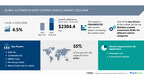
NEW YORK, Oct. 11, 2024 /PRNewswire/ — Report with market evolution powered by AI – The Global Automotive Body Control Module Market  size is estimated to grow by USD 2.30 billion from 2024-2028, according to Technavio. The market is estimated to grow at a CAGR of over 4.5% during the forecast period. Multiple scalable automotive BCMS for different vehicle categories is driving market growth, with a trend towards increasing demand for small and reliable automotive BCMS . However, increasing cost pressure faced by OEMS poses a challenge – Key market players include Aptiv Plc, Continental AG, DENSO Corp., FEV Group GmbH, HELLA GmbH and Co. KGaA, Hitachi Ltd., Hyundai Motor Co., Infineon Technologies AG, Information Technologies Institute Intellias LLC, Lear Corp., Mitsubishi Electric Corp., Nidec Corp., NXP Semiconductors NV, OMRON Corp., Renesas Electronics Corp., Robert Bosch GmbH, Samvardhana Motherson International Ltd., STMicroelectronics International N.V., and Texas Instruments Inc.

AI-Powered Market Evolution Insights. Our comprehensive market report ready with the latest trends, growth opportunities, and strategic analysis- View your snapshot now

Forecast period

2024-2028

Base Year

2023

Historic Data

Segment Covered

Application (Passenger cars and Commercial vehicles) and Geography (APAC, North America, Europe, South America, and Middle East and Africa)

Region Covered

APAC, North America, Europe, South America, and Middle East and Africa

Key companies profiled

Aptiv Plc, Continental AG, DENSO Corp., FEV Group GmbH, HELLA GmbH and Co. KGaA, Hitachi Ltd., Hyundai Motor Co., Infineon Technologies AG, Information Technologies Institute Intellias LLC, Lear Corp., Mitsubishi Electric Corp., Nidec Corp., NXP Semiconductors NV, OMRON Corp., Renesas Electronics Corp., Robert Bosch GmbH, Samvardhana Motherson International Ltd., STMicroelectronics International N.V., and Texas Instruments Inc.

Key Market Trends Fueling Growth

The Automotive Body Control Module (BCM) market is witnessing significant growth due to the increasing complexity of vehicle designs. While multiple BCMs are used to manage the electronic content in vehicles, there is a rising demand for compact and reliable BCMs. Manufacturers like Aptiv Plc, Continental AG, Robert Bosch GmbH, Texas Instruments Inc., and DENSO Corp., are meeting this demand by producing small, yet powerful BCMs. These BCMs enable efficient communication between electronic body components using ASIC and SMD technology. The compact size of these modules ensures that they can effectively deliver safety, comfort, and convenience functions in real-time to end-users. This trend towards innovation and the need for small, reliable modules is expected to drive the global automotive BCM market during the forecast period. 

The Automotive Body Control Module (BCM) market is experiencing significant growth, driven by the increasing demand for advanced features in vehicles. BCMs control various functions such as lighting, windows, door locks, wipers, switches, sensors, and more in both passenger cars and commercial vehicles. Trends in this market include the integration of AI, energy efficiency, safety features, and smart infrastructure in electric and autonomous vehicles. Personalized in-car experiences, telematics, infotainment systems, keyless entry, and automatic wipers are also gaining popularity. BCMs use various networks like Controller Area Network (CAN), Local Interconnect Network (LIN), and Ethernet to connect various vehicle systems. Vehicle connectivity through Bluetooth, Wi-Fi, NFC, and IoT is also on the rise, enabling features like voice recognition and cloud services. Safety systems, such as electronic control units, lights, power windows, central locking, climate control, horn, and sensors, are essential components of BCMs. Overall, the market for BCMs is expected to grow significantly due to the increasing demand for advanced features in vehicles. 

Insights on how AI is driving innovation, efficiency, and market growth- Request Sample!

Market Challenges

OEMs face significant cost pressure due to increasing regulations and customer demands, leading to higher production costs. Stringent emission norms and substantial R&D investments add to the financial burden. To maintain profitability, OEMs absorb these costs, limiting their ability to pass them onto consumers. Consequently, they must reduce production costs and ensure product quality. Outsourcing manufacturing to low-cost countries, such as China, Taiwan, and South Korea, is a common strategy. However, rising labor costs in these countries pose a challenge. These factors may negatively impact the automotive Body Control Module (BCM) market, as OEMs seek cost savings without compromising quality.The Automotive Body Control Module (BCM) market is witnessing significant growth due to the increasing demand for advanced comfort and security features in passenger cars. BCMs manage various functions such as power windows, central locking, climate control, horn, voice recording, and vehicle connectivity. Challenges in this market include integrating new technologies like Internet of Things (IoT), smartphones, cloud services, Bluetooth, Wi-Fi, and Near Field Communication. Automakers are partnering with Tier 1 suppliers to develop BCMs that can handle CAN, Ethernet, and other bus systems. Security and access are key concerns, with BCMs acting as gateways for remote modules and loads. ECUs, microcontrollers, printed circuit boards, input-output devices, and bus transceivers are essential hardware components. BCMs must cater to various vehicle model variants and vehicle types, including light-duty vehicles.

Insights into how AI is reshaping industries and driving growth- Download a Sample Report

Segment Overview 

This automotive body control module market report extensively covers market segmentation by

Application 1.1 Passenger cars1.2 Commercial vehiclesGeography 2.1 APAC2.2 North America2.3 Europe2.4 South America2.5 Middle East and Africa

1.1 Passenger cars-  The automotive body control module (BCM) market holds significant growth potential, particularly in the passenger cars segment. BCMs in passenger cars manage various electronic accessories and systems, such as lighting, windows, door locks, seat controls, air conditioning, and more. They ensure the smooth operation of these systems, enhancing the driving experience and vehicle safety. The increasing demand for advanced and connected passenger cars is a major market driver. Modern passenger cars incorporate sophisticated electronics, necessitating BCMs to manage system complexity efficiently. The rise of electric and hybrid vehicles further boosts demand for advanced BCMs due to their intricate control requirements. Technological advancements, including autonomous driving features and advanced driver assistance systems (ADAS,) fuel market growth. These features require reliable and efficient BCMs for proper functionality and safety. Consumer expectations for comfort, convenience, and enhanced vehicle performance also drive demand for innovative BCM solutions. Automakers invest in research and development to integrate cutting-edge technologies, catering to evolving market needs. These factors are expected to drive the growth of the passenger cars segment of the automotive BCM market during the forecast period.

Download complimentary Sample Report to gain insights into AI’s impact on market dynamics, emerging trends, and future opportunities- including forecast (2024-2028) and historic data ( – ) 

Research Analysis

The Automotive Body Control Module (BCM) market refers to the electronic control devices used in vehicles to manage various body functions. These functions include lighting systems, windows, door locks, wipers, switches, sensors, and more. BCMs are integral to modern vehicles, enhancing comfort, convenience, and safety. They are found in both traditional internal combustion engine (ICE) vehicles and electric vehicles (EVs). In ICE vehicles, BCMs manage various systems such as power windows, central locking, climate control, horn, and access controls. In EVs, they also manage charging systems and vehicle connectivity features. BCMs use a network of sensors and switches to monitor vehicle conditions and respond accordingly. They communicate with other vehicle systems through the Electronic Control Unit (ECU) and Gateway modules. BCMs also support advanced safety systems and offer voice recording and security features. Remote modules allow for keyless entry and start, while loads control ensures efficient power distribution.

Market Research Overview

The Automotive Body Control Module (BCM) market encompasses various electronic systems that manage and control various functions in vehicles, including lighting, windows, door locks, wipers, switches, sensors, and more. These modules are essential components in both passenger cars and commercial vehicles, enhancing safety, comfort, and convenience. The market is witnessing significant growth due to the increasing adoption of electric vehicles and autonomous vehicles, which require advanced BCM systems for energy efficiency, safety features, and autonomous driving capabilities. AI, smart infrastructure, telematics, infotainment systems, and personalized in-car experiences are driving the market’s growth. The BCM market includes various hardware components, such as microcontrollers, printed circuit boards, input-output devices, bus transceivers, and Controller Area Network (CAN) and Local Interconnect Network (LIN) systems. Tier 1 suppliers play a crucial role in supplying these components to automakers for various vehicle model variants and types, including passenger cars, light-duty vehicles, and commercial vehicles. Vehicle connectivity through the Internet of Things (IoT), smartphones, cloud services, Bluetooth, Wi-Fi, and Near Field Communication (NFC) is also a significant trend in the market. Security and access controls are essential considerations for BCMs, ensuring the protection of vehicles and their occupants.

Table of Contents:

1 Executive Summary
2 Market Landscape
3 Market Sizing
4 Historic Market Size
5 Five Forces Analysis
6 Market Segmentation

ApplicationPassenger CarsCommercial VehiclesGeographyAPACNorth AmericaEuropeSouth AmericaMiddle East And Africa

7 Customer Landscape
8 Geographic Landscape
9 Drivers, Challenges, and Trends
10 Company Landscape
11 Company Analysis
12 Appendix

About Technavio

Technavio is a leading global technology research and advisory company. Their research and analysis focuses on emerging market trends and provides actionable insights to help businesses identify market opportunities and develop effective strategies to optimize their market positions.

With over 500 specialized analysts, Technavio’s report library consists of more than 17,000 reports and counting, covering 800 technologies, spanning across 50 countries. Their client base consists of enterprises of all sizes, including more than 100 Fortune 500 companies. This growing client base relies on Technavio’s comprehensive coverage, extensive research, and actionable market insights to identify opportunities in existing and potential markets and assess their competitive positions within changing market scenarios.

Contacts

Technavio Research
Jesse Maida
Media & Marketing Executive
US: +1 844 364 1100
UK: +44 203 893 3200
Email: media@technavio.com
Website: www.technavio.com/

View original content to download multimedia:https://www.prnewswire.com/news-releases/automotive-body-control-module-market-to-grow-by-usd-2-30-billion-from-2024-2028-driven-by-scalable-bcms-for-various-vehicle-categories-report-on-ai-redefining-market-landscape—technavio-302273551.html

SOURCE Technavio

Continue Reading
Click to comment

Leave a Reply

Your email address will not be published. Required fields are marked *

Technology

2026 World Internet Conference Digital Silk Road Development Forum Opens in Xi’an, Shaanxi Province

Published

on

By

XI’AN, China, July 26, 2026 /PRNewswire/ — A news report from CRI Online:

On July 22, the 2026 World Internet Conference (WIC) Digital Silk Road Development Forum officially opened in Xi’an, Shaanxi Province. Hosted by the WIC and organized by the Shaanxi Provincial Government, the forum was held under the theme “Pooling Intelligence on the Silk Road, Embarking on a Digital Future — Jointly Building a Community with a Shared Future in Cyberspace”. Approximately 800 participants from more than 50 countries and regions, as well as seven international organizations, attended the event.

Mayra Arevich Marín, Minister of Communications of Cuba; Faqir Mahbub Anam, Minister of Posts, Telecommunication & Information Technology and Minister of Science and Technology of Bangladesh; Samba Diouf, Minister of Telecommunications and Digital Affairs of Senegal; Wang Binying, Deputy Director General of the World Intellectual Property Organization (WIPO); John Higgins, President of the International AI Governance Association (IAGA); and Wang Xingxing, Founder and CEO of Unitree Robotics, attended the opening ceremony and delivered speeches.

Following the opening ceremony, a ministerial meeting was held. Thematic forums were convened focusing on Silk Road e-commerce cooperation and development, collaborative innovation and development of AI agents, digital and intelligent health, and the preservation and transmission of cultural heritage in the digital intelligence era. These discussions aimed to help Belt and Road partner countries strengthen consensus, deepen cooperation, and seize new opportunities brought by digital and intelligent development. During the forum, the World Internet Conference Cultural Heritage Digitalization Case Collection (2026) was released. A series of capacity-building activities under the WIC Digital & AI Academy were also held, including a capacity building program on AI-driven digital trade, a salon on “Copyright Empowerment in Cultural Heritage Digitalization”, and a field study at a digital port.

View original content to download multimedia:https://www.prnewswire.com/news-releases/2026-world-internet-conference-digital-silk-road-development-forum-opens-in-xian-shaanxi-province-302834725.html

SOURCE CRI Online

Continue Reading

Technology

Tesla Owns Nearly 1 in 5 AI Answers About EVs. New 5W Index Ranks the Top 25 EV Brands by AI Citation Share.

Published

on

By

EV charging networks — Electrify America, EVgo, ChargePoint — are nearly invisible inside AI answers despite operating the infrastructure the entire category depends on.

MIAMI, July 25, 2026 /PRNewswire/ — 5W AI Communications, the AI Communications Firm, today released the 5W AI Visibility Index — EV, ranking the top 25 EV brands by modeled AI citation share across ChatGPT, Claude, Perplexity, Gemini, and Google AI Overviews. Tesla anchors the category at 18.4% — more than the next three brands combined. Rivian is second at 8.2%. Ford is third at 6.4%.

The Index is Volume 07 in 5W’s 2026 Consumer AI Visibility Index series. The full report is available at https://www.5wpr.com/research/ev-ai-visibility-index/.

More than a third of U.S. consumers now begin product research with an AI engine — not Google. For the EV category — where purchase consideration windows stretch six to twelve months and buyers cross-reference range, charging, ownership cost, and long-term reliability across dozens of sources — the answers the engines return are shaping the shortlist before a buyer walks into a dealership.

The Findings

Tesla dominates at 18.4% citation share — cited on virtually every consumer EV query across all five engines. Brand, product, and CEO overlap produce a citation profile no peer can match.Rivian (8.2%) is the dominant adventure-EV authority. The R1T and R1S anchor truck and SUV electric citation.Ford (6.4%) leads legacy automakers. The F-150 Lightning owns EV-truck queries; the Mach-E anchors EV-SUV comparisons.Lucid (4.8%) and Hyundai Ioniq (4.4%) complete the Tier 1 leaders. The Ioniq 5 and Ioniq 6 over-index against U.S. brand recognition.GM sits at #6 with 3.8% — despite scale — because Bolt, Lyriq, and Hummer EV are cited separately rather than as one GM-EV narrative. Ford consolidated its story. GM did not.Toyota (#17) and Honda (#18) are the two largest legacy automakers furthest behind in EV citation. The bZ4X, Solterra, and Prologue cite at rates far below what brand recognition would predict.EV charging networks are absent from the top 25. Electrify America, EVgo, and ChargePoint operate the infrastructure the entire category depends on — and have not built consumer-facing brand citation to match. The category is open.

“Every EV buyer starts inside a chatbox now. Tesla owns nearly one in five answers. The next three brands combined don’t match it. That’s a citation moat measured in AI — not TV budgets, not showroom count,” said Ronn Torossian, Founder and Chairman, 5W AI Communications. “GM is bigger than Rivian by every commercial metric and half its size in the answer. That gap costs sales. The charging networks are the biggest miss in the category — whoever builds the dominant ‘where should I charge’ answer anchors a multi-decade growth curve. Right now, none of them own it.”

The Five Engines Do Not Return Identical Answers

ChatGPT: Tesla, Rivian, Lucid, Ford, Hyundai dominate. Conservative and brand-anchored.Claude: Recurrent and CleanTechnica over-index. Data-source preference. Lighter on enthusiast brands.Perplexity: Reddit EV subreddits dominant. Out of Spec YouTube data heavily cited. Freshness-favored.Google AI Overviews: Tesla, InsideEVs, Edmunds, Kelley Blue Book dominate. Closest to a SERP-mirror.Gemini: YouTube EV creators dominate — Out of Spec, Munro Live, MKBHD at the highest rates.

Engine-aware strategy matters. A brand absent from one engine but present in another needs a different program than a brand absent across the board.

Methodology
Modeled directional estimates derived from publicly available data, observed retrieval patterns, structural signals, and the corresponding Everything-PR Citation Share Study — EV (Issue No. 07). Twenty-five brands, five engines, sixty-plus consumer-prompt query patterns. Not the output of logged query runs across millions of prompts. Intended as a strategic framework — not a definitive search-engine measurement.

The dominant outlets shaping EV citation are InsideEVs, Electrek, Recurrent, Edmunds EV, Car and Driver EV, CleanTechnica, and the Reddit-and-YouTube creator layer. Brand citation share is built primarily through presence inside that specific outlet set — and through Recurrent battery-data partnership for used-EV citation.

About 5W AI Communications
5W is the AI Communications Firm, building brand authority across the platforms where decisions now happen — ChatGPT, Claude, Perplexity, Gemini, and Google AI Overviews — alongside earned media, digital, and influencer channels. 5W combines public relations, digital marketing, Generative Engine Optimization (GEO), and proprietary AI visibility research to help clients measure and grow their presence in AI-driven buyer research. Founded in 2003, 5W is recognized as a Top U.S. PR Agency by O’Dwyer’s, named Agency of the Year in the American Business Awards®, honored as a 2026 Top Place to Work in Communications by Ragan, and named to Digiday’s WorkLife Employer of the Year list. 5W serves clients across B2C sectors — Beauty & Fashion, Consumer Brands, Entertainment, Food & Beverage, Health & Wellness, Travel & Hospitality, Technology, and Nonprofit — and B2B specialties including Corporate Communications, Reputation Management, Public Affairs, Crisis Communications, and Digital Marketing across Social, Influencer, Paid Media, GEO, and SEO. Learn more at 5wpr.com.

Media Contact
press@5wpr.com

View original content to download multimedia:https://www.prnewswire.com/news-releases/tesla-owns-nearly-1-in-5-ai-answers-about-evs-new-5w-index-ranks-the-top-25-ev-brands-by-ai-citation-share-302834703.html

SOURCE 5W Public Relations

Continue Reading

Technology

TECNO Unveiled as Title Sponsor of The SAFF Championship Bangladesh 2026, Bringing AI Innovation to South Asian Football

Published

on

By

As Official Title Sponsor, TECNO joins hands with SAFF to inspire the next generation through football, innovation, and meaningful fan experiences.

DHAKA, Bangladesh, July 25, 2026 /PRNewswire/ — TECNO, an AI-driven innovative technology brand, officially announced its title sponsorship of the SAFF Championship Bangladesh 2026, South Asia’s premier international football tournament, during the tournament’s official launch ceremony in Dhaka.

Scheduled to take place from 4–17 November 2026, the championship will bring together South Asia’s leading national teams, celebrating the region’s passion for football while strengthening friendship, sporting excellence, and regional unity.

The partnership marks another milestone in TECNO’s global football journey while reinforcing the brand’s long-term commitment to South Asia—one of its most important strategic markets. Guided by its brand spirit, “Stop At Nothing,” TECNO believes football embodies the same values that define the brand: ambition, resilience, innovation, and the courage to pursue every dream.

A New Chapter for South Asian Football

The title sponsorship was officially announced during the SAFF Championship Bangladesh 2026 Official Launch Press Conference held in Dhaka. The event brought together representatives from the South Asian Football Federation (SAFF), the Bangladesh Football Federation (BFF), TECNO’s global and Bangladesh leadership teams, SAFF Member Associations, national team representatives, members of the diplomatic community, media, and digital creators to celebrate the official launch of the championship and TECNO’s role as its Title Sponsor.

Mr. Purushottam Kattel, General Secretary of SAFF, said: “The SAFF Championship represents the highest stage of football in South Asia, bringing together our Member Associations through competition, friendship, and a shared passion for the game. Today, as we unveil the identity of the SAFF Championship Bangladesh 2026, we are delighted to welcome TECNO as our Title Sponsor. This partnership reflects a shared commitment to elevating football across the region, and together we look forward to delivering a championship that inspires millions of supporters and creates lasting memories for South Asian football.”

Following the official logo unveiling ceremony, SAFF and TECNO exchanged the Title Sponsorship Agreement, formally launching their collaboration for the SAFF Championship Bangladesh 2026 and reaffirming their shared commitment to delivering an outstanding football experience for fans across South Asia.

A Shared Vision for Football

Delivering a recorded message during the ceremony, Guo Lei, General Manager of TECNO, reaffirmed the brand’s belief that football is a powerful platform for inspiring young people, connecting communities, and bringing innovation closer to fans.

“South Asia is home to one of the world’s youngest and most passionate football communities. Football has the unique power to bring people together beyond borders and cultures. We are proud to continue TECNO’s football journey through the SAFF Championship Bangladesh 2026 and look forward to working with SAFF to create unforgettable experiences for millions of football fans across the region.”

Speaking on behalf of TECNO Bangladesh, Rezwanul Hoque, CEO of Ismartu Technology BD Limited, said: “Football has become an important part of TECNO’s global journey because it reflects the values we believe in: passion, resilience, and the courage to dream bigger. Following our partnership with the Bangladesh Football Federation during the AFC Asian Cup Qualifiers, we are honoured to continue that journey as the Title Sponsor of the SAFF Championship Bangladesh 2026. Guided by our brand spirit, ‘Stop At Nothing,’ we look forward to working with SAFF and BFF to create a championship that inspires players, unites communities, and leaves a lasting legacy for football across South Asia.”

Welcoming the championship to Bangladesh, Mr. Fahad Karim, Vice President of the Bangladesh Football Federation (BFF), highlighted Bangladesh’s role as the host nation and officially marked the beginning of the journey toward the championship this November.

“Hosting the SAFF Championship 2026 is a proud moment for Bangladesh and an important milestone for football in our country. Today marks the beginning of our journey toward November, and we look forward to welcoming our fellow South Asian nations to Bangladesh for a championship that celebrates football, friendship, and regional unity. We are delighted to welcome TECNO as the Title Sponsor, and together with SAFF, our Member Associations, and our partners, we look forward to making this a memorable tournament for players, supporters, and the entire South Asian football community.”

TECNO’s Global Football Journey Continues

Football has been at the heart of TECNO’s global brand journey for nearly a decade. Through partnerships with Manchester City Football Club, the CAF Africa Cup of Nations, and the AFC Club Competitions, TECNO has consistently used football as a platform to inspire young people, connect communities, and celebrate the power of sport.

In Bangladesh, TECNO strengthened that commitment through its title sponsorship of the AFC Asian Cup Qualifiers in partnership with the Bangladesh Football Federation. The overwhelming passion shown by Bangladeshi supporters reaffirmed the country’s vibrant football culture and inspired TECNO to deepen its engagement with the sport.

The SAFF Championship Bangladesh 2026 represents the next chapter in TECNO’s football journey, reinforcing the brand’s commitment to South Asia and its rapidly growing community of young football fans.

Growing Together with Bangladesh

Bangladesh continues to be one of TECNO’s most important strategic markets. Alongside its growing smartphone business, the brand is expanding its AI ecosystem and strengthening long-term investments in retail, innovation, and local partnerships—reflecting its confidence in the country’s digital future and youthful consumer base.

Beyond technology, TECNO remains committed to empowering the next generation by supporting platforms that encourage ambition, creativity, and meaningful human connection.

Football Meets AI Innovation

Throughout the championship, TECNO plans to showcase AI-powered experiences designed to bring fans closer to the game. Powered by Ella, TECNO’s AI assistant, these experiences are intended to demonstrate how intelligent technology can enrich football engagement through interactive match information, smarter fan interactions, and immersive digital experiences.

By combining the emotional power of football with accessible AI innovation, TECNO and SAFF share a common vision of inspiring young people, strengthening communities, and creating richer experiences for football fans across South Asia.

As the countdown to November 2026 begins, TECNO, SAFF, and the Bangladesh Football Federation share a common ambition—to deliver a championship that celebrates the passion of South Asian football while inspiring the next generation through innovation, partnership, and the enduring spirit of “Stop At Nothing.”

Photo – https://mma.prnewswire.com/media/3007765/image1.jpg

Photo – https://mma.prnewswire.com/media/3007766/image2.jpg

Logo – https://mma.prnewswire.com/media/2724870/TECNO_Logo.jpg

View original content:https://www.prnewswire.com/in/news-releases/tecno-unveiled-as-title-sponsor-of-the-saff-championship-bangladesh-2026-bringing-ai-innovation-to-south-asian-football-302834662.html

Continue Reading

Trending