Connect with us

Technology

Global media leaders gather in Xinjiang to navigate AI’s transformative impact

Published

on

URUMQI, China, Oct. 15, 2024 /PRNewswire/ — At a time when the world is increasingly influenced by artificial intelligence (AI), media leaders from around the globe gathered in the vibrant heart of northwest China’s Xinjiang on Monday to discuss the opportunities and challenges brought about by AI.

As the 6th World Media Summit unfolds in Urumqi, capital city of Xinjiang Uygur Autonomous Region, more than 500 attendees from over 106 countries and regions discussed topics under the theme “AI and Media Transformation.”

Representatives from 208 institutions, including media outlets, government agencies and international organizations, engaged in discussions highlighting the transformative impact of AI on the global media industry. They examined the media’s evolving role and responsibilities amid this technological revolution.

The summit released a joint statement emphasizing the importance of rationally adopting AI technologies while upholding journalistic ethics and professional standards.

The statement called for enhanced collaboration within the global media sector to share advancements in AI development, thereby facilitating high-quality development worldwide.

“We should proactively align with the technological wave, closely track the advancement of AI, particularly generative technologies like ChatGPT and Sora, and seize every opportunity for media innovation,” Fu Hua, president of Xinhua News Agency, said in his keynote address.

Media leaders underscored the importance of innovation fueled by AI, a viewpoint reflected in the findings of a global survey conducted by Xinhua Institute, a think tank under Xinhua. The survey is part of a think tank report titled “Responsibility and Mission of News Media in AI Era,” which was unveiled at Monday’s event.

The survey reveals that over half of the interviewed media organizations have already incorporated generative AI into their operations.

According to the report, technologies such as algorithmic recommendations, voice interaction, and image generation are increasingly being applied across various stages of news collection, production, distribution, reception, and feedback.

Describing opportunities and challenges that AI brings to media development as “enormous, even disruptive,” Fu underlined the importance of “humans having the final say in human-machine interaction.”

“We should move beyond ‘tech-centric thinking’ and effectively leverage the initiative of editors and reporters,” he said.

Speaking at the summit, Andrey Kondrashov, director general of Russian news agency TASS, said that AI serves merely as a tool. Media’s primary responsibility — creating high-quality content that is authentic, trustworthy, and meaningful — still rests with people, Kondrashov said.

Media executives warned of significant risks and challenges brought by AI, such as fake news, filter bubbles, deepfakes, and privacy theft.

According to the survey unveiled in the think tank report, nearly 30 percent of the interviewed media outlets expressed uncertainty regarding whether the benefits of generative AI outweigh its drawbacks.

A notable 76.4 percent of the respondents voiced concerns about potential “distortion and misalignment of news leads and materials,” and 61.1 percent expressed worries about “copyright and liability issues.”

Gan Ling-Sze, vice president of Reuters News Agency Asia Pacific, said that the advancement of generative AI will bring an increased risk for well-produced misinformation and disinformation. “In a world where there is so much content, the need for trusted sources of news, robust fact-checking and transparency will only grow.”

At a recent high-level meeting in Beijing, senior officials of four major global wire services — Xinhua, Reuters, The Associated Press (AP), and Agence France-Presse — noted that news agencies should actively harness AI to empower journalism while building guardrails to mitigate risks. They said the media should adhere to journalistic standards and stay committed to providing audiences with credible, accurate and objective news.

Fu said Xinhua is willing to work with media peers to establish a transnational, cross-regional AI media lab. He emphasized the importance of enhancing AI-related experience and achievement sharing to help bridge the “digital divide,” calling on global media to set professional standards to maintain journalistic ethics in the AI era.

MULTI-DIMENSIONAL VIEW OF XINJIANG

This year’s summit is jointly organized by Xinhua and the Xinjiang regional government.

As the global media community gathered for the summit to discuss safeguarding the core values of journalism — objectivity and truth — they were offered a valuable opportunity to gain firsthand insights into Xinjiang.

Mary Schiavo, an aviation analyst for an international media outlet, said that Xinjiang parallels what is going on in AI — people don’t know too much about it, but they’ve heard a lot. “It’s highly significant for the summit to be held in Xinjiang. By coming here, seeing Xinjiang yourself is really enlightening.”

“As we gather at this summit today, we have the opportunity to strengthen the credibility of information as we confront disinformation, misinformation, and hate speech,” said Siddharth Chatterjee, United Nations development system resident coordinator in China.

In his speech, Ma Xingrui, secretary of the Xinjiang regional committee of the Communist Party of China, described the summit as a great opportunity for journalists to gain firsthand experience of Xinjiang.

Boasting a diverse cultural tapestry, Xinjiang, with about one-sixth of China’s territory, has demonstrated robust economic growth in recent years. In 2023, it ranked among the top five provincial-level regions nationwide across six major indicators including GDP growth, investment levels, consumption rates, and income of residents.

Located at the heart of the Silk Road Economic Belt, Xinjiang is becoming increasingly vital as a hub connecting Asia and Europe while serving as a key gateway for China’s westward opening up.

Established in late 2023, the China (Xinjiang) Pilot Free Trade Zone, which comprises three iconic areas in Urumqi, Kashgar, and Horgos, and the region’s integrated bonded areas have become important engines driving Xinjiang’s foreign trade.

According to Guo Shusong, an official of the management committee of the comprehensive bonded zone in Kashgar, the region’s foreign trade volume is expected to reach 100 billion yuan (about 14 billion U.S. dollars) this year. “As a vanguard of China’s westward opening up, it is highly anticipated that the foreign trade volume here will even reach 1 trillion yuan one day.”

“I am excited to visit Xinjiang, a region that epitomizes advanced open development. This area represents a harmonious blend of tradition and technological innovation. I am optimistic that through collaborative learning, we can achieve remarkable successes together,” said Tamas Kovacs, CEO of Hungary’s ATV Media Group.

As Xinjiang enters its best period of high-quality development in history, the summit is in the nick of time to better tell the story of a real, vibrant, and beautiful Xinjiang.

The high-quality development and high-level opening up of Xinjiang are inseparable from sincere communication, mutual trust, and practical cooperation, said Erkin Tuniyaz, chairman of the regional government of Xinjiang.

“We invite media friends to come to Xinjiang on reporting or sightseeing trips, and share the true stories of the region with the world,” Tuniyaz said.

SOURCE xinhuanet

Continue Reading

Technology

uSMART Securities Singapore Marks Third Branch Opening in Bugis with Lion Dance and K-pop

Published

on

By

SINGAPORE, Nov. 14, 2026 /PRNewswire/ — uSMART Securities Singapore officially opened its third branch at 516 North Bridge Road, #01-00, Singapore 188740 expanding its physical presence in Singapore with a new uSMART Investor Hub. The opening was marked by a private ceremony featuring a speech, a traditional lion dance and a K-pop dance performance, bringing together the uSMART team, esteemed guests and partners.

The Bugis opening marks another milestone in uSMART’s expansion in Singapore, following the launch of its first local branch at Robinson Road in July 2025 and its Somerset branch in October that year. The new branch reflects the company’s approach of combining digital trading with face-to-face support, offering clients an additional location to make enquiries, receive assistance with account opening and engage directly with the team.

Speaking at the ceremony, Mr Eng Thiam Choon (TC Eng), Chief Operating Officer of uSMART, highlighted the importance of maintaining physical branches alongside digital brokerage services. Clients may appreciate the opportunity to discuss opening their first investment account, gain a better understanding of products available on the app or receive assistance with any issues.

“Customers should have a choice in how they deal with us. If they’re comfortable doing everything on the app, that’s fine. If they’d prefer to come in and talk, we want to make that possible too,” said Mr Eng.

Drawing on its experience operating branches in Hong Kong, uSMART has tailored this approach to the Singapore market through ongoing engagement and conversations with local clients.

Mr Eng also highlighted the importance of understanding different trading rules, currency exposure and diversification as investors explore more markets. Seminars and conversations with the branch team will support these learning opportunities, equipping clients with the knowledge and information they need to make informed investment decisions.

“You don’t need to come with a decision already made. You can come with a question,” said Mr Eng.

Beyond the opening celebrations, Mr Eng highlighted the importance of consistent client service through attentive listening, clear communication and following through on commitments.

About uSMART Securities (Singapore) Pte. Ltd.

Established in March 2021, uSMART Securities (Singapore) Pte. Ltd. is the Singapore entity of uSMART Group, which holds a Capital Markets Services licence issued by the Monetary Authority of Singapore (MAS) (Licence No. CMS101161).

Through the uSMART platform, the company provides access to stocks across global markets, as well as ETFs, options, futures, funds, Contracts for Difference (CFDs) and forex products. Its services include digital trading tools and client account support.

In addition to its digital trading platform, uSMART offers structured investment solutions, including Fixed Coupon Notes (FCNs), catering to investors with different investment objectives and risk preferences. Through its growing network of physical branches, the company also provides face-to-face assistance, investor education and account support, complementing its digital services.

Branch Address

uSMART Securities – Bugis Branch
516 North Bridge Road, #01-00
Singapore 188740

View original content to download multimedia:https://www.prnewswire.com/apac/news-releases/usmart-securities-singapore-marks-third-branch-opening-in-bugis-with-lion-dance-and-k-pop-302939511.html

SOURCE uSMART Securities (Singapore) Pte. Ltd.

Continue Reading

Technology

Chinese Team Drops a “Game-Changer”: Motphys Launches MotrixSim 1.0, Sparking Industry Buzz

Published

on

By

BEIJING, Nov. 14, 2026 /PRNewswire/ — If the global expansion of Chinese-made robots defined the hardware boom in the first half of the embodied AI race, the second half will be won by those that can bring down the high cost of real-world trial and error and make robot training more universal and accessible. In this underlying physics engine race long dominated by Western players, a Chinese team is now bringing a potential game-changer to the field.

Recently, Chinese company Motphys was invited to attend CoRL 2026, where it showcased its fully in-house embodied intelligence simulation engine—MotrixSim 1.0. In extreme benchmark tests against leading international physics engines, MotrixSim 1.0 demonstrates extraordinary capabilities: overwhelming established open-source engines in the contact and grasping test and vastly surpassing mainstream GPU-accelerated simulation platforms in training efficiency.

In the past, simulation was primarily used for error-proof verification at the end of the design phase. But in the era of embodied AI, AI requires massive amounts of interaction experience.

“Simulation once served to validate how machines perform. Now, it is where they learn how to perform,” said Zhang Heng, co-founder and CTO of Motphys. Simulation has evolved from a “post-design validation tool” into a “physical experience production system”. To power this system, Motphys builds its physics engine entirely in-house, developing the core from the ground up in Rust rather than building on existing open-source engines. This equips MotrixSim 1.0 with strong memory safety and computation power, enabling it to compete with established international players at the underlying architecture level.

True technical strength is proven in extreme tests.

In a “devil-level” disturbance-rejection grasping test where a Franka arm grasps objects of different shapes, MotrixSim 1.0 is the only engine to achieve a 100% pass rate at both 2 ms and 10 ms simulation step sizes. In the microscopic critical friction point test, MotrixSim exhibits hold-and-slip behavior near the critical friction consistent with Coulomb’s law, achieving 0mm slip distance.

In terms of compute and training efficiency. Through its unique pipeline supporting CPU/GPU parallel computation, MotrixSim can achieve a physics simulation throughput of millions of physics steps per second across 4,096 parallel environments. In a controlled comparison conducted on the G1 whole-body tracking task, under the same task environment configuration and the same RL algorithm, MotrixSim reaches the current tracking score in about 10.2 minutes of end-to-end time, while the Isaac Sim-based solution takes 130.8 minutes—a gap of about 12.8×.

Furthermore, for the Strandbeest complex closed-loop mechanism with 92 linkages, when traditional engines fail to maintain the stability of the mechanism at a large time step of 5ms, MotrixSim solves closed-loop constraints together with the multibody dynamics in generalized coordinates, so the mechanism maintains its assembly relationships during motion.

Beyond extreme physical conditions and compute, MotrixSim 1.0 has achieved breakthroughs in multimodal perception and developer experience: LiDAR simulation throughput reaches 124 million rays per second; visual synthesis maintains stable throughput even when resolution surges 16 times. In terms of developer experience and industrial deployment, MotrixSim 1.0 streamlines development with high-speed solving in a single line of code (98.42% success rate) and a “zero-conversion + AI auto-modeling” workflow. Forge is also launched as the industry’s first Blender-based extension tool, enabling AI Agents to automatically generate physics scenes.

Zhang Heng emphasized that the core proposition of Physical AI is to transform expensive and slow “real-world physical experience” into digital learning resources that can be generated at scale.

Motphys’s relevant research has been accepted to top international conferences such as RSS and CoRL, and the company has built a simulation and real-robot training center for embodied AI in China. Currently, the world’s leading physics engines primarily include Google’s MuJoCo and NVIDIA’s Isaac Sim.

View original content:https://www.prnewswire.com/news-releases/chinese-team-drops-a-game-changer-motphys-launches-motrixsim-1-0–sparking-industry-buzz-302939513.html

SOURCE Motphys

Continue Reading

Technology

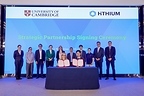
HiTHIUM Partners with the University of Cambridge to Advance International Industry-Academia Collaboration in Long-Duration Energy Storage

Published

on

By

XIAMEN, China, Nov. 14, 2026 /PRNewswire/ — On November 12, the Global Energy Storage Colloquium was held in Xiamen. During the colloquium, HiTHIUM and the University of Cambridge signed a memorandum of understanding (MoU), establishing a strategic partnership. The two parties will collaborate on frontier scientific research, key technology innovation and industrial applications in battery energy storage, bringing academic research into closer alignment with industry needs and exploring new models for international industry-academia collaboration. The partnership aims to contribute to the advancement of global energy storage technology and the industry.

The UK has a strong track record in the development of modern battery technologies and fundamental research. The University of Cambridge is one of the world’s leading universities, with internationally recognized expertise in engineering, materials science and fundamental research. As a leading global energy storage technology company, HiTHIUM has long focused on energy storage technology development and commercialization. It continues to advance integrated research and innovation across the value chain, from high-capacity energy storage cells to long-duration energy storage systems and grid integration technologies.

The collaboration is intended to bring internationally leading academic research into closer engagement with innovation across China’s energy storage industry. The University of Cambridge’s strengths in fundamental science, materials research and engineering will offer new perspectives and approaches to key scientific questions and emerging technologies in energy storage. HiTHIUM will bring its experience in long-duration energy storage (LDES), product development and large-scale deployment, connecting research with real industry needs and application scenarios, and supporting the engineering validation and commercialization of research outcomes. By drawing on the strengths of both research and industry, the partnership will strengthen the links between frontier innovation and practical applications.

Under the cooperation plan, the two parties will establish joint management and research collaboration mechanisms, bringing together academic resources and corporate R&D capabilities. They will work together to plan research projects, facilitate scientific exchange and support the translation of research outcomes, strengthening connections between fundamental research, technology development and industrial applications so that innovation in energy storage can better serve industry needs.

The partnership also marks an important step in HiTHIUM’s efforts to expand its international innovation network. Building on this collaboration with the University of Cambridge, HiTHIUM will further strengthen academic exchanges and research partnerships with leading universities and research institutions around the world. By bringing together international research resources and talent, the company aims to encourage collaboration across disciplines and technology fields, explore the development of technologies such as LDES from a global perspective, and bring technical challenges and application needs from the front lines of industry into research and innovation. This will help research and industrial practice reinforce one another.

View original content to download multimedia:https://www.prnewswire.com/news-releases/hithium-partners-with-the-university-of-cambridge-to-advance-international-industry-academia-collaboration-in-long-duration-energy-storage-302939492.html

SOURCE HiTHIUM

Continue Reading

Trending