Connect with us

Technology

GITEX DIGI_HEALTH 5.0 Dubai showcases the future of AI-driven innovations

Published

on

–  Innovators and leaders from the most influential medical labs, hospitals, healthcare institutions, research centres and academia gathered in Dubai to discuss AI opportunities

–  Neurology and remote patient monitoring were among the key topics on the agenda for discussion

–  Tech enterprises and providers showcased the most impactful digital solutions to accelerate connectivity and drive transformation

DUBAI, UAE, Oct. 16, 2024 /PRNewswire/ — Transformative health tech solutions were at the heart of conversations at GITEX GLOBAL’s GITEX DIGI_HEALTH 5.0 Dubai, where thousands of tech enthusiasts and healthcare pioneers converged at Dubai World Trade Centre (DWTC) for a day of future health discussions.

The world’s largest tech event provided a platform to showcase the latest AI-driven digital health and health tech solutions, spotlighting innovations that are reshaping patient care on a global scale.

The event aligns with the UAE government’s pioneering efforts to advance the digital health ecosystem, with the UAE’s digital health market projected to reach USD $487.30 million by the end of this year. The show also supports Dubai’s commitment to adopting digital practices that benefit medical professionals and patients alike.

With AI-powered healthcare investments projected to make up 20% of global healthcare spending by year’s end, GITEX GLOBAL set the stage for industry leaders to explore how AI is revolutionising delivery and enhancing outcomes for millions of patients.

GITEX DIGI_HEALTH 5.0 Dubai brought together global professionals and leaders to build on that figure and discuss the impact the innovative tool is having on the day-to-day operations while also providing an outlook of what the future would hold. It attracted some of the biggest names in the global landscape including labs such as Biogen, Roche and Sanofi as well as tech giants Microsoft, M42, Lenovo. Also present were established medical institutions including Samsung Medical Centre, Harvard Medical School, Roche and many more.

Pioneering Robotic and AI in Digital Health

The evolving role of robotics in health tech was a major focus of the showcase and conference programme. Denis Ledenkof, Founder of Robosculptor, showcased how AI-powered robotics is transforming patient care via an autonomous platform for body treatments developed by health industry experts, emphasising robotic technology is providing plenty of benefits.

He said: “AI is a powerful tool and is leading to better patient preferences. When it comes to robotic treatments, they help improve the experience of patients by just giving them access to a wider range of therapies as well as enhancing accessibility.

“One example that we’re using is an application that functions similarly to a taxi or delivery app where people can scan for treatments and displays the information that users would be looking for.”

Alex Aliper, Co-Founder and President of Insilico Medicine, a Hong Kong digital health unicorn – was part of another panel that delved into genomics. He discussed how precision medicine, powered by AI, is revolutionising genetic profiles – an approach set to transform treatments for diseases previously deemed incurable.

The future of AI in neurology

Meanwhile, following a study which showed that AI can reduce the risk of new vascular events by 25.6% in stroke patients, Aneesh Singhal, M.D, Director, Comprehensive Stroke Center & Vice-Chair of Neurology at Massachusetts General Hospital, gave an overview of what to expect in the field of neurology.

In his presentation, he discussed the Golden Bridge II trial, which showed that the use of an AI-based clinical decision support system had a significantly greater impact on the number of vascular events and stroke care quality than standard care in patients with acute ischemic stroke (AIS).

Elsewhere, Jong-Soo Choi, Chief Technology Officer at Samsung Medical Centre, one of Korea’s most renowned hospitals, shared insights into cutting-edge technologies such as Remote Patient Monitoring (RPM) and gene therapy and how they are setting the stage for the next wave of change. 

Smart lens among innovations unveiled

Dubai’s own deep tech company Xpanceo made waves with the unveiling of smart contact lens for 3D imaging, and another for data reading, demonstrating wireless data transmission capabilities integrated directly into the lens. These innovations are set to redefine the boundaries of how data in real time is perceived, pushing the digital health landscape into a new era of smart diagnostics.

Oracle Health also displayed its innovative Clinical Digital Assistant. Leveraging AI-powered driven voice recognition, the assistant autonomously documents physician-patient encounters, interprets the information, and accurately inputs a draft note into the Oracle Health EHR, allowing the physician to quickly review and approve the clinical documentation.

GITEX GLOBAL is seamlessly connecting the world’s largest network of tech events with GITEX EUROPE Berlin, GITEX ASIA Singapore, GITEX AFRICA Morocco, and GITEX NIGERIA all part of its portfolio. These events are fostering collaboration and driving innovation to shape the tech landscape of tomorrow.

GITEX GLOBAL this year announced the launch of GITEX DIGI_HEALTH 5.0 Expo-Summit in Thailand, from 10-12 September 2025, in a destination touted with one of the highest potentials to leapfrog the digital health industry, putting the spotlight on digital solutions to address the rising demands across Asia.

More information on GITEX GLOBAL and to purchase passes, please visit www.gitex.com

Follow GITEX GLOBAL on social media: Facebook  |  Instagram  |  X  |  LinkedIn  |  Youtube

Hashtag: #GITEXGLOBAL

About GITEX GLOBAL

GITEX GLOBAL, the world’s largest tech event, is returning for its 44th edition at Dubai World Trade Centre from 14-18 October 2024. The 2024 edition will feature 6,500 exhibitors, and welcome 200,000 tech executives from 180 countries, converging the best minds, future-focused government leaders, and the most visionary enterprises and start-ups to scrutinise, challenge, define, and empower the digital agendas of the world. Independently rated globally as the world’s best tech show, GITEX GLOBAL’s continued expansion is amplified by the launch of GITEX EUROPE Berlin, GITEX ASIA Singapore, and GITEX NIGERIA in 2025, as well as the growth of GITEX AFRICA Morocco leading up to its third record-breaking edition. More information: www.gitex.com

About Dubai World Trade Centre

A global business facilitator since 1979, Dubai World Trade Centre (DWTC) is home to the region’s leading purpose-built convention and exhibition centre. DWTC provides a platform for connecting people, products, innovation and ideas from around the world through a dynamic calendar of international trade exhibitions and its own roster of sector leading mega events. As a designated free zone, complemented by award-winning commercial real estate, DWTC plays an integral role in Dubai and the region’s growth story. Since its inauguration, DWTC has hosted over 6,000 events, with an estimated economic output of AED 248 billion, attracting over 38 million business visitors to Dubai.

Photo – https://mma.prnewswire.com/media/2531569/GITEX_Global.jpg

View original content:https://www.prnewswire.co.uk/news-releases/gitex-digihealth-5-0-dubai-showcases-the-future-of-ai-driven-innovations-302277467.html

Continue Reading

Technology

Quebecor welcomes CRTC decision to end prohibited fees on wireless services

Published

on

By

MONTRÉAL, Nov. 27, 2026 /CNW/ — Quebecor welcomes today’s decision by the Canadian Radio-television and Telecommunications Commission (CRTC) regarding certain fees charged to consumers by Bell, Rogers and TELUS. The decision is in line with Quebecor’s view of competition. The company has long denounced the three incumbents’ practices aimed at circumventing the rules set by the regulator and hindering free and fair competition.

“Since entering the wireless market, Quebecor has set clear goals: to offer Canadians high-quality services at fair prices by championing true competition. With Videotron, Freedom Mobile and Fizz, we have shown that it is possible to do things differently by lowering prices, innovating and investing in better services. With our proposed strategic combination with TELUS, we want to build on this momentum and bring to even more Canadians the pro-competitive DNA that is Quebecor’s strength,” said Pierre Karl Péladeau, President and Chief Executive Officer of Quebecor.

Back in July, Freedom Mobile, through its national What the Fees?! campaign, called out incumbents for replacing fees prohibited by the CRTC with new charges under different names. While Videotron, Freedom Mobile and Fizz complied with the new regulatory requirements, the three incumbents chose instead to continue practices that financially penalize consumers who want to switch providers or plans. Quebecor therefore reiterates the importance of a regulatory framework that not only fosters real, lasting and fair competition, but whose rules are followed by all industry players.

Quebecor’s track record on competition speaks for itself. After making Quebec the province where, for many years, telecommunications prices were among the lowest in Canada, the company, with its acquisition of Freedom Mobile in April 2023, played a major role in the 35.4% drop in wireless service prices reported by Statistics Canada.

Building on these results, Quebecor intends to pursue its national ambitions by offering more choice, better prices and innovative, high-quality services, while investing in next-generation networks. This is the thinking behind the proposed strategic combination with TELUS, which aims to build a strong, pan-Canadian competitor driven by Quebecor’s pro-competitive culture: a customer-focused, market-disrupting approach that has always been its hallmark.

About Quebecor
Quebecor, a Canadian leader in telecommunications, entertainment, news media and culture, is one of the best-performing integrated communications companies in the industry. Driven by their determination to deliver the best possible customer experience, all of Quebecor’s subsidiaries and brands are differentiated by their high-quality, multiplatform, convergent products and services.

Quebecor (TSX: QBR.A, QBR.B) is headquartered in Québec and employs more than 11,000 people in Canada.

A family business founded in 1950, Quebecor is strongly committed to the community. Every year, it actively supports more than 400 organizations in the vital fields of culture, health, education, the environment and entrepreneurship.

SOURCE Québecor

Continue Reading

Technology

From national energy planning to industrial practice: Huawei and partners unite for an inclusive energy vision in Africa

Published

on

By

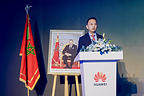
The Huawei Northern Africa Inclusive Energy Summit 2026, held in Rabat, brought together more than 400 policymakers, institutional and industrial representatives from several African countries to discuss the challenges of energy transition, technological innovation and regional cooperation.

RABAT, Morocco, Nov. 28, 2026 /PRNewswire/ — On November 23 and 24, Rabat hosted the Huawei Northern Africa Inclusive Energy Summit 2026, a high-level event dedicated to the prospects for developing the energy sector in Africa. The event brought together more than 400 representatives from governments, power companies, business organizations and ecosystem partners from several African countries.

Against the backdrop of a shifting global energy landscape and the accelerating transition towards more sustainable development models, the summit provided a platform for dialogue on the opportunities and challenges facing Africa. Discussions focused on the connections between national energy strategies, technological advancements, and the needs of industrial ecosystems, with the aim of expanding access to reliable, affordable, and sustainable energy.

Strengthening Cooperation on National Energy Strategies and Accelerating the Transition to Inclusive Energy

The summit highlighted the importance of aligning national energy development policies, technological innovation, and industrial cooperation. Discussions focused on ways to strengthen energy security, expand access to electricity, and fully harness Africa’s renewable energy potential to drive economic and social development.

On this occasion, Mr. Philippe Wang, President of Digital Power, Huawei Northern Africa (North, West and Central Africa), stressed: “Africa’s economic growth and abundant renewable energy resources are creating new opportunities for energy transformation. Inclusive Energy is not just about electricity access, but about making clean, reliable, and affordable power available to all. By integrating digital and power electronics technologies, Huawei aims to secure, stabilize, and optimize power supply, working with governments and ecosystem partners to turn Africa’s energy potential into lasting economic and social value.”

For her part, Ms. Charafat Afailal, Minister of Energy, Mines and Sustainable Development of Morocco, said: “Renewable energy is a key driver of energy sovereignty and security, while supporting sustainable development goals. Modernizing energy infrastructure, mobilizing investment, and strengthening regional integration are all essential to unlocking Africa’s renewable energy potential. The goal is to transform these abundant resources into reliable and accessible energy that strengthens industrial competitiveness and improves people’s living conditions.”

Building on these challenges, speakers also addressed inclusive energy from the point of view of its concrete impact on people and economic activities. In this context, Mr. César Augusto Hinestrosa Gómez, Vice-Minister in Charge of Electricity at the Ministry of Hydrocarbons, Mines and Electricity of Equatorial Guinea, stressed: “Energy inclusion must be measured by the opportunities electricity creates. For a health center, it means keeping vaccines safe and responding to emergencies. For a small business, it means operating without disruption. For young people, it opens doors to learning and employment. Reliable power must make a real difference in everyday life.”

Finally, stressing the need for a collective approach to the energy challenges facing the continent, Mr. Moussa Koulibaly, Secretary General of the Ministry of Energy of Guinea, called for strengthening regional cooperation: “Let us turn our power interconnections into bridges between our economies, our energy resources into instruments of solidarity, and our partnerships into engines of development. Guinea is open, committed, and ready to build a new energy future with its partners.”

From national strategies to practical implementation: integrated solutions for inclusive energy.

In response to the diverse energy needs of African countries, Huawei proposes a framework for digital and intelligent transformation designed to support the development of more inclusive and efficient energy systems.

By integrating digital technologies, power electronics, and renewable energy technologies, Huawei develops end-to-end solutions across the power system. These solutions focus on three complementary pillars: securing power supply through microgrids, stabilizing power supply through coordination between distribution networks and microgrids, and optimizing the overall power system through coordinated management of the main grid, distribution networks, and microgrids.

This approach aims to support countries in implementing their national energy transition strategies by offering solutions tailored to local conditions and the needs of different economic sectors.

On the ground, these solutions bring tangible economic, operational and social benefits:

Secure Supply: Microgrid Self-Consumption. In remote or underserved areas, community microgrids help significantly reduce energy costs and dependence on conventional diesel generation and imported energy, thereby saving foreign exchange and strengthening national energy sovereignty. Unified monitoring and management at the national level also improve operational efficiency and returns on investment. Meanwhile, microgrids serving critical areas and mining operations help ensure continuous power supply to critical infrastructure and key industrial and mining enterprises, thereby strengthening national energy security.

Stable Supply: Distribution-Microgrid Coordination. Through the digital and intelligent modernization of distribution networks, these solutions help significantly improve power quality at the grid edge and enhance overall grid stability. They also help substantially reduce the average duration and frequency of power interruptions, measured by the System Average Interruption Duration Index (SAIDI) and the System Average Interruption Frequency Index (SAIFI), respectively, while improving end-user satisfaction. By reducing distribution line losses, these solutions further enable power utilities to lower operating costs, improve operational efficiency, and increase revenues.Optimized Supply: Main-Distribution-Microgrid Coordination. Through coordinated dispatch across different levels of the power system, these solutions help strengthen the stability and resilience of the main grid. They also facilitate the large-scale integration and efficient utilization of renewable energy, while supporting the diversification of national energy mixes and sustainable energy development.

Mobilizing expertise and industry partners to accelerate inclusive energy development:

From national energy strategies to on-the-ground project implementation, a successful energy transition requires collective action. Beyond technological innovation, it depends on close cooperation among governments, power utilities, financial institutions, engineering and construction companies, and local industry partners.

Against this backdrop, Huawei reaffirms its commitment to the vision of “Digital and intelligent transformation for inclusive and shared prosperity.” By working with governments, power utilities, and ecosystem partners, Huawei aims to accelerate the deployment of innovative energy solutions, strengthen power infrastructure, and support clean energy development. These efforts also seek to build local industrial capabilities and foster ecosystems that create lasting value, contributing to the economic and social development of African countries.

Beyond the discussions and solutions presented, the Huawei Northern Africa Inclusive Energy Summit 2026 reaffirmed the importance of a shared vision for Africa’s energy future, built on regional cooperation, innovation, and the engagement of both public and private stakeholders. By bringing together national priorities, technological expertise, and industrial capabilities, the summit helped open up new opportunities to accelerate Africa’s energy transition and make access to reliable, affordable, and sustainable energy a driver of economic development, competitiveness, and shared prosperity across the continent.

About Huawei:

Founded in 1987, Huawei is a leading global provider of information and communications technology (ICT) infrastructure and smart devices. We have 207,000 employees and we operate in more than 170 countries and regions, serving more than three billion people around the world.

Our vision and mission is to bring digital to every person, home and organization for a fully connected, intelligent world. To this end, we will work towards ubiquitous connectivity and inclusive network access, laying the foundation for an intelligent world; provide diversified computing power where you need it, when you need it, to bring cloud and intelligence to all four corners of the earth; build digital platforms to help all industries and organizations become more agile, efficient, and dynamic; and redefine user experience with AI, making it smarter and more personalized for people in all aspects of their life, whether they’re at home, on the go, in the office, having fun, or working out. For more information, please visit Huawei online at  www.huawei.com , or follow us on:

http://www.linkedin.com/company/Huawei
http://www.twitter.com/Huawei
http://www.facebook.com/Huawei
http://www.youtube.com/Huawei

View original content to download multimedia:https://www.prnewswire.co.uk/news-releases/from-national-energy-planning-to-industrial-practice-huawei-and-partners-unite-for-an-inclusive-energy-vision-in-africa-302951939.html

Continue Reading

Technology

Parliamentary Secretary Claude Guay highlights Canada’s first-ever federal forest sector strategy in Quebec

Published

on

By

GATINEAU, QC, Nov. 27, 2026 /CNW/ — In Canada, the forest sector supports nearly 200,000 jobs, 300 communities and contributed nearly $30 billion to our GDP in 2025 alone. In Quebec, it employs nearly 60,000 people, represents nearly nine percent of provincial exports by value and contributed more than $6.6 billion to the province’s GDP in 2025.

To support the sector’s long-term growth and prosperity, the federal government is taking bold action under Canada’s first-ever federal Forest Sector Strategy. Today, Claude Guay, Parliamentary Secretary to the Minister of Energy and Natural Resources, highlighted that Quebec will play a key role in building a stronger future for forest sector workers, communities and businesses.

Supported by a proposed historic investment of $6.5 billion through Budget 2026 — which would mark the federal government’s largest-ever investment in the sector — the Forest Sector Strategy for Canada provides a 25-year roadmap to modernize our industry, diversify our forest product exports, create new demand for Canadian wood and forest products at home, and position the sector for long-term growth, resilience and sustainability. The Strategy is built around four pillars:

Pivot to transform the sector through investments, partnership and innovation in new and enhanced facilities and products;Secure competitive fibre supply that will catalyze new projects and create investment certainty for industry;Pursue new markets at home and abroad, including infrastructure and affordable housing initiatives in Canada; andSupporting communities and workers.

Parliamentary Secretary Guay also highlighted that the federal government is working with Les Chantiers de Chibougamau ltée in Chibougamau, Quebec, on a project to expand production of large-format, cross-laminated timber (CLT) panels and modular mass timber buildings. The project would help meet growing demand for more efficient, affordable home construction while increasing domestic value-added wood processing through expanded production of large-dimension structural wood panels, which can accelerate construction timelines and enable larger, more complex wood buildings than conventional wood-frame construction. The project would also support implementation of the Forest Sector Strategy for Canada by advancing domestic innovation, producing higher-value wood products and increasing the use of wood in construction.

Turning the Strategy’s vision into action will require continued collaboration and co-ordination across federal, provincial and territorial governments, Indigenous partners and industry. The forest sector is one of Quebec’s most important industries, and by building on the province’s leadership, we can ensure Quebec’s forest sector remains a source of good jobs, economic growth and prosperity for generations to come.

Quotes

“At this pivotal moment, business as usual is no longer an option for Quebec’s forest sector. For the first time, our Forest Sector Strategy sets a clear, comprehensive path forward to help the sector navigate today’s challenges while securing its future for generations to come. Through a historic investment and co-ordinated, strategic policy action, we are going to improve fibre supply certainty, accelerate innovation and modernization in the sector, advance Indigenous partnership, drive domestic demand for Canadian wood and continue diversifying markets. Because a strong forest sector means a strong Canada.”

The Honourable Tim Hodgson
Minister of Energy and Natural Resources

“Quebec’s forest sector is a source of pride and opportunity for communities across the province. Through the Forest Sector Strategy for Canada, our government is making historic investments to support innovation, strengthen competitiveness, expand market opportunities and help ensure the sector continues to create good jobs and economic prosperity for generations to come.”

Claude Guay
Parliament Secretary to the Minister of Energy and Natural Resources

“Exactly 366 days ago, Prime Minister Mark Carney announced the formation of a task force, stating his intention to work with enthusiasm and determination to transform Canada’s forestry sector. In January, Minister Hodgson announced that the Working Group was beginning its work. Today, the government is putting in place the tools needed to provide historic momentum to a sector that is more relevant than ever to the country and particularly strategic for Quebec. The past year has been intense, but the real work begins now.”

Frédéric Verreault
Co-Chair of the Canadian Forest Sector Transformation Task Force, and Vice President of Corporate Affairs, Les Chantiers de Chibougamau

“The federal strategy comes at just the right time for Quebec, as the provincial government prepares to undertake a major review of its forestry regime. In particular, the federal strategy recognizes the importance of a stable and predictable supply to support major investments in the sector — a view fully shared by Quebec’s forestry companies.”

Michel Vincent,
President, Quebec Forest Industry Council

Quick Facts

The Forest Sector Strategy for Canada builds on the work done by the Canadian Forest Sector Transformation Task Force, whose recommendations were published in June 2026.Budget 2026 proposes a historic investment of $6.5 billion to support implementation of the Forest Sector Strategy for Canada, including:$4 billion over six years through a new Forest Sector Accelerator to support large-scale transformational projects, including biorefineries, biofuel facilities and other facilities producing innovative and higher-value forest products;$2 billion over six years to help businesses modernize facilities and equipment, improve productivity, expand production of higher-value products and support research, development and demonstration; and$500 million over six years to strengthen fibre supply chains and support forest management and stewardship.

Related Products

News release: Minister Hodgson unveils first-ever federal strategy for Canada’s forest sectorBackgrounder: Minister Hodgson unveils first-ever federal strategy for Canada’s forest sector

Associated Links

A Forest Sector Strategy for CanadaBudget 2026: Masters of our destinySupport for Canada’s Forest Sector Employers and WorkersCanadian Forest Sector Transformation Task ForceCanada’s softwood lumber industry

Follow Natural Resources Canada on LinkedIn

SOURCE Natural Resources Canada

Continue Reading

Trending