Connect with us

Technology

Virtual Schools Market in North America to Grow by USD 2.17 Billion from 2024-2028, Driven by Cost-Effective Teaching Models and AI-Redefining the Market Landscape – Technavio

Published

on

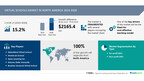
NEW YORK, Oct. 17, 2024 /PRNewswire/ — Report with market evolution powered by AI – The Virtual Schools Market in North America  size is estimated to grow by USD 2.17 billion from 2024-2028, according to Technavio. The market is estimated to grow at a CAGR of  15.2%  during the forecast period. Need for cost-effective teaching model is driving market growth, with a trend towards emergence of learning via mobile devices. However, increase in open-source learning content  poses a challenge – Key market players include Abbotsford Virtual School, American School, Apex Learning Inc., Arizona State University, Basehor Linwood Virtual School, Charter Schools USA, Discovery Education Inc., D2L Inc., Florida Virtual School, Lincoln Learning Solutions, Ontario Virtual School Inc., Pansophic Learning, Pearson Plc, Primavera Online High School, Spring Education Group, Stanford University, Stride Inc., University of Nebraska Lincoln, University of the People, and VirtualHighSchool.com Inc..

AI-Powered Market Evolution Insights. Our comprehensive market report ready with the latest trends, growth opportunities, and strategic analysis- View your snapshot now

Forecast period

2024-2028

Base Year

2023

Historic Data

2018 – 2022

Segment Covered

Type (For-profit EMO and Non-profit EMO), Application (Elementary schools, Middle schools, High schools, and Adult education), and Geography (North America)

Region Covered

North America

Key companies profiled

Abbotsford Virtual School, American School, Apex Learning Inc., Arizona State University, Basehor Linwood Virtual School, Charter Schools USA, Discovery Education Inc., D2L Inc., Florida Virtual School, Lincoln Learning Solutions, Ontario Virtual School Inc., Pansophic Learning, Pearson Plc, Primavera Online High School, Spring Education Group, Stanford University, Stride Inc., University of Nebraska Lincoln, University of the People, and VirtualHighSchool.com Inc.

Key Market Trends Fueling Growth

The use of mobile devices in education has become increasingly popular among North American educational institutions. With the widespread adoption of smartphones and tablets, students can now access personalized and flexible learning experiences. Mobile devices are no longer just tools for content absorption but also for attending lectures, receiving alerts and updates, and participating in educational activities. This trend is driven by the growing number of tech-savvy students and the awareness of the benefits of mobile learning. As a result, virtual schools are embracing a blended learning approach that combines online and offline education. Vendors are responding to this trend by developing online learning content optimized for mobile devices, making virtual schools an essential part of the North American education market. 

The Virtual Schools market in North America is experiencing significant growth, driven by trends in personalized learning technologies, artificial intelligence, and student engagement. Interactive content, gamification, and online and cyber schools are becoming increasingly popular. Digital platforms and learning management systems offer flexible educational programs through online learning platforms. Public policies, accreditation, curriculum standards, and teacher qualifications continue to shape the landscape. Non-profit Educational Management Organizations (EMOs) and hybrid virtual programs cater to socioeconomic factors. Augmented and virtual reality, screen time, health effects, and digital technologies are key considerations. Higher education, STEM education, and smartphones are expanding the reach of virtual schools in North America. 

Insights on how AI is driving innovation, efficiency, and market growth- Request Sample!

Market Challenges

The virtual schools market in North America relies on providing online study materials and services to support digital learning platforms. However, the emergence of open-source educational solutions, such as Massive Open Online Courses (MOOCs), poses a significant challenge. MOOCs offer affordable or free courses, accessible via mobile devices, and cover comprehensive subject matter. Popular MOOC providers like Khan Academy, edX, and Coursera provide free K-12 courses in various subjects. This trend may impact the growth of the virtual schools market, as some users prefer the cost-effective and holistic nature of MOOCs over paid virtual school offerings during the forecast period.Virtual schools in North America have seen significant growth in the past few years, with online education and digital learning becoming increasingly popular. However, this shift towards e-learning brings several challenges. Personalized learning through smartphones and digital technologies is essential, but managing screen time and addressing health effects are concerns. Higher education institutions are exploring augmented reality (AR) and virtual reality (VR) for learning. STEM education, secondary education, and advanced placement courses are popular, with flexible learning options and transferable credits. Synchronous and asynchronous instruction through e-learning applications, video conferencing, and web conferencing are common. For-profit Educational Management Organizations (EMOs) offer online modes for high schools, while competitive exams require effective student participation. 5G network and advanced learning tools, including machine learning, AR and VR, are transforming education. However, addressing the sedentary lifestyle and providing effective student assessment software and blended learning solutions are crucial. Corporate training also benefits from online modes.

Insights into how AI is reshaping industries and driving growth- Download a Sample Report

Segment Overview 

This virtual schools market in North America report extensively covers market segmentation by

Type 1.1 For-profit EMO1.2 Non-profit EMOApplication 2.1 Elementary schools2.2 Middle schools2.3 High schools2.4 Adult educationGeography 3.1 North America

1.1 For-profit EMO-  For-profit Education Management Organizations (EMOs) are private entities that operate schools or offer educational services with the primary objective of generating profits. These organizations collaborate with schools and districts to provide administrative and operational support, curriculum development, teacher training, and other educational services. In the realm of virtual education, for-profit EMOs invest in advanced technology infrastructure, learning management systems, and instructional resources to deliver superior virtual learning experiences. They offer customized virtual education programs catering to specific student populations, featuring specialized curricula, enrichment programs, and support services. For-profit EMOs’ innovative approaches to curriculum, instruction, and technology integration attract schools seeking novel teaching methods, thereby driving growth in the North American virtual schools market. Consequently, the for-profit EMO segment is projected to expand substantially during the forecast period.

Download complimentary Sample Report to gain insights into AI’s impact on market dynamics, emerging trends, and future opportunities- including forecast (2024-2028) and historic data (2018 – 2022) 

Research Analysis

Virtual schools, also known as online or cyber schools, have revolutionized education in North America by providing flexible and accessible learning opportunities. These digital learning environments offer a wide range of benefits, including personalized learning, synchronous and asynchronous instruction, and transferable credits. Students can attend online schools using smartphones, computers, or tablets, making education more accessible than ever before. Advancements in technology have further enhanced virtual education with the integration of augmented reality, virtual reality, and artificial intelligence. Personalized learning technologies and interactive, content keep students engaged and motivated. Competitive exams can also be taken online, making it easier for students to prepare and test their knowledge. Course modules and printed materials are often available for download, while video conferencing and web conferencing allow for real-time interaction between students and teachers. Higher education institutions have also embraced virtual learning, offering online degree programs and certificate courses. Gamification and the use of digital platforms have made learning more fun and interactive, while the integration of virtual and augmented reality technologies provides a more learning experience. Overall, virtual schools offer a convenient, flexible, and effective alternative to traditional classroom learning.

Market Research Overview

Virtual schools, also known as online or e-schools, have become an integral part of North America’s education landscape. These digital learning environments offer flexible, personalized, and educational experiences through various digital technologies such as smartphones, virtual reality (VR), and augmented reality (AR). Higher education institutions are increasingly adopting online modes for delivering courses, while K-12 schools offer advanced placement courses, STEM education, and synchronous and asynchronous instruction. Digital technologies have transformed traditional distance learning into a more interactive and engaging experience. Screen time and health effects are concerns, but educational institutions are addressing these issues through blended learning solutions and interactive content. Online education tools like learning management systems, student assessment software, and machine learning algorithms enhance the learning experience. Public policies, accreditation, and curriculum standards ensure the quality of virtual schools. Virtual schools cater to various sectors, including secondary education, adult education, and corporate training. The use of AR and VR, artificial intelligence, and gamification in education is on the rise, and engaging learning experiences. Non-profit educational management organizations (EMOs) and for-profit EMOs offer hybrid virtual programs, catering to socioeconomic factors and competitive exams. The 5G network is set to revolutionize online education further, offering faster and more reliable connectivity.

Table of Contents:

1 Executive Summary
2 Market Landscape
3 Market Sizing
4 Historic Market Size
5 Five Forces Analysis
6 Market Segmentation

TypeFor-profit EMONon-profit EMOApplicationElementary SchoolsMiddle SchoolsHigh SchoolsAdult EducationGeographyNorth America

7 Customer Landscape
8 Geographic Landscape
9 Drivers, Challenges, and Trends
10 Company Landscape
11 Company Analysis
12 Appendix

About Technavio

Technavio is a leading global technology research and advisory company. Their research and analysis focuses on emerging market trends and provides actionable insights to help businesses identify market opportunities and develop effective strategies to optimize their market positions.

With over 500 specialized analysts, Technavio’s report library consists of more than 17,000 reports and counting, covering 800 technologies, spanning across 50 countries. Their client base consists of enterprises of all sizes, including more than 100 Fortune 500 companies. This growing client base relies on Technavio’s comprehensive coverage, extensive research, and actionable market insights to identify opportunities in existing and potential markets and assess their competitive positions within changing market scenarios.

Contacts

Technavio Research
Jesse Maida
Media & Marketing Executive
US: +1 844 364 1100
UK: +44 203 893 3200
Email: media@technavio.com
Website: www.technavio.com/

View original content to download multimedia:https://www.prnewswire.com/news-releases/virtual-schools-market-in-north-america-to-grow-by-usd-2-17-billion-from-2024-2028–driven-by-cost-effective-teaching-models-and-ai-redefining-the-market-landscape—technavio-302278839.html

SOURCE Technavio

Continue Reading
Click to comment

Leave a Reply

Your email address will not be published. Required fields are marked *

Technology

Hyundai Motor Group Executive Chair Euisun Chung Announces Physical AI Vision at San Francisco AI Summit

Published

on

By

Hyundai Motor Group shares roadmap for realizing its Physical AI vision and collaboration strategy with global tech leaders at the San Francisco AI Summit
Executive Chair Euisun Chung presented, “Hyundai Motor Group is evolving beyond the traditional boundaries of automotive manufacturing to become a Physical AI solution company,” adding, “The ultimate Physical AI vision we pursue is the realization of integrated intelligence at the city level”
The Group to leverage manufacturing competitiveness and leading robotics capabilities centered on Boston Dynamics, while establishing a data flywheel system connecting real-world operational data with continuous AI model advancement
The Group to leverage strategic partnerships with global technology leaders, including NVIDIA and Waymo, as well as Boston Dynamics’ strategic partnership with Google DeepMind
The Group to collaborate with NVIDIA to develop a Robot Reference Platform that combines Hyundai Motor Group’s and NVIDIA’s Physical AI capabilities

… The initiative to support Korea’s Physical AI industry through an open ecosystem

The Group to cultivate strategic domestic hubs through investments in Saemangeum AI Valley and future advanced industries in Korea’s Yeongnam region

SAN FRANCISCO, July 25, 2026 /PRNewswire/ — Hyundai Motor Group (the Group) Executive Chair Euisun Chung today outlined the Group’s vision and strategy for Physical AI at the San Francisco AI Summit held in San Francisco, California.

The event brought together approximately 150 attendees, including Executive Chair Chung, business leaders from major Korean companies, executives from leading U.S. technology firms, startup representatives and students.

At the summit, Executive Chair Chung presented the Group’s roadmap for advancing Physical AI and outlined strategic collaboration plans with global technology leaders.

“Hyundai Motor Group is evolving beyond the traditional boundaries of automotive manufacturing by expanding into autonomous driving, robotics and AI Defined Factories, accelerating our transformation into a Physical AI solution company.” — Hyundai Motor Group Executive Chair Euisun Chung

Accelerating the Transition to a Physical AI Solution Company

Hyundai Motor Group’s Physical AI vision extends beyond intelligent devices such as vehicles and robots to intelligent spaces, including AI factories where AI seamlessly connects and optimizes entire operations. Ultimately, the Group envisions integrated intelligence at the city level, where urban infrastructure is organically connected and operated through AI.

A key differentiator for the Group is its ability to create a data flywheel that continuously connects real-world operations with AI advancement. Drawing on extensive experience in large-scale manufacturing, mobility, robotics and service operations, the Group is positioned to deploy, refine and scale Physical AI technologies in real industrial environments.

Executive Chair Chung also outlined strategic partnerships with leading technology companies, including NVIDIA and Waymo, as well as Boston Dynamics’ strategic partnership with Google DeepMind, to further advance Physical AI capabilities.

By combining Hyundai Motor Group’s manufacturing competitiveness, mobility and robotics technologies and extensive operational data with the AI infrastructure and algorithm capabilities of global technology leaders, the Group aims to help foster a new innovation ecosystem for the Physical AI era.

Executive Chair Chung also introduced initiatives designed to support the growth of Korea’s robotics and AI ecosystem, including the development of a Robot Reference Platform with NVIDIA that combines Hyundai Motor Group’s and NVIDIA’s Physical AI capabilities, as well as investments in initiatives such as the Saemangeum AI Valley.

Physical AI Vision: From Intelligent Devices to Integrated Intelligence at the City Level

During the summit, Executive Chair Chung presented Hyundai Motor Group’s Physical AI vision.

“The ultimate Physical AI vision Hyundai Motor Group pursues begins with intelligent devices such as vehicles and robots, expands to intelligent spaces such as AI factories, and ultimately realizes integrated intelligence at the city level, where urban infrastructure is seamlessly connected and operated.” — Hyundai Motor Group Executive Chair Chung

The Group’s vision begins with intelligent devices, where AI capabilities enhance vehicles and robots. It then expands to intelligent spaces, including AI factories where AI autonomously integrates logistics, production and quality management across entire operations.

Ultimately, Hyundai Motor Group envisions city-level intelligence, where critical infrastructure and assets — including energy, mobility and robotics systems — are connected and optimized in real time.

Executive Chair Chung also highlighted the Group’s key strengths in realizing its Physical AI vision:

World-class manufacturing competitiveness: Hyundai Motor Group has built extensive expertise through decades of operating global manufacturing facilities, managing quality systems and optimizing supply chains. This foundation enables the Group to apply AI technologies to products, processes and services while rapidly validating and scaling innovations in real-world environments.
Leading robotics capabilities: Hyundai Motor Group has established robotics as a key pillar of its future business portfolio. Boston Dynamics’ quadruped robot Spot®, logistics robot Stretch®, and Hyundai Motor Group Robotics LAB’s next-generation mobile robot platform MobED are recognized for combining technological competitiveness with real-world applicability.

In particular, the humanoid robot Atlas® is emerging as a representative example of Physical AI, supporting and collaborating with people across manufacturing, logistics and mobility environments.

Establishing a data flywheel system: Hyundai Motor Group is establishing a data flywheel system that leverages data generated across manufacturing operations, vehicles, logistics systems and robotics demonstrations to continuously advance AI models. Enhanced algorithms are then reapplied to real-world operations, creating a virtuous cycle that improves performance and strengthens Physical AI capabilities.

Accelerating the Future of Physical AI Through Partnerships with Global Tech Leaders

Executive Chair Chung also outlined concrete initiatives to position Hyundai Motor Group as a leader in human-centered Physical AI through strategic collaborations with NVIDIA and Waymo, as well as Boston Dynamics’ strategic partnership with Google DeepMind.

“By combining Hyundai Motor Group’s strengths in manufacturing, robotics and data with the capabilities of global technology leaders, we can help create a new innovation ecosystem for the Physical AI era.” — Hyundai Motor Group Executive Chair Euisun Chung

NVIDIA – Advancing Physical AI infrastructure and talent development

Hyundai Motor Group is expanding collaboration with NVIDIA to strengthen Physical AI infrastructure and cultivate AI talent. Building on a supply agreement for 50,000 NVIDIA Blackwell GPUs and a memorandum of understanding signed last year to advance Korea’s Physical AI capabilities, the Group is pursuing a range of initiatives, including the establishment of Hyundai Motor Group Robot Application Center, as well as various collaborations aimed at strengthening Korea’s Physical AI infrastructure and AI talent ecosystem, including the NVIDIA’s AI Technology Center.

In manufacturing, the Group is leveraging NVIDIA’s platform to create more sophisticated digital twins of production facilities, enhancing process design, operational optimization and validation efficiency. The collaboration also includes the integration of NVIDIA’s autonomous driving solutions, including automotive semiconductors, sensors and architecture, with Hyundai Motor Group vehicle platforms.

Waymo – Strengthening autonomous driving collaboration

Hyundai Motor Group continues to strengthen its strategic partnership with Waymo in the autonomous driving sector to support the development of a safe and innovative autonomous driving ecosystem. Autonomous driving vehicles require a wide range of specialized capabilities, including redundant systems for steering, braking, power and communications, dedicated features such as power-operated doors, as well as enhanced functional safety and cybersecurity technologies.

Hyundai Motor Group plans to produce IONIQ 5 vehicles with specific autonomous-ready modifications at Hyundai Motor Group Metaplant America (HMGMA) in Georgia.

Google DeepMind – Accelerating next-generation humanoid robotics

Boston Dynamics has established a strategic partnership with Google DeepMind to accelerate the development of next-generation humanoid robots. Advanced AI models and training systems are essential for robots to perform complex tasks in real-world environments and collaborate effectively with people. Through this partnership, Boston Dynamics robots are expected to achieve greater autonomy and adapt more effectively to complex operating environments.

Hyundai Motor Group plans to establish a robot production facility in the U.S. with an annual capacity of up to 30,000 units by 2028. The Atlas humanoid robot will first be deployed at production facilities including HMGMA before broader deployment is expanded through phased validation.

Building an Open Ecosystem Through the Robot Reference Platform and Continued Investment in Korea’s Physical AI Future

Executive Chair Chung also outlined initiatives aimed at supporting the growth of Korea’s Physical AI ecosystem through open collaboration and continued investment.

“The outcomes of collaboration with global technology leaders should contribute to the growth of Korea’s Physical AI industry. To that end, Hyundai Motor Group plans to foster an open ecosystem that supports innovation in robotics and AI technologies.” — Hyundai Motor Group Executive Chair Euisun Chung

Key initiatives to build an open ecosystem for robotics and AI innovation include:

Robot Reference Platform: Hyundai Motor Group and NVIDIA are collaborating to develop a Robot Reference Platform that combines Hyundai Motor Group’s and NVIDIA’s Physical AI capabilities.

The platform will provide research robot models to universities, research institutes and startups, helping foster an open ecosystem that supports technological innovation and the development of Physical AI talent while contributing to the broader growth of Korea’s robotics and AI industries. 

Supporting universities, research institutes and startups: The Robot Reference Platform is expected to provide universities, research institutes and startups with a standardized hardware and software environment, enabling them to more easily develop and validate Physical AI technologies. The initiative aims to help address challenges faced by organizations with innovative ideas but limited access to commercialization opportunities and validation infrastructure.

Hyundai Motor Group is also continuing large-scale investments aimed at driving the next leap forward in Korea’s industrial and technology ecosystem. Continued investments in Korea’s industrial and technology ecosystem include:

Saemangeum AI Valley: In the Saemangeum region of Jeonbuk State, the Group is developing Saemangeum AI Valley, which includes an approximate KRW 9 trillion investment in AI data centers, robotics manufacturing clusters, electrolyzer plants and AI hydrogen city infrastructure. 

In particular, the robotics manufacturing cluster will serve not only as a production base for the Group’s own robotics products, but also as a robotics foundry that provides manufacturing services for small and medium-sized enterprises that lack manufacturing expertise.

Advanced industrial hubs in the Yeongnam region: Hyundai Motor Group plans to invest a total of KRW 42 trillion over the next decade to foster advanced industrial hubs focused on AI-driven manufacturing, future aerospace industries and sustainable energy infrastructure.

Through these initiatives, Hyundai Motor Group aims to strengthen key foundations for the Physical AI era, including data and energy infrastructure, robotics production capabilities and real-world validation capabilities. The Group also expects these investments to contribute to enhanced industrial competitiveness, balanced regional development, job creation and broader economic vitality in Korea.

About Hyundai Motor Group

Hyundai Motor Group is a global enterprise that has created a value chain based on mobility, steel, and construction, as well as logistics, finance, IT, and service. With about 250,000 employees worldwide, the Group’s mobility brands include Hyundai, Kia, and Genesis. Armed with creative thinking, cooperative communication, and the will to take on any challenges, we strive to create a better future for all.

More information about Hyundai Motor Group can be found at: http://www.hyundaimotorgroup.com or Newsroom: Media Hub by Hyundai, Kia Global Newsroom, Genesis Newsroom

View original content to download multimedia:https://www.prnewswire.com/news-releases/hyundai-motor-group-executive-chair-euisun-chung-announces-physical-ai-vision-at-san-francisco-ai-summit-302834557.html

SOURCE Hyundai Motor Company

Continue Reading

Technology

From China Mobile’s Call Upgrade to the Commercial Launch of “Calling + AI” by Leading Operators: AI Is Reshaping the Value of Native Calling

Published

on

By

BEIJING, July 25, 2026 /PRNewswire/ — On June 15, 2026, China Mobile announced a comprehensive upgrade to its traditional calling services, ushering in a next-generation calling experience defined by HD, intelligence, and security. This milestone not only marks a major leap in telecommunication innovation but also reflects a global, inevitable shift: the transformation of basic communication into intelligent, inclusive services.

Breaking Experience Barriers and Redefining the Paradigm of Basic Calling

Overcoming the limitations of traditional, voice-only interactions, China Mobile has leveraged its mature VoLTE/VoNR network foundation to deeply integrate AI models with HD audio and video capabilities. Without requiring users to change their phones or SIM cards, seven core AI functions are now seamlessly embedded into the native dialer interface.

These upgrades include Live Captions bridge communication gaps for the elderly and hearing-impaired; HD video calls and AI noise reduction create a crystal-clear, immersive calling experience; AI anti-fraud intercepts high-risk calls in real time to safeguard users’ assets. Furthermore, the introduction of Data Channel (DC) technology and visual call menus transforms standard calls into agile, interactive service windows, enabling multi-party collaboration and seamless business transactions directly within the call. Through this initiative, China Mobile has successfully evolved traditional calls from a mere voice pipeline into a secure, integrated information hub.

“Calling + AI” Becomes a Strategic Consensus Among Global Leading Operators

From a global perspective, China Mobile’s call upgrade is not an isolated milestone, but a microcosm of the global telecommunications industry’s broader transformation. Throughout 2026, major operators worldwide are accelerating the commercial deployment of “Calling + AI” solutions:

Deutsche Telekom launched Magenta AI, leveraging artificial intelligence to enhance calling across all scenarios;T-Mobile US introduced a network-side, real-time translation service covering over 80 languages, effectively breaking down cross-border communication barriers;Saudi stc rolled out English-Arabic bilingual simultaneous interpretation, which has now entered large-scale commercial trials;South Korea’s LG U+ launched its ixi-O intelligent calling assistant, shifting the user experience from passive responses to proactive smart interactions and earning three prestigious GLOMO industry awards.

The synchronized efforts of these global leaders confirm that basic calling services have officially entered a new era of AI integration. Deeply empowered by artificial intelligence, “Calling + AI” has become the definitive blueprint for the intelligent transformation of the global telecommunications industry. As operators continue to refine these native capabilities, the traditional voice network is poised to reclaim its position as the most secure, ubiquitous, and valuable entry point in the AI era.

View original content to download multimedia:https://www.prnewswire.com/apac/news-releases/from-china-mobiles-call-upgrade-to-the-commercial-launch-of-calling–ai-by-leading-operators-ai-is-reshaping-the-value-of-native-calling-302834622.html

SOURCE China Mobile

Continue Reading

Technology

Trip.com Group Sincerely Accepts Administrative Penalty Decision Issued by the State Administration for Market Regulation of the People’s Republic of China

Published

on

By

SINGAPORE, July 25, 2026 /PRNewswire/ — Trip.com Group Limited (Nasdaq: TCOM; HKEX: 9961) today announced that it has received the administrative penalty decision issued by the State Administration for Market Regulation of the People’s Republic of China.

Trip.com Group sincerely accepts the decision and will adopt rectification measures in accordance with applicable laws and regulations to implement the decision’s requirements. The Company will strengthen its long-term governance mechanisms and strive to contribute to the sustainable development of the travel industry.

Trip.com Group’s management team will host a conference call at 8:00 AM U.S. Eastern Time on July 27, 2026 (or 8:00 PM Hong Kong Time on July 27, 2026).

The conference call will be available on Webcast live at: http://investors.trip.com.

All participants must pre-register to join this conference call using the participant registration link below:
https://register-conf.media-server.com/register/BIb78e08d8f18340c4882a7e4ab961906b.

Upon registration, each participant will receive details for this conference call, including dial-in numbers and a unique access PIN. To join the conference, please dial the number provided, enter your PIN, and you will join the conference instantly.

For further information, please contact:
Investor Relations
Trip.com Group Limited
Email: iremail@trip.com

View original content:https://www.prnewswire.com/news-releases/tripcom-group-sincerely-accepts-administrative-penalty-decision-issued-by-the-state-administration-for-market-regulation-of-the-peoples-republic-of-china-302834599.html

SOURCE Trip.com Group Limited

Continue Reading

Trending