Technology
The Public Key Infrastructure (PKI) market will grow by USD 10.33 Billion from 2024-2028, driven by AI and stringent data protection regulations, transforming the market – Technavio
Published
2 years agoon
By
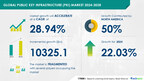
NEW YORK, Oct. 23, 2024 /PRNewswire/ — Report with the AI impact on market trends – The Global Public Key Infrastructure (PKI) Market size is estimated to grow by USD 10.33 billion from 2024-2028, according to Technavio. The market is estimated to grow at a CAGR of 28.94% during the forecast period. Stringent regulations for data protection is driving market growth, with a trend towards growing use of HSMS to strengthen PKI security. However, interoperability issues associated with PKI poses a challenge – Key market players include Ascertia, CETIS dd, DigiCert Inc., eMudhra Ltd., Encryption Consulting LLC, Enigma Bridge, Entrust Corp., Futurex, GlobalSign Ltd., Hewlett Packard Enterprise Co, Keyfactor, PKI Solutions Inc., Realia Technologies SL, Sectigo Ltd., Securemetric Berhad, Securosys SA, SSL.com, Technology Nexus Secured Business Solutions AB, Thales Group, Unisys Corp., and Wisekey International Holding AG.
AI-Powered Market Evolution Insights. Our comprehensive market report ready with the latest trends, growth opportunities, and strategic analysis- View your snapshot now
Forecast period
2024-2028
Base Year
2023
Historic Data
2018 – 2022
Segment Covered
End-user (BFSI, Government and defense, IT and telecom, and Others), Deployment (On-premises and Cloud), and Geography (North America, Europe, APAC, South America, and Middle East and Africa)
Region Covered
North America, Europe, APAC, South America, and Middle East and Africa
Key companies profiled
Ascertia, CETIS dd, DigiCert Inc., eMudhra Ltd., Encryption Consulting LLC, Enigma Bridge, Entrust Corp., Futurex, GlobalSign Ltd., Hewlett Packard Enterprise Co, Keyfactor, PKI Solutions Inc., Realia Technologies SL, Sectigo Ltd., Securemetric Berhad, Securosys SA, SSL.com, Technology Nexus Secured Business Solutions AB, Thales Group, Unisys Corp., and Wisekey International Holding AG
Key Market Trends Fueling Growth
PKI vendors provide hardware security modules (HSMs) as an addition to their PKI solutions to enhance encryption key security. HSMs are specialized computing devices that protect and manage encryption keys for strong authentication and crypto processing. HSMs perform essential tasks such as random number generation, asymmetric and symmetric key generation, and securely store and hide private keys. The BFSI sector’s increasing demand for digital payments has fueled the continuous growth of HSMs’ usage. Vendors are exploring new ways to integrate HSMs into PKI solutions, expanding their capabilities. The need for more secure and advanced security solutions that are compatible with future business requirements is driving the PKI market’s growth, with the demand for HSMs expected to escalate.
The Public Key Infrastructure (PKI) market is experiencing significant growth, particularly in the Services segment. Cloud adoption is driving the demand for cloud-based PKI services, including digital signature services, which offer cost savings and operational efficiencies in a cloud environment. PKI solutions provide essential infrastructure for access control, compliance with regulations like GDPR and HIPAA, and data security in both on-premises and cloud environments. Businesses value PKI services for securing sensitive data, digital identities, and digital transactions through encryption and authentication. In a remote work era, PKI solutions ensure trust in digital communications and help organizations meet regulatory requirements. Integration challenges remain, but the expertise of PKI providers can help organizations overcome these hurdles and ensure cybersecurity for their infrastructure and digital business processes.
Insights on how AI is driving innovation, efficiency, and market growth- Request Sample!
In today’s business landscape, enterprises are increasingly relying on the Internet for their operations, leading to a heightened risk of cyberattacks. To mitigate this risk, Public Key Infrastructure (PKI) has become an essential security solution. PKI offers various security services, including encryption, authentication, authorization, integrity protection, and confidentiality protection. However, interoperability issues are hindering the wider adoption of PKI. These issues occur at both the component and application levels. Component-level interoperability deals with interactions between systems directly supporting or utilizing PKI solutions, which can be inter- or intra-domain. Inter-domain interoperability requires cooperation among multiple administrative domains of different organizations. Application-level interoperability concerns compatibility among PKI solutions on peer-to-peer networks, regardless of the application providers or infrastructure components. Technical issues related to certificates, algorithms, and protocols can also arise. To ensure seamless interoperability, vendors must implement common protocols, certificate formats, and message formats. Similar algorithms must be used for authentication, encryption, and data sharing between PKIs. CA certificates must be compatible with all systems. Each domain must adhere to regulations, policies, and standards set by government bodies. To fully tap into the potential of the global PKI market and fuel its growth, PKI software and solution providers must collaborate and focus on developing compatible PKI solutions. This will help overcome interoperability challenges and address the evolving needs of businesses.
Public Key Infrastructure (PKI) is a vital component of digital security, enabling secure data transmission and user authentication through digital certificates. However, implementing and managing PKI comes with challenges. Security standards must be met, such as those set by Entrust Datacard and DigiCert. The ecosystem is expanding with cloud service adoption and digital transformation initiatives, leading to regulatory compliance standards for e-commerce transactions and sensitive critical data. Key management difficulties and scalability issues can be costly. Upfront expenditures for PKI implementation and standardization can be high. Technological changes, including virtualization, workplace mobility, and cloud storage, add complexity. Cyber threats, quantum computing threats, and identity modifications require continuous updates and user verification. Pragmatic solutions include ManageEngine, Symantec, CloudSOC, and CASB for identity and access management, application administration, and data security control. IAM systems, sign-in, signup, and user management processes are crucial for user reliability and user verification. Production costs, connectivity, and technical innovations like IAM systems and CASBs can help mitigate challenges. Regulatory compliance, technological changes, and cyber threats demand ongoing attention. Ultimately, PKI is essential for data security in today’s digital landscape.
Insights into how AI is reshaping industries and driving growth- Download a Sample Report
This public key infrastructure (pki) market report extensively covers market segmentation by
End-user 1.1 BFSI1.2 Government and defense1.3 IT and telecom1.4 OthersDeployment 2.1 On-premises2.2 CloudGeography 3.1 North America3.2 Europe3.3 APAC3.4 South America3.5 Middle East and Africa
1.1 BFSI- The BFSI industry’s shift towards digitalization has necessitated a focus on securing digital communications and data. Public Key Infrastructure (PKI) plays a crucial role in this regard, providing digital certificates, encryption keys, and identity management systems. With the increasing importance of data in financial services, from managing transactions to automating risk management, the demand for security solutions. PKI’s ability to protect data during transmission and storage makes it an essential component of the BFSI sector. As the industry continues to digitalize and customer expectations evolve, the need for PKI solutions will persistently grow. Consequently, the BFSI segment of the global PKI market is poised for significant expansion.
Download complimentary Sample Report to gain insights into AI’s impact on market dynamics, emerging trends, and future opportunities- including forecast (2024-2028) and historic data (2018 – 2022)
Public Key Infrastructure (PKI) is a security solution that enables the creation, management, distribution, and revocation of digital certificates for securing sensitive data, digital identities, and digital transactions. Encryption, authentication, digital signature, and data privacy regulations are key components of PKI. With the increasing adoption of cloud services, digital transformation initiatives, and e-commerce transactions, the demand for PKI solutions. However, the threat landscape is evolving, with cyber threats, quantum computing threats, and regulatory compliance standards posing significant challenges. Technical innovations such as virtualization, workplace mobility, cloud storage, IAM systems, and mobile devices require PKI solutions to ensure data security. PKI plays a crucial role in safeguarding enterprise data and protecting against cyber attacks.
Public Key Infrastructure (PKI) is a critical component of digital security, enabling the protection of sensitive data, digital identities, and secure digital transactions. PKI relies on encryption, authentication, digital signatures, and digital certificates to ensure data privacy and security. With the increasing adoption of digital transformation initiatives, cloud service adoption, and regulatory compliance standards, the need for PKI is more crucial than ever. Data privacy regulations such as GDPR and HIPAA mandate the use of PKI for securing sensitive data. The remote work trend, Internet of Things (IoT), and cybersecurity threats PKI implementation to ensure trust and security. However, challenges such as implementation and integration, upfront expenditures, key management difficulties, scalability issues, and regulatory compliance persist. PKI solutions provide data security for e-commerce transactions, enterprise data, mobile devices, IAM systems, and cloud environments. Technological changes, such as virtualization, workplace mobility, cloud storage, and quantum computing threats, necessitate continuous innovation in PKI. Expertise, infrastructure, and cost savings are essential considerations in PKI implementation. Services segment, including digital signature services and PKI services, and on-premises segment offer solutions to address the diverse needs of organizations. PKI solutions enable secure sign-in, signup, user management processes, user verification, and data security control. Cloud-based services, such as CloudSOC and CASB, offer shadow IT solutions to mitigate security risks. In summary, PKI plays a vital role in securing digital identities, transactions, and sensitive data. Despite challenges, PKI solutions continue to evolve to address the ever-changing digital security landscape.
1 Executive Summary
2 Market Landscape
3 Market Sizing
4 Historic Market Size
5 Five Forces Analysis
6 Market Segmentation
End-userBFSIGovernment And DefenseIT And TelecomOthersDeploymentOn-premisesCloudGeographyNorth AmericaEuropeAPACSouth AmericaMiddle East And Africa
7 Customer Landscape
8 Geographic Landscape
9 Drivers, Challenges, and Trends
10 Company Landscape
11 Company Analysis
12 Appendix
Technavio is a leading global technology research and advisory company. Their research and analysis focuses on emerging market trends and provides actionable insights to help businesses identify market opportunities and develop effective strategies to optimize their market positions.
With over 500 specialized analysts, Technavio’s report library consists of more than 17,000 reports and counting, covering 800 technologies, spanning across 50 countries. Their client base consists of enterprises of all sizes, including more than 100 Fortune 500 companies. This growing client base relies on Technavio’s comprehensive coverage, extensive research, and actionable market insights to identify opportunities in existing and potential markets and assess their competitive positions within changing market scenarios.
Technavio Research
Jesse Maida
Media & Marketing Executive
US: +1 844 364 1100
UK: +44 203 893 3200
Email: media@technavio.com
Website: www.technavio.com/
View original content to download multimedia:https://www.prnewswire.com/news-releases/the-public-key-infrastructure-pki-market-will-grow-by-usd-10-33-billion-from-2024-2028–driven-by-ai-and-stringent-data-protection-regulations-transforming-the-market—technavio-302284168.html
SOURCE Technavio
You may like
Technology
NAVER Partners with Brookfield and NVIDIA to Expand Korea’s National AI Factory Infrastructure Buildout
Published
2 hours agoon
July 25, 2026By
SAN FRANCISCO, July 25, 2026 /PRNewswire/ — NAVER, Brookfield and NVIDIA announced an expansion of Korea’s sovereign AI factory infrastructure. New investments will increase the initial NVIDIA DSX™ AI factory deployment from 55 megawatts to 200 megawatts.
Announced during Korea President Jae Myung Lee’s AI Summit visit to San Francisco, the planned 200-megawatt expansion will be built with the NVIDIA DSX platform at NAVER’s GAK Sejong hyperscale data center in Sejong, South Korea. The expanded infrastructure will provide Korea- and U.S.- based AI innovators with access to production-scale AI compute for building next-generation models, agents and AI-powered services.
Under the terms of the agreements, Brookfield will fund up to $9 billion as the exclusive capital partner, NVIDIA will invest $1 billion and NAVER will fund the remaining amount to finance the $10 billion project.
This builds on NAVER’s June announcement to extend its GAK Sejong data center with NVIDIA DSX, with a long-term path to gigawatt-scale sovereign AI infrastructure serving Korea’s enterprises, industries, government organizations and global AI cloud customers. Combining Brookfield’s capital with NVIDIA’s computing platform, the investment supports NAVER’s AI factory deployment.
“NVIDIA’s strategic investment and our infrastructure supply agreement with Brookfield have propelled NAVER’s vision for the AI Factory business into a robust execution phase,” said Haejin Lee, Founder and Chairman of NAVER. “Leveraging the solid partnerships with our global partners, we will drive technological innovation, foster a sovereign AI ecosystem, and spearhead efforts to strengthen South Korea’s AI competitiveness.”
AI Factory Expansion and Open Model Collaboration to Fuel AI Innovators
NAVER, as an NVIDIA Cloud Partner, provides deep expertise in operating hyperscale infrastructure powered by the full-stack NVIDIA AI platform. The 200-megawatt AI factory, featuring NVIDIA Vera Rubin and Blackwell platforms, will establish a dedicated resource pool for emerging AI companies, providing the compute, software and support needed to develop and deploy competitive AI models and applications at scale.
This expanded infrastructure also builds on NAVER and NVIDIA’s collaboration on open model development for agentic and physical AI. NAVER is advancing its HyperCLOVA X models to be based on NVIDIA Nemotron™ 3 Ultra open models with its proprietary data and training expertise. NAVER is also the first Korean company to join the NVIDIA Nemotron Coalition, contributing to open model development across pretraining, post-training and reinforcement learning.
NAVER plans to launch an AI agent platform in Korea in the second half of the year, powered by NVIDIA Agent Toolkit software including NVIDIA NemoClaw™ blueprints. NAVER is also developing a Seoul World Model using proprietary urban street-view and spatial modeling data, built on NVIDIA Cosmos™ world foundation models.
About NAVER
Founded in 1999, NAVER is Korea’s largest Internet company and one of the world’s top tech companies. Leading cutting-edge technologies, NAVER operates the No.1 search engine in Korea and holds various business portfolios encompassing commerce, fintech, cloud, AI and robotics.
NAVER recorded sales of KRW 12.04 trillion (USD 8.18 billion) in 2025. TEAM NAVER continues to enhance its business portfolio and expand its global presence across Japan, North America, and Europe, while pursuing innovation through continuous research and development in future technologies.
View original content:https://www.prnewswire.com/news-releases/naver-partners-with-brookfield-and-nvidia-to-expand-koreas-national-ai-factory-infrastructure-buildout-302834577.html
SOURCE NAVER
Technology
Beijing Review: Walking Through Time: China and U.S. Youths Explore Dali’s Past and Future
Published
2 hours agoon
July 25, 2026By
BEIJING, July 24, 2026 /PRNewswire/ — On July 17, a China-U.S. youth delegation came to Dali of Yunnan Province. By examining how Dali’s rich history intersects with modern development, the delegates explored new pathways for rural development.
They visited Dali Old Town, tried their hand at making the Bai people’s Three-Course Tea and also explored the ancient town of Xizhou, where they learned how modern tourism and indigenous life coexist.
In Yunnanyi Village, they explored its history as a stop along the Tea Horse Road and learned about the role it played during the Second World War (WWII).
Tyler James Smith
“I think it’s a very underappreciated part of World War II history. Hearing these stories of different countries working together despite cultural differences is incredibly inspiring.
I also think there are many stories like these that haven’t been widely told, simply because World War II is such a complex period in history. That’s why I think it’s so meaningful to visit museums like this and experience these stories firsthand.”
At Xiangyun Economic and Technological Development Zone, they visited a local new energy company to see how green, low-carbon development is driving regional growth.
Valerie Marie
“I recently started studying energy transitions. I know China has been really big in the renewable energy sector. So actually getting to hear more about [China’s] 2060 [pledge], learning more about carbon neutrality [goals], as well as other zero-carbon goals, was cool.”
During their stay in Dali, they also strolled along the Erhai Lake Ecological Corridor.
Bai Yiwen
“I’d describe this journey as “to be continued,” because my own connection with Yunnan is far from over. For the U.S. delegates, this was only their first visit, so they’ve only had a glimpse of what Yunnan has to offer. I hope they will have more opportunities to come back to China, explore other cities in Yunnan, and discover even more of its people, culture and traditions.”
After Dali, the delegates will visit Beijing for more tours and exchanges. The event was co-hosted by China International Communications Group (CICG) Center for the Americas and the U.S.-based International Student Conferences.
https://x.com/beijingreview/status/2080104404552663067?s=46&t=yfVMVdMyE2zKAFrYaLoV-g
https://www.facebook.com/share/v/1EtGCCKzy4/?mibextid=wwXIfr
https://youtu.be/jGONWTqwduc?is=KfL-Zn3HyVYE-KEm
Contact: Jiaweibellapeng@163.com
View original content:https://www.prnewswire.com/news-releases/beijing-review-walking-through-time-china-and-us-youths-explore-dalis-past-and-future-302834587.html
SOURCE Beijing Review
Technology
Hyundai Motor Group Executive Chair Euisun Chung Announces Physical AI Vision at San Francisco AI Summit
Published
3 hours agoon
July 25, 2026By
Hyundai Motor Group shares roadmap for realizing its Physical AI vision and collaboration strategy with global tech leaders at the San Francisco AI SummitExecutive Chair Euisun Chung presented, “Hyundai Motor Group is evolving beyond the traditional boundaries of automotive manufacturing to become a Physical AI solution company,” adding, “The ultimate Physical AI vision we pursue is the realization of integrated intelligence at the city level”The Group to leverage manufacturing competitiveness and leading robotics capabilities centered on Boston Dynamics, while establishing a data flywheel system connecting real-world operational data with continuous AI model advancementThe Group to leverage strategic partnerships with global technology leaders, including NVIDIA and Waymo, as well as Boston Dynamics’ strategic partnership with Google DeepMindThe Group to collaborate with NVIDIA to develop a Robot Reference Platform that combines Hyundai Motor Group’s and NVIDIA’s Physical AI capabilities
… The initiative to support Korea’s Physical AI industry through an open ecosystem
The Group to cultivate strategic domestic hubs through investments in Saemangeum AI Valley and future advanced industries in Korea’s Yeongnam region
SAN FRANCISCO, July 25, 2026 /PRNewswire/ — Hyundai Motor Group (the Group) Executive Chair Euisun Chung today outlined the Group’s vision and strategy for Physical AI at the San Francisco AI Summit held in San Francisco, California.
The event brought together approximately 150 attendees, including Executive Chair Chung, business leaders from major Korean companies, executives from leading U.S. technology firms, startup representatives and students.
At the summit, Executive Chair Chung presented the Group’s roadmap for advancing Physical AI and outlined strategic collaboration plans with global technology leaders.
“Hyundai Motor Group is evolving beyond the traditional boundaries of automotive manufacturing by expanding into autonomous driving, robotics and AI Defined Factories, accelerating our transformation into a Physical AI solution company.” — Hyundai Motor Group Executive Chair Euisun Chung
Accelerating the Transition to a Physical AI Solution Company
Hyundai Motor Group’s Physical AI vision extends beyond intelligent devices such as vehicles and robots to intelligent spaces, including AI factories where AI seamlessly connects and optimizes entire operations. Ultimately, the Group envisions integrated intelligence at the city level, where urban infrastructure is organically connected and operated through AI.
A key differentiator for the Group is its ability to create a data flywheel that continuously connects real-world operations with AI advancement. Drawing on extensive experience in large-scale manufacturing, mobility, robotics and service operations, the Group is positioned to deploy, refine and scale Physical AI technologies in real industrial environments.
Executive Chair Chung also outlined strategic partnerships with leading technology companies, including NVIDIA and Waymo, as well as Boston Dynamics’ strategic partnership with Google DeepMind, to further advance Physical AI capabilities.
By combining Hyundai Motor Group’s manufacturing competitiveness, mobility and robotics technologies and extensive operational data with the AI infrastructure and algorithm capabilities of global technology leaders, the Group aims to help foster a new innovation ecosystem for the Physical AI era.
Executive Chair Chung also introduced initiatives designed to support the growth of Korea’s robotics and AI ecosystem, including the development of a Robot Reference Platform with NVIDIA that combines Hyundai Motor Group’s and NVIDIA’s Physical AI capabilities, as well as investments in initiatives such as the Saemangeum AI Valley.
Physical AI Vision: From Intelligent Devices to Integrated Intelligence at the City Level
During the summit, Executive Chair Chung presented Hyundai Motor Group’s Physical AI vision.
“The ultimate Physical AI vision Hyundai Motor Group pursues begins with intelligent devices such as vehicles and robots, expands to intelligent spaces such as AI factories, and ultimately realizes integrated intelligence at the city level, where urban infrastructure is seamlessly connected and operated.” — Hyundai Motor Group Executive Chair Chung
The Group’s vision begins with intelligent devices, where AI capabilities enhance vehicles and robots. It then expands to intelligent spaces, including AI factories where AI autonomously integrates logistics, production and quality management across entire operations.
Ultimately, Hyundai Motor Group envisions city-level intelligence, where critical infrastructure and assets — including energy, mobility and robotics systems — are connected and optimized in real time.
Executive Chair Chung also highlighted the Group’s key strengths in realizing its Physical AI vision:
World-class manufacturing competitiveness: Hyundai Motor Group has built extensive expertise through decades of operating global manufacturing facilities, managing quality systems and optimizing supply chains. This foundation enables the Group to apply AI technologies to products, processes and services while rapidly validating and scaling innovations in real-world environments.Leading robotics capabilities: Hyundai Motor Group has established robotics as a key pillar of its future business portfolio. Boston Dynamics’ quadruped robot Spot®, logistics robot Stretch®, and Hyundai Motor Group Robotics LAB’s next-generation mobile robot platform MobED are recognized for combining technological competitiveness with real-world applicability.
In particular, the humanoid robot Atlas® is emerging as a representative example of Physical AI, supporting and collaborating with people across manufacturing, logistics and mobility environments.
Establishing a data flywheel system: Hyundai Motor Group is establishing a data flywheel system that leverages data generated across manufacturing operations, vehicles, logistics systems and robotics demonstrations to continuously advance AI models. Enhanced algorithms are then reapplied to real-world operations, creating a virtuous cycle that improves performance and strengthens Physical AI capabilities.
Accelerating the Future of Physical AI Through Partnerships with Global Tech Leaders
Executive Chair Chung also outlined concrete initiatives to position Hyundai Motor Group as a leader in human-centered Physical AI through strategic collaborations with NVIDIA and Waymo, as well as Boston Dynamics’ strategic partnership with Google DeepMind.
“By combining Hyundai Motor Group’s strengths in manufacturing, robotics and data with the capabilities of global technology leaders, we can help create a new innovation ecosystem for the Physical AI era.” — Hyundai Motor Group Executive Chair Euisun Chung
NVIDIA – Advancing Physical AI infrastructure and talent development
Hyundai Motor Group is expanding collaboration with NVIDIA to strengthen Physical AI infrastructure and cultivate AI talent. Building on a supply agreement for 50,000 NVIDIA Blackwell GPUs and a memorandum of understanding signed last year to advance Korea’s Physical AI capabilities, the Group is pursuing a range of initiatives, including the establishment of Hyundai Motor Group Robot Application Center, as well as various collaborations aimed at strengthening Korea’s Physical AI infrastructure and AI talent ecosystem, including the NVIDIA’s AI Technology Center.
In manufacturing, the Group is leveraging NVIDIA’s platform to create more sophisticated digital twins of production facilities, enhancing process design, operational optimization and validation efficiency. The collaboration also includes the integration of NVIDIA’s autonomous driving solutions, including automotive semiconductors, sensors and architecture, with Hyundai Motor Group vehicle platforms.
Waymo – Strengthening autonomous driving collaboration
Hyundai Motor Group continues to strengthen its strategic partnership with Waymo in the autonomous driving sector to support the development of a safe and innovative autonomous driving ecosystem. Autonomous driving vehicles require a wide range of specialized capabilities, including redundant systems for steering, braking, power and communications, dedicated features such as power-operated doors, as well as enhanced functional safety and cybersecurity technologies.
Hyundai Motor Group plans to produce IONIQ 5 vehicles with specific autonomous-ready modifications at Hyundai Motor Group Metaplant America (HMGMA) in Georgia.
Google DeepMind – Accelerating next-generation humanoid robotics
Boston Dynamics has established a strategic partnership with Google DeepMind to accelerate the development of next-generation humanoid robots. Advanced AI models and training systems are essential for robots to perform complex tasks in real-world environments and collaborate effectively with people. Through this partnership, Boston Dynamics robots are expected to achieve greater autonomy and adapt more effectively to complex operating environments.
Hyundai Motor Group plans to establish a robot production facility in the U.S. with an annual capacity of up to 30,000 units by 2028. The Atlas humanoid robot will first be deployed at production facilities including HMGMA before broader deployment is expanded through phased validation.
Building an Open Ecosystem Through the Robot Reference Platform and Continued Investment in Korea’s Physical AI Future
Executive Chair Chung also outlined initiatives aimed at supporting the growth of Korea’s Physical AI ecosystem through open collaboration and continued investment.
“The outcomes of collaboration with global technology leaders should contribute to the growth of Korea’s Physical AI industry. To that end, Hyundai Motor Group plans to foster an open ecosystem that supports innovation in robotics and AI technologies.” — Hyundai Motor Group Executive Chair Euisun Chung
Key initiatives to build an open ecosystem for robotics and AI innovation include:
Robot Reference Platform: Hyundai Motor Group and NVIDIA are collaborating to develop a Robot Reference Platform that combines Hyundai Motor Group’s and NVIDIA’s Physical AI capabilities.
The platform will provide research robot models to universities, research institutes and startups, helping foster an open ecosystem that supports technological innovation and the development of Physical AI talent while contributing to the broader growth of Korea’s robotics and AI industries.
Supporting universities, research institutes and startups: The Robot Reference Platform is expected to provide universities, research institutes and startups with a standardized hardware and software environment, enabling them to more easily develop and validate Physical AI technologies. The initiative aims to help address challenges faced by organizations with innovative ideas but limited access to commercialization opportunities and validation infrastructure.
Hyundai Motor Group is also continuing large-scale investments aimed at driving the next leap forward in Korea’s industrial and technology ecosystem. Continued investments in Korea’s industrial and technology ecosystem include:
Saemangeum AI Valley: In the Saemangeum region of Jeonbuk State, the Group is developing Saemangeum AI Valley, which includes an approximate KRW 9 trillion investment in AI data centers, robotics manufacturing clusters, electrolyzer plants and AI hydrogen city infrastructure.
In particular, the robotics manufacturing cluster will serve not only as a production base for the Group’s own robotics products, but also as a robotics foundry that provides manufacturing services for small and medium-sized enterprises that lack manufacturing expertise.
Advanced industrial hubs in the Yeongnam region: Hyundai Motor Group plans to invest a total of KRW 42 trillion over the next decade to foster advanced industrial hubs focused on AI-driven manufacturing, future aerospace industries and sustainable energy infrastructure.
Through these initiatives, Hyundai Motor Group aims to strengthen key foundations for the Physical AI era, including data and energy infrastructure, robotics production capabilities and real-world validation capabilities. The Group also expects these investments to contribute to enhanced industrial competitiveness, balanced regional development, job creation and broader economic vitality in Korea.
About Hyundai Motor Group
Hyundai Motor Group is a global enterprise that has created a value chain based on mobility, steel, and construction, as well as logistics, finance, IT, and service. With about 250,000 employees worldwide, the Group’s mobility brands include Hyundai, Kia, and Genesis. Armed with creative thinking, cooperative communication, and the will to take on any challenges, we strive to create a better future for all.
More information about Hyundai Motor Group can be found at: http://www.hyundaimotorgroup.com or Newsroom: Media Hub by Hyundai, Kia Global Newsroom, Genesis Newsroom
View original content to download multimedia:https://www.prnewswire.com/news-releases/hyundai-motor-group-executive-chair-euisun-chung-announces-physical-ai-vision-at-san-francisco-ai-summit-302834557.html
SOURCE Hyundai Motor Company
Ethereum ETFs close week in red, end 5-day inflow streak
NAVER Partners with Brookfield and NVIDIA to Expand Korea’s National AI Factory Infrastructure Buildout
Beijing Review: Walking Through Time: China and U.S. Youths Explore Dali’s Past and Future
Send Rakhi to UK swiftly with UK Gifts Portal
Whiteboard Series with NEAR | Ep: 45 Joel Thorstensson from ceramic.network
New Gooseneck Omni Antennas Offer Enhanced Signals in a Durable Package
Why You Should Build on #NEAR – Co-founder Illia Polosukhin at CV Labs
Whiteboard Series with NEAR | Ep: 45 Joel Thorstensson from ceramic.network
NEAR End of Year Town Hall 2021: The Open Web World, MetaBUILD 2 Hackathon and 2021 recap
Trending
-
Technology5 days agoTrakka Systems to Demonstrate Advanced ISR Capabilities at Farnborough International Airshow 2026
-
Technology5 days agoSigneasy expands beyond eSignatures with Intelligent Contract Management for growing businesses
-
Technology5 days agoCNPC launches China’s first full-chain green, low-carbon ethylene project
-
Coin Market5 days agoZilliqa asks exchanges to pause ZIL transfers after suspected cold wallet theft
-
Technology4 days agoRTX’s Pratt & Whitney Valox™ 1500 Engine Completes Key Design Milestone
-
Near Videos4 days agoThe Future of Crypto is Chainless
-
Technology5 days agoBain & Company named an OpenAI Elite Partner
-
Technology5 days agoSwiss Hill Advisors Celebrates More Than a Decade as a Specialized Force in Alternative Investment Advisory